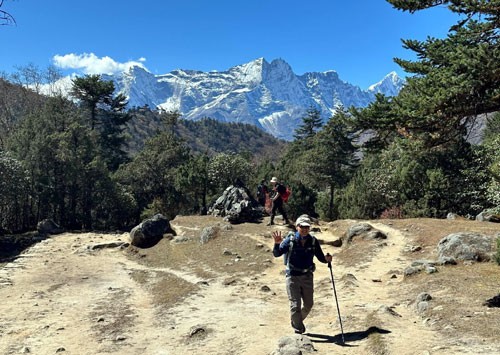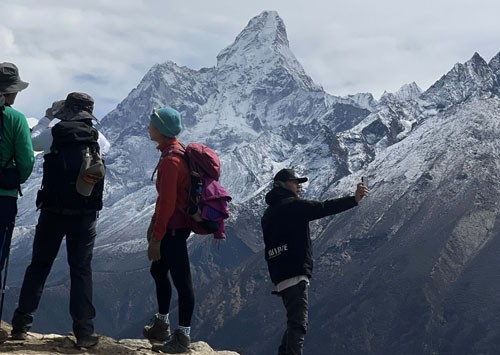
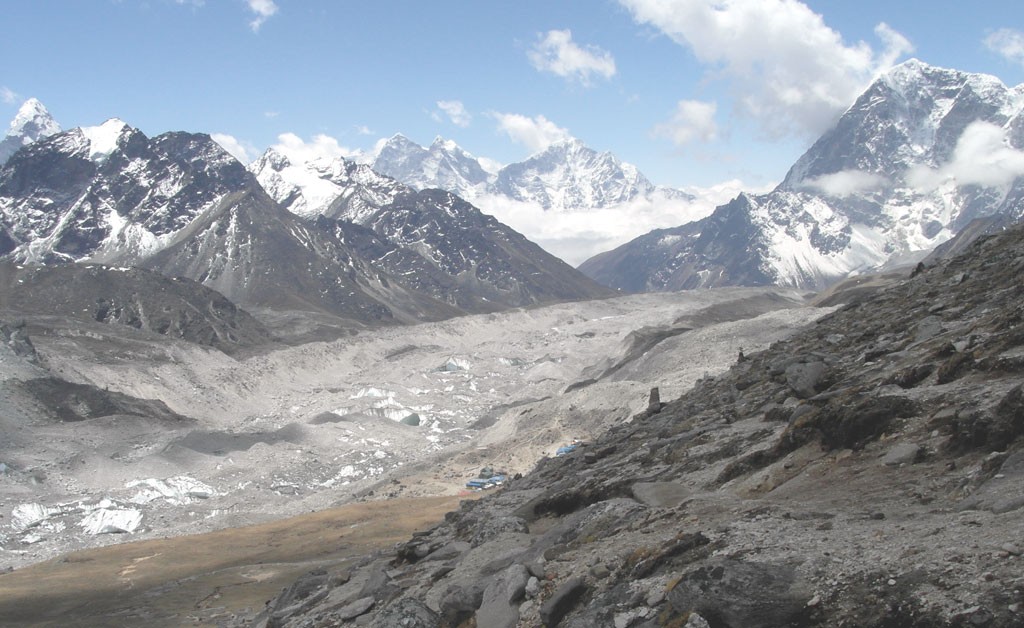
Everest Base Camp Trek via Salleri Overview
The Everest Base Camp Trek via Salleri is a 15-day overland alternative to the classic Everest Base Camp route for trekkers who prefer to reach and leave the Everest region without relying on a scheduled Lukla flight. Instead of flying from Kathmandu to Lukla, the journey begins with a road trip to Salleri and continues toward Tham Dada, where the walking route through the lower Solu region begins.
The first few days are noticeably different from the standard Lukla approach. From Tham Dada, the trail passes through Puiyan before connecting with the familiar Everest route around Phakding. This lower section adds quieter village trails and additional walking before reaching Namche Bazaar, rather than placing you directly at Lukla at 2,860 meters on the first trekking day.
After joining the main Khumbu trail, the journey follows the classic progression through Namche Bazaar, Tengboche, Dingboche, Lobuche, and Gorak Shep. Acclimatization days are included at Namche and Dingboche before reaching Everest Base Camp at 5,364 m and climbing Kala Patthar at approximately 5,545 m, the highest point of the itinerary.
The main advantage of the Salleri approach is not that it makes Everest Base Camp easy. You still face long walking days, cold high-altitude conditions, and the physical demands of trekking above 5,000 meters. What changes is the approach: you spend more time reaching the Khumbu on foot and avoid making a Lukla flight part of the planned itinerary.
After visiting Everest Base Camp and Kala Patthar, the trek descends through the Khumbu to Namche and Lukla. Instead of boarding a flight from Lukla, this itinerary continues overland via Tham Dada and Salleri before returning to Kathmandu by road. This makes the route particularly relevant for travelers who prefer road travel, want to explore the lower Solu approach, or specifically want an Everest Base Camp itinerary that does not depend on scheduled Lukla flights.
For travelers who prefer the faster and more conventional approach, our Everest Base Camp Trek begins with access through Lukla and requires fewer days for the overall journey
Highlights of Trekking to Everest Base Camp via Salleri
- Travel overland from Kathmandu through Salleri instead of relying on a scheduled Lukla flight to begin the Everest Base Camp journey.
- Walk through the lower Solu region before joining the main Everest trail, adding a section of the region that travelers flying directly to Lukla normally bypass.
- Approach the Khumbu from lower elevations over several trekking days rather than beginning the trek directly from Lukla at around 2,860 meters.
- Experience quieter village trails before Phakding and Namche Bazaar, after which the route joins the busier classic Everest Base Camp trail.
- Follow the established high-altitude route through Namche Bazaar, Tengboche, Dingboche, Lobuche, and Gorak Shep, with acclimatization stops built into the itinerary.
- Reach Everest Base Camp at 5,364 m and climb Kala Patthar at approximately 5,545 m for close views across the Everest massif.
- Descend through the Khumbu to Lukla and continue overland via Tham Dada and Salleri, avoiding a scheduled Lukla flight on the return journey as well.
- Choose a 15-day road-based alternative to the classic EBC itinerary when avoiding scheduled Lukla flights and experiencing the lower Solu approach matter more than completing the journey in the shortest possible time.
Everest Base Camp via Salleri vs Lukla: What’s the Difference?
Both routes ultimately join the same Everest Base Camp trail and visit the major destinations of the upper Khumbu, including Namche Bazaar, Tengboche, Dingboche, Lobuche, Gorak Shep, Everest Base Camp, and Kala Patthar. The main difference is how you enter and leave the Everest region, how much time the journey takes, and how much of the lower Solu region you experience before reaching the classic trail.
| EBC via Salleri | Standard EBC via Lukla | |
|---|---|---|
| Access from Kathmandu | Overland journey via Salleri | Flight to Lukla |
| Starting approach | Lower Solu trails before joining the main EBC route | Begins directly from Lukla |
| Scheduled Lukla flight | Not required on this 15-day itinerary | Required |
| Overall duration | Longer | Shorter |
| Lower Solu experience | Included | Mostly bypassed |
| Trail before Phakding/Namche | Generally quieter | Joins the established Khumbu trail immediately |
| Altitude progression at the start | Begins from lower elevations and gains altitude over additional days | Starts trekking from Lukla at about 2,860 m |
| Road travel | Considerable; long and sometimes rough | Much less |
| Best suited to | Travelers prioritizing road access and the lower Solu approach | Travelers prioritizing time and convenience |
Which Everest Base Camp route should you choose?
Choose the Everest Base Camp Trek via Salleri if avoiding a scheduled Lukla flight is important to you and you have enough time for the longer overland journey. It also makes sense if you want to walk through part of the lower Solu region that most trekkers flying directly to Lukla do not experience.
Choose the standard Everest Base Camp Trek if your priority is reaching the main Khumbu trail efficiently and completing the overall journey in fewer days. Flying to Lukla avoids the long road journey and additional lower-region trekking required by the Salleri route.
The Salleri route should not automatically be considered better, easier, or safer. It replaces the convenience and uncertainty of mountain flights with considerably more road travel and additional trekking. The better option depends on whether you value time efficiency or an overland approach more.
Who Is the Everest Base Camp Trek via Salleri Best For?
The Everest Base Camp Trek via Salleri is best suited to travelers who want to reach the Everest region overland and have enough time for a longer approach than the standard Lukla route. It is particularly relevant for trekkers who prefer not to make a scheduled Lukla flight part of their itinerary and who are interested in walking through the lower Solu region before joining the main Everest Base Camp trail.
This route can also suit trekkers who prefer quieter walking days at the beginning of the journey. The difference is most noticeable before joining the established Khumbu trail; after reaching the Phakding and Namche area, you share essentially the same route used by trekkers approaching from Lukla.
Good physical preparation is still necessary. You should be comfortable with consecutive trekking days of around 5 to 7 hours, including steep ascents and descents, followed later by high-altitude walking above 4,000 and 5,000 meters. Previous trekking experience is helpful but not compulsory for a well-prepared first-time trekker.
The Salleri route is not automatically the better choice for someone who is nervous about flying. Avoiding the Lukla flight means accepting long road journeys, rough sections of mountain road, and additional travel time. Travelers who dislike prolonged overland travel may actually find the standard Lukla approach more comfortable.
This itinerary is also less suitable if your holiday time is limited. If reaching the main Khumbu trail efficiently is more important than experiencing the lower Solu approach, our standard Everest Base Camp Trek is the more practical option.
How Difficult Is the Everest Base Camp Trek via Salleri?
The Everest Base Camp Trek via Salleri is a challenging high-altitude trek that combines long overland travel, additional walking through the lower Solu region, and the same demanding upper-Khumbu section followed by trekkers approaching through Lukla. No technical climbing skills are required, but good endurance and preparation for consecutive trekking days are important.
One difference from the standard Everest Base Camp Trek is the additional lower-region journey before reaching the main Khumbu trail. After traveling overland through Salleri and Tham Dada, you begin walking toward Puiyan and Phakding before continuing to Namche Bazaar. These early stages include repeated ascents and descents, so starting at a lower elevation does not mean the first part of the trek is physically easy.
Once the Salleri route joins the established Everest trail, the challenge becomes increasingly dominated by altitude rather than the choice of approach route. The itinerary continues through Namche, Tengboche and Dingboche before reaching Lobuche and Gorak Shep, where walking becomes slower as sleeping elevations increase and temperatures become colder.
The most demanding period usually comes around the Everest Base Camp and Kala Patthar stages. Everest Base Camp lies at approximately 5,364 m, while Kala Patthar reaches about 5,545 m on this itinerary. Even physically strong trekkers can feel the effects of reduced oxygen at these elevations, and fitness alone does not protect against altitude illness.
Two acclimatization days are included, at Namche Bazaar and Dingboche, before the highest stages of the trek. Your walking pace and response to altitude remain more important than trying to maintain a fixed speed, and symptoms of altitude illness should never be ignored simply to remain on schedule.
The Salleri route is therefore longer rather than technically harder than the classic Lukla approach. It requires additional time and endurance in the lower region, while the high-altitude difficulty after the routes join is essentially the same. Travelers who want to reduce the overall duration and lower-region walking should consider the standard Everest Base Camp Trek instead.
How We Operate the Everest Base Camp Trek via Salleri
The Everest Base Camp Trek via Salleri requires coordination across two quite different parts of the journey: the overland approach and lower Solu trails, followed by the established high-altitude route through the Khumbu. Our team arranges the road transportation, trekking accommodation, permits, guide services, and daily logistics as one continuous itinerary rather than treating Salleri simply as an alternative transfer to Lukla.
Road conditions between Kathmandu, Salleri, and the trail access point can change with rainfall, landslides, construction, and local traffic. Before departure, we check the practical road situation and coordinate the vehicle plan accordingly. Once trekking begins, the guide manages the transition from the quieter lower route into the busier Khumbu trail and monitors the group's pace as sleeping elevations increase.
The itinerary also includes acclimatization stops at Namche Bazaar and Dingboche before the highest section toward Lobuche, Gorak Shep, Everest Base Camp, and Kala Patthar. If weather, road conditions, altitude symptoms, or other circumstances affect the planned schedule, decisions are made according to the conditions on the ground rather than forcing the published itinerary.