Manaslu Circuit Trek Essential Information
Good preparation for the Manaslu Circuit Trek depends on understanding how the journey works in practice. The information below covers the key details you need before departure, from altitude and trail conditions to permits, accommodation, transportation, weather, safety, and preparation.
Trail and Walking Conditions on the Manaslu Circuit
- Lower Budhi Gandaki Valley
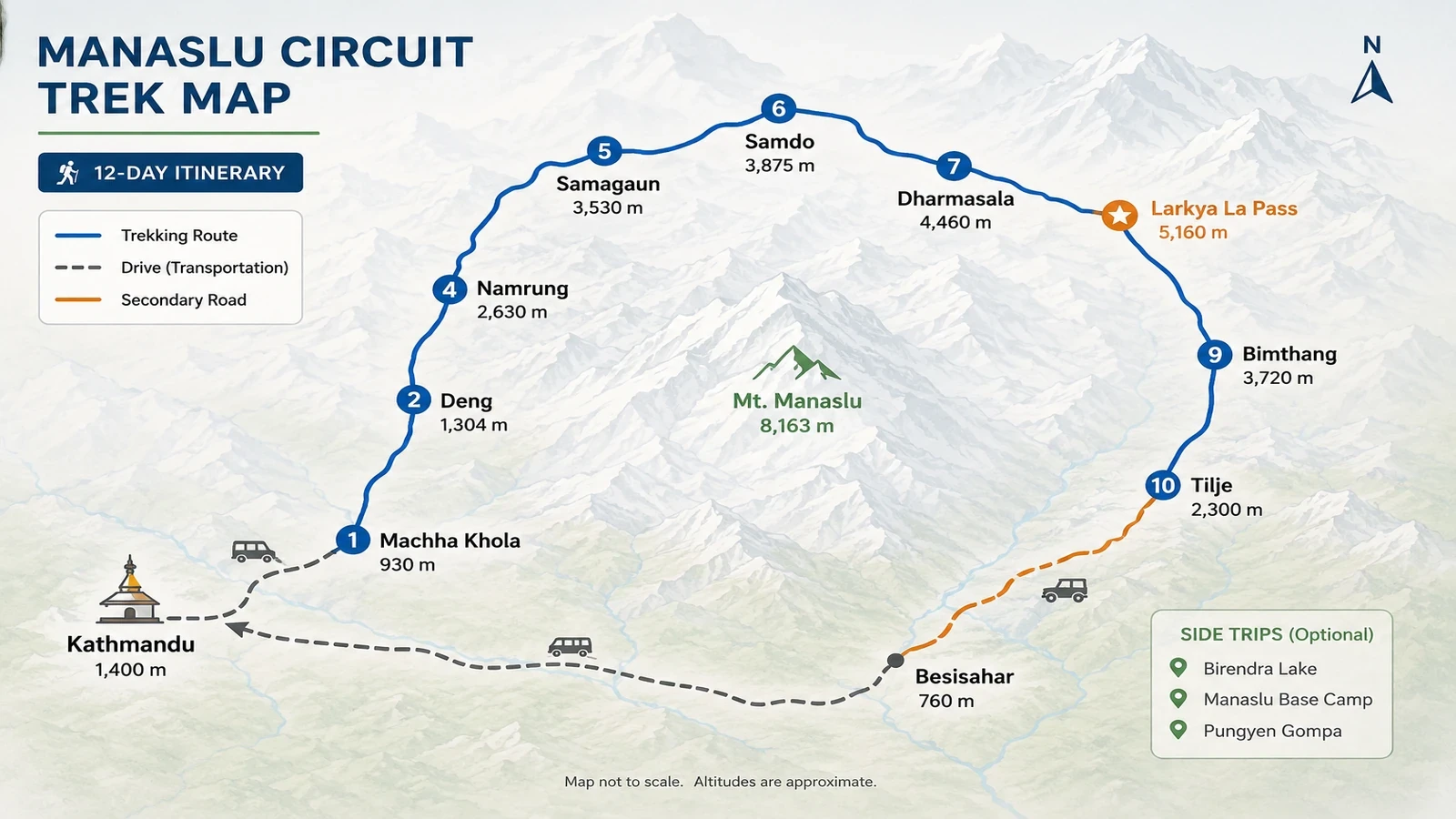
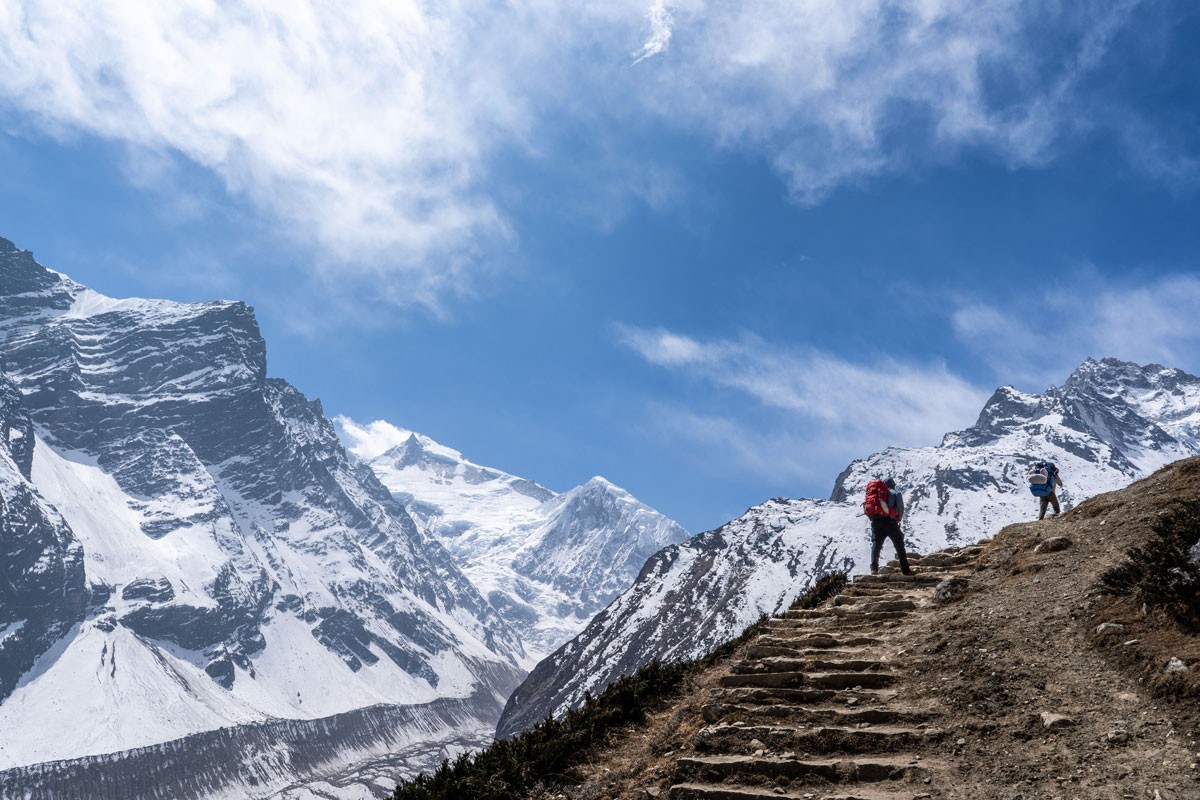
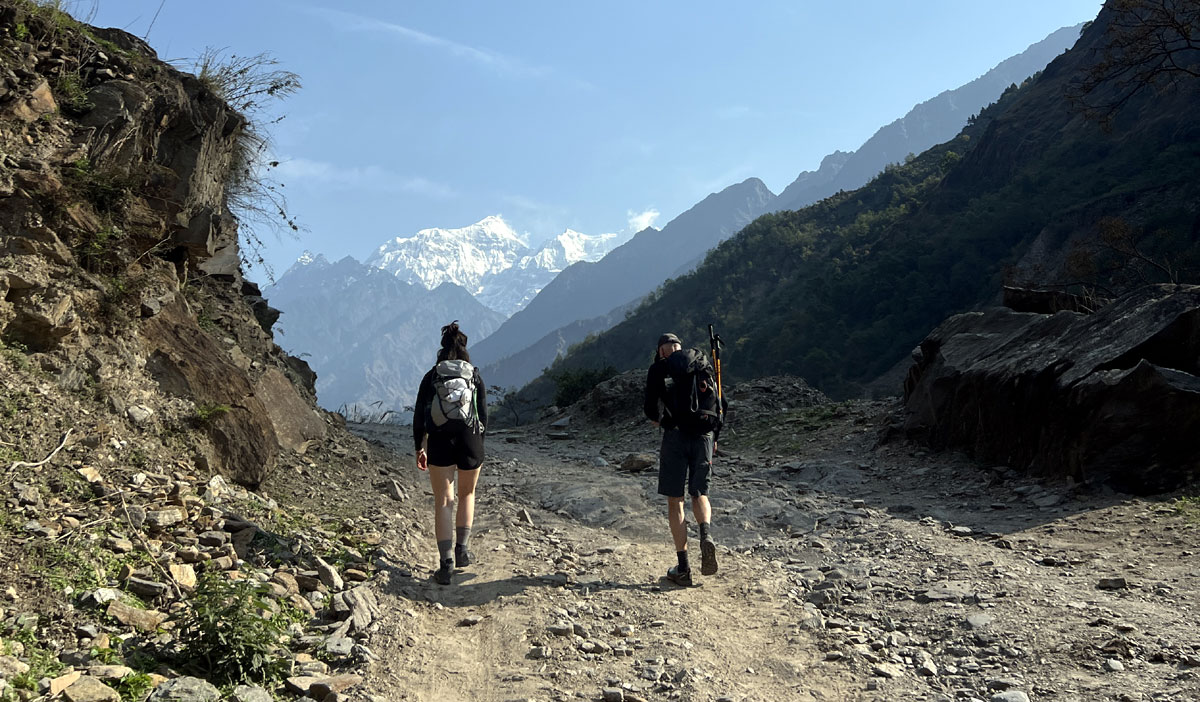
In the lower Budhi Gandaki Valley, from Machha Khola to Deng, the trail is more rugged and varied. You walk on narrow paths carved into hillsides, cross multiple suspension bridges, and pass through sections with stone steps, rocky ground, and occasional landslide areas.
During the monsoon and early post-monsoon periods, some sections can also become muddy or temporarily affected by small landslides.
- Namrung to Samagaun Section
From Deng to Namrung and Lho, the trail becomes more stable and passes through forested areas with a mix of gradual climbs and small ups and downs.
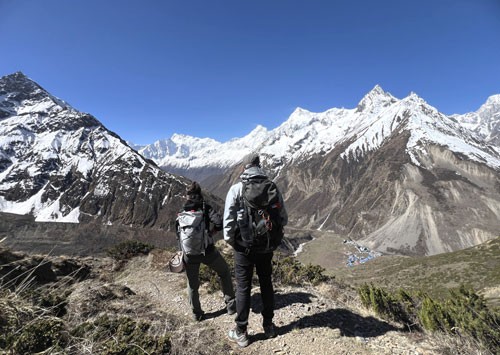
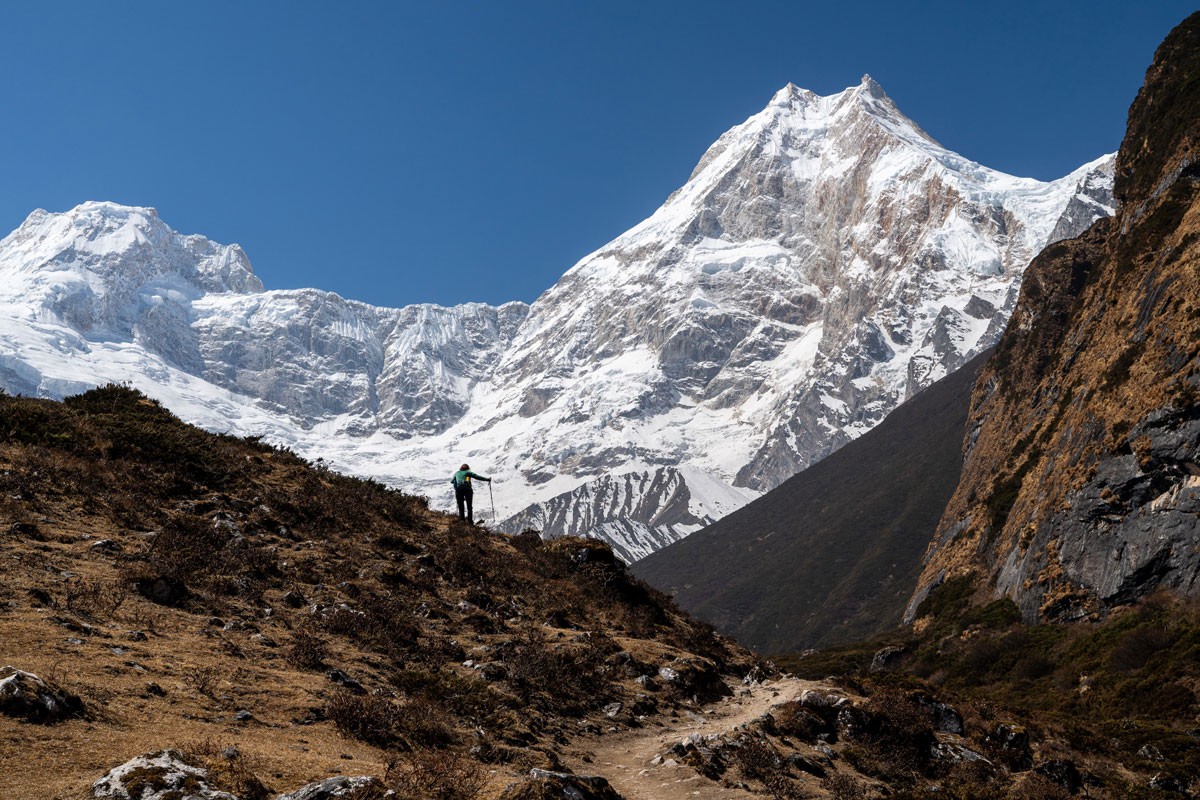
As the route moves higher toward Samagaun and Samdo, the landscape opens up noticeably. Trails become wider, drier, and more exposed, with fewer trees and broader mountain views.
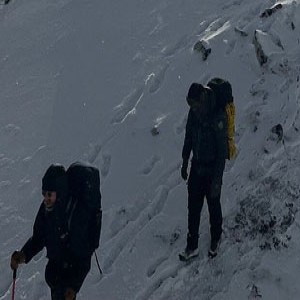
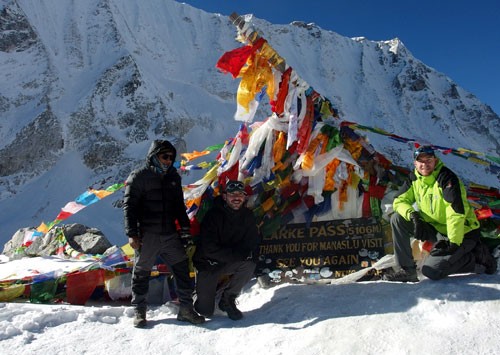
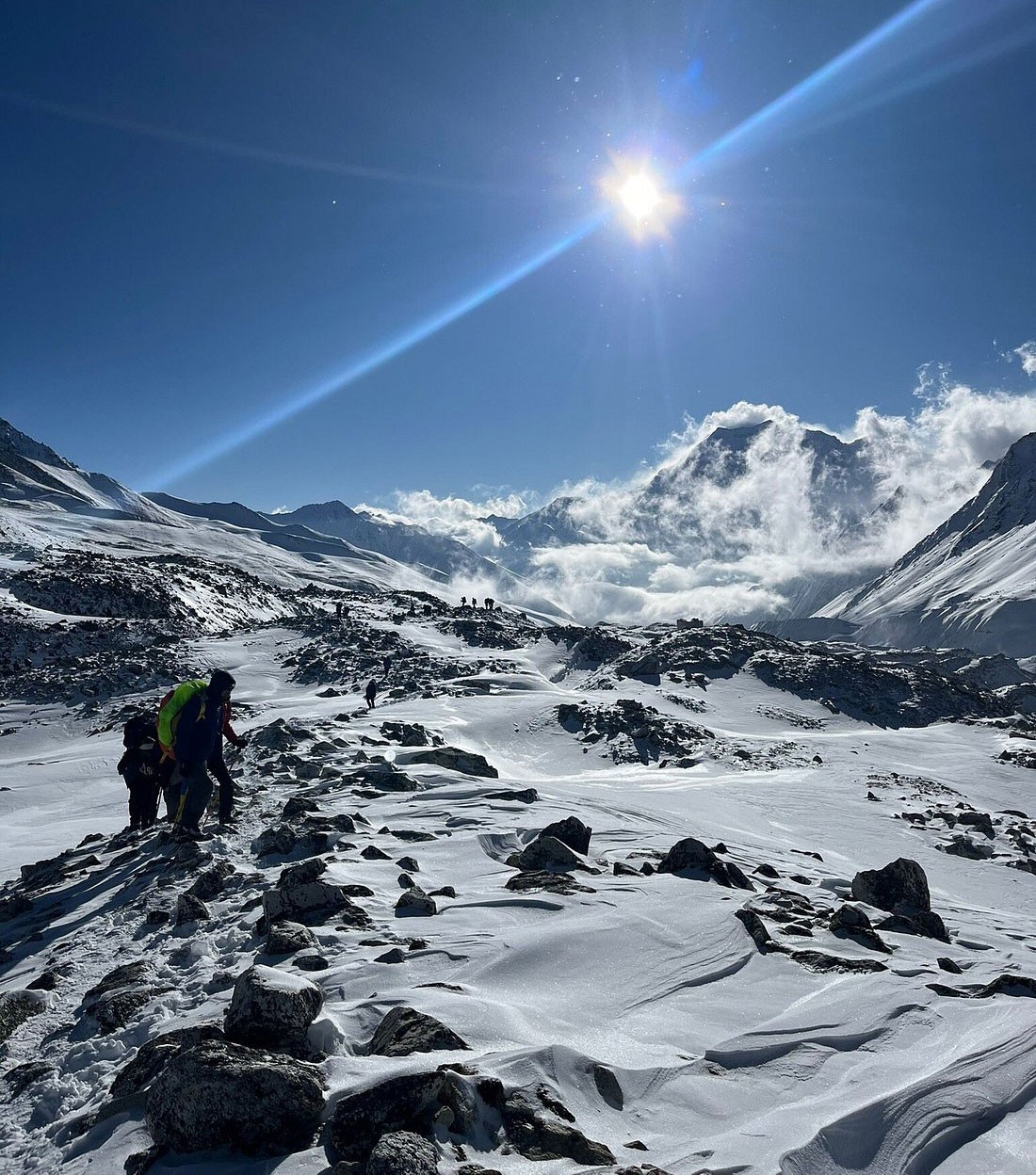
Above Samdo, toward Dharmasala and Larkya La Pass, the trekking environment becomes quieter, colder, and more rugged. The route crosses rocky terrain, glacial sections, alpine slopes, and exposed mountain paths before reaching the pass.
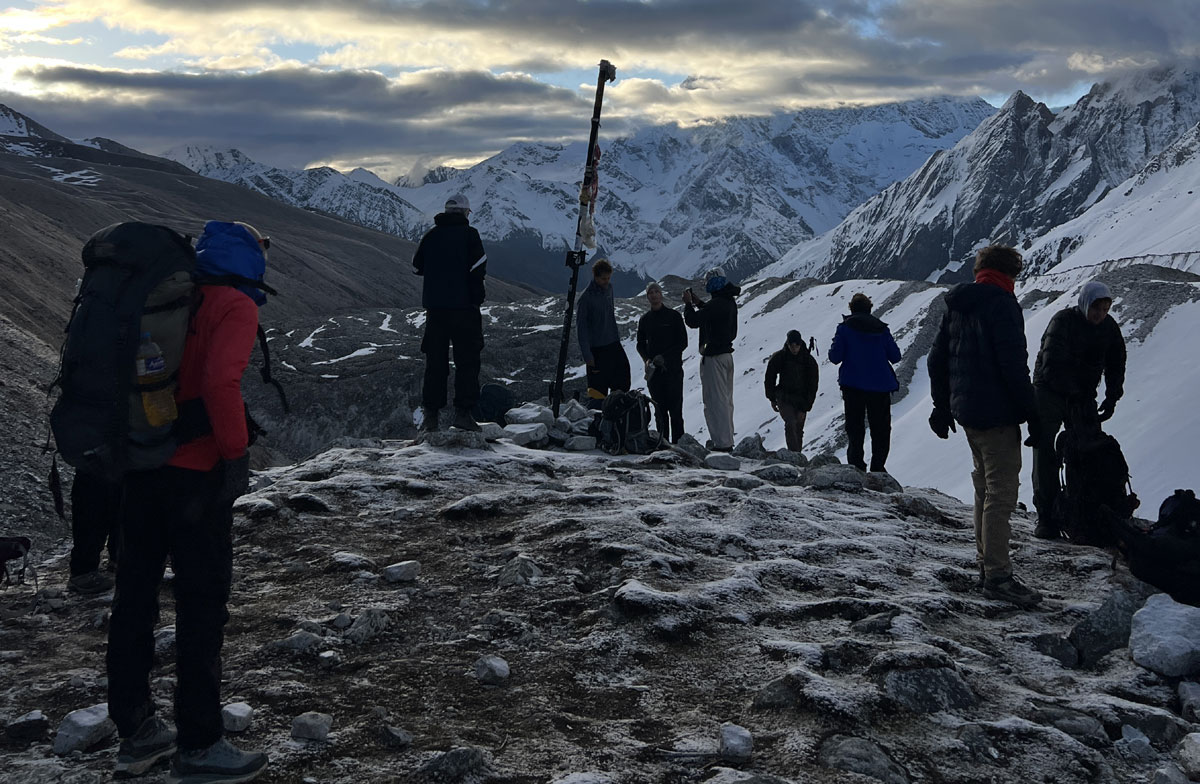
Early morning conditions near Larkya La may include frost, wind, or light snow depending on the season.
After crossing the pass, the trail descends toward Bimthang through a long downhill section with loose stones, alpine terrain, and eventually greener forest trails lower down the valley.
This section can feel tiring on the knees after the long pass-crossing day, especially on uneven ground.
Altitude and Acclimatization on the Manaslu Circuit
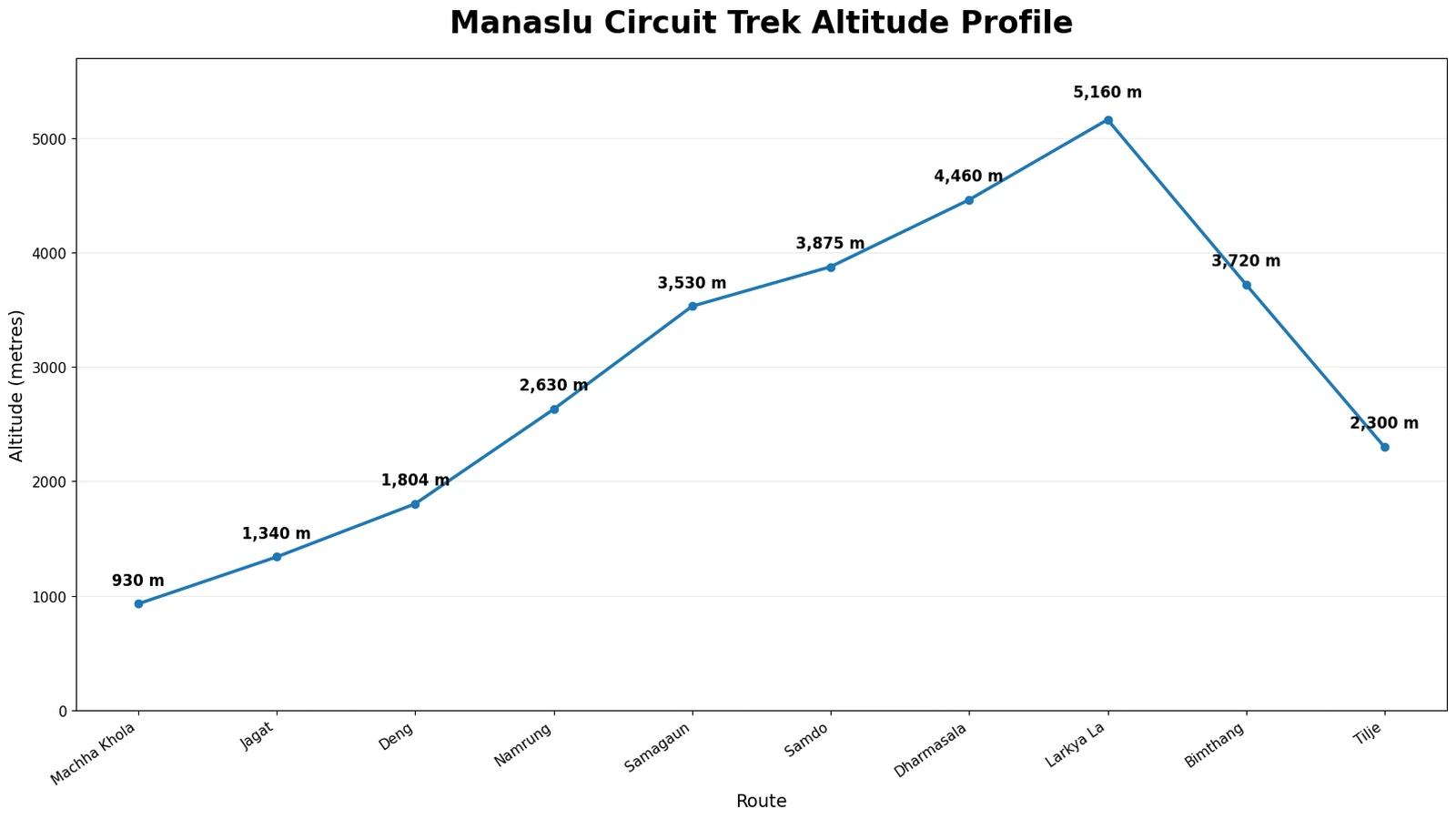
| Location | Altitude |
|---|
| Machha Khola | 930 m |
| Namrung | 2,630 m |
| Samagaun | 3,530 m |
| Samdo | 3,875 m |
| Dharmasala | 4,460 m |
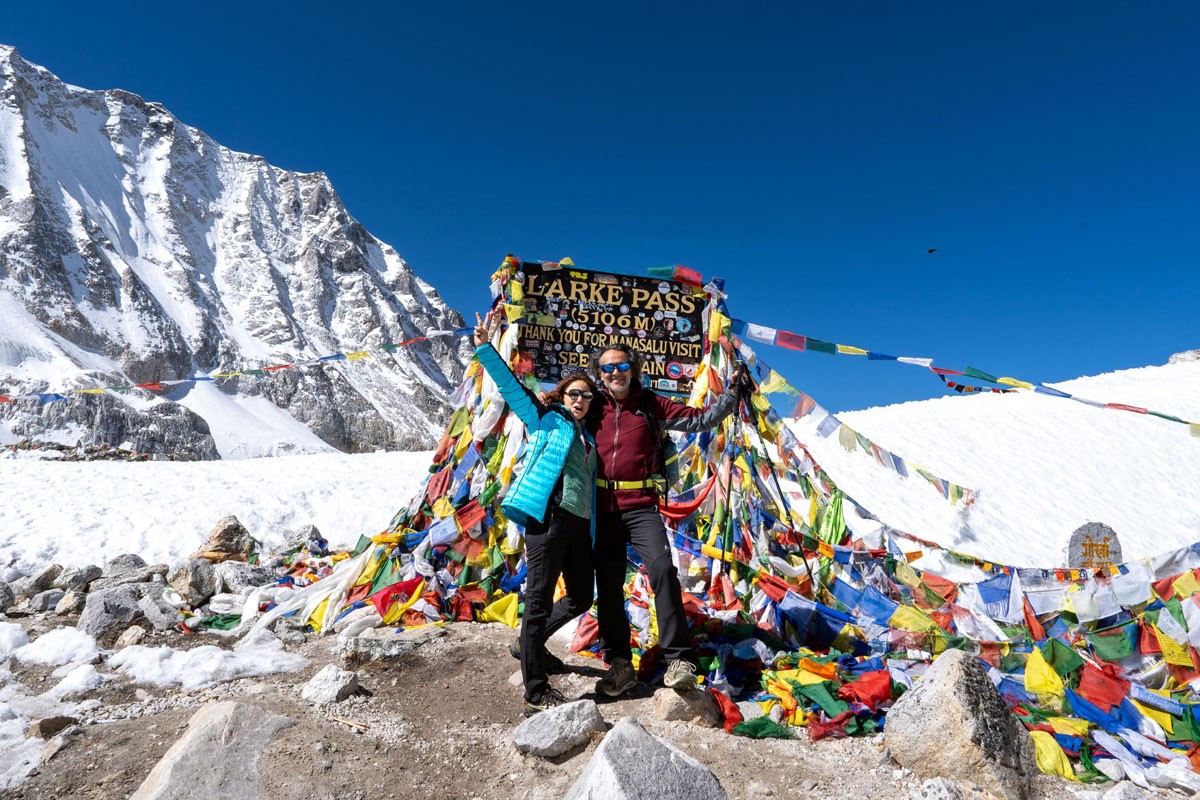
| Larkya La Pass | 5,160 m |
| Bimthang | 3,720 m |
The Manaslu Circuit Trek begins at around 900 meters in Machha Khola and reaches its highest point at Larkya La Pass (5,160 m). As the trek moves higher through Deng, Namrung, Lho, and Samagaun, the air becomes thinner and walking naturally feels slower above 3,500 meters.
Samagaun (3,530 m) is the first main acclimatization stop on the trek. Trekkers usually spend an extra day here with short hikes toward Birendra Lake, Manaslu Base Camp, or nearby viewpoints before continuing higher into the valley.
The second acclimatization stop is Samdo (3,875 m), located close to the Tibetan border. Short hikes around Samdo are commonly used to help the body adjust before moving toward Dharmasala and the pass section.
After Samdo, the route enters a more exposed alpine environment toward Dharmasala, where temperatures become colder and weather conditions can change quickly before the crossing of Larkya La Pass.
For more detailed guidance on altitude preparation and common challenges, read our Altitude Sickness and Trek Challenges on the Manaslu Circuit guide.
Best Side Trips on the Manaslu Circuit Trek
Our itinerary includes acclimatization time in both Samagaun and Samdo, but this does not mean every optional excursion needs to be completed. The better approach is to choose the side trip that suits your acclimatization, energy level, weather, and the conditions our guide finds on the day.
Pungyen Gompa
Pungyen Gompa is best considered by trekkers who are particularly interested in the Buddhist culture and mountain setting around Shyala and Samagaun. Unlike the higher Manaslu Base Camp hike, the reason to choose Pungyen Gompa is less about gaining maximum altitude and more about adding a cultural detour away from the direct circuit route.
Whether it fits comfortably depends on the day's walking pace, weather, and how the itinerary is progressing.
Birendra Lake
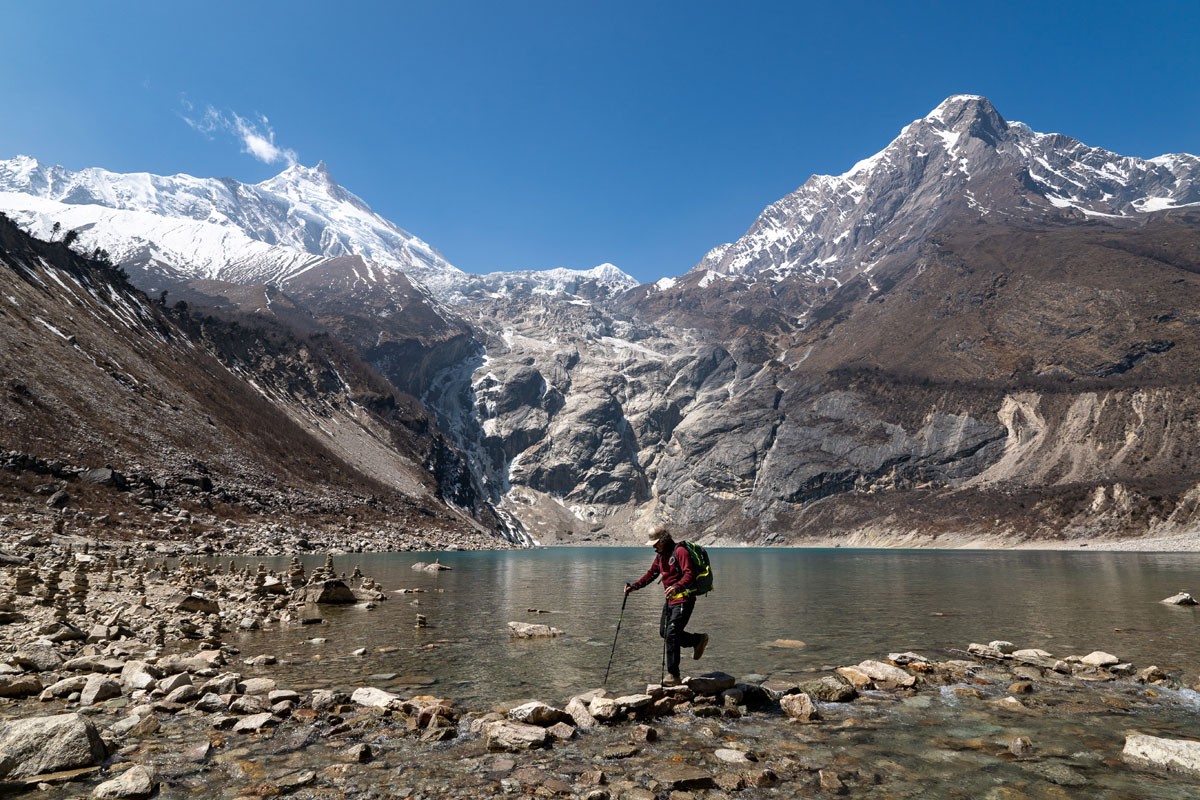
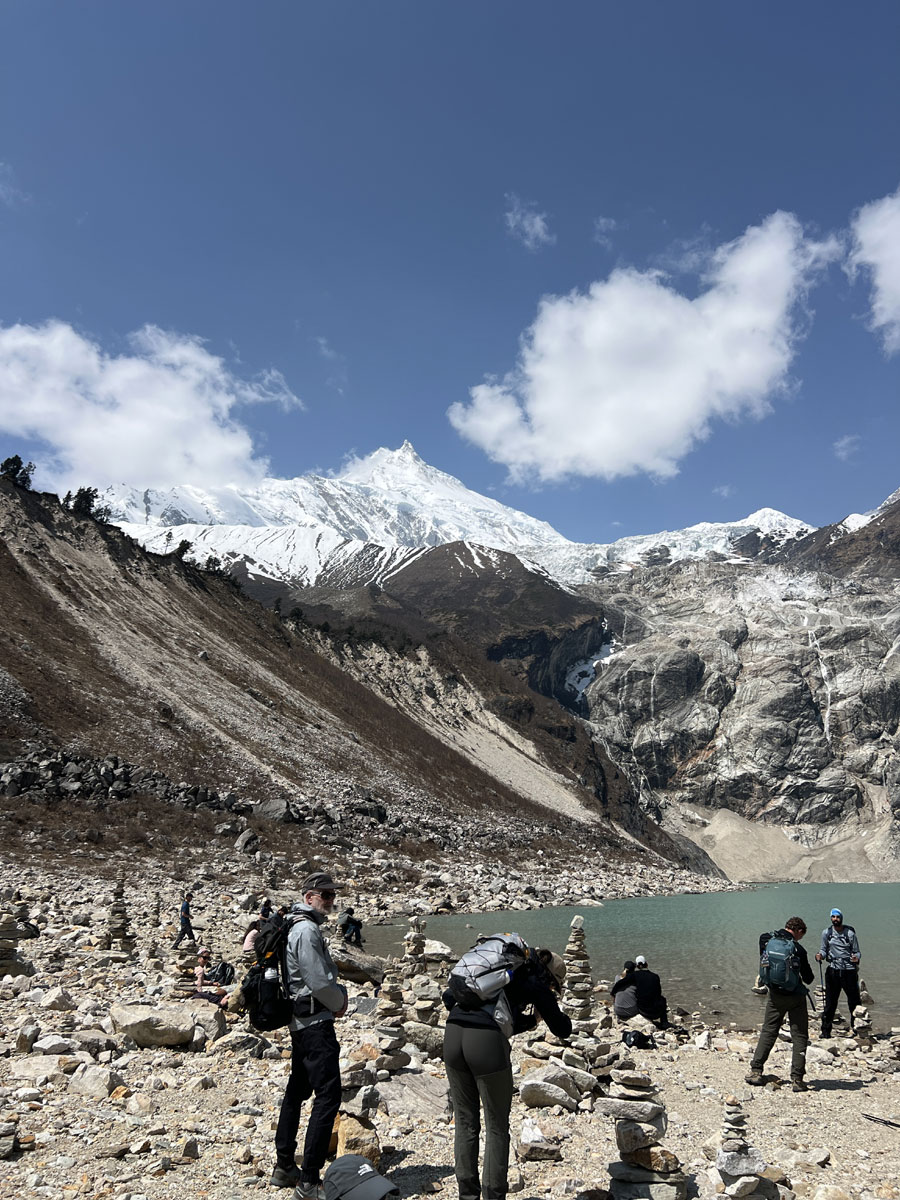
Birendra Lake is generally the most practical choice when you want an active acclimatization day without committing to the longer and higher Manaslu Base Camp hike.
Because the lake follows the initial direction of the Base Camp route, it also gives the day some flexibility. If you are feeling strong and acclimatizing well, a longer hike may be considered; if not, Birendra Lake can remain the day's destination without unnecessarily pushing higher.
Manaslu Base Camp
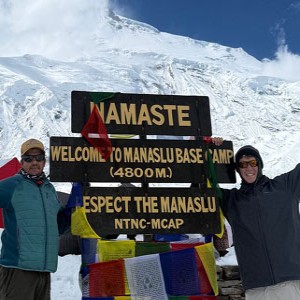
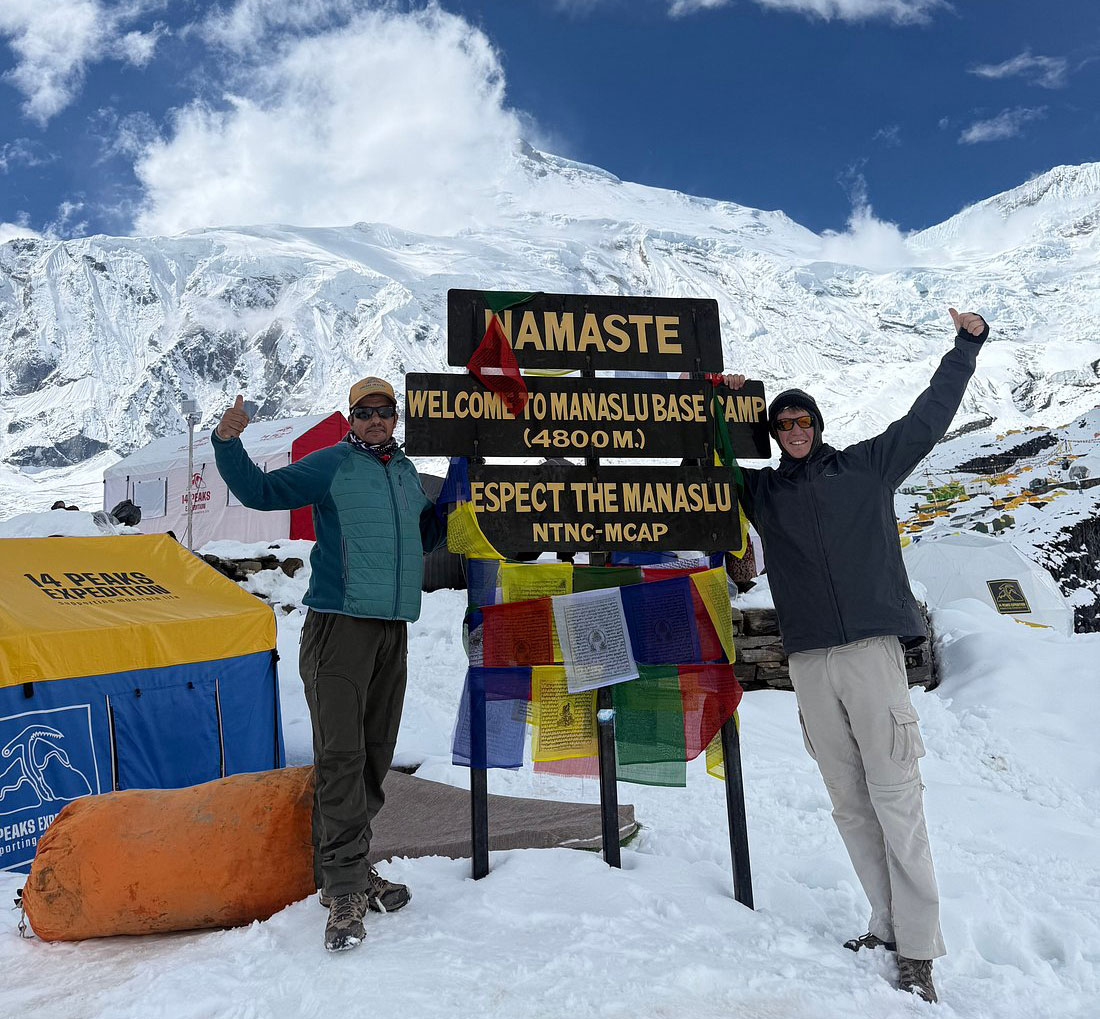
Manaslu Base Camp, at approximately 4,800 metres, is the most demanding of the main Samagaun side trips and should not be treated as something every trekker needs to complete.
We normally consider the full hike when a trekker is acclimatizing well, has sufficient energy for the additional altitude gain, and weather and trail conditions are suitable. If you are experiencing headache, unusual fatigue, poor sleep, or other signs that you are not adapting comfortably to the altitude, choosing a shorter acclimatization walk is the more sensible decision.
Samdo and the Tibet-Border Route
The old trading route north of Samdo provides a flexible acclimatization hike rather than a destination that must be reached. The distance and altitude gain can be adjusted according to your condition, weather, and available time.
Reaching the international border itself is not necessary. The purpose is to gain some elevation above Samdo and return to sleep at the lower altitude of the village before continuing toward Dharmasala.
Which Side Trip Should You Choose?
There is no advantage in trying to complete every side trip. Birendra Lake is usually the easier Samagaun option, Manaslu Base Camp requires considerably more effort and altitude gain, Pungyen Gompa adds a stronger cultural element, and the route above Samdo works well as an adjustable acclimatization hike.
Our guide discusses the options with you on the trail and recommends the most appropriate choice based on your acclimatization, walking pace, weather, trail conditions, and the following day's plan.
Best Time for the Manaslu Circuit Trek
For most trekkers, spring (March to May) and autumn (September to November) provide the most reliable conditions for the Manaslu Circuit Trek, especially for crossing Larkya La Pass. During these periods, weather is usually more stable, visibility is clearer, and trail conditions are generally safer for high-altitude trekking.
Spring Season (March to May)
By late March and April, the lower Budhi Gandaki Valley becomes greener and warmer, while upper villages such as Samdo and Dharmasala can still feel cold during mornings and evenings. Rhododendron forests begin blooming below Namrung, and higher sections near Larkya La sometimes still hold patches of snow from winter storms earlier in the season.
Spring is also an active climbing season in the Himalayas, so villages like Samagaun become busier with trekking and expedition movement around the Manaslu region.
Autumn Season (September to November)
Autumn is usually the busiest trekking season on the Manaslu route because weather conditions tend to become more stable after the summer monsoon. Trails are generally drier, mountain views clearer, and temperatures more comfortable for long trekking days.
October and early November are often considered the most reliable months for crossing Larkya La Pass. Early mornings near Dharmasala can still feel very cold, especially before sunrise when most trekkers begin the pass crossing.
Winter Season (December to February)
Winter conditions become much colder above Samdo, especially around Dharmasala and Larkya La Pass where snowfall and strong wind can affect trail conditions quickly. Heavy snow sometimes makes the pass difficult or temporarily inaccessible depending on weather patterns during the season.
At the same time, stable winter weather can bring exceptionally clear mountain views and quieter trails for trekkers properly prepared for cold temperatures and changing mountain conditions.
Monsoon Season (June to August)
During the monsoon season, the lower Budhi Gandaki Valley becomes wetter, greener, and more humid, with muddy sections, occasional landslides, and possible transportation delays after heavy rain.
However, parts of the upper Manaslu region near Samdo and Larkya La fall within a partial Himalayan rain-shadow zone, which sometimes creates drier conditions compared to lower trekking areas during the monsoon period. Even so, weather conditions in the higher mountains can still change quickly around the pass section.
In recent years, Himalayan weather patterns have become less predictable, and unexpected snowfall or sudden weather changes can occasionally affect the trail even during traditionally stable trekking months. Strong wind near Larkya La Pass, especially during colder mornings, can also make the crossing feel significantly colder than the actual temperature.
For a month-by-month season breakdown, read our full guide on the best time for Manaslu Circuit Trek.
Manaslu Circuit Trek Difficulty
The Manaslu Circuit Trek is considered a moderately challenging high-altitude trek, mainly because of the altitude, long walking days, and the crossing of Larkya La Pass (5,160 m).
Trek Difficulty at a Glance
- Daily walking: Approximately 5-7 hours on most trekking days
- Highest point: Larkya La Pass (5,160 m)
- Most demanding day: Dharmasala to Bimthang via Larkya La Pass
- Technical climbing: Not required
- Main challenge: Altitude, long walking days, and changing mountain weather conditions
- Best approach: Slow pacing, proper acclimatization, and steady energy management throughout the trek
Above 3,500 meters, oxygen levels become lower, and walking naturally feels slower and more physically demanding, especially around Samagaun, Samdo, and Dharmasala. Even gradual uphill sections can feel tiring at higher altitude.
What makes the Manaslu Circuit physically demanding is not technical terrain but the combination of consecutive trekking days, increasing altitude, and the long crossing of Larkya La Pass. Recovering well each evening, maintaining a steady pace, and allowing your body time to adapt to the elevation are far more important than trying to cover ground quickly. Trekkers with good fitness and realistic preparation generally find the challenge manageable, especially when following a well-paced itinerary with proper acclimatization.
Most trekkers begin the pass-crossing day before sunrise, usually around 4:00 AM, as weather and wind conditions are often more stable during the early morning hours.
The climb to Larkya La Pass is mostly gradual, but the combination of high altitude, an early pre-dawn start, and one of the longest trekking days of the journey makes it physically demanding. The long descent to Bimthang can be particularly tiring after crossing the pass.
Some trekkers may experience mild altitude-related symptoms above 3,500 meters, including headache, disturbed sleep, lower appetite, or unusual tiredness. Proper acclimatization, hydration, rest, and guide support play an important role in helping trekkers adjust safely during the trek.
For more detailed preparation advice, you can also explore our guide on how difficult the Manaslu Circuit Trek is.
Accommodation and Meals on the Manaslu Circuit Trek
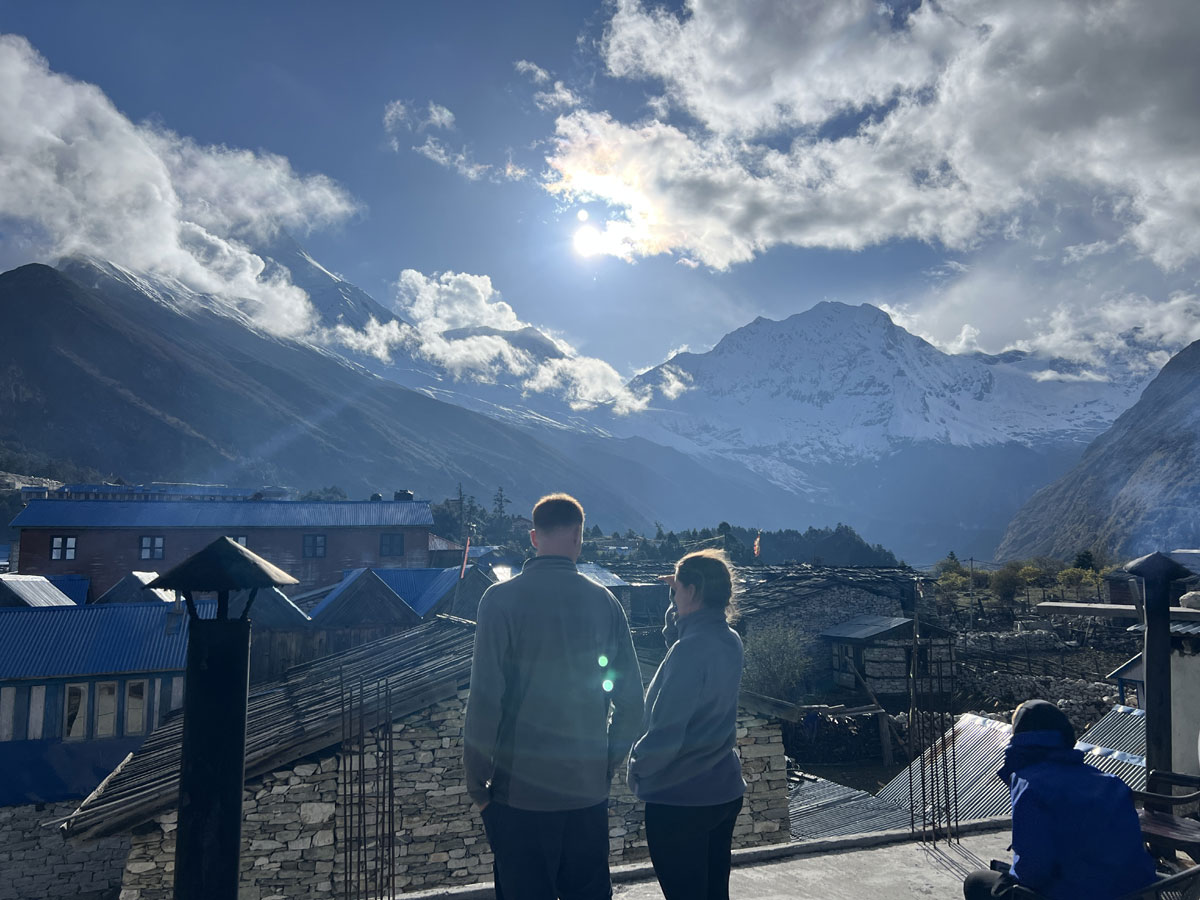
Accommodation on the Manaslu Circuit Trek is in traditional teahouses run by local families, offering a simple local mountain experience throughout the journey.
In the lower villages such as Machha Khola, Jagat, and Deng, teahouses are relatively comfortable, with basic private rooms, twin beds, blankets, and shared bathrooms. Some places may offer attached bathrooms and hot showers, depending on availability.
As you move higher toward Namrung, Lho, Samagaun, and Samdo, the facilities become more basic due to the remote location. Rooms are simple, usually with wooden beds, foam mattresses, and shared toilets. During busy trekking seasons, room availability may become limited in some of the higher villages.
Rooms are generally not heated along the entire Manaslu trail, while the shared dining area is usually the warmest part of the teahouse. Carrying a warm sleeping bag makes a big difference for comfort during colder nights.
Charging phones, power banks, hot showers, and Wi-Fi are usually available in many villages for an additional cost, although these services become more limited and less reliable at higher altitude.
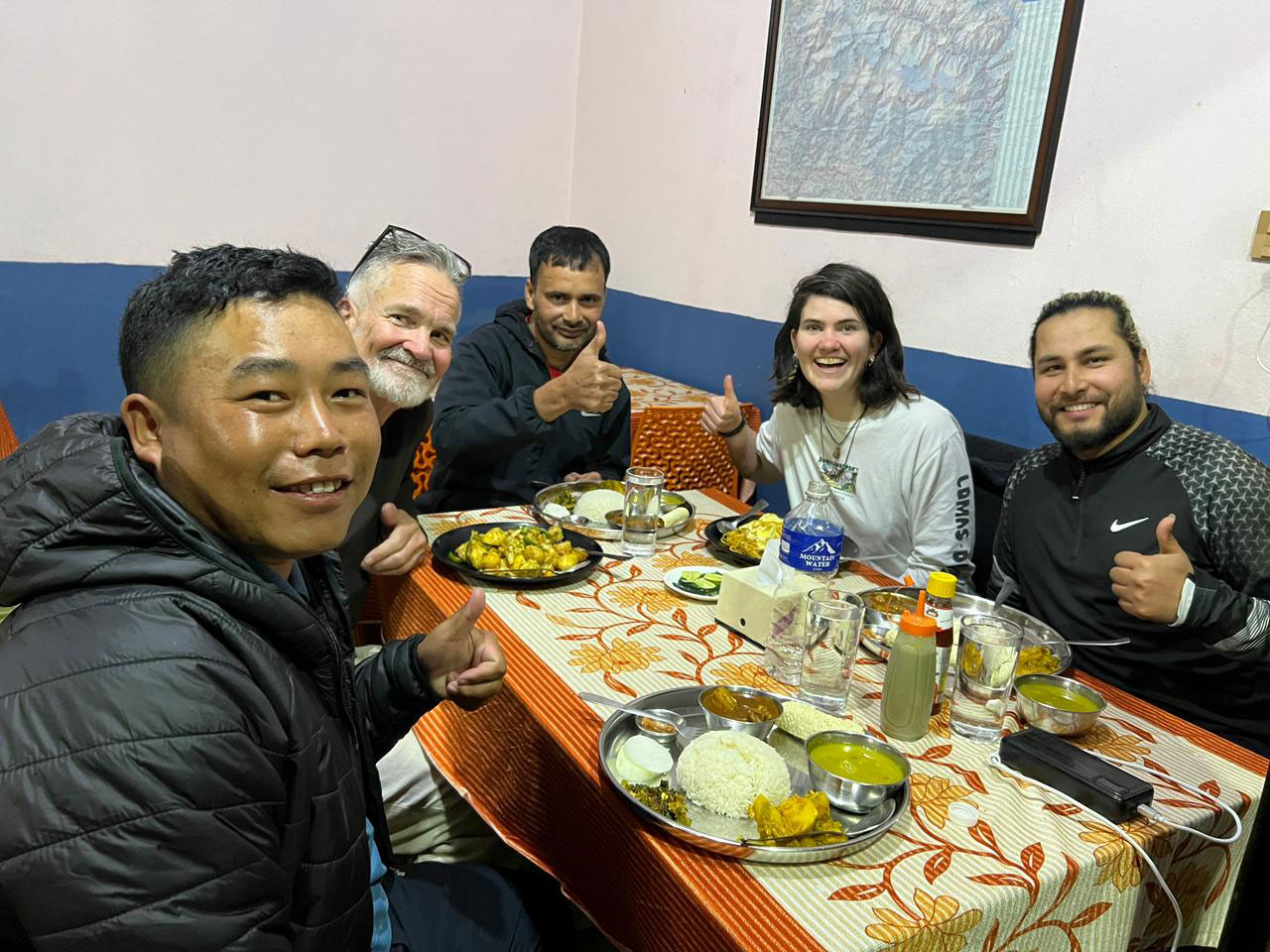
Meals are freshly prepared in the teahouses using locally available ingredients. The most common and recommended meal is dal bhat (rice, lentil soup, vegetables, and pickles), which provides good energy and is often refillable. Other options include noodle soup, fried rice, pasta, potatoes, eggs, pancakes, and simple Western-style dishes.
In villages like Namrung and Samagaun, some bakeries and teahouses now serve fresh bread, coffee, cappuccino, and simple espresso-based drinks, although facilities become much more basic after Samdo.
You can also explore our detailed Manaslu Circuit Trek Tea House Guide for more information about accommodation, meals, charging facilities, and sleeping conditions along the route.
Along the descent from Larkya La Pass toward Bimthang, there is a very basic stop locally known as Phedi. This small shelter-style teahouse is sometimes used by trekkers who are unable to comfortably complete the full descent to Bimthang after crossing the pass.
Accommodation here is extremely basic, usually with simple mattresses and limited facilities, but basic meals and hot drinks are generally available when the teahouse is operating.
In the evenings, trekkers usually gather in the shared dining hall around the central stove to eat, relax, and warm up after the day’s walk. This shared dining-room routine is a familiar part of teahouse life on the Manaslu Circuit, especially as the nights become colder higher in the valley.
What to Expect at Dharmasala (Larkya Phedi)
Dharamsala, also known as Larkya Phedi, is one of the most distinct stops on the Manaslu trekking route. Dharamsala feels noticeably different from the lower villages on the Manaslu Circuit, both in the surrounding landscape and in the overall atmosphere of the trail.
The landscape is more open and exposed, with no trees and very little natural shelter. The air feels colder, and the wind can be stronger, especially later in the day. By this stage of the trek, the environment already feels fully alpine, with wider open terrain and very little separation between the trail and the surrounding mountains.
Accommodation at Dharamsala is very basic compared to other villages on the trek. During busy trekking periods, rooms are often shared, and the overall focus here is more on rest and preparation than comfort.
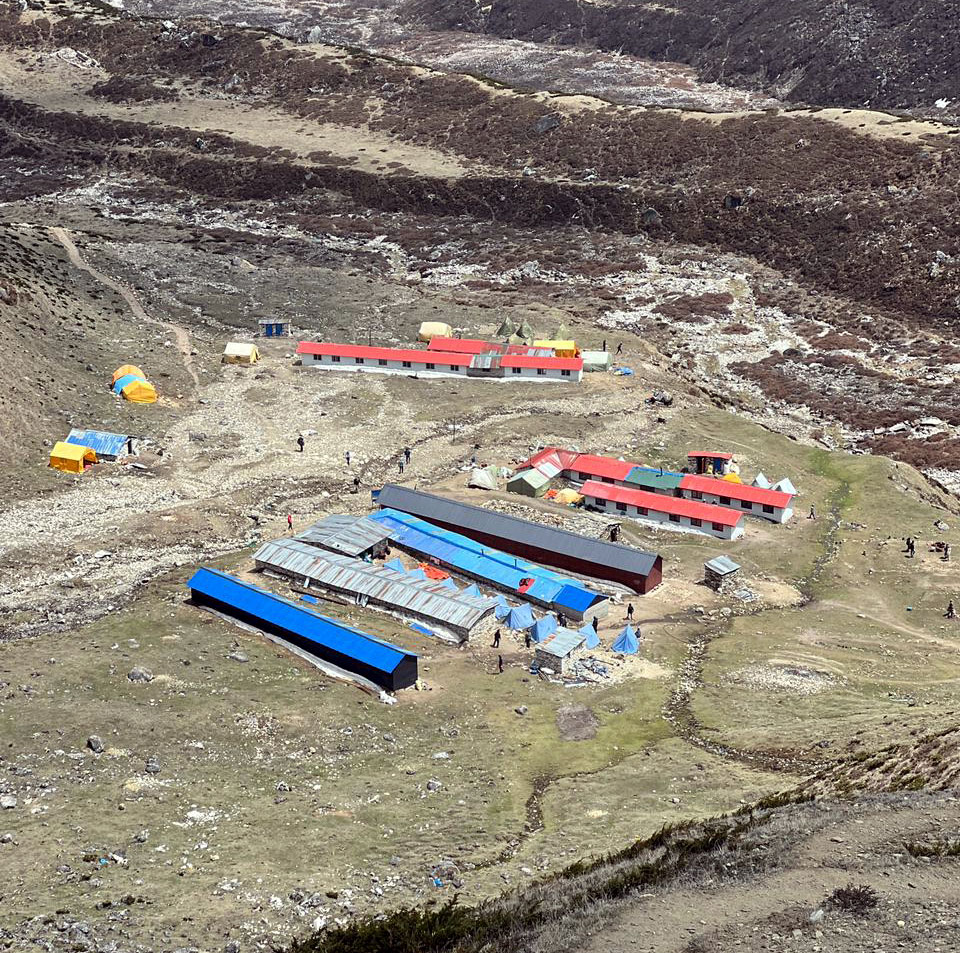
By late afternoon, most trekkers at Dharmasala are already preparing gear, organizing layers, and resting early before the next morning’s pass crossing.
Transportation for the Manaslu Circuit Trek
This price is based on scheduled local transportation between Kathmandu and the trailhead, as well as the return journey after the trek. If you prefer greater comfort and flexibility, private jeep upgrades are available at an additional cost. We are happy to arrange private jeep transportation for individuals, couples, families, or private groups upon request.
On Day 1, transportation from Kathmandu to Machha Khola is by local bus. The journey normally takes approximately 8 to 10 hours, depending on traffic, road conditions, weather, and temporary delays. The first part follows the paved highway before continuing on rougher roads toward the Budhi Gandaki Valley.
A private jeep from Kathmandu to Machha Khola is available as an optional upgrade. It offers greater comfort, more flexible departure times, and private stops along the way, but it is not included in the standard package.
After completing the trek at Tilje, transportation to Besisahar is by local shared jeep. From Besisahar, the standard package continues to Kathmandu by local bus. Private jeep or private car transportation from Besisahar to Kathmandu can also be arranged at additional cost.
Road conditions in the lower Manaslu and Marsyangdi regions can change after heavy rainfall, landslides, road maintenance, or local disruption. Before each departure, our team reviews the latest road situation and confirms the scheduled transportation with the group. If a change is required for safety or operational reasons, the available options and any additional cost are discussed with the trekkers before the arrangement is made.
Guide and Porter Support on the Manaslu Circuit Trek
A licensed trekking guide is included in the standard Manaslu Circuit Trek package and accompanies the group from Kathmandu until the completion of the journey. Because Manaslu is a restricted trekking region, travelling with a licensed guide through a registered trekking agency is mandatory.
Your guide manages navigation, daily planning, permit checkpoints, tea-house coordination, communication with local communities, and practical decisions related to weather, altitude, trail conditions, and the condition of each trekker.
Porter service is optional and is not included in the standard package. When porter service is booked, one porter normally carries up to 20–22 kg of shared luggage between two trekkers, subject to the agreed load arrangement. Each trekker should still carry a personal daypack containing water, snacks, warm layers, rain protection, medication, documents, and other items needed during the walking day.
We follow an ethical porter policy that includes fair wages, appropriate clothing and equipment, safe load limits, meals, accommodation, and insurance for the trekking period. Porter service can be added during booking or arranged before the trek begins.
Manaslu Circuit Trek Permits
The Manaslu region is a restricted trekking area, and independent trekking without a licensed guide is not allowed. All trekkers must obtain special permits before entering the route.
Three permits are required for the Manaslu Circuit Trek:
- Manaslu Restricted Area Permit (RAP)
- Manaslu Conservation Area Permit (MCAP)
- Annapurna Conservation Area Permit (ACAP)
Permit checkpoints are located at several points along the trek, including around Jagat and after crossing Larkya La Pass into the Annapurna region. During the trek, your guide or local trek leader manages all permit verification at these checkpoints, including both restricted-area and conservation permit checks.
You can also read our detailed Manaslu Circuit Trek Permit guide for updated 2026 permit costs, solo trekking rules, required documents, and seasonal permit information.
Manaslu permits are issued through a licensed trekking company and require a licensed guide, regardless of whether you join a group or book a private trek. An additional Chumnubri Rural Municipality fee of approximately NPR 1,000 per person is collected locally. This fee is included in our standard Manaslu Circuit Trek package, so guests booking the full package do not need to pay it separately during the trek.
All permit arrangements are handled in Kathmandu before the trek using your passport copy, Nepal visa details, and required documents.
Travellers booking close to their departure date can also read our last-minute Manaslu Circuit Trek booking guide.
Manaslu Circuit Trek Altitude Sickness and Safety
Altitude-related symptoms can begin above 3,000 meters. Common early signs include headache, loss of appetite, dizziness, nausea, difficulty sleeping, or unusual tiredness. These symptoms should never be ignored, as early attention helps prevent more serious conditions.
Safety on this trek is based on awareness, proper monitoring, and timely decision-making. Your guide carries an oximeter to regularly check oxygen saturation levels at higher altitudes, especially during acclimatization days and before crossing Larkya La Pass. This helps track how your body is adapting and identify early warning signs.
Our guides are trained in high-altitude safety, first aid, and real-time decision-making in remote mountain conditions. They carry a basic medical kit, including essential medicines for common issues such as headaches, stomach problems, and mild altitude discomfort. For more serious situations, immediate descent is always the first and safest response.
In higher villages such as Samagaun and Samdo, some teahouses and health posts may have access to emergency oxygen if required. While this is not a replacement for proper acclimatization, it can provide short-term support in certain situations.
Early recognition and honest communication are important at altitude. If you feel noticeably different from normal, tell your guide rather than waiting to see whether the problem disappears overnight. Your condition can then be assessed before the group continues higher.
In remote sections of the Manaslu region, medical facilities are very limited. In case of serious emergencies, helicopter evacuation is the fastest and most reliable option, which can be arranged through your travel insurance.
If conditions require a change of plan, safety decisions are always based on the trekker's condition, weather, and trail circumstances rather than the planned itinerary. Reaching Larkya La Pass is important, but completing the trek safely always takes priority.
Practical Information for the Manaslu Circuit Trek
Understanding basic facilities along the trail helps you prepare better for the Manaslu Circuit Trek, especially in remote sections where services are limited.
Drinking Water
Drinking water can be obtained in villages along the route, most commonly as boiled water from teahouses. Trekkers can also treat locally available water using purification tablets, a UV purifier, or a suitable filter bottle.
Boiled water is the option we most commonly recommend on the trek and also helps reduce reliance on single-use plastic bottles. Bottled water is available in some lower and mid-altitude villages but becomes more limited and expensive as you go higher.
Toilets and Hygiene
Toilet facilities vary depending on altitude and location. In lower villages such as Machha Khola, Jagat, and Deng, many teahouses offer Western-style toilets with running water.
As you move higher toward Namrung, Samagaun, and Samdo, squat-style toilets become more common, and facilities are more basic. In remote places like Dharmasala (Larkya Phedi), toilets are very simple due to limited infrastructure.
Hot showers are available in most villages, usually for an additional cost. In lower areas, showers are often gas-heated, while at higher altitude they are typically bucket showers using boiled or solar-heated water.
Internet and Connectivity
Mobile network coverage is available in some lower areas, but it becomes weak or unavailable as you go higher.
In villages like Machha Khola, Jagat, and Deng, NTC and Ncell networks may work in certain locations. Around Samagaun and Samdo, connectivity is very limited or unstable.
Many teahouses offer paid Wi-Fi, but the speed is basic and mainly suitable for messaging rather than streaming or large data use.
There is generally no reliable mobile network or Wi-Fi in Dharmasala (Larkya Phedi), so it is normal to be completely offline in this section of the trek.
Electricity and Charging
Electricity is available throughout most of the Manaslu Circuit, allowing trekkers to charge phones, cameras, and power banks at tea houses for a small additional fee. Charging is generally more reliable in the lower villages, while higher settlements rely more heavily on solar power, so availability may vary with weather conditions and charging points can become busier during the evening.
Charging points are usually available in dining halls rather than in rooms. Carrying a power bank, spare batteries, and charging cables is strongly recommended.
Money and Personal Expenses
There are no ATMs along the Manaslu Circuit Trek, so all necessary cash should be withdrawn in Kathmandu before starting the trek.
It is also a good idea to buy snacks, energy bars, batteries, and other small personal items in Kathmandu before starting the trek, as options become more limited and expensive in remote mountain villages.
Teahouses, shops, and services along the route accept cash only, and digital payments are generally not available.
In addition to your main package, personal expenses may include Wi-Fi, charging, hot showers, drinks, snacks, and tips for guides and porters.
A comfortable budget is typically around NPR 25,000 to 35,000 per person for the full trek, depending on spending habits.
Culture and Local Experience on the Manaslu Circuit Trek
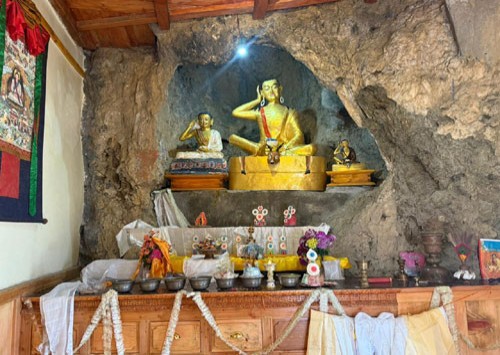
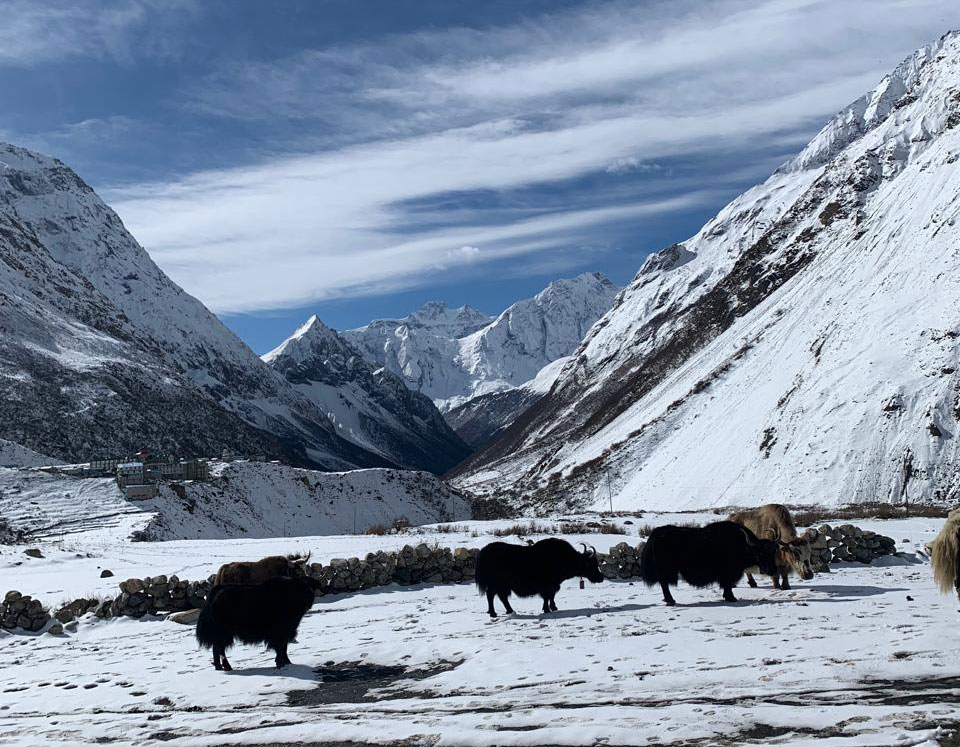
As the trail climbs from the lower Budhi Gandaki Valley toward Namrung, Lho, Samagaun, and Samdo, the cultural character becomes increasingly influenced by Tibetan Buddhist traditions. Mani walls, prayer wheels, chortens, and monasteries remain part of everyday village life along the upper route. Samdo also has historical connections with seasonal trade and yak caravans through the high valleys near Tibet.
When passing mani walls, chortens, and other religious structures, follow local practice by walking clockwise where appropriate, and dress respectfully when entering monasteries or religious sites. Trekkers interested in exploring the cultural side of the region more deeply can read our Manaslu Tsum Valley Trek guide.
Travel Insurance for the Manaslu Circuit Trek
Dream Heaven Adventure requires all participants to hold travel insurance covering high-altitude trekking up to at least 6,000 metres, including emergency helicopter evacuation. Although insurance is not normally checked as part of the Manaslu permit application, it is a booking and participation requirement for this trek because the route enters remote terrain where medical facilities and road access are extremely limited.
In case of serious illness, injury, or altitude-related problems, helicopter evacuation is often the fastest and safest option in this region. Our team assists with coordination and communication with your insurance provider if needed.
A comprehensive policy should also include medical treatment, trip delays, cancellations, and baggage coverage for a more secure travel experience.
Packing Checklist for the Manaslu Circuit Trek
Packing the right clothing and equipment makes the Manaslu Circuit Trek safer, warmer, and more comfortable. The route passes through warm lowlands and cold high-altitude terrain, so layering is the most effective way to stay comfortable throughout the trek.
Below is our recommended packing list for the Manaslu Circuit Trek. Most trekking equipment can be rented or purchased in Kathmandu before the trek begins.
Essential Clothing
- Warm thermal base layers
- Light trekking shirts
- Mid-layer fleece or soft-shell jacket
- Insulated down jacket
- Waterproof and windproof outer shell
- Comfortable trekking pants
- Thermal leggings for cold nights
- Warm hat and sun hat
- Buff or neck gaiter
- Inner and outer gloves
- Wool or synthetic trekking socks (multiple pairs)
Footwear
- Strong, waterproof trekking boots (well broken-in)
- Light shoes or sandals for teahouses
- Optional gaiters in snowy conditions
Sleeping and Trekking Gear
- Warm sleeping bag suitable for high altitude
- 30-40L daypack with rain cover
- Trekking poles
- Headlamp with spare batteries
- Reusable water bottles or hydration bladder
- Dry bags or packing cubes
- Power bank and charging cables
- Lightweight towel
Personal and Medical Items
- Sunscreen and lip balm
- Basic toiletries
- Wet wipes and hand sanitizer
- Personal first-aid supplies
- Altitude medication if prescribed
- Any personal medicines
Optional Useful Items
- Camera or GoPro
- Notebook or book
- Snacks such as nuts, chocolate, or energy bars
- Water purification tablets or filter bottle
Packing light while keeping essential warm layers easily accessible makes the trek more comfortable. If you choose to hire a porter, they will usually carry your main duffel bag, allowing you to trek with a small daypack containing water, snacks, and essential layers.
At higher altitudes, temperatures drop quickly in the evening, so keeping warm clothing easily accessible is important. For detailed preparation, you can check our complete Manaslu Circuit Trek Packing List to understand what to bring for different altitudes and conditions.
Current Manaslu Trail Update - Checked September 2026
The Manaslu Circuit trekking trail is currently operating normally again following the temporary disruption around Therang Khola near Namrung earlier in September. The affected trail crossings have been restored through local repair and temporary access work, and trekkers are now moving through the route.
The September incident was separate from the August flooding in Rasuwa around Syabrubesi and the Nepal–Tibet border. Those floods occurred in a different trekking region and did not directly affect the Manaslu Circuit.
The main issue that may still affect a Manaslu departure is road access between Kathmandu and the trailhead. Repair work continues on parts of the highway network, including the affected section around Krishnabhir in Dhading. Traffic is operating using alternative arrangements, but the journey toward Machha Khola can take longer than under normal road conditions.
For this reason, trekkers should allow flexibility on the driving day. Local buses can take considerably longer when traffic is diverted or road conditions are slow. A private jeep is available as an upgrade for travelers who prefer more comfort, flexibility with stops, and a more convenient journey toward Machha Khola. A private jeep cannot avoid every road delay, however, and travel time still depends on the conditions on the day.
For upcoming departures later in September, October and November 2026, our Kathmandu team will continue checking the road to Machha Khola and current trail conditions before departure. Road repairs and temporary traffic arrangements can change, so we prefer to reconfirm the actual situation close to each trek rather than relying on an older road report.
For updates covering other trekking regions and recent access disruptions across Nepal, see our latest Nepal trekking safety update.
Practical Tips From Our Manaslu Circuit Guides
After operating Manaslu Circuit treks over many seasons, our guides have found that small decisions on the trail can make the journey noticeably easier. These are practical points we regularly share with trekkers during our Manaslu departures.
Always Take the Hillside When Mule Trains Pass
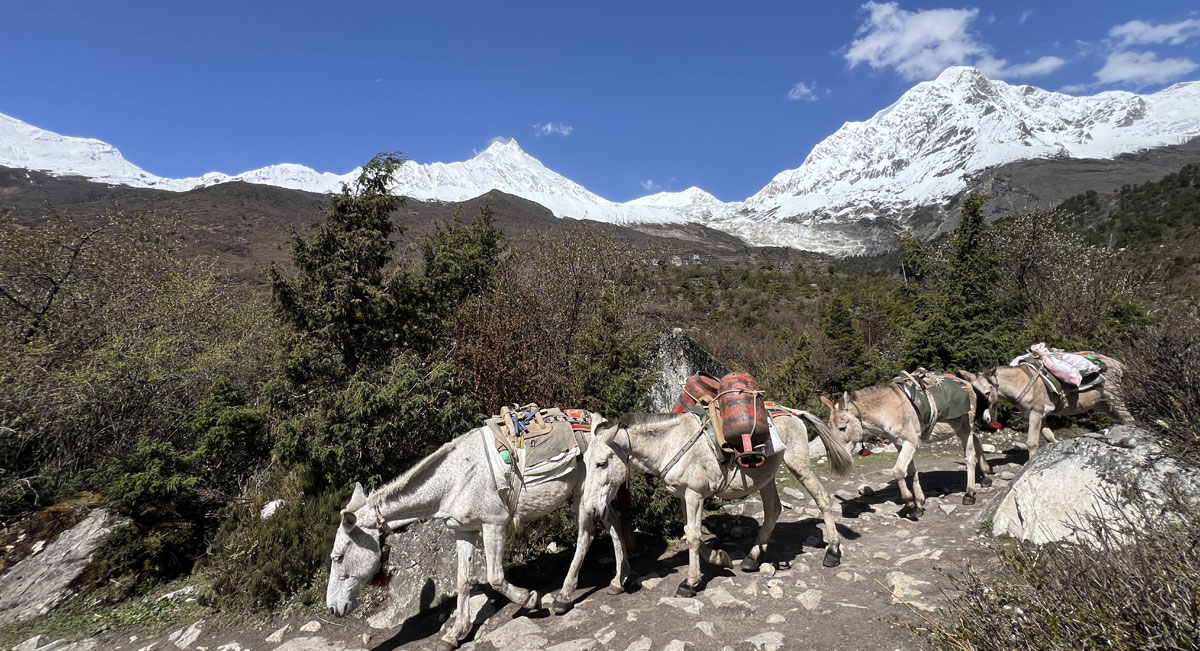
Mules regularly transport food, gas cylinders, and other supplies between villages along the Manaslu Circuit. When a mule train approaches on a narrow section, stop somewhere secure and move to the inside of the trail, preferably against the hillside or retaining wall.
Do not wait on the exposed edge. Loaded animals can occupy more space than expected, particularly when turning corners or passing on narrow sections.
Do Not Rely on Your Porter Bag During the Walking Day
Your porter normally walks at a different pace from the trekking group, so your main bag may not be accessible again until you reach the next tea house.
Before leaving each morning, make sure anything you may need during the walking day is in your own daypack. Treat your main porter bag as unavailable until you reach the next tea house.
Fully Charge Your Devices Before Leaving Samdo
Although charging is available in many villages, electricity becomes less dependable in the highest section of the circuit. Samdo is therefore a sensible place to fully charge your phone, camera, and power bank rather than depending on charging at Dharmasala.
Keep some battery capacity in reserve for the high-pass section, particularly for your headlamp, phone, or camera during the early-morning Larkya La crossing.
Prepare Your Larkya La Gear Before Going to Bed
At Dharmasala, organize your clothing and daypack before going to sleep. The Larkya La crossing starts before daylight, and searching through luggage in a cold room during the early morning is unnecessary.
Keep your headlamp, gloves, warm layers, water, snacks, sunglasses, and other essentials ready. Your headlamp should be immediately accessible rather than packed underneath other equipment.
Fill Your Water Before Starting the Larkya La Crossing
Prepare sufficient drinking water at Dharmasala before beginning the pass crossing rather than expecting regular places to buy or refill water along the high section.
Ask your guide how much to carry based on the day's conditions, and keep at least some water easily accessible. During the cold pre-dawn start, repeatedly unpacking your daypack while wearing gloves and several layers is inconvenient.
These details may seem minor before the trek, but they become much more useful during long walking days and in the colder high-altitude section. Your guide will also adjust practical advice according to weather, trail conditions, and the needs of the group.
Why This Manaslu Circuit Trek Is Designed for 12 Days
This 12-day Manaslu Circuit Trek itinerary is designed around actual trekking conditions, road access, acclimatization needs, and daily walking rhythm to create a more balanced high-altitude journey.
The acclimatization days in Samagaun and Samdo allow your body time to adjust naturally to the altitude while also providing opportunities to explore nearby viewpoints before continuing higher toward Larkya La Pass.
Another key factor is updated route planning based on current road conditions. The drive now reaches Machha Khola, allowing trekkers to start directly from the main trail without unnecessary walking on lower road sections. Similarly, after crossing the pass and reaching Tilje, road access is available, so there is no need to continue walking on dusty road tracks toward Besisahar.
Daily walking hours are arranged to maintain a steady and realistic progression toward Larkya La Pass, with the longer trekking days scheduled only after your body has had time to adapt to the increasing altitude. The itinerary is designed to use time efficiently without adding extra days that do not meaningfully improve acclimatization or the overall trekking experience.
Planning Your Manaslu Trek?
Our Nepal-based team can help you choose the right trekking season, transportation option, acclimatization pace, and itinerary style based on your travel dates, fitness level, and overall comfort preference.
Whether you are planning a private departure, looking to join a small group, or need updated information about current trail conditions and permits, we can help you plan the journey with the right pace, route, and local support.



.jpg)