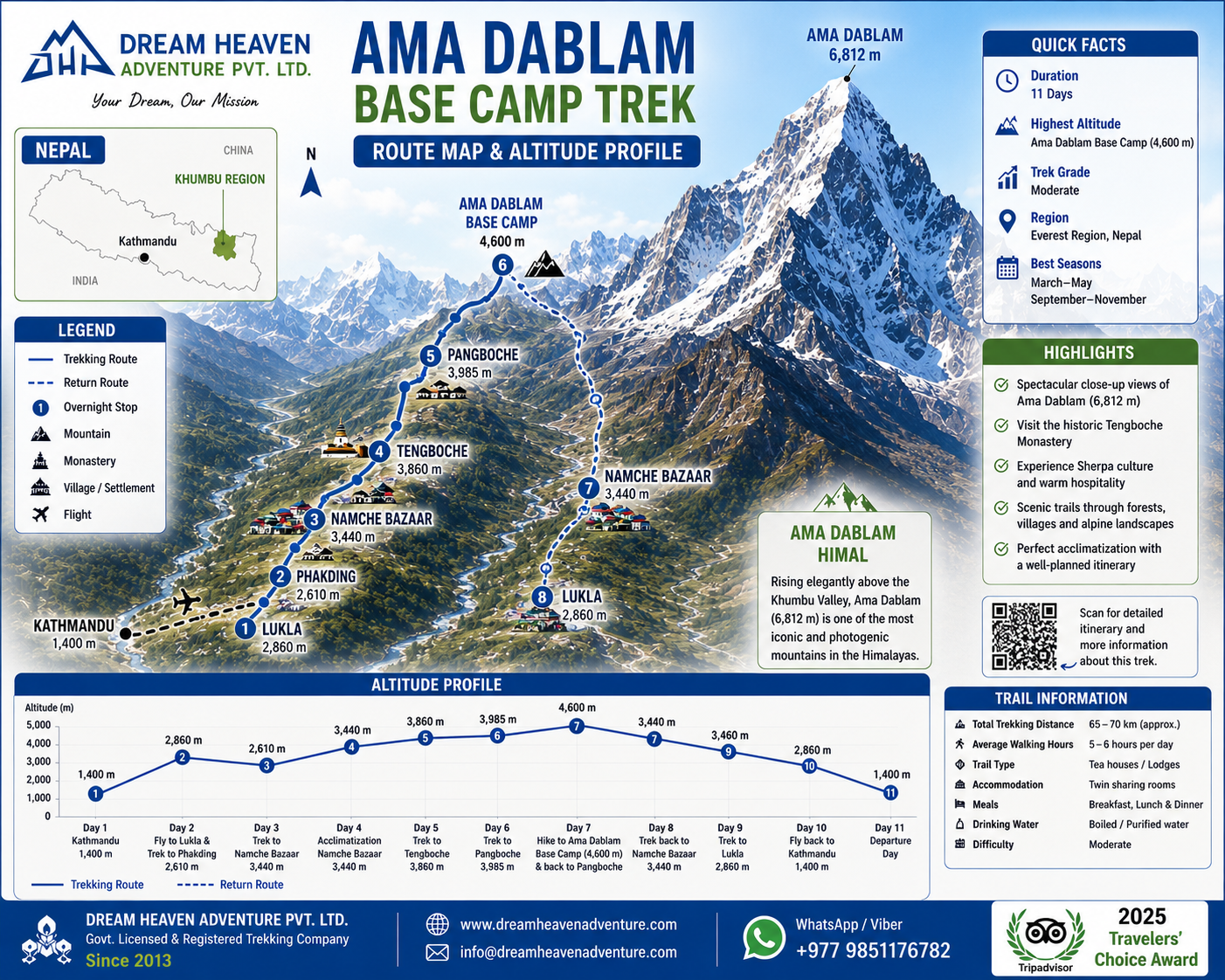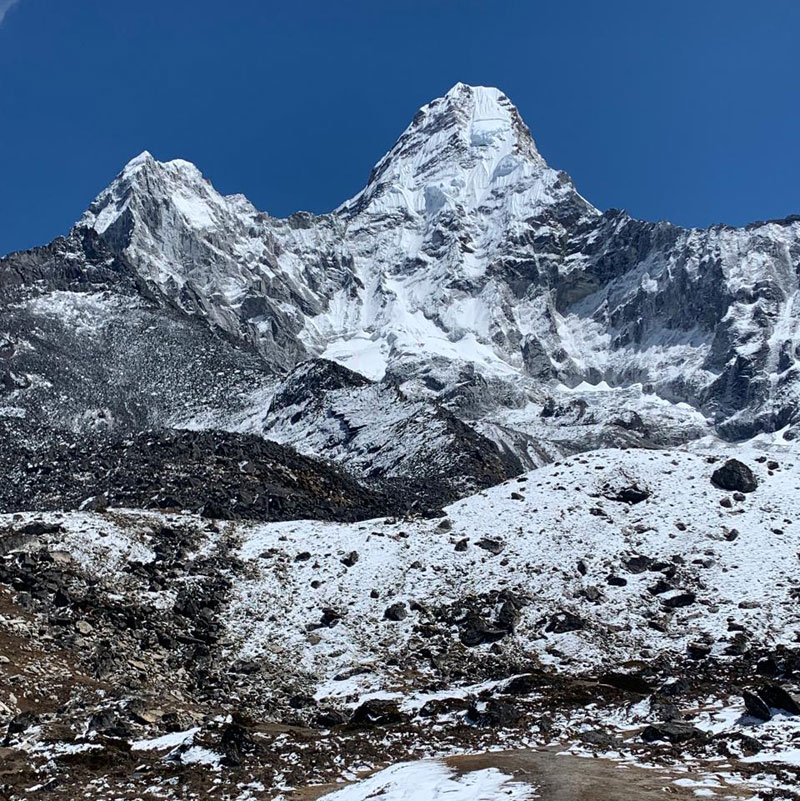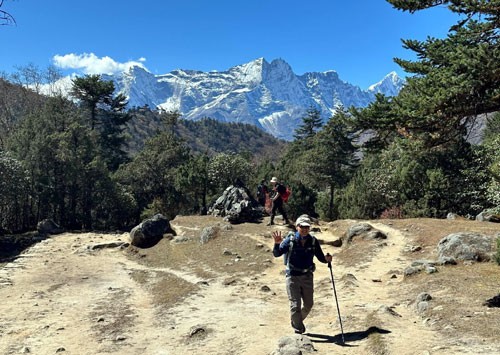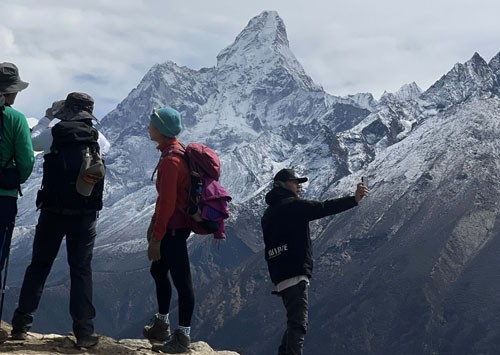
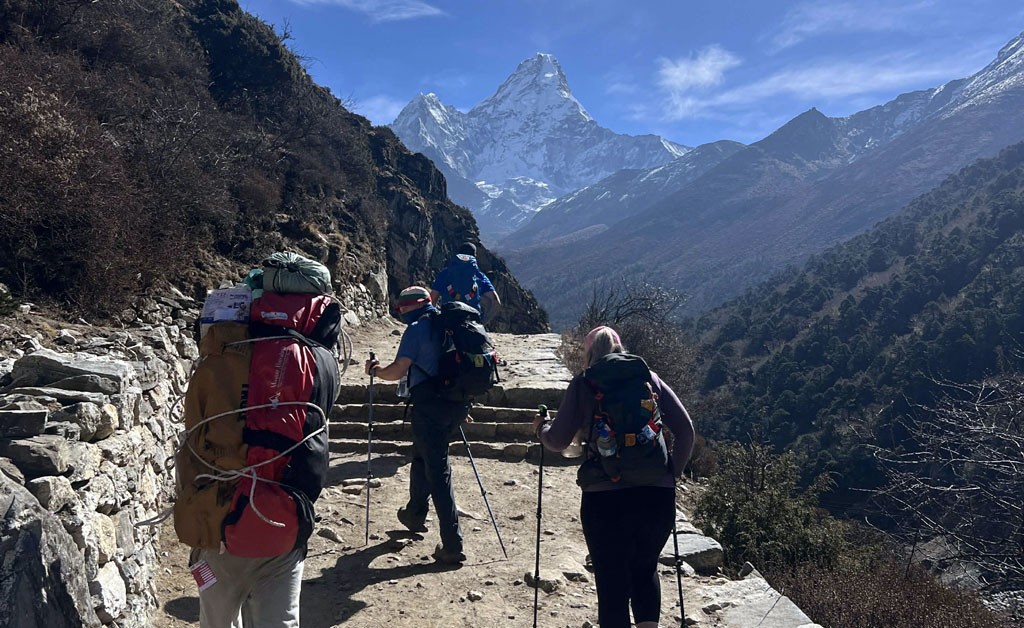
Some mountains become a destination long before you reach them. Ama Dablam is one of those peaks. Visible from different points throughout the Khumbu Valley, its distinctive shape gradually becomes a constant presence on the journey, appearing closer and more dramatic with each passing day.
The Ama Dablam Base Camp Trek follows the trails beneath one of the Himalayas' most recognizable mountains, leading to a viewpoint where the scale of the peak can be appreciated in a way that photographs rarely capture. For many trekkers, standing below Ama Dablam becomes one of the most memorable moments of their time in the Everest region.
Ama Dablam Base Camp Trek Overview
Many trekkers arrive in the Khumbu region expecting Everest to be the mountain they talk about most. In reality, one of the peaks that often captures their attention first is Ama Dablam.
From the hills above Namche Bazaar to the trails around Tengboche and Pangboche, the mountain appears repeatedly throughout the journey. Over the years, we have noticed that many trekkers stop for more photographs of Ama Dablam than any other peak in the region. Even among the towering mountains of the Everest region, its distinctive shape makes it instantly recognizable.
The Ama Dablam Base Camp Trek follows one of the most scenic sections of the Khumbu Valley before leaving the main Everest trail and heading toward the foot of the mountain itself. The route combines traditional Sherpa villages, Buddhist monasteries, suspension bridges, and high Himalayan landscapes while leading to a destination that remains quieter than many of the region's better-known trekking objectives.
One of the aspects that makes this trek particularly rewarding is how the relationship with the mountain changes as the journey progresses. During the first few days, Ama Dablam appears as part of a much larger Himalayan panorama. After Pangboche, however, the mountain gradually becomes the focus of the trek. With each step, it feels closer, larger, and more imposing until trekkers eventually find themselves standing directly beneath its dramatic southwest face.
The journey begins with a flight to Lukla before following the Dudh Koshi Valley through Sagarmatha National Park to Namche Bazaar, the historic center of the Sherpa homeland. From there, the trail continues through Tengboche and Pangboche, villages that have long played an important role in the cultural and spiritual life of the Khumbu region.
Along the way, trekkers enjoy views of Everest, Lhotse, Nuptse, Thamserku, Kangtega, Taboche, and numerous surrounding peaks. Yet throughout much of the journey, it is Ama Dablam that dominates the skyline and gives this trek its unique identity.
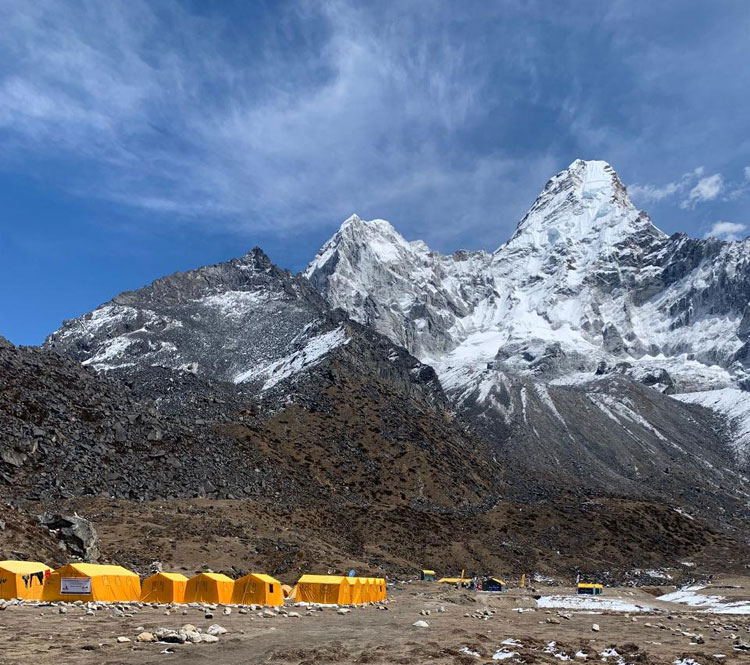
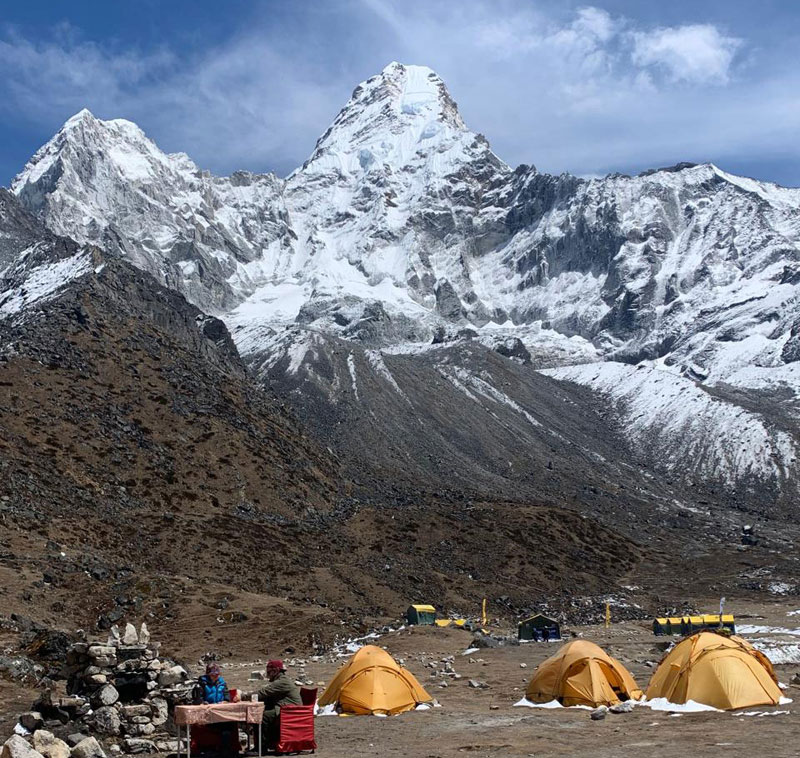
The final approach to Ama Dablam Base Camp feels noticeably different from the main Everest route. The number of trekkers decreases, the landscape becomes more open, and the mountain reveals details that are impossible to appreciate from a distance. Standing at base camp beneath one of the most iconic peaks in the Himalayas is a moment that many trekkers remember long after the journey has ended.
This itinerary reflects the experience of our local Everest-region trekking team, which has guided trekkers through the Khumbu Valley for many years. The route, pacing, and daily walking distances are based on practical experience from operating treks in the region and are designed to balance mountain scenery, cultural experiences, and comfortable acclimatization.
Trail Experience on the Trek to Ama Dablam Base Camp
The experience of this trek changes noticeably from one stage of the route to the next.
The first days follow the busy trails of the Khumbu Valley, passing through Sherpa villages, suspension bridges, and forests alongside the Dudh Koshi River. The atmosphere is lively, with trekkers, local residents, porters, and yak caravans all sharing the same route.
Namche Bazaar brings a different rhythm to the journey. Many trekkers spend time exploring the village, visiting local bakeries, and watching daily life in what has long been the main trading center of the Everest region.
Beyond Namche, the trail to Tengboche combines forest paths, open hillsides, and some of the most enjoyable walking in the Khumbu. Arriving at Tengboche Monastery often becomes one of the memorable moments of the trek, not because of the distance covered but because of the setting and atmosphere of the place itself.
As the route continues toward Pangboche, the landscape gradually becomes more open and the villages smaller. The trail feels quieter, and the mountain environment begins to play a larger role in the experience.
After leaving Pangboche, the character of the trek changes again. The route toward Ama Dablam Base Camp sees far fewer trekkers than the main Everest trail, creating a greater sense of solitude and space. The surroundings become increasingly alpine, and the journey feels more focused on the mountain landscape than the busy trekking routes lower in the valley.
By the time trekkers reach Ama Dablam Base Camp, many find themselves remembering the journey as much as the destination itself. The route combines Sherpa villages, monastery trails, forest paths, and quieter alpine landscapes in a way that feels distinct from many other treks in the Everest region.
Current Route Update June 2026: The Ama Dablam Base Camp Trek route is operating normally. Lodges are open in all major villages, and the trail between Pangboche and Ama Dablam Base Camp is in regular use by trekkers and climbing teams. Route conditions can change due to weather and seasonal factors, so we recommend checking for the latest updates before departure.
Ama Dablam Base Camp Trek Highlights
- Trek to Ama Dablam Base Camp (approximately 4,600 m) in the heart of the Everest region.
- Enjoy close-up views of Ama Dablam, one of the most iconic mountains in the Himalayas.
- Follow the classic Khumbu trail through Lukla, Namche Bazaar, Tengboche, and Pangboche.
- Visit Tengboche Monastery, one of the most important Buddhist monasteries in the Everest region.
- Experience traditional Sherpa villages, culture, and mountain hospitality.
- Walk through Sagarmatha National Park, a UNESCO World Heritage Site.
- Enjoy views of Everest, Lhotse, Nuptse, Thamserku, Kangtega, Taboche, and surrounding Himalayan peaks.
- Cross suspension bridges above the Dudh Koshi River.
- Spend time in Namche Bazaar, the historic trading center of the Khumbu region.
- Trek on a quieter route after Pangboche compared to the main Everest Base Camp trail.
- Experience a combination of forest trails, alpine landscapes, monasteries, and high mountain scenery.
- Ideal for trekkers seeking an Everest-region adventure beyond the traditional Everest Base Camp route.
How Difficult Is the Ama Dablam Base Camp Trek?
The Ama Dablam Base Camp Trek is generally considered a moderate trek, but like many routes in the Everest region, altitude often plays a bigger role than the trail itself.
Most days involve around 4 to 7 hours of walking on well-established mountain trails, stone steps, forest paths, and alpine terrain. The route does not cross a major high pass, and the technical difficulty is relatively low compared to some of Nepal's more demanding treks.
Over the years, we have found that most trekkers are surprised not by the terrain but by how different walking feels above 3,500 meters. Distances that seem straightforward on paper can feel more demanding at higher elevations, which is why a steady pace is usually more important than speed.
Ama Dablam Base Camp sits at approximately 4,600 meters, making proper acclimatization an important part of the journey. Trekkers who arrive with a reasonable level of fitness and are comfortable walking for several hours a day generally adapt well to the route.
Previous trekking experience can be helpful, but it is not essential. We regularly guide first-time Himalayan trekkers on this route, and many complete the journey successfully with good preparation, realistic expectations, and a gradual approach to altitude.
Altitude and Acclimatization on the Ama Dablam Base Camp Trek
Ama Dablam Base Camp is located at approximately 4,600 meters, making altitude one of the most important factors to consider during the trek.
One thing we have observed over the years is that altitude affects people differently. Some trekkers feel comfortable throughout the journey, while others may notice the effects of elevation as the trail climbs higher through the Khumbu Valley. For this reason, the goal is never to reach base camp as quickly as possible but to allow the body enough time to adjust along the way.
The route gains altitude gradually through villages such as Namche Bazaar, Tengboche, and Pangboche, which helps trekkers acclimatize naturally as the journey progresses. Maintaining a steady pace, staying hydrated, and listening to your guide are often more important than fitness alone when trekking at higher elevations.
Our itinerary is designed to balance progress and acclimatization, allowing trekkers to enjoy the experience while reducing the risk of altitude-related problems. Throughout the trek, guides monitor how trekkers are adapting to the elevation and can make adjustments if required.
Most trekkers who follow a sensible pace and arrive with realistic expectations adapt well to the altitude on this route and complete the trek successfully.
Best Time to Trek to Ama Dablam Base Camp
The Ama Dablam Base Camp Trek can be completed during most trekking seasons in Nepal, but the experience varies considerably throughout the year. In our experience, spring and autumn provide the most reliable combination of weather, mountain views, and trail conditions, while winter and monsoon appeal to trekkers looking for a different experience.
Spring (March to May)
Spring is one of the most popular seasons for the trek to Ama Dablam Base Camp. Temperatures are generally comfortable for walking, mountain views are often excellent, and the forests below Namche Bazaar and Tengboche can be particularly attractive when rhododendrons are in bloom.
The trails are active during this period, creating a lively atmosphere throughout the Khumbu region. Spring is often a good choice for trekkers who want a balance of favorable weather, clear views, and comfortable trekking conditions.
Autumn (September to November)
Autumn is widely regarded as the best trekking season in the Everest region. After the monsoon, the air is often exceptionally clear, mountain views are at their sharpest, and trail conditions are generally very reliable.
For trekkers whose main goal is to experience the mountain scenery at its best, autumn is often the season we recommend first. October and November are particularly popular because of their combination of stable weather and outstanding visibility.
Winter (December to February)
Winter offers a quieter experience on the trail and a different perspective of the Khumbu region. Clear mornings frequently provide excellent mountain views, but temperatures become significantly colder, especially during the mornings, evenings, and at higher elevations.
The trek remains possible for well-prepared trekkers, although flexibility and appropriate cold-weather gear become increasingly important during this season.
Monsoon (June to August)
Monsoon is the least popular trekking season for Ama Dablam Base Camp. Rainfall is most common at lower elevations, where trails can become wet and visibility may occasionally be limited.
However, trekkers who choose this season often encounter fewer people on the trail and a greener landscape. The main drawback is the increased possibility of weather-related flight delays and less predictable mountain views.
When Would We Recommend Trekking to Ama Dablam Base Camp?
After operating treks in the Everest region for many years, we generally recommend autumn for most trekkers planning to visit Ama Dablam Base Camp.
The combination of stable weather, clear mountain views, and reliable trail conditions makes it the most consistent season overall. For photographers and trekkers whose primary goal is mountain scenery, October and November are often particularly rewarding.
Spring is a very close second and is frequently preferred by trekkers who enjoy slightly warmer temperatures and a more active atmosphere on the trail.
If we were recommending a season to someone visiting the Everest region for the first time, autumn would usually be our first choice, followed closely by spring.
Sherpa Villages and Monasteries Along the Route
The Ama Dablam Base Camp Trek is not only about the mountain itself. Some of the most memorable moments of the journey often come from the villages and monastery settlements encountered along the way.
Namche Bazaar
For many trekkers, Namche Bazaar is the place where the pace of the journey begins to slow down. After several days on the trail, there is finally time to explore the village, visit local bakeries and cafés, and watch daily life unfold in the main trading center of the Khumbu region. It is often here that trekkers begin to feel fully immersed in the Everest region.
Tengboche
Tengboche is one of the places where trekkers tend to spend more time than expected. The setting of the monastery, combined with the surrounding mountain landscape, creates an atmosphere that feels noticeably different from the villages lower on the trail. Many trekkers choose to sit quietly around the monastery grounds before continuing their journey.
Pangboche
Pangboche offers a different side of the Khumbu. The village feels quieter, the pace of life appears slower, and the surrounding landscape begins to feel more alpine. For many trekkers, this is where the journey starts to feel more remote and where the connection between village life and the mountain environment becomes particularly noticeable.
Together, these settlements add a dimension to the trek that extends beyond mountain scenery alone. They provide insight into everyday life in the Khumbu while helping create the gradual transition from busy lower trails to the quieter landscapes surrounding Ama Dablam Base Camp.
Ama Dablam Base Camp Trek vs Everest Base Camp Trek
One of the questions we are asked most often is whether to choose the Ama Dablam Base Camp Trek or the Everest Base Camp Trek. Having operated both routes for many years, we have found that the decision is rarely about which trek is better. More often, it comes down to what kind of experience a trekker is looking for in the Everest region.
The Everest Base Camp Trek is built around one of the world's most famous trekking destinations. For many people, reaching Everest Base Camp is a personal goal they have been thinking about for years. The journey is longer, reaches a higher altitude, and focuses on the experience of following the classic route through the heart of the Khumbu to the foot of Mount Everest.
The Ama Dablam Base Camp Trek offers a different experience. Rather than focusing on a famous destination, the journey revolves around one mountain and the changing relationship trekkers develop with it as the route progresses. Ama Dablam remains a constant presence throughout much of the trek, creating an experience that feels more connected to the mountain itself rather than a single point on a map.
Another important difference is the overall pace of the journey. Everest Base Camp generally requires more time on the trail and involves a higher maximum elevation. Ama Dablam Base Camp is shorter, reaches a lower altitude, and is often preferred by trekkers who want to experience the Everest region without committing to a longer itinerary.
Both routes pass through Sherpa villages, Buddhist monasteries, and some of the most impressive mountain scenery in Nepal. The difference lies in what awaits at the end of the journey. Everest Base Camp leads trekkers to one of the most famous locations in mountaineering, while Ama Dablam Base Camp provides the opportunity to stand directly beneath one of the most iconic mountains in the Himalayas.
Over the years, we have noticed that trekkers who choose Everest Base Camp are often motivated by the achievement of reaching a world-famous destination. Trekkers who choose Ama Dablam Base Camp are often looking for a quieter experience, a shorter itinerary, or a route that feels slightly removed from the main flow of Everest-bound trekkers.
Neither trek is objectively better than the other. The best choice depends entirely on what you hope to experience in the mountains. If your goal is to stand at Everest Base Camp, the decision is straightforward. If you are looking for a shorter Everest-region trek that combines Sherpa culture, mountain scenery, and a close connection with one of Nepal's most beautiful peaks, Ama Dablam Base Camp is often an excellent choice.
Accommodation and Food on the Ama Dablam Base Camp Trek
Accommodation on the Ama Dablam Base Camp Trek is provided in local teahouses and trekking lodges throughout the route. Most rooms are simple and comfortable, typically offering twin beds, blankets, and access to a shared dining area where trekkers gather each evening.
One thing that often surprises first-time trekkers is that accommodation in the Everest region is generally more comfortable than they expected. Villages such as Namche Bazaar and Tengboche offer well-established lodges, while facilities become gradually simpler as the route moves higher into the mountains.
Meals are served in the lodges and form an important part of the trekking experience. Dal Bhat remains the most popular choice among both trekkers and guides, but menus also commonly include noodles, fried rice, soups, potatoes, eggs, pasta, and a variety of vegetarian options.
We have found that many trekkers are surprised by how consistent the food options remain throughout much of the route. While menus become slightly more limited at higher elevations, most lodges continue to provide filling meals designed to support long days of walking in the mountains.
Hot drinks such as tea, coffee, ginger tea, and lemon tea are widely available, and vegetarian meals can usually be arranged without difficulty. Trekkers with specific dietary requirements should inform us before the trek so that we can provide appropriate guidance.
Although accommodation and meals are simple compared to city hotels and restaurants, they provide the comfort, warmth, and energy needed for a successful journey to Ama Dablam Base Camp.
Why Trek With Dream Heaven Adventure
Since 2013, Dream Heaven Adventure has been organizing treks throughout Nepal, with the Everest region remaining one of our primary operating areas. Our team regularly works on routes such as Everest Base Camp, Gokyo Lakes, Three Passes, and Ama Dablam Base Camp, giving us first-hand familiarity with the trails, villages, accommodation, and seasonal conditions encountered along the journey.
For the Ama Dablam Base Camp Trek, we assign licensed trekking guides who are experienced in the Khumbu region and familiar with the practical challenges that can arise during a high-altitude trek. Beyond guiding the route itself, they assist with acclimatization, daily pace management, and the logistical details that help a trek run smoothly.
We prefer to operate with small groups whenever possible. This allows guides to spend more time with individual trekkers and creates a more flexible experience on the trail.
The welfare of both trekkers and staff is an important part of how we operate. Our guides and porters are insured, and we believe responsible treatment of trekking staff is an essential part of running Himalayan treks.
One of the advantages of working with a company that regularly operates in the Everest region is familiarity with the details that are often overlooked during the planning stage. Flight schedules, changing trail conditions, accommodation availability, and acclimatization considerations can all influence the overall trekking experience, and our team works with these realities throughout the year.
Over the years, we have found that successful treks are usually the result of good preparation, realistic pacing, experienced local support, and a team that understands the route well. That approach continues to guide how we operate the Ama Dablam Base Camp Trek today.
Our Ama Dablam Base Camp Trek is led by licensed local guides with extensive experience in the Khumbu region, including regular operations on Everest Base Camp, Gokyo, Three Passes, and Ama Dablam routes.