How Difficult Is Pisang Peak Climbing?
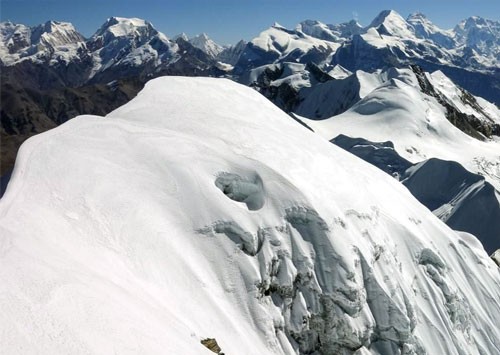
Pisang Peak Climbing is considered a moderately challenging Himalayan trekking peak that combines high-altitude trekking with an introductory level of technical mountaineering. While the mountain is achievable for well-prepared trekkers, it should never be viewed as an easy climb. From our experience leading expeditions in the Annapurna region, the greatest challenge is rarely one single obstacle. Instead, it is the combination of consecutive trekking days, increasing altitude, changing mountain conditions, and the physical demands of summit day that make Pisang Peak a rewarding expedition.
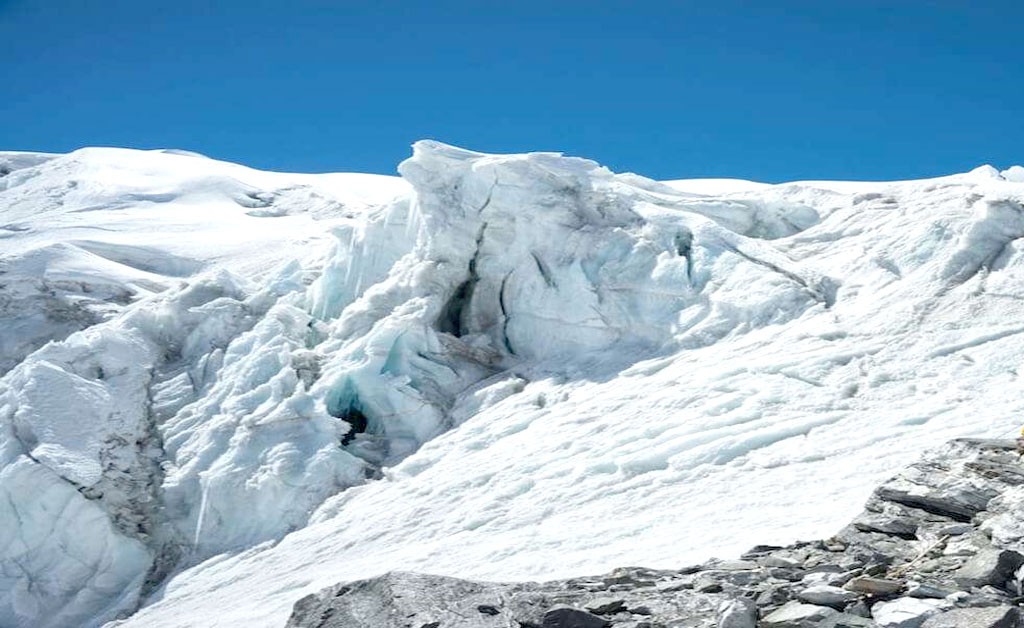
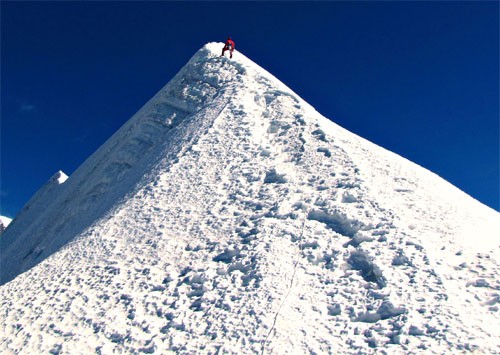
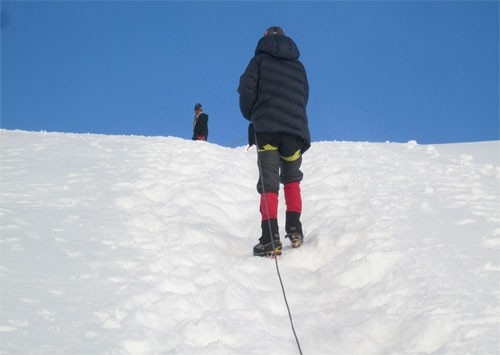
The approach to Base Camp follows well-established trekking trails along part of the Annapurna Circuit, allowing climbers to acclimatize gradually while gaining confidence in the mountain environment. As the expedition progresses, the terrain becomes steeper and more alpine, with loose moraine, rocky slopes, snow, and glacier terrain replacing village trails. Summit day normally involves walking in darkness, wearing crampons, using fixed ropes where required, and climbing steadily for several hours above 5,000 metres before reaching the 6,091-metre summit.
Altitude is often the factor that surprises climbers the most. Even experienced trekkers can notice that simple tasks require more effort as oxygen levels decrease. Over many years of guiding Pisang Peak, we have found that climbers who maintain a steady pace, stay well hydrated, eat consistently, and allow enough time for acclimatization usually perform far better than those who rely only on physical strength. Good judgement and patience are often more valuable than speed on the mountain.
Weather conditions can also influence the overall difficulty of the climb. Fresh snowfall, strong winds, colder temperatures, or icy sections may make summit day more demanding than expected, while stable mountain weather often allows for a smoother ascent. Because conditions can change quickly in the Himalaya, our climbing guides continually assess the route, monitor every climber's condition, and adjust decisions based on the mountain rather than following a fixed timetable.
Overall, Pisang Peak is best suited to physically fit trekkers who enjoy long days in the mountains and are ready to progress into Himalayan mountaineering. It is not the most technically demanding trekking peak in Nepal, but it requires careful preparation, respect for altitude, and a positive attitude throughout the expedition. For many climbers, those challenges are exactly what make reaching the summit such a rewarding achievement.
Do You Need Previous Climbing Experience for Pisang Peak?
Previous technical climbing experience is helpful, but it is not the most important requirement for a successful Pisang Peak expedition. After leading climbing trips in the Annapurna region over many years, we have found that strong trekking experience, good physical fitness, and a willingness to learn usually contribute far more to a safe and enjoyable climb than previous mountaineering skills alone.
Pisang Peak is often chosen by trekkers preparing for their first Himalayan summit above 6,000 metres. Many of our climbers have successfully completed the expedition after trekking routes such as the Annapurna Circuit, Everest Base Camp, Manaslu Circuit, or other multi-day high-altitude adventures. These journeys help develop the endurance, confidence, and mountain awareness that become valuable throughout the expedition.
If you have never used crampons, fixed ropes, or a climbing harness before, there is no need to be discouraged. Before the summit attempt, our experienced climbing guides provide practical instruction on using all essential climbing equipment, explain the techniques required for the route, and ensure every climber feels comfortable before leaving Base Camp. By the time summit day arrives, most first-time climbers have already developed the confidence needed to climb safely under professional guidance.
From our experience, the climbers who perform best are not always those with the longest climbing resumes. More often, they are the people who arrive well prepared, maintain a steady pace, communicate openly with their guides, and respect the acclimatization process throughout the expedition. A positive attitude and a willingness to learn are often greater advantages than previous technical experience.
If you already have experience on trekking peaks such as Mera Peak or Island Peak, you will likely feel more familiar with the equipment and mountain environment. However, Pisang Peak also provides an excellent introduction to Himalayan mountaineering for motivated trekkers attempting their first technical trekking peak. If you are uncertain whether your previous trekking experience is sufficient, we are always happy to review your background and recommend the expedition that best matches your experience and climbing goals.
How Should You Prepare for Pisang Peak?
One of the biggest misconceptions we continue to see is that preparing for Pisang Peak is simply about getting fitter. Physical fitness is certainly important, but after leading climbing expeditions in the Annapurna region for many years, we have found that the climbers who enjoy the expedition most are those who prepare for several consecutive days in the mountains rather than focusing only on summit day. Pisang Peak rewards steady endurance, patience, and consistency far more than short bursts of strength.
The approach to Pisang Peak includes long trekking days before the technical climbing even begins. This is why we encourage every climber to spend the weeks before arriving in Nepal building hiking endurance rather than concentrating only on gym workouts. Regular hiking, trail walking, stair climbing, running, cycling, or swimming all help improve cardiovascular fitness, but whenever possible, nothing replaces spending time walking on uneven trails while carrying a light backpack. That kind of preparation closely reflects the demands of the expedition itself.
Strength training should focus on movements that improve balance, stability, and endurance instead of maximum lifting power. Strong legs, a stable core, and good shoulder strength make carrying your daypack and moving across steep mountain terrain much more comfortable. In our experience, climbers who develop functional strength and train consistently over several weeks usually recover better each evening and maintain more energy throughout the expedition than those who rely only on occasional intensive workouts.
Mental preparation is equally important but often receives far less attention. Mountain weather can change quickly, walking times sometimes vary, and every expedition progresses at the pace that best suits the entire team. Climbers who remain patient, flexible, and willing to adapt to changing conditions usually enjoy the experience far more than those focused only on reaching the summit. One lesson the mountains teach repeatedly is that good decisions and steady progress almost always achieve better results than unnecessary speed.
We generally recommend beginning your preparation at least eight to twelve weeks before your departure to Nepal. Gradually increasing the duration of your training allows your body to adapt naturally while reducing the risk of injury. If possible, complete several full-day hikes before your trip, as these provide one of the best ways to understand how your body responds after spending many hours on your feet. We have consistently found that climbers who arrive already comfortable with long days of walking settle into the rhythm of the expedition much more easily.
Perhaps the most valuable preparation is arriving with realistic expectations. Pisang Peak is not a mountain that rewards rushing. It rewards those who respect the altitude, trust the acclimatization process, and remain open to learning throughout the journey. From our experience, climbers who prepare patiently before arriving in Nepal usually enjoy the expedition more, climb with greater confidence, and give themselves the best opportunity for a safe and successful summit.
Our Acclimatization Strategy for Pisang Peak
After leading Pisang Peak expeditions in the Annapurna region for many years, one lesson has remained remarkably consistent: successful summit days are rarely decided on summit day itself. They are built gradually through the decisions made during the approach. The steady pace of the trek, the choice of overnight stops, daily recovery, hydration, and allowing the body enough time to adapt to increasing altitude all contribute far more to a successful climb than many first-time climbers expect. That is why acclimatization is at the centre of every Pisang Peak expedition we operate.
One of Pisang Peak's greatest advantages is its natural approach through the Annapurna Circuit. Unlike mountains that require rapid altitude gain, this expedition allows climbers to progress steadily from the lower valleys into the high alpine environment. Every overnight stop has been carefully planned to reduce unnecessary physical stress while helping the body adapt naturally before moving higher. From our experience, climbers who follow this gradual rhythm usually arrive at Base Camp stronger, recover more comfortably each evening, and feel far more confident when the technical climbing begins.
Our guides never judge acclimatization by altitude alone. Throughout the expedition, they quietly observe how every climber responds to the mountain. Walking rhythm, breathing, appetite, hydration, sleep quality, recovery after each day's trek, and even small changes in energy or conversation often provide valuable insight into how well someone is adapting. Over the years, we have learned that these early observations are often far more useful than waiting until someone begins to feel unwell. When necessary, we adjust the pace, encourage additional rest, or modify the day's plan because protecting your health will always take priority over reaching the summit on a fixed schedule.
We have guided experienced endurance athletes who needed extra time to acclimatize, while older trekkers walking at a comfortable, steady pace adapted surprisingly well. For that reason, we never compare one climber with another. Instead, we encourage every member of the team to listen to their own body, communicate openly with their guide, and trust the gradual process that the mountain demands.
Simple daily habits also make a remarkable difference throughout the expedition. Drinking enough water, eating regular meals even when appetite decreases, maintaining a comfortable walking pace, sleeping well, and speaking openly with your guide whenever something feels unusual all help your body adjust more effectively to the altitude. None of these habits is difficult on its own, yet together they consistently contribute to stronger acclimatization and a more enjoyable climbing experience.
For us, acclimatization is never treated as a single rest day before the summit attempt. It is a continuous process that begins on the very first day of trekking and continues until every climber has safely returned from the mountain. This patient, experience-based approach has guided every Pisang Peak expedition we have led, giving our climbers the best possible opportunity to enjoy the journey, climb with confidence, and return home safely with an unforgettable Himalayan experience.
What to Expect on Summit Day
Summit day is the most demanding and rewarding stage of the Pisang Peak expedition, but after leading many successful climbs, we have learned that it should never be approached with unnecessary pressure. Reaching the summit is important, yet the decisions made throughout the day are even more important. A successful summit is always measured by returning safely to camp with the entire team.
The day usually begins well before sunrise while temperatures are at their coldest and the mountain is at its most stable. Before leaving camp, our climbing guides carefully check every climber's harness, crampons, helmet, headlamp, gloves, and other essential equipment. We also review the weather, snow conditions, expected climbing pace, and the overall plan for the ascent. These final preparations may appear routine, but they are among the most valuable parts of the expedition because small details often make the biggest difference higher on the mountain.
As the climb progresses, the terrain gradually becomes steeper, with sections of snow, rock, and fixed ropes requiring greater concentration and steady movement. One thing we continue to notice is that climbers who maintain a consistent rhythm almost always perform better than those who try to climb too quickly. Our guides encourage a pace that allows the body to work efficiently at high altitude, conserving energy for the long ascent and the equally important descent.
Throughout summit day, our guides observe much more than the route ahead. They continually monitor how every climber is breathing, moving, communicating, and responding to the altitude. Conditions on Himalayan mountains can change quickly, and good judgement is often more important than determination alone. If weather, snow conditions, or a climber's condition require us to slow down, adjust our plan, or turn back, those decisions are made without hesitation because protecting every member of the team will always take priority over standing on the summit.
Reaching the 6,091-metre summit of Pisang Peak is an unforgettable achievement, rewarded with breathtaking views across the Annapurna massif, Tilicho Peak, Gangapurna, Chulu peaks, and countless Himalayan summits stretching towards the horizon. Yet we always remind our climbers that the expedition is only halfway complete at this point. The descent requires the same level of focus, careful footwork, and teamwork as the climb itself, and returning safely to camp is the final measure of a successful summit day.
Perhaps the greatest lesson Pisang Peak teaches is patience. Mountains are never conquered by speed or determination alone. They reward preparation, sound judgement, teamwork, and respect for the conditions. That philosophy has guided every Pisang Peak expedition we have led and continues to shape the way we approach every summit attempt in the Himalaya.
When Is the Best Time to Climb Pisang Peak?
One of the questions we are asked most often is, "When is the best time to climb Pisang Peak?" After leading climbing expeditions in the Annapurna region through different seasons over many years, our answer has remained remarkably consistent. Spring and autumn provide the most reliable combination of stable mountain weather, safer climbing conditions, comfortable trekking temperatures, and the highest chance of a successful summit. However, each season offers a different experience, and choosing the right time depends not only on the weather but also on the type of Himalayan adventure you are looking for.
Spring (March to May)
Spring is widely regarded as the best season for Pisang Peak Climbing and is also Nepal's principal mountaineering season. During these months, many of the world's highest mountains, including Mount Everest, host their annual climbing expeditions. This is no coincidence. As winter snow gradually settles and temperatures become more comfortable, the Himalaya usually experiences its most stable climbing conditions of the year.
On Pisang Peak, spring often brings reliable weather, longer daylight hours, and excellent snow conditions for climbing. The approach through the Annapurna Circuit is particularly enjoyable as forests come alive with blooming rhododendrons, while higher elevations remain beautifully snow-covered. From our experience, April and early May consistently offer some of the best summit conditions, making spring our preferred season for climbers attempting their first Himalayan trekking peak.
Autumn (Late September to November)
Autumn is another outstanding season for climbing Pisang Peak and is equally popular among experienced trekkers and mountaineers. After the summer monsoon clears the atmosphere, the mountains often enjoy exceptional visibility, dry trails, and crisp conditions that reveal some of the finest panoramic views anywhere in the Himalaya.
Temperatures are generally cooler than in spring, particularly during the early morning summit climb, but weather patterns are usually stable and predictable. October and early November are particularly reliable months, offering excellent climbing conditions together with spectacular views of Annapurna II, Annapurna IV, Gangapurna, Tilicho Peak, Chulu peaks, and countless surrounding Himalayan summits.
Winter (December to February)
Pisang Peak can still be climbed during winter, but the expedition becomes noticeably more demanding. Temperatures drop well below freezing at higher elevations, daylight hours are shorter, and fresh snowfall can make the summit route more challenging. These conditions often require greater flexibility and may occasionally delay or prevent a summit attempt if weather deteriorates.
The reward is a much quieter mountain. Trails are less crowded, the air is exceptionally clear, and experienced climbers seeking a more remote Himalayan experience often appreciate the peaceful atmosphere. Winter is generally better suited to well-prepared climbers who are comfortable with colder conditions and understand that mountain weather plays an even greater role during this season.
Monsoon (June to August)
Although climbing Pisang Peak during the monsoon is possible, it is generally not the season we recommend. Lower sections of the Annapurna region often experience heavy rainfall, muddy trails, leeches in forested areas, and frequent afternoon cloud, while higher elevations may receive fresh snowfall that can make climbing conditions less predictable.
Flights and road transportation are also more likely to experience delays because of weather. While occasional stable periods do occur, they are much harder to predict, making the overall expedition less reliable than during spring or autumn.
Our Recommendation
If we were planning our own Pisang Peak expedition, we would normally choose April, October, or early November. These months have consistently provided the best balance of stable weather, reliable climbing conditions, comfortable trekking temperatures, excellent visibility, and a gradual acclimatization experience. They also coincide with Nepal's main Himalayan climbing seasons, when many experienced mountaineers are attempting peaks throughout both the Annapurna and Everest regions.
Ultimately, there is no single perfect month for every climber. The best season depends on your experience, preferred temperatures, and the kind of mountain atmosphere you enjoy most. Our role is to help you choose the departure that best matches your expectations while giving you the safest and most rewarding opportunity to experience Pisang Peak.
Weather and Temperature on Pisang Peak
Weather is one of the few parts of a Himalayan expedition that no guide can control, yet it influences almost every decision we make on the mountain. After leading Pisang Peak expeditions through different seasons over many years, we have learned that successful climbs are rarely determined by temperature alone. Wind strength, recent snowfall, cloud cover, and the stability of the weather window often have a much greater impact on climbing conditions than the thermometer itself. Understanding how these factors change throughout the expedition is an important part of climbing safely in the Himalaya.
As the route gains altitude, temperatures become noticeably colder with each passing day. Lower sections of the Annapurna Circuit are often comfortable for trekking during the daytime, but mornings and evenings become progressively cooler above Upper Pisang. At Pisang Peak Base Camp, overnight temperatures regularly fall below freezing, while summit day begins several hours before sunrise when conditions are at their coldest. Depending on the season and current mountain weather, temperatures near the summit commonly range between -10°C and -20°C, with strong winds often making it feel considerably colder.
Climbers who prepare only for cold temperatures are often surprised by the effect of wind at high altitude. A calm morning with clear skies can feel surprisingly comfortable despite sub-zero temperatures, while even a moderate wind can quickly increase the physical demands of the climb. This is one reason why our climbing guides carefully assess both wind forecasts and actual mountain conditions before every summit attempt rather than relying solely on seasonal averages.
Weather conditions also vary noticeably throughout the year. Spring usually brings slightly warmer temperatures together with reliable snow conditions, making it the main Himalayan climbing season. Autumn is generally cooler, particularly before sunrise, but is well known for exceptionally clear skies and outstanding mountain visibility. Winter creates a colder and more demanding environment with shorter daylight hours and a greater possibility of fresh snowfall, while the summer monsoon often brings wet lower trails, afternoon cloud, and less predictable climbing conditions at higher elevations.
Because Himalayan weather can change rapidly, flexibility remains an essential part of every Pisang Peak expedition. Although our itinerary is carefully planned, departure times, climbing pace, and even summit schedules may occasionally be adjusted to match the safest weather window available. Over the years, we have found that respecting the mountain's conditions rather than following a rigid timetable consistently provides climbers with a safer and more rewarding experience.
Weather forecasts provide valuable guidance, but they never replace experience on the mountain. Our climbing leaders combine professional weather forecasts with real-time observations throughout the expedition, allowing us to make careful decisions based on the conditions we are actually seeing rather than what was predicted several days earlier. That practical, experience-based approach has guided every Pisang Peak expedition we have led and remains one of the most important parts of our climbing philosophy.
Essential Equipment for Pisang Peak Climbing
Having the right equipment is one of the most important parts of a successful Pisang Peak expedition. After leading climbing trips in the Annapurna region over many years, we have learned that comfort, safety, and confidence on the mountain rarely depend on carrying the most expensive gear. They depend on bringing equipment that fits properly, performs reliably in changing mountain conditions, and allows you to move comfortably throughout the expedition. Good equipment supports good decisions, while unsuitable equipment often creates unnecessary challenges long before summit day.
As the expedition progresses from the lower valleys to high alpine terrain, clothing requirements change significantly. A flexible layering system works far better than relying on one heavy jacket. Moisture-wicking base layers, insulating mid-layers, and a quality waterproof outer shell allow climbers to adjust quickly as temperatures, wind, and weather conditions change throughout the day. This approach keeps you comfortable while avoiding unnecessary overheating during long climbs.
Footwear is equally important. Well-fitting, waterproof mountaineering boots that are compatible with crampons provide the stability and protection needed for snow, ice, and rocky terrain near the summit. One of the most common mistakes we continue to see is climbers arriving with brand-new boots that have never been properly broken in. We always recommend wearing your climbing boots during training hikes before arriving in Nepal, allowing your feet to adjust well before the expedition begins.
Technical climbing equipment such as crampons, harnesses, helmets, ice axes, ascenders, and safety ropes plays an essential role during the summit climb. Before leaving Base Camp, our climbing guides carefully inspect every climber's equipment, demonstrate the correct use of technical gear, and answer any final questions. From our experience, spending time checking equipment thoroughly before summit day gives climbers greater confidence once they begin climbing in the dark and on snow-covered terrain.
Sleeping equipment is another important consideration. Nights at higher elevations regularly fall below freezing, particularly during spring and autumn. A high-quality sleeping bag rated to at least -15°C to -20°C helps ensure better rest and recovery throughout the expedition. Good sleep is often underestimated, yet we have consistently found that climbers who rest well adapt more comfortably to altitude and recover better between trekking days.
The good news is that you do not need to purchase every piece of climbing equipment before travelling to Nepal. Most technical gear, including mountaineering boots, crampons, harnesses, helmets, sleeping bags, and down jackets, can be rented in Kathmandu from reliable outdoor stores. Before your expedition begins, our team is always happy to review your equipment, recommend any additional items if necessary, and ensure you are fully prepared before heading into the mountains.
Accommodation and Meals During Pisang Peak Climbing
Accommodation on the Pisang Peak expedition changes naturally as the journey progresses, and understanding that transition is an important part of preparing for the climb. During most of the trek through the Annapurna Circuit, climbers stay in traditional family-run tea houses, where comfortable twin-sharing rooms, warm dining halls, and freshly prepared meals provide an excellent opportunity to rest and recover after each day's walk. As the expedition moves higher towards Base Camp, the experience becomes more remote and the focus gradually shifts from comfort to supporting the summit climb.
Tea houses along the route are simple but welcoming, offering clean rooms with beds, mattresses, pillows, and blankets. Although facilities become more basic at higher elevations, they provide everything needed for a comfortable night's rest after a day on the trail. Dining rooms are often the social centre of each lodge, where climbers gather to enjoy hot meals, warm drinks, discuss the day's journey, and prepare for the next stage of the expedition.
At Pisang Peak Base Camp, accommodation changes to fully equipped expedition tents. While tented camping is naturally more basic than staying in tea houses, it allows the climbing team to establish a safe and practical base for the summit attempt. Evenings at Base Camp are often spent reviewing climbing equipment, discussing the weather forecast, confirming the summit plan, and making final preparations with the climbing guides before an early start the following morning.
Meals throughout the expedition are carefully chosen to provide the energy needed for consecutive days of trekking and climbing. Along the trail, tea houses serve a wide variety of freshly prepared dishes, including Dal Bhat, noodles, fried rice, soups, potatoes, pasta, eggs, pancakes, Tibetan bread, and seasonal vegetables. Dal Bhat remains one of the most popular choices because it provides balanced nutrition, generous portions, and free refills in many tea houses, making it especially suitable for high-altitude trekking.
Appetite often decreases as climbers gain altitude, even though the body's energy requirements increase. For this reason, our guides regularly encourage climbers to continue eating balanced meals, drink enough water, and avoid skipping meals before summit day. Maintaining energy levels through proper nutrition and hydration is one of the simplest yet most effective ways to support acclimatization and recovery throughout the expedition.
For us, accommodation and meals are much more than basic services included in the itinerary. They are an essential part of the overall climbing strategy. Good food helps maintain strength, comfortable accommodation supports recovery, and well-rested climbers are better prepared for the physical and mental demands of summit day. Over many years of leading Pisang Peak expeditions, we have found that these small daily comforts often make a significant difference to the overall success and enjoyment of the journey.
Transportation to Pisang Peak Climbing
The journey to Pisang Peak begins in Kathmandu and gradually follows one of Nepal's most scenic mountain routes into the Annapurna region. After organizing Pisang Peak expeditions over many years, we have found that travelling overland allows climbers to experience the changing landscapes of Nepal while giving both the body and mind time to transition from city life to the rhythm of the mountains.
From Kathmandu, we travel by road to Besisahar before continuing by four-wheel-drive jeep towards Chame, the starting point of the trekking section. The journey follows the Marsyangdi River through traditional villages, terraced farmland, deep river gorges, waterfalls, and increasingly dramatic Himalayan scenery as the road gradually climbs towards Manang District.
The road between Besisahar and Chame is a typical Himalayan mountain road. Although significant improvements have been made in recent years, certain sections remain rough, particularly after heavy rainfall or during the summer monsoon. Temporary landslides, road maintenance, or weather conditions can occasionally influence travelling times, which is why we always monitor local conditions carefully before every departure and allow enough flexibility within our itinerary.
All transportation throughout the expedition is arranged by our team. Depending on the group size and current road conditions, we normally use comfortable four-wheel-drive jeeps that are well suited to the mountain roads. Rather than focusing only on reaching the trailhead as quickly as possible, our priority is providing a safe, comfortable, and well-organised journey from the very beginning of the expedition.
After successfully completing the climb, the return journey follows the Annapurna Circuit back towards Chame before driving through Besisahar and returning to Kathmandu. Many climbers tell us that travelling by road becomes an enjoyable part of the overall expedition, offering a unique opportunity to experience the remarkable geographical and cultural diversity of Nepal long before and long after reaching the summit of Pisang Peak.
Permits Required for Pisang Peak Climbing
Climbing Pisang Peak requires several official permits issued by the Government of Nepal and the Nepal Mountaineering Association (NMA). These permits are an essential part of every expedition, helping protect the mountain environment, support conservation work, and regulate climbing activities throughout the Annapurna region. The good news is that you do not need to arrange any of these permits yourself. Once your booking is confirmed, our team manages the complete permit process on your behalf.
The most important document is the Pisang Peak Climbing Permit, issued by the Nepal Mountaineering Association. This permit is mandatory for every climber attempting the summit and is issued according to the official seasonal climbing regulations. Because spring is Nepal's main Himalayan climbing season, permit fees are generally higher than during autumn, winter, and summer.
Every climber also requires an Annapurna Conservation Area Permit (ACAP), as the expedition takes place inside the Annapurna Conservation Area. Revenue collected through this permit contributes directly to trail maintenance, environmental conservation, wildlife protection, and community development projects throughout the region, helping preserve one of Nepal's most spectacular mountain landscapes for future generations.
To complete the permit applications, we normally require a copy of your passport, a recent passport-sized photograph, and your travel details before the expedition begins. Once we receive these documents, our office prepares all official paperwork, submits the applications, verifies every permit, and ensures everything is ready before leaving Kathmandu. This allows you to focus on preparing for the climb instead of dealing with administrative procedures after arriving in Nepal.
Throughout the expedition, permits are checked at official checkpoints along the Annapurna Circuit and again before entering the climbing route. Our experienced guides carry all necessary documentation, assist with every checkpoint, and ensure the expedition follows the latest government regulations. Should permit procedures or official requirements change in the future, our team always follows the most up-to-date regulations so every Pisang Peak expedition remains fully compliant.
While organising climbing expeditions in Nepal, we have found that careful preparation before leaving Kathmandu helps the entire journey run more smoothly. By managing every permit and administrative detail in advance, we allow our climbers to focus entirely on the experience ahead while knowing that every official requirement has already been taken care of.
How We Keep You Safe on Pisang Peak
Every Himalayan expedition involves a degree of uncertainty, and no responsible climbing company should ever promise that reaching the summit is guaranteed. After leading Pisang Peak expeditions in the Annapurna region over many years, we have learned that the safest climbs are not the ones where guides simply follow an itinerary. They are the ones where every important decision is made according to the conditions on the mountain and the wellbeing of the team. That philosophy guides every Pisang Peak expedition we operate.
Safety begins long before summit day. Our carefully planned itinerary allows gradual altitude gain, giving climbers time to acclimatize naturally before attempting the summit. Throughout the expedition, our climbing guides continually observe each climber's walking pace, breathing, hydration, appetite, recovery, and overall energy levels. These small daily observations often provide the earliest indication of how well someone is adapting to the altitude, allowing us to make sensible decisions before minor concerns become more serious.
Before every summit attempt, we carefully review the latest mountain weather forecasts together with the conditions we observe on the route itself. Wind strength, snowfall, snow stability, visibility, and overall mountain conditions all influence our final decision. If conditions are not suitable, we are always prepared to delay, adjust, or cancel a summit attempt because protecting our climbers will always be more important than standing on the summit.
Technical safety is equally important. Before leaving Base Camp, our climbing guides carefully inspect every climber's equipment, ensuring that crampons, harnesses, helmets, and safety systems fit correctly and are being used properly. We also provide practical instruction on climbing techniques and the safe use of fixed ropes so every climber begins summit day with greater confidence and a clear understanding of the route ahead.
Our guides carry comprehensive first aid equipment and maintain regular communication throughout the expedition. In the unlikely event of an emergency, we follow established evacuation procedures and coordinate with local rescue services whenever required. Every climber is also required to have appropriate travel insurance covering high-altitude trekking and emergency helicopter evacuation, providing an additional level of protection throughout the expedition.
Perhaps the most important lesson the Himalaya continues to teach us is that the summit is never the only goal. A successful Pisang Peak expedition is one where every climber returns safely after making good decisions, respecting the mountain, and enjoying the journey from beginning to end. That belief has shaped the way we lead every expedition and remains the foundation of our approach to mountain safety.
Why Climb Pisang Peak with Dream Heaven Adventure?
Choosing the right climbing company is just as important as choosing the right mountain. A successful Pisang Peak expedition depends not only on experienced climbing guides but also on careful planning, realistic itineraries, responsible decision-making, and a team that genuinely understands how Himalayan expeditions work. These are the principles that have guided Dream Heaven Adventure since the very beginning.
Our climbing expeditions are led by licensed and experienced mountain guides who know the Annapurna region through years of practical experience rather than guidebooks alone. They understand that every climber adapts differently to altitude, every season presents different mountain conditions, and every expedition requires thoughtful decisions based on what is happening on the mountain rather than simply following a fixed schedule.
We believe that good expeditions are built on preparation rather than promises. Before every departure, we carefully organise transportation, permits, accommodation, climbing equipment, and logistics so our climbers can focus entirely on the experience ahead. Throughout the expedition, our team remains available to answer questions, monitor progress, provide practical climbing instruction, and support every climber from the first day in Kathmandu until the journey is successfully completed.
Group size also plays an important role in the overall experience. Smaller groups allow our guides to spend more time with each climber, maintain a comfortable walking pace, and respond quickly whenever someone needs additional support or encouragement. From our experience, this creates a safer, more enjoyable, and more personal Himalayan expedition for everyone involved.
One thing we continue to value most is honest advice. If we believe another trekking peak or a different itinerary is better suited to your experience, we will tell you. Our goal is never simply to sell a climbing package. It is to help every climber choose the expedition that genuinely matches their ability, expectations, and long-term mountaineering goals. We believe that trust is earned through honest guidance long before anyone stands on the summit.
For us, leading Pisang Peak is about much more than reaching 6,091 metres. It is about introducing climbers to the mountains in a safe, responsible, and memorable way while sharing the knowledge, culture, and mountain experience that have shaped our lives in the Himalaya. That commitment continues to define every Pisang Peak expedition we lead with Dream Heaven Adventure.