Everest Base Camp Trek for Seniors

1 reviewsEBC Trek for Elderly People
Trip Fact:
  • Duration 18 Days
  • Difficulty Level Moderate
  • DestinationNepal
  • Max Altitude5545m ( Kala Pathar)
  • AccommodationHotel/Tea House
  • MealsBreakfast in Kathmandu and Breakfast/Lunch/Dinner during the trek
  • Trip Start/EndLukla
  • Group Size2-30 pax
  • Best SeasonMarch to May and Mid September to November are best months

Everest Base Camp Trek for Seniors Overview

The Everest Base Camp Trek for Seniors is specially designed for travelers who want to experience the Everest region at a slower and more comfortable pace. It is ideal for senior trekkers and older travelers who may not be able to walk long distances each day or follow the faster 12-day Everest Base Camp itinerary.

This journey follows the same classic route toward Everest Base Camp, passing through villages such as Phakding, Namche Bazaar, Tengboche, and Dingboche. The difference is in how the trek is planned. Walking days are shorter, the pace is more relaxed, and there is enough time to rest, recover, and enjoy the surroundings without feeling rushed.

Instead of pushing long and tiring days, the itinerary includes carefully planned breaks and additional overnight stops to reduce physical strain. Sections that are normally demanding are divided into smaller, more manageable walks, allowing the body to adapt gradually, especially as the altitude increases.

Acclimatization is given special attention. Extra time is spent in key locations such as Namche Bazaar and Dingboche, where your body naturally adjusts to the altitude. This slower approach helps make the trek more comfortable and improves the overall experience.

In real trekking experience, reaching Everest Base Camp is not about speed, but about maintaining a steady rhythm. Walking slowly, taking regular breaks, and staying well-paced often makes the journey more achievable, even for those who do not consider themselves fast trekkers.

This itinerary is suitable for active senior travelers who are in good health and enjoy walking, as well as for those who prefer a less demanding version of the Everest Base Camp trek. It is also a good option for families with older children who want a more relaxed Himalayan experience.

Reaching Everest Base Camp and standing close to Mount Everest remains a meaningful moment. What makes this journey different is the way you get there, with time, patience, and a pace that allows you to fully enjoy every step of the experience.

Everest Base Camp Trek for Seniors Highlights

  • Carefully designed itinerary with shorter and more gradual walking days for better comfort
  • Extra acclimatization time in key locations such as Namche Bazaar and Dingboche
  • Flexible pacing that allows rest when needed, without pressure to rush
  • Split walking sections (such as Punge Thenka stop) to reduce long and tiring days
  • Well-managed altitude gain to support natural acclimatization
  • Experienced guides who monitor pace, health, and daily conditions throughout the trek
  • Stay in comfortable teahouses with warm meals and rest stops along the route
  • Walk through Sherpa villages, forests, and mountain landscapes at a relaxed pace
  • Reach Everest Base Camp and enjoy views of Mount Everest step by step
  • Ideal for active senior travelers and families looking for a more balanced Everest experience

Is This Everest Base Camp Trek Suitable for Seniors?

Yes, this Everest Base Camp Trek is suitable for senior travelers who want to experience the Himalayas at a slower and more comfortable pace. It is designed for those who may not be able to follow the faster 12-day Everest Base Camp itinerary but still wish to reach the same destination.

This is a 16-day journey from Kathmandu to Kathmandu, including the Lukla flight, with a carefully planned schedule that allows more time for walking, rest, and proper adjustment to altitude. Unlike shorter itineraries, this trek includes two important acclimatization days, one in Namche Bazaar and another in Dingboche, where your body gradually adapts before moving higher.

Walking days are also designed to be shorter and more manageable than the standard route. Longer sections are divided into smaller stages, reducing fatigue and allowing a steady and comfortable pace throughout the trek.

The itinerary is well suited for active seniors who enjoy walking but prefer flexibility and regular breaks. You do not need to be fast or highly experienced, but you should feel comfortable walking for several hours a day at a relaxed and consistent pace.

For those concerned about altitude or long trekking days, this approach makes a noticeable difference. In real trekking experience, a slower ascent combined with proper acclimatization often makes Everest Base Camp more achievable and more enjoyable.

While the trek is designed primarily for seniors, it is also suitable for families with older children and for anyone who prefers a less demanding version of the Everest Base Camp journey.

In simple terms, this itinerary is ideal for those who want to reach Everest Base Camp with more time, more rest, and a pace that matches their ability, without missing the true experience of the Himalayas.

Everest Base Camp Trek Difficulty for Seniors

The Everest Base Camp Trek is generally considered a moderate to challenging journey, mainly because of altitude and the number of walking days rather than technical difficulty. There is no climbing or mountaineering involved, and the trail is well established, but as the elevation increases above 4,000 meters, walking naturally becomes slower and more demanding.

For this senior-friendly itinerary, the difficulty is reduced by following a slower and more gradual approach. The trek is completed over 16 days from Kathmandu to Kathmandu, including the Lukla flight, with two important acclimatization days in Namche Bazaar and Dingboche. This allows your body enough time to adjust before moving to higher elevations.

In a regular Everest Base Camp trek, walking time is often around 6 to 8 hours per day. In this itinerary, most walking days are shorter, usually around 4 to 6 hours depending on the section and your pace. Longer and more demanding stretches are divided into smaller segments, which helps reduce fatigue and makes the journey more manageable.

You do not need previous trekking experience to complete this trek. However, you should be in good general health and comfortable walking for several hours a day at a steady pace. In real trekking experience, many first-time senior trekkers complete Everest Base Camp successfully by following a slower itinerary and maintaining a consistent rhythm.

The main challenge of the trek is altitude. As you go higher, the air becomes thinner, and your body needs more time to adapt. It is normal to feel slower, take more breaks, and conserve energy. This is why proper acclimatization and pacing are so important.

This itinerary is designed specifically to make the experience easier for senior trekkers. With shorter walking days, additional acclimatization time, and a flexible pace, the journey becomes more comfortable and less physically demanding than standard itineraries.

Guides and support staff play an important role throughout the trek. They help set a comfortable pace, monitor your condition daily, and adjust the plan if needed. With the right support and a steady approach, the trek becomes more achievable and less stressful.

In simple terms, this trek is not easy, but it is very achievable for senior travelers who take their time, walk at a comfortable pace, and allow their body to adjust naturally to the altitude.

Best Time for Everest Base Camp Trek for Seniors

The best time for the Everest Base Camp Trek for seniors is during spring (March to May) and autumn (September to November), when weather conditions are generally stable, skies are clear, and mountain views are at their best. These seasons offer comfortable daytime temperatures, good trail conditions, and a more predictable trekking experience, which is especially important for older trekkers.

Spring is a beautiful time to trek, with blooming rhododendron forests, longer daylight hours, and gradually warming temperatures. The trail feels lively but not overwhelming, and visibility is usually very good in the mornings. Autumn, on the other hand, is known for its clear skies and sharp mountain views after the monsoon season. The air is crisp, the landscape is fresh, and this period is often considered the most reliable for consistent visibility.

Winter, from December to February, can also be a good time for the trek, especially for those who prefer quieter trails and very clear mountain views. The skies are often extremely clear, offering some of the best views of Mount Everest. However, temperatures at higher altitudes can be very cold, particularly in the early mornings and evenings, and some sections of the trail may have snow or ice. For seniors, this season can still be suitable with proper preparation, warm clothing, and a flexible itinerary.

The monsoon season, from June to August, is generally less recommended. Lower sections of the trail can be muddy, slippery, and affected by rain, while cloud cover often limits mountain views. However, higher parts of the Everest region receive less rainfall compared to lower elevations due to the rain shadow effect. Even so, weather conditions during this time can be unpredictable.

Flight conditions to Lukla are also an important factor when planning your trek. During peak seasons such as spring and autumn, many flights operate from Manthali (Ramechhap) instead of Kathmandu, which requires an early morning drive of about 4 to 5 hours before the short flight to Lukla. Weather can sometimes cause delays or changes in flight schedules, so having a buffer day is always recommended.

In real trekking experience, the best time is not only about the season but also about choosing a period with stable weather, clear mornings, and comfortable walking conditions. For senior trekkers, spring and autumn remain the most balanced and reliable seasons for a safe and enjoyable Everest Base Camp journey.
Itinerary

Dream heaven Adventure's representative will pick you up from Kathmandu airport and transfer you to the hotel. During the daytime, you can visit Thamel for trekking gear shopping. In the evening, our tour manager and trek guide will deliver trek briefings to you.

    Everest Base Camp Trek begins with a flight to Lukla. Unlike before, those flying to Lukla first must drive to Ramechhap and fly from Manthali Airport to Lukla.

    Once you land at Lukla, you'll have lunch at the tea house. After lunch, you'll prepare for the trek to Phakding, which takes four hours. Before leaving Lukla, you'll have your Everest permits checked at the Khumbu Pasang Lhamu Rural Municipality Permit issue center.

    Overnight at the tea house in Phakding.

      After breakfast at the tea house in Phakding, you'll prepare for the hike to Namche Bazaar. The trek gets interesting as you'll be hiking over the cliffs to the right banks of the Dudh Koshi River.

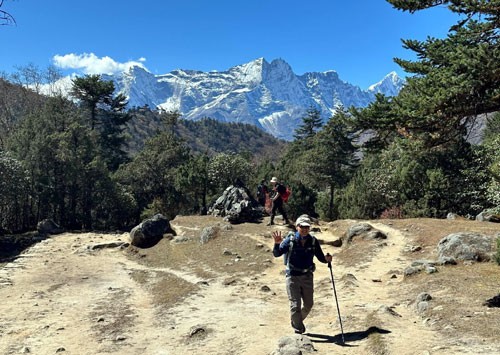
      You'll hike past TokTok, Monjo, Jorsale, and Larcha Dovan and finally reach Namche in five hours. You'll walk through the pine forest and cross several suspension bridges and beautiful villages. And in Spring, the entire trail gets covered with rhododendrons, which can be serene and entertaining.

      En route, you'll have your trek permits checked at Monjo and stop for lunch at Jorsale.

      Overnight at the tea house in Namche Bazaar.

        Acclimatization is a must at Namche Bazaar. For this, you'll hike to Hotel Everest View after breakfast at the tea house in Namche Bazaar.

        After leaving Namche, to Syangboche airport, you'll hike on a steep trail. But past it, the course gets flat till the hotel.

        You'll get a clear view of Everest, Lhotse, Nuptse, Ama Dablam, Khumbila, and Thamserku from the hotel.

        After an hour's stay at the hotel, you'll return to the tea house in Namche and take a good rest for the remaining day. You can visit cafes in Namche for a good coffee in the evening.

        Overnight at the tea house in Namche.

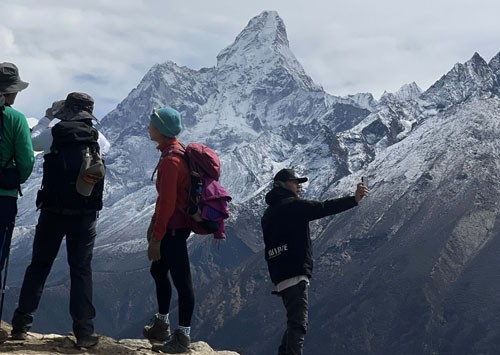
          After leaving Namche, you'll hike on a relatively flat trail but on the ridge of the hills. One hour hike from Namche takes you to Ama Dablam Viewpoint Hotel, where you'll stop for some good rest.

          From here, you'll hike past Sansa and descend to Punge Thenka. Punge Thenka sits just right to Dudh Koshi River, and it's a fantastic place to acclimate well.

          From here till Tengboche, it's an almost steep ascent. Thus, staying at Punge Thenka and resuming the trek the next day is best. Kids and seniors can rest at the tea house in Punge Thenka.

            After breakfast at the tea house in Punge Thenka, you'll start the hike to Tengboche. First, you'll cross the suspension bridge over the Dudh Koshi River. Past the bridge, till Tengboche, its steep ascend and often becomes tiring.

            The beautiful glimpse of Thamserku and Ama Dablam keeps you in awe as you hike close to Tengboche. And from Tengboche, you'll get 360 panoramic glimpses of mountains. Plus, you'll visit Tengboche monastery in the evening to attend the monk's praying session.

            Overnight at the tea house in Tengboche.

              After breakfast at the tea house in Tengboche, you'll prepare for the hike to Somare.

              After leaving Tengboche, with a 30 minute hike, you'll reach Deboche. It's also a beautiful village en route to Everest Base Camp.

              Thirty minute hike from Deboche takes you to a suspension bridge over the Imja river. And from here, you'll get a wholesome glimpse of Ama Dablam mountain. Past this bridge, till Pangboche, you'll hike on excellent stone paved trails, almost like a stairway to heaven.

              Pangboche is a beautiful village that sits opposite Ama Dablam mountain. From here, you'll hike for two hours to Somare, stopping for overnight accommodation.

                You'll start the hike from Somare to Dingboche after having breakfast at the tea house in Somare.

                Almost till Dingboche, you'll hike along the Imja River. Also, you'll now walk on the actual high-altitude terrain with occasional juniper bushes en route.

                The route from Somare to Imja Khola bridge is relatively flat. After crossing the bridge, you'll hike another 45 minutes to the beautiful village, Dingboche, where you'll stop for overnight accommodation.

                Evening at Dingboche becomes scenic as the Lhotse, Nuptse, and Ama Dablam get painted with the setting sun's red, yellow, and pink colors.

                  Acclimatization at Dingboche allows you to adapt well over 5,000 meters. Also, it gives you an ideal sightseeing opportunity while hiking to Nangkartshang Peak.

                  You'll see Ama Dablam, Island Peak, Makalu, Tawoche, Cholatse, and other beautiful mountains from the top of this peak. Also, you'll get a beautiful glimpse of Dingboche village from the top.

                  Breakfast, Lunch, and Dinner at the tea house in Dingboche.

                    You'll start hiking from Dingboche to Thukla around 9 am. Thukla is a short day hike from Dingboche, but the high-altitude environment makes the hike strenuous.

                    You'll hike past Pheriche, adjacent to Cholatse, cross Imja Khola, and stop at the tea house in Thukla.

                    You'll have lunch, dinner, and overnight accommodation at the tea house in Thugla.

                      Thugla to Lobuche is a three-hour distance that gives you a panoramic glimpse of Pumori, Lobuche east, Lhotse, Khubutse, etc.

                      After leaving Thugla, you'll hike to the Lobuche memorial for almost an hour. It's the most arduous section; you'll gain over 300 meters in an hour.

                      After reaching the Lobuche memorial, you'll hike on a relatively flat trail to Lobuche.

                      Lunch, dinner, and overnight accommodation at the tea house in Lobuche.

                        You'll hike on glacier moraines and above Khumbu glacier en route to Gorak Shep and Everest Base Camp. This is the most arduous section of the entire Everest Base Camp Trek.

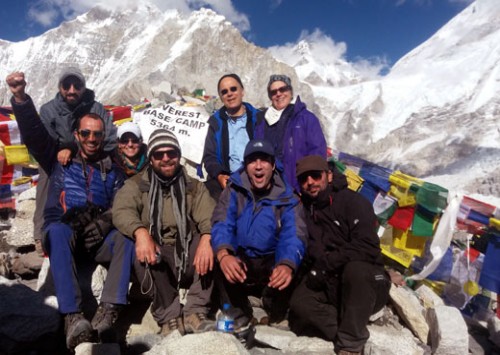
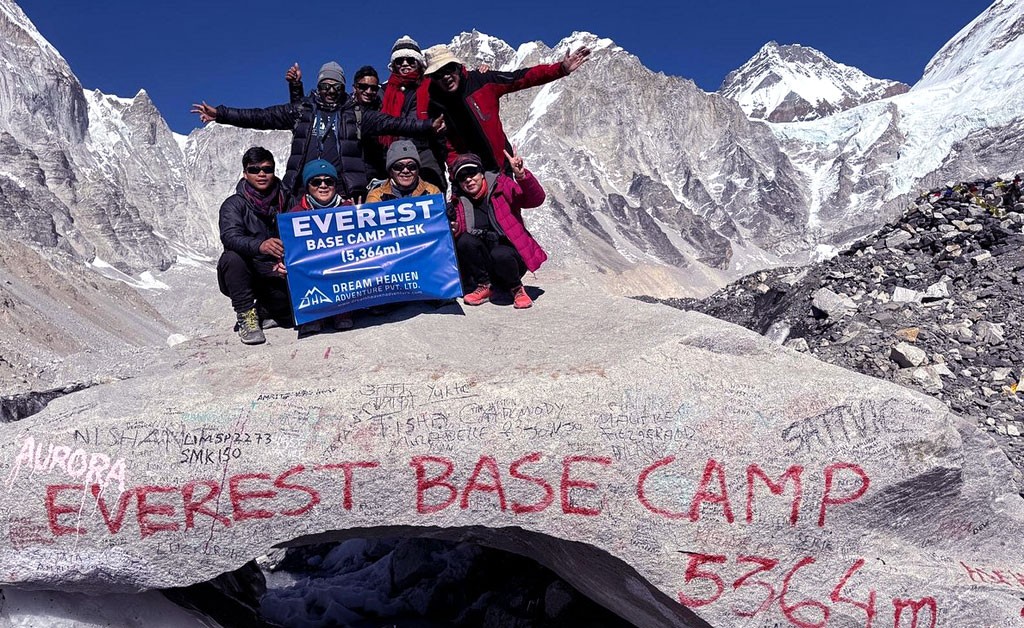
                        After leaving Lobuche, you'll reach Gorak Shep after four hours. You'll eat lunch in Gorak Shep's tea house and hike to Everest Base Camp. You'll have a photographic moment at the base camp. Also, you'll stay at the base camp for an hour to cherish the triumph.

                        It'll take another three hours to walk to the base camp and return to the tea house in Gorak Shep.

                        Dinner and overnight accommodation at the tea house in Gorak Shep.

                          For the best sunrise view, in the early morning, around 4 am, you'll hike to the Kala Patthar viewpoint. As it gets cold, the Kala Patthar hike is not mandatory.
                              
                          After returning from Kala Patthar, you'll have breakfast and prepare for the return hike. From Gorak Shep, you'll hike down to Lobuche and stop for lunch. You'll hike from Lobuche another two hours to Thugla and stop overnight.

                            The return hike to Punge Thenka sees you hiking for six hours. And you'll descend entirely to Punge Thenka except for the half-hour ascend to Tengboche from Deboche.

                            You'll have lunch at Somare/Pangboche.

                            Overnight at the tea house in Punge Thenka.

                              After breakfast at Punge Thenga, you'll start the hike. Till Sansa, you'll be ascending. And past it to Namche, you'll hike on an almost flat trail, on the edge of a hill, below Hotel Everest View.

                              You'll stop at Namche for lunch. After lunch, you'll descend to Larcha Dovan, Jorsale, and stop at the tea house in Monjo.

                              Overnight accommodation at the tea house in Monjo.

                                You'll hike from Monjo to Phakding, Ghat, Chauri Kharka, and Lukla. It'll take 5 hours at most.

                                The trail till Ghat is a descent, but past Ghat till Lukla, it's gradual ascend.

                                Overnight at the tea house in Lukla.

                                  You'll take the early flight from Lukla to Ramechhap. You'll get picked up by our Ramechhap airport representative and drive you to Kathmandu.

                                  Upon reaching Kathmandu, you'll get a complimentary hotel transfer.

                                    This is the leisure day in Kathmandu, you may do the trour of historial Kathmandu or some shopping around. Join our sultural dinner show in the evening. Stay overnight in Kathmandu hotel.

                                      Note

                                      Based on previous client experiences, the itinerary has been customized to provide an unforgettable travel experience. The destinations and activities have been carefully selected to cater to different interests and preferences, while ensuring a balance of adventure, culture, and relaxation. The accommodations and transportation have also been chosen with the utmost care to ensure comfort and convenience throughout the trip. Whether you're a solo traveler, a couple, or a group of friends, this itinerary promises to offer a unique and memorable travel experience that will stay with you for years to come.

                                      Cost Details

                                      Includes

                                      • Airport pickup and drop off
                                      • 3 nights hotel in Kathmandu ( 3 star hotel)
                                      • Round trip flight ticket ( Kathmandu-Lukla-Kathmandu)
                                      • Professional trekking guide
                                      • Strong and friendly trekking porter (1 porter for 2 trekkers basis)
                                      • Necessary trekking permits ( Sagarmatha national park, Khumbu local tax etc)
                                      • Tea houses in the Mountain
                                      • All meals in the Mountain ( breakfast, lunch, dinnner and tea/coffee)
                                      • Usage of Duffel bag, sleeping bag and walking poles
                                      • Trekking equipments for the staff
                                      • Basic first aid kit

                                      Good to Know

                                      Flight to Lukla for Everest Base Camp Trek

                                      Flights to Lukla are one of the most important parts of the Everest Base Camp journey. Weather in the mountain region can change quickly, even during the main trekking seasons of spring and autumn. Because of this, flight delays or rescheduling are a normal part of trekking in the Everest region.

                                      In recent years, flights during peak seasons are often operated from Manthali (Ramechhap) instead of Kathmandu, which requires an early morning drive of about 4 to 5 hours before the short flight to Lukla.

                                      For this reason, it is always recommended to keep at least one or two extra days as a buffer in your travel plan. In real trekking experience, having this flexibility helps avoid unnecessary stress and allows the journey to remain relaxed, especially for senior travelers.

                                      Accommodation on Everest Base Camp Trek for Seniors

                                      Accommodation during the Everest Base Camp trek is in locally run teahouses along the trail. In Kathmandu, you will stay in a comfortable hotel with breakfast included.

                                      During the trek, rooms are usually twin-sharing and simple but clean. Up to Dingboche, many lodges offer attached bathrooms, which makes the stay more comfortable, especially for senior trekkers. At higher altitudes, facilities become more basic, but we always select the best available lodges for comfort, hygiene, and location.

                                      Warm blankets are provided at most teahouses, and dining areas are heated in the evenings. Services such as hot showers, charging, and Wi-Fi are available in many places for an additional cost.

                                      Meals on Everest Base Camp Trek

                                      Teahouses along the Everest trail offer a wide variety of meals to suit different preferences. You will find Nepali, Tibetan, and international dishes such as rice, noodles, soups, pasta, eggs, potatoes, and bread.

                                      Dal Bhat, a traditional Nepali meal of rice, lentils, and vegetables, is one of the most recommended options as it is fresh, filling, and energy-rich for trekking.

                                      Breakfast usually includes items like porridge, eggs, toast, pancakes, and hot drinks such as tea or coffee. Lunch and dinner menus are similar, and you can choose meals based on your preference each day.

                                      We always choose lodges that provide clean and freshly prepared meals to ensure a safe and comfortable trekking experience.

                                      Acclimatization During the Everest Base Camp Trek

                                      Acclimatization is an essential part of the Everest Base Camp trek, especially for senior trekkers. As the altitude increases, the body needs time to adjust to lower oxygen levels.

                                      This itinerary includes two important acclimatization days in Namche Bazaar and Dingboche. On these days, short hikes are taken to slightly higher elevations, followed by returning to sleep at a lower altitude. This “climb high, sleep low” approach helps the body adapt gradually.

                                      In real experience, proper acclimatization combined with a slower pace makes the trek significantly more comfortable and reduces the risk of altitude-related discomfort.

                                      Preparation for Senior Trekkers

                                      Preparing in advance can make a big difference in how comfortable you feel during the trek. Regular walking, light hiking, or simple cardio exercises such as swimming or cycling are helpful before starting the journey.

                                      It is also important to walk at a steady pace rather than rushing. In real trekking experience, maintaining a consistent rhythm and taking regular breaks helps reduce fatigue and makes the trek more enjoyable.

                                      Packing the right clothing and keeping your daypack light also improves comfort. Many senior trekkers choose to use a porter, which allows them to walk more easily without carrying heavy loads.

                                      With basic preparation and a well-planned itinerary, the Everest Base Camp trek becomes more manageable and rewarding.

                                      Safety, Support, and Travel Insurance

                                      Safety is always the top priority during the Everest Base Camp trek. All treks are led by experienced, government-licensed guides who are familiar with the route, altitude conditions, and daily pace required for a safe journey.

                                      Guides monitor your condition throughout the trek, help manage pace, and provide support whenever needed. If any situation arises, decisions are made early to ensure your comfort and well-being.

                                      Travel insurance is an important requirement for this trek. Your policy should cover high-altitude trekking and emergency helicopter evacuation if needed. We request all trekkers to provide a copy of valid insurance before the trek begins.

                                      Our team members, including guides and porters, are fully insured, and all trekking operations follow standard safety practices in the Everest region.

                                      Drinking Water on Everest Base Camp Trek

                                      Drinking enough water is very important during the trek, especially at higher altitude. Along the route, bottled water is available in teahouses, but it becomes more expensive as you go higher.
                                      Boiled water is also available at lodges and is a safer and more environmentally friendly option. Many trekkers choose to use water purification tablets or filters to refill bottles along the way.

                                      In real trekking experience, staying well hydrated helps reduce fatigue and supports better acclimatization, which is especially important for senior trekkers.

                                      Electricity and Internet on the Trail

                                      Electricity is available in most villages along the Everest Base Camp route, but charging devices usually comes with an extra cost, especially at higher altitudes.

                                      Wi-Fi is available in many teahouses, but the connection can be slow and less reliable as you go higher. Mobile networks may work in lower areas, but signal becomes limited in remote sections.
                                      It is recommended to carry a power bank to keep your devices charged during the trek.

                                      Porter Support for a More Comfortable Trek

                                      Hiring a porter can make the trek significantly more comfortable, especially for senior travelers. A porter can carry your main bag, allowing you to walk with a light daypack.

                                      This reduces physical strain and helps maintain a steady and relaxed pace throughout the trek.

                                      In real experience, many senior trekkers find that having porter support makes the journey more enjoyable and less tiring.

                                      Client Reviews

                                      • K
                                        Kienny KingsmillAustralia |November 03, 2024
                                        TripAdvisor

                                        Highly recommended company for Nepal trek

                                        We enjoyed our trip to Annapurna Base Camp. MD of Dream Heaven Adventure Suman was very responsive and very helpful in all areas. And Our guide Shambhu was very proficient, friendly, persistent and full of information about our trek. He was very pleasurable. He even taught us Dumbhal card game and made the trek so much fun. He seemed be famous in the teahouses on the mountain. Shambhu and his team of young accountable porters were very generous and they helped us a lot, gently guiding us to our goal. They did their best to get us back from Lukla to Kathmandu via surke. Without their help, we would have missed our flight. Shambhu and Suman were always in touch with each other and kept us all updated with everything that was going on. We can extremely applaud Dream Heaven Adventures to anyone planning adventurous trek in Nepal. Suman and his team will definitely take care of you. They are very thoughtful, trustworthy and adoring about carrying a great service. With Dream HeavenAdventure by your side you will be carefree about your trip knowing that you have booked a very specialized, approachable and authentic company.
                                        Gratitude towards Shambhu, Bi-Nod, Suman and Mahendra

                                      Suggested Itineraries

                                      Ask a Question