Trail and Walking Conditions on the Annapurna Royal Trek
Walking on the Annapurna Royal Trek is typical of Nepal's middle hills rather than the high Himalayas. There are no glaciers, high passes or long sections above the tree line. Instead, the route moves between village paths, cultivated hillsides, forest trails, open ridges and sections where the traditional walking route now meets local roads.
One thing we tell trekkers is not to judge the walking only by the altitude. The route stays below 2,000 meters, but the hills still require effort. A village that looks close across the valley may involve walking downhill first, crossing lower ground and then climbing again to reach the opposite side. This repeated up-and-down walking is more important to understand than the maximum elevation alone.
Around the cultivated areas, the trail often follows local footpaths beside terraced fields and between settlements rather than a purpose-built trekking track. Underfoot, you can move from packed earth and stone onto forest ground, wider village tracks and occasional road sections within the same walking day. Comfortable hiking shoes or lightweight trekking boots with reliable grip are more useful here than heavy footwear designed for high-altitude terrain.
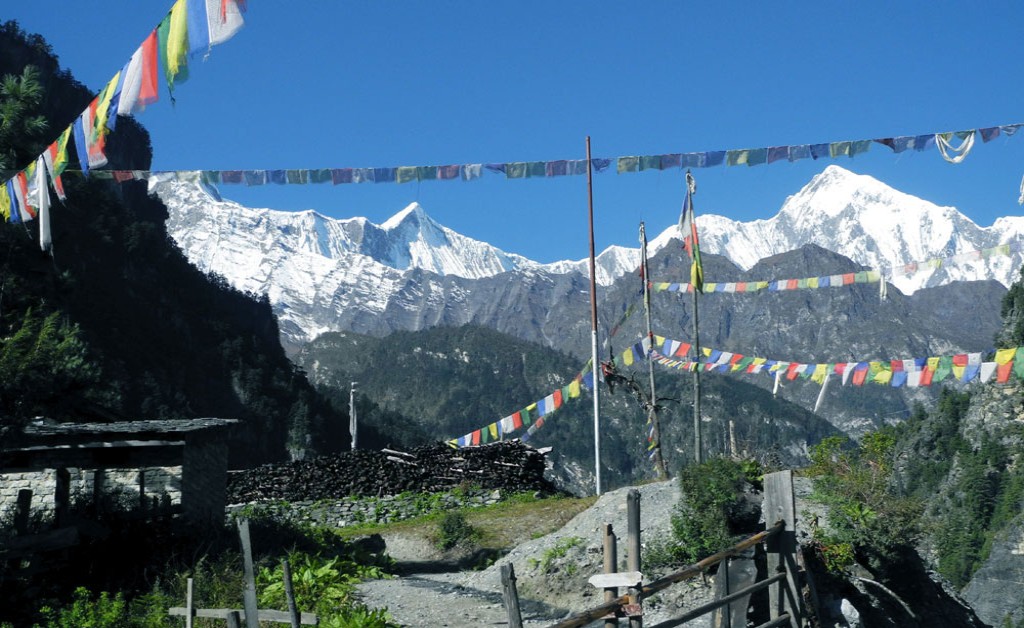
When the trail reaches the more open ridges, the character of the walk changes. After climbing through farmland or forest, the view can suddenly open across several layers of hills and, in clear weather, toward the Himalayan skyline. Do not expect the ridge walking to remain continuously level. The trail continues to rise and fall as it connects the villages along the route.
Some sections of the traditional Royal Trek now meet or briefly follow local motor roads. Where this happens, the surface is generally wider and more exposed than the older village paths, while recent road work or rain can leave loose or soft ground. Our guide uses the most practical walking line available rather than relying on an old route description when conditions on the ground have changed.
Rain can change the trail surprisingly quickly. Earth paths become muddy, stone surfaces become more slippery, and recently disturbed road sections can soften underfoot. When that happens, we reduce the pace where necessary rather than trying to match the walking time of a dry day. Local road conditions can also affect the vehicle transfers connected with the trek after prolonged rain.
Most days are manageable for someone comfortable walking for several hours over hilly ground, but there is an important difference between low altitude and effortless walking. On the Royal Trek, your legs are more likely to notice the repeated climbing and descending than the elevation itself.
For us, the best way to walk this route is simple: keep a steady rhythm on the climbs, take your time where the descent is loose or wet, and do not rush just because the next village appears close. In Nepal's middle hills, what you can see across the valley and how long it takes to reach it are often two very different things.
Annapurna Royal Trek Difficulty and Physical Preparation
The Annapurna Royal Trek is an easy trek by Nepal trekking standards, mainly because it stays below 2,000 meters and does not involve a high pass, technical climbing or several days at high altitude. However, we always explain what “easy” means before the trek. It describes the overall grade of the route, not a flat or effortless walk.
For most trekkers, altitude is not what makes the Royal Trek tiring. The bigger adjustment is walking for several hours, finishing the day, resting overnight and then doing it again the following morning. Someone can feel very comfortable on the first day while their legs notice the accumulated walking much more on the second or third day.
This is why we pay attention to recovery as much as walking speed. In our experience, how someone feels when starting the next morning often tells us more about their trekking fitness than how quickly they reached the lodge the previous afternoon. There is little benefit in arriving early if you have used more energy than necessary to get there.
You do not need previous Himalayan trekking experience for the Royal Trek. Before coming to Nepal, the most useful preparation is simply to make regular walking part of your routine. If you are not normally active, gradually increase the length of your walks and include hills or stairs where possible rather than doing all your preparation on flat ground.
You also do not need to train like you are preparing for Annapurna Base Camp or a high Himalayan pass. A useful personal test is whether you can walk comfortably for four to five hours and still feel ready to be active again the following day. If you can, the physical demands of the Royal Trek should be much easier to manage.
Age alone is not how we judge whether someone is ready for this trek. A regularly active older traveler can be better prepared than a much younger traveler who rarely walks. We look more at normal activity level, confidence walking for several hours and how well someone recovers after exercise.
Once the trek begins, our guide does not expect everyone to prove their fitness by walking quickly. We prefer to establish a pace that can be maintained throughout the day. Starting too fast on the first climb and repeatedly stopping to recover usually works less well than beginning at a steady rhythm and keeping enough energy for the rest of the day.
For the Royal Trek, preparation does not need to be complicated. Arrive comfortable with several hours of walking, give your legs some experience of hills or stairs, and remember that you will be walking again the next morning. That is more useful for this route than an intensive training plan designed for a much higher or more demanding Himalayan trek.
Who Is the Annapurna Royal Trek Best Suited For?
The Annapurna Royal Trek is best suited to travelers who want several days of trekking in Nepal without making high altitude or a famous mountain destination the main objective. It is a particularly good fit when the walking itself, the countryside and the journey between villages matter as much as reaching a final viewpoint.
We often suggest the Royal Trek to first-time visitors who want to begin with a lower-altitude route around Pokhara before considering Nepal's higher treks. You still experience a proper multi-day journey on foot, but the trip is not built around reaching a base camp, crossing a high pass or sleeping at increasingly higher elevations.
It also works well when you have only a few days available for trekking but want more than a day hike from Pokhara. The Royal Trek can fit naturally into a wider Nepal itinerary without requiring most of your holiday to be committed to one mountain route.
Another good fit is a traveler who is genuinely interested in Nepal's middle-hill countryside and village landscapes. On this trek, agricultural land, homes, local activity and changing hill scenery are not simply things you pass on the way to a major mountain attraction. They are a large part of what you have come to experience.
The Royal Trek can also suit travelers who prefer to remain at lower elevation. Some guests simply have no interest in sleeping at 3,500 or 4,000 meters when they visit Nepal. Choosing a lower route does not have to be a compromise if the foothill landscape and style of walking are what you actually want.
There are also travelers for whom we would recommend another trek. If your priority is standing close beneath the high mountains, reaching a base camp, entering alpine terrain or crossing a major Himalayan pass, the Royal Trek will probably feel too modest. Mardi Himal, Annapurna Base Camp or one of the longer Annapurna routes would be a better match.
When someone asks us whether the Royal Trek or a higher Annapurna trek is better, we do not start with which one is easier. We first want to know what they expect from their days on the trail. If the answer is a few days of lower-altitude walking through hills and villages around Pokhara, the Royal Trek makes sense. If the answer is dramatic high-mountain terrain and a major Himalayan objective, we recommend going higher.
Best Time for the Annapurna Royal Trek
The best time for the Annapurna Royal Trek is generally October to November and March to April. These months usually give the best balance of comfortable walking conditions and opportunities for clear Himalayan views. Because the route stays below 2,000 meters, however, the Royal Trek has a wider workable season than many higher treks in the Annapurna region.
For this particular trek, visibility can matter more than temperature. You are looking toward the high Himalayas from the foothills rather than walking directly beneath the mountains, so haze and cloud make a noticeable difference. We can have a comfortable walking day but limited mountain views, while a colder morning with clear air can give a much better experience.
October and November are our first choice when mountain visibility is the priority. Once the main monsoon period has passed, the hills are still green and the air is often clearer. November becomes cooler in the mornings and evenings, but daytime walking at these elevations is generally comfortable.
March and April are particularly good for travelers who prefer spring conditions. The hills become warmer, vegetation is active and the countryside has a different character from autumn. We normally pay more attention to the morning during spring because cloud and haze can increase as the day warms. A clear view at breakfast should not be taken for granted several hours later.
The winter months from December to February remain realistic for the Royal Trek. This is one advantage of staying in the lower Annapurna foothills rather than following a route dependent on a high pass or high-altitude lodges. Expect colder starts and evenings, but winter can reward trekkers with crisp visibility when the weather is settled.
By May, we start thinking more about daytime heat. The lower hills can become warm during exposed climbs, so an earlier start often makes more sense than following exactly the same daily timing we would use in November. Pre-monsoon cloud can also build later in the day, making morning mountain views more valuable.
The June to September monsoon period is possible, but it is not our first recommendation if Himalayan views are an important reason for choosing the trek. The countryside becomes very green, but humidity, rain and frequent cloud make mountain visibility less dependable. Some travelers enjoy Nepal during the monsoon, but they should choose it knowing that the clear northern skyline shown in trekking photographs cannot be expected every day.
One thing we have learned from walking in the foothills is not to waste a clear morning. If Annapurna and the surrounding mountains are visible when you wake up, enjoy the view then and be ready for the day's walk. A clear skyline early in the morning can be partly hidden by cloud a few hours later, especially as the hills warm.
For most guests, we would therefore choose October-November for autumn clarity or March-April for a warmer spring trek. Winter is a realistic alternative if you are comfortable with colder mornings. The Royal Trek does not have an extremely narrow trekking season; outside the main months, the decision is mostly about how much you are willing to trade clear mountain views and comfortable temperatures for heat, rain, cloud or colder starts.
Accommodation and Meals on the Annapurna Royal Trek
Accommodation on the Annapurna Royal Trek is simple and locally run, and travelers should come with different expectations from the busier lodge routes of the Annapurna region. During the trekking section, our priority is a clean and practical place to sleep at each overnight stop rather than hotel-style facilities or a choice of several room categories.
The important difference on this route is the limited choice in some of the smaller overnight villages. We prefer to organize the night's accommodation as part of the trek rather than arrive late in the day and start looking for rooms. Facilities can vary from one stop to another, and rooms are generally basic, with simple beds and bedding. Bathroom and other lodge facilities depend on the property available in that village.
Meals are prepared locally during the trek rather than provided from a fixed menu that is identical at every stop. Dal bhat is usually one of the most practical meals on the route, with rice, lentils and vegetables providing a filling dinner after a walking day. Other simple Nepali and familiar trekking meals may be available depending on the kitchen and supplies at each overnight place.
One thing we ask guests to understand is that a smaller village kitchen works differently from a restaurant in Pokhara. Ingredients and menu choices can be more limited, and meals may take time to prepare after the group arrives. We prefer guests to order with the evening schedule in mind rather than expect every dish to be available immediately.
Breakfast is normally kept simple before setting out for the day. What matters to us is that trekkers have enough to eat before walking rather than promising a large selection that a small village kitchen may not consistently provide.
Vegetarian meals can generally be arranged, but guests with vegan, gluten-free, allergy-related or other specific dietary requirements should tell us before leaving Pokhara. This gives our guide time to communicate the requirement at the overnight stops instead of discovering it only when dinner is being prepared. For a restricted diet, we may also recommend bringing a few suitable personal foods from Pokhara when local choices are likely to be limited.
The experience changes once you return to Pokhara, where hotels, restaurants and food choices are far more extensive. On the Royal Trek itself, we keep expectations straightforward: simple local accommodation, freshly prepared meals and the best practical services available at each overnight village. That is a more accurate picture of this route than promising the same lodge facilities found on Nepal's busiest trekking corridors.
Transportation and Access for the Annapurna Royal Trek
The Annapurna Royal Trek is accessed through Pokhara, which serves as the base before and after the trekking section. Unlike routes that depend on mountain flights or a long drive into a remote valley, the Royal Trek can be reached by road from Pokhara and the walking begins the same day.
On the first trekking morning, we leave Pokhara by vehicle and drive toward the practical trail access for Kalikasthan. From there, we begin walking uphill toward Kalikasthan rather than spending unnecessary time on sections that are now better approached by road. The exact drop-off point can change with local road conditions and access at the time of the trek, so we prefer to organize this according to the situation on the ground rather than promise one permanent roadside starting point.
After Kalikasthan, the journey continues on foot through Syaklung and Chisapani. These are the main walking days of the Royal Trek, with vehicle transfers kept at the beginning and end rather than used to move between the overnight villages.
The final trekking day leaves Chisapani and descends toward Begnas Lake. Begnas gives the walking route a natural finish on the eastern side of the Pokhara Valley. Once we reach the practical road-access point around the lake area, our vehicle meets the group for the drive back to Pokhara.
For guests following our complete 9-day Annapurna Royal Trek itinerary, Kathmandu and Pokhara are connected by the scheduled overland transportation included in the package. The journey normally takes most of the day, so we keep the night in Pokhara before trekking rather than arriving from Kathmandu and trying to begin walking immediately.
Travelers who are already staying in Pokhara can start the Royal Trek from Pokhara without adding unnecessary Kathmandu travel days. We can arrange the trailhead transfer, trekking services and return transportation around a Pokhara-based itinerary.
Private transportation can also be arranged when requested. This can be useful for guests who prefer more control over departure time and stops between Kathmandu and Pokhara rather than following the schedule of tourist transport.
One practical detail we always keep flexible is the local vehicle access at either end of the trek. Roads in Nepal's middle hills continue to change through construction, maintenance and seasonal conditions. We therefore use the most sensible drop-off and pickup points available at the time instead of adding road walking simply because an older Royal Trek itinerary followed a different access route.
For the route we operate, the transport pattern is straightforward: travel to Pokhara, drive to the practical trail access below Kalikasthan, trek through Kalikasthan, Syaklung and Chisapani to the Begnas Lake side, then return to Pokhara by road. There are no domestic or mountain flights required for the Annapurna Royal Trek.
Permits Required for the Annapurna Royal Trek
The Annapurna Conservation Area Permit (ACAP) is required for the Annapurna Royal Trek. No restricted-area permit or climbing permit is needed for this route.
The Royal Trek remains at relatively low elevation, but permit requirements are determined by the area the route passes through rather than the maximum altitude reached. For our itinerary through the lower Annapurna foothills, ACAP is the main trekking permit we arrange for our guests.
For international trekkers, the standard ACAP fee is NPR 3,000 per person. Permit fees and procedures can be revised by the responsible authorities, so we confirm the applicable requirement again when preparing each departure rather than relying on an old fee published online.
When you book the Royal Trek with us, our team handles the ACAP arrangements before the trekking section begins. We normally request the necessary passport details in advance so the paperwork can be completed without using your trekking time for permit formalities.
Your guide carries the relevant trekking documentation during the journey and handles any permit checks encountered along the route. From the guest's side, the process is straightforward: provide the required travel details before departure, and we take care of the permit arrangements for the trek.
Guide and Porter Support on the Annapurna Royal Trek
On the Annapurna Royal Trek, our guide does much more than lead the way between villages. Before leaving Pokhara, we confirm the trekking arrangements, local access and planned overnight stops so the walking days can begin without guests having to organize these details along the trail.
Once we start walking, the guide sets a pace that works for the group rather than expecting everyone to keep the same speed. This matters particularly on the climbs, where starting too quickly can make a relatively short walking day unnecessarily tiring. If someone needs more time, we adjust the pace instead of treating the estimated walking hours as a deadline.
The guide also coordinates the practical side of each day. Accommodation and meals at the smaller overnight stops are simpler than on Nepal's major trekking corridors, so knowing where the group is staying and communicating with the local accommodation before arrival helps the evening run more smoothly.
There is also more to explain on this trek than mountain names. You are walking through working villages and agricultural hillsides, where the houses, crops and daily activity you pass are part of the journey. Our guides help guests understand what they are seeing rather than allowing the countryside to become just scenery between one overnight stop and the next.
A porter can be arranged for guests who prefer not to carry their main trekking bag. When using porter support, you walk with a small daypack containing the things you may need before reaching the next overnight stop, such as water, a rain layer, sun protection, personal medication, camera or phone.
We recommend leaving luggage that is not needed for the trekking days in Pokhara. There is little value in carrying a large suitcase or clothing for the rest of your Nepal holiday through Kalikasthan, Syaklung and Chisapani. Packing only what you will actually use on the trail keeps the trekking load simpler for both the guest and porter.
Porter loads are organized according to the number of trekkers and the amount of luggage being carried, not simply treated as extra baggage space to fill. If you are sharing porter support, we explain the luggage arrangement before leaving Pokhara so everyone knows what should go into the trekking bag and what should remain behind.
For us, good guide and porter support on the Royal Trek should not dominate the experience. It should make the trek feel straightforward: you know where you are going, the day's pace is sensible, the next overnight stop is organized, and you can spend more time paying attention to the hills and villages you came here to walk through.
Drinking Water, Electricity and Connectivity on the Annapurna Royal Trek
Drinking water, electricity and mobile service are available at different points on the Annapurna Royal Trek, but we tell guests not to expect the same consistency they have in Pokhara. The route stays in inhabited middle-hill country, yet once you are walking between villages, services depend on the settlement, accommodation and local network at that particular point.
For drinking water, carry at least one reusable bottle from Pokhara. Water can be obtained along the route, but untreated tap, spring or stream water should not be assumed safe to drink simply because it looks clean. Depending on the source available, our guide will advise whether the water should be boiled, filtered or treated before you drink it.
Because this is a short trek, managing electronics is usually straightforward. Start from Pokhara with your phone, camera and power bank fully charged. Electricity is available in the villages, but the location of charging points and reliability of the supply can vary between the accommodation we use. A power bank is useful when you would rather not depend on finding a free socket immediately after arriving.
Mobile reception is less predictable once you begin walking. You may have a good signal on an exposed hillside or in one village and lose it after dropping behind the next ridge. This is normal in Nepal's middle hills, where the shape of the terrain can matter as much as the distance from Pokhara.
We treat Wi-Fi in the same way. If it is available at an overnight stop, use it as a convenience rather than something the day's plans depend on. Guests who need to make an important video call, send large work files or remain continuously online are better doing that in Pokhara before the trek or after returning.
Before leaving Pokhara, we normally suggest doing three simple things: charge your devices, download anything you may need offline and let people at home know that you may not reply immediately while walking. There is little reason to carry extra electronics for a few trekking days when a charged phone and a small backup power source will cover most guests' needs.
The practical approach on the Royal Trek is simple: refill water carefully, keep enough battery for the day's walk and treat internet access as useful when available rather than guaranteed. Being relatively close to Pokhara does not mean every hillside between Kalikasthan, Syaklung and Chisapani has the same services as the city.