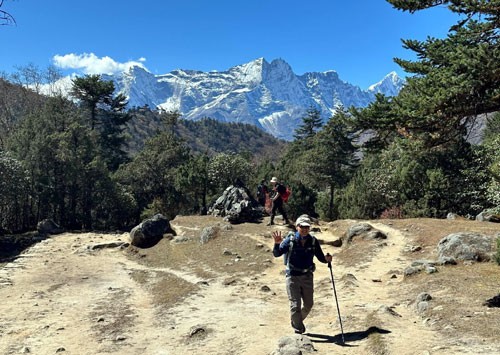
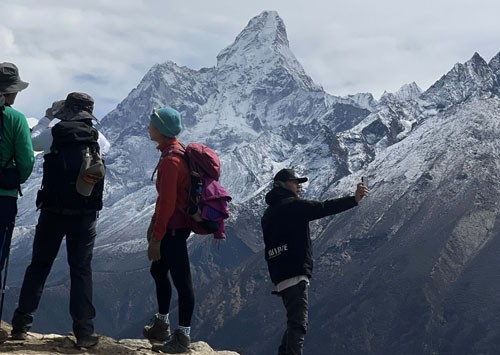
Who Is the Pikey Peak Trek For?
The Pikey Peak Trek is designed for travelers who want a genuine Himalayan trekking experience without committing to a longer expedition or trekking to extreme altitude. With a maximum elevation of 4,065 metres, a gradual ascent, and daily walks of around 5 to 7 hours, it is suitable for a broad range of trekkers with reasonable fitness and a positive attitude toward walking.
For first-time trekkers, Pikey Peak provides an excellent introduction to trekking in Nepal. The route follows established trails through lower Solukhumbu, the daily distances are manageable, and the steady altitude gain gives most people enough time to adjust naturally. It allows beginners to experience mountain teahouses, ridge walking, and spectacular Himalayan scenery without the demands of more challenging high-altitude routes.
If you later decide to take on a longer adventure in the Everest region, our Everest Gokyo Lake Trek offers a natural next step with greater altitude, a longer itinerary, and a more demanding trekking experience.
Families with older children who enjoy walking also find this route rewarding. The itinerary is short enough to remain enjoyable while still offering varied experiences each day, including forest trails, traditional villages, Buddhist monasteries, and panoramic mountain viewpoints. Many families appreciate that the journey combines outdoor adventure with opportunities to experience local culture at a relaxed pace.
For couples, the route offers a quieter mountain experience than Nepal's busiest trekking trails. Smaller villages, locally operated teahouses, and the early morning climb to Pikey Peak create memorable shared experiences without the crowds often found on more popular Everest-region routes.
Solo travelers are equally well suited to this trek. The route passes through welcoming settlements such as Jhapre and Junbesi, making it easy to interact with local communities and other trekkers, while the quieter stretches between villages still provide the sense of peace and independence that many solo hikers enjoy.
Senior travelers who are in good health and accustomed to regular walking can also complete the trek comfortably. Success depends far more on maintaining a steady pace, allowing time to acclimatize, and enjoying the journey than on walking quickly or covering long distances each day.
Pikey Peak is also an excellent option for travelers with limited time. Within just 5 to 7 days, it delivers a complete Himalayan trekking experience that combines mountain scenery, traditional Sherpa communities, cultural landmarks, and rewarding daily walks without requiring a lengthy holiday.
From our experience organizing treks in the lower Everest region, we regularly see two types of travelers choosing Pikey Peak. Some want to enjoy views of Everest while avoiding the longer Everest Base Camp itinerary, while others have already completed Nepal's busier trekking routes and return to discover a quieter and less-visited part of the Everest region.
Travelers interested in other short Himalayan adventures can also explore our 5 Days Langtang Valley Trek or Mardi Himal Trek, both of which offer rewarding mountain experiences within a similar timeframe.
One practical consideration is the drive between Kathmandu and Dhap. Although the journey is scenic, some road sections can be long and uneven. Travelers who value greater comfort and flexibility often choose a private jeep, particularly families, couples, and small groups.
Ultimately, the Pikey Peak Trek is ideal for travelers who value a well-paced itinerary, authentic mountain communities, and rewarding Himalayan scenery over covering the greatest distance or reaching the highest altitude. It is especially suited to those seeking a shorter trek that still feels genuinely immersive from start to finish.
Pikey Peak Trek Difficulty
The Pikey Peak Trek is not considered a difficult trek, but it still offers a real Himalayan walking experience. Compared to higher-altitude treks in Nepal, the route is less demanding, with a steady pace and gradual elevation gain throughout the journey.
The trails are clear and well-used, passing through forests, ridgelines, open hillsides, and small Sherpa villages. Most walking days are around 5 to 7 hours, depending on the itinerary and walking pace. The trail generally feels comfortable rather than physically challenging, allowing trekkers to enjoy the scenery and local atmosphere without feeling rushed.
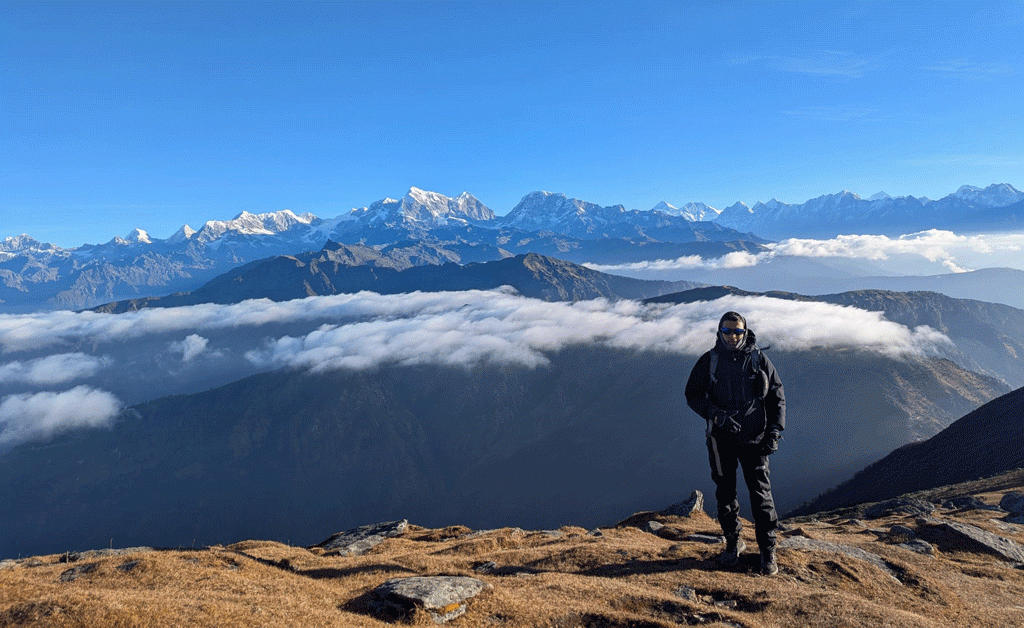
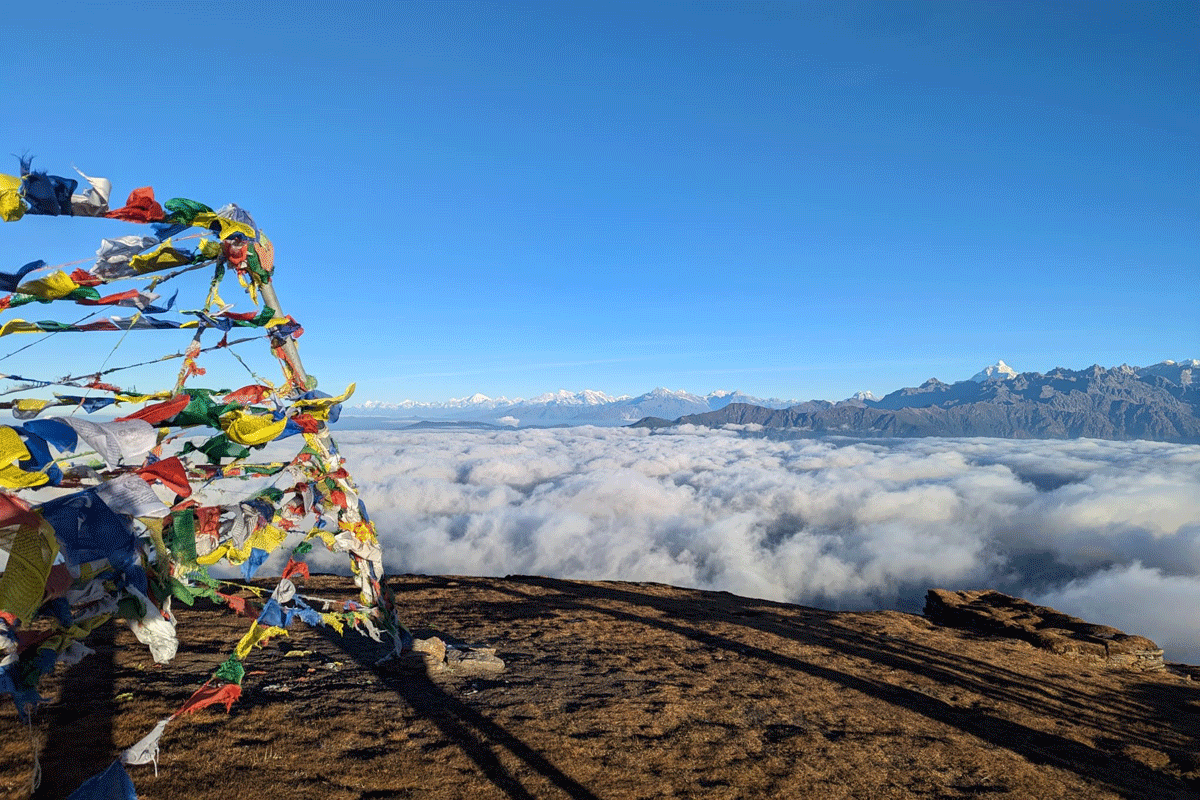
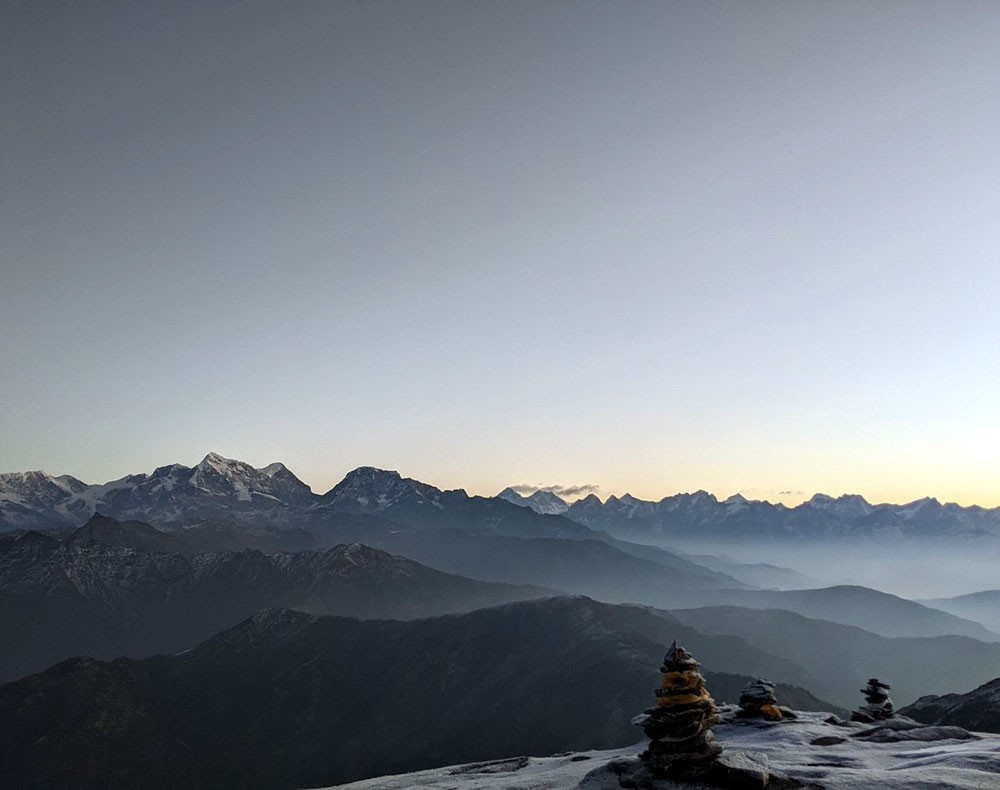
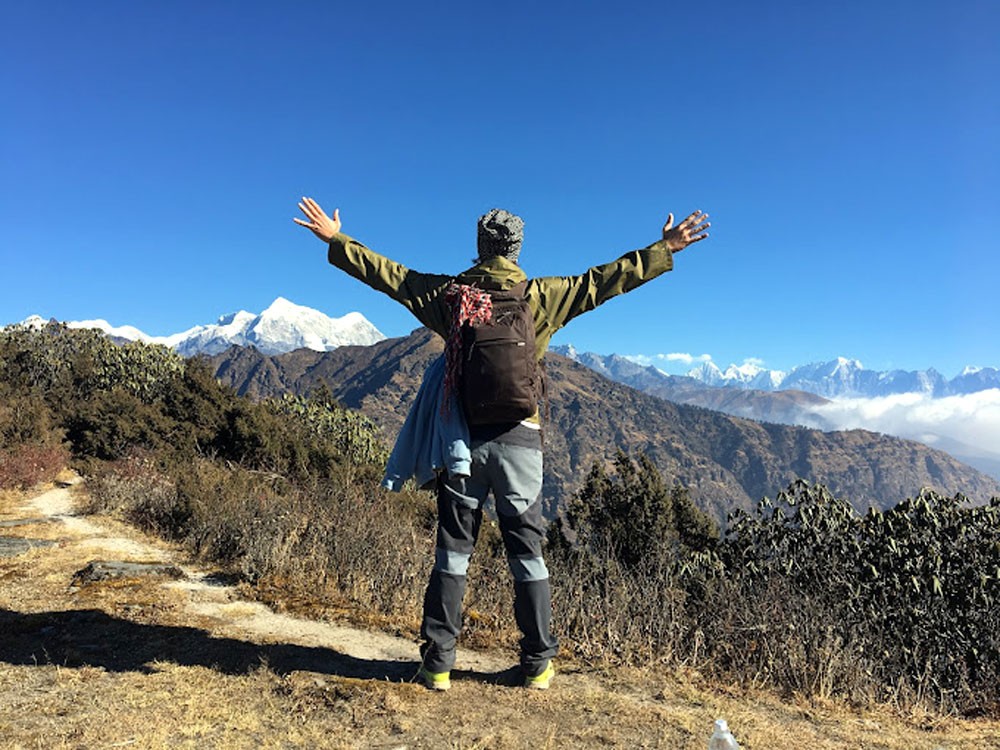
The highest point of the trek is Pikey Peak at around 4,065 meters. At this altitude, the air becomes thinner, especially during the early morning hike to the summit. The final climb is gradual and manageable for most trekkers, although the cold weather and elevation can make the walk feel slightly more demanding. Reaching the summit at sunrise, however, is one of the most rewarding parts of the journey.
Trail conditions remain stable across most trekking seasons. Forest paths are usually soft and shaded, while ridge sections are more open with wide mountain views. During spring, the route passes through blooming rhododendron forests, while autumn usually brings dry trails and clear mountain visibility. In winter, light snow near Pikey Peak can add a small extra challenge, especially during the morning ascent.
The trek is suitable for beginners, families, and trekkers with basic fitness who want to experience the Himalayas without the longer duration and higher altitude of Everest Base Camp. While altitude sickness risk is lower compared to many high Himalayan treks, walking slowly, staying hydrated, and maintaining a steady pace are still important throughout the journey.
If you prefer an even shorter Everest experience with lower altitude exposure and extra comfort, our Everest View Hotel Trek is another suitable option.
The Pikey Peak Trek is more about steady walking, changing landscapes, local culture, and enjoying the rhythm of the journey rather than pushing physical limits. This is one of the reasons many trekkers find the route both approachable and genuinely rewarding compared to more demanding high-altitude treks in Nepal.
From our experience organizing treks in the lower Everest region, many trekkers are surprised by how peaceful the Pikey Peak route feels compared to busier trails near Lukla and Namche Bazaar. Even during the main autumn season, it is still possible to walk for long sections without meeting large trekking groups.
Best Time to Trek Pikey Peak
The Pikey Peak Trek can be done for most of the year, but the overall trekking experience changes noticeably depending on the season. Choosing the right season is less about whether the trek is possible and more about what kind of atmosphere and views you want to experience.
Spring (March to May) is one of the most enjoyable times to walk this route. The forests along the trail become colorful with blooming rhododendrons, especially between Jhapre and the higher ridges. The weather is generally stable, with mild temperatures during the day and cooler mornings. Mountain views are often clear, although occasional clouds can appear in the afternoon.
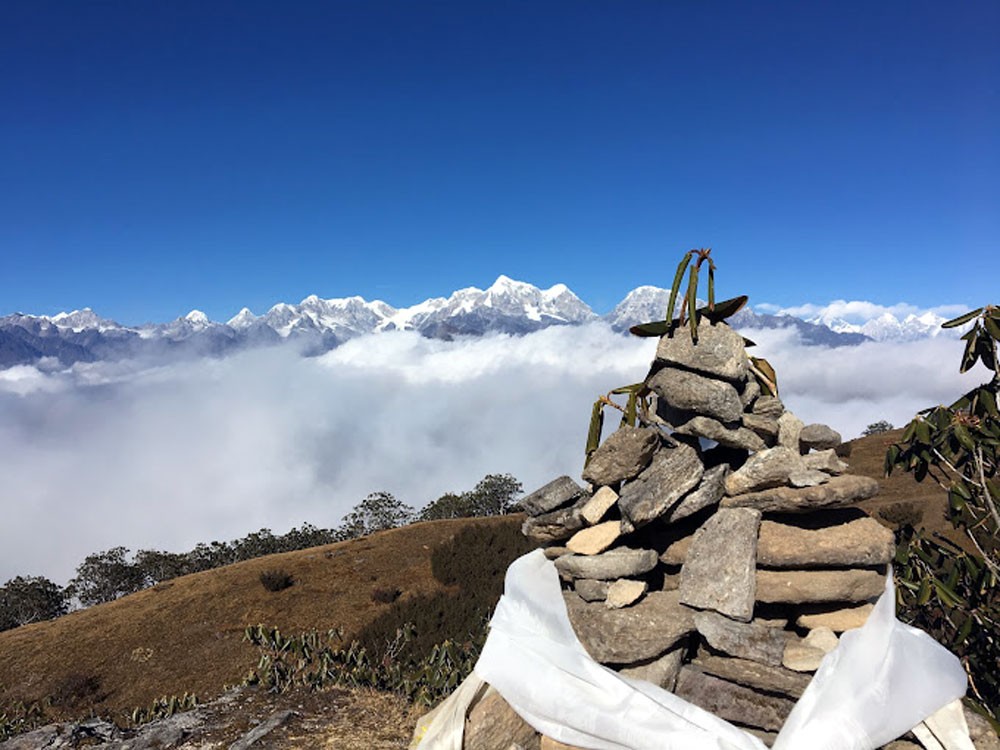
Autumn (September to November) offers the clearest mountain views of the entire year. After the monsoon, the air feels fresh and visibility is at its best. This is usually the most reliable season for wide Himalayan views from Pikey Peak, including Everest and surrounding peaks. Trails are dry and comfortable, and the overall trekking conditions are very stable.
Travelers who want to see Everest without trekking can also consider our Everest Mountain Flight from Kathmandu.
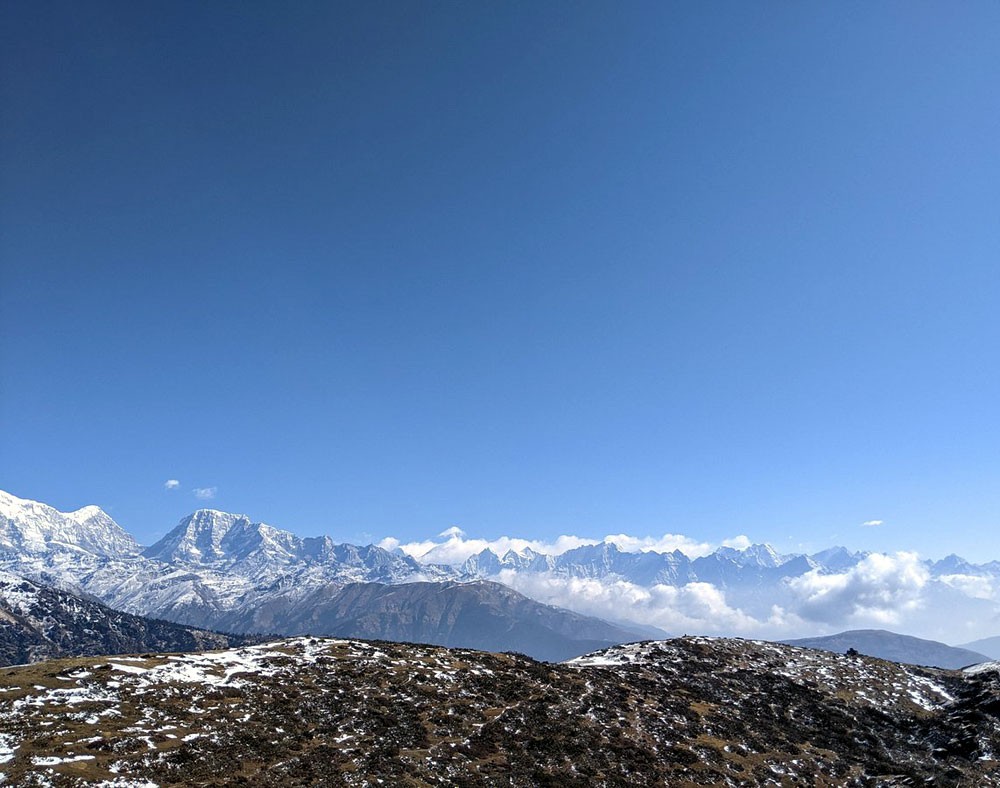
Winter (December to February) is quieter and more peaceful. Morning skies are often very clear, giving sharp mountain views. However, temperatures drop significantly, especially at higher elevations and during the early morning summit hike. There may be snow near the top, which can make the final ascent slightly more challenging but also very beautiful in winter conditions.
Monsoon (June to August) brings a completely different experience. The lower hills and forests become very green during this period, with fewer trekkers on the route. However, clouds, rain, and limited visibility can affect mountain views, especially in the afternoon. Trails can be muddy and slippery in some sections, so this season is less preferred for those coming mainly for clear Himalayan views.
The best season often depends on the kind of experience you are looking for. If you want the clearest mountain views, autumn is the most reliable. If you prefer colorful forests and a more lively natural setting, spring is a great choice. For those who enjoy quiet trails and don’t mind the cold, winter can be surprisingly rewarding.
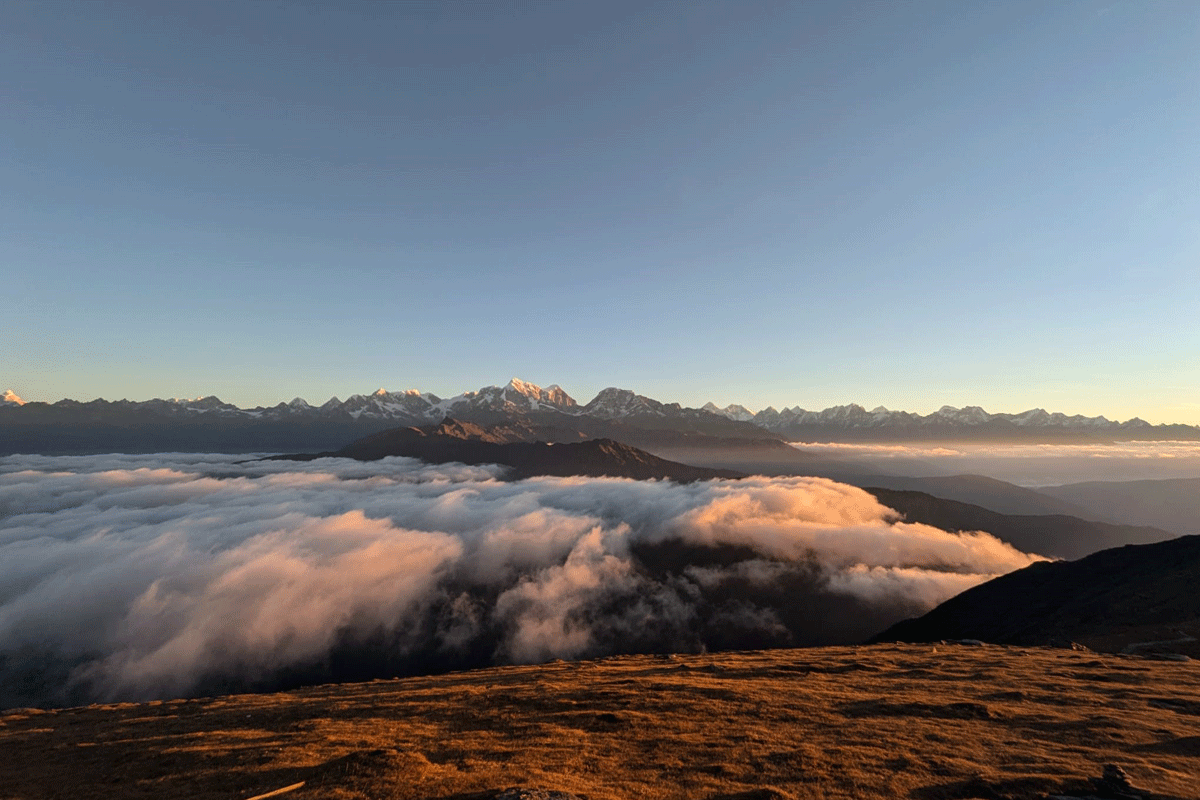
Tea House Accommodation on the Pikey Peak Trek
Accommodation on the Pikey Peak Trek is provided mainly in locally owned tea houses run by families from the surrounding villages. While the facilities are simple, they are clean, welcoming, and well suited to the pace of trekking through the lower Everest region.
Most rooms are basic twin-sharing rooms with wooden beds, mattresses, pillows, and blankets. Compared with the more developed trekking routes to Everest Base Camp or Annapurna Base Camp, accommodation is more modest, but it provides everything most trekkers need for a comfortable night's rest after a day on the trail.
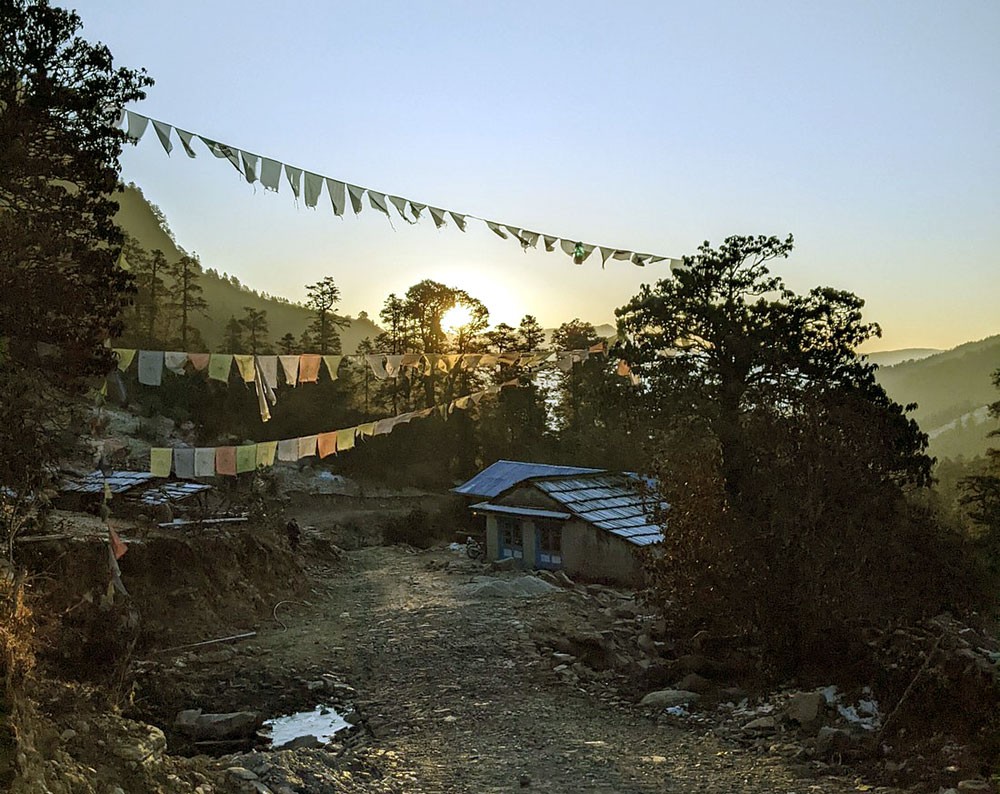
In villages such as Jhapre, Pikey Base Camp, and Junbesi, evenings are usually spent in the shared dining room, where trekkers enjoy hot meals, tea, and conversation while gathering around the stove during colder months. These communal spaces naturally bring trekkers and local hosts together, creating a relaxed atmosphere at the end of each day.
Attached bathrooms are uncommon on this route, and most tea houses provide shared toilets and washing facilities. Hot showers are available in some villages for an additional charge, although availability depends on the season and local water supply.
Electricity is available in most villages for charging phones, cameras, and other electronic devices, though charging fees may apply at higher elevations. Wi-Fi and mobile network coverage are available in some locations, but connections can be slow or unreliable in the more remote sections of the trail.
Because the Pikey Peak Trek receives far fewer visitors than Nepal's busiest trekking routes, many tea houses offer a quieter and more relaxed experience. It is common to spend time talking with lodge owners in the evening, learning about village life, farming, local festivals, and daily life in the lower Everest region. For many trekkers, these conversations become just as memorable as the mountain views.
Rather than offering luxury facilities, the tea houses reflect the character of the region itself. Comfortable beds, freshly prepared meals, welcoming hosts, and the peaceful atmosphere of small Himalayan villages combine to create an authentic mountain experience that is an important part of the journey.
Food During the Pikey Peak Trek
Meals on the Pikey Peak Trek are served in locally operated tea houses and are prepared to provide the energy needed for several consecutive days of walking in the mountains. Although the menus are simpler than those found in Kathmandu, the food is freshly cooked, filling, and well suited to the pace of trekking through the lower Everest region.
Dal bhat is the meal most trekkers choose throughout the journey. This traditional Nepali combination of rice, lentil soup, seasonal vegetables, pickles, and, in some tea houses, a vegetable or meat curry provides balanced nutrition and lasting energy. Because free refills are commonly available, many trekkers prefer dal bhat after a full day on the trail.
Tea houses also serve a variety of familiar dishes, including fried rice, noodles, pasta, potatoes, momos, soups, eggs, porridge, pancakes, chapati, and, in some villages, simple bakery items. Hot drinks such as milk tea, black tea, coffee, hot lemon, ginger tea, and garlic soup are widely available and are especially popular during cool mornings and evenings.
As the trail climbs toward Pikey Base Camp, menu choices become slightly more limited than in villages such as Jhapre and Junbesi. Since food supplies are transported into the mountain communities by vehicle, porter, or mule, prices gradually increase with altitude. Even in the higher villages, however, meals are usually prepared after ordering rather than cooked in advance.
Vegetarian meals are available throughout the trek and are a popular choice for many hikers. Vegan meals may also be possible at some tea houses, although the selection becomes more limited in the smaller and higher settlements. If you have specific dietary requirements or food allergies, it is helpful to inform your guide before the trek so arrangements can be made whenever possible.
Most evenings are spent in the shared dining room, where trekkers enjoy dinner, exchange stories from the day's walk, and relax beside the stove during colder months. These dining areas often become the social centre of each tea house and are an enjoyable part of the overall trekking experience.
For drinking water, tea houses sell bottled water and provide boiled drinking water for a small charge. Many trekkers carry a reusable bottle together with water purification tablets or a filtration bottle, reducing plastic waste while ensuring a reliable supply of safe drinking water throughout the journey.
Food on the Pikey Peak Trek is not about luxury or an extensive menu. It is about fresh, nourishing meals prepared by local families who welcome trekkers into their tea houses each day. Combined with warm hospitality and the relaxed atmosphere of the lower Everest region, these simple meals become an important part of the overall trekking experience.
Transportation to the Pikey Peak Trek
The Pikey Peak Trek usually begins with an overland journey from Kathmandu to Dhap, the most common starting point of the trek. The drive normally takes around 8 to 10 hours, although travel time can vary depending on road conditions, traffic, and the season.
Trekkers can travel by either a local shared jeep or a private jeep. Shared jeeps are the most economical option and are commonly used by both local residents and trekkers. For those seeking greater comfort, additional luggage space, and a more flexible journey, a private jeep is generally the preferred choice, particularly for families, couples, and small groups.
After leaving Kathmandu, the road passes through river valleys, hillside towns, terraced farmland, and traditional villages before reaching the quieter landscapes of the lower Everest region. While much of the route is paved, sections beyond Okhaldhunga can be rough, especially during the monsoon season when road conditions may slow the journey.
One of the main advantages of the Pikey Peak Trek is that it does not require a flight to Lukla. This removes the uncertainty of weather-related flight delays and cancellations while still providing access to the Sherpa villages, mountain scenery, and cultural heritage of the Everest region.
The trek normally finishes in Phaplu, from where most trekkers return to Kathmandu by road. The return drive usually takes around 8 to 9 hours under normal conditions. Domestic flights between Phaplu and Kathmandu may also operate during certain seasons, although they remain dependent on weather and flight schedules.
Although the drive takes longer than flying into the Everest region, it offers a gradual introduction to rural Nepal before the trek begins. Passing through traditional villages, cultivated hillsides, and everyday mountain communities gives travelers a broader perspective of the region, making the journey itself an enjoyable part of the overall trekking experience.
Drinking Water During the Pikey Peak Trek
Safe drinking water is available throughout the Pikey Peak Trek, although trekkers should avoid drinking untreated water from natural sources. Most tea houses provide boiled drinking water for a additional charge, making it the most common and reliable option along the route.
Bottled mineral water is available in many villages, but prices gradually increase at higher elevations because supplies must be transported into the mountains. To reduce plastic waste and keep costs lower, many trekkers carry a reusable water bottle together with water purification tablets or a filtration bottle.
Staying well hydrated is especially important during longer walking days and as the trail gradually gains altitude toward Pikey Peak. Along with drinking water, tea houses also serve a variety of hot drinks, including milk tea, black tea, coffee, hot lemon, and ginger tea, which are popular during cool mornings and evenings.
Charging, Wi-Fi, and Mobile Network on the Pikey Peak Trek
Electricity is available in most villages along the Pikey Peak Trek, and tea houses generally provide charging facilities for phones, cameras, and other small electronic devices. Charging is normally available for an additional fee, especially in the higher villages where electricity is limited and often supplied by solar power.
Wi-Fi is available in several villages, including Jhapre, Junbesi, and Phaplu, although connections are usually slower and less reliable than in cities. In the higher and more remote sections of the trek, internet access may be limited or unavailable depending on local conditions.
Mobile network coverage is available in many parts of the route, with NTC generally providing better coverage than Ncell in several mountain areas. However, signal strength can vary depending on location, weather, and terrain.
Trekkers are encouraged to charge their devices whenever the opportunity is available and avoid relying on continuous internet access during the journey. For many visitors, the limited connectivity becomes part of the experience, allowing more time to enjoy the mountains, local communities, and the peaceful atmosphere of the lower Everest region.
Why Choose This Trek With Us?
Dream Heaven Adventure is a locally owned and registered trekking company based in Kathmandu, Nepal. We organize the Pikey Peak Trek with experienced Nepali guides who regularly lead treks in the lower Everest region and have first-hand knowledge of the trail, seasonal conditions, local communities, and the practical details that help every journey run smoothly.
Throughout the trek, our guides do much more than lead the trail. They manage the walking pace according to the group's ability, monitor how trekkers are adapting to the altitude, coordinate accommodation with local tea houses, and adjust daily plans whenever weather or trail conditions require flexibility. Along the way, they also share insights into Sherpa culture, Buddhist traditions, village life, and the history of the region, helping you experience the mountains beyond the scenery.
We also understand that every traveler has different expectations. Whether you prefer a private trek, would like to join a small group, or need minor itinerary adjustments to suit your schedule or walking pace, we do our best to create a journey that matches your travel style while maintaining a safe and enjoyable trekking experience.
From the moment you arrive in Kathmandu until the day your trek concludes, our team takes care of the logistics so you can focus on the journey itself. With experienced local support, carefully planned operations, and a genuine passion for sharing Nepal's mountains, we aim to make your Pikey Peak Trek enjoyable, well organized, and memorable for all the right reasons.