Upper Mustang Jeep Tour

Trip Fact:
  • Duration 12 Days
  • Difficulty Level Moderate
  • DestinationNepal
  • Max Altitude3,840m / 12,598 ft
  • MealsBreakfast in Kathmandu and Pokhara, with Full Board Meals while on the Mountain
  • Trip Start/EndPokhara
  • Group Size1-7
  • Best SeasonMarch to May and September to December, though Mustang remains accessible even during June to August.

Upper Mustang Jeep Tour Overview

The Upper Mustang Jeep Tour is a complete overland journey into Nepal’s restricted Himalayan region, offering access to the “Last Forbidden Kingdom” without trekking. This Upper Mustang overland tour allows you to explore one of the most remote and culturally preserved areas of Nepal in a practical and time-efficient way.

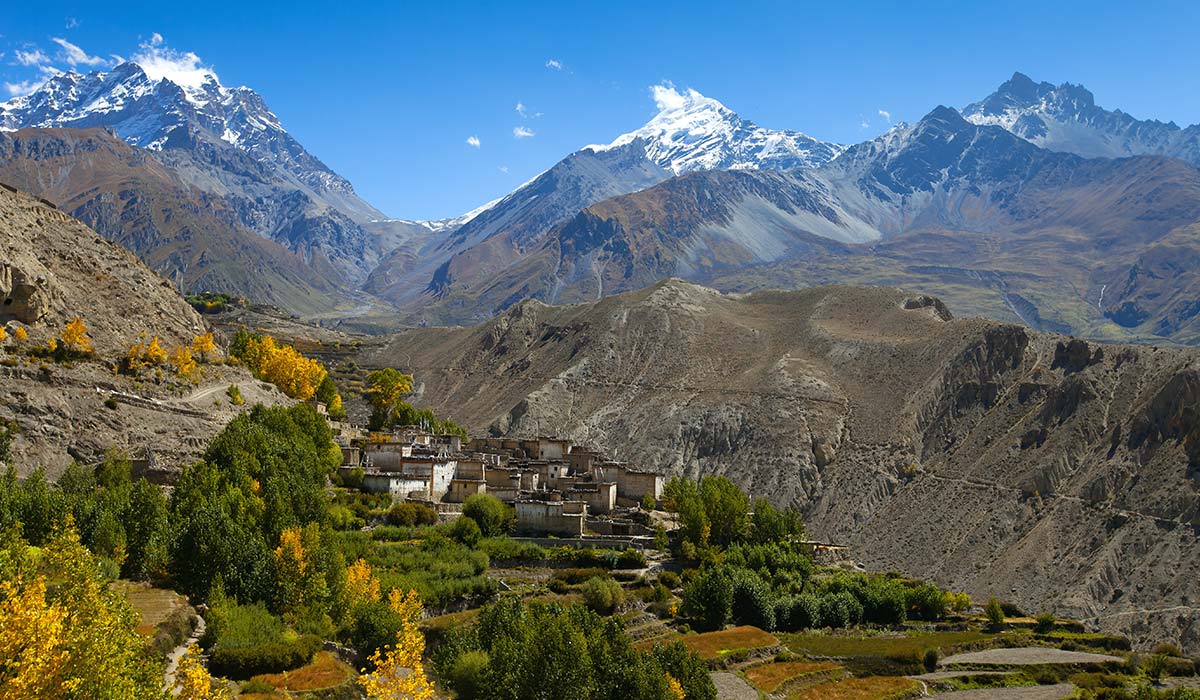
Located in the rain shadow of the Himalayas, Upper Mustang presents a striking landscape of dry valleys, red rock cliffs, and wind-shaped terrain that is very different from the greener regions of Nepal. The region remains culturally distinct, with strong Tibetan influence visible in architecture, monasteries, and daily life.

The journey begins by road from Kathmandu and continues through Pokhara and the Kali Gandaki valley toward Jomsom. As the route progresses, the environment gradually changes from forested hills to open, high-altitude desert terrain. Villages such as Kagbeni, Chhusang, Ghiling, and Ghami reflect traditional lifestyles that have remained largely unchanged over time.

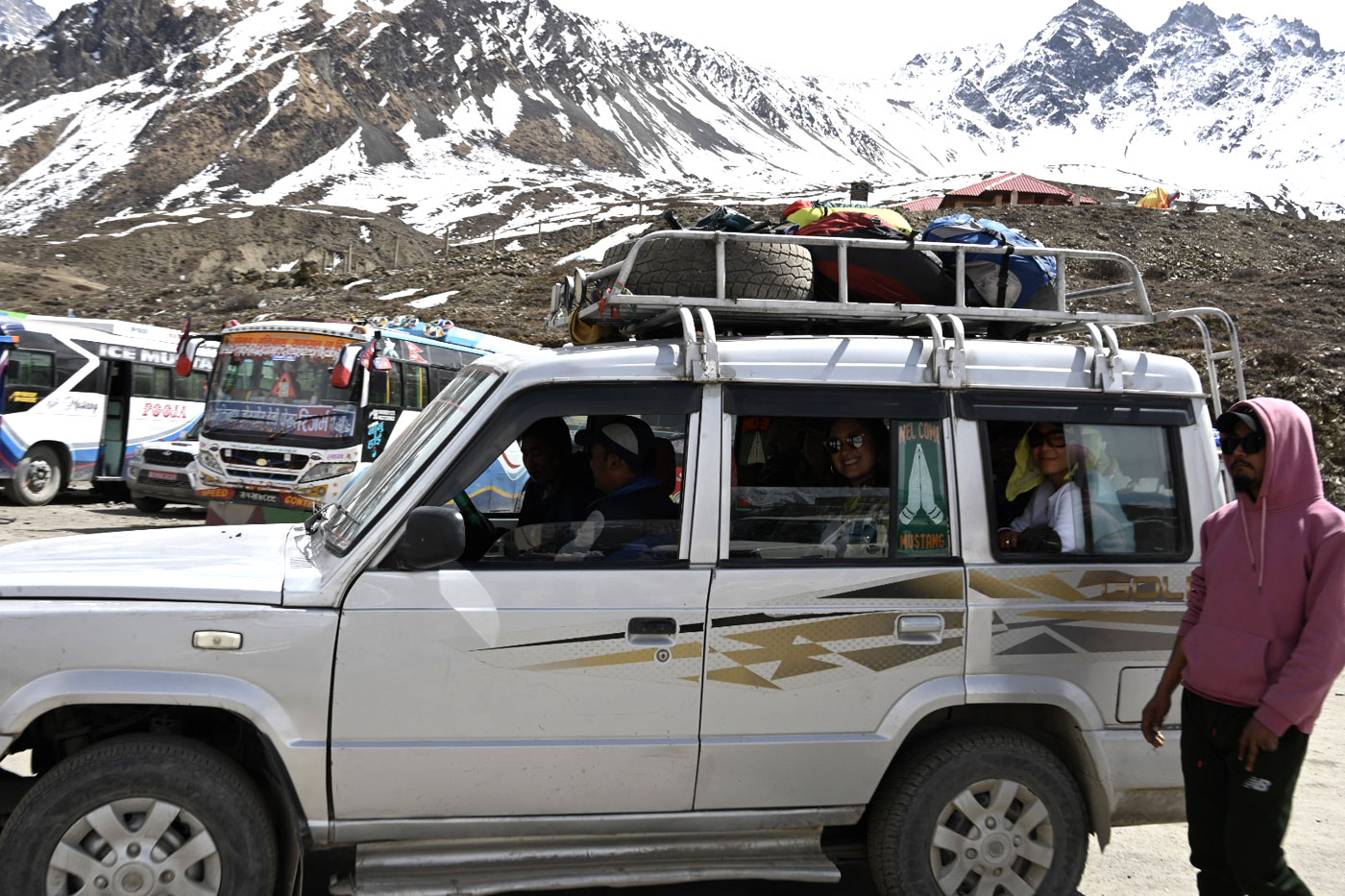
Traveling by 4WD vehicle makes this Upper Mustang jeep tour more accessible compared to trekking. It allows you to cover the full route to Lo Manthang in a shorter duration while still experiencing key cultural and historical sites along the way. This makes it an ideal choice for travelers looking for a high Himalayan experience without long-distance walking.

Lo Manthang, the historic walled capital of Mustang, is the cultural center of the journey. The city preserves a unique identity, with monasteries, royal structures, and local communities maintaining traditions shaped by centuries of isolation and trade history. Exploring this area offers direct insight into a way of life that is rarely seen elsewhere.

The route also includes important sites such as Muktinath Temple, Luri Gompa, and the Choser cave system, connecting natural landscape with spiritual and historical significance. These locations add depth to the journey beyond its scenic value.

Unlike trekking routes that require extended physical effort, this Lo Manthang jeep tour focuses on broader exploration across a larger region. The journey combines road travel, cultural immersion, and high-altitude scenery into a continuous experience, making it suitable for travelers who want to explore Upper Mustang in a more comfortable and structured way.

Upper Mustang remains a controlled and protected region, and traveling here offers a rare opportunity to experience a preserved Himalayan culture, dramatic desert landscape, and remote settlements within a single journey.

Based on years of organizing Upper Mustang jeep tour experiences, this itinerary is designed to follow a logical route flow, adapt to real road conditions, and provide a balanced combination of comfort, cultural exposure, and reliable travel experience.

Upper Mustang Jeep Tour Highlights

  • Explore the ancient walled city of Lo Manthang, the cultural heart of Upper Mustang
  • Experience a complete Upper Mustang overland journey without trekking
  • Drive through the Kali Gandaki Gorge, one of the deepest in the world
  • Visit traditional Tibetan-influenced villages such as Kagbeni, Ghami, and Chhusang
  • Cross high mountain routes including Syangboche Pass with wide Himalayan views
  • Discover ancient monasteries, chortens, and cliffside cave settlements
  • Explore Luri Gompa and the historic Choser cave system
  • Experience unique high-altitude desert landscapes with red cliffs and deep canyons
  • Enjoy views of Annapurna, Dhaulagiri, and Nilgiri mountain ranges

Why Choose the Upper Mustang Jeep Tour?

The Upper Mustang Jeep Tour is chosen for its ability to provide full access to a restricted Himalayan region without the need for long-distance trekking, making it one of the most accessible ways to explore Upper Mustang.

One of the strongest reasons to choose this tour is the efficiency of travel. With a 4WD jeep, you can reach Lo Manthang and other remote areas within a short timeframe, covering a route that would otherwise require many days of walking.

A defining advantage of this journey is that it does not require trekking. This allows travelers of different fitness levels to experience high Himalayan landscapes, remote settlements, and cultural sites without physical strain.

The route itself is a major factor. It follows a rare overland corridor through dry valleys, canyon systems, and high-altitude terrain that remains isolated from mainstream travel routes.

Cultural access is another key reason. The tour reaches traditional villages, monasteries, and historical sites where Tibetan-influenced culture continues to be practiced in its original form.

Flexibility in travel is also important. Road-based movement allows adjustments based on weather, road conditions, and timing, making the journey more adaptable compared to fixed trekking itineraries.

The scale of exploration sets this tour apart. Instead of focusing on a single destination, the journey covers a wide geographic area, allowing a deeper understanding of the region within a shorter period.

Overall, the Upper Mustang Jeep Tour is chosen for its combination of accessibility, efficient route coverage, and direct access to one of Nepal’s most restricted and culturally preserved Himalayan regions, without the limitations of trekking.

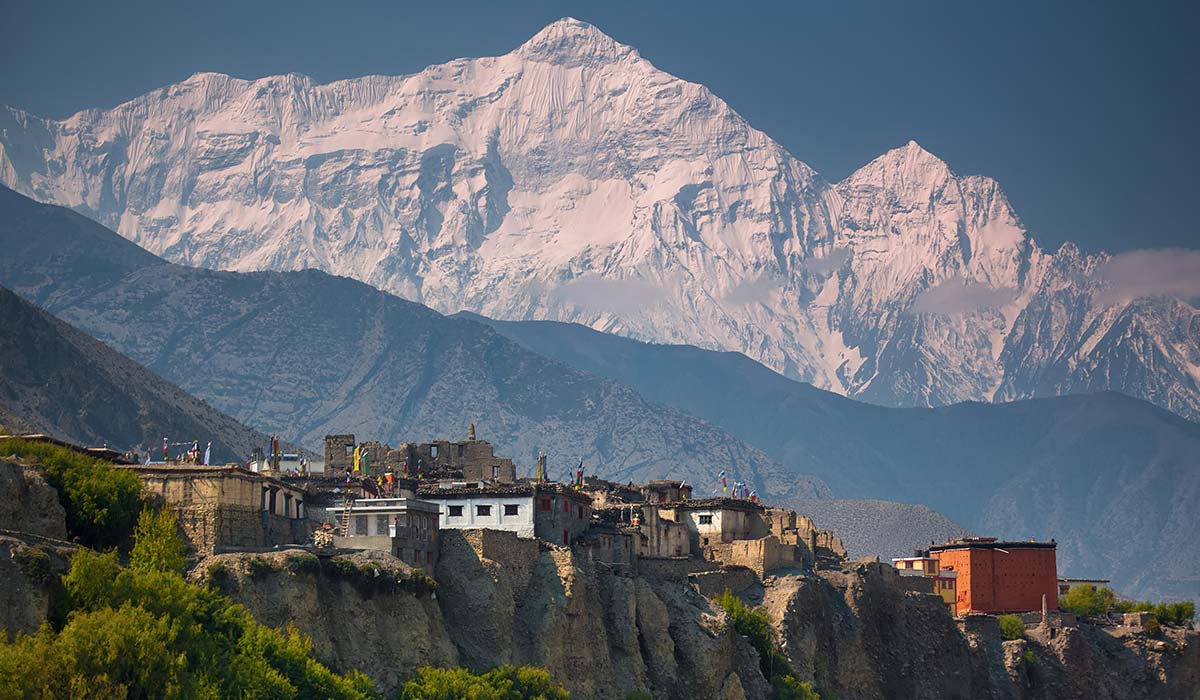
lo manthang

Who Is the Upper Mustang Jeep Tour For?

The Upper Mustang Jeep Tour is suitable for a wide range of travelers who want to explore a remote Himalayan region without the physical demands of trekking.

This tour is ideal for travelers who prefer a comfortable journey while still reaching high-altitude landscapes. Since the route is completed by 4WD jeep, it allows access to Upper Mustang without the need for long daily walks.

It is a good option for beginners who have little or no trekking experience but still want to experience the Himalayan environment. The journey provides exposure to mountain landscapes, local culture, and remote villages without requiring technical skills or endurance.

Families traveling together can also consider this tour. The shorter walking requirements and flexible pace make it more manageable for different age groups, including children who are comfortable with long drives.

Senior travelers with good general health often choose this option as well. While the altitude remains high in some sections, the ability to travel by vehicle reduces physical strain and makes the journey more accessible compared to trekking routes.

The tour is also suitable for travelers with limited time. It allows you to cover the full Upper Mustang region within a shorter duration while still experiencing key locations such as Lo Manthang and surrounding villages.

Photographers and cultural travelers find this journey especially rewarding. The route offers access to unique landscapes, traditional settlements, monasteries, and historical sites that are difficult to reach in a short time by other means.

At the same time, this tour may not be ideal for travelers looking for a physically active trekking experience. The focus is on overland exploration rather than walking-based adventure.

It is also important to consider the high-altitude desert environment. Although the journey is not physically demanding, the dry climate, wind, and elevation can still affect comfort, especially for those not used to altitude.

Overall, the Upper Mustang Jeep Tour is best suited for travelers who want a comfortable, time-efficient, and culturally rich Himalayan experience without the need for trekking, while still being prepared for high-altitude conditions.

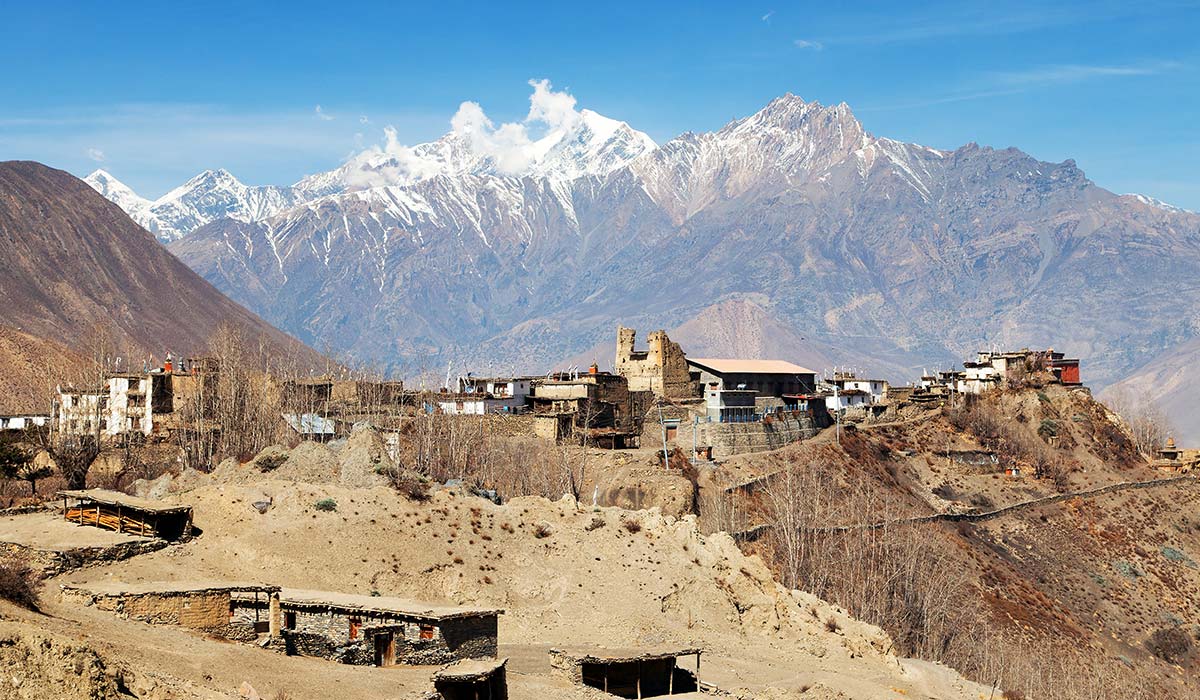
jharkot-village

How Difficult Is the Upper Mustang Jeep Tour?

The Upper Mustang Jeep Tour is not physically demanding, as the journey is completed by 4WD vehicle and does not require long-distance walking or trekking.

However, the difficulty of this tour comes from the nature of the terrain and environment rather than physical effort. The route follows rugged mountain roads that are unpaved, narrow in sections, and often uneven. Daily travel can involve several hours of driving, which may feel tiring due to continuous movement and road conditions.

The journey also takes place at high altitude, with several locations above 3,000 meters and Lo Manthang itself situated at around 3,800 meters. Although you are not walking, the body still needs to adjust to the elevation. Some travelers may feel mild symptoms such as shortness of breath or fatigue, especially during the first days.

Weather and wind are additional factors. Upper Mustang lies in a high-altitude desert region, where strong winds and dry conditions are common, particularly in the afternoon. This can affect overall comfort during travel.

The long driving hours combined with changing road conditions make the journey more of an overland adventure than a relaxed road trip. Travelers should be prepared for bumpy sections, dust, and occasional delays depending on weather and road situations.

Despite these factors, the tour remains manageable for most people because it does not require physical exertion. Regular stops, flexible pacing, and proper planning help reduce fatigue and make the journey more comfortable.

Overall, the Upper Mustang Jeep Tour is best described as a moderately comfortable overland journey, where the challenge comes from terrain, altitude, and travel conditions rather than physical difficulty.

Itinerary

Upon your arrival at Tribhuvan International Airport in Kathmandu, our team will greet you and welcome you. They will then help you with all the arrival procedures, assist with any luggage, and ensure that everything goes well. You will then be transferred directly to your hotel, where you can relax after your journey.

Later in the day, we’ll have a brief orientation session, giving you an overview of the upcoming adventure through Upper Mustang. This will help you get used to the itinerary, travel tips, and essential information during the days ahead. The rest of the day is yours to explore Kathmandu at your own pace or simply relax. You can also prepare for the exciting journey that awaits you. Enjoy your evening in the heart of Nepal’s vibrant capital.

    On the second day of the journey, tourists can drive to Kathmandu's vibrant culture and take a guided tour of its UNESCO World Heritage sites. Start by visiting Swayambhunath Stupa, located on a hilltop with an amazing valley view.  It is more popularly known as the Monkey Temple among tourists. You can then head to Pashupatinath Temple and experience the sacred Hindu temple. Experience the serenity at Boudhanath Stupa, which is considered one of the largest in Asia.

    You’ll need to prepare for the Upper Mustang journey after exploring city gems. The bustling energy of the city market and bazaars is a perfect place to get essentials if you need to go shopping around the city. This typically includes arranging the permits and attending a trip briefing to understand the itinerary and detailed information about the trip.

    After all the essentials are done, one must try the local foods available. You can go for street foods, dine at local restaurants, or explore hidden spots based on your guide’s recommendations. Each dish gives you a taste of Nepal’s rich culinary heritage, adding depth to your Kathmandu experience. With the sightseeing complete and preparations done, you’ll be all set for the adventure ahead. You’ll now head back to your hotel and call it a day.

      The journey begins from Kathmandu to Pokhara, a scenic six-hour drive of 200 kilometers to a picturesque landscape. Traveling by a comfortable tourist bus, you’ll wind through the lush green hills covering the traditional villages along the way.

      The views of terraced fields are beautiful, with glimpses of rivers cutting through the valleys. Due to its natural beauty, it's popular among travelers. It's more of an enjoyable experience in itself rather than just a transit. Once you reach Pokhara, you’ll feel relaxed. You can experience the lakeside charm of this vibrant city. It promises much from the very beginning.

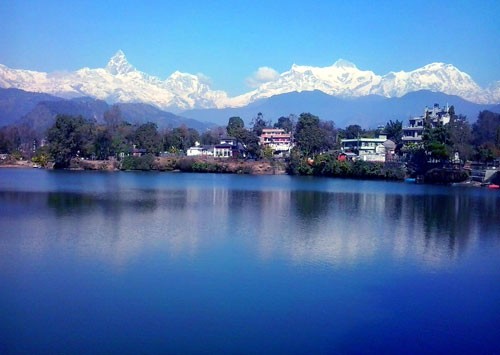
      After hotel check-in, you will be given free time. Take a stroll along the lakeside area, where you’ll find free time to explore. Also, you can go sit for a cup of coffee at one of the aesthetic-looking cafes with lakeside views. You’ll find a lot of quaint cafes, unique shops, and serene views of Phewa Lake with the backdrops of mountains. You can even go for a boat ride or just soak in the city’s laid-back atmosphere before your next adventure begins.

        You begin the Jeep tour with a drive through hills and valleys. Begin your Jeep tour on this day by driving through beautiful hills. Along the way, you start your Pokhara to Tatopani adventure through the beautiful town of Beni. It is a scenic route of about 110 km and takes about 6 to 7 hours to drive.

        The journey takes one through sweeping views down the Seti River. The scenery changes as the route goes up toward the mountain, with lush greenery and terraced fields around. You will reach Tatopani by the middle of the afternoon. The village is famous for its natural hot springs. This place is appropriate for relaxation and spending time outside the long drive.

        The hot springs here are believed to have healing properties, a reason so many travelers take the time to soak. Therefore, they relieve any tension in the muscles from the journey. Take your time and enjoy the warmth, serenity, and spectacular view of the mountains here. Afterward, either walk around the village or head back to your hotel room and get ready for the following day's journey into the Upper Mustang.

        .

          A Day 5 adventurous drive from Tatopani with scenic terrain to 2,900m high Kagbeni will be done. This section of the journey follows winding trails with breathtaking landscapes that take you through valleys carved by the Kali Gandaki River. With the views of snow-capped peaks distance wide. You will have an exhilarating experience en route to Kagbeni. Pay a visit to the sacred temple and return to Kagbeni for an overnight stay.

          You will continue to Muktinath Temple from Kagbeni. After visiting the sacred temple, you will return to Kagbeni for overnight accommodation. Muktinath is a sacred pilgrimage site at an altitude of 3,800 meters. It holds immense importance for Hindus and Buddhists alike. The name itself means a place of salvation in Hinduism. Muktinath takes pride in its spiritual importance and natural beauty.

          You can visit the temple's surroundings, which are usually calm and have 108 water spouts. These add to the beauty of this place with their aura and attract pilgrims all over. After the temple, you will return to Kagbeni for an overnight stay. Think about all the fantastic sites you have visited in the day.

            The adventure begins with official formalities for the Upper Mustang special permit. We complete the required documentation to ensure a smooth journey. Once you are ready, you can embark on a thrilling jeep ride from Lo Manthang to Ghami Village.

            Our route passes through the scenic Syanboche Passes after reaching an impressive altitude of 4200 meters. As you drive, take in the remarkable landscape changes. The high-altitude views are nothing short of stunning, as are the rugged mountains. The deep valleys with the dramatic cliffs reveal the wild beauty of the Mustang region. Along the way, you may see herds of yaks grazing and traditional villages perched on hillsides.

            As we descend towards Ghami, the landscape shifts, introducing red cliffs and ancient stupas that showcase the region’s rich culture. We finally arrive at Ghami, which is a charming village surrounded by a unique red cliff and terraced fields. It offers a peek into the local life of the villagers.

              Today’s journey to Lo Manthang involves a scenic three-hour drive over 17 kilometers. You will pass breathtaking landscapes, from barren highlands to quaint villages. It showcases the wonders of the Mustang.

              As you approach Lo Manthang, the opening views of rugged mountains and ancient monasteries give this trip something timeless. The town itself is a walled city that tells tales. It looks like an oasis amidst the surrounding ruggedness.

              Upon arrival, check into your guesthouse and take some time to rest. Lo Manthang invites you to stay calm and enjoy the serenity in its atmosphere. Spend the evening exploring nearby sites, such as the Palace of Lo Manthang. Ancient temples or local settlements may also be offered to provide a glimpse into traditional Tibetan culture.

              Take a stroll through its quiet streets and connect with this unique place. Enjoy the rhythm of your life in Mustang. This day is utilized in Lo Manthang to get yourself acquainted with the tranquil surroundings. Additionally, it lays a path for further explorations.

                Today, you will dive into the ancient charm of Lo Manthang. Your guide will lead you through historic monasteries that showcase centuries-old Tibetan Buddhist art and statues. As you walk around, you’ll feel the history of the Royal Palace. It is home to the local king, so learn about its significance to the Mustang Kingdom. These ancient structures reveal the spiritual core of Mustang, offering an unmatched cultural experience.

                From here, you will be taken to Chhosar Valley, which is famous for its rich heritage and beautiful scenery. The valley is also famous for its cave dwellings carved into cliffs, where locals once lived and stored essentials. Some caves are nearly five stories high, providing a glimpse into Mustang’s past lifestyle.

                As you explore these caves, you’ll head to Chhosar Valley, which is known for its rich heritage and stunning scenery. The valley is famous for its cave dwellings carved into cliffs where locals once lived and stored essentials. Some caves are nearly five stories high, providing a glimpse into Mustang’s past lifestyle. As you explore these caves, you’ll sense the stories held within these ancient rock walls. This region is also home to the Nyphu and Garphu Monasteries, which offer quiet, reflective moments surrounded by Tibetan architecture.

                  After you've completed your exploration of Lo Manthang and Chhosar, you’ll get to explore more. Go for a drive to Jomsom. The drive is very picturesque and passes through the amazing landscapes of the mountain range. The ride is definitely bumpy due to the graveled road. But it makes for an experience for a lifetime. You’ll drive for about 6 to 7 hours, which is approximately 50 kilometers. Jomsom is located at an elevation of 2743 meters.

                  Upon arrival at Jomsom, you get time to relax and get around. It is a town famous for its nice weather and pleasant atmosphere, which is perfect during rest time. You can take a stroll through the town. If interested, you can visit the local shops to see handicrafts or local products. You can also visit the nearby Kali Gandaki River, which is extremely famous for its black stones. It is actually called Shaligram, which is considered sacred. A warm evening enjoying the charm of Jomsom in preparation for the final part of your adventure.

                    After the Jomsom trip is over, you’ll return to Pokhara through beautiful landscapes. The seven to eight-hour trip includes seventoeighthoursofdriving, approximately about158km. The serenity of the Mustang region slowly gets drowned as one drives through some beautiful scenes of Nepal, from the rolling hills farmed in a terraced manner to the tranquil villages depicting the Nepalese countryside.

                    This drive enables revisiting the changes that occurred in the scenery, from Mustang's desert-like terrains to the lush greenery closer to Pokhara. This 158-kilometer stretch offers captivating views that are apt for relaxation and introspection on the trip. Upon arrival in Pokhara, you will have a free afternoon to relax by the lake.

                    The tranquil Phewa Lake of Pokhara is an ideal destination for an evening without noise and disturbance. You can rest in one of the lakeside cafes or stroll on a quiet lakeside path. With the surrounding mountains in the distance and the relaxed pace of the lakeside. It's one of the great ways to round off a memorable journey through Mustang before heading back home.

                      After having breakfast in Jomsom, we start driving back toward Kathmandu. We drive six hours from Jomsom to Pokhara by private tourist bus. You can catch a last glimpse of the Himalayas down to the pictorial villages and valleys. While driving down to Pokhara, you pass through terraced fields and small settlements with natural landscapes. It does remind you of the diverse beauty of Nepal.

                      Upon arrival in Pokhara, the drive back to Kathmandu starts after a short break. On the last leg of your journey, the memories of Tibetan culture, landscape, and adventure you have gotten in Upper Mustang will settle in. You'll drive through Nepal's vibrant landscape, and this breathtaking landscape of Mustang keeps popping into your head right away.

                      After you arrive in Kathmandu, you’ll have some free time. You can go shopping at the last minute for souvenirs or even buy some gifts to take back home. You can roam the busy streets of Kathmandu’s lively bazaars, historical sites, and teeming neighborhoods. Take it easy on this last day and soak into the vibrant culture of Nepal. It is highly important to fly back home.

                        On your final day, the Dream Heaven Adventure representative will be there to assist with hotel procedures and ensure a smooth transfer to the airport for your scheduled flight home. For this last day in Nepal, take some time to soak it all in one last time. Reflect on the incredible landscapes, ancient monasteries, and unique experiences you gathered on the Upper Mustang Jeep Tour.

                        Before heading to the airport, go through the photos you captured along the way. These memories will bring you back to Mustang’s rugged beauty whenever you revisit them. As you depart, our team will give you a heartfelt farewell, sending you off with best wishes for safe travels. You will leave with lifelong memories and an enlightened heart. Even after you’re home, you’ll carry Mustang’s stories and experiences with you.

                          Cost Details

                          Includes

                          • Pick-up and drop-off at Tribhuvan International Airport in Kathmandu.
                          • A comprehensive guided tour of UNESCO World Heritage Sites in Kathmandu.
                          • Hotel stays in Kathmandu and Pokhara (as per the itinerary).
                          • Guesthouse/lodge accommodations in Upper Mustang region.
                          • Comfortable private jeep for the entire Upper Mustang tour.
                          • Option of either a scenic drive or flight between Kathmandu and Pokhara (USD 180 PP extra, if flight choosed).
                          • Daily breakfast in Kathmandu and Pokhara.
                          • Full board (breakfast, lunch, dinner) during the Upper Mustang tour.
                          • Special Restricted Area PermitAnnapurna Conservation Area Project (ACAP) permit.
                          • Professional English-speaking guide for the entirety of the Upper Mustang tour.
                          • Traditional Nepali dinner in Kathmandu.
                          • All government and local taxes and Service charges

                          Excludes

                          • International Flights: Airfare to and from Nepal.
                          • Personal Expenses: Snacks, beverages, and souvenirs.
                          • Tips: Gratuities for guides and drivers.
                          • Travel Insurance: Comprehensive travel insurance (unless specified).
                          • Extra Activities: Optional activities not included in the itinerary.
                          • Accommodation Upgrades: Costs for upgraded hotel accommodations.

                          Good to Know

                          Best Time to Do the Upper Mustang Jeep Tour

                          The Upper Mustang Jeep Tour can be done for most months of the year, but the overall experience depends mainly on road conditions, weather stability, and visibility.

                          Spring (March to May) and autumn (September to November) are considered the best times to visit Upper Mustang. During these months, the weather is generally stable, skies are clearer, and road conditions are more reliable. The landscape appears more defined, and visibility of the surrounding mountains and desert terrain is at its best.

                          One of the key advantages of Upper Mustang is that it lies in a rain shadow area of the Himalayas. This means the region receives significantly less rainfall compared to other parts of Nepal, making it possible to travel even during months when trekking in other regions becomes difficult.

                          However, the monsoon season (June to August) still presents challenges, mainly due to road conditions. The drive from Pokhara to Jomsom and further into Upper Mustang can become muddy, slippery, and less predictable during this time. 

                          Winter (December to February) is also possible for this tour. The weather is usually dry with clear skies, but temperatures drop significantly, especially in the morning and evening. Strong winds are common in Upper Mustang, particularly in the afternoon, which can affect travel comfort.

                          In real travel conditions, mornings are usually calmer and clearer, while wind tends to increase later in the day. This makes early departures important for a smoother journey.

                          Overall, the best time for the Upper Mustang Jeep Tour is spring and autumn for stable weather, clearer views, and better road conditions, while monsoon requires flexibility due to road challenges, and winter requires preparation for cold and wind.

                          Upper Mustang Permit and Entry Requirements

                          Upper Mustang is a restricted Himalayan region, and entry is only possible with special permits issued by the Government of Nepal. These regulations are designed to protect the region’s unique culture, fragile environment, and historical heritage, which have remained preserved due to limited access.

                          To travel in Upper Mustang, two permits are required: the Restricted Area Permit and the Annapurna Conservation Area Permit.

                          Restricted Area Permit (RAP)

                          The Restricted Area Permit is the primary permit required for entering Upper Mustang beyond Kagbeni, which serves as the official checkpoint into the restricted zone.

                          Under the latest system, the permit is issued on a daily basis. Travelers are required to pay USD 50 per person per day, and there is no longer a fixed minimum duration requirement. This allows you to pay only for the number of days you actually spend inside the restricted area.

                          This updated structure provides greater flexibility compared to the previous system, where a fixed permit duration was mandatory regardless of itinerary length.

                          Annapurna Conservation Area Permit (ACAP)

                          In addition to the restricted permit, the Annapurna Conservation Area Permit is required for this journey.

                          This permit is necessary because the route passes through the Annapurna region before entering Upper Mustang. The cost is approximately NPR 3,000 per person for foreign travelers.

                          Important Permit Rules

                          Upper Mustang is a controlled region, and specific government regulations must be followed throughout the journey.

                          The Restricted Area Permit must be arranged through a registered trekking agency, and independent travel is not permitted inside the restricted zone. A licensed guide is mandatory for the entire trip, and permits are issued based on a confirmed itinerary.

                          These rules are strictly enforced to ensure proper management, safety, and preservation of the region.

                          Permit Process and Requirements

                          All permits are issued in Kathmandu through a registered agency.

                          To complete the permit process, you will need to provide a valid passport copy, a Nepal visa copy, and a confirmed travel itinerary. Once all documents are submitted, the permit is typically processed within one working day.

                          Upper Mustang Jeep Tour vs Upper Mustang Trek

                          The Upper Mustang Jeep Tour and the Upper Mustang Trek both follow a similar route into the restricted region of Mustang, but the overall experience, time commitment, and physical demand are very different.

                          The most important difference is how the journey is completed. The Jeep Tour is an overland experience using a 4WD vehicle, while the trek requires several days of continuous walking through high-altitude terrain. This makes the Jeep Tour more accessible for travelers who prefer comfort or have limited time.

                          In terms of duration, the Jeep Tour can cover the full Upper Mustang route, including Lo Manthang, in a much shorter timeframe. A trekking itinerary usually takes around 12 to 14 days, while the Jeep Tour completes the journey in about a week, allowing travelers to experience the region more efficiently.

                          Physical effort is another key difference. The trek involves long walking days, gradual altitude gain, and continuous physical exertion. In contrast, the Jeep Tour removes the need for daily hiking, making it suitable for a wider range of travelers, including those who may not be prepared for a high-altitude trek.

                          The experience itself also varies. Trekking offers a slower and more immersive connection with the landscape, where each section is experienced step by step. The Jeep Tour, on the other hand, focuses on broader exploration, covering larger distances and allowing access to multiple locations within a shorter period.

                          Road conditions are part of the Jeep Tour experience. The journey includes rugged and off-road sections, which create a sense of adventure but also require flexibility and patience. This is different from trekking, where the challenge comes from the trail rather than the road.

                          Both options provide access to the cultural and historical highlights of Upper Mustang, including traditional villages, monasteries, and the walled city of Lo Manthang. However, the way these places are experienced differs depending on the mode of travel.

                          Overall, the Upper Mustang Trek is better suited for those seeking a physically active and longer journey, while the Upper Mustang Jeep Tour is ideal for travelers who want to explore the same region in a more comfortable, time-efficient, and accessible way.

                          Travel Time and Distance for Upper Mustang Jeep Tour

                          The Upper Mustang Jeep Tour is a multi-day overland journey that covers a significant distance across different regions of Nepal, from lowland valleys to high-altitude desert landscapes.

                          The total duration of the tour is typically 7 to 10 days, depending on the itinerary, route variation, and exploration time in Lo Manthang and surrounding areas.

                          Travel Time Overview

                          The journey begins with a drive from Kathmandu to Pokhara, which usually takes around 6 to 7 hours by road. From Pokhara, the route continues toward Jomsom, following the Kali Gandaki valley. This section is longer and more demanding, typically taking 7 to 9 hours, depending on road conditions and seasonal factors.

                          From Jomsom to Lo Manthang, the drive usually takes 6 to 7 hours, including stops at villages, viewpoints, and permit checkpoints. Although the distance is not extremely long, the rugged terrain and off-road conditions naturally increase travel time.

                          The return journey follows a similar route, with comparable driving hours spread across multiple days.

                          Distance Covered

                          The total driving distance for the complete Upper Mustang Jeep Tour is approximately 750 to 900 kilometers round trip, depending on the exact route and detours taken for exploration.

                          Daily driving distances generally range between 80 to 150 kilometers, but due to terrain conditions, travel speed remains slow and controlled throughout the journey.

                          Travel Nature and Conditions

                          It is important to understand that travel time in Upper Mustang is influenced more by road conditions than distance. The route includes a combination of paved roads, gravel sections, riverbeds, and off-road mountain tracks.

                          In many sections, especially between Jomsom and Lo Manthang, the journey involves slow driving through rugged terrain, where comfort depends on road conditions rather than distance alone.

                          Regular stops are part of the journey, allowing time for rest, photography, and exploration of villages and cultural sites along the route.

                          Key Understanding for Travelers

                          The Upper Mustang Jeep Tour is not a fast road trip but a gradual overland experience. Travel time is shaped by terrain, altitude, and road quality rather than distance alone.

                          This slower pace allows for continuous exposure to changing landscapes, local settlements, and cultural sites, making the journey itself an essential part of the overall experience.

                          amazing-rooftop-view-of-lo-manthang-with-traditional-houses-and-monasteries

                          Road Condition and Travel Experience in Upper Mustang

                          The journey to Upper Mustang is defined by a gradual shift from standard highway travel to a remote high-altitude off-road route, where the road itself becomes an essential part of the experience.

                          The drive from Kathmandu to Pokhara follows a paved highway with relatively stable conditions, making this the most comfortable section of the entire route. As the journey moves beyond Pokhara toward Beni and Tatopani, road quality begins to vary, with sections of broken pavement and uneven surfaces reflecting changing terrain and maintenance conditions.

                          Beyond this point, the transition becomes more noticeable. As the route approaches Jomsom, paved roads become limited, and the surface changes to gravel, loose stones, and rough mountain tracks. The surrounding landscape opens into wider valleys with less vegetation and more exposed terrain.

                          From Jomsom onward, particularly after crossing Kagbeni into the restricted region, the road is entirely off-road. There are no paved sections in Upper Mustang. The route follows dirt tracks along riverbeds, dry valleys, and narrow mountain corridors, often carved into cliffs or open slopes. Driving is steady and controlled, requiring experienced handling due to uneven ground and changing surfaces.

                          Environmental factors also influence travel conditions. Dust is common in dry periods, especially in exposed sections, while during the monsoon, lower areas between Pokhara and Jomsom can become muddy and less predictable due to rainfall and occasional landslides.

                          Wind is another defining element of the region. Strong afternoon winds are typical in Upper Mustang, particularly across open valleys. For this reason, daily travel usually begins early in the morning when conditions are more stable and visibility is clearer.

                          Travel speed throughout the route remains slow due to terrain rather than distance. Regular stops are part of the journey, allowing time to adjust, observe the surroundings, and move comfortably through changing landscapes.

                          Overall, the road to Upper Mustang is not designed for fast travel. It reflects the isolation, terrain, and natural conditions of the region, creating a continuous overland experience that connects geography, culture, and movement in a way that is unique to this part of the Himalayas.

                          vertical-shot-of-a-buddhist-temple

                          Health, Safety, and Responsible Travel in Upper Mustang

                          Traveling in Upper Mustang is generally safe and well-managed, but it takes place in a remote high-altitude environment where basic awareness and preparation are important for a smooth journey.

                          Altitude and Health Awareness

                          Even though this is a jeep tour, the journey reaches elevations above 3,000 meters, including Lo Manthang at around 3,800 meters. The reduced oxygen level can affect some travelers, especially during the first days.

                          The itinerary is designed with gradual elevation gain, but it is still important to stay hydrated, avoid alcohol, and allow your body time to adjust. Mild symptoms such as headache or fatigue can occur, and resting when needed helps the body adapt naturally.

                          Carrying basic personal medication for common issues such as headache or stomach discomfort is recommended. While serious altitude problems are rare on jeep tours, awareness remains important.

                          Safety and Travel Conditions

                          The route passes through remote mountain terrain, where road conditions can vary. Travel is conducted with experienced drivers and a licensed guide who understand the region and manage the journey carefully.

                          In case of any health concerns, guides are trained to respond and can coordinate assistance if required. Access to medical facilities is limited in Upper Mustang, so basic precautions and communication with your guide are essential.

                          Daily travel is planned with regular stops for rest, meals, and adjustment, helping reduce fatigue and maintain comfort throughout the journey.

                          Cultural Respect and Local Etiquette

                          Upper Mustang preserves a strong Tibetan-influenced culture, and respectful behavior enhances both your experience and the connection with local communities.

                          Simple gestures such as greeting with “Namaste,” dressing modestly, and maintaining quiet behavior around monasteries are appreciated. Always ask permission before taking photographs of people or religious sites.

                          Monasteries, prayer walls, and chortens are important cultural elements. Walking around them in a respectful manner and following local customs helps maintain harmony with the environment.

                          Responsible Travel Practices

                          Upper Mustang is a fragile high-altitude desert environment, and responsible travel plays an important role in its preservation.

                          Avoid single-use plastics where possible and carry reusable water bottles. Dispose of waste properly and follow a “leave no trace” approach throughout the journey.

                          Supporting local lodges, shops, and services helps sustain the local economy and ensures that tourism benefits the community directly.

                          Packing Essentials for Upper Mustang Jeep Tour

                          Packing for the Upper Mustang Jeep Tour is different from trekking, as the journey is vehicle-based but takes place in a high-altitude desert environment with strong sun, wind, and temperature changes. The focus should be on comfort during long drives, protection from weather conditions, and basic personal convenience in remote areas.

                          Clothing should be layered to handle changing temperatures throughout the day. Mornings and evenings can be cold, while daytime conditions are often dry and sunny. A combination of light and warm layers allows you to adjust easily without carrying unnecessary weight.

                          Clothing and Weather Protection

                          • Base layers with moisture-wicking fabric
                          • Light fleece or warm mid-layer
                          • Windproof or water-resistant jacket
                          • Light down jacket for cold mornings and evenings
                          • Comfortable trekking pants or travel pants
                          • Hat or cap for sun protection
                          • Warm beanie for cold conditions
                          • Gloves for wind and early morning chill
                          • Sunglasses with UV protection
                          • Sunscreen with high SPF

                          Footwear and Comfort

                          • Comfortable walking shoes or light hiking shoes
                          • Breathable socks for long travel days

                          Since short walks may be required around villages, monasteries, and viewpoints, footwear should provide stability on uneven surfaces.

                          Personal Items and Essentials

                          • Travel-sized toiletries
                          • Wet wipes and hand sanitizer
                          • Personal medications
                          • Basic first-aid kit
                          • Reusable water bottle

                          Facilities in Upper Mustang are basic, so carrying essential personal items helps maintain comfort throughout the journey.

                          Electronics and Travel Accessories

                          • Power bank or portable charger
                          • Phone or camera with extra storage
                          • Charging cables and adapters

                          Electricity is limited and often available only for certain hours, making backup power important.

                          Additional Comfort Items

                          • Neck pillow for long drives
                          • Eye mask and earplugs
                          • Small daypack for daily essentials

                          These items help improve comfort during extended travel hours on rough roads.

                          The Upper Mustang Jeep Tour does not require heavy gear. Packing should be light, practical, and focused on comfort, weather protection, and basic personal needs. A well-prepared packing list ensures a smoother and more enjoyable journey through this remote Himalayan region.

                          FAQs

                          • Q1. Is it possible to go to Upper Mustang by bus?

                            There is no direct bus service available in Upper Mustang. As a matter of fact, buses can take you as far as Jomsom, beyond which 4WD vehicles are recommended to reach Upper Mustang.

                          • The roads are mostly untarred and quite rough. One should expect bumpy and irregular roads, especially in remote areas. However, 4WD vehicles can easily handle them.

                          • Upper Mustang's altitude ranges between 3,500 and 4,200 meters. Because of its high altitude, acclimatization in this region needs to be gradual.

                          • Yes, high altitude and altitude sickness can be one factor. The recommendations are to keep one's body hydrated by drinking plenty of water, avoiding alcohol consumption, and resting when needed. If possible, it is best to consult a doctor beforehand to avoid any health inconveniences.

                          • Basic health facilities are available but very limited. For serious medical emergencies, evacuation to lower altitudes or Kathmandu may be required. It is highly recommended that emergency evacuation insurance be taken out to cover trip cancellations.

                          • An Upper Mustang tour generally costs from $1,500 to $2,500 per person, depending on the duration, transport, accommodations, and permits. The price may vary for private or group tours.

                          • It is costlier to stay there due to remote accessibility, special permits, and high-rate accommodations. The region also has restricted area policies, which means it has to bear a higher cost for logistics.

                          • The cost for the restricted area permit for the Upper Mustang is USD 500 per head for the first 10 days and USD 50 per day beyond that limit.

                          • It is restricted to preserving Upper Mustang's unique culture and environment, retaining local heritage, and controlling the consequences of tourism in the region.

                          • The Dhaulagiri Circuit, Makalu Base Camp, and Kanchenjunga Trek are the most challenging treks undertaken in Nepal because of their hard terrain, altitude, and remote location.

                          • Bring warm clothes, easy walking shoes, sunscreen, and a refillable water bottle. Due to the elevation above sea level, the temperature might suddenly fall at any moment, so it is good to wear layers of clothes.

                          • Yes, a 4WD vehicle can go to the Upper Mustang, but the rough roads need an experienced driver, and tours usually offer suitable vehicles.

                          • The highest point on the Upper Mustang Trek is about 4,200 meters near Lo La Pass.

                          • It is famous for its peculiar Tibetan culture, ancient monasteries, arid landscapes , and the Lo Manthang kingdom , one of the few opportunities to catch a glimpse of one of the best-preserved Himalayan cultures.

                          • It's ideal to travel to Upper Mustang from March into early November because the weather is clear, and it provides excellent traveling with magnificent mountain scenery.

                          Suggested Itineraries

                          Ask a Question