Everest Base Camp Luxury Trek

3 reviews
Trip Fact:
  • Duration 12 Days
  • Difficulty Level Moderate
  • DestinationNepal
  • Max Altitude5545m
  • Accommodation5 star Hotel in Kathmandu & Luxury lodges on the trek
  • MealsBreakfast in Kathmandu and All meals during trekking
  • Trip Start/EndLukla/ Lukla
  • Group Size1-10 pax
  • Best SeasonMarch, April, May, September, October and November are the best months.

Everest Base Camp Luxury Trek Overview

The Everest Base Camp Luxury Trek is designed for travelers who want to experience the legendary Everest trail without sacrificing comfort, time, or quality. This journey follows the same classic Everest Base Camp route, but every part of the experience is upgraded to make it smoother, more enjoyable, and truly premium.

From the moment you land in Kathmandu, your journey begins with comfort and careful planning. You are welcomed at the airport and transferred to a luxury hotel such as Baber Mahal Vilas or a similar high-end property, where you can rest in a quiet courtyard setting, recover from your flight, and prepare for the mountains ahead.

One of the biggest challenges in the Everest region today is the flight to Lukla. During peak seasons, most trekkers must wake up very early and drive 4 to 5 hours to Ramechhap just to catch a short flight, often facing delays and uncertainty. This luxury itinerary avoids that completely by including a direct helicopter flight from Kathmandu to Lukla, saving time and offering a breathtaking aerial entry into the Himalayas.

Once you begin the trek, you follow the same iconic trail used by climbers and trekkers for decades, passing through Phakding, Namche Bazaar, Tengboche, Dingboche, and eventually reaching Everest Base Camp and Kala Patthar. The difference is how you experience it.

Up to Debuche, you stay in the finest lodges in the Everest region, including the well-known Mountain Lodges of Nepal (Yeti Mountain Home). These lodges provide heated dining areas, comfortable beds, quality food, and in many places attached bathrooms, which is a rare level of comfort in the Himalayas. After long walking days, you return to a warm space where you can sit comfortably, enjoy a proper meal, and sleep well, something that makes a big difference as the altitude increases.

As you move higher beyond Debuche, the environment becomes more remote and raw. There are no luxury lodges above this point, but we carefully select the best available teahouses in Dingboche, Lobuche, and Gorakshep, ensuring clean rooms, good meals, and the most comfortable options possible in these high-altitude areas. This is also where the real mountain experience begins. Nights become colder, the air becomes thinner, and the landscape opens into dramatic glacier valleys. Even in a luxury trek, this part remains authentic, and that is what makes reaching Everest Base Camp truly meaningful.

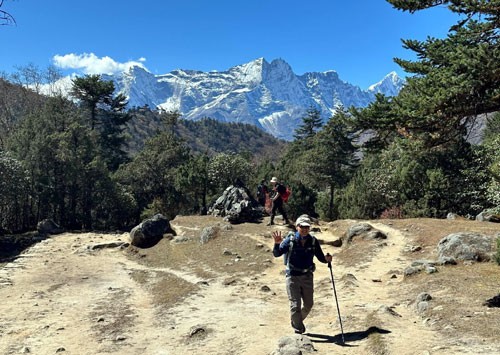
The journey itself is gradual and well-paced, with proper acclimatization in Namche and Dingboche. This is essential for safety and comfort, as the trek reaches over 5,300 meters. Walking hours are moderate, usually 5 to 7 hours a day, allowing you to enjoy the surroundings without rushing. The trail passes through forests, suspension bridges, Sherpa villages, and eventually into the high alpine terrain where only rock, ice, and mountains remain.

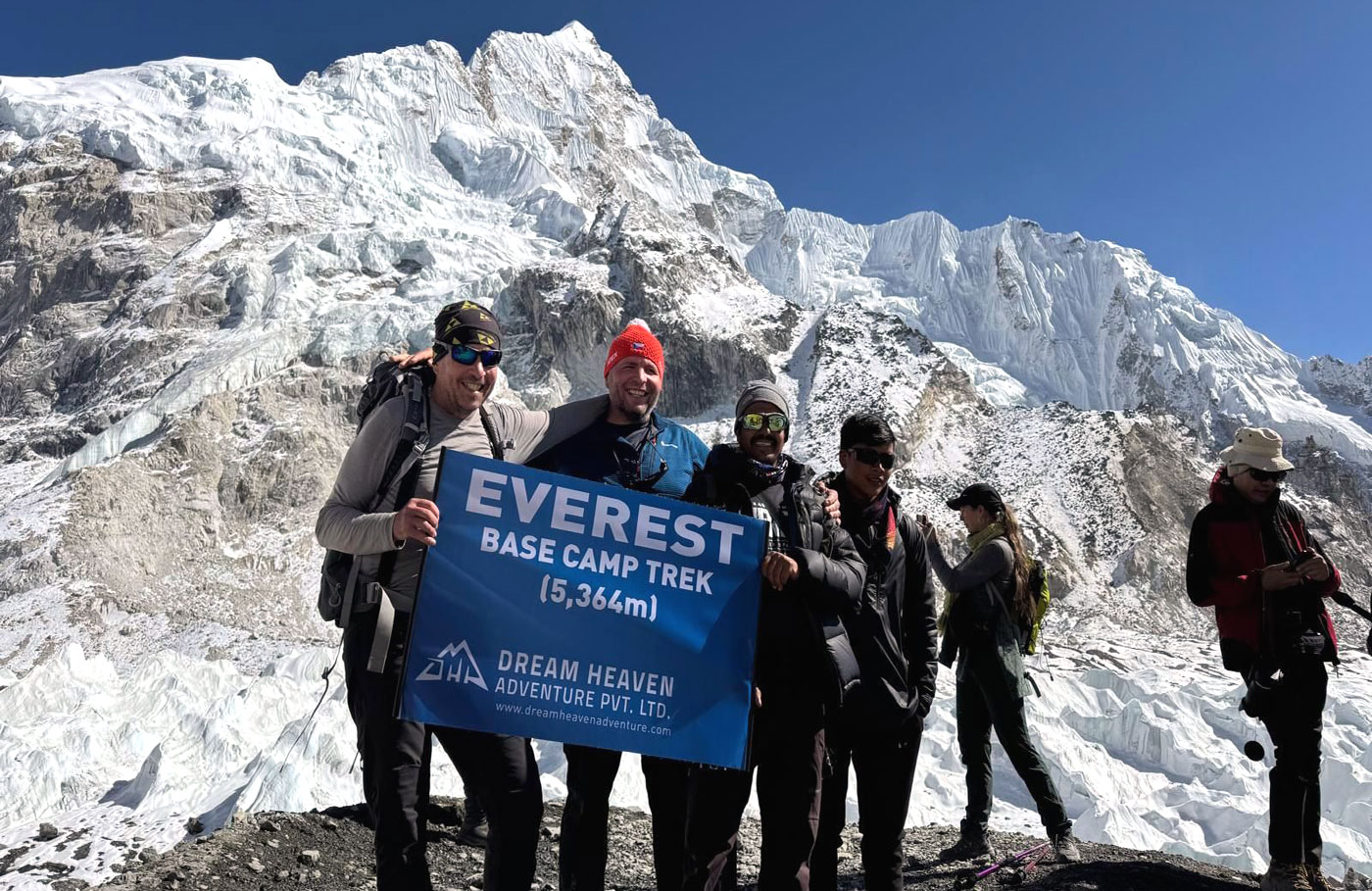
Reaching Everest Base Camp is a powerful moment, but the highlight for many is the early morning hike to Kala Patthar, where you stand face to face with Mount Everest and the surrounding peaks. It is not just about seeing the mountain, it is about how you feel after days of walking, breathing thin air, and slowly moving higher into the Himalayas.

After completing the trek, instead of retracing the long descent, you return by helicopter, flying over the same trail you walked. This not only saves several days of trekking but also gives you a completely different perspective of the mountains from above, making the experience both efficient and unforgettable.

What makes this luxury Everest Base Camp trek truly special is the balance it offers. You experience the real trail, the real altitude, and the real sense of achievement, but without unnecessary discomfort. You sleep better, eat better, and travel smarter, allowing you to focus on the experience rather than the hardship.

This trek is ideal for travelers who value comfort, time, and quality, but still want a genuine Himalayan adventure. Whether you are an experienced trekker or someone doing your first high-altitude journey, this itinerary is designed to make Everest Base Camp achievable, enjoyable, and memorable at the highest level.

If you are looking for a refined way to experience Everest, with careful planning, premium service, and a true understanding of the trail, this luxury journey delivers exactly that.

Why Choose This Everest Base Camp Luxury Trek in 2026

For 2026, luxury in the Everest region is no longer just about booking a nicer room. The real value is in removing the parts of the journey that feel tiring before the trek even begins, while keeping the reward of reaching Everest Base Camp fully intact. That is why this itinerary works so well for premium travelers.

A major advantage is the Kathmandu to Lukla helicopter sector. In the main spring and autumn trekking windows, many Lukla fixed-wing flights are routed through Ramechhap, which means an extra road transfer in the middle of the night before the mountain trip even starts. A helicopter departure from Kathmandu cuts out that long, uncomfortable transfer and turns the approach into part of the experience itself. That matters to travelers who want to arrive in the Khumbu fresh, calm, and ready to enjoy the walk rather than already feeling worn out.

Another reason this package feels genuinely high-end is the lodging standard in the lower and mid-Khumbu. Mountain Lodges of Nepal currently operates its Everest comfort lodges in Lukla, Phakding, Monjo, Namche, Deboche, and Kongde, and its lodge pages highlight features such as full bedding, heated blankets, ensuite bathrooms in key properties, and full-board comfort services. Those details may sound small on paper, but on the trail they change the entire mood of the trip. A warm bed, a proper wash, and a comfortable indoor space at altitude help guests recover better and enjoy the next day more.

Kathmandu also matters more than many trek pages admit. Starting and ending with a refined city stay gives the trip a polished frame, especially after international travel and again after returning from the mountains. Baber Mahal Vilas presents itself as a heritage boutique property in Kathmandu with a distinctive architectural setting, which is exactly the kind of base that matches a premium Everest program rather than making the capital city feel like a rushed stopover.

The strongest part of this journey, however, is that it does not try to fake luxury where luxury does not truly exist. Above Deboche, the high-altitude section becomes more basic for everyone in the region. The best luxury operators handle this honestly by upgrading everything that can genuinely be upgraded, then choosing the strongest available lodges farther up instead of overpromising. That approach is better for trust, guest satisfaction, and long-term rankings as Google keeps rewarding realistic, experience-based travel content over exaggerated sales language. Competitor itineraries in 2026 also consistently position helicopter returns, premium lodges, and selective upgrades as the core of the luxury Everest model, not five-star claims all the way to Base Camp.

This style of trek also suits how many luxury travelers now make decisions. They are not looking for the cheapest route to Everest. They want comfort where it makes a real difference, efficient logistics, cleaner accommodation standards, stronger service, and enough recovery built into the itinerary to enjoy the mountain instead of simply enduring it. Premium Everest products in the market now emphasize exactly that combination: quality lodges, professional support, sensible pacing, and helicopter segments that reduce wasted time.

What makes this especially attractive in 2026 is the balance between prestige and authenticity. You still earn the destination on foot. You still pass through Sherpa settlements, forested sections, suspension bridges, monastery country, and the stark upper valley below the Khumbu Glacier. But the overall journey feels more polished, more private, and more memorable because the rough edges are reduced in the right places. Official Mountain Lodges of Nepal Everest journeys continue to package comfort with iconic Khumbu walking routes and helicopter elements, which reflects exactly where the premium end of the market is headed.

For travelers comparing options online, this is the key message: a true luxury Everest Base Camp trek is not about softening the mountain. It is about making the journey smarter. You remove the unnecessary fatigue, keep the iconic trail, stay in the finest available properties where they exist, and return with a much better overall experience. That is what makes this version of Everest feel worth the price, worth the time, and worth booking.

Luxury Everest base camp trek

Is This Everest Base Camp Luxury Trek Suitable for You?

This trek is designed for travelers who want to experience Everest in a more comfortable and well-managed way, without removing the true feeling of walking in the Himalayas.

You do not need to be an athlete, but you should be prepared for daily walks of 5 to 7 hours at high altitude. The pace is gradual, with proper acclimatization days included to help your body adjust. Many first-time trekkers complete this journey successfully with a reasonable level of fitness and a positive mindset.

This luxury version is especially suitable if you:

  • Prefer comfortable accommodation and better food 
  • Want to avoid unnecessary travel stress like long drives to Ramechhap 
  • Value good sleep and recovery after each day 
  • Are short on time and prefer a helicopter return instead of long descent 
  • Want a more private and well-organized experience 

At the same time, it is important to understand that this is still a real Himalayan trek. As you go higher, the air becomes thinner, temperatures drop, and facilities become simpler. The luxury is in how the journey is managed, not in turning the mountains into a city-like experience.
If you are looking for a balanced adventure where comfort, safety, and experience all come together, this trek is a very good fit.

Luxury Everest Base Camp Trek Highlights

This journey combines the classic Everest experience with carefully selected upgrades that make the trip more comfortable and memorable.

  • Scenic helicopter flight from Kathmandu to Lukla, avoiding long drives and delays 
  • Stay at premium lodges such as Mountain Lodges of Nepal up to Debuche 
  • Best available accommodation selected at higher altitudes for comfort and cleanliness 
  • Walk the full Everest Base Camp trail through Namche, Tengboche, and Dingboche 
  • Gradual ascent with proper acclimatization for safety and better experience 
  • Stunning views of Everest, Lhotse, Ama Dablam, and surrounding peaks 
  • Sunrise hike to Kala Patthar for one of the best mountain panoramas in Nepal 
  • Return by helicopter, saving time and offering aerial views of the Himalayas 
  • Professional guide and well-managed logistics throughout the journey 
  • Balanced itinerary designed for comfort, safety, and enjoyment

Luxury Accommodation on Everest Base Camp Trek

Accommodation is one of the biggest differences between a standard Everest trek and a luxury experience. On this journey, we carefully select the best possible places to stay at every stage, so you can rest properly and enjoy the trek more.

In Kathmandu, your stay is arranged in a premium hotel such as Baber Mahal Vilas or a similar boutique luxury property. This provides a calm and comfortable environment before and after the trek, with spacious rooms, quality service, and a peaceful atmosphere away from the busy streets.

During the trek, the experience is upgraded wherever possible. In the lower and mid-altitude sections, including Lukla, Phakding, Monjo, Namche, and Debuche, you stay in the well-known Mountain Lodges of Nepal (Yeti Mountain Home). These lodges offer a much higher level of comfort compared to regular teahouses, with clean rooms, comfortable beds, and warm dining areas where you can relax after a full day of walking.

Many of these lodges provide attached bathrooms, better bedding, and a more refined dining experience, which makes a noticeable difference in your overall journey, especially as you gradually gain altitude.

As you continue above Debuche, the region becomes more remote and accommodation options are naturally more limited. In Dingboche, you stay at one of the best available lodges such as Hotel Good Luck, Dingboche Resort, or a similar high-standard lodge. These lodges are known for their relatively better rooms, good food, and more comfortable environment compared to other options in the village.

In Lobuche and Gorakshep, due to the high altitude and remote location, accommodation is more basic everywhere. We arrange the best available lodges in both places, focusing on cleanliness, proper meals, and a comfortable place to rest before reaching Everest Base Camp and Kala Patthar. It is important to note that attached bathrooms are not available in these two locations, and facilities are shared.

To ensure your comfort during these colder nights, we provide warm sleeping bags for your stay in Lobuche and Gorakshep, helping you stay warm and sleep better even in freezing temperatures.
Apart from these two nights, all other stays during the trek offer a higher level of comfort with better rooms, warmer dining spaces, and overall improved facilities.

Luxury in the Everest region is not about having high-end hotels at every altitude. It is about providing the best possible comfort where available and making smart choices where options are limited. This honest approach ensures you know exactly what to expect while still enjoying a well-managed and comfortable journey.

This combination of premium lodges in the lower section and carefully selected best lodges in the upper section creates a balanced experience where comfort, realism, and the true Himalayan journey come together.

Itinerary

Kathmandu: 1,400 m

Your Everest journey begins the moment you land in Kathmandu. Our team will welcome you at Tribhuvan International Airport and transfer you by private vehicle to a luxury hotel such as Baber Mahal Vilas or a similar premium property. After a long international flight, this first day should feel calm, polished, and easy. Instead of rushing into trekking logistics, you can shower, rest well, and settle into the rhythm of Nepal.

Later, you will meet your trekking guide for a detailed briefing. This is the right time to check your gear, sort your duffel bag, and go over the plan for the mountain days ahead. In the evening, a welcome dinner adds a warm cultural start to the trip. It also helps luxury travelers feel that the journey is organized from the first hour, not only once the walking begins. Your current itinerary already places Baber Mahal Vilas on this night, which is a strong match for the premium positioning of the trip.

  • Baber Mahal Vilas or similar luxury hotel
  • Dinner

Lukla 2,846 m to Phakding 2,640 m
Flight: about 45 minutes
Walk: about 3 hours

Today the trip changes from city comfort to mountain air. Instead of the tiring pre-dawn drive to Ramechhap that many standard trekkers now face in peak seasons, you start with a direct helicopter flight from Kathmandu to Lukla, which makes the beginning of the trek smoother and far more exclusive. Your own itinerary already uses this luxury advantage, and it is one of the clearest reasons the package feels premium from the start.

The arrival into Lukla is exciting. The village is the classic gateway to Everest, and Mountain Lodges of Nepal describes its Lukla property as a comfortable first stop with panoramic views, heated blankets, full bedding, and ensuite bathrooms. Their official lodge listing also places it at the far end of Lukla bazaar, about a ten-minute walk from the airport, which fits well with the flow of the trek.

Once you begin walking, the trail is gentle and encouraging. This first stage is mostly downhill or softly rolling, following the Dudh Koshi valley through small settlements, prayer walls, and forested sections. You begin to notice the Khumbu mood immediately: spinning prayer wheels, fluttering prayer flags, and a mix of trekkers, porters, pack animals, lodges, and village life. It is an easy introduction to Himalayan walking and gives your body time to start adjusting.

By afternoon you reach Phakding, where the first night on the trail should feel restful rather than rough. In the luxury version of the trek, that difference matters. A warm room, proper bedding, a calm dining space, and a comfortable dinner help guests sleep better and wake up stronger for the longer ascent to Namche.

  • Mountain Lodges of Nepal (Yeti Mountain Home)
  • Breakfast/Lunch/Dinner and Tea/Coffee

Phakding 2,640 m to Namche Bazaar 3,440 m
Walk: about 6 hours

This is the first day that feels like a true mountain trek. The route follows the Dudh Koshi River and crosses several suspension bridges, including the famous high bridge section before the final climb to Namche. It is one of the most memorable walking days on the lower trail because the scenery changes constantly: forest, river gorge, hanging bridges, and then the long uphill push into the Sherpa capital.

Permit formalities matter today. The Khumbu Pasang Lhamu Rural Municipality permit is commonly handled in Lukla, while the Sagarmatha National Park permit is checked at the park entrance near Monjo. Monjo is widely treated as the gateway to the national park, and this is where the protected landscape of Sagarmatha truly begins.

The final ascent to Namche is the first real test of pacing. The trail is not technical, but the elevation gain is noticeable, so this is where walking slowly becomes important. On clear stretches, many trekkers try to spot their first distant view of Everest. Arriving in Namche feels special because it is not just another stop. Nepal Tourism Board describes Namche as a historic trading hub, famous for yak cheese and butter, and still rich in old Khumbu culture even with cafés, gear shops, and modern trekking comforts.

Your lodge experience improves the day enormously. Mountain Lodges of Nepal’s Namche property sits above town near the Sherpa Culture Museum and national park headquarters, with warm rooms, mountain views, ensuite bathrooms, and even spa or wellness features. After the long climb, that extra comfort feels earned

  • Mountain Lodges of Nepal (Yeti Mountain Home)
  • Breakfast/Lunch/Dinner and Tea/Coffee

Namche Bazaar, 3,440 m
Hike: 4 to 5 hours

This is one of the most important days of the trek. Good Everest itineraries do not treat acclimatization as a day of doing nothing. Instead, you walk higher and sleep lower. From Namche, the classic acclimatization hikes go toward Hotel Everest View, Khumjung, or nearby ridges with broad Himalayan panoramas. Your own itinerary includes Everest View Hotel or Khumjung Village, which is exactly the right approach.

This day is also where the cultural side of Khumbu becomes clearer. Khumjung is closely associated with Sir Edmund Hillary’s legacy, and Mountain Lodges of Nepal notes that local Sherpa leaders asked Hillary to build a school there in 1960. Namche itself remains the administrative and cultural center of the region, with the Sherpa Culture Museum close to the lodge and the bazaar still functioning as the main supply town before trekkers move into more remote country.

For luxury travelers, this is also one of the most enjoyable rest-and-explore days. You can have a slower breakfast, take in the C-shaped amphitheater of Namche, browse shops for final trail items, and notice local products such as yak cheese, butter, Tibetan goods, and imported trekking essentials that reach the mountains through long-standing trade networks. Weekend markets still bring an old trading energy to town.

  • Mountain Lodges of Nepal (Yeti Mountain Home)
  • Breakfast/Lunch/Dinner and Tea/Coffee

Namche Bazaar 3,440 m to Deboche 3,845 m
Walk: 5 to 6 hours

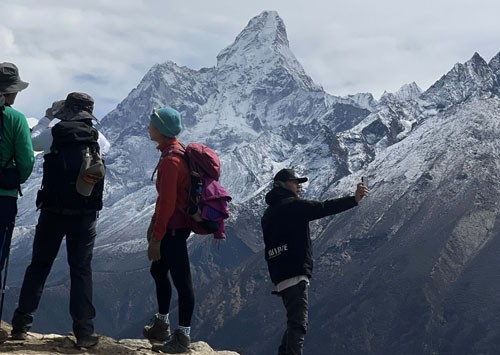
This is one of the most beautiful days on the whole route. The trail leaves Namche on a balcony path with some of the best open views in the lower Khumbu. On a clear day, Ama Dablam dominates the skyline, with Lhotse and Nuptse adding scale to the horizon. You then descend to the river at Phunki Tenga before climbing through forest toward Tengboche.

Tengboche is famous for its monastery, the largest gompa in the Khumbu region. Nepal Tourism Board highlights it as the home of the Mani Rimdu festival, a major Buddhist celebration held in autumn, and Sagarmatha National Park emphasizes how deeply Sherpa life in the region is woven with Tibetan Buddhist practice. Around this section of trail, prayer flags, mani stones, chortens, and monastery walls are not decorations. They are part of daily spiritual geography.

After visiting Tengboche, you continue to Deboche for the night. Staying here rather than in a simpler teahouse helps the day finish softly. It is one of the last points on the route where luxury-standard lodge comfort is still readily available, so guests often sleep especially well here.

  • Mountain Lodges of Nepal (Yeti Mountain Home)
  • Breakfast/Lunch/Dinner and Tea/Coffee

Deboche 3,845 m to Dingboche 4,410 m
Walk: about 6 hours

From this point onward, the landscape starts to feel bigger, drier, and more alpine. The forest gradually thins, and the valley opens. After crossing the river and moving through Pangboche, the route becomes more exposed, with stone walls, open pastures, and broad mountain views.

Pangboche is one of the oldest Sherpa settlements on the trail and is especially known for its ancient monastery, which reliable recent travel references still describe as one of the oldest monasteries in Khumbu. This part of the route feels deeply local. You see fields, yak pastures, carved mani stones, and homes shaped by weather, religion, and altitude rather than by tourism alone.

Dingboche is often called the summer valley of Khumbu because of its broader open setting and old stone-walled fields. It is also where many trekkers first feel the altitude more clearly while resting. In your luxury version, this is where you move from premium lodges to the best available upper-altitude accommodation, such as Hotel Good Luck, Dingboche Resort, or a similar well-run lodge. This honest change in standard is important. It keeps expectations realistic while still offering comfort where it genuinely exists.

  • Hotel Good Luck or Best Available Lodge
  • Breakfast/Lunch/Dinner and Tea/Coffee

Dingboche 4,410 m
Hike: 4 to 5 hours

This second acclimatization day is what makes the itinerary strong. Many guests find that Dingboche is where the mountain environment begins to feel serious, but also more dramatic and rewarding. The recommended hike is usually to Nangkartshang / Nagarjun ridge or toward Chhukung, both of which help the body adapt while offering wider Himalayan views.

Today is less about distance and more about rhythm. You go slowly, breathe steadily, and allow the altitude to become normal rather than fighting it. It is often a day when trekkers feel proud of how far they have already come. You are now above the tree line, and the valley is shaped more by rock, glacier, wind, and snow peaks than by forest.

Back at the lodge, the afternoon is often simple: tea, rest, hydration, and watching changing light on Ama Dablam and surrounding ridges. On itinerary, even these quieter days matter. The value is not only in moving forward. It is in having enough time to feel good while doing it.

  • Hotel Good Luck or Best Available Lodge
  • Breakfast/Lunch/Dinner and Tea/Coffee

Dingboche 4,410 m to Lobuche 4,940 m
Walk: 5 to 6 hours

Today the route becomes more austere and high-altitude in character. You walk above the tree line on open terrain toward Thukla, then climb to the memorial area above it. This section is powerful not because it is lush or colorful, but because it feels stark, exposed, and close to the glaciers.

The memorial ridge above Thukla is one of the most emotional points on the trail, marked by chortens and remembrance monuments for climbers and Sherpas who died on Everest and surrounding peaks. From there, the trail continues along the lateral edge of the Khumbu Glacier toward Lobuche. By now the walking pace is naturally slower, not because the path is technical, but because the air is much thinner.

Accommodation in Lobuche is basic everywhere, and attached bathrooms are not part of the upper-route reality. The luxury difference here is in choosing the strongest available lodge, managing the day well, and preparing guests properly. This is one of the two coldest nights of the trek, so your plan to provide sleeping bags here is a smart and reassuring inclusion.

  • Best available lodges
  • Breakfast/Lunch/Dinner and Tea/Coffee

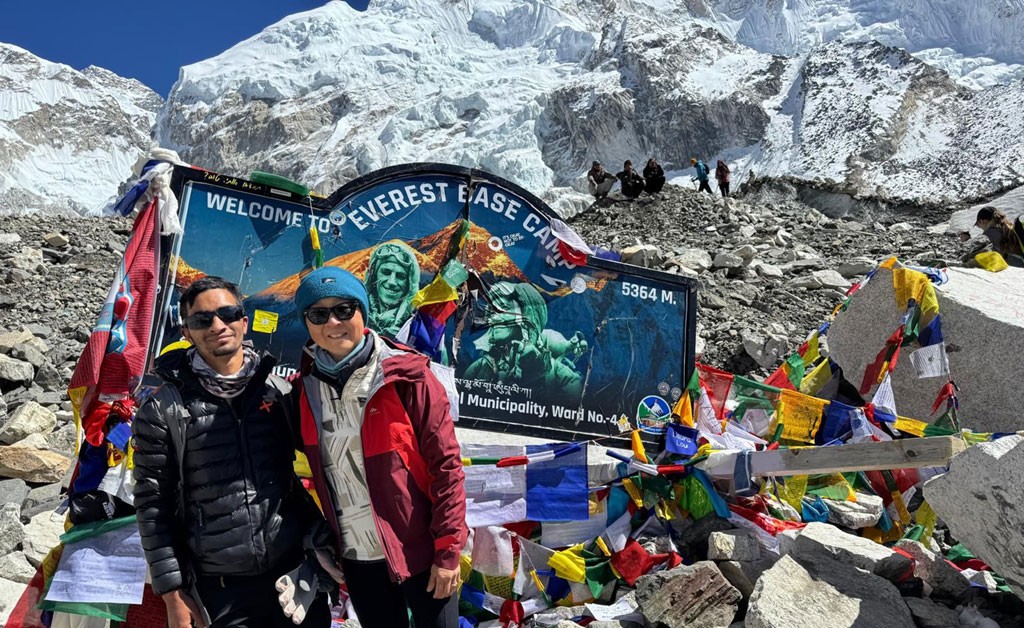
Lobuche 4,940 m to Gorak Shep 5,164 m to Everest Base Camp 5,364 m
Walk: long day, about 7 to 8 hours total

This is the day many trekkers have imagined for years. The route from Lobuche to Gorak Shep follows the rough, stony edge of the Khumbu Glacier. It is not lush or easy-looking; it is raw, high, and unmistakably Himalayan. The terrain underfoot is uneven and the effort is real, but the sense of moving deeper into the Everest landscape is unforgettable.

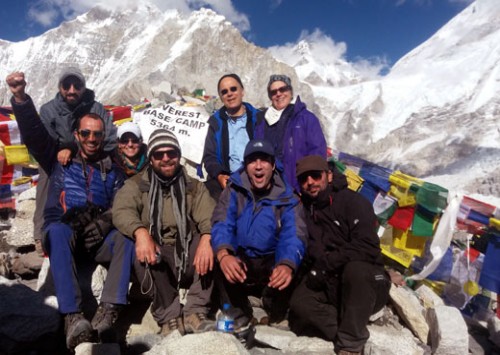
After a short break and leaving your main bag at Gorak Shep, you continue to Everest Base Camp itself. In the main climbing season (spring), the atmosphere can feel especially alive with expedition energy below the Khumbu Icefall. At other times, the reward is the setting itself: moraine, glacier, flags, ice, and the feeling that you have reached one of the most iconic trekking destinations on earth.

Gorak Shep is simple, and that simplicity is part of the truth of the upper mountain. Like Lobuche, it has shared facilities rather than attached bathrooms, and it is best presented honestly. This is your second high, cold night, so the sleeping bag support matters here too. Guests usually sleep early, knowing the next morning brings Kala Patthar.

  • Best available lodges
  • Breakfast/Lunch/Dinner and Tea/Coffee

Kala Patthar 5,545 m
Flight back to Kathmandu

Kala Patthar is often the emotional high point of the trip. Everest Base Camp gives you the achievement, but Kala Patthar gives you the classic view. You start early, usually in the cold, and climb slowly as dawn develops. When the weather is clear, the reward is extraordinary: Everest, Nuptse, Pumori, and the surrounding giants lit by first light.

Back at Gorak Shep, the luxury logic of the itinerary shows itself clearly. Instead of several more days retracing the trail all the way down, you board a helicopter back to Kathmandu. This saves time, reduces physical wear, and turns the return into another scenic highlight rather than only a descent. Your original itinerary already uses this format, and it is one of the strongest selling points of the package.

By afternoon, you are back in Kathmandu. That contrast is one of the pleasures of a luxury Everest trek: sunrise at over 5,500 meters, then a hot shower, comfortable bed, and city-level rest later the same day.

  • Baber Mahal Vilas or similar luxury hotel
  • Breakfast
  • 1,400 m

After the intensity of the mountains, this final full day lets the trip open outward into Nepal’s cultural side. Your itinerary includes Swayambhunath, Pashupatinath, Boudhanath, and Patan Durbar Square, which gives a strong balance of Hindu and Buddhist heritage as well as living urban history. This day also works well for luxury travelers because it adds depth to the Nepal experience instead of making the journey only about one trek.

It is also a good day for shopping, café time, and a final slow meal. For many guests, this is when the whole trip settles in. In the mountains you feel movement, effort, breath, and landscape. Back in Kathmandu, you finally have time to reflect on it.

  • Baber Mahal Vilas or similar luxury hotel
  • Breakfast/Dinner

Your final day is simple and well-managed. According to your flight time, our team will transfer you to the international airport. After days among prayer flags, stone trails, Sherpa villages, suspension bridges, and glacier country, this is where the trip ends, but it is also usually where guests start planning their return to Nepal. Your current itinerary closes with airport transfer, which is exactly right for a premium package.

  • Breakfast

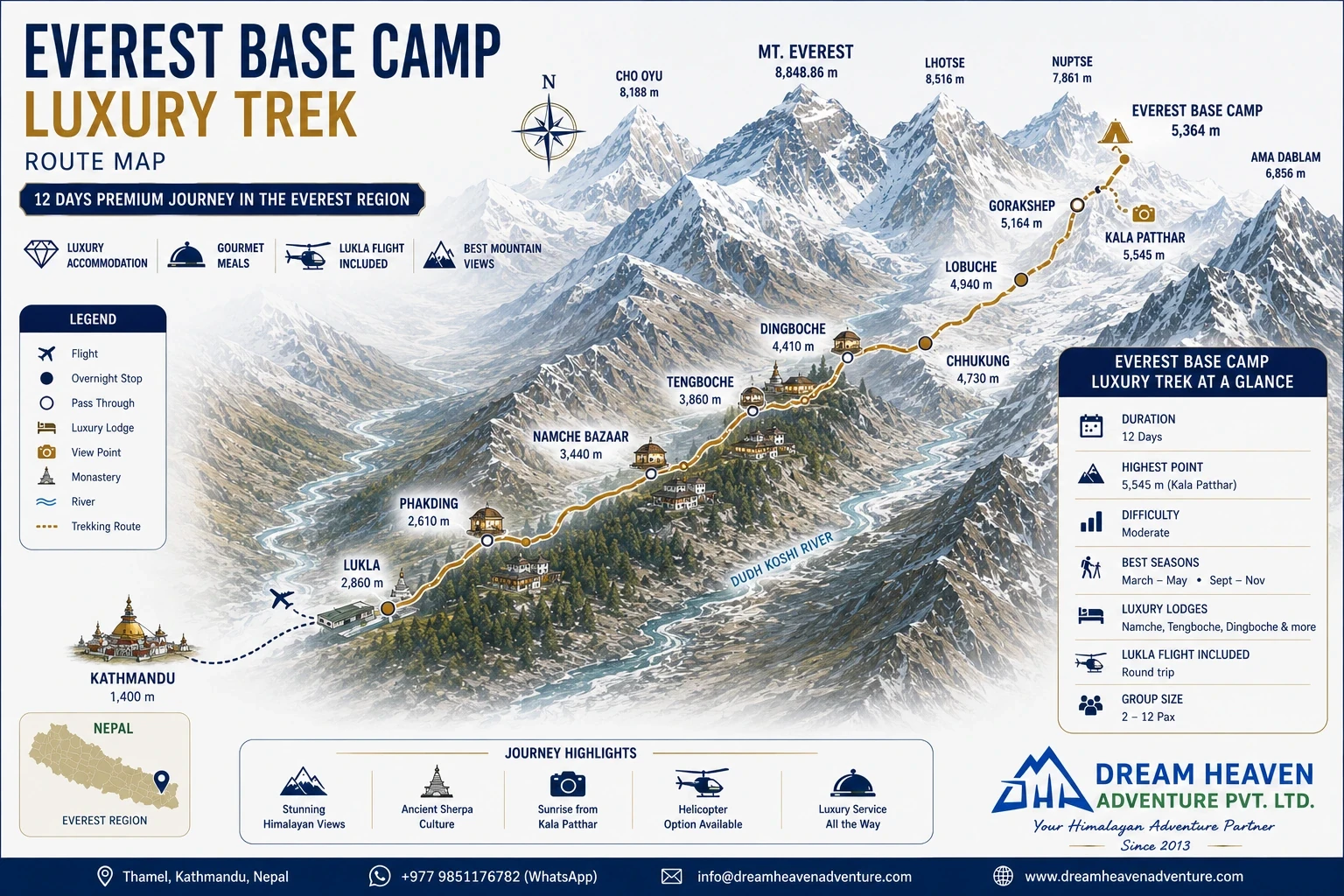
Trip Map

Everest Base Camp Luxury Trek map

Cost Details

Includes

  • Airport transfer (private tourist vehicle)
  • 4 nights stay in 5 star hotel ( Kathmandu ) including breakfast
  • Kathmandu sightseeing including professional tour guide and private car
  • Round trip flight ticket ( Kathmkandu-Lukla-Kathmandu)
  • 11 Nights in Luxury lodges (Heated Blankets, Ensuite Bathroom, Hot Shower, Free WIFI)
  • All meals (B/L/D) including tea/coffee during the trek
  • Professional english trekking guide
  • Strong trekking porters ( 1 porter for 2 trekkers basis)
  • Sagarmatha National park entry permits and Local taxes
  • A comprehensive medical kit
  • All expences for the trekking staff
  • All documents and government tax

Excludes

  • Nepal visa fee (visa can be obtained upon arrival in Kathmandu airport)
  • International Airfare
  • Lunch and dinner in Kathmandu
  • Extra night accommodation in Kathmandu ( if needed)
  • Travel and rescue insurance
  • Tips for guides and porters
  • All kind of drinks - alcoholic and soft drinks.
  • All personal expences

Good to Know

Permits for Everest Base Camp Luxury Trek

For the Everest Base Camp Luxury Trek, all trekkers are required to obtain two official permits issued by the local authorities in the Khumbu region.

The first is the Khumbu Pasang Lhamu Rural Municipality Permit, which is a local area entry permit introduced to manage tourism and support local communities. The second is the Sagarmatha National Park

Permit, required to enter the protected UNESCO-listed national park that covers the Everest region.

All permits are arranged in advance by our team in Kathmandu before the trek begins. This means you do not need to visit any offices or wait in queues. We handle the entire process smoothly, including documentation and verification, so you can focus on preparing for your journey.

You will need to provide a copy of your passport and a valid Nepal visa for the permit process. Once issued, permits are non-refundable and non-transferable, and each permit is valid for a single entry only.
During the trek, these permits are checked at several points, including near Monjo and at other checkpoints along the trail. Your guide will carry and manage the permits, ensuring everything is in order throughout the journey.

In recent years, the permit system in the Everest region has become more streamlined and strictly monitored. For 2026, the process remains efficient, but proper documentation and advance preparation are important to avoid any delays.

Overall, the permit process is simple from your side, as everything is arranged for you, allowing you to start your Everest Base Camp luxury experience without any complications.

Everest Base Camp Luxury Trek Difficulty

The Everest Base Camp Luxury Trek is considered a moderate to challenging trek, but it is achievable for most people with a good level of fitness and the right mindset.

This is not a technical climb. There is no need for climbing skills or previous trekking experience. However, it is a high-altitude journey, and the challenge comes mainly from walking at elevation rather than the trail itself. You will gradually move from around 2,800 meters in Lukla to over 5,300 meters, where the air becomes thinner and your body needs time to adjust.

Each day, you walk approximately 5 to 7 hours at a steady and comfortable pace.  Some sections include gradual uphill climbs, rocky paths, and suspension bridges, especially on the way to Namche Bazaar and beyond Dingboche.

The trail is well-established and safe, but it requires patience, steady breathing, and consistent walking.

The good part is that this itinerary is designed with proper acclimatization and comfortable pacing, which makes a big difference. Rest days in Namche and Dingboche allow your body to adjust naturally to the altitude, reducing the risk of discomfort and making the journey more enjoyable.

You do not need prior trekking experience to join this trip. Many first-time trekkers complete Everest Base Camp successfully every year. However, regular physical activity before the trip is highly recommended. Simple preparation like walking, hiking, or light cardio training for a few weeks can make your experience much easier and more enjoyable.

One of the biggest advantages of this luxury trek is the support system. You will be accompanied by an experienced professional guide who understands the trail, weather, and altitude conditions. Your guide will monitor your pace, assist with any concerns, and ensure your safety throughout the journey.

At the same time, your main luggage is carried by a porter, so you only need to walk with a small daypack. This usually includes essentials such as water, snacks, a light jacket, passport, and personal items. 
Walking without a heavy backpack makes a significant difference, allowing you to enjoy the trail more comfortably.

Even though the lodges are comfortable and the logistics are well-managed, this is still a real Himalayan experience. You will feel the altitude, the changing temperature, and the effort of walking in the mountains. But with the right pace, proper rest, and good support, the journey becomes enjoyable rather than exhausting.

In simple terms, if you can walk a few hours a day, stay active, and maintain a positive attitude, you can complete this trek.

This luxury Everest Base Camp trek is not about pushing your limits to the extreme. It is about walking at your own pace, staying comfortable, and enjoying one of the most iconic journeys in the world with confidence and support.

Altitude & Acclimatization on Everest Base Camp Luxury Trek

Altitude is one of the most important parts of the Everest Base Camp journey, but with the right planning and pace, it can be managed safely and comfortably.

As you begin the trek from Lukla, the elevation gradually increases each day. You move from green forest areas into higher alpine landscapes, where the air becomes thinner and your body naturally takes more time to adjust. It is normal to feel slightly out of breath while walking uphill, and this is simply part of being at altitude, not something to worry about.

This itinerary is carefully designed with proper acclimatization built in, which is the key to a safe and enjoyable trek. You will spend extra nights in places like Namche Bazaar and Dingboche, allowing your body to adapt slowly before moving higher. These acclimatization days are not rest days in bed, but gentle walking days where you hike a bit higher and return to sleep lower, helping your body adjust naturally.

The pace of the trek is also important. You will walk at a steady, comfortable speed, not rushing, and your guide will always adjust the pace according to your condition. The goal is not to reach quickly, but to reach comfortably.

Throughout the trek, your experienced guide will monitor your condition daily, checking how you feel and making sure everything is progressing well. If needed, the plan can always be adjusted. This level of attention and flexibility is one of the key advantages of a well-organized luxury trek.

Staying well hydrated, eating properly, and getting enough rest each day all play an important role in how your body adapts. Thanks to comfortable lodges and better sleeping conditions, you are able to recover well each night, which makes a noticeable difference at higher elevations.

It is also important to understand that most trekkers complete this journey successfully by following simple guidelines: walk slowly, drink enough water, and listen to your body. With the right approach, altitude becomes part of the experience rather than a barrier.

In 2026, with improved logistics, better itinerary planning, and experienced support teams, the Everest Base Camp trek is more accessible than ever. This luxury version ensures that you not only reach your goal safely, but also enjoy every step of the journey along the way.

Travel Insurance for Everest Base Camp Luxury Trek

Travel insurance is strongly recommended for the Everest Base Camp Luxury Trek, and for most travelers it is one of the most important parts of trip preparation. Even on a well-planned luxury itinerary, you are still traveling in a remote mountain region where weather, altitude, and flight changes can affect the journey. Nepal Tourism Board’s emergency guidance for trekkers specifically references helicopter evacuation support in high-altitude areas, which is one reason proper insurance matters so much for the Everest region.

For this trek, the most useful policy is one that covers high-altitude trekking, emergency medical treatment, and helicopter evacuation. Since Everest Base Camp and the Kala Patthar viewpoint are above 5,000 meters, it is very important to check the altitude limit in your policy carefully. Some standard travel insurance plans exclude trekking above a certain elevation, so the wording of the policy matters just as much as the price. Current Everest trekking guidance from operators and safety-focused sources consistently advises choosing cover that includes trekking above 5,000 meters and helicopter rescue in Nepal.

A good insurance policy can also help with the practical side of mountain travel, not only emergencies. In the Everest region, weather can affect flights and travel timing, especially around Lukla. A stronger policy may include benefits for trip interruption, flight delay, unexpected medical costs, and lost or delayed baggage. Those details are especially valuable for luxury travelers who are investing more in upgraded services, premium accommodation, and tighter travel schedules.

The good news is that when the trek is organized properly, insurance often becomes a backup rather than something you need to use. Your itinerary includes gradual ascent, comfortable lodge stays, experienced guide support, porter assistance, and careful pacing, all of which help reduce unnecessary stress during the journey. That said, having coverage gives extra peace of mind because mountain travel is never completely predictable.

Before traveling, it is best to read your policy carefully and confirm these points: high-altitude trekking in Nepal is covered, helicopter evacuation is included, medical treatment is included, and the maximum covered elevation is suitable for Everest Base Camp and Kala Patthar. It is also wise to keep a digital and printed copy of your insurance details with you during the trip.

In simple terms, travel insurance is not there to make the trip feel risky. It is there to make the journey feel protected. For a premium Everest experience, that added security is part of traveling well in the Himalayas.

Guide and Porter Support on Everest Base Camp Luxury Trek

A well-organized support team is one of the most important parts of a successful Everest Base Camp journey. On this luxury trek, you are supported by experienced professionals who take care of the details, allowing you to focus fully on the experience.

You will be accompanied by a professional, English-speaking guide who has deep knowledge of the Everest region, including the trail, weather patterns, altitude conditions, and local culture. Your guide is not only there to show the way, but also to manage the pace, monitor your condition, and make sure each day runs smoothly.

Throughout the trek, your guide will walk with you, adjusting the pace based on your comfort. Some days may feel easier, while others may feel slightly more demanding due to altitude. Having an experienced guide makes a big difference, as they understand how to balance walking speed, rest breaks, and acclimatization naturally.

At the same time, your main luggage is carried by a porter, which significantly reduces the physical effort required during the trek. Porters are responsible for carrying the bulk of your gear, typically sharing loads between trekkers to keep the weight manageable.

This means you only need to carry a small and light daypack during the day. Your daypack usually includes essentials such as water, snacks, a light jacket, sunglasses, sunscreen, and personal items like your passport.

Walking with a light backpack makes the journey much more comfortable, especially at higher altitudes, where even a small amount of extra weight can feel heavier than usual.

Your duffel bag, carried by the porter, will be waiting for you at each lodge when you arrive in the afternoon. This simple system allows you to walk freely during the day and still have access to all your belongings in the evening.

Another important part of the experience is the coordination between the guide and porter. They work together as a team to manage logistics, accommodation, timing, and overall safety. Their experience in the mountains ensures that your journey is not only comfortable but also well-organized from start to finish.

This level of support is what makes the luxury Everest Base Camp trek different. You are not just trekking, you are being guided, supported, and looked after throughout the entire journey.

With the right team beside you, the trek becomes less about effort and more about experience, allowing you to enjoy the mountains with confidence and peace of mind.

Food and Meals on Everest Base Camp Luxury Trek

Food plays a much bigger role on the Everest Base Camp trek than most travelers expect. It is not just about eating, it is about maintaining energy, staying comfortable, and recovering properly each day as you gain altitude.

On this luxury trek, meals are carefully planned to provide both variety and quality, especially in the lower and mid-altitude sections where better kitchen facilities are available. In places like Lukla, Phakding, Namche, and Debuche, you can enjoy a wide range of freshly prepared meals, including soups, pasta, rice dishes, potatoes, eggs, pancakes, and bakery items.

Breakfasts are usually warm and filling, helping you start the day with enough energy for several hours of walking. Options often include porridge, eggs, toast, pancakes, and hot drinks like tea or coffee. Lunch is taken along the trail at scenic stops, where meals are freshly cooked and served hot.

Dinner is the most important meal of the day. After reaching the lodge in the afternoon, you can sit in a warm dining area and enjoy a proper meal. One of the most recommended dishes during the trek is dal bhat, a traditional Nepali meal of rice, lentils, vegetables, and pickles. It is simple, nutritious, and provides long-lasting energy, which is why many trekkers choose it regularly.

As you move higher, especially beyond Dingboche, the menu becomes slightly more limited due to the remote location and difficulty of transporting supplies. However, meals remain fresh, warm, and sufficient, with options like soups, noodles, rice, potatoes, and eggs still available.

Another important part of the trekking experience is staying well hydrated. You can easily find boiled water, tea, soups, and other warm drinks at all lodges. Drinking enough fluids helps your body adjust better to altitude and keeps your energy levels stable.

Snacks such as chocolate bars, nuts, and energy bars are also available along the route, but many trekkers prefer to carry a few personal favorites in their daypack for convenience.
In 2026, the overall food experience on the Everest Base Camp trek continues to improve, especially in the lower regions where lodge standards are higher. On a luxury trek, the difference is not only in the accommodation, but also in the consistency of meals, hygiene, and dining comfort.

You may not have restaurant-style dining at every altitude, but you will always have warm, freshly prepared food, a comfortable place to eat, and enough variety to keep your journey enjoyable.
Good food, combined with proper rest and steady walking, plays a key role in making this trek not just achievable, but truly enjoyable.

Practical Information for Everest Base Camp Luxury Trek

Understanding the day-to-day conditions on the Everest trail helps you prepare better and enjoy the journey with confidence. While this is a luxury trek, you are still in a remote mountain environment, so knowing what to expect makes a big difference.

Electricity and Charging

Electricity is available throughout most of the trekking route, especially in the lower villages. In luxury lodges, charging is usually more convenient and sometimes available in your room. As you go higher, charging is still possible but often limited and may come with a small extra cost.
It is recommended to carry a power bank to keep your devices charged, especially for the nights in Lobuche and Gorakshep, where power supply is more limited.

WiFi and Connectivity

WiFi is available in many lodges along the trail, particularly in places like Namche Bazaar. However, the connection can be slow and not always reliable, especially at higher altitudes.
Mobile network coverage (NCELL or NTC) works in some sections of the trek, mainly in lower areas. As you go higher, connectivity becomes weaker or unavailable.
Most trekkers use this time to disconnect and enjoy the natural surroundings, while still having occasional access to communication when needed.

Drinking Water

Safe drinking water is easily available throughout the trek. You can buy bottled water or request boiled water at lodges.
Many travelers prefer to use water purification tablets or filters, which is both cost-effective and environmentally friendly. This also reduces plastic waste in the mountains.
Staying well hydrated is very important at altitude, so regular water intake is highly recommended during the trek.

Showers and Hygiene

Hot showers are available in many lodges, especially in the lower and mid-altitude areas. In luxury lodges, the experience is more comfortable, with better facilities.
At higher altitudes, showers are still available in some places but may be limited and charged separately. In very high locations, simple or no shower facilities are common due to the cold environment.
Carrying basic personal hygiene items such as wet wipes and hand sanitizer is useful throughout the trek.

Toilets

Toilet facilities vary depending on the location. In luxury lodges, attached bathrooms are available in many places up to Debuche.
Above this altitude, toilets are generally shared and more basic. However, we always select lodges that maintain good cleanliness standards.

Luggage and Packing

Your main luggage is carried by porters, so you only need to carry a light daypack with essentials such as water, snacks, camera, sunscreen, and personal items.
We also provide a duffel bag for the trek if needed. Packing light and smart helps make your walking experience more comfortable.

Tipping Culture

Tipping is a common practice in trekking and is considered a way to appreciate the effort of your guide and porter.
It is not mandatory, but if you are happy with the service, a tip at the end of the trek is a thoughtful gesture.

Overall Experience

Even with luxury arrangements, the Everest Base Camp trek remains a true mountain experience. Facilities become simpler as you go higher, but the journey is well-managed, comfortable where possible, and supported at every step.

Knowing these practical details in advance allows you to travel with confidence and focus on enjoying the experience rather than worrying about small things.

FAQs

  • Q1. What food is available during the trek?

    You will have a variety of freshly prepared meals, including local and international options.
    Dal bhat is a popular choice for energy, along with soups, noodles, rice dishes, and breakfast items like eggs and porridge. Meals remain warm and satisfying throughout the trek.

  • Travel insurance is strongly recommended for this trek.
    It should cover high-altitude trekking and emergency helicopter evacuation. This provides peace of mind while traveling in a remote mountain environment.

  • The best seasons are spring (March to May) and autumn (September to November).
    These months offer stable weather, clear mountain views, and comfortable trekking conditions.

  • Yes, the trek is safe when properly organized.
    With experienced guides, a well-planned itinerary, and proper acclimatization, thousands of trekkers complete this journey every year successfully.

  • A luxury trek focuses on comfort, better logistics, and overall experience.
    You avoid unnecessary fatigue, stay in better lodges, and have a more relaxed and enjoyable journey while still experiencing the real Everest trail.

  • Yes, especially if you value comfort, time, and a well-managed experience.
    You still walk the same Everest trail and reach the same destination, but the journey feels much smoother. Better accommodation, helicopter flights, and organized support allow you to enjoy the trek without unnecessary stress.

  • The difference is in how the journey is planned and experienced.
    This trek includes helicopter flights to avoid long travel delays, premium lodges up to Debuche, carefully selected best lodges at higher altitudes, and a well-paced itinerary. You walk the same trail, but with more comfort, better rest, and stronger support throughout.

  • No, previous trekking experience is not required.
    Many first-time trekkers complete Everest Base Camp successfully. You should have a reasonable level of fitness and be comfortable walking several hours a day. Regular exercise before the trip helps make the experience more enjoyable.

  • Our group sizes usually consist of 1 to 10 trekkers. In a group of 7 or more trekkers, we provide an assistant guide along with the lead guide.

  • The trek is considered moderate to challenging mainly due to altitude, not technical difficulty.
    You walk about 5 to 7 hours a day on well-established trails. With proper acclimatization, a steady pace, and guide support, most trekkers can complete the journey comfortably.

  • Altitude is something to respect, but it is manageable with proper planning.
    This itinerary includes acclimatization days and a gradual ascent, which helps your body adjust naturally. Your guide monitors your condition daily, and simple habits like walking slowly and staying hydrated make a big difference.

  • You stay in premium lodges such as Mountain Lodges of Nepal up to Debuche, offering comfortable rooms, warm dining areas, and better facilities.
    Above this altitude, lodges are more basic, but we select the best available options. In Lobuche and Gorakshep, rooms are simple with shared bathrooms, which is standard in high-altitude areas.

  • You have only private trip option available to do this Everest luxury trek. If you are a solo trekker or in a group, schedule your own trekking time with us. You can travel independently or with your friends and families. We curate treks in Nepal throughout the year.

  • Attached bathrooms are available in many luxury lodges in the lower section of the trek.
    However, at higher altitudes like Lobuche and Gorakshep, attached bathrooms are not available, and facilities are shared.

  • You only carry a small daypack with essentials such as water, snacks, and personal items.
    Your main luggage is carried by a porter, allowing you to walk comfortably without extra weight.

  • Helicopter flights save time and reduce travel stress.
    They avoid the long drive to Ramechhap and minimize flight delays. The return helicopter flight also allows you to skip several days of descent while enjoying incredible aerial views of the Himalayas.

Client Reviews

  • L
    Luke StauberUnited States |February 27, 2021
    Google

    Best Experience in Everest Base Camp Trekking

    We choose Dream Heaven Adventure for our trekking to EBC 12 days on Fabruary 2017. They came to the airport and very morning in next day take us tour in Kathmandu. Their services were superb. Our guide Raj was very friendly and helpful. We had a very much fun and we definitely travel with DHA again!

  • Hilary and John
    Hilary and JohnAustralia |November 01, 2019
    Google

    11 day Everest base camp luxury trek

    Suman and his team at Dream Heaven helped us to plan our Everest base camp trek. He was always patient and very prompt in responding my numerous queries. This was our first trek to Nepal and Mr. Suman along with our guide Mr. HupRaj made our adventure trip perfect for me and my fiancé. If we plan another adventure in Nepal, we will contact Suman definitely.

  • M
    Monica ReaganUnited Kingdom |November 17, 2017
    Google

    Wonderful experience in Everest Base Camp Trek

    We just returned from Everest Base Camp. We had bunch of life changing experience throughout the trek. We enjoyed every bit of our trek as our guide was highly concerned with our satisfaction. The trip was probably best trip I have ever done. Anyone who is looking for amazing trekking experience, trek with Dream Heaven.

Suggested Itineraries

Ask a Question