This Manaslu Circuit Trek Planning Guide explains everything you need to prepare for the trek, including difficulty, altitude, permits, the best seasons, physical preparation, packing and practical trail advice. If you are looking for our guided 12-day Manaslu Circuit Trek package with itinerary and pricing, you can view it here.
Despite these developments, Manaslu remains a physically demanding high-altitude trek that requires preparation, endurance, and careful acclimatization.
Manaslu Circuit Trek in Autumn has seen the highest number of trekkers in the Manaslu region ever. Trekkers are more excited to hike on the serene routes with arresting terrains, hills, mountains, lakes, and a high Himalayan Pass over 5,106 metres. Manaslu is finally getting the number of trekkers it deserved for so long.
However, one mustn't underestimate the trek difficulty with the increased numbers of trekkers on the Manaslu Circuit Treks Route. There's no denying that the en route accommodation services are better now, but the difficulty of trekking Manaslu still remains.
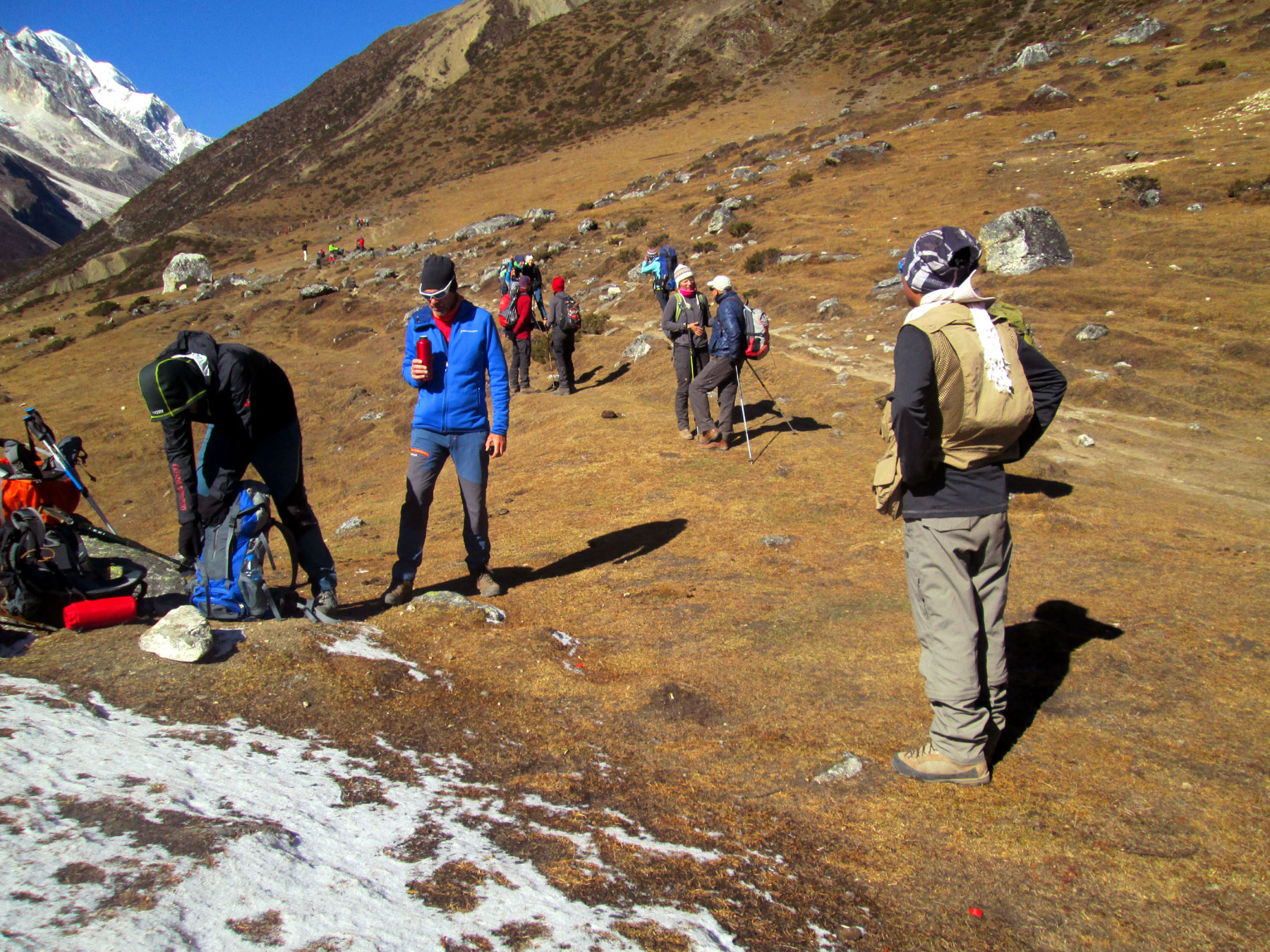
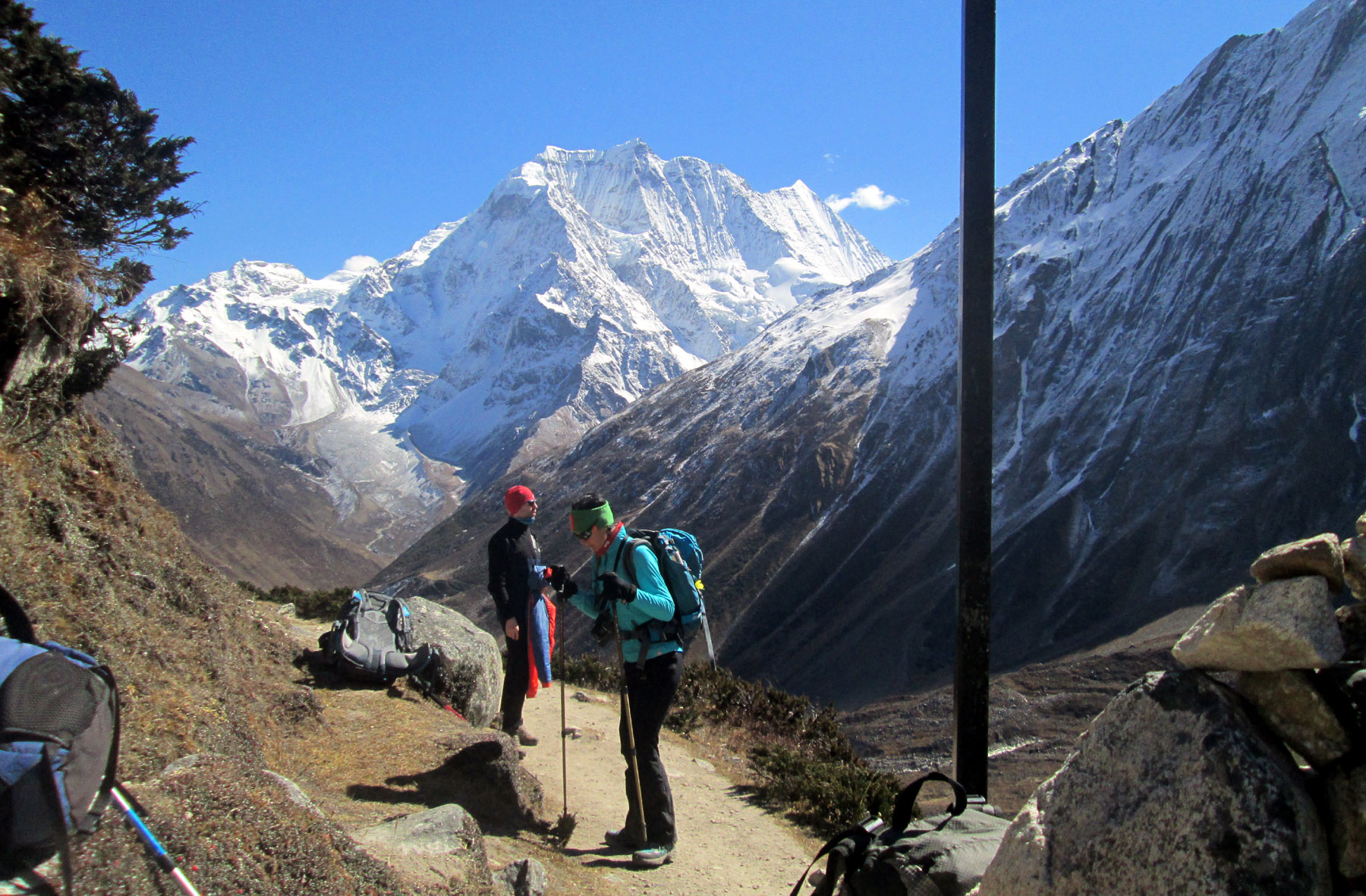
Trekkers Resting while Trekking in the Manaslu Trekking
Factors such as altitude sickness, long walking days, backpack weight, weather conditions, and seasonal timing all contribute to the overall difficulty of the Manaslu Circuit Trek.
Understanding how these factors affect the trek can help you prepare more effectively and enjoy a safer experience on the trail.
Table of Contents
Altitude Sickness on the Manaslu Circuit Trek
You'll traverse through five to six climatic zones throughout Manaslu Circuit Trek. The maximum elevation you'll hike is Larke La Pass at 5,106 metres. During acclimatisation, if you wish to walk Manaslu Base Camp from Sama Gaun, you'll reach a height of 4,800 metres.
At these higher altitude places, the atmospheric oxygen level decreases; trekkers experience altitude sickness symptoms. Usually, altitude sickness symptoms start appearing past 3,500 metres; most trekkers don't feel this until they reach around 4,000 metres.
The most common symptoms of altitude sickness include headache, loss of appetite, nausea, dizziness, unusual fatigue, difficulty sleeping, and shortness of breath during physical activity. These symptoms can affect trekkers differently, and some people may experience them even if they are physically fit. Ignoring early symptoms and continuing to gain elevation too quickly is one of the most common reasons altitude-related problems become more serious.
However, there are ways in which you can escape altitude sickness in the list of Manaslu Circuit Trek Difficulty elements. Being hydrated, consuming adequate meals daily, and proper acclimatisation are the ways to minimise the altitude issue. Diamox and other medicines can lower the chance of altitude sickness in trekkers. Also, your trekking guide will take your best care and call a helicopter for evacuation if necessary.
Isolated and Rugged Terrain of Manaslu Region
The terrain itself becomes progressively more demanding as the trek moves higher into the Manaslu Valley. While the lower section follows river valleys, villages, and forested trails, the landscape above Samdo becomes more exposed and alpine.
Longer climbs, thinner air, colder temperatures, and rough mountain terrain require more effort than the lower part of the route. By the time trekkers reach Dharmasala and prepare for Larke Pass, the physical challenge often comes from several consecutive days at altitude rather than a single difficult section.
Not only the alpine but the narrow cliffs over the Budhi Gandaki River, crossing several glacier-melted streams, slippery trails in monsoon, and snow-covered remote trails in Manaslu Region also increases the Manaslu Circuit Trek Difficulty.
Manaslu Circuit Trek Length and Hiking Hour
One of the reasons the Manaslu Circuit feels more demanding than many other tea house treks in Nepal is the consistency of the walking days. Depending on the itinerary, the route covers approximately 177 kilometres and usually takes between 12 and 16 days to complete.
Our popular 12 Days Manaslu Circuit Trek itinerary follows a carefully planned route with acclimatization days in Samagaun and Samdo.
Trekkers often spend 5 to 8 hours on the trail each day, passing through river valleys, forests, mountain villages, and high alpine terrain. While no single day is exceptionally difficult in the lower section, the cumulative effect of consecutive trekking days can gradually increase physical fatigue as the journey progresses toward higher elevations.
The longest and most challenging day is usually the crossing of Larke Pass between Dharmasala and Bimthang. Most trekkers spend 8 to 10 hours on the trail that day, starting before sunrise and crossing the highest point of the trek before descending into the Bimthang Valley.
On top, trekkers in Manaslu Circuit in winter have to cross this in one day as the tea houses at higher altitudes get closed on freezing days. In summer, the landslides may disrupt the actual route and trekkers might have to take an alternate way that might add extra kilometres.
What You Carry
Manaslu Circuit Trek Difficulty depends on how well you plan your backpacking materials and what gears you carry. The two-week trek demands adequate bags, personal stuff, and other elements. But, you can reduce the backpack weight by having only those you need most.
Carrying unnecessary weight can make long trekking days feel significantly more difficult, especially at higher elevations where every uphill section requires more effort.
A well-fitted trekking backpack with proper shoulder and hip support can improve comfort throughout the journey, but keeping the overall pack weight manageable is equally important. Many trekkers find the trek far more enjoyable when they pack only essential items and avoid carrying gear they rarely use.
Hence, to reduce the Manaslu Circuit Trek Difficulty, you can plan your backpacking item with the help of your trek guide. You can also hire a porter to carry your backpack if you want a tireless hike.
Understanding the expected budget can also help when deciding whether to hire a porter, guide, or private transportation. See our Manaslu Circuit Trek Cost Guide.
When You Plan Manaslu Trek
Manaslu Circuit Trek Difficulty dramatically depends on the time in a year you plan this trek. The two best seasons, Spring and Autumn, are the most preferred time whereas Summer and Winter are the least favoured time in the year for this trek.
Spring (March to May) and Autumn (September to November) are generally considered the best seasons for the Manaslu Circuit Trek. Stable weather, clearer mountain views, longer daylight hours, and more predictable trail conditions make the trek significantly more manageable than during the monsoon or winter months.
Because weather-related challenges are reduced, trekkers can focus more on acclimatization and daily walking rather than dealing with heavy rain, snow, or poor visibility.
For many trekkers, choosing the right season can have as much impact on the overall difficulty of the trek as physical fitness and trekking experience.
The Manaslu region becomes a magical heaven of inspiring terrains and luring mountains in Spring and Autumn.
Summer is not the time for hiking Manaslu Circuit, especially from June to early September. The risk of frequent landslides, heavy downpours, hindered transportation, and overcast over entire landscapes won't let you enjoy the hike. These conditions make the trek almost not doable in summer.
Winter months in Manaslu are for the audacious yet experienced high-altitude hikers. Those who can hike in snowfall, know ways to use snow gear, and can bear cold find Manaslu Circuit Trek Difficulty a moderate grade. But for aspiring trekkers, Manaslu in Winter is a nightmare.
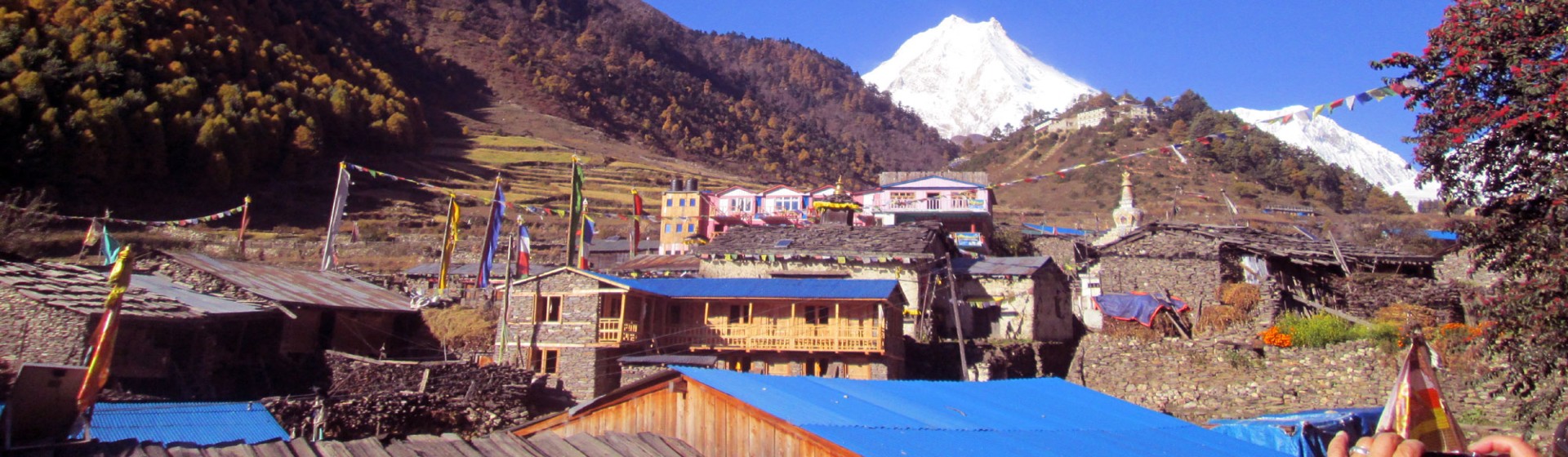
Beautiful Trekking in Manaslu Circuit
Local Tip From Our Team
Based on our experience organizing Manaslu Circuit Treks, many trekkers focus heavily on crossing Larke Pass but underestimate the importance of the days leading up to it. A steady walking pace, proper hydration, and adequate acclimatization around Samagaun and Samdo often contribute more to a successful trek than physical strength alone.
Trekkers who avoid rushing the early stages of the route generally adapt better to the increasing altitude and find the higher sections of the trek more comfortable and enjoyable.
Travelers looking for a longer experience often combine the route with the culturally rich Tsum Valley Trek.
Ways to Minimise Manaslu Circuit Trek Difficulty
While the Manaslu Circuit Trek is considered a challenging high-altitude trek, proper preparation can make the experience significantly more manageable. Physical fitness, acclimatization, gear selection, and trekking support all play an important role in reducing difficulty and improving overall comfort on the trail. Here are some practical ways to prepare for a successful Manaslu Circuit Trek.
Maintain Physical Fitness: A decent physical fitness with a month's preparation for Manaslu trekking is a must for every trekker. Cardio, hikes, marathons, and other physical exercises can prepare you well for this trek, which is a must.
Eating Habits: Your eating habits make some impact on Manaslu Circuit Trek Difficulty. You'll get dehydrated if you consume caffeinated drinks and alcohol, which fosters altitude sickness symptoms. Also, drinking adequate water and eating plenty of healthy meals helps recover the energy for day hikes.
Hiring Trek Guide and Porter: Trek guides and porters on the Manaslu trek can reduce the difficulty of navigation, accommodation, and backpacking. The trek guide will guide you through the best route throughout the tour. Further, a porter, who carries nearly 20-22 kg, carries your backpack so you can hike comfortably.
Local Travel Agency: Local travel agency helps you with logistics, guides, porters, accommodations, meals, permits, transportation, and all elements involved throughout this trek. With one payment with no hidden cost, you'll get the best service from a trusted and government-registered agency like Dream Heaven Adventure.
With over 15 years of experience in the tourism sector of Nepal, Suman is the Managing Director of Dream Heaven Adventure. His passion for trekking has taken him to nearly all of Nepal's popular regions, making him an authorized trekking and tour operator.
Suman has a particular affinity for traveling to the Himalayas, where he has gained deep knowledge about the region's religion, culture, and history. As a part-time blogger, Suman shares his research on the cultural and religious diversity of Nepal, providing his personal touch with insights from his decade-long experience. He also enjoys answering readers' queries with his expert knowledge and personal touch.