Why Combine the Manaslu Circuit with the Tsum Valley Trek
Combining the Manaslu Circuit Trek with the Tsum Valley Trek transforms a challenging mountain journey into a more complete Himalayan experience. While the Manaslu Circuit delivers dramatic landscapes, high passes, and a strong sense of adventure, Tsum Valley adds cultural depth and spiritual calm that cannot be experienced on the circuit alone.
One of the main reasons trekkers choose this combination is balance. The Manaslu Circuit involves long walking days, increasing altitude, and demanding terrain, especially near the high pass. Tsum Valley, by contrast, is walked at lower elevations with gentler gradients, allowing trekkers to slow down, explore villages, and recover physically while still remaining fully immersed in the mountains. This balance makes the overall journey feel more sustainable rather than rushed or exhausting.
Culturally, the difference is even more striking. The circuit route passes through traditional mountain villages, but Tsum Valley feels like stepping into a preserved Himalayan world. Ancient monasteries, mani walls, prayer flags, and daily religious practices are part of everyday life. Trekkers often spend more time interacting with locals, visiting monasteries, and observing rituals that have remained unchanged for generations. This cultural immersion is one of the strongest reasons experienced trekkers choose to add Tsum Valley to their Manaslu journey.
Another important factor is pace and depth. By including Tsum Valley, the trek naturally becomes longer, allowing for better acclimatization and more rest days. Instead of pushing quickly through the circuit, trekkers gain the time needed to adapt to altitude and truly absorb the surroundings. This slower approach not only improves safety but also enhances the quality of the experience.
In 2026, many trekkers are moving away from short, checklist-style itineraries and looking for journeys that feel meaningful and immersive. Combining Manaslu Circuit with Tsum Valley responds directly to this shift. It offers a trek that is not only physically rewarding but also culturally rich and emotionally grounding, making it one of the most satisfying long-distance trekking experiences in Nepal.
Manaslu Circuit vs Tsum Valley Trek
Although the Manaslu Circuit Trek and the Tsum Valley Trek share the same region, the experience on each trail feels very different. Understanding these differences helps trekkers decide whether to choose one route or combine both for a deeper journey.
Landscape and Scenery
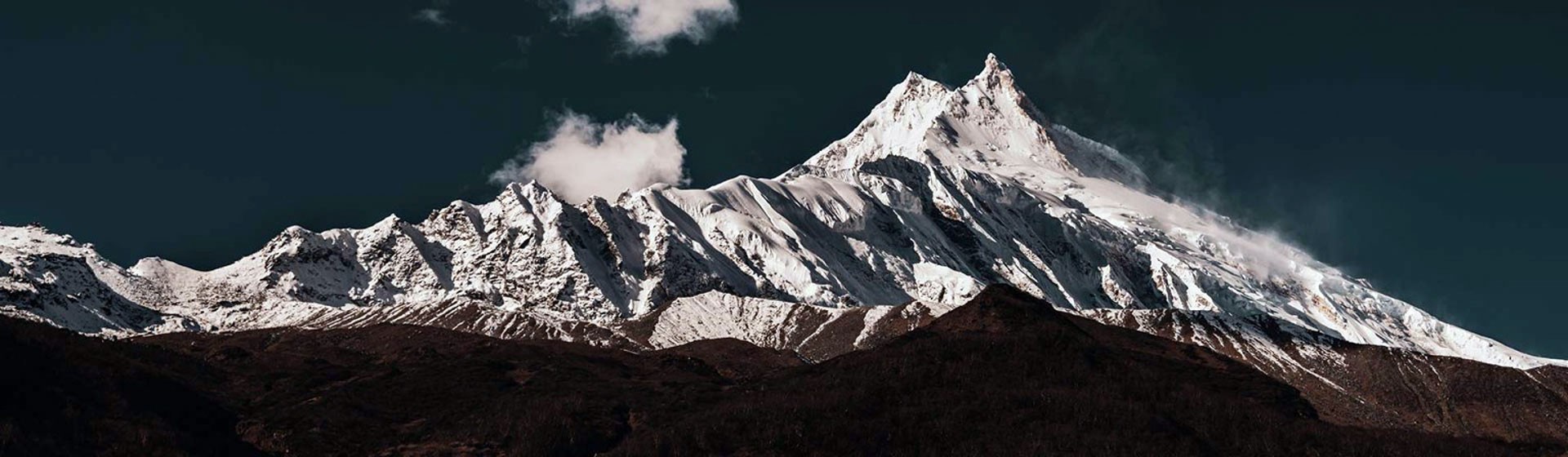
The Manaslu Circuit is defined by scale and drama. Trekkers walk through deep river gorges, alpine forests, wide glacial valleys, and eventually reach high mountain terrain near the pass. Views change quickly, and the landscape feels powerful and expansive. Snow-covered peaks dominate the horizon, especially in the upper sections, creating a strong sense of high-Himalayan adventure.
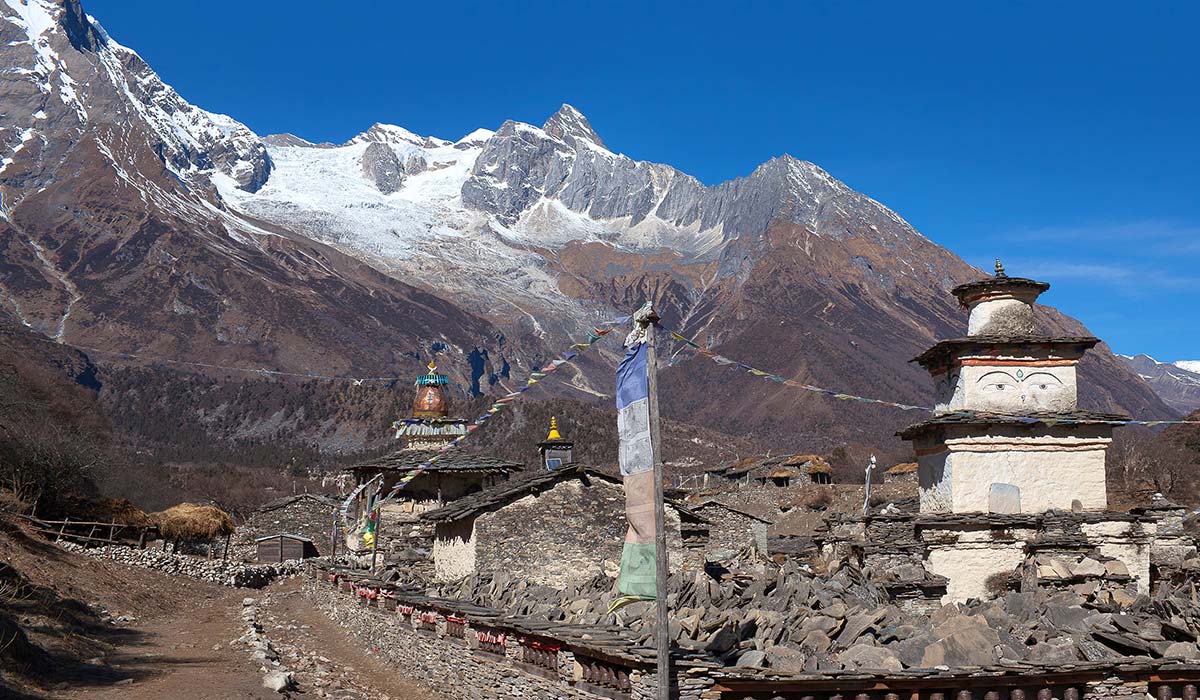
Tsum Valley offers a softer visual rhythm. The scenery is quieter and more intimate, with green valleys, terraced fields, traditional villages, and sacred landscapes shaped by centuries of human settlement. Mountains are always present, but they feel more like guardians of the valley rather than the main focus. The beauty here comes from harmony between nature and culture rather than sheer scale.
Cultural Experience and Daily Life
Cultural exposure exists on both routes, but the depth differs. On the Manaslu Circuit, villages are part of a working mountain economy, and cultural encounters happen naturally but briefly as trekkers move forward each day. Life feels traditional, yet practical and connected to seasonal movement.
Tsum Valley is culturally immersive. It is deeply influenced by Tibetan Buddhism, and religious practices shape daily routines. Monasteries, mani walls, chortens, and prayer flags are not landmarks but living elements of the valley. Trekkers often spend more time in one place, allowing meaningful interaction with locals and a stronger sense of cultural continuity.
Remoteness and Crowd Levels
Both routes are less crowded than Nepal’s major trekking corridors, but they feel remote in different ways. The Manaslu Circuit sees more through-traffic during peak seasons, especially as trekkers move toward the high pass. Encounters with other groups are possible, though still limited and spread out.
Tsum Valley feels quieter and more secluded. Fewer trekkers enter the valley, and those who do tend to stay longer rather than pass through quickly. The absence of transit traffic creates a calm atmosphere that feels almost timeless, even during the main trekking months.
Physical Demand and Walking Style
The Manaslu Circuit is more physically demanding. Long walking days, higher altitude, and the crossing of a major pass require strong endurance and careful acclimatization. It suits trekkers looking for a challenge and a sense of progression toward a major high-mountain goal.
Tsum Valley involves gentler terrain and lower elevation. Walking days are generally shorter, and the focus is less on pushing forward and more on exploration. This makes the valley ideal for slowing the pace, recovering energy, and adding balance to a longer trek.
How the Combined Manaslu Circuit and Tsum Valley Route Works
The combined route is not a simple extension of one trek onto another. It is a carefully connected journey that branches into the Tsum Valley and later rejoins the main circuit, creating a natural loop rather than a back-and-forth detour. Understanding how this works helps trekkers plan time, energy, and expectations more realistically.
The journey begins on the Manaslu Circuit Trek, following the Budhi Gandaki valley through traditional villages and steadily gaining altitude. After several days on the main trail, the route separates and leads into the Tsum Valley Trek, a side valley that feels immediately quieter and more settled. This transition is noticeable not only in the number of trekkers but also in the rhythm of daily life, as walking days become less rushed and villages feel more rooted.
Once inside Tsum Valley, trekkers usually spend several days exploring deeper into the valley rather than moving quickly from place to place. This section includes monastery visits, short side walks, and overnight stays that encourage rest and cultural immersion. Because the valley is not a transit route, there is no pressure to “push through,” and itineraries naturally slow down.
After completing the Tsum Valley section, the route reconnects with the Manaslu Circuit at a higher point on the trail. From here, trekkers continue the circuit with better acclimatization, stronger trail awareness, and a deeper connection to the region. This sequencing is intentional. Entering Tsum Valley earlier in the trek allows trekkers to adjust gradually to altitude before reaching the more demanding upper sections of the circuit.
What makes this combined route work so well is its flow. Instead of feeling like two separate treks stitched together, the journey feels progressive and balanced. Cultural exploration comes first, followed by higher-altitude challenges later, creating a trek that builds naturally in both physical intensity and experience.
Difficulty Level of the Manaslu Circuit and Tsum Valley Trek
The combined Manaslu Circuit Trek and Tsum Valley Trek is best described as moderately challenging with demanding sections, rather than continuously difficult from start to finish. What makes it feel challenging is not constant steep terrain, but the length of the journey, altitude gain, and cumulative fatigue over multiple weeks.
From a physical perspective, the Manaslu Circuit is the more demanding part. Walking days become longer as altitude increases, and the high pass requires steady endurance rather than speed. Trekkers need to be comfortable walking for several hours a day on uneven terrain, often gaining and losing elevation. The challenge here is consistency, being able to maintain energy and focus over many days.
Tsum Valley, by contrast, is physically gentler. Elevations are generally lower, trails are less steep, and walking days are shorter. This section feels more relaxed and plays an important role in balancing the overall difficulty of the trek. Many trekkers find that Tsum Valley provides a natural recovery phase, allowing the body to adapt gradually before returning to the higher sections of the circuit.
Altitude is a key factor to consider. While Tsum Valley helps with acclimatization, the Manaslu Circuit still reaches high elevations where oxygen levels are significantly lower. Proper pacing, rest days, and hydration are essential. This trek is not recommended for complete beginners with no trekking experience, but it is very achievable for hikers who are reasonably fit, patient, and willing to walk at a steady pace.
Mentally, this journey requires commitment. The remoteness of the region means fewer exit points and limited infrastructure, which can feel challenging for trekkers used to highly developed routes. However, for those prepared for a simpler lifestyle and slower rhythm, this remoteness becomes part of the reward rather than a hardship.
In summary, the combined Manaslu Circuit and Tsum Valley trek is challenging but manageable. It suits trekkers who are physically prepared, mentally patient, and motivated by long, immersive journeys rather than short, fast adventures.
If you want a deeper look at physical preparation, read our guide on how difficult the Manaslu Circuit trek really is.
Best Time to Do the Manaslu Circuit and Tsum Valley Trek in 2026
Choosing the right season has a major impact on comfort, visibility, and the overall rhythm of the combined Manaslu Circuit Trek and Tsum Valley Trek. While this region is accessible for much of the year, certain months clearly offer a better balance of weather, trail conditions, and experience quality.
Spring Season (March to May)
Spring is one of the most reliable periods for this combined trek. March brings cooler temperatures and quieter trails, making it ideal for trekkers who value calm walking days and gradual acclimatization. As the season progresses into April and early May, conditions remain stable, snow gradually clears from higher sections, and visibility improves.
Late spring offers longer daylight hours and comfortable temperatures at higher elevations, which is especially helpful for the longer itinerary required when combining Tsum Valley with the circuit. However, April tends to attract more trekkers overall, so those seeking a quieter experience often prefer March or early May.
Autumn Season (September to November)
Autumn is another excellent season, particularly for clear mountain views and dry trail conditions. September begins with fewer trekkers and fresh post-monsoon landscapes, while October offers the most consistent weather patterns. This period is popular because it provides stable conditions for crossing the high pass and comfortable temperatures during the day.
November is especially appealing for experienced trekkers who want fewer people on the trail while still enjoying good visibility. Nights become colder, but the air is crisp, and the sense of remoteness becomes more pronounced as trekking numbers decrease.
We discuss seasonal differences in more detail in our best time to trek Manaslu Circuit and Tsum Valley guide.
Shoulder and Winter Considerations
Late November and early December are possible for well-prepared trekkers who prioritize solitude over warmth. Trails are quiet, but colder temperatures and occasional snow require flexibility and proper preparation. Winter months beyond this are generally not recommended for the combined route due to increased weather-related challenges and limited services.
For most trekkers planning this journey in 2026, spring and autumn remain the best choices, with shoulder months offering the most peaceful experience. Selecting the right timing allows trekkers to enjoy both the cultural depth of Tsum Valley and the high-mountain challenge of the Manaslu Circuit under favorable conditions.
Cultural Highlights of the Tsum Valley Section
The cultural experience in the Tsum Valley Trek is what truly sets this combined journey apart. While the Manaslu Circuit offers glimpses of traditional mountain life, Tsum Valley allows trekkers to step into a living cultural landscape where daily routines, beliefs, and community values remain deeply rooted in Tibetan Buddhism.
One of the most striking features of Tsum Valley is the presence of ancient monasteries and gompas that are still actively used by local communities. These are not historical monuments preserved for visitors, but functioning spiritual centers where prayer, learning, and ritual shape everyday life. Trekkers often hear chanting in the early morning or evening, creating moments of quiet reflection that feel far removed from modern trekking routes.
The valley is also known for its strong Tibetan influence, visible in architecture, clothing, language, and social customs. Mani walls, chortens, prayer flags, and carved stone inscriptions line the trails and village paths. These cultural markers are not isolated highlights but continuous companions throughout the walk, reinforcing the spiritual atmosphere of the region.
What makes cultural interaction in Tsum Valley especially meaningful is time. Because itineraries move slowly, trekkers often stay multiple nights in the same village. This allows for deeper engagement with local families, observation of agricultural life, and informal conversations that go beyond brief encounters. Hospitality feels personal rather than transactional, and many trekkers describe these moments as the emotional core of the journey.
Another defining aspect is the valley’s non-violent and conservation-focused tradition. Historically designated as a sacred region, Tsum Valley has long emphasized respect for life and the natural environment. This philosophy is still reflected in local attitudes toward wildlife, land use, and community living, offering trekkers a rare glimpse into a value system shaped by centuries of spiritual practice.
For those seeking more than physical challenge or scenery, the Tsum Valley section adds depth and meaning to the trek. It transforms the journey from a mountain crossing into a cultural passage, leaving trekkers with a stronger sense of connection to the people and traditions of the Himalayas.
Permits and Regulations for Manaslu Circuit and Tsum Valley
The combined Manaslu Circuit and Tsum Valley trek is one of the most carefully regulated trekking routes in Nepal. These regulations are not just formalities; they are designed to protect the region’s fragile environment, cultural heritage, and local communities. For trekkers, understanding the permit structure is an essential part of planning the journey.
To complete this combined trek, multiple permits are required, as the route passes through different protected and restricted areas:
Manaslu Restricted Area Permit (RAP)
This permit is mandatory for trekking in the Manaslu restricted zone. It controls the number of trekkers entering the region and helps preserve its remote character.
Tsum Valley Restricted Area Permit (RAP)
A separate restricted area permit is required specifically for Tsum Valley. This permit ensures that access to the culturally sensitive valley remains controlled and respectful.
Manaslu Conservation Area Permit (MCAP)
This permit supports environmental conservation, trail maintenance, and local community development within the Manaslu region.
Annapurna Conservation Area Permit (ACAP)
ACAP is required because the Manaslu Circuit exits through the Annapurna region. Even though only part of the route passes through this area, the permit is compulsory.
Local Rural Municipality Permit (Chum Nubri Area)
An additional local permit is required by the Chum Nubri rural municipality. This supports local administrative services and community initiatives in the villages along the route.
All of these permits must be arranged through a registered trekking agency. Independent trekking is not allowed in these restricted areas. A licensed guide is compulsory, and a minimum of two trekkers is required to obtain the permits. These rules are strictly enforced at multiple checkpoints along the trail.
While this permit system may appear complex at first, it plays a vital role in keeping the Manaslu Circuit and Tsum Valley less crowded and well preserved. For trekkers, it results in smaller group sizes, better-managed trails, and a trekking experience that feels respectful, organized, and far removed from mass tourism.
Accommodation and Food on the Combined Manaslu Circuit and Tsum Valley Trek
Accommodation and meals on the combined Manaslu Circuit Trek and Tsum Valley Trek reflect the remote nature of the region. This is not a comfort-focused trek, but it is well supported by local tea houses that provide everything needed for a safe and rewarding journey when expectations are realistic.
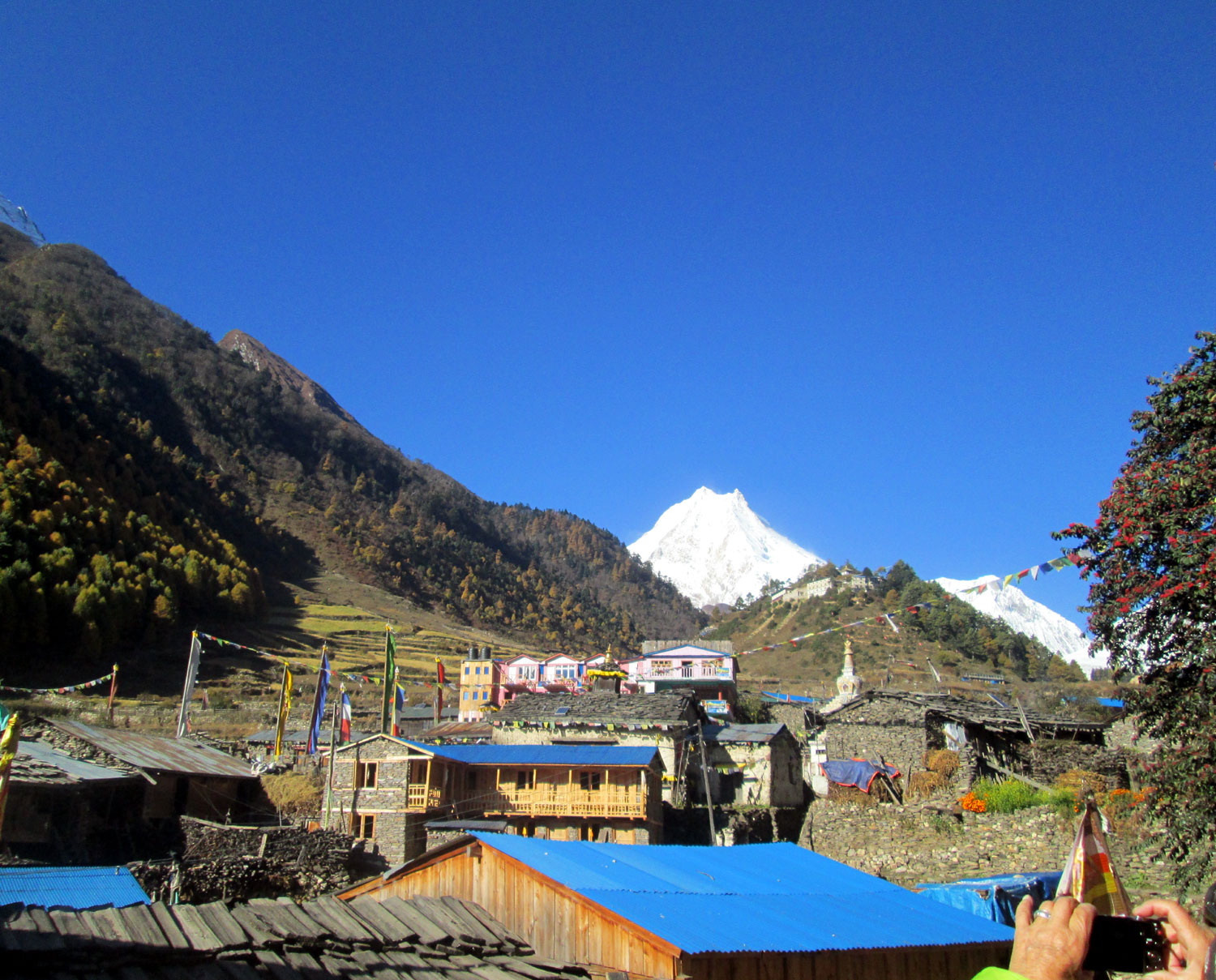
Most accommodation consists of simple, family-run tea houses. Rooms are typically twin-sharing with basic beds, mattresses, pillows, and blankets. Cleanliness is generally good, but facilities remain modest. Heating is usually available only in the common dining area, often through a wood or gas stove, while bedrooms are unheated, especially at higher elevations. Luxury features such as electric bed warmers or central heating are not part of the experience.
In the lower and middle sections, both Manaslu and Tsum Valley villages offer relatively better facilities. Hot showers (solar or gas) and Wi-Fi or charging services are often available for an additional cost, though reliability decreases with altitude. As the trek progresses higher, services become more basic, and comfort depends largely on weather and local supply conditions.
Food on the trek is simple, nourishing, and designed to support long walking days. Meals are freshly prepared using locally available ingredients, with menus typically including rice-based dishes, noodles, soups, potatoes, vegetables, and Tibetan-style bread. In Tsum Valley, meals tend to feel more traditional and locally influenced, reflecting the agricultural lifestyle of the valley. Options become more limited at higher elevations, but portions are filling and suitable for sustained energy.
What stands out most is the hospitality. Tea houses are not commercial lodges but family homes adapted for trekkers. Hosts are attentive and welcoming, and meals are often shared in a communal setting that encourages conversation and rest. This personal atmosphere becomes an important part of the overall experience, especially on a long trek.
For trekkers in 2026, the key to enjoying accommodation and food on this route is mindset. Those expecting hotel-style comfort may find the conditions challenging. Those open to simplicity, local flavors, and a slower rhythm will find the tea house experience deeply satisfying and well aligned with the spirit of the region.
To understand what staying on the trail is really like, you can read our guide on tea house accommodation on the Manaslu route.
Who Should Choose the Manaslu Circuit with Tsum Valley Trek
The combined Manaslu Circuit Trek and Tsum Valley Trek is best suited for trekkers who value depth, patience, and authenticity over speed or comfort. This journey rewards those who enjoy spending extended time in the mountains, walking through remote villages, and adapting to a slower rhythm of travel rather than rushing from one highlight to another.
Previous trekking experience is helpful, but it is not strictly required. Fit individuals with good stamina, a positive mindset, and a willingness to walk consistently for many days can complete this trek successfully. What matters more than technical skill is the ability to manage long walking days, uneven terrain, and gradual altitude gain. Trekkers who regularly hike, walk, or follow a basic fitness routine before arrival usually adapt well once on the trail.
Physical preparation plays an important role. Light endurance training, stair climbing, day hikes, or regular cardiovascular exercise before the trek makes a noticeable difference. The trek does not require mountaineering skills, but it does demand steady energy over multiple weeks. Those who arrive prepared tend to enjoy the journey rather than simply endure it.
Mentally, this trek suits travelers who are comfortable with simplicity. Accommodation is basic, connectivity is limited, and daily plans depend on weather, trail conditions, and local logistics. Trekkers who enjoy cultural interaction, quiet evenings, and shared dining spaces often find the experience deeply rewarding. The slower pace of Tsum Valley in particular appeals to those interested in spirituality, village life, and meaningful encounters with local communities.
On the other hand, this trek is not ideal for travelers seeking luxury, quick access, or highly developed infrastructure. Those who prefer hotel-style comfort, short itineraries, or flight-supported routes may find the conditions challenging. This journey asks for flexibility and openness rather than convenience.
For trekkers who approach it with realistic expectations and a prepared body and mind, the Manaslu Circuit with Tsum Valley becomes more than a physical challenge. It offers a rare combination of endurance, culture, and quiet mountain life that many describe as one of the most fulfilling trekking experiences in Nepal.
Best Itinerary Length for Manaslu Circuit with Tsum Valley
Choosing the right duration is one of the most important decisions when planning the Manaslu Circuit Trek with the Tsum Valley Trek. Unlike shorter routes, this combined journey rewards time and patience. Rushing it reduces both safety and the depth of the experience.
For most trekkers, an itinerary of 18 days is ideal. This range allows enough time to explore Tsum Valley properly, follow the full Manaslu Circuit, and cross the high pass without unnecessary pressure. Shorter itineraries often sacrifice rest days, cultural exploration, or safe acclimatization, which can negatively affect the overall experience.
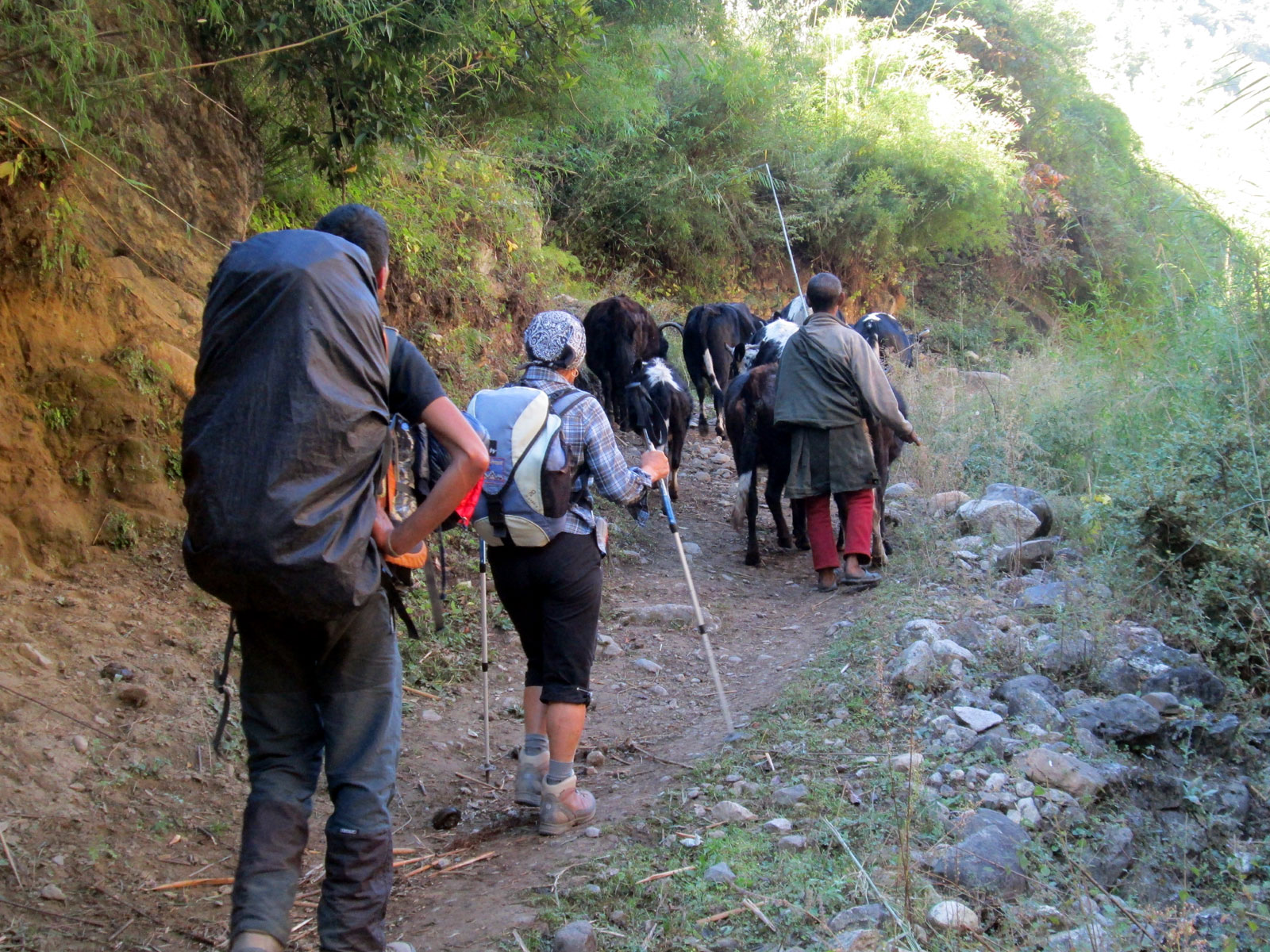
An 18-day plan creates a natural progression. The early days are spent at lower elevations with steady walking, followed by deeper exploration in Tsum Valley, and only later does the trek move into higher alpine terrain. This sequencing supports gradual altitude adaptation and helps trekkers arrive at the upper circuit feeling strong rather than fatigued.
When to Add Extra Rest and Exploration Days
Some trekkers benefit from adding one or two extra days, especially those interested in monasteries, photography, or a slower pace. Tsum Valley in particular deserves time. Extra days allow for short side walks, longer village stays, and more meaningful interaction with local communities. These days also serve as valuable recovery time before returning to the main circuit.
Adding rest days is not only about comfort. It improves safety and makes the high-altitude section of the trek more enjoyable. Trekkers who feel well acclimatized tend to move more confidently and appreciate the landscape rather than focusing on physical strain.
Why Rushing This Trek Is Not Recommended
Trying to complete the combined route too quickly turns a rich journey into a physical checklist. Long walking days, limited recovery time, and reduced acclimatization increase the risk of fatigue and altitude-related issues. More importantly, rushing means missing what makes this trek special: the quiet rhythm of village life in Tsum Valley and the gradual build-up toward the high mountain environment on the Manaslu Circuit.
For trekkers planning this journey in 2026, time should be viewed as an asset rather than a constraint. A well-paced itinerary not only improves safety and comfort but also delivers a deeper, more rewarding Himalayan experience that stays memorable long after the trek is over.
Manaslu Circuit and Tsum Valley Trek 18 Day Itinerary
Day 1: Drive from Kathmandu to Machha Khola
Machha Khola – 930 m
8–9 hours | +930 m
Scenic drive through hills, rivers, and rural villages into the Budhi Gandaki valley.
Day 2: Trek from Machha Khola to Jagat
Jagat – 1,340 m
6–7 hours | +410 m
Gradual walking with suspension bridges and the first taste of mountain village life.
Day 3: Trek from Jagat to Lokpa (Tsum Valley Entry)
Lokpa – 2,240 m
6–7 hours | +900 m
Leave the Manaslu main trail and enter the quieter, culturally rich Tsum Valley.
Day 4: Trek from Lokpa to Chumling
Chumling – 2,386 m
5–6 hours | +146 m
Forest paths and traditional villages introduce the slow rhythm of Tsum Valley.
Day 5: Trek from Chumling to Chhokang Paro
Chhokang Paro – 3,010 m
5–6 hours | +624 m
Steady ascent with mani walls, monasteries, and strong Tibetan Buddhist influence.
Day 6: Trek from Chhokang Paro to Nile (Upper Tsum Valley)
Nile – 3,361 m
4–5 hours | +351 m
Walk deeper into Upper Tsum Valley with expansive views and a strong sense of remoteness.
Day 7: Exploration Day in Upper Tsum Valley (Nile)
Nile – 3,361 m
3–4 hours (optional)
Visit Mu Gompa, explore nearby villages, and experience daily spiritual life in this sacred valley.
Day 8: Trek from Nile to Chumling
Chumling – 2,386 m
6–7 hours | −975 m
A longer descent retracing cultural landscapes and allowing natural recovery.
Day 9: Trek from Chumling to Deng
Deng – 1,860 m
6–7 hours | −526 m
Rejoin the Manaslu Circuit and continue through river valleys and forests.
Day 10: Trek from Deng to Namrung
Namrung – 2,630 m
6–7 hours | +770 m
The landscape becomes more alpine with wider valleys and cooler air.
Day 11: Trek from Namrung to Samagaun
Samagaun – 3,530 m
5–6 hours | +900 m
Enter high-altitude terrain; walking hours are kept moderate for acclimatization.
Day 12: Acclimatization Day in Samagaun
Samagaun – 3,530 m
2–4 hours (optional hikes)
Rest day or short hikes to prepare for higher elevation.
Day 13: Trek from Samagaun to Samdo
Samdo – 3,875 m
4–5 hours | +345 m
Gentle ascent through open valleys near the Tibetan border.
Day 14: Trek from Samdo to Larkya Phedi (Dharamshala)
Dharamshala – 4,460 m
4–5 hours | +585 m
Short, strategic day before the high-pass crossing.
Day 15: Cross Larkya La Pass (5,106 m) and Trek to Bimthang
Bimthang – 3,720 m
8–9 hours
The most challenging and rewarding day with dramatic Himalayan scenery.
Day 16: Trek from Bimthang to Goa
Goa – 2,560 m
5–6 hours | −1,160 m
Descend through alpine meadows, pine forests, and changing landscapes.
Day 17: Trek from Goa to Dharapani, Drive to Besisahar
After reaching Dharapani, the trekking section officially ends.
Walking: 4–5 hours | −597 m Drive to Besisahar 4–5 hours
– 760 m Overnight in Besisahar.
Day 18: Drive from Besisahar (via Dharapani route) to Kathmandu
Kathmandu – 1,300 m
Driving time: 6–7 hours
A full-day scenic drive back to Kathmandu, marking the end of the Manaslu Circuit and Tsum Valley journey.
Manaslu Circuit and Tsum Valley Trek Cost (2026)
The cost of the combined Manaslu Circuit and Tsum Valley trek is higher than many classic trekking routes in Nepal due to its length, remoteness, and strict permit requirements. However, it also offers significantly greater value in terms of cultural depth, time on the trail, and access to restricted regions that remain carefully preserved.
Tentative costs generally start from around USD 1,500 per person and can increase depending on individual preferences and trek design. The final price varies based on several factors, including porter services, group size, transportation type, itinerary length, and the level of support chosen for the trek. Because this is a long and remote journey, customization plays a major role in determining the overall cost.
A substantial portion of the cost comes from mandatory permits, including restricted area permits for both Manaslu and Tsum Valley, conservation area permits, and local municipality fees. These costs are fixed by the government and cannot be reduced. In addition, trekking must be done with a licensed guide and a minimum of two trekkers, which ensures safety, proper logistics, and regulated access to the region.
The duration of the trek, usually close to three weeks, also affects the price. Longer itineraries mean additional days of accommodation, meals, guide and porter support, and logistical coordination in remote villages where supplies are transported from outside the region. Transportation costs are another factor, as the route relies on long overland drives rather than flights.
It is best to view the cost of this trek as an investment in experience rather than comfort. The price reflects access to quiet trails, preserved culture, controlled trekking conditions, and a journey that prioritizes depth and authenticity over speed or luxury. For trekkers planning this route in 2026, focusing on a well-planned itinerary and clear inclusions is far more important than choosing the lowest possible price.
Exact pricing is confirmed only after finalizing group size, travel dates, and service level.
Is the Manaslu Circuit and Tsum Valley Trek Worth It in 2026?
Yes, for trekkers seeking depth, culture, challenge, and solitude, the combined Manaslu Circuit and Tsum Valley trek remains one of the most rewarding journeys in Nepal in 2026. While it may not offer the conveniences of more commercial routes, it delivers something far more meaningful: a sense of connection with remote mountain communities, uninterrupted Himalayan landscapes, and a trekking rhythm that balances cultural immersion with physical challenge.
This trek is different from quick-paced trails because it invites explorers to slow down, absorb, and engage. Tsum Valley brings rich spiritual and cultural experiences with active monasteries, traditional lifestyles, and quiet daily routines. The Manaslu Circuit adds dramatic scenery, high passes, and the satisfaction of traversing a long, less-traveled Himalayan loop.
The route’s restricted permit system, mandatory guide requirement, and limited infrastructure help keep crowds low and the environment well preserved. Comfortable accommodation and modern conveniences are not the focus here, instead, the journey emphasizes simplicity, local hospitality, and authentic experiences.
In 2026, as more trekkers look for experiences that feel real, respectful, and immersive, this combined trek stands out. If your goal is not just to walk but to experience the mountains, this journey is absolutely worth it.
If you are planning this trek and want a realistic itinerary based on your available time and experience level, it is best to discuss the details in advance.