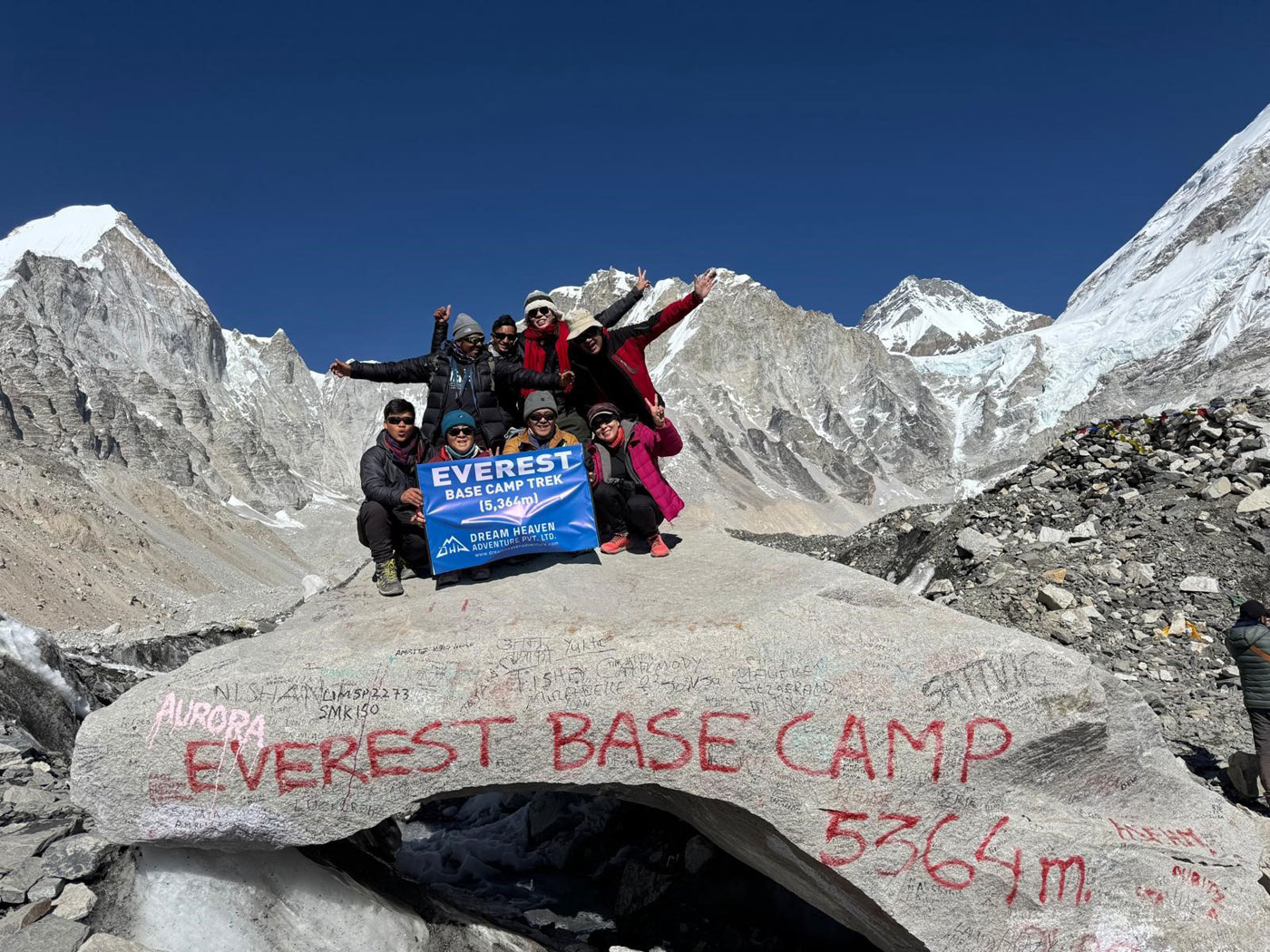
What Does Group Join Mean for the Everest Base Camp Trek?
A group join trek means that you reserve a place in a pre-scheduled Everest Base Camp departure that already has a fixed itinerary and confirmed travel dates. Instead of organizing the trek privately, you become part of a small international team of trekkers who follow the same plan and walk together toward the same goal. All major arrangements, including permits, accommodation, flights to Lukla, guides, and daily logistics, are managed in advance by the trekking agency.
In a group join trek, the entire program is carefully designed to suit most trekkers. The route, acclimatization days, and daily walking distances are planned with safety and altitude adaptation in mind. As a participant, you simply join the group and focus on enjoying the experience, while the professional team takes care of the practical details behind the scenes.
This trekking style is especially helpful for solo travelers. Many people wish to reach Everest Base Camp but feel hesitant about going alone in a remote mountain environment. A group join option allows them to travel with like-minded people, share accommodation, and trek under the guidance of an experienced leader. It creates a friendly and supportive atmosphere where encouragement and teamwork become a natural part of the journey.
Another important aspect of group join trekking is the shared schedule. Everyone in the group follows the same itinerary and walking plan. This means there is less flexibility to change dates or alter the route for individual preferences. However, for most travelers this structure is a major advantage rather than a limitation. It provides clear organization, proven safety standards, and the confidence of trekking with a well-prepared team instead of facing the challenges alone.
Group join trekking also simplifies complex mountain logistics. Lukla flights, trekking permits, and tea house bookings can be difficult to manage individually, especially during busy seasons. In a group program, these arrangements are coordinated in advance, including adjustments such as possible flights from Ramechhap during peak months. This organized approach reduces stress and allows trekkers to concentrate on the adventure rather than on administrative details.
In simple terms, joining a group trek to Everest Base Camp means becoming part of a professionally managed journey where planning, guidance, and logistics are shared. It is a practical, safe, and social way to experience the Everest region, particularly for those who want a reliable structure and the company of fellow travelers on one of the world’s greatest trekking routes.
Why Choose a Group Join Trek to Everest Base Camp?
Choosing a group join trek to Everest Base Camp offers many practical, social, and financial advantages. For most travelers, the biggest attraction is affordability. Trekking in a group allows major expenses such as guide services, porter support, permits, and transportation to be shared among participants. This makes the overall cost significantly lower than arranging a private trek, especially for solo travelers.
Another important reason to choose a group trek is the social experience. The Everest Base Camp journey lasts almost two weeks, and walking day after day with people from different countries creates a strong sense of friendship and teamwork. Conversations on the trail, shared meals in tea houses, and celebrating milestones together make the trek feel more enjoyable and memorable. Many trekkers find that the people they meet become one of the highlights of the entire adventure.
Group join treks are also highly convenient. All complicated arrangements, including Lukla flights, trekking permits, accommodation bookings, and daily planning, are organized in advance. Travelers simply arrive in Nepal, join the team, and start the trek without worrying about managing details on their own. This organized structure is especially valuable for first-time visitors to Nepal who may not be familiar with local systems.
Motivation and support are additional benefits of trekking in a group. On challenging days, it is often easier to keep going when you are surrounded by others who share the same goal. The encouragement of fellow trekkers and the guidance of an experienced leader help many people push beyond their comfort zone and successfully reach Everest Base Camp.
Safety and professional guidance are also strong reasons to choose a group join trek. An experienced guide leads the team, monitors altitude adaptation, and handles any unexpected situations. While private treks can be equally safe when well organized, the group environment provides extra reassurance, particularly for new trekkers or those with limited high-altitude experience.
Group join treks also offer predictable planning. Fixed departure dates allow travelers to choose a schedule that matches their vacation time. During peak seasons, securing Lukla flights and tea house rooms can be difficult for individuals, but group programs arrange these services in advance, reducing uncertainty and last-minute stress.
In summary, choosing a group join trek to Everest Base Camp means enjoying a well-organized, cost-effective, and socially rewarding experience. It combines professional support, shared motivation, and structured planning, making the dream of reaching Everest Base Camp achievable for a wide range of travelers.
Who Is the Group Joining Trek Best For?
The Everest Base Camp group joining trek is best suited for travelers who want a well-organized, social, and structured trekking experience. It is an ideal option for people who prefer to travel with others rather than trek alone in a remote mountain environment. Many first-time visitors to Nepal feel more confident knowing they will be part of a guided team with clear daily plans and professional support.
This trekking style is especially perfect for solo travelers. Instead of arranging a private trek at a higher cost, solo trekkers can join an existing departure and share the experience with other international participants. Group join treks provide companionship on the trail, shared motivation on long days, and the comfort of knowing that logistics and safety are already managed.
Budget-conscious travelers also benefit greatly from group departures. Because major expenses such as guide services, porter support, and transportation are shared among the group, the overall cost becomes more affordable. For students, backpackers, and travelers with limited budgets, a group join trek offers one of the most economical ways to reach Everest Base Camp without compromising on safety or organization.
First-time trekkers to the Everest region often find group join treks the most comfortable option. The Himalayas can feel unfamiliar and challenging at first, especially for those without previous high-altitude experience. Being part of a guided group removes much of the uncertainty. Everything from acclimatization schedules to accommodation and route planning is already arranged, allowing new trekkers to focus on enjoying the journey.
Small groups of friends or couples who do not have enough people to form their own private group can also benefit. Instead of paying higher private trek costs, they can join a scheduled departure and still enjoy trekking together while meeting new people along the way.
The group join option is best for travelers who are comfortable following a fixed itinerary and walking at a shared pace. People who enjoy meeting new friends, exchanging travel stories, and being part of a team will find this trekking style highly rewarding. For these travelers, a group join trek to Everest Base Camp becomes not only a journey into the mountains but also a meaningful cultural and social adventure.
At the same time, it is important to be honest about expectations. Group join treks may not be the best choice for those who require complete flexibility, want a very slow or highly customized pace, or prefer full privacy. Such travelers may feel more comfortable choosing a private trek instead.
Overall, if you are looking for an affordable, organized, and social way to experience the Everest region, the group join trek is one of the most suitable and enjoyable options available.
How Group Join Everest Base Camp Trek Works
A group join Everest Base Camp trek works through a simple and organized system that makes the entire journey easy to manage for travelers. Instead of planning everything individually, you join a pre-arranged departure with a confirmed itinerary, professional trekking staff, and a clear day-by-day schedule. From the moment you arrive in Kathmandu until you return, the trek follows a structured and well-tested plan.
Before the trek begins, there is usually a short briefing meeting in Kathmandu. During this meeting, the guide explains the route, checks essential gear, and provides important information about altitude safety, daily walking routines, and group expectations.
This is also the first opportunity for group members to meet each other and understand how the trek will run. Even when travelers come from different countries and backgrounds, this early interaction quickly builds a friendly team atmosphere.
Once the trek starts, everyone follows the same itinerary and acclimatization plan. The group walks on the same days, stays in the same villages, and takes rest days at key points such as Namche Bazaar and Dingboche. These acclimatization stops are a vital part of the program and are designed to help all trekkers adapt safely to higher altitudes. This structured approach is one of the main reasons group join treks work so well in the Everest region.
During trekking days, the guide manages the overall pace in a practical and flexible way. Trekkers are not required to walk as a tight line, but the movement is coordinated so that the team reaches each destination within a safe timeframe. Faster walkers may arrive earlier and relax, while slower walkers receive support and arrive later. The important point is that the group progresses together without unnecessary pressure or competition.
Logistics are also handled collectively. The guide organizes tea house accommodation, meal timing, daily plans, and any necessary adjustments due to weather or trail conditions. This shared responsibility allows trekkers to focus on walking, enjoying the scenery, and adapting to altitude instead of worrying about practical details.
Flights to Lukla are an important part of how group join treks operate. Depending on the season and flight schedules, departures may take place from Kathmandu or from Ramechhap airport. A well-managed group program prepares travelers for these realities, arranges transfers when needed, and keeps enough flexibility in the itinerary to manage possible flight delays, which are a normal part of trekking in the Everest region.
In essence, a group join Everest Base Camp trek works by combining a proven itinerary, shared logistics, professional guidance, and a supportive team environment. This organized structure removes the stress of independent planning and allows travelers to focus on the true purpose of the journey: experiencing the beauty of the Khumbu region and successfully reaching Everest Base Camp.
Cost of Everest Base Camp Group Join Trek
One of the main reasons travelers choose a group join trek to Everest Base Camp is the cost advantage. Trekking in a group allows major expenses such as guide services, porter support, permits, and transportation to be shared among participants. This shared system makes the overall price much more affordable compared to organizing a private trek.
For 2026 departures, the general market cost of an Everest Base Camp group join trek usually ranges between USD 1,250 to USD 1,650 per person, depending on the service level and inclusions. These prices normally cover essential services such as domestic flights to and from Lukla, national park permits, TIMS card, professional guide support, porter assistance, tea house accommodation, and airport transfers.
At Dream Heaven Adventure, our standard and most popular 14-day Everest Base Camp Group Join Trek package is priced at USD 1,490 per person. This cost includes Lukla flights, necessary permits, experienced trekking guide, porter service, tea house accommodation, and a carefully planned itinerary with proper acclimatization days. The package is designed to offer excellent value while maintaining reliable service quality and safety standards.
Several factors can influence the final cost of a group join trek. The trekking season plays a big role. Spring (March–May) and autumn (September–November) are the busiest periods in the Everest region, and demand for Lukla flights and accommodation is highest during these months. Even so, group departures help keep prices stable and predictable compared to individual travel arrangements.
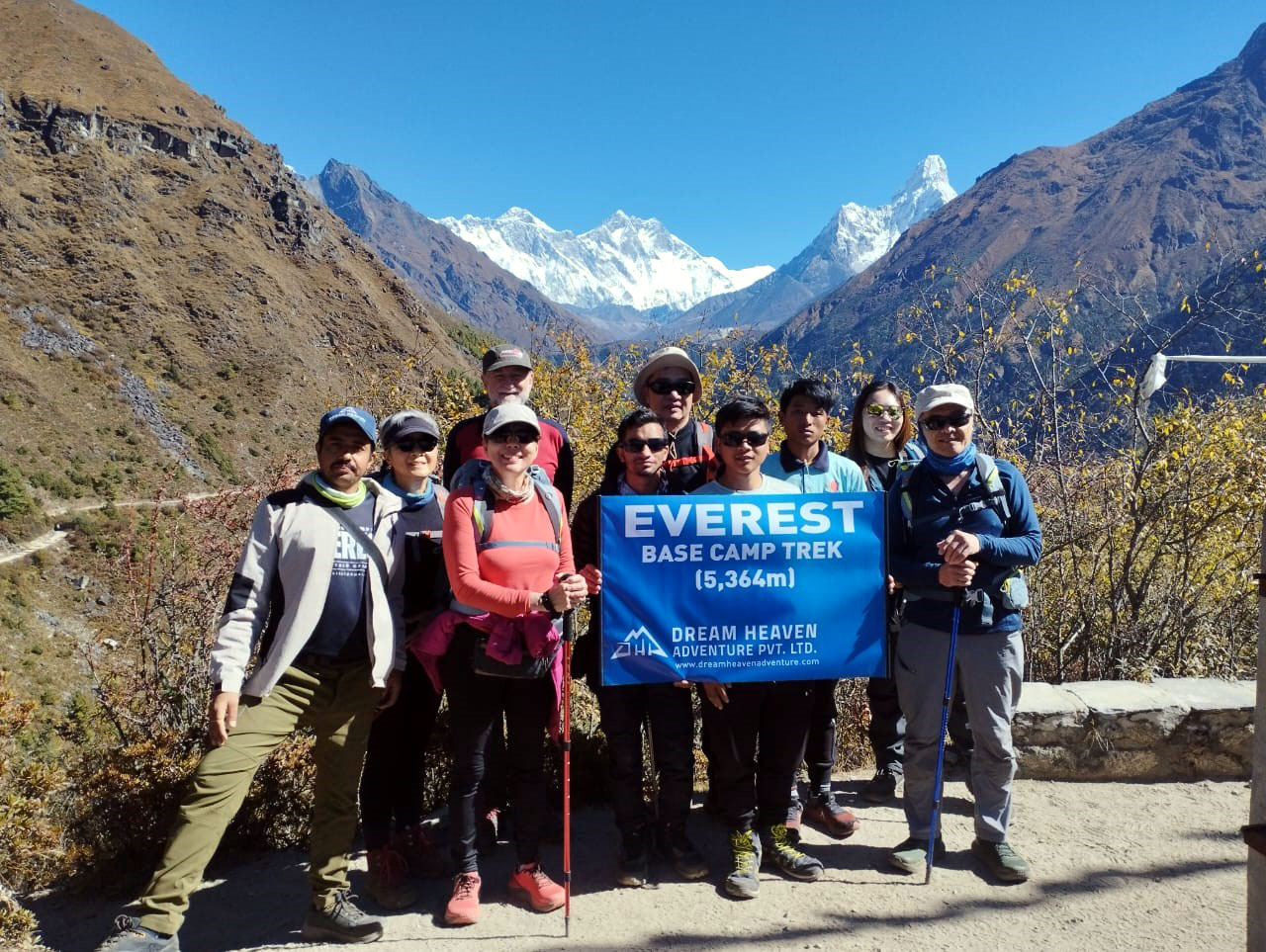
The level of service included also affects the price. Standard group packages usually provide basic but comfortable tea house accommodation on a twin-sharing basis. Some programs may offer upgraded hotels in Kathmandu, additional porter support, or full-board meal plans, which can increase the overall cost. Budget-focused packages may exclude meals, while more comprehensive programs include them. Understanding exactly what is included is important when comparing different trekking offers.
Compared to private treks, group join options significantly reduce individual expenses. In a private trek, one or two travelers must cover the full cost of guides, porters, and logistics on their own. In a group join trek, these expenses are shared among several participants, making it one of the most economical ways to reach Everest Base Camp without lowering safety or service quality.
It is also important to plan for personal expenses that are not normally included in trekking packages. Items such as trekking gear, travel insurance, drinks on the trail, Wi-Fi, hot showers, snacks, and tips for trekking staff should be budgeted separately. Having a small extra budget for these costs helps travelers stay comfortable throughout the journey.
For anyone looking for a well-organized, transparent, and reasonably priced way to experience Everest Base Camp, a group join trek offers excellent value for money. It combines professional management, shared costs, and a proven itinerary to make this iconic Himalayan adventure achievable and affordable.
Everest Base Camp Group Join Itinerary Overview
An Everest Base Camp group join trek follows a carefully designed itinerary that balances adventure with safety and proper acclimatization. Most group programs are planned for 12 to 14 days of trekking, starting and ending in Kathmandu. The schedule is structured around gradual altitude gain so that trekkers from different backgrounds can adapt comfortably while still enjoying the main highlights of the Khumbu region.
The journey normally begins with an early morning flight to Lukla, the gateway to the Everest region. From Lukla, the group starts walking together through Sherpa villages, pine forests, and suspension bridges over the Dudh Koshi River. Each day follows a steady routine of morning trekking, afternoon rest, and preparation for the next stage of the journey. Acclimatization days are built into the plan to allow the body enough time to adjust to higher elevations.
Below is a typical outline itinerary used for most Everest Base Camp group join treks:
Day 1: Arrival in Kathmandu and trek briefing
Day 2: Flight from Kathmandu to Lukla and trek to Phakding
Day 3: Trek from Phakding to Namche Bazaar
Day 4: Acclimatization day at Namche Bazaar
Day 5: Trek from Namche Bazaar to Tengboche
Day 6: Trek from Tengboche to Dingboche
Day 7: Acclimatization day at Dingboche
Day 8: Trek from Dingboche to Lobuche
Day 9: Trek from Lobuche to Gorakshep and visit Everest Base Camp
Day 10: Hike to Kala Patthar and trek to Pheriche
Day 11: Trek from Pheriche to Namche Bazaar
Day 12: Trek from Namche Bazaar to Lukla
Day 13: Flight from Lukla to Kathmandu
Day 14: Final departure from Kathmandu
This outline represents the most common and proven route followed by group join trekkers. The itinerary is not designed to be rushed. Instead, it allows enough time for rest, exploration, and safe altitude adaptation. Daily walking hours are kept within a reasonable range so that trekkers with different fitness levels can complete the journey together.
Group itineraries are also prepared with real mountain conditions in mind. Weather in the Everest region can change quickly, and flights to Lukla are sometimes delayed due to cloud cover or wind. A well-organized group join program always includes practical flexibility and buffer time so that the overall schedule remains smooth even when small adjustments are required.
Another important point is that the itinerary follows internationally recommended acclimatization practices. Rest days in Namche Bazaar and Dingboche are essential parts of the plan, not optional breaks. These days help reduce the risk of altitude sickness and give trekkers time to explore local culture, viewpoints, and monasteries along the route.
By following this structured and time-tested itinerary, group join trekkers receive the best balance between challenge and safety. This organized approach is one of the main reasons why thousands of travelers successfully reach Everest Base Camp every year as part of guided group departures.
Fixed Departure Dates for Everest Base Camp Group Join Trek
One of the main features of an Everest Base Camp group join trek is the availability of fixed departure dates. Unlike private treks that can start on any day, group programs operate on pre-scheduled dates announced well in advance. These departures allow travelers from different parts of the world to join the same trek and share the journey together as a coordinated team.
Most group join departures are planned during the two main trekking seasons in Nepal. Spring, from March to May, and autumn, from September to November, are considered the best times for Everest Base Camp treks. During these months, the weather is generally stable, skies are clearer, and trail conditions are more reliable. Because of high demand in these periods, we publish regular guaranteed departures so that travelers can plan their trips with confidence.
During the peak trekking seasons, departures are very frequent and convenient. In the busiest months such as October, November, and mid-March to mid-May, we operate at least two fixed group departures every week. This regular schedule makes it easy for travelers to find a date that matches their travel plans without waiting long for the next available group. Even in shoulder periods like February, early March, and late November, regular departures are still available, although the frequency may be slightly lower.
Fixed departure dates make trip planning much easier, especially for solo travelers and small groups. Instead of trying to find travel partners or waiting to form a private team, trekkers can simply choose a date that suits their schedule and join one of our confirmed departures. This system is very convenient for people with limited vacation time who need clear and confirmed travel plans before arriving in Nepal.
Group departures also ensure that minimum group size requirements are met. We keep our groups small and comfortable to maintain good service quality and personal attention from the guide. Even when only a few trekkers book a particular date, we normally guarantee to run the trip so that travelers do not face last-minute cancellations.
Another important advantage of fixed dates is better management of Lukla flights and accommodation. During peak trekking seasons, seats on Lukla flights and rooms in popular tea houses can be in high demand. Our scheduled group join programs secure these services in advance, reducing uncertainty and stress for participants.
It is also worth noting that flight operations to Lukla can vary depending on the season. In busy months, flights may operate from Ramechhap airport instead of Kathmandu due to air traffic management. We plan for this reality in advance and organize necessary transfers so that the trek runs smoothly regardless of airport changes.
For anyone planning an Everest Base Camp adventure, checking our available fixed departure calendar is one of the first and most important steps. It allows travelers to select the most suitable season and date, prepare properly, and join a well-organized Himalayan journey with complete peace of mind.
Everest Base Camp Group Join Trek 2026 - Autumn Fixed Departures
| Departure Date | Day | Status | Starting Price |
|---|
| September 20, 2026 | Sunday | Guaranteed Departure | USD 1490 per person |
| September 25, 2026 | Friday | Guaranteed Departure | USD 1490 per person |
| September 27, 2026 | Sunday | Guaranteed Departure | USD 1490 per person |
| October 2, 2026 | Friday | Guaranteed Departure | USD 1490 per person |
| October 4, 2026 | Sunday | Guaranteed Departure | USD 1490 per person |
| October 9, 2026 | Friday | Guaranteed Departure | USD 1490 per person |
| October 11, 2026 | Sunday | Guaranteed Departure | USD 1490 per person |
| October 16, 2026 | Friday | Guaranteed Departure | USD 1490 per person |
| October 18, 2026 | Sunday | Guaranteed Departure | USD 1490 per person |
| October 23, 2026 | Friday | Guaranteed Departure | USD 1490 per person |
| October 25, 2026 | Sunday | Guaranteed Departure | USD 1490 per person |
| October 30, 2026 | Friday | Guaranteed Departure | USD 1490 per person |
| November 1, 2026 | Sunday | Guaranteed Departure | USD 1490 per person |
| November 6, 2026 | Friday | Guaranteed Departure | USD 1490 per person |
| November 8, 2026 | Sunday | Guaranteed Departure | USD 1490 per person |
| November 13, 2026 | Friday | Guaranteed Departure | USD 1490 per person |
| November 15, 2026 | Sunday | Guaranteed Departure | USD 1490 per person |
| November 20, 2026 | Friday | Guaranteed Departure | USD 1490 per person |
| November 22, 2026 | Sunday | Guaranteed Departure | USD 1490 per person |
| November 27, 2026 | Friday | Guaranteed Departure | USD 1490 per person |
| November 29, 2026 | Sunday | Guaranteed Departure | USD 1490 per person |
| December 4, 2026 | Friday | Guaranteed Departure | USD 1490 per person |
| December 6, 2026 | Sunday | Guaranteed Departure | USD 1490 per person |
All Everest Base Camp group join departures are operated by licensed local trekking guides from Dream Heaven Adventure. The trip cost includes airport pickup and drop-off, domestic flights, trekking permits, accommodation during the trek, and ground transportation as per the itinerary. Porter service is available at an additional cost. Early booking is highly recommended for the autumn trekking season in Nepal.
Fitness and Preparation for Group Join Everest Base Camp Trek
Good fitness and sensible preparation are essential for a successful Everest Base Camp group join trek. Since you will be trekking as part of a team, it is important to be able to walk at a steady group pace rather than at your own individual speed. Unlike private treks, where the itinerary can be adjusted for one person, group join treks follow a fixed schedule. Being physically and mentally prepared in advance makes the entire journey safer, more comfortable, and far more enjoyable.
The Everest Base Camp trek does not require technical climbing skills, but it does demand endurance and consistency. Most days involve five to seven hours of walking on rocky, uneven, and often uphill trails. A basic level of cardiovascular fitness is therefore very important. Regular activities such as hiking, jogging, cycling, swimming, or long brisk walks help condition the body for the demands of the trail. Trekkers who spend a few weeks training before their trip usually find it much easier to adapt once the trek begins.
Because group join treks move as a team, fitness plays an even more important role. Faster walkers may need to slow down, while slower walkers must have enough stamina to maintain a reasonable pace. The goal is not to race to the next village, but to walk steadily and comfortably with the group. Arriving in Nepal with good preparation ensures that you can enjoy the journey without feeling pressured or exhausted.
A practical preparation plan should ideally begin four to six weeks before departure. Walking with a light backpack, practicing uphill and downhill routes, climbing stairs, and doing simple strength exercises for legs and core muscles are very effective ways to prepare. Even walking one hour a day can make a noticeable difference by the time the trek starts.
Mental preparation is just as important as physical training. Group join treks require patience, flexibility, and a positive attitude. Some days feel long, some mornings start early, and altitude can make normal tasks tiring. Understanding in advance that the journey is gradual and sometimes challenging helps trekkers stay calm and motivated. A cooperative mindset makes the group experience much more enjoyable for everyone.
Another key part of preparation is learning about altitude. Everest Base Camp lies at 5,364 meters, and the trek includes several nights above 4,000 meters. Knowing how altitude sickness can affect the body, drinking plenty of water, eating properly, and following the planned acclimatization schedule are essential habits. Even very fit trekkers must respect altitude and allow enough time for safe adaptation.
Choosing the right gear also plays a major role in comfort and success. Well-fitted trekking boots, warm layered clothing, a quality sleeping bag, and a comfortable daypack are essential items for the Everest region. Breaking in boots before the trek and testing equipment in advance prevents many common problems on the trail and helps trekkers stay comfortable within the group.
Finally, practical preparations such as arranging comprehensive travel insurance, packing personal medications, and arriving in Kathmandu with enough time to rest before the trek are important steps. Joining a group trek means starting the adventure together from day one, and being well prepared ensures that you can participate confidently without struggling to keep up.
With proper fitness training, realistic expectations, and thoughtful preparation, joining an Everest Base Camp group trek becomes an achievable and rewarding goal for travelers from many different backgrounds.
Accommodation and Meals on the Group Join Trek
Accommodation on an Everest Base Camp group join trek is normally based on traditional mountain tea houses along the trail. These lodges are simple, clean, and practical, designed mainly to serve trekkers in remote Himalayan villages. Rooms usually include basic beds, mattresses, blankets, and pillows, with shared bathrooms in most locations. As altitude increases, facilities naturally become more basic because of the limited resources available in high mountain areas.
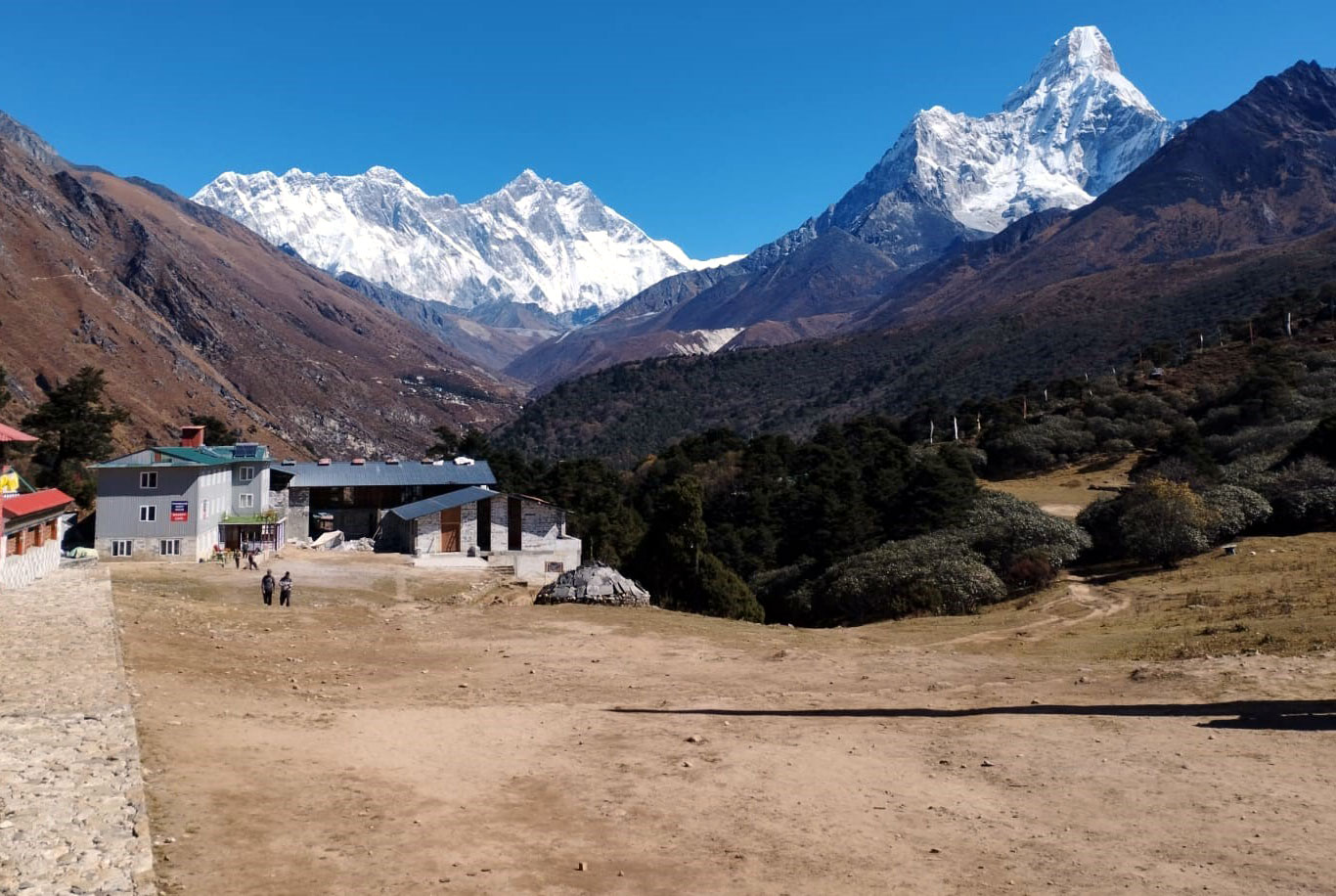
It is important to understand that there are also comfort lodges and higher-standard hotels available on parts of the Everest route. However, group join treks generally use standard tea house accommodation to keep costs reasonable and to maintain the same level of service for all participants. Comfort lodges are usually offered only on private or customized treks where travelers choose to upgrade their services.
In our group join programs, rooms are arranged mostly on a twin-sharing basis. Trekkers share a room with another group member of the same gender, which helps create a friendly atmosphere and keeps the overall price affordable. This is a normal and well-accepted practice on the Everest Base Camp route and works smoothly for the majority of travelers.
For solo female travelers, we take special care with room arrangements. Female trekkers are always paired with another female participant whenever possible. If there is no other female traveler in the group, we arrange a private room so that comfort, privacy, and safety are fully respected. This policy ensures that women traveling alone feel comfortable and secure throughout the trek.
Meals during the trek are served in the tea house dining halls, where the group gathers together each day. The menu offers a wide variety of choices such as dal bhat (rice and lentils), noodles, pasta, potatoes, soups, momos, eggs, pancakes, and local breads. Food is simple but nourishing and is prepared to give trekkers the energy needed for long walking days. Eating together as a group becomes an enjoyable daily routine and an important part of the social experience.
As the trek moves higher toward Everest Base Camp, menus gradually become more limited and prices increase due to transportation challenges. Even so, tea houses provide warm meals, hot drinks, and a comfortable place to rest after each day on the trail. Staying well fed and properly hydrated is strongly encouraged, as it plays a vital role in altitude adaptation and overall trekking comfort.
Most standard group join packages include accommodation during the trek, while meals may be included or offered as an optional full-board plan depending on the program. We always explain these details clearly at the time of booking so that travelers know exactly what to expect.
In summary, accommodation and meals on a group join Everest Base Camp trek are basic, reliable, and suitable for the mountain environment. While they may not be luxurious, they provide everything necessary for a safe, warm, and enjoyable journey in the Himalayas, with thoughtful arrangements made to ensure comfort for all types of travelers.
Advantages of Joining an Everest Base Camp Group Trek
One of the biggest advantages of joining an Everest Base Camp group trek is the shared experience. Trekking to EBC is not only a physical journey but also an emotional and cultural adventure. Long walking days, changing landscapes, and high-altitude challenges feel much more manageable when you are surrounded by people who are working toward the same goal. On difficult days, a simple conversation, shared laughter, or a few encouraging words from fellow trekkers can make a huge difference.
Another major benefit is the international connection that naturally develops in group treks. Our group departures bring together travelers from different countries, cultures, and backgrounds. It is common to meet people from Europe, America, Asia, Australia, and many other parts of the world on the same trail. Along the way, trekkers exchange stories about their home countries, traditions, food, and travel experiences. Many travelers say that these cultural exchanges become one of the most memorable parts of their Everest Base Camp journey.
Cost saving is also a very practical advantage. Group join treks are more affordable because major expenses such as guiding services, porter support, permits, and transportation are shared among participants. This makes the Everest Base Camp trek achievable for a wider range of travelers, especially solo trekkers who would otherwise pay much higher prices for private arrangements. The value is not only financial, but also organizational, as everything is professionally planned in advance.
Motivation and teamwork are additional strengths of group trekking. Walking in a team creates a natural rhythm and discipline. Daily routines, acclimatization days, and meal times become easier to follow when the group moves together. For first-time trekkers at high altitude, this structure provides confidence and helps maintain safe trekking habits such as walking slowly, resting properly, and staying hydrated.
Group treks also provide a strong sense of safety and support. Having an experienced guide and supportive companions nearby gives reassurance throughout the journey. If someone feels tired or needs encouragement, there are always people around to help. This supportive environment is especially valuable for travelers who are new to high-altitude trekking.
Another advantage is convenience. All complicated logistics, including Lukla flights, permits, accommodation, and daily planning, are arranged by us in advance. Travelers do not need to worry about bookings, route planning, or dealing with local arrangements. This allows trekkers to focus completely on enjoying the scenery, culture, and adventure.
Finally, group join treks often create friendships that last long after the trek ends. Many travelers stay connected, meet again in other parts of the world, or even return to Nepal together for new adventures. For people who want both an unforgettable Himalayan journey and meaningful human connections, joining an Everest Base Camp group trek offers a unique and rewarding experience.
If you are also interested in another classic Himalayan group adventure, you may like our Manaslu Circuit group join trek, which offers a quieter but equally spectacular trekking experience.
Possible Disadvantages of EBC Group Join Trek
An Everest Base Camp group join trek offers excellent value and a memorable shared experience, but it is also important to understand a few practical limitations. Knowing these points in advance helps travelers choose the right trekking style and set realistic expectations for the journey.
The first limitation is walking pace. Every trekker moves at a slightly different speed. Some people naturally walk faster and like to reach the destination early, while others prefer a slower rhythm with more short breaks.
In a group join trek, the guide manages the overall movement so that the team reaches each village safely and within a reasonable timeframe. Faster walkers may need to slow down a little, and slower walkers must be prepared to maintain a steady group pace. Travelers who want complete freedom over daily walking speed may feel more comfortable on a private trek.
Another point is the fixed itinerary. Group join treks follow a planned route and schedule that is designed for safe acclimatization and smooth logistics. This structure is very helpful for most people, but it means there is limited flexibility to change plans for individual preferences. If a traveler wishes to add extra rest days, shorten walking hours, or spend more time in a particular place, a private trek usually offers better flexibility than a group format.
Group join treks also involve shared routines. Accommodation is generally twin-sharing, meal times are similar for everyone, and the group stays in the same villages each night. Many travelers enjoy this social environment, but those who prefer more privacy, quiet time, or personal space may find the group setting slightly restrictive.
Support distribution is another practical factor. In a group join trek, one guide team supports multiple trekkers. The service is still professional and safe, but it is different from a private trek where the guide’s attention is focused only on one traveler or a small private group.
If a trekker feels unwell, tired, or uncomfortable due to altitude, the guide will always provide care and adjust the plan as much as possible. However, decisions must also consider the wellbeing and schedule of the entire group.
It is important to be clear that these limitations do not make group join treks unsafe or unsuitable. They are simply natural characteristics of traveling as part of a team. For most travelers, the advantages of lower cost, shared motivation, and organized logistics easily outweigh these small compromises.
In simple terms, a group join trek is ideal for people who are flexible, sociable, and comfortable following a common schedule. Travelers who require complete independence, highly personalized pacing, or maximum privacy may prefer a private trek instead. Understanding these differences in advance helps ensure that every trekker chooses the option that best matches their travel style and expectations.
Private Trek vs Group Join Trek – Which Is Better?
Choosing between a private trek and a group join trek to Everest Base Camp depends entirely on personal preference, budget, and travel style. Both options follow the same classic route, reach the same destination, and use the same acclimatization principles. The real difference lies in flexibility, cost, and the overall trekking experience.
A group join trek is usually the better option for solo travelers and those looking for an affordable and social adventure. Because costs are shared among participants, group treks are significantly cheaper than private arrangements. They also provide a friendly environment where trekkers can meet new people, share daily experiences, and enjoy the journey as part of a team. For first-time trekkers to Nepal, this sense of companionship often makes the entire experience more comfortable and enjoyable.
A private trek, on the other hand, offers complete freedom and personalization. Travelers can choose their own start date, preferred walking pace, extra rest days, and even customize the itinerary according to their interests. This option is ideal for families, couples, photographers, or trekkers who want a slower schedule or more individual attention. Private treks are also more suitable for travelers with specific health concerns or special time requirements.
Support levels feel slightly different between the two styles. In a private trek, the guide and porter team focus entirely on one traveler or a small private group, providing very personal attention. In a group join trek, the guide supports the whole team together, which works very well for most trekkers but may feel less individualized. Both options are equally safe when organized professionally; the difference is mainly about the style of service rather than safety standards.
Privacy is another important factor. Group join treks involve shared rooms and shared daily routines, while private treks allow single rooms, flexible meal times, and quieter travel. Travelers who value independence and personal space generally prefer private arrangements, whereas those who enjoy meeting new people and being part of a team often choose group departures.
A group join trek is best for budget-conscious, social, and flexible travelers who are happy to follow a fixed schedule. A private trek is better for those who want full control over their pace, itinerary, and comfort level. Understanding these differences helps each traveler choose the trekking style that matches their personality and expectations, ensuring that the Everest Base Camp experience feels perfect for them.
Travelers with limited time can also consider our Short Everest Base Camp Trek option, which follows the same route in fewer days with longer walking hours.
How to Book Your Everest Base Camp Group Join Trek
Booking an Everest Base Camp group join trek is a simple and straightforward process when done through a reliable trekking agency. The first step is to choose a suitable departure date that matches your travel schedule. We publish a calendar of fixed group departures for spring and autumn seasons, allowing travelers to select the most convenient option well in advance.
Once you decide on a preferred date, the next step is to confirm your place in the group. This is normally done by completing a booking form and paying a small advance deposit. The deposit secures your seat in the group and allows us to arrange essential logistics such as Lukla flights, trekking permits, and accommodation on your behalf.
After your booking is confirmed, we send detailed information about the itinerary, packing list, arrival arrangements, and payment procedures. At this stage, it is important to check your international flight tickets, travel insurance, and Nepal visa requirements. Preparing these documents early ensures a smooth and stress-free start to your journey.
Most group join treks require the remaining balance to be paid either before arrival or upon reaching Kathmandu. We also request passport details, emergency contact information, and copies of travel insurance so that everything is properly organized before the trek begins. Clear communication at this stage helps avoid any confusion later.
Upon arrival in Kathmandu, there is usually a pre-trek briefing at our office or hotel. During this meeting, you meet the guide and other group members, review the route, check equipment, and discuss final preparations. Any last-minute questions are answered, and necessary paperwork is completed. From this point onward, our trekking team handles all arrangements, and you can focus fully on the adventure ahead.
Booking a group join trek is designed to be easy and traveler friendly. By following a few simple steps and planning ahead, anyone can secure a place in a well-organized Everest Base Camp departure and look forward to an unforgettable Himalayan experience with complete peace of mind.
Important Tips for Everest Base Camp Group Join Trekkers
Joining an Everest Base Camp group trek becomes far more enjoyable and comfortable when travelers follow a few practical tips. Good preparation and the right mindset can make a big difference in how smoothly the journey goes from start to finish.
One of the most important tips is to prepare physically before arriving in Nepal. Even though group join itineraries are designed for gradual acclimatization, the trek still involves long walking days at high altitude. Spending a few weeks improving basic fitness through hiking, regular walking, or light exercise helps trekkers feel confident and relaxed once the trek begins.
Packing wisely is another key factor. Carry only essential items and focus on good quality trekking boots, warm layered clothing, and a reliable sleeping bag. In a group trek, everyone moves together, so being properly equipped ensures you can keep up comfortably and enjoy the daily routine without unnecessary discomfort.
Respecting the group pace is very important. Group join treks operate on a shared schedule, and trekkers need to be prepared to walk at a steady, balanced rhythm. Trying to walk too fast or too slow can affect the overall flow of the team. Listening to the guide’s instructions, taking regular breaks, and maintaining a positive attitude help the entire group stay safe and comfortable.
Flexibility and patience are essential qualities on a group trek. Weather conditions, Lukla flight schedules, and individual walking speeds can sometimes cause small changes in daily plans. Understanding in advance that such adjustments are a normal part of Himalayan travel helps trekkers stay calm and enjoy the adventure even when things do not go exactly as expected.
Health and hydration should always be top priorities. Drinking plenty of water, eating well, getting enough rest, and avoiding alcohol at high altitude are simple habits that greatly reduce the risk of altitude problems. It is also important to inform the guide immediately if you feel unwell so that the right precautions can be taken early.
Travelers should also come prepared to be part of a team. Group join treks bring together people from different cultures and personalities. Being friendly, respectful, and supportive toward fellow trekkers creates a pleasant atmosphere and often leads to strong friendships on the trail.
Finally, arrive in Nepal with realistic expectations. The Everest region is remote, facilities are basic, and the weather can change quickly. Accepting these realities with an open mind allows trekkers to fully appreciate the natural beauty, culture, and adventure that make the Everest Base Camp trek so special.
By following these simple tips, trekkers can make the most of their Everest Base Camp group join adventure and enjoy every step of this incredible Himalayan journey.
Frequently Asked Questions About Everest Base Camp Group Join Trek
Can I join the Everest Base Camp trek as a solo traveler?
Yes. Group join treks are specially designed for solo travelers. You can book a place on a fixed departure and trek together with other international participants under the guidance of our experienced trekking team.
What is the usual group size?
Our group sizes are normally small and comfortable, usually between 4 to 10 trekkers. This allows personal attention from the guide while still keeping the social and team spirit of a group trek.
Do I need previous trekking experience?
No previous high-altitude experience is required. The itinerary is planned with proper acclimatization days and gradual altitude gain, making it suitable for first-time trekkers who have reasonable fitness and determination.
Is the group join trek safe?
Yes. Safety standards are the same for both group and private treks. Professional guides, responsible acclimatization schedules, and careful planning ensure that the journey is managed safely for all participants.
Will I have to share a room?
Normally rooms are arranged on a twin-sharing basis with another trekker of the same gender. For solo female travelers, sharing is arranged only with another female. If this is not possible, we arrange a private room whenever available.
What happens if I feel sick during the trek?
Our guides closely monitor the health of all group members. If someone feels unwell, the pace can be adjusted, extra rest can be arranged, or descent can be organized if necessary. All decisions are made with safety as the top priority.
Can I change the itinerary after joining the group?
Group join treks follow a fixed schedule, so major changes are not normally possible. Travelers who need full flexibility or personalized pacing should consider a private trek instead.
When is the best time to join an EBC group trek?
The best seasons are spring (March to May) and autumn (September to November). These months offer stable weather, clear mountain views, and the highest number of group departures.
Are meals included in the group join package?
This depends on the specific package chosen. Some programs include full-board meals during the trek, while others offer accommodation-only packages. We clearly explain all inclusions at the time of booking.
How far in advance should I book?
It is best to book at least two to three months before your planned travel date, especially for peak seasons, to secure Lukla flights and guaranteed group departures.
What level of fitness is required?
A basic level of cardiovascular fitness is required. Trekkers should be able to walk 5-7 hours a day on uphill and downhill trails. Simple preparation such as regular walking and light exercise is usually enough.
Do I need travel insurance?
Travel insurance is not compulsory, but it is recommended for all participants, especially coverage that includes high-altitude trekking and emergency evacuation.
Where do Lukla flights operate from?
Depending on the season, Lukla flights may operate from Kathmandu or Ramechhap airport. We organize all necessary transfers as part of the group program.
Can I join the trek at the last minute?
Last-minute bookings are possible if space is available, but we always recommend booking early to secure flights, permits, and accommodation without stress.
Ready to join our
Everest Base Camp Trek Group in 2026/2027? Check available dates and secure your seat today