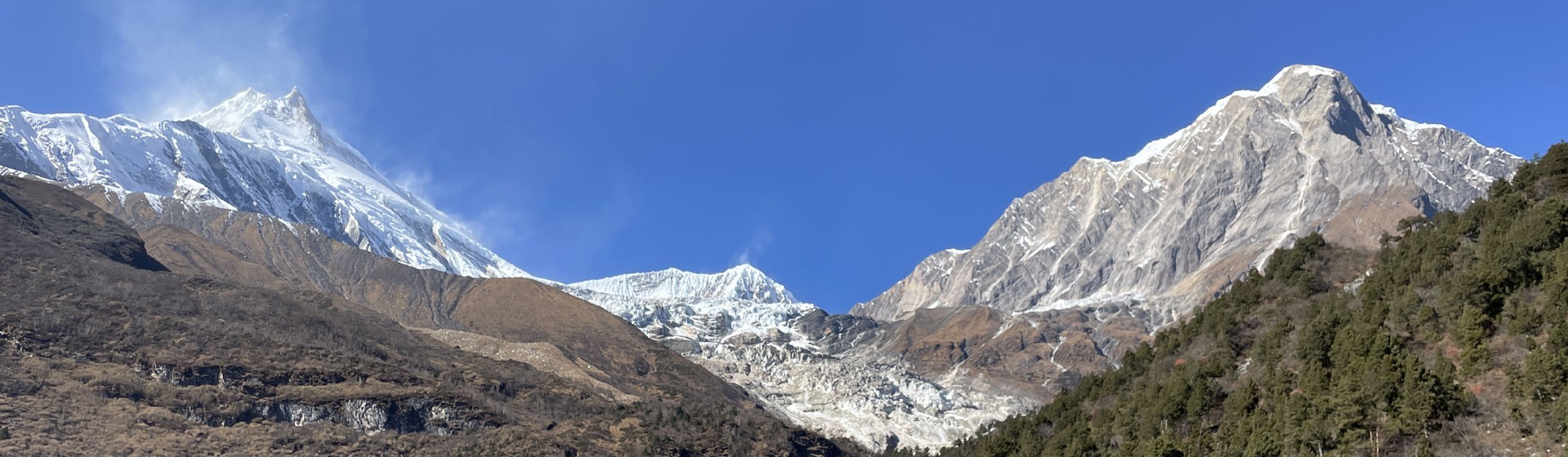
Manaslu Circuit Trek vs Annapurna Circuit - Quick Comparison
Both the Manaslu Circuit Trek and the Annapurna Circuit Trek are among the most famous long-distance treks in Nepal. While both routes offer spectacular mountain scenery and high Himalayan passes, the trekking experience can be quite different. The following comparison helps trekkers quickly understand the key differences between these two iconic Himalayan treks.
Both treks offer incredible Himalayan landscapes, but the experience differs in terms of crowd levels, accessibility, and cultural atmosphere. The Manaslu Circuit Trek is often preferred by trekkers looking for a quieter and more remote trekking experience, while the Annapurna Circuit Trek remains a classic choice for those who want comfortable lodges and easier logistics.
| Feature | Manaslu Circuit Trek | Annapurna Circuit Trek |
|---|
| Trek Region | Manaslu Conservation Area | Annapurna Conservation Area |
| Trek Duration | 12–16 days | 10–14 days |
| Highest Point | Larkya La Pass (5,160 m) | Thorong La Pass (5,416 m) |
| Difficulty Level | Moderate to Challenging | Moderate |
| Trekking Experience | Remote and less crowded | Popular and well-developed |
| Accommodation | Basic tea houses | Wide range of tea houses and lodges |
| Permit Requirements | Restricted Area Permit, ACAP, MCAP | ACAP permit |
| Guide Requirement | Guide required | Guide optional |
| Cultural Experience | Tibetan-influenced villages | Gurung and Thakali culture |
| Road Access | Limited road development | Several road sections |
| Best For | Trekkers seeking remote adventure | Trekkers wanting classic Himalayan trek |
Overview of Manaslu Circuit Trek
The Manaslu Circuit Trek is one of the most rewarding and authentic trekking routes in Nepal. If you want to learn more about the route, you can explore our Manaslu Circuit Trek itinerary for detailed daily trekking information. Located in the remote Gorkha region, the trail circles around Mount Manaslu (8,163 m), the eighth highest mountain in the world. Compared to many other famous trekking routes in Nepal, the Manaslu Circuit remains relatively untouched and less crowded, which makes it especially attractive for trekkers who want a quieter and more immersive Himalayan experience.
The trek usually begins with a drive from Kathmandu to Machha Khola and gradually follows the Budhi Gandaki River valley through a series of traditional mountain villages. Along the route, trekkers pass through lush subtropical forests, narrow river gorges, suspension bridges, terraced fields, and high alpine landscapes. As the trail climbs higher, the scenery changes dramatically, offering spectacular views of Mount Manaslu, Himalchuli, Ngadi Chuli, and several other snow-covered Himalayan peaks.
One of the most memorable parts of the Manaslu Circuit Trek is the cultural experience. Many villages in the upper region, such as Samagaun and Samdo, are strongly influenced by Tibetan culture. Stone houses, ancient monasteries, prayer flags, and mani walls create a unique atmosphere that feels very different from other trekking areas in Nepal.
The highlight of the trek is crossing the impressive Larkya La Pass (5,160 m), one of the most scenic high mountain passes in the Himalayas. The climb to the pass is challenging but extremely rewarding. On clear mornings, trekkers are surrounded by breathtaking panoramic views of Himlung Himal, Cheo Himal, Kang Guru, and Annapurna II.
Because the Manaslu region is a restricted area, special trekking permits and a licensed guide are required. This regulation has helped preserve the natural beauty and cultural authenticity of the region. Today, the
Manaslu Circuit Trek is widely considered one of the best alternatives to the Annapurna Circuit, offering a similar trekking adventure but with fewer crowds and a stronger sense of wilderness.
For trekkers looking for a remote Himalayan journey that combines dramatic landscapes, rich culture, and high-altitude adventure, the Manaslu Circuit Trek remains one of the most unforgettable trekking experiences in Nepal.
Overview of Annapurna Circuit Trek
The Annapurna Circuit Trek is one of the most famous trekking routes in the world and has attracted trekkers to Nepal for decades. This classic Himalayan journey circles the Annapurna massif, offering an incredible variety of landscapes, cultures, and mountain views along the way. Because of its accessibility and well-developed trekking infrastructure, the Annapurna Circuit has long been considered one of the best trekking experiences for both first-time and experienced trekkers.
The trek usually begins with a drive from Kathmandu to Besisahar and gradually follows the Marsyangdi River valley through traditional villages such as Jagat, Dharapani, Chame, and Pisang. As the trail ascends toward Manang, trekkers experience dramatic changes in scenery, from lush green hills and terraced farms to dry alpine valleys and high mountain terrain. The route offers magnificent views of Annapurna II, Annapurna III, Gangapurna, Tilicho Peak, and several other impressive Himalayan peaks.
One of the most important highlights of the Annapurna Circuit Trek is crossing the famous Thorong La Pass (5,416 m), the highest point of the trek. Reaching the top of the pass early in the morning and looking across the vast Himalayan landscape is an unforgettable moment for many trekkers. After crossing the pass, the trail descends toward the sacred pilgrimage site of Muktinath before continuing through the Kali Gandaki valley.
Another reason for the popularity of the Annapurna Circuit is the diversity of cultural experiences. The lower sections of the trail pass through villages influenced by Gurung and Magar communities, while the upper Mustang region reflects Tibetan Buddhist traditions. This cultural diversity, combined with comfortable tea houses and well-established trekking facilities, makes the Annapurna Circuit one of the most accessible high-altitude treks in Nepal.
Although road development has changed some parts of the route in recent years, the Annapurna Circuit still offers an incredible trekking experience. Many trekkers continue to choose this route because it combines stunning Himalayan scenery, cultural diversity, and relatively comfortable trekking conditions.
For those seeking a classic Himalayan trekking adventure with excellent infrastructure and spectacular mountain views, the Annapurna Circuit Trek remains one of Nepal’s most iconic trekking routes.
Trek Difficulty Comparison: Manaslu Circuit vs Annapurna Circuit Trek
When comparing the Manaslu Circuit Trek and the Annapurna Circuit Trek, difficulty is one of the most common concerns for trekkers. Both routes are high-altitude Himalayan treks and require a reasonable level of fitness, good acclimatization, and the ability to walk several hours each day on mountain trails. However, the overall level of challenge can feel slightly different between the two routes.
In general, the Manaslu Circuit Trek is considered slightly more demanding, mainly because of its remote nature. The trail passes through less developed areas where facilities are simpler and distances between villages can sometimes be longer. Trekkers usually walk around 6 to 8 hours per day while gradually gaining altitude along the Budhi Gandaki valley before reaching the high alpine landscapes.
The most challenging part of the trek is crossing Larkya La Pass (5,160 m). This is the highest point of the Manaslu Circuit and typically the longest trekking day. Trekkers usually start early in the morning from Dharmasala (Larkya Phedi) and gradually climb across rocky and glacial terrain before reaching the pass. Although the pass day can feel demanding due to the altitude and length of the walk, it is also one of the most rewarding moments of the entire trek. On clear days, the panoramic views of Himlung Himal, Cheo Himal, Kang Guru, and Annapurna II are truly unforgettable.
Apart from the pass crossing day, most trekking days on the Manaslu Circuit are steady and manageable. The trail follows river valleys and traditional villages, allowing trekkers to gain altitude gradually. With proper pacing and acclimatization, many trekkers find the daily walks comfortable and enjoyable.
The Annapurna Circuit Trek is often considered slightly easier in terms of logistics and infrastructure. There are more tea houses and villages along the route, which allows trekkers to adjust their daily walking distances more flexibly. The highest point of this trek is Thorong La Pass (5,416 m). Although the altitude is higher than Larkya La Pass, the trail approaching Thorong La is well established and supported by many lodges along the route.
It is also important to understand that age itself is not the most important factor for completing these treks. Trekkers of many different age groups successfully complete both the Manaslu Circuit and the Annapurna Circuit every year. What matters more is overall fitness, preparation, and a steady trekking pace. With proper acclimatization days, good hydration, and reasonable physical condition, both treks can be achievable and enjoyable for many trekkers.
Overall, the Manaslu Circuit offers a slightly more remote and adventurous trekking experience, while the Annapurna Circuit provides a classic Himalayan journey with more developed facilities. Both treks are challenging in their own way, but with good preparation and the right mindset, they are well within reach for trekkers who are reasonably fit and prepared for high-altitude trekking.
Scenery and Mountain Views: Manaslu Circuit Trek vs Annapurna Circuit
One of the main reasons trekkers choose long Himalayan journeys like the Manaslu Circuit or the Annapurna Circuit is the extraordinary mountain scenery. Both treks offer breathtaking landscapes, but the way the mountains appear along the trail creates two very different visual experiences.
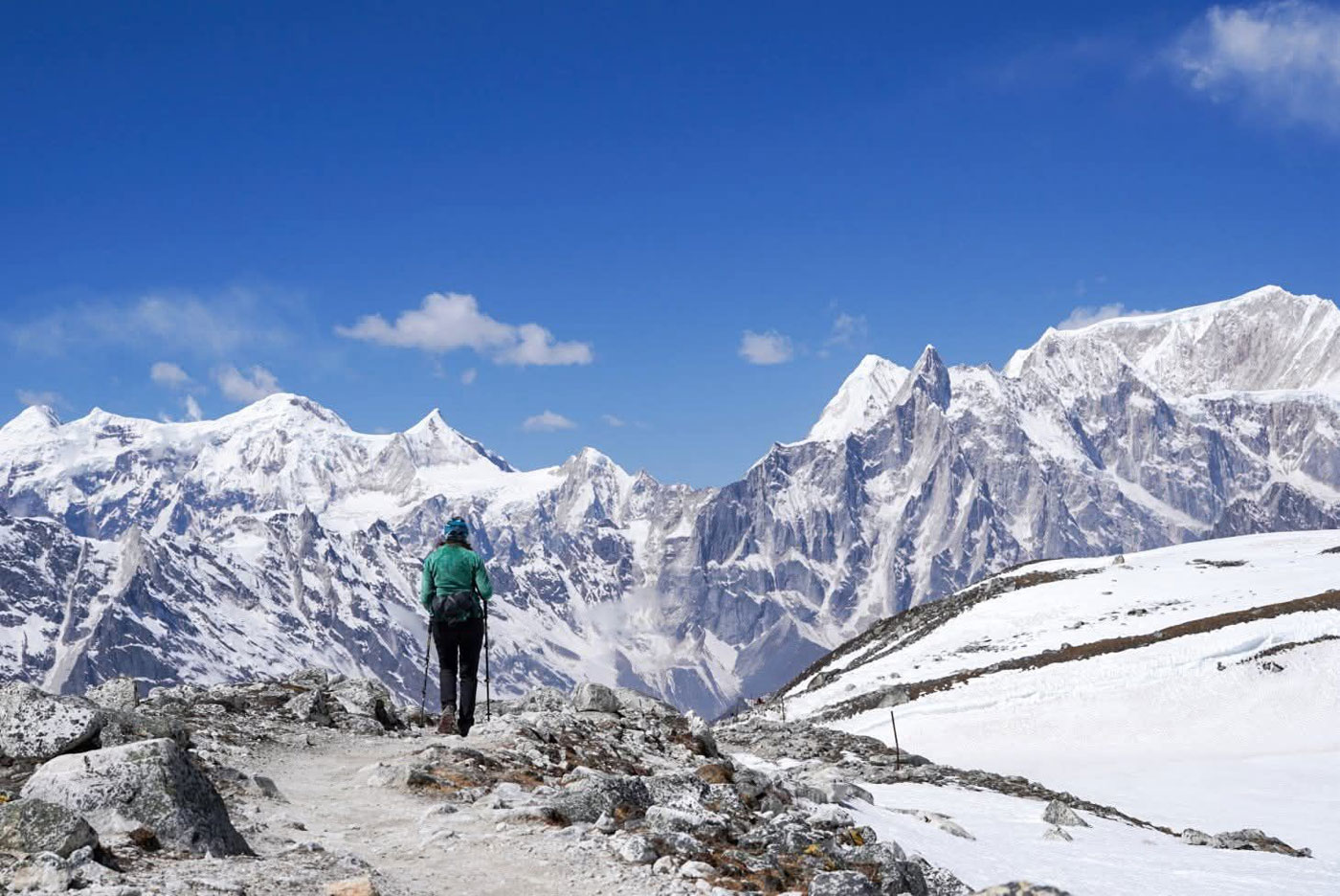
On the Manaslu Circuit Trek, many trekkers feel that the scenery becomes truly magical after reaching the upper villages of the Manaslu region. As the trail climbs toward Syala village, the surrounding mountains suddenly open up in every direction. From Syala, trekkers are surrounded by spectacular views of Mount Manaslu, Himalchuli, Ngadi Chuli, and several glacier-covered peaks. Many trekkers describe this place as one of the first moments on the trek where the Himalayas feel incredibly close and powerful.
Just above Samagaun lies Birendra Lake, a beautiful glacial lake located beneath the massive Manaslu glacier. The turquoise water reflecting the surrounding snow-covered peaks creates one of the most peaceful and photogenic places along the route. It is a short acclimatization walk from the village, and many trekkers consider it one of the hidden highlights of the Manaslu Circuit.
For trekkers who have an extra acclimatization day in Samagaun, an optional hike to Manaslu Base Camp is highly recommended. The trail gradually climbs above the village to a high alpine viewpoint where trekkers stand directly below the towering north face of Mount Manaslu (8,163 m). From this point, the scale of the mountain becomes truly impressive, and many trekkers say it is one of the most unforgettable viewpoints of the entire trek.
Another unforgettable moment comes while crossing Larkya La Pass. After a long and steady ascent from Dharmasala, the top of the pass reveals a dramatic panorama of glaciers and Himalayan peaks stretching across the horizon. Standing at the prayer flag-covered summit at 5,160 meters, many trekkers describe the feeling as surreal, surrounded by towering peaks such as Himlung Himal, Cheo Himal, Kang Guru, and Annapurna II.
The Annapurna Circuit Trek offers a different but equally impressive visual experience, known for its incredible landscape diversity. As trekkers approach the Manang valley, the trail opens into a wide high-altitude basin surrounded by massive peaks including Annapurna II, Annapurna III, Gangapurna, and Tilicho Peak. The views from around Braga village and Manang are particularly impressive, where traditional stone villages sit beneath dramatic Himalayan walls.
A popular acclimatization hike from Manang leads to higher viewpoints above the valley, where trekkers gain a sweeping perspective of the entire Annapurna range. From these ridges, the combination of glaciers, alpine valleys, and rugged cliffs creates one of the most dramatic mountain settings along the Annapurna Circuit.
The highlight of the Annapurna Circuit scenery often comes during the crossing of Thorong La Pass (5,416 m). Early morning light illuminates the surrounding snowfields and distant peaks, and the immense scale of the Himalayan landscape becomes fully visible. From the top of the pass, trekkers can look across vast mountain valleys stretching toward the Mustang region.
While both treks provide unforgettable Himalayan views, the atmosphere feels slightly different. The Manaslu Circuit often gives trekkers the sense of exploring a remote and untouched mountain world, where the scenery unfolds gradually and feels deeply immersive. The Annapurna Circuit, meanwhile, offers an extraordinary variety of landscapes and wide mountain panoramas that change dramatically throughout the journey.
In the end, many trekkers describe moments on both trails, standing in Syala beneath Mount Manaslu or watching the sunrise near Thorong La, as the kind of experiences that make the Himalayas feel almost unreal, as if walking through one of the most extraordinary mountain landscapes on Earth.
Culture and Local Life: Manaslu Circuit Trek vs Annapurna Circuit
Beyond mountains and landscapes, the cultural experience is one of the most meaningful parts of trekking in Nepal. Both the Manaslu Circuit and the Annapurna Circuit pass through traditional Himalayan villages where people have lived for generations in challenging mountain environments. Trekkers often remember these cultural encounters just as much as the mountain views, because they offer a glimpse into daily life in remote parts of the Himalayas.
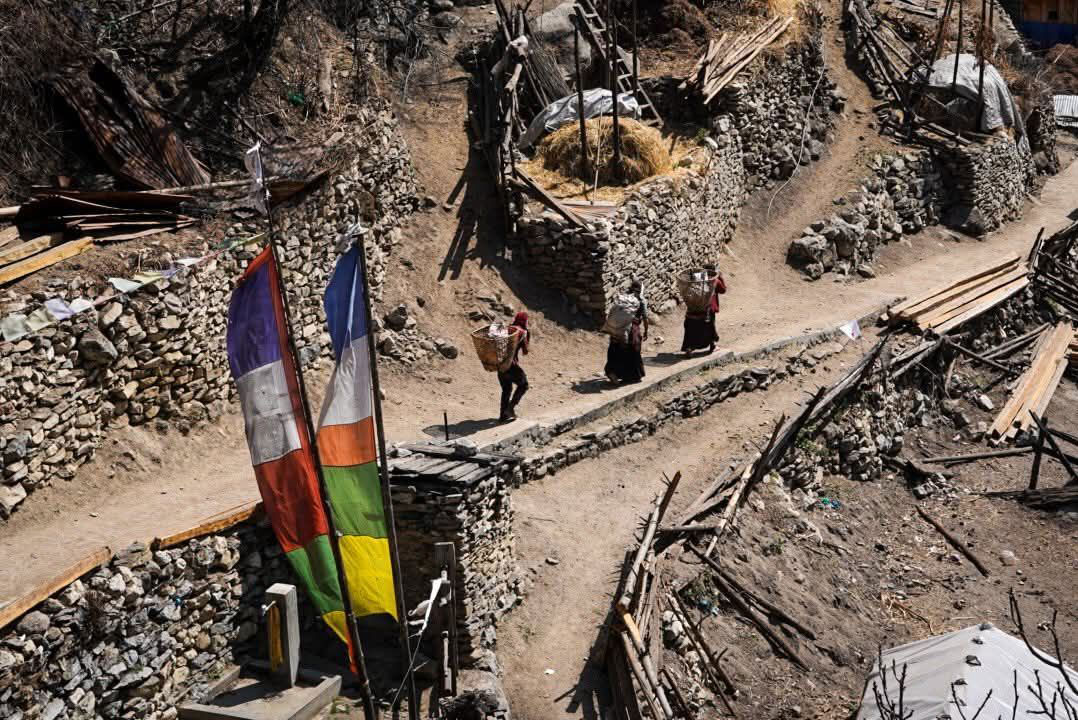
The Manaslu Circuit Trek passes through villages where Tibetan Buddhist culture remains strongly preserved. Many of the communities living in the upper Manaslu region are of Tibetan origin and have maintained their traditions, language, and lifestyle for centuries. Villages such as Lho, Samagaun, and Samdo reflect this heritage clearly. Stone houses built close together protect families from strong mountain winds, and colorful prayer flags are seen on rooftops, bridges, and hilltops throughout the trail.
Along the route, trekkers often pass long mani walls carved with Buddhist prayers, small chortens, and ancient monasteries that play an important role in village life. Local people follow Tibetan Buddhist traditions, and it is common to see elders turning prayer wheels or monks performing daily rituals in monasteries. Ribung Monastery in Lho village is one of the most well-known monasteries in the region and offers a peaceful place where trekkers can observe the spiritual life of the community.
Daily life in the Manaslu villages is closely connected to farming and livestock. Because of the high altitude and limited farmland, people work extremely hard to grow crops such as potatoes, barley, and buckwheat. Many families also raise yaks and other mountain livestock that help transport goods and provide milk, butter, and wool. Trekkers walking through these villages often see farmers working on steep terraced fields or carrying heavy loads along narrow mountain trails. The hardworking nature of the local people and their ability to live comfortably in such a harsh environment often leaves a strong impression on visitors.
The Annapurna Circuit Trek offers a slightly different cultural journey because the route passes through several ethnic communities as it climbs from the lower hills into the high Himalayan valleys. In the lower sections of the trail, villages are largely influenced by Gurung and Magar communities. These villages are known for their strong traditions, hospitality, and agricultural lifestyle. Terraced rice fields, traditional stone houses, and community gathering places create a lively atmosphere where trekkers can observe everyday village life.
As the trek continues toward the Manang region, the culture gradually shifts toward Tibetan-influenced traditions similar to those seen in the northern Himalayas. Villages such as Pisang, Braga, and Manang reflect this transition. Monasteries, chortens, and prayer flags become more visible along the trail, and Buddhist culture becomes a central part of the community.
The Braga Monastery, located above Braga village near Manang, is one of the most significant cultural landmarks along the Annapurna Circuit. The monastery contains ancient Buddhist paintings, statues, and scriptures that represent centuries of spiritual history in the region.
Local livelihoods along the Annapurna Circuit also rely heavily on agriculture, livestock, and trade. Families grow crops such as barley, wheat, and potatoes, while also maintaining apple orchards in some of the lower valleys. Yak herding is common in the higher regions, and trekkers often see long caravans of pack animals transporting supplies between villages.
What many trekkers appreciate most about the culture in both regions is the warmth and resilience of the local people. Despite living in remote mountain areas with limited resources, communities maintain strong family bonds, traditional customs, and deep respect for nature and spirituality. Lodge owners often welcome trekkers with genuine hospitality, sharing simple meals, warm tea, and stories about life in the mountains.
Experiencing these cultures up close allows trekkers to understand how people have adapted to life in the Himalayas over many generations. The hardworking lifestyle, strong traditions, and peaceful mountain villages create a cultural richness that adds depth to the entire trekking journey.
For many visitors, these interactions with local communities become some of the most memorable parts of the trek, offering a meaningful connection to the people who call the Himalayas home.
Accommodation and Food: Manaslu Circuit Trekking vs Annapurna Circuit
Accommodation and meals are an important part of any long trekking journey in Nepal. Both the Manaslu Circuit Trekking and the Annapurna Circuit Trek follow the traditional tea house trekking system, where trekkers stay in locally operated mountain lodges and eat meals prepared by the lodge owners. While both routes offer comfortable and welcoming places to stay, the overall experience can feel slightly different because of the level of development in each region.
On the Manaslu Circuit Trek, accommodation is generally simpler but still comfortable and welcoming. Tea houses are small family-run lodges where trekkers are provided with a private room, usually with two single beds, mattresses, pillows, and blankets. The rooms are basic but clean, and the dining area is normally the warmest and most social part of the lodge, often heated with a traditional stove during colder evenings.
Meals along the Manaslu route are freshly prepared and provide the energy needed for trekking at high altitude. The most common meal is dal bhat, a traditional Nepali dish consisting of rice, lentil soup, vegetables, and sometimes pickles. Because it is nutritious and refillable in many lodges, dal bhat is a favorite choice for many trekkers. Other meals such as noodles, fried rice, soups, pasta, eggs, pancakes, and Tibetan bread are also widely available along the route.
As trekkers move higher into the region, especially above Samagaun, the menu becomes slightly more limited due to the remote location and the difficulty of transporting supplies. However, lodge owners still manage to provide warm meals and comfortable rest stops for trekkers traveling through the high Himalayan villages.
The Annapurna Circuit Trek generally offers a wider range of accommodation options because the region has been welcoming trekkers for many decades. Many villages along the trail have well-established lodges that provide comfortable rooms and larger dining areas. In some places, trekkers may even find rooms with attached bathrooms, bakeries, or small cafés that serve freshly baked goods and coffee.
Food choices along the Annapurna Circuit are often more varied, with many lodges offering extended menus that include Nepali, Tibetan, and international dishes. Trekkers can usually find meals such as pizza, pasta, momos, soups, sandwiches, pancakes, and apple pies in addition to the traditional dal bhat. Villages in the Manang region are particularly known for their bakeries and cafés where trekkers enjoy warm drinks and fresh desserts during acclimatization days.
Despite these differences, the overall atmosphere of tea house trekking remains similar in both regions. Evenings are often spent in the dining room where trekkers gather around the stove, share stories from the trail, and enjoy warm meals after a long day of walking.
One of the aspects many trekkers appreciate most is the hospitality of the lodge owners. Families living along the trail work hard to welcome trekkers and provide a comfortable place to rest in a challenging mountain environment. Their effort and kindness play an important role in making the trekking experience enjoyable.
Whether staying in the quieter tea houses of the Manaslu region or the more developed lodges along the Annapurna Circuit, trekkers usually find that the combination of warm food, simple accommodation, and friendly hospitality becomes a memorable part of the entire Himalayan journey.
Permits and Rules: Manaslu Circuit Trek vs Annapurna Circuit
Permit regulations are one of the biggest practical differences between the Manaslu Circuit Trek and the Annapurna Circuit Trek. Understanding these requirements helps trekkers plan their journey more clearly, as the Manaslu region has stricter regulations while the Annapurna Circuit follows a simpler conservation-area permit system.
The Manaslu Circuit Trek lies in a restricted trekking region of Nepal, which means several permits are required before starting the trek. The most important permit is the Manaslu Restricted Area Permit (RAP). The permit cost depends on the season. From September to November, the fee is USD 100 per person for the first seven days, with an additional USD 15 per day if the trek continues beyond one week. From December to August, the permit costs USD 75 for the first seven days and USD 10 per additional day.
In addition to the restricted area permit, trekkers must also obtain entry permits for conservation areas along the route. The Manaslu Conservation Area Permit (MCAP) costs NPR 3,000 per person for foreign nationals. As the trail eventually connects with the Annapurna region after crossing Larkya La Pass, trekkers must also carry the Annapurna Conservation Area Permit (ACAP), which also costs NPR 3,000 per person.
Another local permit required on the Manaslu Circuit is the Chumnubri Rural Municipality Permit, which costs NPR 1,000 per person. This permit supports local administration and development projects in the villages located within the Chumnubri region.
Because Manaslu is a restricted trekking area, permits must be arranged through a registered trekking agency and trekkers must be accompanied by a licensed guide. Solo trekkers are now permitted under the current regulation, so a minimum group of two is no longer required.
The Annapurna Circuit Trek has a simpler permit system. Trekkers mainly need the Annapurna Conservation Area Permit (ACAP), which costs NPR 3,000 per person for foreign trekkers and NPR 1,000 for SAARC nationals. In addition, the TIMS (Trekkers’ Information Management System) card is required for trekking in the Annapurna region. The TIMS card helps authorities keep track of trekkers for safety and management purposes.
Because the Annapurna Circuit is not a restricted region, organizing the trek is generally easier and more flexible. Trekkers can arrange permits quickly, and the overall process requires fewer documents compared with the Manaslu Circuit.
For many trekkers, permit requirements also influence the overall trekking experience. The stricter permit rules in the Manaslu region help protect a more remote and culturally preserved trekking environment. In contrast, the Annapurna Circuit remains easier to organize and more accessible for trekkers who prefer a straightforward planning process.
Both treks require permits that contribute to conservation efforts and support local communities, ensuring that trekking tourism continues to benefit the people and natural landscapes of the Himalayas.
Cost Comparison: Manaslu Circuit vs Annapurna Circuit Trek
Cost is an important factor when trekkers choose between the Manaslu Circuit Trek and the Annapurna Circuit Trek. Both treks follow the traditional tea house trekking system, where accommodation, meals, guides, permits, and transportation are included in trekking packages or paid along the route. The final cost usually depends on the itinerary length, group size, services included, and transportation choices.
The Manaslu Circuit Trek is often considered one of the best-value remote treks in Nepal. A standard Manaslu Circuit trekking package usually starts from around USD 950 per person for a basic tea house trek. This normally includes permits, licensed guide service, tea house accommodation, and meals during the trek. The total cost may increase depending on group size, porter services, and private transportation arrangements.
Because the Manaslu region is a restricted trekking area, several permits are required for the trek. These include the Manaslu Restricted Area Permit (RAP), Manaslu Conservation Area Permit (MCAP), Annapurna Conservation Area Permit (ACAP), and the Chumnubri Rural Municipality Permit. These permits help regulate trekking activities and support conservation and local community development within the region.
The Annapurna Circuit Trek is another iconic Himalayan trek and offers a wide range of trekking options depending on the itinerary. A typical Annapurna Circuit trekking package generally starts from around USD 1,150 per person, often including transportation, guide service, tea house accommodation, permits, and meals during the trek. Some itineraries also include a scenic flight from Jomsom to Pokhara, which saves travel time and provides impressive aerial views of the Kali Gandaki valley and surrounding Himalayan peaks.
Because the Annapurna region is more developed and easier to access, organizing the trek is usually straightforward. Trekkers mainly require the Annapurna Conservation Area Permit (ACAP) for this route.
Daily expenses on both treks may vary depending on personal choices such as drinks, snacks, charging electronic devices, hot showers, or internet access in tea houses. Prices generally increase as trekkers move to higher elevations because supplies must be transported by porters, pack animals, or small cargo vehicles.
In reality, both treks offer excellent value considering the incredible Himalayan scenery, cultural encounters, and high-altitude adventure they provide. The Manaslu Circuit Trek often attracts trekkers looking for a quieter and more remote mountain experience, while the Annapurna Circuit Trek appeals to those who prefer a classic Himalayan route with easier logistics and well-established trekking infrastructure.
Best Time to Trek: Manaslu Circuit vs Annapurna Circuit
Choosing the right season can make a big difference in the overall trekking experience. Weather conditions in the Himalayas affect trail safety, mountain visibility, and the comfort of daily walking. Both the Manaslu Circuit Trek and the Annapurna Circuit Trek follow similar seasonal patterns, but each route can feel slightly different depending on altitude, geography, and exposure to mountain weather.
The most popular seasons for both treks are spring (March to May) and autumn (September to November). During these months, weather conditions are generally stable, skies are clearer, and mountain views are at their best.
Spring is a beautiful time to trek in both regions. As temperatures begin to rise after winter, forests along the lower trails come alive with blooming rhododendrons and fresh greenery. Days are usually mild and comfortable for trekking, while mornings often offer clear views of the surrounding Himalayan peaks. In higher elevations, trekkers can still see snow-covered landscapes, which adds to the dramatic scenery.
Autumn is widely considered the best overall trekking season in Nepal. After the summer monsoon ends, the air becomes clean and visibility improves significantly. The mountains appear especially sharp and clear during this time, making it ideal for photography and panoramic views. Trails are also more lively during autumn, as trekkers from around the world visit Nepal during this popular trekking season.
Winter trekking is possible on both routes, but conditions become more challenging. Temperatures drop significantly at higher altitudes, and heavy snowfall can sometimes affect the high mountain passes. Crossing Larkya La Pass on the Manaslu Circuit or Thorong La Pass on the Annapurna Circuit may be difficult during periods of deep snow. However, winter also brings quieter trails and beautiful snow-covered landscapes for trekkers who are prepared for colder conditions.
The summer monsoon season, typically from June to August, brings frequent rainfall in many lower sections of the Himalayas. Trails can become muddy, and clouds often block mountain views. Because of these conditions, fewer trekkers choose this time of year. However, some sections of the Annapurna Circuit closer to the rain shadow areas can still be trekked during the monsoon with careful planning.
Overall, spring and autumn remain the most reliable seasons for both treks. Stable weather, comfortable temperatures, and clear mountain views create ideal conditions for trekking across the high Himalayan landscapes. For most trekkers planning either the Manaslu Circuit or the Annapurna Circuit, choosing one of these two seasons will provide the most enjoyable and memorable trekking experience.
Which Trek Should You Choose: Manaslu Circuit or Annapurna Circuit?
After comparing scenery, culture, difficulty, permits, accommodation, cost, and season, many travelers still ask one final question: which trek should you actually choose in Nepal? Both the Manaslu Circuit Trek and the Annapurna Circuit Trek are among the most famous long-distance trekking routes in the Himalayas, and each offers a remarkable mountain adventure. The decision often depends on the kind of trekking or hiking experience you want during your journey in Nepal.
The Annapurna Circuit Trek is widely known as one of the classic Himalayan treks. For decades, trekkers and hikers from around the world have followed this route to experience the dramatic landscapes of the Annapurna region. The trek passes through a wide range of environments, from lush river valleys and terraced farmland to high alpine terrain and the spectacular Thorong La Pass (5,416 m). Because the trail has been popular for many years, it has a well-developed network of tea houses, lodges, and services. Many trekkers appreciate this convenience, especially those doing their first high-altitude trek or multi-day hiking adventure in Nepal.
The Manaslu Circuit Trek, on the other hand, offers a different style of Himalayan trekking. The trail circles around Mount Manaslu (8,163 m), the eighth-highest mountain in the world, and passes through remote valleys where the trekking environment feels quieter and more untouched. Compared to other popular treks in Nepal, the Manaslu route sees fewer trekkers, which creates a more peaceful hiking experience. Many experienced trekkers choose this trek specifically because the trails feel less crowded and the surrounding landscapes remain very natural.
Another difference trekkers notice is the overall trekking atmosphere. On the Annapurna Circuit, hikers often meet many other travelers along the trail, creating a lively and social trekking environment. On the Manaslu Circuit, the journey often feels more remote, where long sections of trail pass through quiet mountain valleys and traditional Himalayan villages.
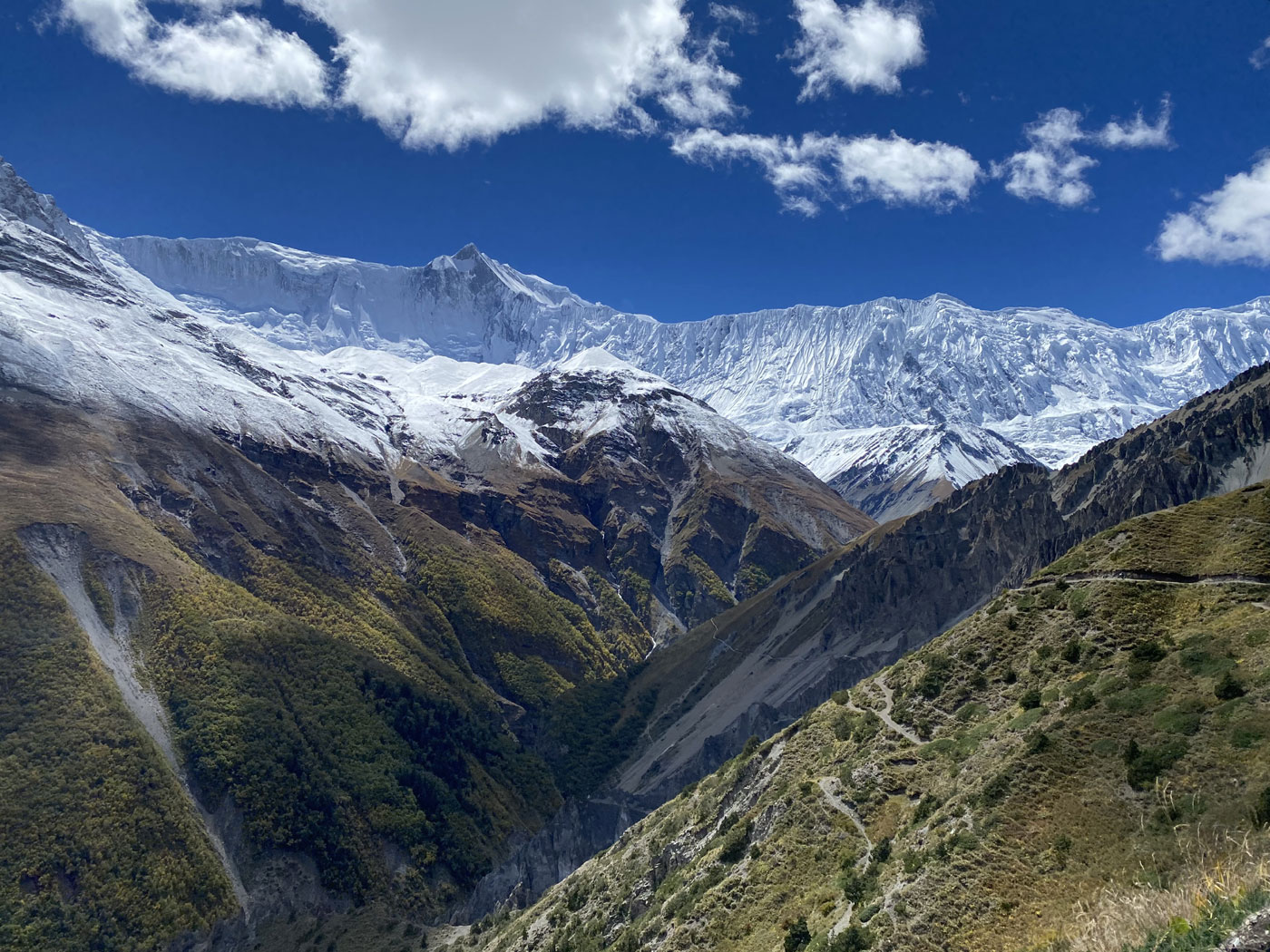
Both trekking routes involve crossing a high Himalayan pass. The Annapurna Circuit crosses the famous Thorong La Pass, while the Manaslu Circuit crosses Larkya La Pass, one of the most scenic high mountain passes in the Himalayas. These pass crossings are often the most memorable days of the trek, when trekkers feel the full scale and beauty of the Himalayan landscape.
For trekkers deciding between the two routes, the choice often comes down to personal preference. Travelers looking for a classic and well-established trekking route with diverse landscapes may find the Annapurna Circuit ideal. Those who prefer a quieter trekking adventure with remote trails and fewer crowds may find the Manaslu Circuit Trek especially rewarding.
In the end, both treks offer unforgettable Himalayan journeys. Whether choosing the Manaslu Circuit Trek or the Annapurna Circuit Trek, trekkers and hikers will experience dramatic mountain scenery, welcoming local communities, and the unique adventure that makes trekking in Nepal one of the most inspiring travel experiences in the world.
Frequently Asked Questions: Manaslu Circuit Trek vs Annapurna Circuit Trek
Is the Manaslu Circuit Trek harder than the Annapurna Circuit?
Both treks are high-altitude Himalayan journeys that require good physical fitness and proper acclimatization. The Manaslu Circuit Trek can feel slightly more challenging because it passes through more remote terrain with fewer villages and facilities. However, most trekking days are manageable with steady pacing. The main challenge on both routes is crossing the high mountain passes Larkya La Pass on the Manaslu Circuit and Thorong La Pass on the Annapurna Circuit.
How many days does the Manaslu Circuit Trek usually take?
Most trekkers complete the Manaslu Circuit Trek in about 13 to 16 days, depending on the itinerary and acclimatization schedule. Some trekkers add an extra day in Samagaun for exploration or hiking to viewpoints like Manaslu Base Camp, which helps with acclimatization before crossing Larkya La Pass.
How long does the Annapurna Circuit Trek take?
The Annapurna Circuit Trek typically takes 12 to 15 days depending on the starting point and travel arrangements. Some itineraries include a flight from Jomsom to Pokhara after crossing Thorong La Pass, which shortens the overall trekking duration.
Which trek is less crowded?
The Manaslu Circuit Trek is generally less crowded because the region is a restricted trekking area with stricter permit regulations. Many trekkers prefer Manaslu for its quieter trails and more remote Himalayan atmosphere. The Annapurna Circuit Trek is more popular and tends to see more trekkers during peak seasons.
Do I need a guide for the Manaslu Circuit Trek?
Yes. The Manaslu region is classified as a restricted trekking area in Nepal, which means trekkers must be accompanied by a licensed guide and arrange permits through a registered trekking agency. This rule helps protect the environment and local culture of the region.
What is the highest point of the Manaslu Circuit Trek?
The highest point of the Manaslu Circuit Trek is Larkya La Pass (5,160 meters). Crossing the pass is often the most memorable part of the trek, offering panoramic views of surrounding Himalayan peaks including Himlung Himal, Cheo Himal, Kang Guru, and Annapurna II.
What is the highest point of the Annapurna Circuit Trek?
The highest point of the Annapurna Circuit Trek is Thorong La Pass (5,416 meters). The pass is one of the highest trekking passes in the world and provides dramatic views of the Annapurna and Dhaulagiri mountain ranges.
Which trek offers better mountain views?
Both treks provide spectacular Himalayan scenery. The Manaslu Circuit offers close views of Mount Manaslu and remote glacial valleys, while the Annapurna Circuit presents wide panoramas of the Annapurna massif and surrounding peaks. Many trekkers feel both routes offer equally impressive mountain experiences in different ways.
When is the best time to trek the Manaslu Circuit or Annapurna Circuit?
The best seasons for both treks are spring (March to May) and autumn (September to November). These months usually provide stable weather, clear mountain views, and comfortable trekking temperatures.
Can beginners do the Manaslu Circuit or Annapurna Circuit trek?
Yes, many trekkers with moderate fitness complete these routes every year. Previous high-altitude trekking experience is helpful but not always necessary. With proper preparation, gradual acclimatization, and a steady pace, both treks can be achievable for hikers who are reasonably fit.
Which trek should I choose for my Himalayan adventure?
Both routes offer unforgettable trekking experiences in Nepal. Trekkers who prefer a quieter and more remote journey often choose the Manaslu Circuit Trek. Those looking for a classic Himalayan trek with easier logistics and more developed facilities may prefer the Annapurna Circuit Trek. Either choice provides a remarkable opportunity to experience the landscapes, culture, and adventure of the Himalayas.
Final Thoughts: Manaslu Circuit Trek vs Annapurna Circuit
Both the Manaslu Circuit Trek and the Annapurna Circuit Trek offer extraordinary trekking experiences in the Himalayas. The Annapurna Circuit remains one of the world’s most famous trekking routes, known for its diverse landscapes, cultural richness, and well-developed trekking facilities. The Manaslu Circuit Trek, meanwhile, provides a quieter and more remote adventure, where trekkers can experience dramatic mountain scenery and traditional Himalayan culture in a less crowded environment.
For trekkers seeking a classic Himalayan trek with easier logistics and a wide range of accommodation options, the Annapurna Circuit is often an excellent choice. Those who prefer a more remote trekking experience with fewer crowds and untouched landscapes may find the Manaslu Circuit Trek especially rewarding.
If you are planning your Himalayan adventure, you can explore our Manaslu Circuit Trek itinerary or Annapurna Circuit Trek package for detailed trip information.