Best Time to Visit Bhutan
One of the questions travelers ask most before booking is whether the season changes the experience of the Bhutan Tour 5 Days. From our experience, this itinerary can be enjoyed throughout the year, but each season offers something slightly different. The route through Paro, Thimphu, and Punakha remains accessible in all four seasons, while the scenery, weather, and overall atmosphere change as the months progress.
Spring (March to May)
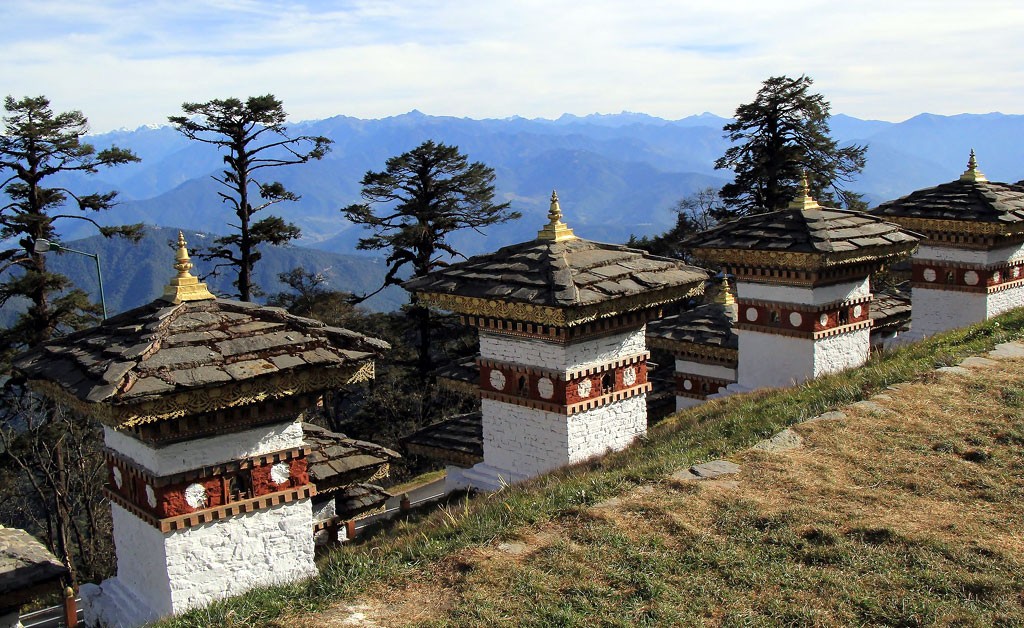
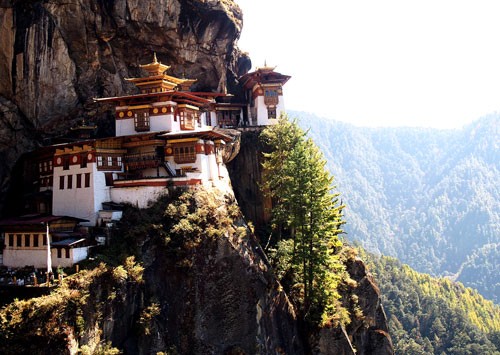
Spring is one of the best times to visit Bhutan. The weather is generally mild, the valleys become lush and green, and rhododendrons bloom across the hillsides. Clear mornings often provide excellent Himalayan views from Dochula Pass, while comfortable temperatures make the hike to Tiger's Nest Monastery particularly enjoyable. It is an ideal season for travelers who want to combine mountain scenery with pleasant walking conditions.
Autumn (September to November)
Autumn is widely considered the best overall season for this itinerary. After the monsoon, the skies are usually at their clearest, offering outstanding visibility of the surrounding mountains. This is also the season when many of Bhutan's famous festivals take place, giving visitors the opportunity to experience traditional masked dances, religious ceremonies, and local celebrations alongside the country's cultural highlights.
Winter (December to February)
Winter offers a quieter travel experience with fewer visitors at Bhutan's most popular attractions. Although mornings and evenings can be cold in Paro and Thimphu, the days are often sunny and clear, while Punakha enjoys a comparatively mild climate. Travelers who prefer peaceful trails and uncrowded cultural sites often find winter to be a rewarding time to visit.
Monsoon (June to August)
The summer monsoon brings regular rainfall, especially in the lower valleys, and mountain views are sometimes hidden by cloud. At the same time, the countryside becomes exceptionally green, rivers flow at their fullest, and the landscapes take on a completely different character. Carrying a waterproof jacket and suitable footwear is usually all that is needed to enjoy the tour comfortably during this season.
For most first-time visitors, we generally recommend spring or autumn, when weather conditions are the most reliable and mountain views are often at their best. However, every season offers a different perspective on Bhutan, and choosing the right time depends on the type of experience you are looking for rather than simply the weather.
Bhutan Visa and Travel Requirements
Traveling to Bhutan is different from many other destinations because tourism is regulated by the government to protect its culture and environment. All international travelers, except citizens of India, Bangladesh, and the Maldives, require a visa to enter Bhutan. The visa is arranged in advance through a licensed tour operator, and it is approved only after your trip is fully confirmed.
As part of Bhutan’s tourism policy, travelers are required to pay a Sustainable Development Fee (SDF), which is included in your tour package. This fee supports Bhutan’s environmental conservation, cultural preservation, and infrastructure development. Because of this system, travel in Bhutan is well organized, with accommodation, transport, guide services, and permits arranged in advance.
Independent travel is not permitted in Bhutan for most international visitors. You must travel with a licensed guide and follow a pre-arranged itinerary. This ensures a smooth, safe, and meaningful travel experience while maintaining Bhutan’s unique tourism approach.
Your passport must be valid for at least six months from your travel date. It is also recommended to have travel insurance, especially when traveling in mountain regions. Flights to Bhutan usually operate via Paro from cities like Kathmandu, Delhi, Bangkok, and Singapore, offering scenic Himalayan views during arrival and departure.
From practical experience, the Bhutan travel system makes the journey very comfortable and stress-free for visitors. Once your visa and tour are arranged, everything is managed for you, allowing you to fully enjoy the culture, landscapes, and peaceful atmosphere of Bhutan.
Flights to Bhutan
Most travelers begin their Bhutan Tour 5 Days by flying into Paro International Airport, Bhutan's only international airport. Direct flights are available from Kathmandu, Delhi, Bangkok, and Singapore, making it easy to combine Bhutan with other destinations in South Asia.
Approximate flight times are:
Kathmandu to Paro: 1 hour 15 minutes
Delhi to Paro: 2 hours 30 minutes
Bangkok to Paro: 3 hours 30 minutes
Singapore to Paro: 5 hours 30 minutes (on selected schedules)
One piece of advice we always give our travelers is to reserve a window seat whenever possible, especially on flights between Kathmandu and Paro. On clear days, the journey offers spectacular views of the Himalayan range before the aircraft makes its memorable approach into Paro Valley. For many visitors, the flight itself becomes one of the highlights of the trip.
Mountain weather can occasionally affect flight schedules, particularly during the monsoon season. While delays are not an everyday occurrence, we recommend allowing a little flexibility before and after your Bhutan tour rather than booking tight international connections.
Once you arrive at Paro Airport, our representative will welcome you and begin the drive to your hotel, allowing your Bhutan journey to start smoothly from the moment you land.
Money, Currency, and Payments in Bhutan
The official currency of Bhutan is the Bhutanese Ngultrum (BTN), although Indian Rupees (INR) are also widely accepted throughout the country. Most travelers exchange a small amount of local currency after arriving in Paro or Thimphu for personal expenses during the tour.
Hotels, larger restaurants, and many souvenir shops accept international credit cards, but smaller cafés, family-run businesses, and local markets often prefer cash. For that reason, we recommend carrying some Bhutanese Ngultrum with you each day, especially when visiting smaller towns or shopping for local handicrafts.
ATMs are available in Paro and Thimphu, but they become much less common outside the main towns. From our experience, withdrawing enough cash at the beginning of the tour is usually more convenient than searching for an ATM later in the journey.
If your Bhutan Tour 5 Days package includes accommodation, transportation, guide services, entrance fees, and meals listed in the itinerary, you will need very little additional spending money. Most travelers use cash mainly for drinks, personal shopping, tips, and other individual expenses, while keeping a credit card as a backup whenever needed.
Mobile Network and Internet in Bhutan
Staying connected during the Bhutan Tour 5 Days is generally straightforward. Mobile coverage is good throughout Paro, Thimphu, and Punakha, and most travelers have no difficulty using messaging apps, checking emails, or sharing photos during the journey.
If you would like mobile data throughout your trip, we recommend purchasing a local SIM card after arriving at Paro International Airport or in Paro town. The process is simple, data packages are reasonably priced, and having your own connection is usually more reliable than depending entirely on hotel Wi-Fi.
Wi-Fi is available in most hotels on this itinerary and works well for everyday use such as browsing the internet, communicating with family, and using social media. Connection speeds can vary, especially during busy hours, so travelers who need a more stable connection for work or regular video calls are generally better served by using mobile data.
For most visitors, staying connected in Bhutan is easy, and a local SIM card combined with hotel Wi-Fi provides more than enough coverage for the duration of the tour.
Travel Insurance for Bhutan
We strongly recommend purchasing comprehensive travel insurance before traveling to Bhutan. Although the Bhutan Tour 5 Days is primarily a cultural journey, a suitable policy provides valuable protection against unexpected medical expenses, trip cancellations, lost baggage, flight delays, and emergency evacuation if required.
The hike to Tiger's Nest Monastery is the most active part of this itinerary. While most travelers complete the hike comfortably, accidents and unexpected medical situations can happen during any trip. Having appropriate travel insurance provides added peace of mind throughout your journey.
Flights to and from Paro International Airport occasionally experience delays or schedule changes due to mountain weather. Choosing a policy that includes coverage for travel interruptions can help protect you from additional expenses if your itinerary needs to be adjusted.
Before purchasing insurance, we recommend checking that your policy covers Bhutan for the full duration of your trip and includes all activities listed in your itinerary. Spending a few minutes reviewing your coverage before departure can help you travel with greater confidence and fewer unexpected concerns.
Electricity and Power Plugs in Bhutan
Electricity is available throughout the Bhutan Tour 5 Days, and all hotels included in the itinerary provide power for charging phones, cameras, laptops, and other personal devices.
Bhutan operates on a 230V supply with a 50Hz frequency. The most commonly used plug types are Type D, Type F, and Type G. Many hotels also provide universal sockets, but bringing a universal travel adapter is the simplest way to ensure your devices can be charged throughout the trip.
If you plan to carry cameras, drones, or several electronic devices, a small multi-port USB charger or compact power strip can be useful for charging everything overnight.
For most travelers, keeping devices charged during the Bhutan Tour 5 Days is straightforward and requires very little preparation.