Everest View Hotel Trek Overview
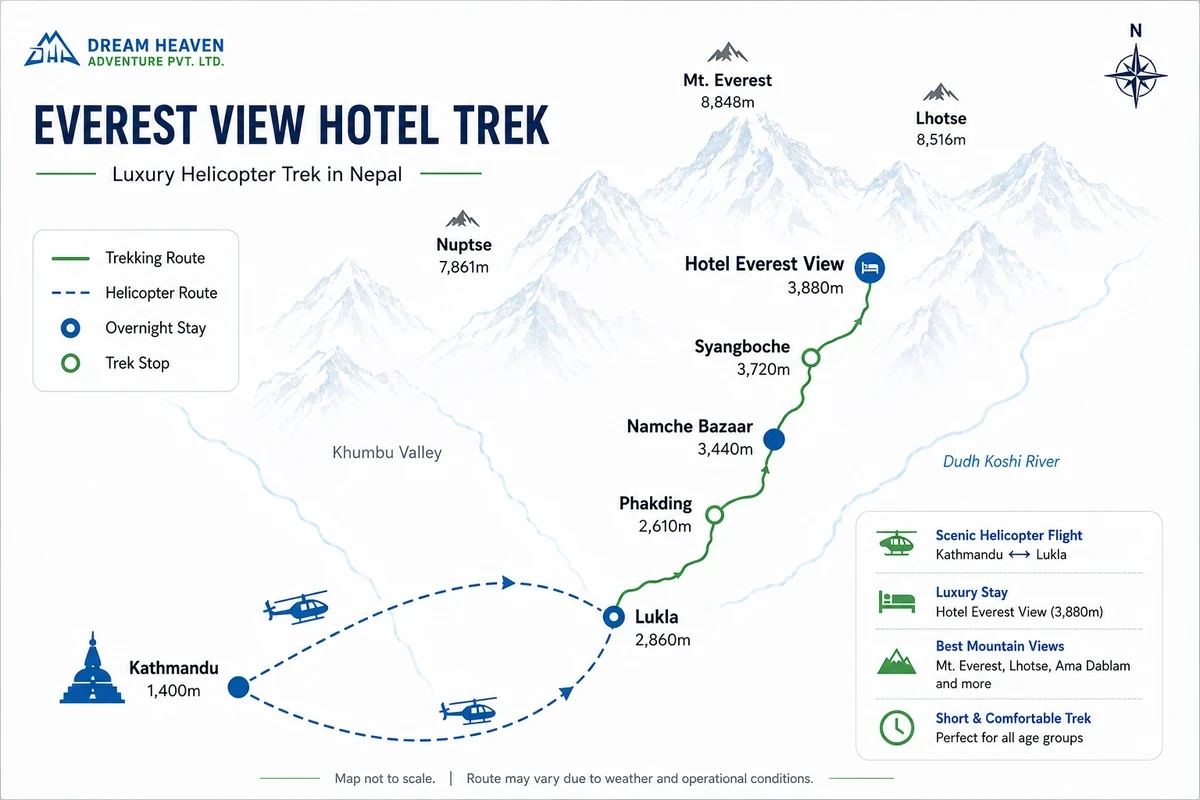
The Everest View Hotel Trek is one of the shortest and most comfortable ways to experience the Everest region on foot. Combining scenic trekking with helicopter transfers and a stay at the iconic Hotel Everest View, this itinerary is ideal for travellers who want to enjoy spectacular Himalayan scenery, premium mountain lodges, and clear views of Mount Everest without trekking to extreme altitude or committing to a longer expedition.
If your goal is to reach the foot of the world's highest mountain, you can also explore our Everest Base Camp Trek, a longer and more demanding journey that continues to Everest Base Camp at 5,364 metres.
This Everest View Hotel Trek combines scenic walking with a helicopter flight between Kathmandu and Lukla, creating a smooth and time-efficient travel experience. The aerial journey adds a unique perspective of the Himalayan landscape while avoiding long and tiring travel routes.
The route follows the classic Everest trail through Phakding and Namche Bazaar, staying in selected high-quality lodges, including the well-known Mountain Lodges of Nepal. These lodges offer a higher standard of comfort, making the overall journey more relaxed and enjoyable compared to basic trekking routes.
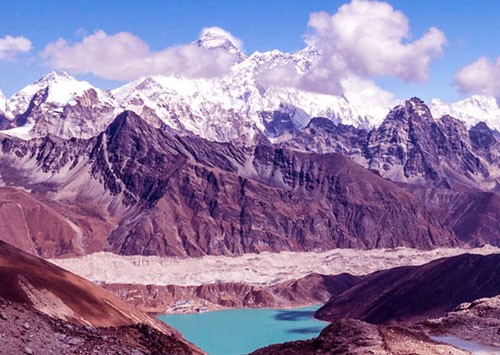
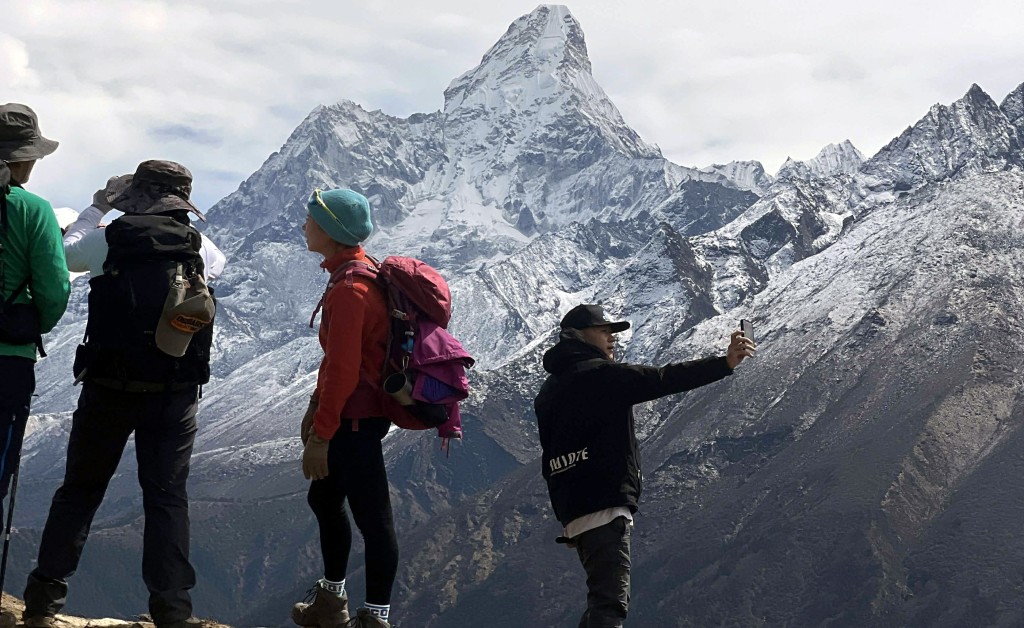
From Namche Bazaar, the trail gradually leads to Everest View Hotel, one of the highest located hotels in the world. This viewpoint provides one of the most accessible panoramic views of Everest, along with Ama Dablam, Lhotse, and surrounding Himalayan peaks. The pace here is slower and more relaxed, allowing time to fully enjoy the mountain setting.
Unlike longer Everest expeditions that continue above 5,000 metres, this itinerary remains below 4,000 metres while still offering spectacular views of Mount Everest and the surrounding Himalayan peaks. Walking distances are shorter, giving travellers more time to enjoy Sherpa villages, local culture, and the mountain scenery at a relaxed pace.
The return journey follows the same scenic route back toward Lukla through forest trails, suspension bridges, and Sherpa settlements. A helicopter flight back to Kathmandu completes the trip, offering one final aerial view of the Everest region.
The Everest View Hotel Trek is well suited for travelers with limited time, those seeking a more comfortable trekking experience, or anyone who wants to see Mount Everest without the challenges of high-altitude trekking.
Based on real trekking experience, this trek offers a balanced combination of comfort, accessibility, and iconic Himalayan scenery, making it one of the most rewarding short treks in Nepal.
Why Choose the Hotel Everest View Trek?
Travelling by helicopter between Kathmandu and Lukla makes this itinerary significantly more comfortable than the standard Everest approach, particularly during busy trekking seasons when regular Lukla flights may operate from Ramechhap. It also provides greater flexibility while allowing you to spend more time in the mountains and less time managing transport logistics.
Unlike most Everest View treks that stop at Hotel Everest View for tea before returning to Namche Bazaar, this itinerary includes an overnight stay at the hotel. Spending the night at nearly 3,880 metres allows you to experience the quieter atmosphere after day visitors leave and enjoy the mountain panorama in the evening and again at sunrise, weather permitting.
Accommodation throughout the journey has been selected to provide a consistently higher level of comfort than a traditional teahouse trek. The package includes a five-star hotel in Kathmandu, carefully chosen Mountain Lodges of Nepal properties along the trail, and an overnight stay at the iconic Hotel Everest View, combining quality accommodation with an authentic Himalayan trekking experience.
To make the walk more enjoyable, porter support is included throughout the trek, so you only need to carry a light daypack while your main luggage is transported between overnight stops. This is especially appreciated during the steady climb from Phakding to Namche Bazaar, the most physically demanding walking day of the itinerary.
From your arrival in Kathmandu until your departure, our team manages the essential trekking logistics, including airport transfers, accommodation, helicopter arrangements, permits, meals specified in the itinerary, an experienced licensed guide, porter support, and on-the-ground assistance. This allows you to focus on enjoying the Everest region without worrying about the practical details of the journey.
Everest View Hotel Trek Cost and Value
The Everest View Hotel Trek starts from USD 3500 per person, based on twin-sharing accommodation, shared helicopter transfers, and the minimum group size for this itinerary. Single-room upgrades, private helicopter charters, and other customised services are available at an additional cost. The final price depends on the travel season, group size, helicopter arrangements, room category, and any itinerary customisation requested before departure.
The Everest View Hotel Trek is a premium short trek in the Everest region, and the price reflects the level of service, accommodation, and travel convenience included throughout the journey. Unlike a standard Everest tea house trek, this itinerary combines helicopter travel, premium mountain lodges, and an overnight stay at Hotel Everest View, creating a distinctly more comfortable and time-efficient Himalayan experience.
Your package includes helicopter transfers between Kathmandu and Lukla, a licensed trekking guide, porter support, required trekking permits, accommodation in carefully selected mountain lodges, meals as specified in the itinerary, airport transfers, and all ground transportation included in the package. Every major logistical detail is arranged before your arrival, allowing you to focus on the trek, the mountain scenery, and the experience rather than organising services along the route.
A significant part of the package cost comes from the helicopter flights and upgraded accommodation. Helicopter transfers reduce travel time and simplify access to the Everest region, while premium lodges provide a higher standard of comfort, warmer dining areas, better facilities, and a more relaxing environment than standard tea houses. The overnight stay at Hotel Everest View is also a central part of the itinerary rather than simply a short viewpoint stop.
Before confirming your booking, we provide a detailed quotation showing exactly what is included, any optional upgrades you request, and any additional costs that may apply. This transparent approach allows you to understand the full cost of your journey before travelling.
From our experience, travellers rarely choose this itinerary because it is the least expensive way to visit the Everest region. They choose it because it offers outstanding value for the time available. The combination of helicopter transfers, premium accommodation, shorter trekking days, personalised support, and an overnight stay at Hotel Everest View makes it possible to experience the Everest region in comfort without committing to a longer high-altitude trek.
For travellers with limited holiday time, couples, families, active older travellers, or anyone seeking a more refined Himalayan experience, the additional investment is often rewarded by the time saved, the higher level of comfort, and the quality of the overall journey.
Who Is This Everest View Hotel Trek For?
The Everest View Hotel Trek is ideal for travellers who want to experience the Everest region in a shorter, more comfortable, and more accessible way without committing to a long high-altitude expedition.
This trek is an excellent choice for first-time trekkers with a reasonable level of fitness who want to experience the Himalayas without trekking to Everest Base Camp. The well-established trails, moderate daily walking distances, and carefully planned itinerary provide an enjoyable introduction to trekking in the Everest region.
It is also suitable for families travelling with children who already enjoy regular walking and outdoor activities. The shorter trekking days, comfortable accommodation, and gradual pace make the journey more manageable than longer Everest trekking itineraries.
Active older travellers in good health often find this itinerary particularly rewarding. Although the trek reaches approximately 3,880 metres, it avoids the prolonged high-altitude exposure and demanding walking days associated with Everest Base Camp, making it a comfortable option for those seeking spectacular Himalayan scenery with a lower level of physical challenge.
The itinerary is equally well suited to travellers with limited holiday time who still want to experience the Everest region without committing to the longer Everest Base Camp Trek. By combining scenic trekking with helicopter transfers between Kathmandu and Lukla, it allows you to enjoy the highlights of the Khumbu in just a few days while maximising your time in the mountains.
This trek also appeals to couples, honeymoon travellers, photographers, solo travellers, and small private groups looking for a more relaxed Himalayan journey. Rather than focusing on long distances or reaching the highest possible altitude, the emphasis is on enjoying Sherpa culture, premium mountain lodges, spectacular Himalayan views, and an overnight stay at the iconic Hotel Everest View.
If your goal is to stand at the foot of the world's highest mountain and you have more time available, our Everest Base Camp Trek with Helicopter Return offers a longer and more challenging journey while retaining the convenience of a helicopter flight back to Kathmandu.
How Difficult Is the Everest View Hotel Trek?
The Everest View Hotel Trek is generally considered an easy to moderate trek, making it one of the most accessible ways to experience the Everest region.
The difficulty is influenced more by the gradual gain in altitude than by the terrain itself. Although the trails are well established and non-technical, trekkers still reach approximately 3,880 metres, where the thinner air can make walking feel more demanding, particularly for those arriving from sea level or other low-altitude regions.
Daily walking is moderate, usually lasting between 3 and 6 hours at a steady and comfortable pace. The route follows forest trails, stone steps, suspension bridges, and gradual ascents, with no technical climbing or difficult mountain terrain.
The most noticeable challenge for many trekkers is the altitude. Even at moderate elevations such as Namche Bazaar and Hotel Everest View, the thinner air can make walking feel slower and more tiring than expected. A steady pace, sensible acclimatisation, good hydration, and close communication with your guide all help reduce the likelihood of altitude-related problems, helping you enjoy the trek more comfortably.
Because the itinerary has been designed with a gradual ascent and adequate time for adjustment, most travellers with a reasonable level of fitness can complete the trek comfortably without previous high-altitude trekking experience.
Overall, the Everest View Hotel Trek is best described as an easy to moderate trek, making it an excellent choice for travellers seeking spectacular Himalayan scenery, premium mountain lodges, and a rewarding trekking experience without the physical demands of the Everest Base Camp Trek.
Everest View Hotel Trek vs Everest Base Camp Trek
Both treks follow the classic Everest trail and offer unforgettable Himalayan scenery, but they are designed for different types of travellers. The Everest View Hotel Trek focuses on comfort, shorter walking days, and panoramic mountain views, while the Everest Base Camp Trek is a longer and more demanding journey for those wanting to reach the foot of the world's highest mountain.
| Feature | Everest View Hotel Trek | Everest Base Camp Trek |
|---|---|---|
| Typical Duration | 8 Days | 12 Days |
| Highest Altitude | Hotel Everest View (3,880 m) | Everest Base Camp (5,364 m) and Kala Patthar (5,545 m) |
| Difficulty | Easy to Moderate | Moderate to Challenging |
| Helicopter Travel | Included for arrival and return | Optional on selected itineraries |
| Suitable for Beginners | Yes, with reasonable fitness | Better suited to trekkers with good fitness and more time |
| Accommodation | Premium mountain lodges, including Hotel Everest View | Traditional tea houses along the trekking route |
| Best For | Travellers seeking comfort, shorter trekking days, and iconic Everest views | Travellers wanting the complete Everest Base Camp experience |
If your priority is enjoying spectacular Himalayan scenery in a shorter time while staying in comfortable lodges, the Everest View Hotel Trek is an excellent choice. If reaching Everest Base Camp itself is your main goal and you have more time available, our Everest Base Camp Trek provides the full classic Everest adventure.
About Hotel Everest View
Hotel Everest View is located on a ridge above Namche Bazaar at approximately 3,880 metres (12,729 feet), inside Sagarmatha National Park. Opened in 1971, it was built to give visitors a comfortable way to experience the Everest region without trekking to the higher parts of the Khumbu. Today, it remains one of Nepal's most iconic mountain hotels and a highlight for travellers exploring the Everest region.
The hotel is widely known for its exceptional mountain setting and panoramic views. Mount Everest can be seen from the rooms and main viewing areas, while Ama Dablam, Lhotse, Thamserku, Kongde Ri, and other surrounding peaks form a spectacular Himalayan skyline. Clear mornings usually provide the best visibility, which is why our guides prefer reaching the hotel early whenever weather and trail conditions allow.
Hotel Everest View has just twelve guest rooms, each featuring an en suite bathroom, a comfortable seating area, heating, electric blankets, and mountain-facing windows. Because availability is limited, overnight stays should be reserved well in advance, particularly during the busy spring and autumn trekking seasons.
You do not need to stay overnight to enjoy the hotel. Day visitors trekking from Namche Bazaar can stop for breakfast, lunch, tea, or another meal while taking in the mountain views from the dining room or outdoor terrace. The hotel welcomes overnight guests, passing trekkers, and visitors arriving by helicopter, making it one of the most popular viewpoints and dining destinations above Namche Bazaar.
Many travellers visit Hotel Everest View because it offers a rare combination of accessibility, spectacular Himalayan scenery, and premium hospitality. The walk from Namche Bazaar generally takes around two hours, allowing visitors to enjoy close views of the Everest range without continuing towards Everest Base Camp or sleeping above 4,000 metres.
For guests staying overnight, the experience becomes noticeably quieter after the daytime visitors leave. Early morning light, fewer people around the terrace, and uninterrupted mountain views create a very different atmosphere from a brief daytime stop. This is one of the main reasons an overnight stay at Hotel Everest View forms a central part of our itinerary rather than serving only as a viewpoint visit.
Travellers looking for a longer Himalayan journey with premium lodges and a helicopter return can also explore our Everest Base Camp Luxury Trek.
Why Staying at Hotel Everest View Is the Highlight of the Trek
Reaching Hotel Everest View is one of the defining moments of this journey. As the trail climbs above Namche Bazaar, the surrounding pine forest gradually opens to reveal the Everest range. Perched at approximately 3,880 metres, the hotel offers one of the most accessible panoramic viewpoints in the Khumbu, with Mount Everest, Ama Dablam, Lhotse, Thamserku, Kongde Ri, and surrounding Himalayan peaks visible from the property in favourable weather.
Unlike most Everest View treks that stop here briefly for tea or lunch before returning to Namche Bazaar, this itinerary includes an overnight stay at the hotel. Spending the night allows you to experience the mountains after most daytime visitors have left, when the surroundings become noticeably quieter. On clear evenings, the changing light across the Himalayan peaks creates a memorable atmosphere, while early mornings often reward guests with some of the clearest views of Everest before breakfast overlooking the mountains.
What makes the experience special is not only the scenery, but the opportunity to enjoy it without feeling rushed. Rather than arriving for a quick photograph and continuing down the trail, you can relax on the outdoor terrace, enjoy panoramic views from the dining room, take a short walk around the surrounding ridge, and appreciate the landscape at a slower pace. This unhurried experience is something many trekkers never enjoy on a standard day visit.
Although the mountain panorama is the main attraction, the comfort of staying at Hotel Everest View adds another dimension to the journey. Comfortable guest rooms, quality dining, and attentive hospitality allow you to experience the Everest region without sacrificing the comfort of a premium mountain lodge. The combination of exceptional scenery and high-quality accommodation is what sets this itinerary apart from a traditional Everest trek.
After leading travellers through the Everest region for many years, we have found that guests rarely remember this journey simply because it is one of the easiest ways to see Mount Everest. Instead, they remember the peaceful morning atmosphere, breakfast overlooking the Himalayas, the slower pace of the experience, and the opportunity to spend meaningful time surrounded by some of the highest mountains on Earth. Those are the moments that stay with people long after the trek has ended.