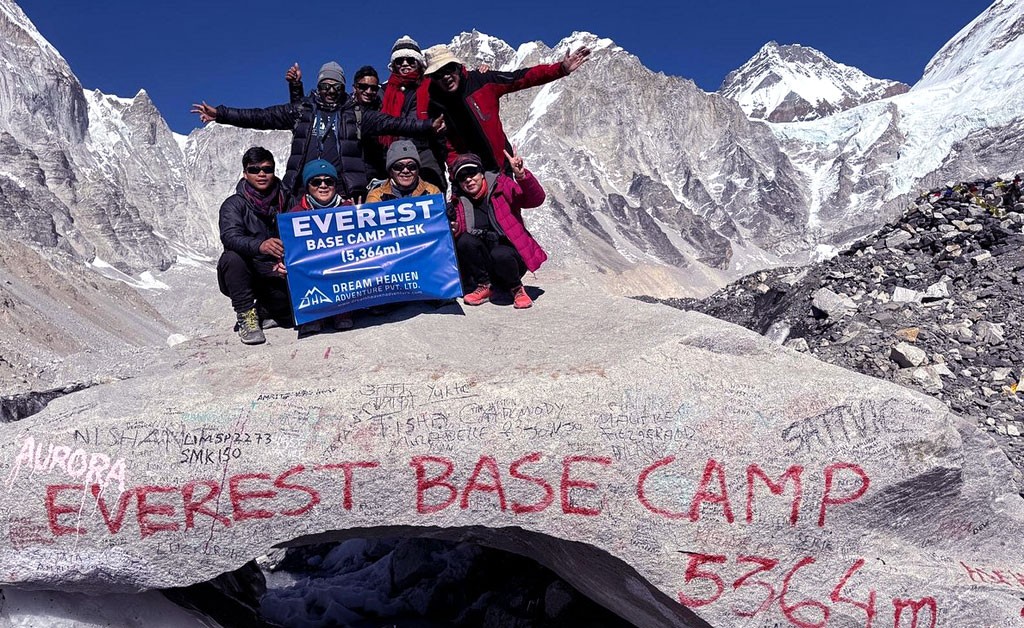
Everest Base Camp Trek for Seniors Overview
The Everest Base Camp Trek for Seniors is specially designed for travelers who want to experience the Everest region at a slower and more comfortable pace. It is ideal for senior trekkers and older travelers who may not be able to walk long distances each day or follow the faster 12-day Everest Base Camp itinerary.
This journey follows the same classic route toward Everest Base Camp, passing through villages such as Phakding, Namche Bazaar, Tengboche, and Dingboche. The difference is in how the trek is planned. Walking days are shorter, the pace is more relaxed, and there is enough time to rest, recover, and enjoy the surroundings without feeling rushed.
Instead of pushing long and tiring days, the itinerary follows a more gradual trekking rhythm with carefully planned overnight stops that make the journey feel less rushed and more enjoyable.
For many senior trekkers, the experience becomes more enjoyable when the focus shifts from covering distance to maintaining a comfortable daily rhythm. The slower pace allows more time to appreciate the changing landscapes, village life, and mountain views along the route rather than concentrating only on reaching the destination
This itinerary is suitable for active senior travelers who are in good health and enjoy walking. It is also a good option for families with older children who want a more relaxed Himalayan experience.
Reaching Everest Base Camp and standing close to Mount Everest remains a meaningful moment. What makes this journey different is the way you get there, with time, patience, and a pace that allows you to fully enjoy every step of the experience.
Everest Base Camp Trek for Seniors Highlights
- Carefully designed itinerary with shorter and more gradual walking days for better comfort
- Extra acclimatization time in key locations such as Namche Bazaar and Dingboche
- Flexible pacing that allows rest when needed, without pressure to rush
- Split walking sections (such as Punge Thenka stop) to reduce long and tiring days
- Well-managed altitude gain to support natural acclimatization
- Experienced guides who monitor pace, health, and daily conditions throughout the trek
- Stay in comfortable teahouses with warm meals and rest stops along the route
- Walk through Sherpa villages, forests, and mountain landscapes at a relaxed pace
- Reach Everest Base Camp and enjoy views of Mount Everest step by step
- Ideal for active senior travelers and families looking for a more balanced Everest experience
Is This Everest Base Camp Trek Suitable for Seniors?
The main difference is not simply that this trek has more days. We divide several sections that are normally combined on standard Everest Base Camp itineraries. From Namche, we stop at Punge Thenka before Tengboche, and higher up the valley we use Somare and Thukla to break the approach towards Lobuche into shorter stages.
This becomes particularly useful after Dingboche. Instead of leaving an acclimatization day and immediately making the full walk to Lobuche, the itinerary moves first to Somare and then to Thukla before reaching Lobuche. The daily altitude gain is therefore spread across several nights rather than concentrated into one longer trekking day.
The difficult sections have not disappeared. The climb above Thukla, the Everest Base Camp day from Lobuche through Gorak Shep, and the early hike to Kala Patthar still require good stamina. The purpose of the slower schedule is to reach these sections with more recovery time behind you, not to present Everest Base Camp as an easy trek for older travelers.
When This Slower Everest Base Camp Itinerary May Still Not Be Enough
The extra days on this itinerary help most at specific points where the standard Everest Base Camp schedule can feel rushed. We stop at Punge Thenka instead of continuing directly from Namche to Tengboche, break the approach to Lobuche with nights at Somare and Thukla, and keep acclimatization days at both Namche and Dingboche. These changes reduce the length of several walking days, but they do not remove the hardest parts of the route.
The section from Thukla towards Lobuche is still a steady climb at high altitude, and the Everest Base Camp day from Lobuche through Gorak Shep remains long even on this slower schedule. Kala Patthar the following morning involves another steep ascent above 5,000 meters. For some senior trekkers, these three stages become the real test of whether the itinerary is slow enough.
We pay particular attention to how a trekker is recovering at Dingboche and again at Thukla. If someone is already taking unusually long to complete the shorter stages, has stopped eating normally, is sleeping poorly, or is not recovering by the following morning, simply continuing because another short day is planned is not a sensible approach. The guide may recommend an additional rest, changing the next overnight stop, or descending rather than pushing higher.
This is why we do not describe the 18-day itinerary as an easy version of Everest Base Camp. It gives senior trekkers more time between the major altitude gains, while leaving room for the guide and trekker to make decisions according to how the journey is actually progressing.
Everest Base Camp Trek Difficulty for Seniors
The Everest Base Camp Trek is generally considered a moderate to challenging journey, mainly because of altitude and the number of walking days rather than technical difficulty. There is no climbing or mountaineering involved, and the trail is well established, but as the elevation increases above 4,000 meters, walking naturally becomes slower and more demanding.
For this senior-friendly itinerary, the difficulty is reduced by following a slower and more gradual approach. The trek is completed over 18 days from Kathmandu to Kathmandu, including arrival, the Lukla flights, and a leisure day in Kathmandu. The trekking portion itself follows a deliberately slower progression, with shorter walking stages and additional overnight stops compared with standard Everest Base Camp itineraries.
In a regular Everest Base Camp trek, walking time is often around 6 to 8 hours per day. In this itinerary, most walking days are shorter, usually around 4 to 6 hours depending on the section and your pace. Longer and more demanding stretches are divided into smaller segments, which helps reduce fatigue and makes the journey more manageable.
You do not need previous trekking experience to complete this trek. However, you should be in good general health and comfortable walking for several hours a day at a steady pace. Many first-time senior trekkers complete Everest Base Camp successfully by following a gradual itinerary, listening to their bodies, and maintaining a consistent pace throughout the journey.
The main challenge of the trek is altitude. As you go higher, the air becomes thinner, and your body needs more time to adapt. It is normal to feel slower, take more breaks, and conserve energy. This is why proper acclimatization and pacing are so important.
Higher sections between Lobuche and Gorakshep usually feel slower due to thinner air, colder temperatures, and rocky glacier terrain, which is completely normal at this altitude.
Guides and support staff play an important role throughout the trek. They help set a comfortable pace, monitor your condition daily, and adjust the plan if needed. With the right support and a steady approach, the trek becomes more achievable and less stressful.
Above Dingboche, trekking becomes noticeably slower as oxygen levels decrease, making steady pacing and energy management more important than speed.
Best Time for Everest Base Camp Trek for Seniors
The best time for the Everest Base Camp Trek for seniors is during spring (March to May) and autumn (September to November), when weather conditions are generally stable, skies are clear, and mountain views are at their best. These seasons offer comfortable daytime temperatures, good trail conditions, and a more predictable trekking experience, which is especially important for older trekkers.
Spring is a beautiful time to trek, with blooming rhododendron forests, longer daylight hours, and gradually warming temperatures. The trail feels lively but not overwhelming, and visibility is usually very good in the mornings. Autumn, on the other hand, is known for its clear skies and sharp mountain views after the monsoon season. The air is crisp, the landscape is fresh, and this period is often considered the most reliable for consistent visibility.
Winter, from December to February, can also be a good time for the trek, especially for those who prefer quieter trails and very clear mountain views. The skies are often extremely clear, offering some of the best views of Mount Everest. However, temperatures at higher altitudes can be very cold, particularly in the early mornings and evenings, and some sections of the trail may have snow or ice. For seniors, this season can still be suitable with proper preparation, warm clothing, and a flexible itinerary.
The monsoon season, from June to August, is generally less recommended. Lower sections of the trail can be muddy, slippery, and affected by rain, while cloud cover often limits mountain views. However, higher parts of the Everest region receive less rainfall compared to lower elevations due to the rain shadow effect. Even so, weather conditions during this time can be unpredictable.
Flight conditions to Lukla are also an important factor when planning your trek. During peak seasons such as spring and autumn, many flights operate from Manthali (Ramechhap) instead of Kathmandu, which requires an early morning drive of about 4 to 5 hours before the short flight to Lukla. Weather can sometimes cause delays or changes in flight schedules, so having a buffer day is always recommended.
In real trekking experience, the best time is not only about the season but also about choosing a period with stable weather, clear mornings, and comfortable walking conditions. For senior trekkers, spring and autumn remain the most balanced and reliable seasons for a safe and enjoyable Everest Base Camp journey.