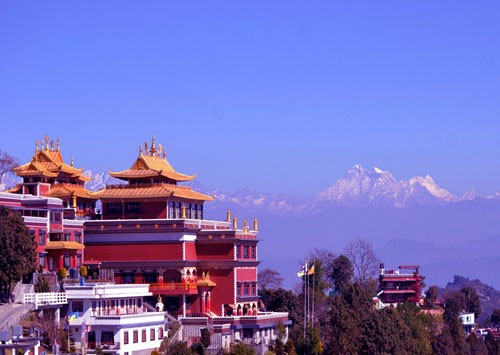
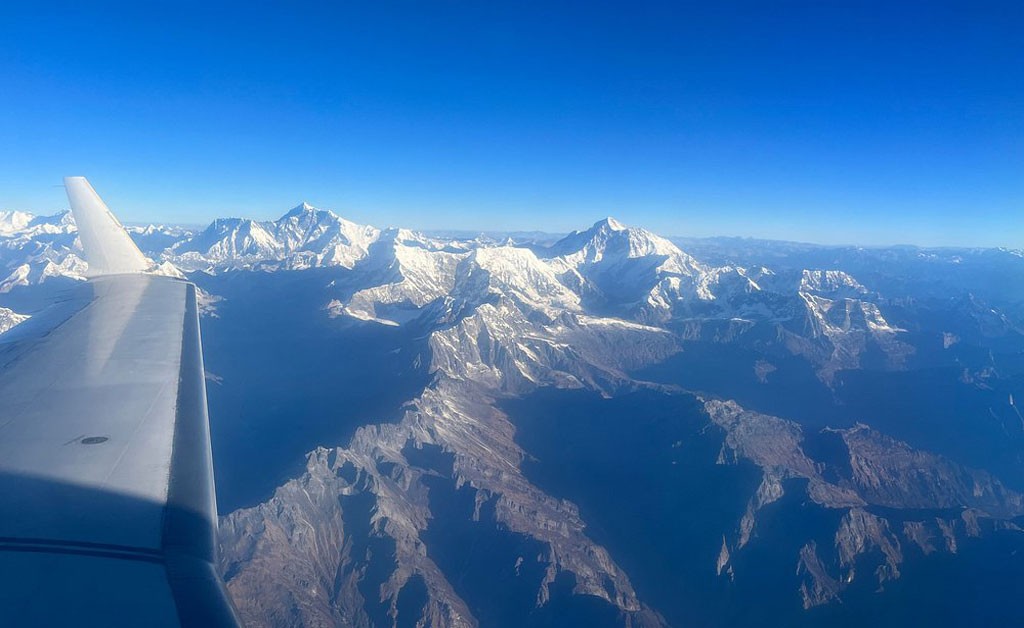
Everest Mountain Flight from Kathmandu

Trip Fact:
  • Duration 1 Hours
  • DestinationNepal
  • Trip Start/EndYour hotel
  • Group Size1-25 pax
  • Best SeasonSpring (March to May) and autumn (September to November), while winter (December to February) also offers excellent visibility on clear days.

Everest Mountain Flight Overview

The Everest Mountain Flight from Kathmandu is one of the easiest and most comfortable ways to see the Himalayas, including Mount Everest, without trekking. In just about one hour, you can enjoy close views of the world’s highest peaks directly from your window seat.

Many travelers are surprised by how close the mountains appear during the flight. Unlike distant views from the ground, the aircraft brings you directly in front of the Himalayan range, making the scale of the peaks feel much more real and impressive.

This scenic flight is specially designed for travelers who want to experience Everest in a short time without physical effort. It is ideal for families, senior travelers, and anyone with limited time in Nepal who still wants to witness the beauty of the Himalayas.

The experience begins early in the morning from Tribhuvan International Airport, when weather conditions are usually calm and visibility is at its best. As the aircraft flies east from Kathmandu, the landscape changes quickly from green hills to snow-covered mountains, revealing a continuous range of Himalayan peaks.

During the flight, you will see well-known mountains such as Langtang Lirung, Gauri Shankar, Shishapangma, Cho Oyu, Lhotse, and Makalu before reaching the highlight of the journey. The aircraft flies close enough to offer a clear and memorable perspective, allowing you to understand the true scale and beauty of the Himalayas.

Passengers are also invited one by one to the cockpit, where the view becomes even more impressive. In addition, airlines provide a mountain map and a short briefing to help identify each peak during the flight.

Based on years of organizing Everest mountain flights, what makes this experience special is not only seeing the mountains, but feeling how vast and powerful they are in a short time. For many travelers, the moment they first recognize Everest from the aircraft becomes the highlight of their entire Nepal journey.

Everest Mountain Flight Highlights

  • Fly close to Mount Everest and witness the world’s highest peak in just one hour
  • Guaranteed window seat for every traveler, ensuring uninterrupted views of the Himalayas
  • Early morning departure for the best visibility, calm weather, and clear skies
  • Scenic flight from Tribhuvan International Airport with smooth and safe operations
  • Enjoy panoramic views of major Himalayan peaks including Lhotse, Makalu, Cho Oyu, and Shishapangma
  • Experience the rare opportunity to visit the cockpit and see the mountains from the front
  • Stunning aerial views of glaciers, deep valleys, ridgelines, and snow-covered landscapes
  • Two viewing angles during the flight, with both outbound and return perspectives
  • Operated by trusted airlines with professional crew and reliable service
  • Suitable for all travelers, including families, seniors, and those with limited time
  • No trekking required, making it one of the easiest ways to experience Everest
  • Includes mountain briefing and peak identification map during the flight
  • Complimentary Everest flight certificate as a memory of your journey
  • Fully organized experience with hotel pickup, airport assistance, and drop-off
  • A simple yet unforgettable way to understand the true scale of the Himalayas in a short time

What You Experience on an Everest Mountain Flight

The Everest mountain flight is not just about seeing the Himalayas from above. It is a complete visual journey that gradually brings you closer to the world’s highest mountains in a short and comfortable time.

The experience begins early in the morning, when the sky is usually calm and clear. After takeoff from Kathmandu, the aircraft slowly leaves the valley behind, and within a few minutes, the first snow-covered peaks begin to appear on the horizon.

At this stage, the view is still distant, but it quickly becomes more dramatic as the aircraft moves east. Green hills fade away, and the landscape transforms into rugged terrain, deep valleys, and snow-covered ridgelines. The transition feels natural and steady, giving you time to fully take in the scenery.

As the flight continues, a long line of Himalayan peaks comes into view. Mountains such as Langtang Lirung, Gauri Shankar, Shishapangma, and Cho Oyu appear one after another, each rising higher and more sharply than the last. The scale of the mountains becomes more impressive with every passing minute.

The highlight of the journey is the close view of Mount Everest. Unlike what many expect, Everest does not stand alone in front. It rises slightly behind surrounding peaks, and recognizing it becomes a special moment for most travelers. Once identified, the view feels powerful and unforgettable, especially as the aircraft flies close enough to reveal glaciers, ridgelines, and the true depth of the Himalayan landscape.

During the flight, passengers are invited one by one to the cockpit, where the view becomes even clearer from the front of the aircraft. This is often one of the most memorable parts of the experience, offering a different perspective that cannot be seen from the seat.

After reaching the eastern section of the range, the aircraft turns back toward Kathmandu. This return journey offers a second viewing angle of the same mountains, allowing you to notice details that may have been missed earlier. Many travelers find this part equally enjoyable, as they already know where to look.

By the time the flight returns, the experience feels complete but never rushed. In just one hour, you move from the busy Kathmandu Valley into the heart of the Himalayas and back again, carrying a clear and lasting impression of the mountains.

Everest Mountain Flight vs Helicopter Tour - Which is Better?

Both Everest mountain flights and helicopter tours offer incredible views of the Himalayas, but the overall experience is quite different. Choosing the right option depends on your time, budget, and what kind of experience you are looking for.

The Everest mountain flight is a one-hour scenic journey from Kathmandu. It is simple, smooth, and budget-friendly, making it one of the easiest ways to see Mount Everest without trekking. Every passenger gets a guaranteed window seat, and the aircraft flies along the Himalayan range, offering wide panoramic views of multiple peaks in a short time.

In contrast, an Everest helicopter tour is a longer and more flexible experience, usually lasting around 4 to 5 hours. The journey includes several stops, allowing you to enjoy the mountains from different viewpoints. One of the highlights is landing near Everest, often at Hotel Everest View, where you can step outside, take photos, and experience the Himalayas more closely.

Helicopters can fly closer to the mountains than fixed-wing aircraft, giving a more intimate and dramatic perspective. However, this experience comes at a significantly higher cost compared to the mountain flight.

In simple terms, if you are looking for a quick, comfortable, and affordable way to see the Everest region, the mountain flight is the best choice. If your priority is a more exclusive experience with landings, longer duration, and closer views of the mountains, then the helicopter tour is the better option.

For travelers short on time, the mountain flight is usually the most practical choice, while the helicopter tour suits those looking for a premium and more immersive experience.

Everest Mountain Flight Price and Cost Details

The Everest mountain flight from Kathmandu is one of the most affordable ways to see Mount Everest without trekking. The cost generally depends on the airline, season, and availability, but the overall experience remains similar across all operators.

Currently, the average price for an Everest mountain flight is around USD 280 per person. This usually includes a guaranteed window seat, airline service, and a one-hour scenic flight over the Himalayas.

Most packages also include hotel pickup and drop-off, airport assistance, and flight coordination, making the entire experience smooth and stress-free, especially for early morning departures.

Prices may vary slightly during peak seasons such as autumn (October and November) and spring (April and May), when demand is higher and visibility is at its best. Booking in advance during these months is recommended to secure your preferred date.

Compared to helicopter tours, which cost significantly more, the mountain flight offers a much more budget-friendly option while still providing clear and memorable views of the Everest region.

In simple terms, the Everest mountain flight offers excellent value for money, delivering a once-in-a-lifetime Himalayan experience in a short time and at a reasonable cost.

For travelers looking for the best balance between cost, comfort, and experience, this flight remains one of the most practical options in Nepal.
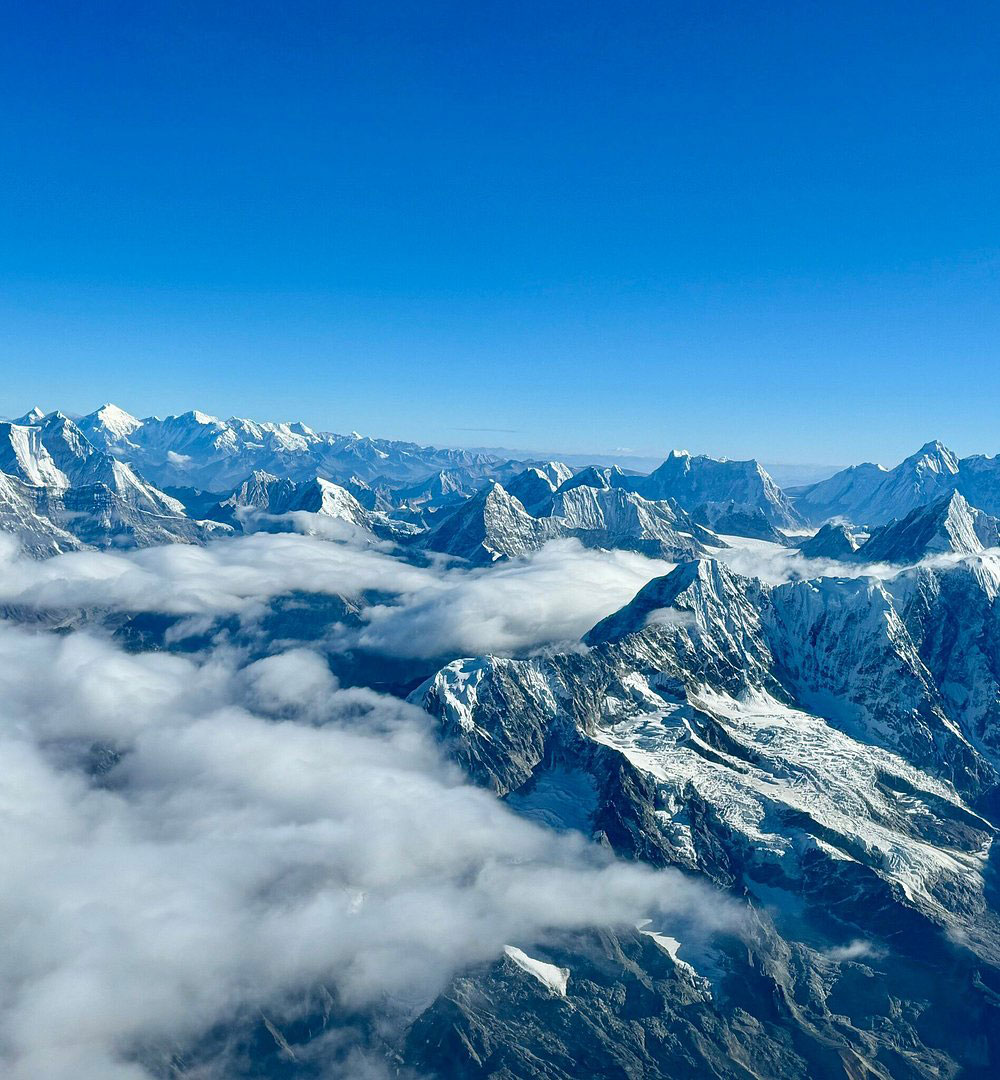
Mount everest aerial view from kathmandu flight

Best Time for Everest Mountain Flight

The best time for the Everest Mountain Flight from Kathmandu is during spring (March to May) and autumn (September to November). These seasons offer the most stable weather, clear skies, and the highest chance of seeing Mount Everest and surrounding Himalayan peaks without clouds. During this time, visibility is usually sharp, and flying conditions remain smooth, making the overall experience more reliable and enjoyable.

Among all months, October and November are considered the best for crystal-clear mountain views. After the monsoon, the air becomes very clean, allowing you to see the Himalayan range in full clarity. Spring months like April and May are also excellent, with good visibility, slightly warmer temperatures, and fresh green landscapes below the mountains.

Winter (December to February) is another good option for mountain flights. On clear days, the snow-covered peaks appear especially bright and sharp, offering stunning views. There are also fewer tourists during this time, creating a quieter and more peaceful experience. However, mornings can be colder, and weather conditions may change quickly, so flexibility is important.

The monsoon season (June to August) is generally not recommended. During this time, clouds, rain, and haze often block the mountain views, and flights may be delayed or cancelled more frequently. While flights still operate, the chances of clear visibility are much lower compared to other seasons.

The time of day is equally important. All flights operate early in the morning, usually starting around 6:15 AM from Tribhuvan International Airport. Morning hours provide the best conditions, with calm winds, clearer skies, and better lighting for mountain views and photography. As the day progresses, clouds often begin to form, reducing visibility.

Based on years of organizing Everest mountain flights, the best way to plan this experience is to choose a clear season like autumn or spring, book the earliest flight available, and keep at least one extra day as a backup in case of weather changes. If your priority is the highest chance of crystal-clear views, October and November are the most reliable months. This simple planning approach greatly increases your chances of getting a perfect Everest view.
Itinerary

Pickup Time: Around 5:15 AM to 5:30 AM
Flight Time: Around 6:15 AM
Flight Duration: 50 minutes to 1 hour

Your 1 hour mountain flight from Kathmandu begins early in the morning with a hotel pickup and transfer to Tribhuvan International Airport. After a smooth check-in and boarding process, the flight usually takes off around 6:15 AM, which is the best time for clear mountain views. As the aircraft leaves the Kathmandu Valley, the scenery quickly changes from green hills to snow-covered peaks, and within a few minutes, the first Himalayan mountains appear above the horizon.

As the flight continues east, you will enjoy a panoramic view of the Himalayan range, including major peaks such as Gauri Shankar, Cho Oyu, Shishapangma, Lhotse, and Makalu. The highlight of the journey is the close and clear view of Mount Everest, which appears among the surrounding peaks, offering a rare and unforgettable perspective. During the flight, you will receive a mountain map and briefing, and in many cases, you will also have the opportunity to visit the cockpit for an even better view.

After reaching the eastern section of the Everest region, the aircraft turns back toward Kathmandu, allowing you to enjoy a second view of the mountains from a different angle. The flight lasts about 50 minutes to one hour in total. After landing, our team will be waiting to transfer you back to your hotel, completing a smooth and well-organized Himalayan experience.

    Cost Details

    Includes

    • Airport pickup and drop-off from your hotel
    • Assistance at Tribhuvan International Airport
    • Everest mountain flight ticket (1 hour scenic flight)
    • Guaranteed window seat for every passenger
    • All government taxes and service charges
    • Mountain briefing and Himalayan peaks map
    • Opportunity to visit the cockpit during flight
    • Everest experience certificate from the airline
    • Full support and coordination by our team

    Excludes

    • Personal expenses (snacks, drinks, etc.)
    • Any extra cost due to flight delay or cancellation

    Good to Know

    Everest Mountain Flight - Important Information and Travel Tips

    If you want to see Mount Everest in a short time, in comfort, and without physical effort, this flight is one of the best experiences available in Nepal. With the right season, early morning timing, and proper planning, it becomes more than just a sightseeing trip and turns into a lasting memory of the Himalayas.

    Flight Timing and Early Morning Departure

    The Everest mountain flight operates early in the morning because this is the best time for clear visibility. Flights usually start around 6:15 AM, although exact timing may vary slightly depending on weather conditions and airline schedules. Since check-in is required before boarding, it is important to reach the airport 30 to 45 minutes before departure. For convenience, hotel pickup is usually arranged about one hour earlier. Starting early may feel challenging, but it gives you the highest chance of enjoying clear mountain views.

    Weather and Visibility

    Weather plays the most important role in mountain flights. Even during the best seasons, conditions can change quickly. Some mornings are perfectly clear, while others may have clouds or haze. Autumn and spring usually offer the most reliable visibility, but no airline can guarantee perfect views every day. Keeping one extra day in Kathmandu significantly improves your chances of completing the flight successfully.

    Understanding Weather and Cloud Patterns

    Mountain visibility is not only about the season but also daily weather patterns. Early mornings are usually clearer because clouds tend to form later in the day as temperatures rise. This is why the first flight of the day offers the best opportunity to see the mountains clearly.

    What Happens If the Flight Is Cancelled

    Mountain flights depend fully on weather conditions. If visibility is poor or conditions are not safe, flights may be delayed or cancelled. This is a normal part of mountain operations. In most cases, cancelled flights can be rescheduled for the next available clear morning or refunded according to airline policy. For better flexibility, it is recommended to plan the flight at the beginning of your stay in Kathmandu.

    Airlines Operating Everest Mountain Flights

    Several domestic airlines operate this scenic flight. The most commonly used and trusted names are Buddha Air, Yeti Airlines, and Shree Airlines. All provide professional service, experienced crew, and a safe flying experience with guaranteed window seats.

    Window Seat and Viewing Experience

    Every passenger gets a window seat, which is essential for enjoying uninterrupted mountain views. During the flight, cabin crew provide a mountain map or short explanation to help identify the peaks. Passengers are also invited one by one to the cockpit, where the front view offers an even clearer perspective of the Himalayas.

    Window Side and Best Viewing Direction

    Although every passenger gets a window seat, the side of the aircraft can slightly affect the viewing angle. Since the aircraft turns during the flight, both sides offer good views at different stages. Paying attention during both outbound and return segments allows you to experience the mountains from multiple perspectives.

    What Mountains Can You See

    The flight offers views of a wide range of Himalayan peaks, not just Everest. As the aircraft moves east, you can see Langtang Lirung, Gauri Shankar, Shishapangma, Cho Oyu, Lhotse, and Makalu, along with glaciers, valleys, and snow-covered ridges. The return journey provides a second opportunity to enjoy the same scenery from a different angle.

    Is This Flight Suitable for Everyone

    This is one of the easiest Himalayan experiences in Nepal because it does not require trekking or physical preparation. It is suitable for families, senior travelers, couples, children, and anyone with limited time who wants to experience Everest comfortably.

    What to Wear and Carry

    Mornings in Kathmandu can be cool, especially in autumn and winter, so a light jacket is recommended. Sunglasses are helpful due to bright sunlight reflecting off the snow. It is important to carry a valid ID or passport for check-in. Since the flight is short, carrying minimal items is best.

    Photography Tips for the Best Experience

    For clear photos, keep your camera close to the window without touching the glass. Early morning light helps capture sharp and well-lit images. It is also recommended to first enjoy the experience with your eyes, as the flight passes quickly. The return segment provides another chance to take photos if needed.

    Everest Flight Certificate and Experience Memory

    At the end of the flight, most airlines provide a certificate as a memory of the experience. While simple, it becomes a meaningful reminder of seeing Everest. For many travelers, this short flight becomes one of the most memorable highlights of their Nepal journey.

    Why This Experience Is Worth It

    This is not just a scenic flight. In less than one hour, you travel from the Kathmandu Valley to the heart of the Himalayas and back. It offers a clear understanding of the scale, beauty, and geography of the region without the need for trekking.

    Our Strong Recommendation

    Based on years of organizing Everest mountain flights, the best approach is to choose spring or autumn, book the earliest flight available, and keep at least one extra day as a backup. This simple planning greatly increases your chances of enjoying a clear and unforgettable Everest experience.

    Ready to Experience Everest?

    This short flight offers one of the easiest and most memorable ways to see the Himalayas. With proper planning and the right weather conditions, it can become the highlight of your Nepal trip.

    FAQs

    • Q1. How close will I be to Mount Everest during the flight?

      The aircraft flies close enough to give a clear view of Everest, usually around 20 miles away. While it does not fly directly over the summit, the perspective is much closer than from the ground, allowing you to clearly see the surrounding peaks and glaciers.

    • Yes, for travelers short on time or not planning to trek, this is one of the best ways to experience the Himalayas. In just one hour, you can see Everest and several other major peaks without physical effort.

    • It is best to book at least a few days in advance, especially during peak seasons. Booking early morning flights and keeping one extra day as backup is highly recommended.

    • Yes, we provide full service including hotel pickup, airport assistance, and drop-off after the flight. This makes the experience smooth and stress-free, especially in the early morning.

    • Spring (March to May) and autumn (September to November) offer the best visibility. Early morning flights provide the clearest views.

    • The average price is around USD 280 per person, depending on airline and season.

    • The Everest mountain flight usually lasts between 50 minutes to 1 hour. During this time, you fly close to the Himalayan range and get a clear view of Mount Everest and many other peaks.

    • Flights start early in the morning, usually around 6:15 AM from Tribhuvan International Airport. Early morning is the best time because the sky is clearer and the chances of seeing the mountains are higher.

    • Yes, all passengers receive a window seat so everyone can enjoy clear mountain views during the flight.

    • The main airlines operating these flights are Buddha Air, Yeti Airlines, and Shree Airlines. These airlines are well known for their safety and regular mountain flight operations.

    • Yes, on clear weather days you can see Mount Everest clearly from your window. The aircraft flies close enough to give a very good view, along with other major peaks like Lhotse and Makalu.

    • If the flight is cancelled due to weather conditions, it can usually be rescheduled for the next available day or refunded according to airline policy. This is why we recommend keeping one extra day in Kathmandu.

    • Yes, the flight is considered very safe. It is operated by experienced pilots and trusted domestic airlines with regular safety checks. Flights only operate in suitable weather conditions.

    • No physical fitness is required. This is a comfortable scenic flight, and it is suitable for all age groups including seniors, children, and families.

    • Wear comfortable clothing and bring a light jacket, especially in colder months. Sunglasses are also helpful due to bright sunlight on snow.

    • Yes, photography is encouraged. Large windows allow clear views, and early morning light helps capture sharp images.

    Suggested Itineraries

    Ask a Question