Everest Base Camp Helicopter Tour

5 reviews
Trip Fact:
  • Duration 5 Hours
  • DestinationNepal
  • Max AltitudeLanding in Kala Pathar at 5545m/18192 ft
  • Trip Start/EndKathmandu
  • Group Size1-15 pax
  • Best SeasonFebruary to May and September to December are best months

Everest Base Camp Helicopter Tour Overview

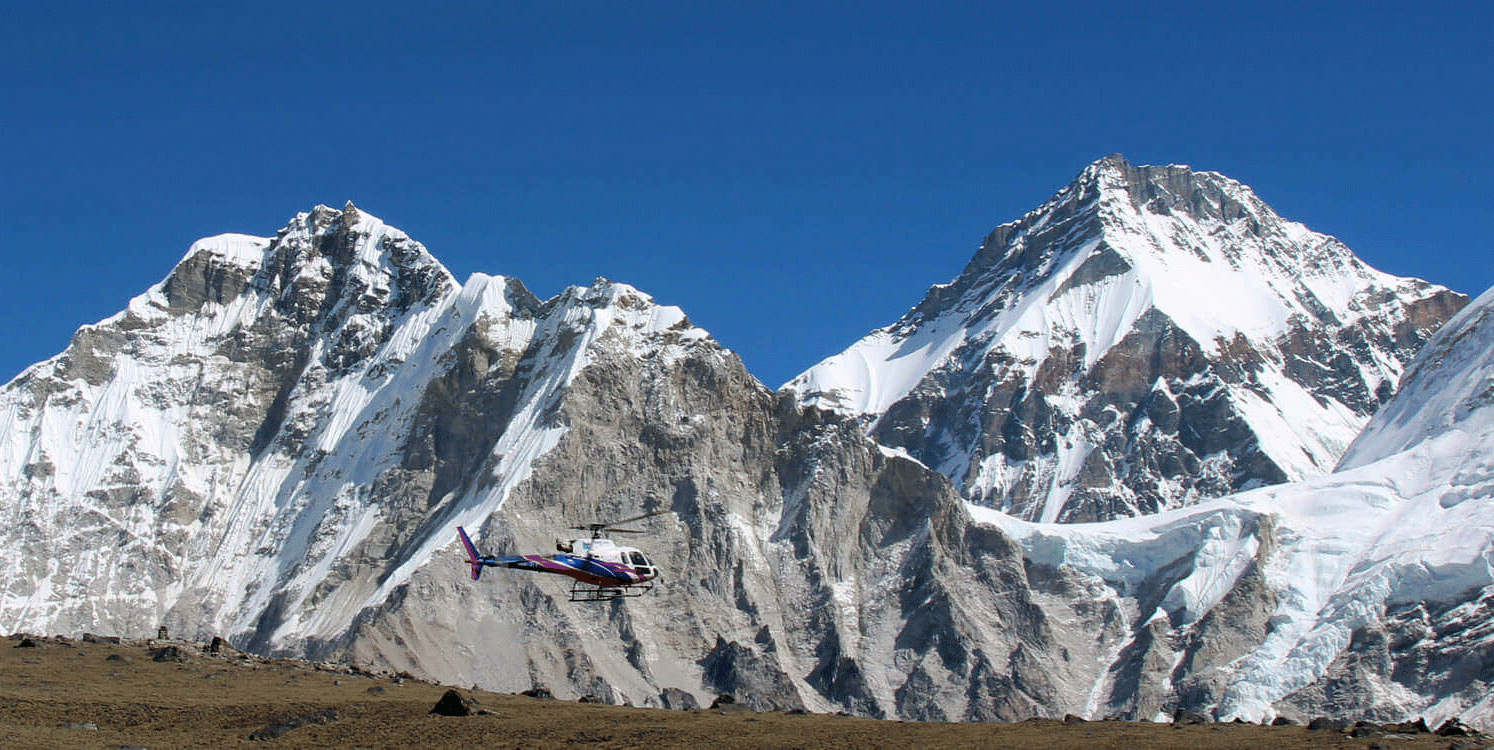
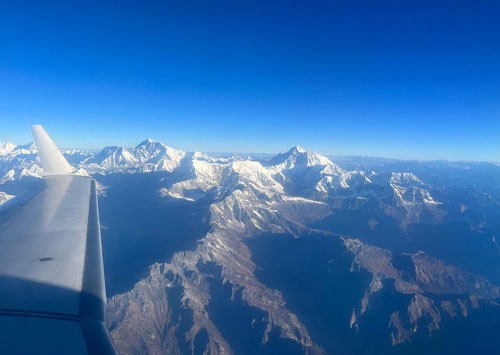
The Everest Base Camp Helicopter Tour is one of Nepal’s most extraordinary Himalayan experiences, a luxury one-day journey that blends adventure, comfort, and dramatic mountain scenery into a single, unforgettable flight. Instead of trekking for nearly two weeks, this helicopter tour takes you straight into the heart of the Khumbu region, offering breathtaking aerial views of Everest, Lhotse, Ama Dablam, Nuptse, Pumori, and the vast glacier systems that define the Everest landscape.

Your day begins at sunrise as the helicopter lifts from Kathmandu, rising above terraced hills, winding rivers, and quiet mountain villages. Within minutes, the noise of the city fades, replaced by sweeping views of the Himalayas glowing in golden light. The transition is almost surreal a peaceful, exhilarating moment that sets the tone for the entire journey.

As the helicopter follows the route toward the Khumbu Valley, you gain a perspective few travelers ever see. Below you are the iconic trekking trails, long suspension bridges, deep forests, and stone-built Sherpa villages framed by prayer flags. From the air, the scale and beauty of the Himalayas reveal themselves more clearly than any ground-level view can offer. This bird’s-eye perspective is one of the reasons travelers describe the flight as one of the most powerful Himalayan experiences available in Nepal.

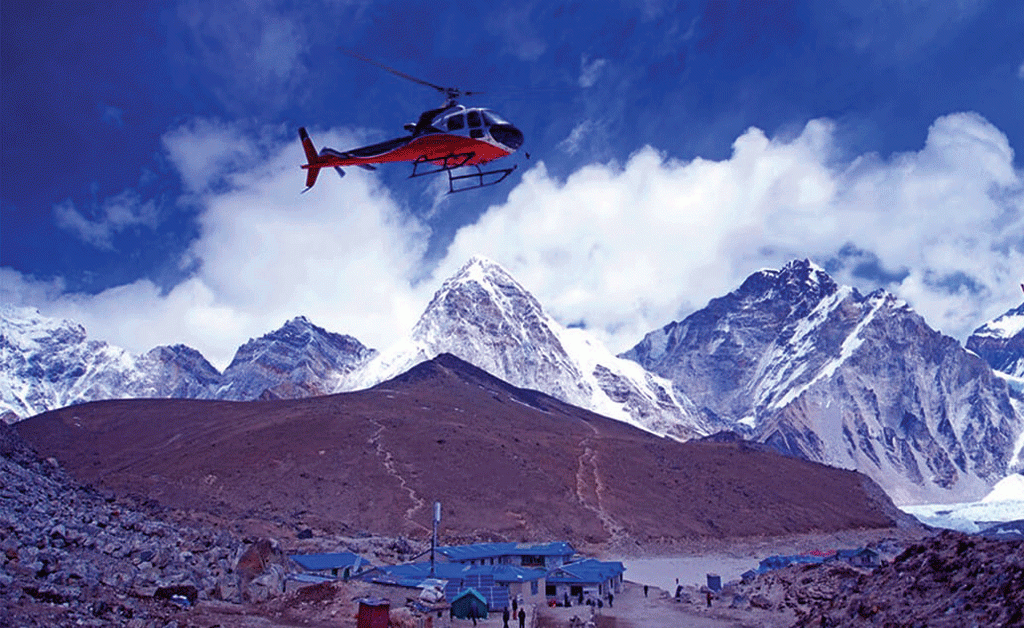
Your first landing is typically at the world-famous Hotel Everest View (3,880 m) a serene, high-altitude viewpoint renowned for its unparalleled panorama. Here you step into fresh mountain air, enjoy tea or breakfast with Everest rising directly in front of you, and take photographs from one of the finest viewpoints in the entire region. Many travelers consider this quiet moment standing on a ridge with Everest in perfect morning light, the highlight of their Nepal adventure.

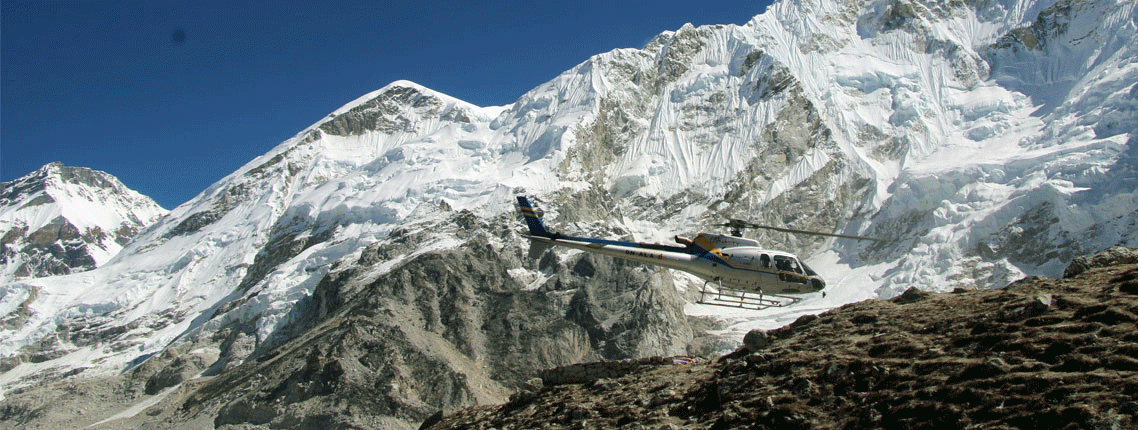
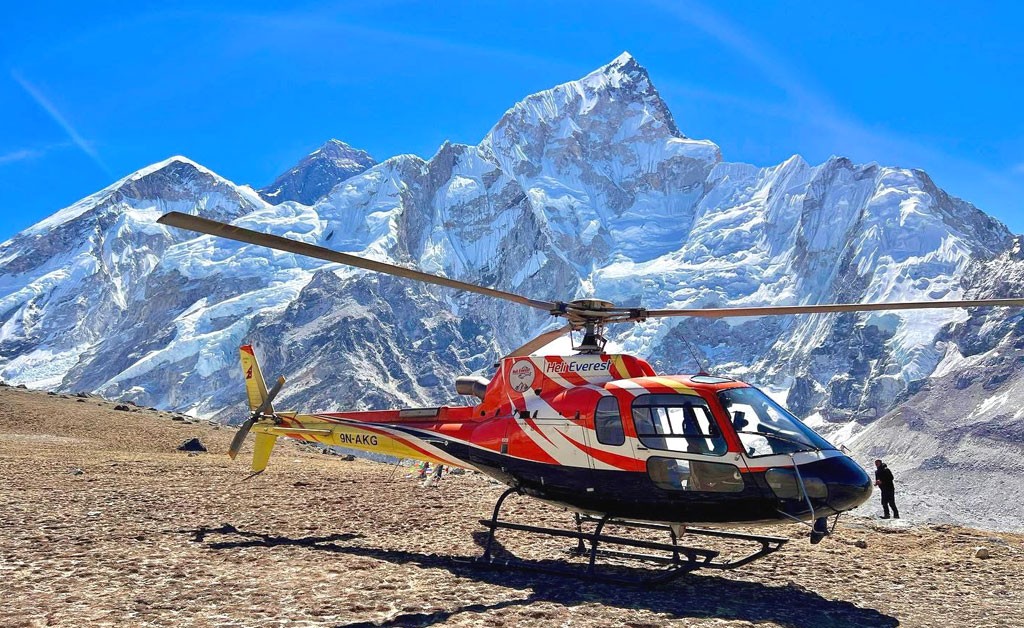
When weather conditions and aviation regulations allow, the helicopter continues toward Kalapathar, the closest and clearest aerial viewpoint of Mount Everest. From this vantage point, you witness the summit pyramid, the sweeping Khumbu Icefall, and the dramatic glaciers that climbers cross on their ascent. Even seasoned travelers say Everest appears far more immense and commanding from the air a visual experience that is difficult to describe until you see it yourself.

Safety is at the core of this tour. All flights are operated by experienced, government-licensed high-altitude pilots who understand Himalayan wind patterns, safe landing windows, and emergency procedures. Helicopters are equipped with oxygen systems, first-aid kits, and weight-balanced seating. Because mountain weather can shift quickly, departures, landings, and route adjustments are made with complete transparency, we communicate honestly with every traveler and prioritize safety above all else.

This tour is ideal for travelers who want to experience Everest but do not have the time or ability to trek for days. It is perfect for families, seniors, honeymoon couples, photographers, business professionals, and anyone dreaming of reaching Everest comfortably and safely. The experience delivers the emotional impact of Everest the silence, the scale, the snow-covered giants without the physical demands of trekking.

What truly enhances this tour is the care and coordination behind the scenes. From hotel pickup to airport assistance, weather checks, permits, safety briefings, and communication with the helicopter crew, our team handles every detail. We work only with trusted operators who maintain strict safety standards and provide pilots trained specifically for mountain aviation.

Whether you are celebrating a birthday, anniversary, proposal, Christmas, New Year, or simply fulfilling a lifelong dream, the Everest Base Camp Helicopter Tour offers a rare chance to witness the world’s highest mountains at their most spectacular. It is a beautifully crafted Himalayan experience designed for travelers who value safety, comfort, luxury, and genuine adventure in one perfect day.

What Makes the Everest Base Camp Helicopter Tour Special

The Everest Base Camp Helicopter Tour stands apart from every other Himalayan experience because it gives travelers a direct, comfortable, and awe-inspiring journey into the Everest region, all within a single morning. Instead of trekking for nearly two weeks through rugged trails and high altitudes, this flight delivers the same legendary scenery with ease, elegance, and an unmatched aerial perspective.

In just a few hours, you soar above the Khumbu Valley, glide past snow-capped giants, and witness iconic landmarks like Everest, Lhotse, Ama Dablam, Nuptse, Pumori, and the Khumbu Icefall from a viewpoint that only a helicopter can provide. The helicopter’s vantage point reveals the incredible scale and beauty of the Himalayas in ways that even trekkers rarely see, making the tour deeply memorable for first-time visitors and seasoned travelers alike.

A major reason this experience is so special is that it’s accessible to everyone. Whether you have limited time in Nepal, prefer not to trek, or simply want the most comfortable way to reach the Everest region, this tour allows you to enjoy world-class mountain views without physical strain. Families with children, senior travelers, honeymoon couples, photographers, and luxury-focused guests all find the flight meaningful, exciting, and surprisingly effortless.

Safety is at the heart of what makes this tour unique. Every flight is handled by experienced, government-licensed mountain pilots who understand high-altitude weather patterns and specialized landing procedures. Helicopters are maintained to strict aviation standards and equipped with oxygen systems and first-aid support. Weather conditions are monitored continuously, and any timing or route adjustments are made with full transparency to ensure a secure, smooth experience.

What truly sets this tour apart is its time efficiency. In a single morning, you cover terrain that trekkers spend 10-14 days reaching. The helicopter journey shows you deep valleys, glacier-fed rivers, Sherpa settlements, monasteries, and expansive mountain walls all from a peaceful, panoramic viewpoint. For many travelers, seeing Everest and its neighboring peaks from the sky feels more powerful than any photograph or story can explain.

The combination of comfort, safety, breathtaking scenery, and thoughtful organization makes the Everest Base Camp Helicopter Tour one of Nepal’s most remarkable short adventures. It’s not just a flight it’s a rare opportunity to witness the world’s highest mountains at their most majestic, without compromise, without exhaustion, and without missing a single moment of beauty.

Everest Base Camp Helicopter Tour With Landing at Kalapathar 

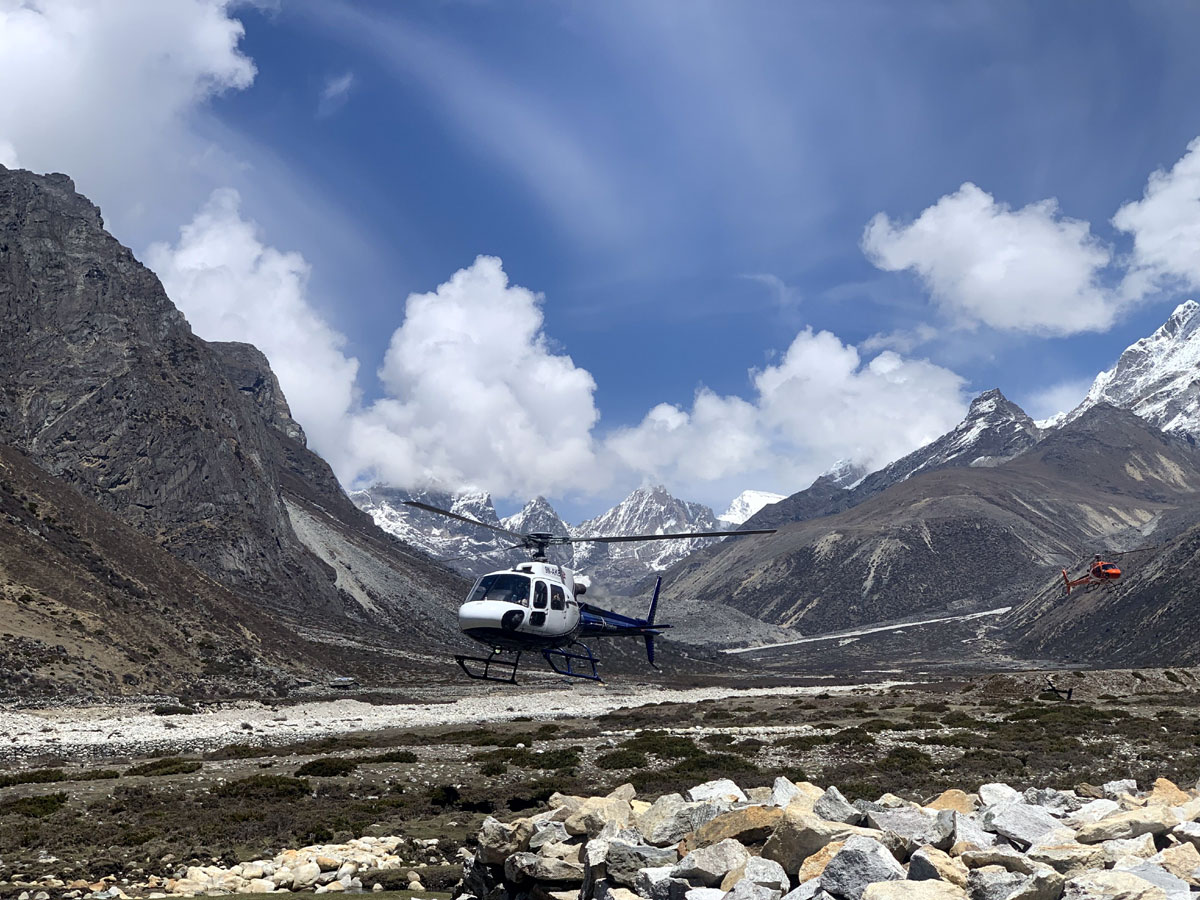
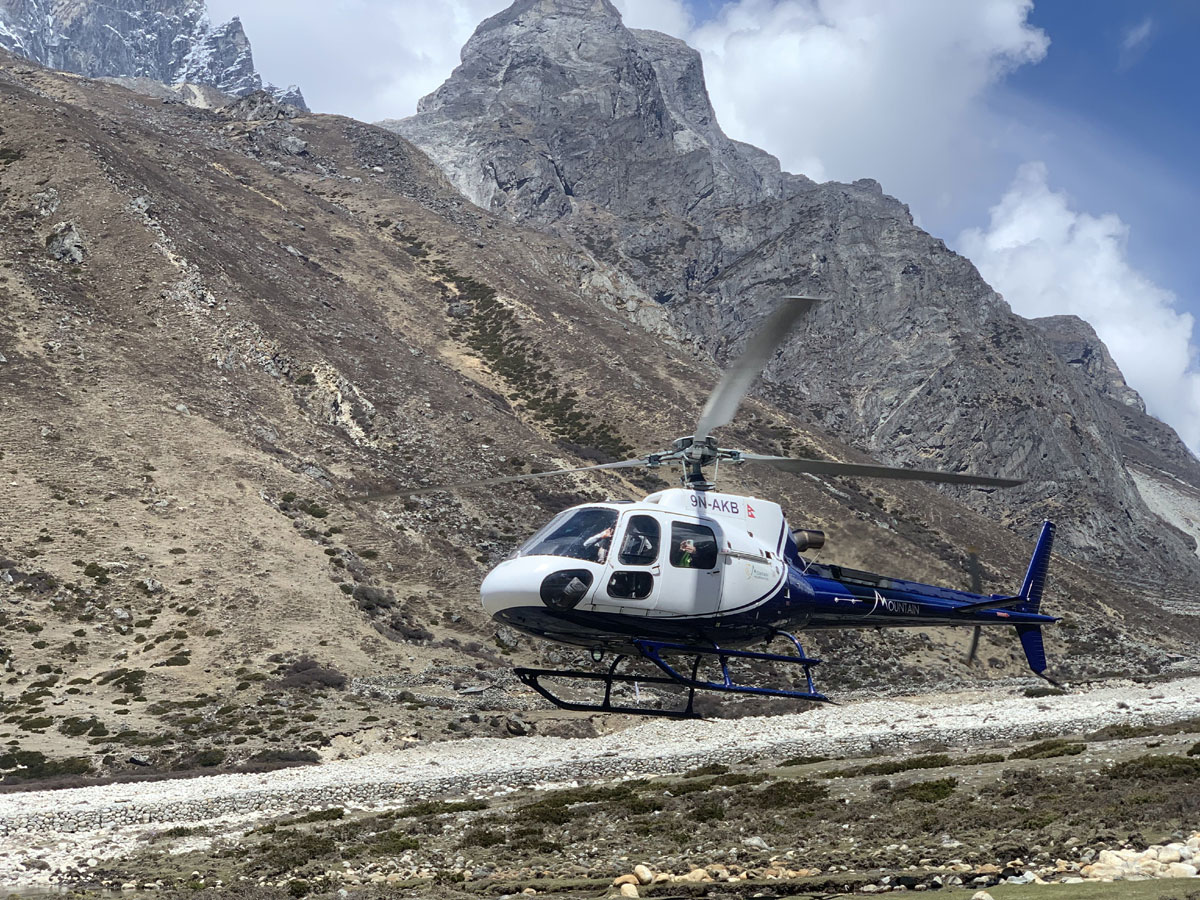
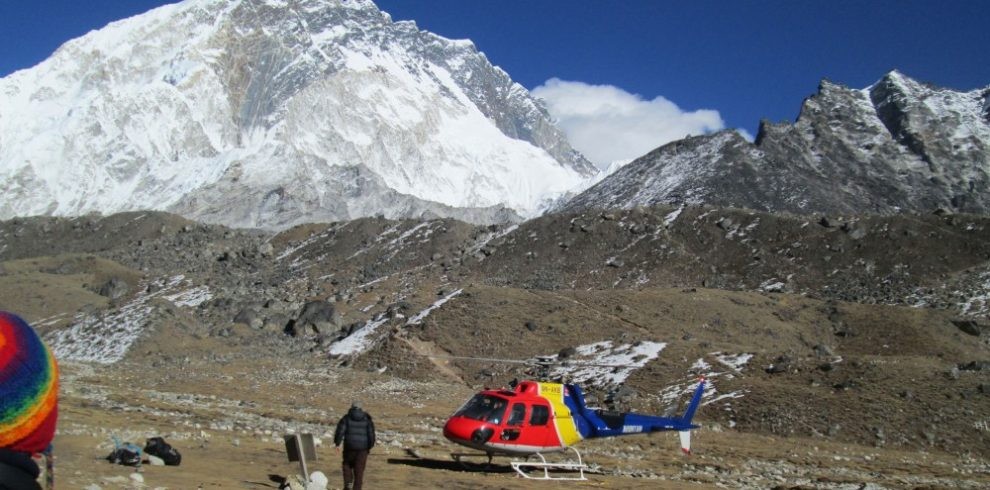
Landing at Kalapathar is the most thrilling highlight of the Everest Base Camp Helicopter Tour,  the moment where travelers get the closest possible view of Mount Everest without trekking for days. And yes, landing at Kalapathar is possible when morning weather, wind, and aviation conditions align. This short but powerful landing gives you a front-row vantage point facing the tallest mountain on Earth, a perspective normally seen only by trekkers who walk all the way to the Everest region.

Kalapathar rises to about 5,545 meters, positioned directly across from Everest, offering a completely unobstructed panorama. Unlike Everest Base Camp itself which sits low inside the valley and does not show the Everest summit clearly, Kalapathar stands high on an exposed ridge. This elevated position provides the most iconic and dramatic view of Everest, making it the top landing point for helicopter tours in Nepal.

Why Kalapathar Offers the Best Everest View

From Kalapathar, you can see:

  • The full summit pyramid of Mount Everest
  • The massive south face glowing in morning light
  • The twisting Khumbu Icefall
  • Lhotse, Nuptse, Pumori, and several 7,000m peaks
  • Glacier-filled valleys spreading in every direction

No other point in the Everest region gives such a complete and powerful perspective. This is the view most travelers imagine when they dream of seeing Everest up close.

Landing Time: Short, Safe & Meaningful

Landings at Kalapathar are brief typically 5 to 10 minutes because of the high altitude and helicopter performance limits in thin air. Even though the stop is short, travelers consistently describe it as breathtaking. Stepping out into the crisp Himalayan air with Everest towering just ahead feels unreal, emotional, and unforgettable. The short stop is intentional: it ensures maximum passenger safety while still giving you enough time to absorb the moment and take incredible photos.

Why Morning Landings Are Best

The chances of landing successfully at Kalapathar are highest early in the morning, when the atmosphere is calm, stable, and clear. Morning flights help avoid:

  • Midday valley winds
  • Rising cloud layers
  • Thermal turbulence
  • Fast-changing weather near the peaks

Sunrise lighting also enhances photography, making Everest look golden, clean, and dramatically defined. For the highest landing success and the best views, we strongly recommend a sunrise departure.

Is Landing Guaranteed?

No operator in Nepal can guarantee a Kalapathar landing every day and any company that promises “100% guaranteed landing” is not being honest. The decision always depends on:

  • Wind speed at the ridge
  • Cloud movement
  • Visibility
  • Temperature
  • Airspace safety protocols
  • Pilot judgment

However, choosing a company with experienced high-altitude pilots significantly increases the chance of landing. Skilled pilots understand micro-weather patterns, know the safest approach lines, and time the landing window precisely during the calm morning hours.

Even on rare days when landing is not possible, the helicopter will still circle the area at close altitude, offering spectacular views of Everest, Nuptse, Lhotse, and the Icefall.

How the Kalapathar Experience Feels

Travelers often describe this moment as:

“life-changing,”

“emotional,”

“like touching Everest with your eyes,”

“the best five minutes of my life.”

The air feels pure and silent, the peaks rise impossibly close, and the world seems frozen in a beautiful stillness. The helicopter sits gently on the ridge while you take photographs, feel the crisp mountain breeze, and admire the grand scale of the Himalayas. It’s an incredibly powerful experience short, but deeply memorable.

Everest Heli Tour for Honeymoon Couples, Families & Luxury Travelers

The Everest Heli Tour has become one of the most loved luxury experiences in Nepal not only for adventurers but for honeymoon couples, families with children, senior travelers, solo explorers, and anyone wanting a comfortable, safe, and unforgettable way to witness the highest mountain on Earth. Unlike trekking, which requires days of walking at high altitude, the helicopter tour makes Everest accessible to everyone, offering world-class views and a peaceful Himalayan atmosphere without physical strain. Whether you’re celebrating love, creating family memories, or fulfilling a lifelong dream, this experience fits beautifully into almost every travel style.

A Once-in-a-Lifetime Honeymoon Moment
For honeymoon couples and those celebrating anniversaries, the Everest Helicopter Tour creates a setting that feels straight out of a dream. As the helicopter rises into the sky and the Himalayan range comes into view, the moment becomes deeply emotional a perfect blend of romance, adventure, and serenity. Many couples describe the first sight of Everest as a shared memory they will treasure forever.

The landing at Everest View Hotel adds a luxurious touch: stepping into crisp mountain air hand-in-hand, sipping warm tea while watching the sun touch Ama Dablam and Everest. Photos taken here often become the most cherished part of a couple’s entire Nepal trip.

Ideal for Families With Children
Parents often look for travel experiences that feel both safe and meaningful and the Everest Helicopter Tour delivers exactly that. Children love the excitement of flying above valleys, seeing hanging bridges, spotting snow-covered peaks, and watching the helicopter gently land near the mountains. The journey is short and comfortable, making it suitable for most ages (usually above 5 years, depending on sensitivity to altitude).

The flight is peaceful, well-regulated, and carefully monitored by the pilot. Families appreciate that the tour requires no trekking, no physical pressure, and no long days at altitude, making it a perfect Himalayan experience even for young travelers.

A Comfortable Experience for Senior Travelers
Many older travelers dream of seeing Everest but hesitate due to the physical challenges of trekking. The helicopter tour removes these barriers completely. Seniors can enjoy:

  • Zero physical strain
  • Minimal exposure to high altitude
  • Comfortable seating
  • A smooth, well-planned itinerary
  • The joy of experiencing Everest without hiking

Morning departures ensure the best conditions, and pilots adjust flight altitude gradually to maintain comfort. For many seniors, this flight becomes the highlight of their entire trip a joyful realization that adventure never has an age limit.

Perfect for Luxury Travelers Seeking Comfort & Exclusivity
For guests who prefer premium travel experiences, the Everest Heli Tour offers the perfect blend of comfort, exclusivity, and adventure. Luxury travelers appreciate:

  • Private or semi-private flight options
  • Priority morning time slots
  • Relaxed landing experiences at Everest View Hotel
  • Soft aerial transitions for gentle viewing
  • A bucket-list adventure completed within a few hours

Emotional, Inclusive & Unforgettable
What makes the Everest Helicopter Tour so special is that it brings the world’s highest mountains within reach of everyone. The experience is peaceful, inclusive, emotional, and deeply moving. Whether you're a couple, a family, a luxury traveler, a senior guest, or someone who simply wants the magic of a Himalayan sunrise without trekking this tour welcomes you fully.

EBC Helicopter Tour for Christmas, New Year & Valentine’s Day

The EBC Helicopter Tour has become a beautiful way for travelers to celebrate life’s most meaningful moments. Whether it’s Christmas morning in the Himalayas, a New Year sunrise above Everest, or a Valentine’s Day adventure with your partner, this experience turns ordinary occasions into unforgettable memories. The peaceful sunrise, the golden glow on Everest, and the quiet air of the Khumbu Valley create a setting that feels magical during international holidays.

Christmas in the Himalayas
Celebrating Christmas in Nepal is becoming increasingly popular among couples and families. The early morning helicopter ride feels festive and warm in spirit, even in the winter chill. Snow-draped peaks reflect morning light like diamonds, and the landing at Everest View Hotel feels like stepping into a winter postcard. Many guests say it is the most meaningful Christmas gift they have ever given themselves.

A New Year Sunrise With Everest
There is no more powerful way to welcome the New Year than watching the first sunrise of the year from the Himalayas. The quiet morning sky, the glowing peak of Everest, and the fresh high-altitude air create a profound feeling of renewal and hope. For travelers seeking something unique — something symbolic — this moment is unforgettable. The New Year Everest flight is also a trending keyword and increasingly sought after.

Valentine’s Day & Romantic Proposals
The Everest region is surprisingly romantic. Valentine’s Day helicopter tours have become popular among couples seeking something extraordinary — a moment that is private, emotional, and truly breathtaking. Many travelers choose this day for marriage proposals, surprising their partner with a ring at Everest View Hotel or during the scenic landing. The natural beauty and stillness of the mountains add a deep emotional layer that makes the moment unforgettable.

Celebrating Birthdays, Anniversaries & Milestones
People also use this flight to celebrate:

  • Birthdays
  • Engagements
  • Anniversaries
  • Graduation trips
  • Retirement journeys
  • Bucket-list achievements

Because the tour requires no trekking, it is perfect for people of all ages including seniors, young couples, and anyone who prefers comfort over strenuous hiking.

Everest Base Camp Helicopter Tour Gift Experience: The Ultimate Surprise for Your Loved One

There are gifts that people enjoy and then there are gifts they remember for the rest of their lives. An Everest Helicopter Tour gift falls into the second category. Whether you’re surprising your partner, parents, children, or a close friend, gifting a flight to the world’s highest mountains carries emotion, meaning, and a sense of adventure that no material present can match. It’s a way of saying: “You deserve something extraordinary.”
Imagine surprising your loved one early in the morning, not with a wrapped box, but with the words: “Today, we are flying to Everest.”
Their reaction excitement, disbelief, joybecomes part of the memory you create together.

A Gift Beyond Expectations
This experience is ideal for birthdays, anniversaries, proposals, graduations, retirements, or simply as a heartfelt gesture to show appreciation. Instead of gifting an object, you are gifting a story one that will be told and remembered for years.
Your loved one will enjoy:

  • A private or semi-private helicopter flight
  • Breathtaking aerial views of Everest, Ama Dablam, Lhotse, and countless peaks
  • A scenic landing for breakfast or tea with a Himalayan panorama
  • A safe, comfortable, and luxurious experience
  • A surprise that feels heartfelt and deeply personal

In a world filled with short-lived material gifts, a helicopter journey over the Himalayas becomes something timeless.

The Emotional Impact of a Surprise Everest Trip
Travelers who receive this tour as a surprise often describe it as overwhelming in the best possible way. The quiet morning air, the golden light over the peaks, and the feeling of rising gently above the valleys create a powerful emotional moment. For couples, this becomes a shared memory that strengthens connection. For parents or grandparents, it becomes a cherished family story. For friends, it becomes a legendary adventure.
Most importantly, the person receiving the gift feels valued because you’ve chosen something meaningful, unique, and unforgettable.

Suitable for All Ages & Personalities
This gift works beautifully for:

  • Your romantic partner (one of the most unique surprises in Nepal)
  • Parents celebrating milestones
  • Children experiencing their first flight adventure
  • Seniors with a lifelong dream to see Everest
  •  LGBTQ+ partners and individuals celebrating love
  • Adventurous friends
  • People who prefer experiences over material things

Because the flight is short, comfortable, and safe, it is accessible to almost everyone.

Luxury, Comfort & Personal Touch
Helicopter tour gifts are special because they combine comfort with awe. The entire experience feels premium from the gentle takeoff to the serene landing at Everest View Hotel. You can personalize the surprise by adding:

  • A celebration breakfast at the landing point
  • A handwritten message
  • A proposal moment
  • A private flight upgrade
  • A birthday cake at the hotel / Kalapathar (upon request)

This makes the experience even more meaningful.

A Gift That Says “You Deserve the Extraordinary”
Whether you are celebrating love, life, or achievement, the Everest Base Camp Helicopter Tour is a profound way to express gratitude and affection. It transforms a simple day in Nepal into a milestone that stays forever in the heart one of those rare experiences that becomes more valuable with time.
If you want to surprise someone with something unforgettable, there is no better gift in Nepal than an intimate, peaceful, beautifully crafted flight to the world’s highest peak.

Is the Mount Everest Helicopter Tour Worth It?

Deciding whether the Mount Everest Helicopter Tour is worth the investment is a common question for travelers planning their first Himalayan adventure. The truth is simple: for many visitors, this flight becomes the most extraordinary experience of their entire Nepal trip. But it depends on what kind of journey you are looking for.

Here is a clear and honest explanation to help you decide.

What Makes the Mount Everest Helicopter Tour Valuable?

A Fast, Effortless Way to Reach the Heart of the Himalayas.
The helicopter gives you access to the Everest region in a way trekking cannot match.
Instead of navigating long days on the trail, you rise above valleys, glaciers, and mountain ridges within minutes.
It’s a rare chance to witness landscapes that would normally require weeks of walking.

Aerial Views You Cannot Get From the Trekking Route
From above, the Himalayas reveal patterns, glaciers, and ridgelines that are impossible to see at ground level. The aircraft circles near Everest and other iconic peaks, offering a perspective that even trekkers at Base Camp do not experience.

A Comfortable Experience for Any Age Group
One of the strongest advantages is accessibility. Anyone who prefers comfort families with children, older travelers, or guests unable to trek can still enjoy a close encounter with Everest without physical strain or multi-day altitude exposure.

A Safe Way to Enjoy High Altitude Scenery

Your time at high elevation is short and carefully controlled.
Pilots monitor weather and visibility throughout the flight, adjusting the route when needed.
For travelers concerned about long treks or altitude risks, this offers a reassuring level of safety.

A Memorable Moment Many Describe as “Unreal”

Standing at a scenic landing point with Everest and its neighboring peaks rising in front of you is a moment people remember for life.
Most guests say the combination of silence, scale, and clear Himalayan light makes the experience feel dreamlike.

When the Tour May Not Match Your Expectations
The helicopter tour is not meant to replace the Everest Base Camp trek.
You should choose the trek instead if you are seeking:

  • A physical challenge
  • Multi-day cultural immersion
  • The feeling of reaching Base Camp on foot

Also, flights may adjust or delay due to weather, something important to understand before booking.

Is the Cost Worth It? 
The tour is priced higher because it involves:

  • High-altitude aircraft designed for mountain environments
  • Skilled pilots with specialized training
  • Strict safety procedures
  • Fuel and operational costs at remote airstrips

For travelers who value comfort, efficiency, and a powerful visual experience, the price reflects the uniqueness of the journey.

Everest Helicopter Tour Highlights

  • Experience Mount Everest up close with breathtaking aerial views of the summit, the Khumbu Icefall, and the surrounding Himalayan giants all in a single morning.
  • Land at Hotel Everest View (3,880 m) for tea or breakfast while enjoying a panoramic window to Everest, Ama Dablam, Lhotse, and the entire Khumbu range.
  • Possible landing at Kalapathar, the closest and clearest viewpoint of Everest, offering unmatched photographic opportunities when weather and aviation conditions allow.
  • Fly over Sherpa villages, suspension bridges, monasteries, and glacier-fed valleys, gaining a complete perspective of the Khumbu region without trekking.
  • Capture world-class mountain photos from inside the helicopter and during scenic landings, perfect for photographers, honeymooners, and families.
  • Enjo a safe flight operated by experienced, high-altitude–trained mountain pilots with oxygen systems and strict weight-balanced seating.
  • Ideal for families, senior travelers, and guests with limited time, offering the Everest experience without long trekking days.
  • Complete the entire journey in a few hours, making it Nepal’s most time-efficient way to reach the Everest region.
  • A premium and comfortable adventure, combining luxury, safety, and Himalayan scenery in one finely crafted experience.

Why Book the Everest Base Camp Helicopter Tour With Us?

Helicopter flights in the Everest region demand precision, experience, and transparency. Not every company follows the same safety standards, and not every operator explains what is truly possible at high altitude. That is why choosing the right company is more important here than almost anywhere else in Nepal.

At Dream Heaven Adventure, our approach is simple:

We tell you exactly what is possible, what is safe, and what is realistic without false promises. No “100% guaranteed landing,” no misleading claims, no hidden conditions. Only the truth.

Travelers trust us because:

We operate with honesty and clarity

From landing possibilities to weather conditions, we explain everything upfront. If the pilot decides a landing is unsafe, we support that decision — because safety always comes before marketing.

We work only with experienced, government-licensed high-altitude pilots

The pilots we operate with have thousands of hours of flight time in the Himalayas. They know the ridgelines, the wind patterns, and the microclimates better than anyone.

We never compromise on safety

Morning departures, proper weight balancing, real-time weather monitoring — everything is done by the book. We do not cut corners to “complete a tour” at the risk of anyone’s wellbeing.

We believe in transparent service

No hidden costs. No surprise charges. Everything is clearly communicated from the start.

We prioritize your experience

Our team plans the flight to give you the clearest views, the safest timing, and the most comfortable overall journey. When conditions allow, you will enjoy the complete itinerary including Kalapathar landing.

We only promise what we can truly deliver

Many travelers appreciate that we don’t oversell or exaggerate. Instead, we focus on delivering a safe, meaningful, beautifully organized experience one that you can trust from start to finish.

We may not call ourselves the best but our honesty, experience, and safety-first approach are why so many travelers trust us for their Everest helicopter journey.

Itinerary

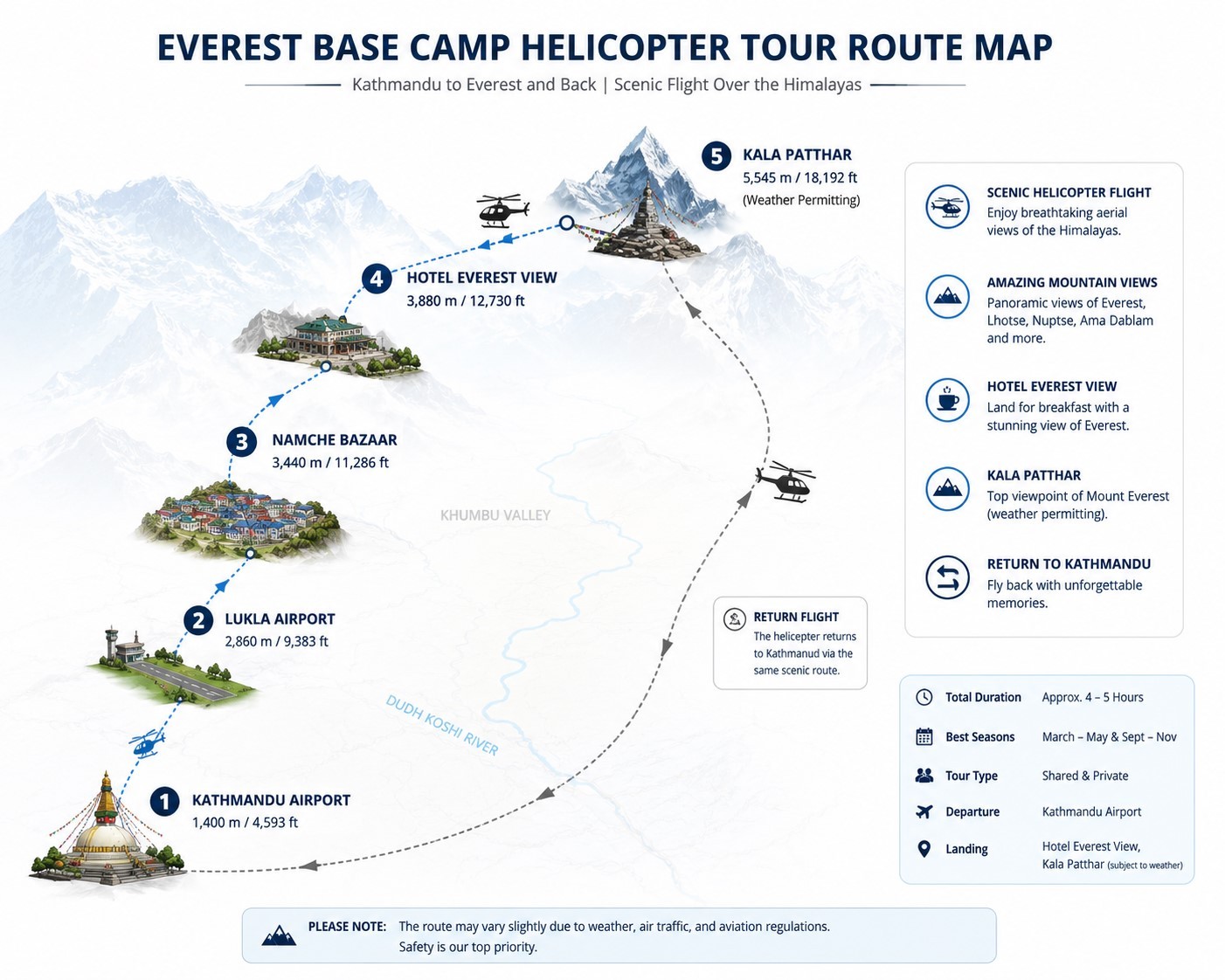
Phase 1: Hotel Pickup & Transfer to Kathmandu Airport (Early Morning -5:30 am to 6:00 am)

Your adventure begins with a comfortable pick-up from your hotel. Our team escorts you to Kathmandu’s domestic terminal, where your pilot and ground staff complete weight checks, safety briefing, and final weather assessments.
This short preparation ensures the flight remains smooth, safe, and perfectly timed with the Himalayan sunrise.

Phase 2: Helicopter Flight from Kathmandu to Lukla (Gateway to Everest)

As the helicopter lifts off, Kathmandu fades into the distance and the landscape changes dramatically-lush hills, terraced fields, deep river valleys, and ridgelines glowing in morning light.
The approach to Lukla Airport (2,860 m) is a highlight in itself, offering your first close views of mountain terrain and Sherpa settlements.

A short refueling stop allows you to stretch, take photos, and enjoy the fresh mountain air.

Phase 3: Scenic Flight from Lukla to Everest Region

From Lukla, the scenery intensifies.

You fly deeper into the Khumbu Valley, passing above:

  • Namche Bazaar
  • Tengboche Monastery
  • Pangboche
  • Ama Dablam Base Camp
  • Khumbu Glacier valleys

As the helicopter climbs higher, the snowy peaks dominate the horizon. Many travelers say this is one of the most beautiful flight routes on Earth.

Phase 4: Optional Landing at Kala Patthar (Weather & Weight Permitting)

Kala Patthar (5,545 m) offers the closest possible view of Mount Everest’s summit, making it the dream moment of this tour.

Landing here is not guaranteed: weight, wind, and aviation rules decide, but when conditions allow, it is truly unforgettable.

If landing is approved (extra landing cost applies):

  • Step onto a snowy ridge
  • Feel the crisp Himalayan wind
  • Capture the famous panoramic view: Everest, Lhotse, Nuptse, Pumori
  • Enjoy a rare vantage point even trekkers don’t always experience

If landing isn’t possible, the helicopter performs a slow, close aerial viewing loop, giving you a clear and breathtaking view of Everest’s summit and the Khumbu Icefall.

Phase 5: Landing at Hotel Everest View (Breakfast Stop)

Next, your helicopter lands at the iconic Hotel Everest View (3,880 m) once listed in the Guinness Book of World Records for its altitude.

Here you enjoy:

  • Warm tea or coffee
  • A light breakfast (optional)
  • Wide panoramas of Ama Dablam, Thamserku, Lhotse, and Everest
  • Calm Himalayan atmosphere ideal for photos

This stop also allows your body to relax at a safer altitude after the high-altitude flight.

Phase 6: Return Flight to Lukla for Refueling

After breakfast and stunning photographs, the helicopter descends back toward Lukla.
The return flight feels peaceful, with changing light illuminating the ridges differently than earlier in the morning.

A short refueling stop is made before returning to Kathmandu.

Phase 7: Final Flight Back to Kathmandu

The last flight segment glides back toward Kathmandu, giving you another chance to enjoy Nepal’s varied landscapes from above lush valleys, small villages, terraced fields, and winding rivers.

Upon arrival, our team will escort you back to your hotel.

Most travelers describe this moment as a blend of joy, gratitude, and disbelief that such a breathtaking experience fits into half a day.

    Note

    Flight timings and landings may vary depending on weather, visibility, and air traffic at Kathmandu and Lukla airports. The itinerary is a general guideline, and adjustments may be made by the pilot for safety and operational reasons.

    Cost Details

    Includes

    • Pick up and drop to your hotel
    • All service charges and airport taxes
    • 4 to 5 hours helicopter flight tour
    • All landing Charges

    Excludes

    • All kinds of foods and drinks ( Tea/Coffee)
    • National park entry permits ( if applicable)
    • Local developers tax 2000 NPR (if applicable)
    • Other expenses not mentioned in cost include

    Good to Know

    Safety, Weather & Flight Conditions for the Everest Base Camp Helicopter Tour

    Flying into the Everest region requires careful planning, expert piloting, and favorable weather. Helicopter flights operate only when conditions are safe, clear, and stable. This section explains how safety, weather, and altitude influence your experience so you know exactly what to expect.

    Safety First: Experienced Pilots & High-Altitude Helicopters

    All flights are operated by licensed, mountain-trained pilots who have years of experience navigating the Khumbu region. These aircraft are equipped for high-altitude performance and include supplemental oxygen systems. Before every flight, pilots review weight limits, weather patterns, wind speeds, and visibility to ensure the safest flight path.

    Weather in the Everest Region Changes Quickly

    The Himalayas are known for unpredictable conditions. Even on clear mornings, weather can shift rapidly at higher altitudes. Because of this:

    • Flights operate mainly in the early morning, when the mountains are most stable.
    • Delays or schedule adjustments may occur due to visibility, clouds, or wind.
    • Safety decisions are made entirely by the pilot and aviation control for your protection.

    This is standard for all reputable helicopter operators in Nepal.

    Kala Patthar Landing Depends on Conditions

    A landing at Kala Patthar (5,545 m) offers one of the best views of Everest, but it is never guaranteed. It depends on:

    • Wind speed
    • Weight balance
    • Visibility
    • Air pressure
    • Aviation rules on that specific day

    When landing isn’t possible, the pilot performs a slow, close-range aerial viewing, giving you clear, breathtaking views of Everest and the Khumbu Icefall.

    Weather Windows Matter

    The best months for reliable flight conditions are:

    • March-May (Spring)
    • September-December (Autumn & early winter)

    These seasons generally provide clear skies, stable winds, and crisp mountain visibility ideal for helicopter tours.

    Weight Limits & Seating Arrangements

    Helicopters flying above 4,000 m must follow strict weight rules. At certain altitudes, passengers may be shuttled in small groups to ensure safe landings and take-offs. This is standard procedure for all high-altitude flights in Nepal.

    Your Pilot Has the Final Say

    For safety reasons, the pilot will decide:

    • Whether flying is possible
    • Whether landing can be attempted
    • Which routes provide the safest viewing
    • Whether weather conditions require rerouting or delay

    This ensures every flight prioritizes safety over schedule.

    Private Charter vs Group Sharing – Which Everest Helicopter Experience Do We Recommend for You?

    Choosing between a private charter and a group sharing flight is one of the biggest decisions travelers make before booking an Everest helicopter tour. Both options reach the same spectacular Himalayan views, but the overall experience, comfort, timing, and flexibility can feel very different. Based on years of operating flights in the Everest region, here is our expert, experience-based guide to help you decide which option suits you best.

    Private Everest Helicopter Charter

    A private charter means the entire helicopter is reserved for you and your group, making the journey much more personal and relaxed. This is the option we usually recommend for travelers who want a smoother, quieter, and more flexible experience.

    In a private charter, the pilot adjusts the timing, seating, and flight pace according to your needs. You don’t wait for other passengers, you don’t rotate seats unless you want to, and you enjoy a calmer environment for photography and scenic viewing. This is especially valuable around Kala Patthar, where weight balance is critical fewer passengers often mean a closer, smoother flyover and better chances of taking clear photos of Everest’s summit and the Khumbu Icefall.

    Private flights are also ideal for families with senior members, honeymoon couples who want a memorable and intimate Himalayan moment, and photographers who need steady angles without pressure from other passengers. Many travelers describe private charters as peaceful, emotional, and far more immersive than expected the type of experience where you truly absorb the magnitude of the mountains around you.

    The only drawback is the higher cost. But if comfort, privacy, and flexibility matter to you, the investment is fully worth it.

    Group Sharing Everest Helicopter Tour

    Group sharing flights are the most common way travelers experience Everest by helicopter. You share the aircraft with other passengers, which significantly reduces the price while still offering the same incredible mountain views.

    This option works best for solo travelers, friends, and budget-conscious visitors. It’s a lively, social experience many travelers enjoy meeting new people and sharing the excitement together. You follow a fixed schedule, the pilot rotates seats so each person gets window views, and the entire journey is organized to keep things smooth and fair for everyone.

    Because weight limits must be balanced across all passengers, group flights sometimes use shuttle systems at higher altitudes for example, splitting groups into two lighter segments for the Kala Patthar loop. This is standard practice and ensures both safety and performance.

    If you want the Everest experience at the best price, group sharing is the perfect choice.

    Which Option Gives the Best Views?

    Both flights offer outstanding views of Everest, Ama Dablam, Nuptse, Lhotse, Pumori, and the Khumbu Glacier. However:

    • Private flight: You control seating, timing, and photo stops the experience feels smoother and more personal.
    • Group flight: You still see everything, but seat rotations and shared timing influence the flow of the journey.

    For serious photographers or couples wanting uninterrupted views, private charter is clearly the better choice.

    Our Honest Recommendation as Experts
    After handling thousands of Everest helicopter flights, here’s our clear and experience-based advice:

    Choose Private Charter for:

    • Couples, honeymooners, families, seniors
    • Travelers who want more comfort and flexibility
    • Photographers needing stable, uninterrupted shots
    • Guests who prefer quiet, private moments in the mountains
    • Anyone who wants the best possible chance for a Kala Patthar landing

    This is the most premium and rewarding way to experience Everest.

    Choose Group Sharing for:

    • Solo travelers and small groups
    • Travelers looking for the most budget-friendly option
    • Guests who simply want to enjoy the views without needing privacy
    • Anyone comfortable with shared seating and scheduled timing

    Best Time for the Everest Helicopter Tour

    The Everest Base Camp Helicopter Tour operates year-round, but the best time to enjoy clear mountain views, stable weather, and safe flying conditions is during the major trekking seasons: spring (March-May) and autumn (September-December). These months offer bright skies, calm morning winds, and excellent visibility the perfect conditions for a smooth and scenic Himalayan flight.

    March to May (Spring Season)

    Spring is one of the most popular periods for helicopter tours. The mornings are crisp, the skies are generally clear, and the temperature is comfortable for landing at higher altitudes. The hills bloom with rhododendrons, and the views of Everest, Lhotse, Ama Dablam, and the glaciers are exceptionally sharp. This is also the season when many Everest expedition teams set up at Base Camp, adding an exciting atmosphere to the region.

    September to December (Autumn & Early Winter)

    Autumn offers the clearest and most reliable weather of the entire year. Rain has washed away dust and haze, leaving the mountains looking sharp and dramatic. From late September to December, the visibility is outstanding, making it ideal for photography and Kalapathar landing opportunities. Early winter flights (December) are cold but often incredibly clear, with striking blue skies and still mornings.

    January & February (Winter Mornings)

    Flights are still possible in winter, and the morning views are often breathtakingly clear. However, temperatures can be extremely cold at high altitude, and weather conditions may change quickly. If you’re prepared for cold weather and flexible with timing, winter mornings can offer some of the best panoramas of the year.

    June to August (Monsoon Season: Less Preferred)

    Helicopter flights to Everest do operate during monsoon, but this period is not ideal due to unpredictable clouds, rain, and low visibility. Short windows of clear weather do open after rainfall, but flights may experience delays or rescheduling. Travelers with flexible schedules can still enjoy the tour, but it is not recommended for fixed itineraries.

    Final Note
    If your schedule is flexible, aim for spring or autumn. If you want the sharpest visibility, choose October, November, or early December. With our experienced team closely monitoring weather patterns and working with skilled high-altitude pilots, we ensure your Everest Helicopter Tour is safe, smooth, and unforgettable no matter which season you choose.

    Sunrise vs. Daytime Flights: Why Morning Departures Are Always Best for the Everest Helicopter Tour

    For anyone planning the Everest Helicopter Tour, one of the most important questions is whether to fly at sunrise or later in the day. While flights occasionally operate mid-morning, every experienced pilot, aviation authority, and mountain guide agrees on one thing: sunrise flights are always the safest, most scenic, and most reliable choice in the Himalayas. The Everest region is known for dramatic shifts in weather, light, and wind patterns, and the early hours offer the calmest atmosphere and the clearest mountain views. Understanding why morning flights perform so much better will help you plan a smooth, trouble-free experience and enjoy the most breathtaking scenery possible.

    The Himalayan Atmosphere Is Most Stable at Sunrise

    In high-altitude environments, the early morning hours are the quietest. Overnight, the atmosphere cools and settles, creating a stable pocket of air across the Khumbu Valley. Winds remain gentle, visibility stretches for miles, and mountain contours appear sharp and detailed without haze. This natural stability makes the sunrise window the most predictable time to fly.

    As morning progresses, sunlight warms the ground, especially in deep valleys. Warm air rises and mixes with colder air from the glaciers, creating turbulence, shifting clouds, and occasional wind gusts. These natural changes become more pronounced after 10:00 AM. For helicopter operations in mountainous terrain, even minor shifts in airflow can affect comfort and timing, which is why pilots always prefer the earliest possible slot.

    Everest Looks the Most Beautiful at Sunrise

    Photographers, pilots, and trekkers all agree: the Himalayas glow in a special way during sunrise. The soft golden light highlights the snow ridges of Everest, Lhotse, Ama Dablam, Nuptse, and the surrounding peaks. Shadows are long and gentle, adding depth and texture to the landscape. Glacier formations reflect the morning sun like crystals, and the sky appears crisp and clean.

    This combination creates some of the best mountain photography conditions in the world. Travelers often say the sunrise views feel surreal almost like watching the Himalayas wake up slowly, with colors changing every second as the light hits new ridges and valleys.

    Fewer Clouds Means Better Views

    Cloud formation in the Himalayas follows a very consistent pattern. The evenings are often clear, nights become cold, and mornings begin with wide open skies. As the sun climbs higher, moisture evaporates, forming low and mid-level clouds that gradually rise through the valleys. Lukla, Namche, Tengboche, and even the high valleys near Base Camp can become partially covered.

    By flying at sunrise:

    • You avoid the late-morning cloud build-up
    • You have clearer views of Everest and the Khumbu Glacier
    • You maximize the chances of stable flying conditions
    • You reduce the need for route or timing adjustments

    This is one of the reasons sunrise flights have the highest success rate for completing the full Everest itinerary.

    Morning Flights Are Safer for High-Altitude Aviation

    Safety is the top priority for all helicopter operations in Nepal. The early hours offer consistent visibility and predictable winds key factors for operating comfortably near high mountain ridges and landing sites like Syangboche. The cooler morning temperature also helps helicopter engines perform more efficiently at altitude, allowing safer ascent and descent patterns.
    Aviation protocols in Nepal strongly support morning departures for Everest flights, and many operators do not fly the mountain leg after mid-morning unless conditions are exceptionally favorable. Flying early reduces:

    • Turbulence
    • Wind shifts
    • Weather changes
    • Cloud obstructions
    • Landing risks

    When Is Visibility Best in the Everest Region?
     
    Clear visibility is the heart of every Everest Base Camp Helicopter Tour. Travelers often wonder when the mountains look the sharpest, when the air is the cleanest, and which time of day gives the most breathtaking views. After years of mountain operations and real-time experience in the Khumbu region, one answer stands above all: visibility is almost always best during the early morning hours. The Everest region follows a unique weather rhythm shaped by altitude, wind, temperature, and the terrain’s dramatic rise from deep valleys to towering 8,000m summits. Understanding why mornings offer the clearest skies will help you plan the perfect helicopter adventure.

    Why Visibility Peaks During the Early Hours
    The Himalayas undergo strong temperature contrasts between day and night. After sundown, the air cools rapidly and settles, especially in high valleys and glacier basins. Overnight, the atmosphere becomes stable, moisture condenses and sinks, and winds calm significantly. By the time the sun rises, the entire Khumbu region from Lukla to Everest and beyond sits under a pocket of clear, crisp air.

    This early-morning atmospheric stability reveals every detail of the landscape: from the jagged ridges of Ama Dablam to the long, sweeping glaciers around Lhotse and Everest. Trekkers who have walked the region often say sunrise brings a “diamond clarity” to the mountainscolors are more vibrant, shadows more defined, and visibility stretches for dozens of miles.

    Travelers often describe the early-morning view as “unreal,” “like watching the world wake up,” or “better than any photo.” The ability to see Everest standing tall without clouds, haze, or wind interference creates an emotional connection many guests never forget.

    What to Wear & Packing Tips for the EBC Helicopter Tour

    Although the Everest Helicopter Tour is short and comfortable, temperatures can change quickly as you gain altitude. Dressing properly ensures you stay warm and relaxed throughout the flight, especially during landings at higher elevations.

    Dress in Warm, Layered Clothing

    The weather at higher altitudes especially around Kala Patthar and Everest View Hotel can be cold even on sunny mornings. The best approach is layering:

    • Base Layer: Light thermal top
    • Mid Layer: Fleece or warm jacket
    • Outer Layer: Windproof or down jacket
    • Pants: Warm trekking pants or insulated trousers

    Layers allow you to adjust your clothing quickly as temperatures shift.

    Wear Proper Footwear

    You don’t need trekking boots, but you should wear:

    • Comfortable sports shoes or hiking shoes
    • Warm socks (preferably wool)

    Snow can be present around Kala Patthar, so closed footwear is recommended.

    Essential Accessories

    These small items make a big difference:

    • Warm hat or beanie
    • Neck buff or scarf
    • Lightweight gloves
    • Sunglasses (high UV protection)
    • Sunscreen (the sun is strong at altitude)

    The helicopter windows magnify sunlight, so sun protection is important.

    Small Daypack (Recommended)

    Carry only the essentials:

    • Passport (or a copy)
    • Water bottle
    • Phone and camera
    • Power bank
    • Light snacks if you prefer
    • Personal medications

    Large bags are not allowed due to weight limits.

    Keep Cameras & Phones Ready

    You will get incredible photos during:

    • Lukla approach
    • Ama Dablam valley
    • Khumbu Glacier
    • Kala Patthar aerial loop
    • Everest View Hotel

    Make sure your devices are fully charged before the flight.

    Real Traveler Tip: Temperatures inside the helicopter remain normal, but landings at high altitude can feel very cold. A warm jacket and gloves make your short time outside much more enjoyable.

    Helicopter Tour to Everest Base Camp With Landing Options

    The Everest Base Camp Helicopter Tour offers some of the most dramatic mountain views in Nepal, but landing options in the Everest region depend on weather, visibility, wind, and aviation regulations. For your safety, every landing is approved by the pilot and air traffic control on the day of the flight. Below is a clear explanation of what is normally included and what is available as an optional request.

    Standard Landing: Hotel Everest View (Syangboche 3,880 m)

    This is the primary and most reliable landing point for all Everest helicopter tours. After flying deep into the Khumbu Valley, the helicopter lands at Hotel Everest View, where you can step out, enjoy stunning Himalayan panoramas, take photos, and optionally have tea or breakfast.

    This stop is comfortable, safe, and perfectly positioned for viewing:

    • Everest
    • Lhotse
    • Ama Dablam
    • Thamserku
    • Khumbu Valley landscapes

    This landing is almost always included, making it the highlight for most travelers.

    Everest Base Camp & Kala Patthar Flyover (Included)

    All Everest helicopter tours include a scenic flyover around the Everest Base Camp region. This gives you incredible aerial views of:

    • Everest Base Camp area
    • Khumbu Icefall
    • Western Cwm
    • Kala Patthar ridge
    • Glacial rivers and high Himalayan terrain

    This part of the tour is breathtaking and allows you to see the Everest region from angles impossible on foot.

    Optional Kala Patthar Landing (Weather & Regulations Dependent)

    A Kala Patthar landing provides the closest viewpoint of Mount Everest’s summit but it is not always allowed. Due to changing aviation regulations, strong winds, and extreme altitude, landing at Kala Patthar can only happen when:

    • Weather is perfectly stable
    • Visibility is clear
    • Weight limits allow safe touchdown
    • Aviation control approves it
    • Pilot confirms safe conditions

    Because of this, Kala Patthar landing is available as an optional, extra-cost request, and never guaranteed. When permitted, landing time is very short (5-10 minutes) due to altitude.

    If landing isn’t possible, you still enjoy a slow, close aerial loop around Kala Patthar, giving you unmatched views of Everest’s summit.

    Why Landings Can Change in the Everest Region

    High-altitude aviation requires strict adherence to safety guidelines. Landing conditions can change based on:

    • Sudden weather shifts
    • Strong winds near ridgelines
    • Cloud cover
    • High-altitude aircraft performance
    • Passenger weight balance
    • Updated aviation rules

    The pilot always makes the final decision to protect your safety.

    Our Commitment to Clarity & Safety

    To ensure transparency, we always present landing options honestly:

    • Guaranteed: Landing at Hotel Everest View / Syangboche
    • Included: Everest Base Camp & Kala Patthar flyover viewing
    • Optional: Kala Patthar landing (extra cost, only if permitted & safe)
    • Your safety comes first, and we follow the strictest operational standards for high-altitude flights.

    Landing locations may vary depending on weather, visibility, and aviation rules. The pilot has full authority to adjust landing points for your safety.

    FAQs

    • Q1. How long does the Everest Base Camp Helicopter Tour take?

      he entire experience typically lasts 4-5 hours, starting and ending in Kathmandu. The helicopter flies from Kathmandu to Lukla, refuels, then continues toward the Everest region with scenic stops at Hotel Everest View and sometimes Kalapathar. The flight time itself is only 1.5-2 hours, with the rest of the time spent on landings, photos, tea or breakfast, and safety checks. This makes it one of Nepal’s most time-efficient Himalayan adventures ideal for travelers with tight schedules, business travelers, seniors, families, or anyone who wishes to see Everest without trekking for days.

    • The best months are March-May (spring) and September-December (autumn/winter). During these seasons, the skies are clear, visibility is excellent, and winds are generally stable in the early morning. Spring offers colorful landscapes and mild temperatures, while autumn brings the crispest views of Everest and the Khumbu Valley. Winter also provides exceptionally clear mornings but can be colder. The monsoon months (June-August) bring clouds and rain, reducing flight opportunities, though short weather windows still occur. Regardless of the month, morning flights are always recommended, as conditions are calmest and safest at sunrise

    • The helicopter typically flies between 12,000 and 18,000 feet (3,500-5,500 meters), depending on weather, air traffic, and landing permissions. The highest point is the Kalapathar landing zone, located around 5,545 meters. While flying, passengers remain comfortable because the helicopter ascends gradually, and oxygen is available if needed. The aircraft stays high enough to provide incredible mountain views while maintaining safe altitude margins. Pilots monitor wind, cloud movements, and air density continuously, adjusting altitude as needed to ensure a smooth, safe experience

    • Altitude sickness risk is minimal because you spend very little time at high elevation. Landings at Kalapathar are kept to 5-10 minutes, which is too short for symptoms to develop. Your time at Everest View Hotel is significantly lower at 3,880 meters, where most travelers feel completely comfortable. If anyone experiences mild dizziness, discomfort, or shortness of breath, the helicopter can quickly descend to a safer altitude. Oxygen support is available onboard as a precaution. This makes the helicopter tour a perfect option for travelers who want Everest views without trekking at altitude

    • The most commonly used aircraft is the Airbus H125 (AS350 B3e) one of the world’s best-performing helicopters for high-altitude operations. It holds the record for the highest landing ever made by a helicopter and is specifically built for thin-air performance. These helicopters have powerful engines, advanced rotor systems, weight-balancing controls, and quick-response maneuvering capabilities. They are used by professional rescue teams, mountaineers, and Himalayan aviation companies because of their reliability, strength, and safety. All aircraft undergo routine maintenance, pre-flight inspections, and strict airworthiness checks before flying to the Everest region

    • Most helicopters seat 5 passengers plus 1 pilot. However, due to weight restrictions in high-altitude areas, the helicopter may split the group into two shuttles after Lukla or Pheriche. This ensures safe performance when flying toward Everest View Hotel and Kalapathar. Group joining options are available for solo travelers or couples who want to share costs, while private charter flights are ideal for families, honeymooners, and photographers. Weight distribution is carefully managed, and passengers may rotate seats for equal scenic viewing time. Operators always follow strict aviation protocols to guarantee safety.

    • Wear warm, layered clothing because temperatures in the Everest region can be cold, especially in the morning. Recommended items include: a thermal base layer, fleece or down jacket, windproof outer shell, gloves, warm hat, sunglasses, scarf or buff, and sturdy shoes. Even though you spend limited time outside, the wind at Kalapathar and the general mountain climate can be chilly. Also bring sunscreen, lip balm, and a fully charged camera or phone. Dressing in layers ensures comfort as temperatures shift throughout the flight.

    • If the weather is not suitable for safe flying, the flight may be delayed, rescheduled for a later time, moved to another day, or refunded according to the company's policy. Mountain weather changes quickly, and pilots make decisions based strictly on safety and visibility. If the sky is clear in Kathmandu but cloudy in the Everest region, flights will not proceed. Travelers appreciate that rescheduling ensures safety and better viewing conditions. Good companies provide transparent updates so passengers know exactly what to expect.

    • Absolutely. A private charter is ideal for couples, families, honeymooners, photographers, and luxury travelers who want personalized timing, maximum comfort, and exclusive seating. Private flights allow more flexibility in landing windows, photo time, and route adjustments, depending on weather. You have the entire aircraft to yourself, and the pilot can focus entirely on your group. Many travelers choose private charters for anniversaries, proposals, birthdays, or special celebrations. It is the most premium way to experience Everest.

    • The cost typically includes the helicopter flight, airport transfers, all necessary permits, seat insurance, fuel surcharges, pilot fees, and company service charges. Breakfast at Everest View Hotel, government taxes, and landing fees (if applicable) are usually included or clearly mentioned in the package. Optional extras may include private flight upgrades, window seat purchases, oxygen rental (usually free), or additional photo time if conditions allow. We ensure transparent pricing with no unexpected charges everything is explained clearly before booking.

    • Most flights depart between 5:30 AM and 6:30 AM, depending on the season and weather. Early morning departures are chosen because winds are calmer, visibility is clearer, and the Himalayan atmosphere is most stable. This timing greatly increases the chance of landing at Everest View Hotel or Kalapathar. Morning light also provides the best photographic conditions, illuminating Everest with a golden glow. Travelers are usually picked up from their hotel about 1-1.5 hours before departure to ensure smooth check-in and safety briefings.

    • The typical stop at Everest View Hotel lasts 30-60 minutes, depending on weather and air traffic regulations. This allows enough time to enjoy breakfast or tea while admiring panoramic views of Everest, Ama Dablam, Lhotse, and surrounding peaks. The hotel sits at a comfortable altitude of 3,880 meters, making it an ideal location to step outside, take photos, and relax in the mountain atmosphere. The duration may be shortened if weather conditions change, but pilots always ensure you have sufficient time to enjoy the viewpoint.

    • Helicopters must maintain precise weight balance to operate safely, especially at high altitude. Passengers are weighed before boarding, and seating is assigned accordingly. If the total weight exceeds safe limits, the group may be split into two shuttles from Pheriche or Everest View Hotel. This is normal for mountain flights. The pilot and ground crew manage these decisions professionally to ensure stability and safety during takeoff, landing, and mid-air maneuvering.

    • Generally, drones are not allowed in the Everest region due to national park regulations, air traffic safety, and risk of interference with helicopter operations. Flying drones near landing zones especially Kalapathar or Everest View Hotel is strictly prohibited. Unauthorized drone use can lead to fines or legal issues. However, you can bring high-quality cameras, GoPros, or smartphones for photography. The helicopter windows offer excellent visibility for aerial filming.

    • Yes, many travelers with height anxiety enjoy the helicopter tour comfortably. The aircraft interior feels secure, and the flight path is smooth due to calm morning air. The large windows allow you to admire views without feeling exposed, and pilots maintain gradual ascents to avoid discomfort. If you feel nervous, you may request a seat further from the window or speak with the pilot before takeoff. Most travelers say the beauty of the mountains quickly replaces any fear.

    • If you feel unwell, inform the pilot or crew immediately. The heli can descend to a lower altitude within minutes. Altitude-related discomfort is rare due to the short exposure time, but oxygen is available onboard. Travelers experiencing motion sickness may take medication beforehand. The tour is designed to be safe, comfortable, and adaptable your wellbeing always comes first.

    • While not mandatory, travel insurance is highly recommended. Your policy should ideally cover emergency evacuation, high-altitude helicopter rescue, medical expenses, and trip cancellations due to weather. Many comprehensive travel plans already include these benefits. Even though the Everest helicopter tour is extremely safe, insurance provides peace of mind, especially when flying in mountainous terrain

    • Small bags are allowed, but large suitcases or heavy backpacks are not permitted due to weight restrictions. Bring only essential items: warm layers, gloves, sunglasses, sunscreen, cameras, and personal valuables. Your main luggage can be stored safely with the ground team or left at your hotel. Lighter aircraft weight improves safety, especially during high-altitude landings.

    • Yes, the Everest heli tour is a popular choice for honeymoons, anniversaries, birthdays, proposals, Christmas, New Year, and other special celebrations. Private flights can include personalized touches such as photography sessions, celebratory messages, or surprise arrangements. Many couples choose this experience for marriage proposals at Everest View Hotel or during a scenic landing. It is one of the most emotional and memorable ways to mark a milestone.

    • Booking is simple. You can reserve your seat online or by clicking on book this trip tab. Early booking is recommended during peak seasons (March-May and September-December) because flights fill quickly. Once booked, you receive full instructions regarding pickup time, clothing, safety guidelines, and weather expectations.

    • Yes. Private or chartered helicopter tours to Everest Base Camp are available. Unlike group joining, the cost of private flights is slightly expensive. However, if you're in a group of five people and want to charter an entire flight, the tour cost gets divided per head.

    • Whether it's a private or group joining a flight, the pilot arranges the seating for everyone. The pilot arranges the seating at each stop. Also, past Pheriche, the helicopter carries only three people. From here, you'll get a window seat. With one on the front, two at the back, and the expansive window view ensures your utmost viewing experience.

    • Yes, this tour is suitable for almost all ages. Children (typically above 5 years) can join, and senior travelers love this experience because it requires no trekking, no physical strain, and minimal exposure to altitude. The helicopter ascends gradually, and landings are brief and safe. Families often say this is the most meaningful shared experience of their Nepal trip. Seniors who always dreamed of seeing Everest appreciate that they can now enjoy the view without hiking. If you have health concerns, it’s always best to consult your doctor beforehand, but the tour is generally very accessible.

    • The temperature at Everest Base Camp and Kala Patthar depends on the month you fly.

      In early Spring, the morning temperature at Everest Base Camp and Kala Patthar averages -6 to -8˚C. However, the temperature starts getting warmer past mid-spring.

      Autumn mornings remain cold, with an average morning temperature of -10˚C at the base camp. Also, you can expect a similar temperature at Kala Patthar. However, the temperature at lower regions like Luka and Hotel Everest View averages 3-4˚C.

      If you plan a day Everest Base Camp Helicopter Tour in winter, prepare to experience a significant drop in temperature. The morning temperature at Kala Patthar averages to -18˚C.

    • Standing atop Everest Base Camp and Kala Patthar gets chilly due to the cold. Moreover, you've to wait for the shuttle at Pheriche. Hence, to deal with the wind and cold, you must wear proper clothing.

      A down jacket of -10˚C is highly recommended. Moreover, you must wear proper thermal layering, trekking pants, decent trekking boots, beanie, gloves, neck buff, sunglasses, and sunscreen. However, if the weather turns bad for multiple days, it will be rescheduled for the best weather days.

      Thus, we recommend you plan this tour with one or two buffer days. With buffer days in hand, you can plan other activities in the city while waiting for better weather.


    • You can make use of a credit card for most of the payments during the tour. For example, you can pay hotel bills, personal expenses, helicopter tours, etc. with credit cards. Moreover, you can also pay for breakfast at Hotel Everest View using a credit card. However, we suggest you carry some cash just in case your credit card fails to make transactions when needed.

    • We'll send you a confirmation email after you pay us the booking fee for the EBC Heli Tour. We'll confirm your tour date with you and book the helicopter for that date.

      Moreover, our manager will contact you with further information to learn more about your requirements. Also, if needed, we'll make the changes as well.

    • Yes, the Everest Base Camp Helicopter Tour is considered very safe when operated under proper conditions by licensed, experienced mountain pilots. All flights are carried out in the early morning when weather is calm and visibility is clear. Helicopters undergo strict maintenance, and pilots are trained specifically in high-altitude aviation, micro-weather assessment, and emergency procedures. Oxygen systems and first-aid kits are always onboard. Safety decisions including landing permissions and timing adjustments are based entirely on weather, wind, and air traffic conditions. No reputable company guarantees landing 100%, and that honesty is what ensures passenger safety. When flown responsibly, this tour is one of Nepal’s safest Himalayan experiences

    • The flight offers sweeping views of the entire Khumbu region, including Everest, Lhotse, Ama Dablam, Nuptse, Pumori, Thamserku, and countless surrounding peaks. You also see Sherpa villages, suspension bridges, monasteries, deep glacier valleys, and the legendary Khumbu Icefall. From above, the landscape looks completely different compared to trekking more dramatic, more detailed, and more vast. If weather permits, the landing at Hotel Everest View provides a perfect panorama, while the optional Kalapathar landing offers one of the closest viewpoints of Everest’s summit. This tour gives you in one morning what trekkers spend two weeks reaching.

    • Yes, landing at Kalapathar is possible and is often the highlight of the helicopter tour. However, landings depend on minute-by-minute weather, wind speed, visibility, and aviation regulations. Kalapathar sits at nearly 5,545 meters, where air density is thin, so pilots require very stable conditions to land safely. When the wind is calm and morning skies are clear, the helicopter makes a short 5-10 minute landing, allowing guests to capture close-up photos of Everest. No company can guarantee a landing every day, but experienced pilot teams significantly increase the likelihood by choosing the best timing and safest approach route.

    • No. Helicopters during Everest Base Camp Helicopter Tour stops at Kala Patthar only. Since Kala Patthar is the best viewpoint of mountains and even the base camp, the helicopter stops there after touring the base camp, glacier, and Khumbu icefall.

      As per the new flight safety policy, helicopters are only allowed to stop at Kala Patthar with two passengers. Hence, the helicopters must carry two people if landing at Kala Patthar. Also, the landing at Kala Patthar makes the tour cost slightly higher.

    • No. The helicopter flies over the base camp, Khumbu Glacier, icefall, and Camp I, and returns to Kala Patthar for landing. The helicopter can't and isn't allowed to fly over Everest. Also, the helicopter can’t land at Kala Patthar or the base camp with passengers less than two on the flight. Moreover, the entire tour costs a few hundred dollars extra if you want to land at Kala Patthar.

    • There is no tour guide. The pilot communicates through the headphones. They're well-informed about the landscape and mountains. Hence, we suggest you wear the headphones throughout the tour.

    Client Reviews

    • M
      Maverick GarciaUnited States |October 14, 2025
      logo

      Amazing Everest Heli Trip in October

      We did the Everest Base Camp Helicopter Tour this October, and Suman and his team at Dream Heaven Adventure were truly exceptional. We had only 4 days in Nepal, yet Suman managed everything perfectly. He arranged our helicopter tour to Mount Everest with such ease and care that we didn't have to worry about a single thing.

      The weather was excellent, and we were lucky enough to land at Kala Patthar the highlight of the whole journey. The views were unreal, something we will remember forever.

      After the Everest tour, we also did a Chitwan jungle trip, which was equally amazing. Hotel Jungle Crown was simply wonderful, with great service and a peaceful ambience.

      Thank you, Suman, for making our short Nepal visit unforgettable. Highly recommended to anyone visiting Nepal!

    • M
      Michael CUnited States |December 22, 2016
      TripAdvisor

      When things don't work out...

      We visited Kathmandu early Sept 2016. The highlight of the trip was suppose to be a helicopter tour of the Himalayas. The weather had other plans. Every morning of our trip we met up with Suman, the managing director of Dream Heaven. Suman dedicated A LOT of his own time, everyday, for five days. The weather never cooperated. Suman was professional and handled everything with ease. Exchanging this amount of money outside of the US (for someone who had never done this before) can be a little scary. There is no reason to fear or doubt the integrity of Dream Heaven Adventure or Suman Aryal. Dream Heaven cannot control the weather. Book with Dream Heaven. You'll be extremely satisfied.

    • Juanny Allbritton
      Juanny AllbrittonUnited States |September 28, 2016
      TripAdvisor

      Exactly what we needed!

      We booked a helicopter tour through Suman. He had excellent communication with our group all the way until we left Kathmandu. He gave us advice before coming and helped with the arrival at the airport too. The weather wasn't cooperating during our visit but Suman kept our group up to date every morning and even had alternative options for us in case it did not clear up. He and his team were very professional and did everything they could. I recommend his help to any and all.

    • D
      Daniel GraciaAustralia |April 01, 2015
      logo

      Amazing EBC Helicopter Tour

      Just finished 5 hours helicopter tour of EBC. We planned this tour as we didn't have enough time for trek. It was once in life time experience for us. We heard that there was no flight just one day before our trip because of bad weather; luckily it was extremely nice weather. Suman and his team organized very well. The cost was reasonable. Views from Kala Pathar were amazing; must do this trip if you love to see Mount Everest!!

    • M
      Matt SattlerUnited States |October 23, 2014
      logo

      Wonderful Heli Tour with Dream Heaven

      We started helicopter tour to Everest Base Camp early in the morning it was very fantastic. We took breakfast in Everest view hotel. This point is very nice gave us a change for amazing views. Then we continue to Kalapathar. The Mountain View from Kala pathar was simply amazing. The close-up view of Mount Everest was simply wow! Suman and his team did great job. We recommend Dream Heaven Adventure for all!

    Suggested Itineraries

    Ask a Question