Everest Base Camp Luxury Trek Overview
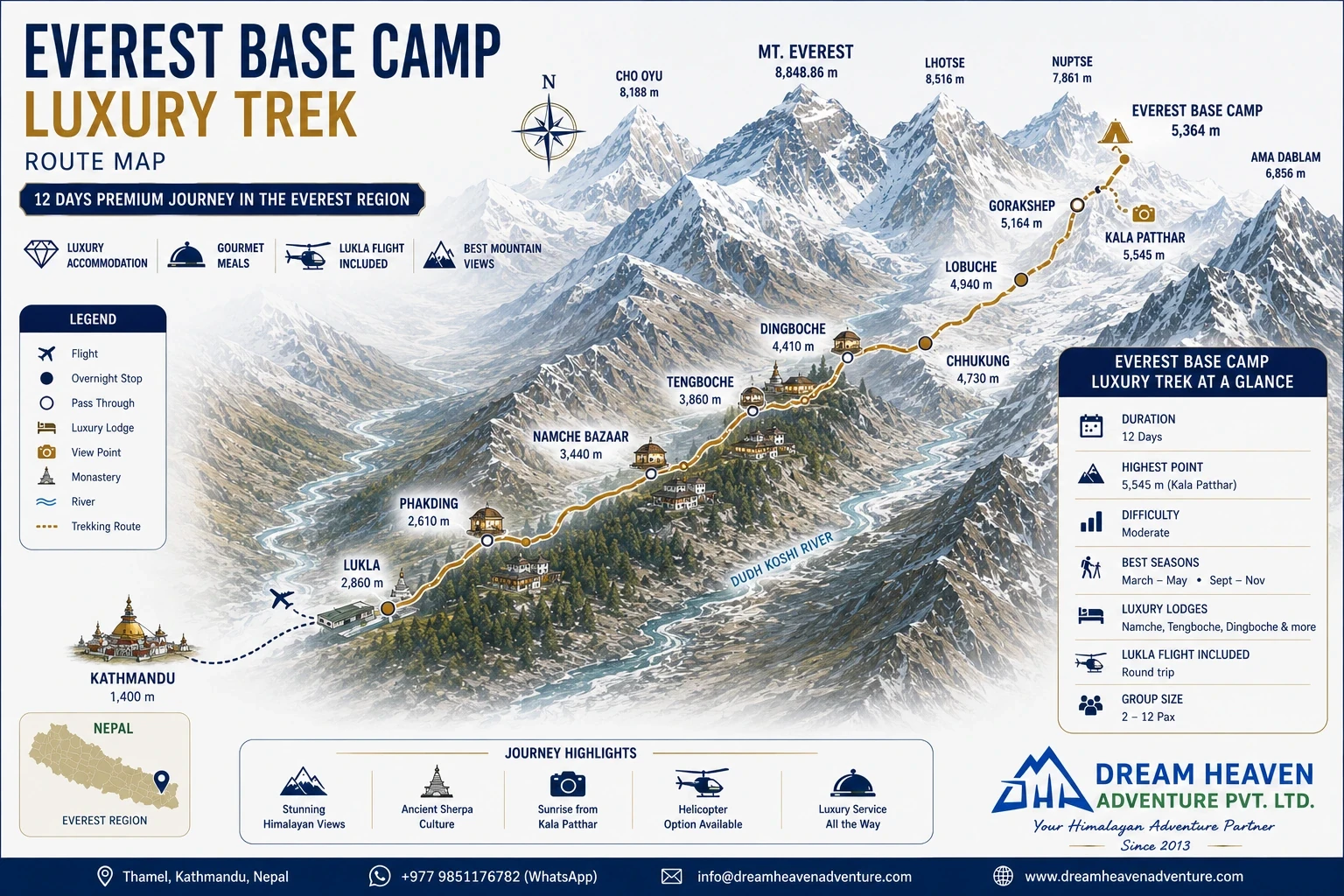
The Everest Base Camp Luxury Trek is designed for travellers who want to experience the classic journey to Everest Base Camp with a higher standard of comfort wherever the Everest region genuinely allows it. The route follows the same iconic trail to Everest Base Camp and Kala Patthar, but combines premium accommodation in the lower Khumbu, shared helicopter transfers, and a carefully paced itinerary to create a more comfortable and efficient trekking experience without changing the character of the adventure. follows the classic Everest Base Camp Trek route before returning by shared helicopter
Your journey begins in Kathmandu with time to rest, prepare your equipment, and meet your trekking guide before flying to Lukla by shared helicopter. During the main trekking seasons, most scheduled Lukla flights operate from Ramechhap, requiring an early morning road transfer from Kathmandu. By using a shared helicopter directly from Kathmandu, this itinerary avoids that additional journey and provides a scenic flight across the Himalayan foothills before the trek begins.
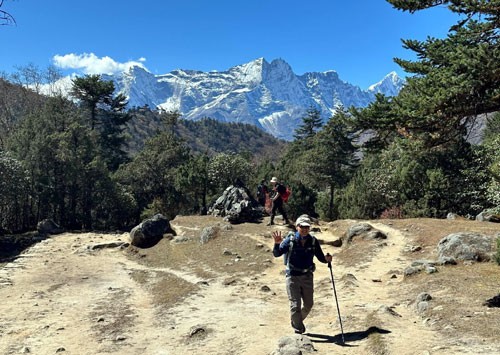
From Lukla, the trail follows the classic Everest route through Phakding, Namche Bazaar, Debuche, Dingboche, Lobuche, Gorak Shep, Everest Base Camp, and Kala Patthar. The destination is the same as the standard Everest Base Camp Trek, but the experience is different. This itinerary focuses on improving comfort wherever possible while preserving the satisfaction of completing the full trek on foot.
Accommodation is one of the biggest differences. Up to Debuche, you stay in premium lodges, including Mountain Lodges of Nepal or comparable properties, where comfortable rooms, heated dining areas, quality meals, and attached bathrooms are available in many locations. After a full day of walking, these facilities provide a noticeably more comfortable environment for rest and recovery than standard teahouse accommodation.
Beyond Debuche, the mountains become more remote and the available facilities become simpler. Luxury lodges do not exist in Dingboche, Lobuche, or Gorak Shep, so accommodation is arranged in the best available local teahouses. Rooms are basic and unheated, and shared bathrooms are common at higher elevations. Rather than describing every overnight stop as luxurious, this itinerary reflects the reality of trekking in the Everest region by providing the highest practical standard of accommodation available at each stage of the journey.
This approach reflects how we operate our luxury Everest treks. Instead of promising facilities that are not available in the upper Khumbu, we focus on providing premium accommodation where it genuinely exists, maintaining a well-planned itinerary for acclimatisation, and delivering consistent service and support from arrival in Kathmandu until the trek is completed.
The itinerary includes acclimatisation days in Namche Bazaar and Dingboche, allowing your body more time to adjust before moving to higher elevations. As you climb above 3,500 metres, the thinner air naturally slows your pace, even on relatively short uphill sections. Building extra time into the itinerary helps many trekkers adapt more comfortably while enjoying the scenery and mountain villages along the way.
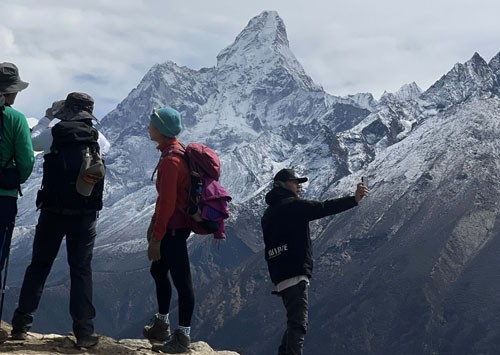
Reaching Everest Base Camp is a memorable achievement, but many trekkers consider the early morning ascent to Kala Patthar to be the highlight of the journey. From its summit, panoramic views of Mount Everest, Lhotse, Nuptse, Pumori, and the surrounding Himalayan peaks reward the gradual days of walking and acclimatisation that make the experience possible.
After completing the trek, you return to Kathmandu by shared helicopter from Gorak Shep, replacing the three to four-day walk back to Lukla. Besides reducing the overall journey time, the return flight offers a unique aerial perspective of the valleys, glaciers, and mountain landscapes you have just crossed on foot.
This trek is ideal for travellers who want to experience Everest Base Camp with upgraded accommodation wherever possible, efficient logistics, and additional comfort without compromising the authenticity of the journey. You still walk the complete route to Everest Base Camp, experience the challenges of high-altitude trekking, and stay in simple mountain lodges where no luxury alternatives exist, but enjoy a higher standard of accommodation, planning, and service throughout the parts of the journey where meaningful upgrades are possible.
Travellers who prefer the traditional Everest Base Camp experience with standard teahouse accommodation can also explore our Classic Everest Base Camp Trek.
Everest Base Camp Luxury Trek vs Classic Everest Base Camp Trek
| Feature | Everest Base Camp Luxury Trek | Classic Everest Base Camp Trek |
|---|---|---|
| Kathmandu - Lukla | Shared helicopter transfer | Scheduled flight (or via Ramechhap during peak seasons) |
| Return Journey | Shared helicopter from Gorak Shep to Kathmandu | Trek back to Lukla, then scheduled flight to Kathmandu |
| Accommodation (Lukla - Debuche) | Premium mountain lodges, including Mountain Lodges of Nepal or comparable properties where available | Standard teahouses |
| Accommodation (Dingboche - Gorak Shep) | Best available local teahouses | Standard local teahouses |
| Walking Route | Full trek to Everest Base Camp and Kala Patthar | Full trek to Everest Base Camp and Kala Patthar |
| Guide | Government-licensed English-speaking local guide | Government-licensed English-speaking local guide |
| Porter Support | Included | Optional or package-dependent |
| Overall Experience | Greater comfort, efficient logistics, and premium accommodation where available | Traditional Everest trekking experience with standard teahouse accommodation |
| Best Suited For | Travellers seeking added comfort, time efficiency, and premium service | Travellers looking for the classic Everest Base Camp experience |
If you prefer a shorter itinerary focused on reducing the return trekking days, our Everest Base Camp Trek with Helicopter Return may be a better option.
Everest Base Camp Luxury Trek Highlights
- Shared helicopter flight from Kathmandu to Lukla, avoiding the seasonal road transfer to Ramechhap required for many fixed-wing flights during peak trekking seasons
- Follow the classic Everest Base Camp route on foot with well-planned acclimatisation in Namche Bazaar and Dingboche
- Stay in premium mountain lodges, including Mountain Lodges of Nepal or comparable properties, from Lukla to Debuche
- Experience the vibrant Sherpa villages of Namche Bazaar, Tengboche, Pangboche, and Dingboche
- Visit Tengboche Monastery, the largest and most important Buddhist monastery in the Everest region
- Trek through forests, suspension bridges, glacial valleys, and the rugged landscape of the Khumbu Glacier
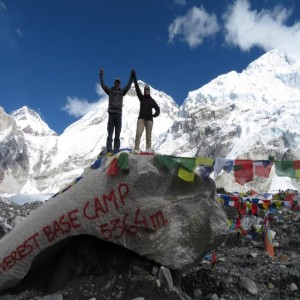
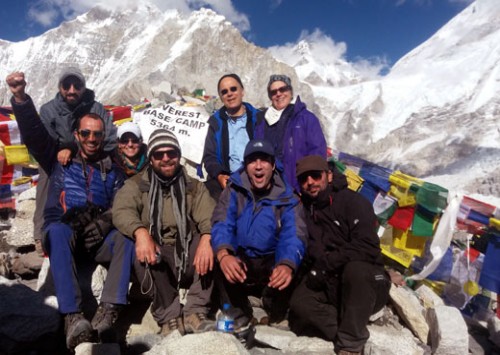
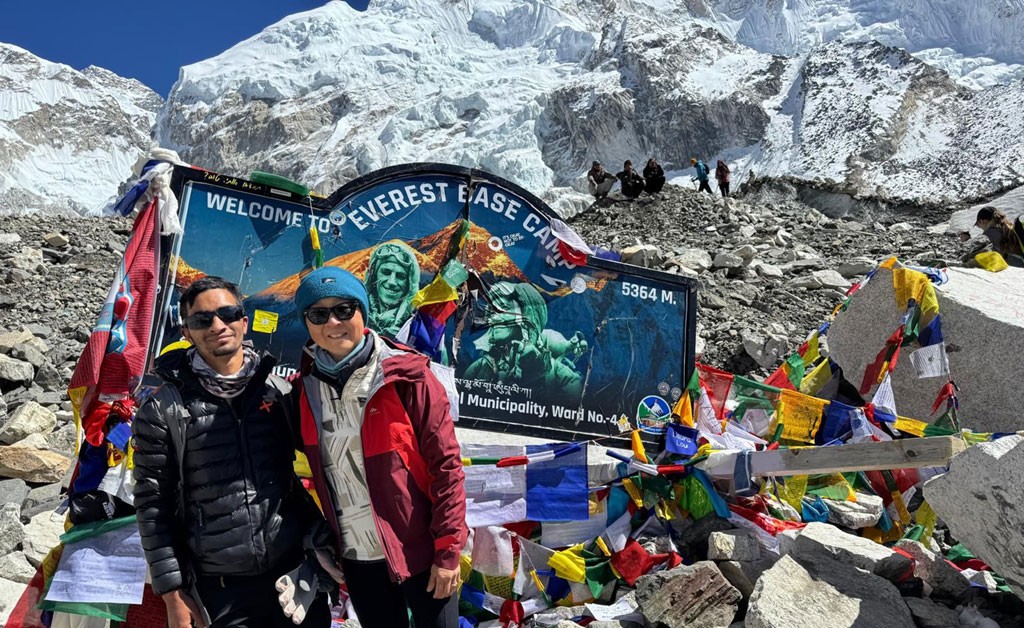
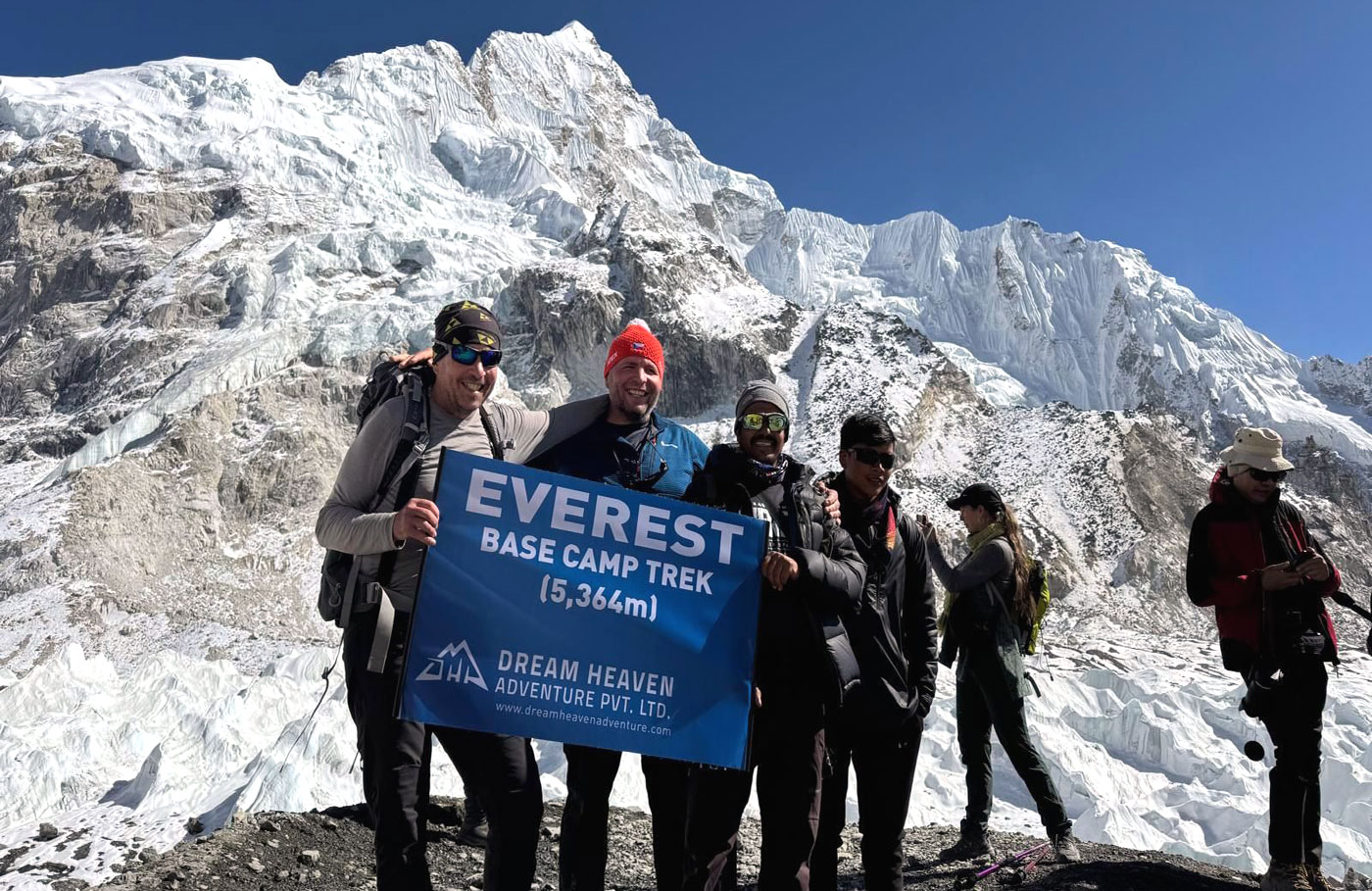
- Reach both Everest Base Camp (5,364 m) and Kala Patthar (5,545 m) for spectacular close-up views of Mount Everest and the surrounding Himalayan peaks
- Enjoy a shared helicopter return from Gorak Shep to Kathmandu, providing a unique aerial perspective of the route you have completed on foot
- Walk approximately 5–7 hours per day on a steady itinerary designed for gradual altitude gain and enjoyable trekking
- Travel with a government-licensed, English-speaking local guide and dedicated porter support throughout the journey
- Experience premium comfort where available while maintaining the authentic adventure of a high-altitude Himalayan trek
- Complete the full Everest Base Camp journey with the perfect balance of adventure, comfort, and efficient logistics
Why Choose a Luxury Everest Base Camp Trek
The Everest Base Camp trek is one of the world's most rewarding trekking journeys, but the experience involves much more than simply reaching Base Camp. Long travel days, changing mountain weather, basic accommodation at higher elevations, and the logistics of getting to and from Lukla all become part of the overall journey. A luxury Everest Base Camp trek does not change these mountain realities, but it is designed to make the parts that can be improved noticeably more comfortable and efficient.
One thing we regularly see is that many travellers choosing this itinerary are not looking for an easier trek. They still want to walk to Everest Base Camp, stand at Kala Patthar, and experience the satisfaction of completing the route on foot. What they want to avoid is unnecessary travel fatigue before the trek begins and a long return walk after reaching their goal.
Instead of beginning the journey with an early road transfer to Ramechhap during the main trekking seasons, this itinerary uses shared helicopter flights between Kathmandu and Lukla. After reaching Everest Base Camp and Kala Patthar, the return to Kathmandu is also by shared helicopter from Gorak Shep, reducing the overall trip length while providing spectacular aerial views of the Khumbu region.
Comfort is improved where the Everest region genuinely allows it. In the lower Khumbu, premium lodges offer a higher standard of accommodation than traditional teahouses, giving trekkers a better environment for rest before continuing to higher elevations. Once the route climbs beyond Debuche, accommodation becomes simpler because luxury lodges are no longer available. Rather than promising luxury throughout the trek, this itinerary focuses on providing the best practical level of comfort at each stage of the journey.
Another important difference is the overall flow of the itinerary. Accommodation, transport, permits, guiding, and daily pacing are planned as one complete journey rather than as separate services. This allows trekkers to spend less time thinking about logistics and more time enjoying the mountains, Sherpa villages, and the experience of trekking through Sagarmatha National Park.
Ultimately, the destination remains exactly the same. You still walk to Everest Base Camp, climb Kala Patthar, and experience the challenges of high-altitude trekking. The difference is that wherever genuine upgrades are possible, this itinerary provides a higher standard of comfort, more efficient logistics, and a smoother overall experience without changing the essence of the adventure.
Travellers who want to visit Everest without completing the full trek can also explore our Everest Base Camp Helicopter Tour, which reaches the region entirely by helicopter.
Who Is the Everest Base Camp Luxury Trek Best Suited For?
The Everest Base Camp Luxury Trek is designed for travellers who want to complete the full Everest Base Camp journey while placing greater value on comfort, efficient logistics, and personalised service than a standard teahouse trek typically provides.
It is particularly popular with couples, private travellers, families with older teenagers, and small groups celebrating a special holiday or once-in-a-lifetime adventure. Many choose this itinerary because they want the achievement of reaching Everest Base Camp on foot while enjoying upgraded accommodation wherever the region genuinely offers it.
The itinerary also appeals to busy professionals and travellers with limited holiday time. Shared helicopter transfers remove several days of return trekking and avoid the seasonal road transfer to Ramechhap, allowing the complete Everest Base Camp experience to fit into a shorter overall schedule.
Fit first-time Himalayan trekkers often prefer this option because the journey combines a gradual acclimatisation schedule with experienced local guides and carefully planned logistics. Although previous trekking experience is helpful, many first-time visitors successfully complete this itinerary with good fitness, realistic preparation, and a steady walking pace.
Senior travellers in good health also frequently choose this trek. While the altitude and daily walking remain physically demanding, improved accommodation in the lower valleys and a well-paced itinerary help create a more comfortable overall experience than a standard Everest Base Camp trek.
At the same time, this itinerary is not designed for travellers expecting luxury hotel standards throughout the entire route. Above Debuche, accommodation becomes increasingly simple due to the remote mountain environment, and all trekkers should be prepared for basic rooms, cold temperatures, and the realities of high-altitude trekking.
This trek is best suited to travellers who understand that luxury in the Everest region is about improving the journey where meaningful upgrades are possible—not changing the mountains themselves. If your goal is to complete the classic Everest Base Camp trek with greater comfort, smoother logistics, and a higher standard of service, this itinerary offers that balance while preserving the authentic trekking experience.
Travellers looking for a shorter Everest trekking experience with lower altitude exposure can also explore our Everest View Hotel Trek.
What Luxury Actually Means Near Everest Base Camp
Luxury on the Everest Base Camp Trek is not about five-star hotels throughout the journey. Instead, it means improving the parts of the experience that can genuinely be upgraded while respecting the realities of trekking in one of the world's highest mountain environments.
In the lower Khumbu, where premium lodges are available, travellers enjoy a noticeably higher standard of accommodation than on a traditional teahouse trek. Depending on the location, this may include more comfortable rooms, attached bathrooms, heated dining areas, better bedding, and higher-quality meals. After a full day of trekking, these improvements provide a more comfortable environment for rest before continuing to higher elevations.
As the trail climbs beyond Debuche, the situation changes. Villages become smaller, supplies are carried into the mountains by porters, yaks, and helicopters, and accommodation options become much more limited. In Dingboche, Lobuche, and Gorak Shep, everyone stays in the best available local teahouses because luxury lodges simply do not exist at these elevations. Rather than promising facilities that are unavailable, this itinerary provides the highest practical standard of accommodation at every overnight stop.
Luxury also means reducing the practical challenges that often come with a high-altitude trek. Before each departure, our team prepares permits, confirms accommodation, coordinates helicopter arrangements, and plans the itinerary so that the journey runs as smoothly as possible once you leave Kathmandu. Throughout the trek, your guide manages the daily pace, monitors acclimatisation, and adjusts the day's schedule when necessary, allowing you to focus on the mountains rather than the logistics behind the journey.
At the same time, some parts of the Everest Base Camp experience remain the same for every trekker. The altitude, mountain weather, trail conditions, and physical effort required to reach Everest Base Camp cannot be upgraded. Every traveller still walks the same trail, crosses the same suspension bridges, and experiences the same high Himalayan environment.
One thing many of our guests tell us after completing the trek is that the greatest luxury is not a larger room or additional facilities. After several days at altitude, they most appreciate simple comforts such as a warm dining room, a freshly prepared meal, a comfortable bed where available, and the confidence that accommodation, transport, and daily logistics have already been organised by an experienced local team.
For this reason, a luxury Everest Base Camp trek should be viewed as an upgraded trekking experience rather than a traditional luxury holiday. The mountains remain exactly the same, but wherever meaningful improvements are genuinely possible, they are incorporated to create a more comfortable, more efficient, and more enjoyable journey while preserving the authentic experience of trekking to Everest Base Camp.