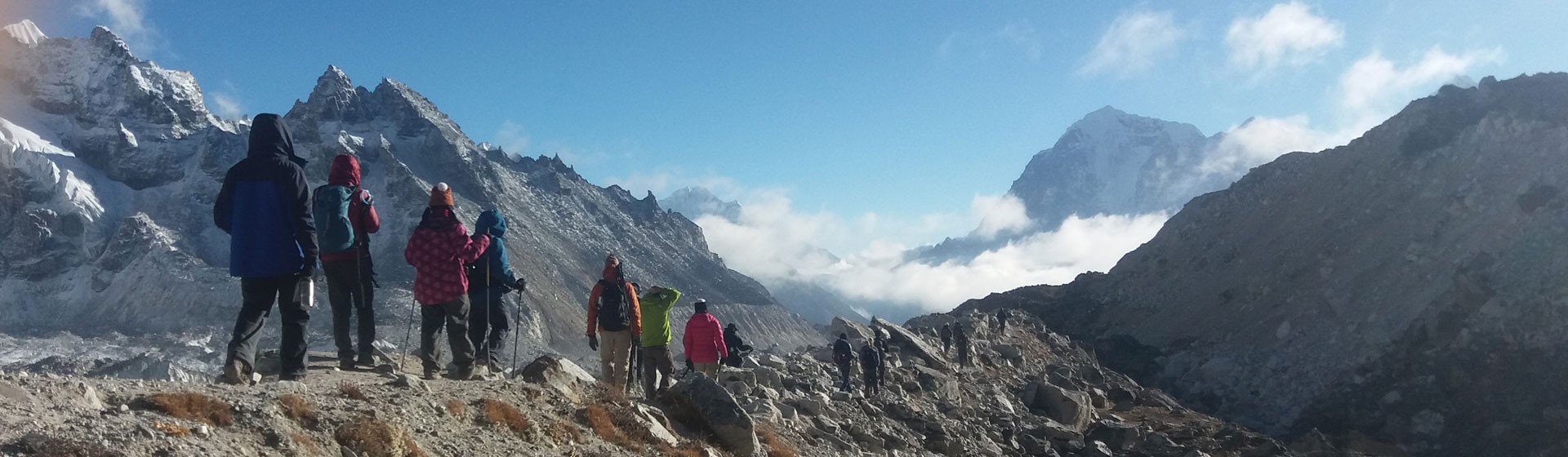
Is There an Official Age Limit for Everest Base Camp Trek?
There is no official age limit for the Everest Base Camp Trek. Trekking permits in Nepal do not set any minimum or maximum age requirement for this route.
However, Everest Base Camp is a high-altitude trek that goes above 5,000 meters, where the environment becomes more demanding. Because of this, the key factors are fitness level, health condition, and the ability to adjust to altitude rather than age alone.
Younger trekkers need to be physically prepared and accompanied by adults. Older trekkers should plan a slower pace, include proper acclimatization days, and consider a basic health check before the trip.
Many people from different age groups complete this trek each year. Success depends on preparation, steady progress, and choosing the right itinerary.
Maximum Age Limit for Everest Base Camp Trek
There is no fixed maximum age limit for the Everest Base Camp Trek. Many trekkers in their 60s and 70s complete the journey successfully each year.
The trail itself is not technical, but it involves long walking days, changing weather, and increasing altitude, especially above Namche Bazaar where the air becomes noticeably thinner. Because of this, age is less important than how well your body can handle steady movement and altitude gain over several days.
For older trekkers, a slower itinerary with extra acclimatization days makes a big difference. Walking at a comfortable pace, taking regular breaks, and maintaining good hydration help the body adjust more naturally along the route.
It is also wise to have a basic health check before the trek, especially for heart or lung conditions. With proper planning, flexibility, and support from an experienced guide, many older trekkers complete Everest Base Camp safely and enjoy the journey at their own pace.
Minimum Age for Everest Base Camp Trek
There is no fixed minimum age requirement for the Everest Base Camp Trek, but in most cases, 10 to 12 years old is considered a practical starting point.
At this age, children are usually able to walk for several hours a day and adapt better to the rhythm of trekking. The route involves gradual altitude gain, crossing suspension bridges, and walking on uneven trails, which can be physically tiring for younger children.
Above villages like Namche Bazaar, the environment changes noticeably. The air becomes thinner, temperatures drop, and daily walks can feel more demanding. Because of this, children need both physical readiness and the ability to handle changing conditions along the trail.
For families planning this trek, it is best to choose a flexible itinerary with shorter walking days and extra acclimatization time. Keeping the pace relaxed and making the journey enjoyable is more important than reaching the destination quickly.
With proper planning, support, and supervision, many families complete the trek successfully with children and create a memorable experience together.
Age vs Fitness: What Really Matters on Everest Base Camp Trek
When it comes to the Everest Base Camp Trek, fitness level matters far more than age.
The trek does not require technical climbing skills, but it does involve walking 5 to 7 hours a day for nearly two weeks, often on uneven trails with gradual altitude gain. The trek becomes more demanding gradually, especially during consecutive walking days where maintaining steady energy and recovery becomes important.
A younger trekker without preparation may struggle more than an older trekker who maintains a steady pace and has good stamina. What makes the biggest difference is your ability to:
- walk consistently for multiple days
- manage energy throughout the trek
- recover well after each trekking day
Trekkers who move at a comfortable pace, take proper rest, and allow their body to adjust gradually tend to perform much better than those who try to rush. Many difficulties on this trek come from going too fast rather than from age itself.
Everest Base Camp is not about speed. It is about maintaining a steady rhythm, staying physically prepared, and managing your energy consistently throughout the journey.
Can Beginners Do Everest Base Camp Trek?
Yes, beginners can complete the Everest Base Camp Trek, but it requires basic fitness, preparation, and the right pace.
The trail itself is not technical. There is no climbing equipment needed, and the route follows well-established paths through villages, forests, and high mountain valleys. The real challenge comes from long walking days and high altitude, not from the terrain itself.
Travelers looking for a more comfortable return option after reaching base camp can also explore our Everest Base Camp Trek with Helicopter Return itinerary.
For someone new to trekking, the first few days up to Namche Bazaar usually feel manageable. As the journey continues towards Dingboche, Lobuche, and Gorak Shep, the altitude becomes more noticeable. Breathing feels slower, and even simple uphill sections take more effort than expected.
For many beginners, the biggest challenge is learning to maintain a comfortable rhythm over multiple trekking days rather than dealing with technical difficulty.
Beginners who follow a proper itinerary with acclimatization days, walk at a steady pace, and avoid rushing tend to do well. Staying hydrated, eating regularly, and listening to your guide also make a big difference.
One common mistake is focusing only on reaching base camp. In reality, the trek is about maintaining a consistent rhythm each day. Those who take their time and allow the body to adapt usually complete the journey comfortably.
Is Everest Base Camp Trek Safe for Seniors?
Yes, the Everest Base Camp Trek can be safe for seniors, provided the trek is planned with care, flexibility, and proper acclimatization.
The trail itself is not technical, but it involves long walking days and steady physical effort over multiple days. For older trekkers, the key is not speed but maintaining a comfortable pace and allowing the body enough time to adjust throughout the journey.
In the lower sections, walking through places like Lukla and Namche Bazaar usually feels manageable. As the journey progresses into the higher parts of the trail, maintaining a relaxed pace and proper daily recovery becomes increasingly important.
With a well-paced itinerary that includes extra acclimatization days, many seniors complete the trek safely. A basic health check before the trip, especially for heart or lung conditions, is strongly recommended. Walking regularly before the trek and building stamina can also make the journey much more comfortable.
Another important factor is flexibility. Some days may feel easier, while others may require more rest. Having the option to adjust pace or itinerary along the way helps reduce unnecessary pressure and keeps the experience enjoyable.
Many senior trekkers successfully reach Everest Base Camp each year by focusing on steady progress, proper rest, and listening to their body throughout the journey.
Everest Base Camp Trek for Kids & Families
The Everest Base Camp Trek can be a rewarding experience for families, but it requires careful planning and a flexible approach when trekking with children.
The journey involves several days of walking through changing landscapes, from forested trails to open high-altitude terrain. For children, this can be both exciting and challenging. While the early days up to Namche Bazaar often feel enjoyable, the higher sections towards Dingboche and beyond can become more demanding due to thinner air and colder conditions.
Many families choose to include an extra rest day at Namche Bazaar, as this is where children often adjust best before moving higher. It also allows time to explore nearby viewpoints without any pressure, making the experience more comfortable and enjoyable.
For families, the key is to adjust the pace based on the child’s comfort. Shorter walking days, regular breaks, and extra acclimatization time help make the experience more manageable. Motivation also plays an important role. Simple things like enjoying the views, interacting with locals, and taking time to rest can make the journey more enjoyable for children.
It is also important to ensure proper clothing, nutrition, and hydration throughout the trek. Warm layers, good sleeping arrangements, and regular meals help maintain energy levels and comfort, especially at higher altitude.
Many families complete this trek successfully by focusing on the overall experience rather than just reaching base camp. With the right preparation and support, it can become a memorable journey that children carry with them for a long time.
Everest Base Camp Trek Difficulty by Age Group
The difficulty of the Everest Base Camp Trek is not fixed by age, but by how the body responds to long walking days and overall physical effort throughout the journey. While the trail remains the same, the experience can feel different depending on stamina, pace, and recovery over multiple days.
Trekkers in their 20s and early 30s often have the advantage of strong stamina and faster recovery. The early days up to Namche Bazaar usually feel comfortable, and many are able to walk at a good pace. However, moving too fast in the beginning is a common mistake. Many younger trekkers feel strong in the beginning but sometimes underestimate the importance of pacing during consecutive trekking days.
For those in their late 30s to 50s, the experience is often more balanced. Many trekkers in this group naturally manage their pace better and understand the importance of gradual progress. The main challenge is maintaining steady energy over several days. Consistency becomes more important than speed.
Trekkers aged 60 and above can also complete the trek successfully, but usually with a slower and more flexible approach. A more flexible itinerary and steady daily rhythm usually make the overall experience much more comfortable for older trekkers. Taking regular breaks and allowing extra recovery time also helps maintain comfort throughout the trek.
Across all age groups, the key factor is not age itself but how well you manage your pace, maintain consistency, and recover throughout the journey. Those who stay patient and steady tend to handle the route much better than those who try to push too hard.Altitude Risk & Age on Everest Base Camp Trek
Altitude is the most important factor to understand on the Everest Base Camp Trek. The route gradually climbs above 5,000 meters, where the oxygen level is significantly lower than at sea level. Because of this, the body needs time to adjust as you move higher.
A common misunderstanding is that altitude sickness is related to age. In reality, altitude affects people differently regardless of age. A young and physically fit trekker can feel the effects just as much as an older person. What matters more is how quickly you ascend and how well your body adapts along the way.
As the trek progresses beyond Namche Bazaar towards Dingboche and Lobuche, the body needs more time to adapt to the changing altitude.
Proper acclimatization is the key to reducing risk. This includes following a gradual itinerary, taking planned rest days, and avoiding rapid ascent. Staying hydrated, eating well, and maintaining a steady pace all support the body’s ability to adapt.
Listening to your body is equally important. Mild symptoms like headache or fatigue can happen, but they should not be ignored if they become stronger. With careful planning, awareness, and a flexible approach, most trekkers complete the journey safely without serious issues.
In the end, altitude is a shared challenge for everyone on this trek. Managing it well is far more important than age when it comes to completing Everest Base Camp safely.
Tips to Successfully Complete Everest Base Camp at Any Age
Completing the Everest Base Camp Trek is less about age and more about how well you prepare and manage each day on the trail. Small decisions made along the way often have a bigger impact than physical strength alone.
One of the most important tips is to walk at a steady and comfortable pace. Trying to keep up with others or rushing in the early days can lead to fatigue later, especially as the trek continues over multiple days. A consistent rhythm helps conserve energy and allows your body to adjust more naturally.
Following a realistic itinerary with enough adjustment time between higher villages helps the body adapt more naturally during the trek.
Staying hydrated and eating regularly plays a key role in maintaining energy. Even when appetite feels lower at higher altitude, warm meals and drinks help support the body during long trekking days.
Listening to your body is another important factor. Some days may feel easier, while others may feel more demanding. If something feels off, slowing down or taking an extra rest can prevent small issues from becoming bigger problems.
Simple preparation also makes a big difference. Comfortable trekking shoes, proper layering, and basic fitness before the trek help reduce unnecessary strain and improve overall comfort on the trail.
With the right approach, patience, and preparation, people from different age groups complete this trek successfully and enjoy every step of the journey.
What We Have Seen From Real Trekkers on the Everest Base Camp Trail
From our experience organizing and guiding treks in the Everest region over many years, one pattern becomes very clear on the trail: age alone rarely decides who reaches Everest Base Camp comfortably.
Some younger trekkers begin the journey with strong energy but try to move too quickly during the early days of the trek. This often leads to unnecessary exhaustion later in the journey, especially as the route gradually climbs higher beyond Namche Bazaar.
At the same time, many older trekkers approach the trek more patiently. Rather than focusing on speed, they tend to follow a steadier daily rhythm and manage their energy more carefully throughout the journey. In many cases, this balanced approach helps create a smoother overall trekking experience.
Some travelers who prefer a shorter mountain experience without completing the full trekking route also choose the Everest Base Camp Helicopter Tour for close-up Himalayan views in a much shorter timeframe.
We have also seen families with children complete the route successfully by keeping the itinerary flexible and allowing extra time for adjustment along the way. Trekkers who enjoy the experience day by day rather than focusing only on reaching base camp often have the most rewarding journey overall.
One of the biggest differences between difficult and successful treks is usually not age or physical strength alone. Preparation, mindset, pacing, and flexibility in the mountains often play a much bigger role throughout the journey.
In the end, Everest Base Camp is not a race. The trekkers who usually enjoy the experience the most are the ones who stay patient, remain consistent, and allow themselves time to fully experience the landscapes, villages, and atmosphere of the Khumbu region.
When Age Becomes a Concern on Everest Base Camp Trek
While age itself is not a limitation on the Everest Base Camp Trek, there are situations where it can become a concern. These are usually related to health, preparation, and expectations rather than the number alone.
One of the main factors is underlying health conditions. Issues related to the heart, lungs, or severe joint problems can make trekking at high altitude more difficult. In such cases, it is important to seek medical advice before planning the trip.
Another common challenge is lack of preparation. The trek involves multiple days of walking and gradual altitude gain. Without basic fitness or prior walking practice, the body may struggle to keep up with the daily routine.
Rushing the itinerary is also a major concern. Trying to complete the trek in fewer days increases the risk of fatigue and physical exhaustion during the journey.
There are also cases where expectations do not match reality. The Everest Base Camp Trek is not a luxury walk. Conditions become more basic as you go higher, and the environment can feel physically demanding.
Being mentally prepared for this helps avoid unnecessary stress during the journey.
Many difficulties on this trek develop gradually over multiple days rather than appearing immediately at the beginning of the journey.
If any of these concerns apply, choosing a longer itinerary, adding extra acclimatization days, or adjusting daily pace can make the trek much safer and more comfortable.
Age becomes a concern only when these factors are ignored. With proper preparation, realistic expectations, and a flexible approach, most people can manage the trek safely and enjoy the journey.
Who Should Avoid Everest Base Camp Trek?
The Everest Base Camp Trek is achievable for many people, but it is not suitable for everyone. Understanding when it may not be the right choice is just as important as knowing when it is.
People with serious heart or lung conditions should avoid high-altitude trekking unless cleared by a medical professional. The reduced oxygen level above 3,000 meters places additional strain on the body, especially in higher sections where breathing becomes more effortful even during normal walking.
Those who are not prepared for multiple days of continuous walking may also find the trek difficult. Walking 5 to 7 hours a day on uneven trails can feel manageable at first, but the effort builds over time throughout the journey.
Another important factor is time flexibility. Weather conditions in the Everest region are unpredictable, and flights to Lukla are often delayed or rescheduled. Trekkers with tight schedules or fixed return plans may face stress if delays occur, especially during peak seasons.
The trek may also not suit those expecting a high level of comfort. Accommodation becomes more basic at higher altitude, and daily conditions are simple. Higher sections of the trail become noticeably more remote, and daily conditions feel more physically demanding compared to the lower villages.
If any of these situations apply, it is better to consider a longer itinerary, a shorter trek, or an alternative route rather than pushing through with the standard plan.
Travelers with limited time or those looking for a shorter Everest experience can also explore the Everest Base Camp Short Trek itinerary.
Choosing to delay or adjust the trek is not a limitation. It is a practical decision that helps ensure safety and a more enjoyable experience in the long run.
Conclusion
There is no fixed age limit for the Everest Base Camp Trek. What matters more is preparation, pacing, and allowing your body enough time to adjust throughout the journey.
Trekkers from many different age groups complete this route every year. Some walk faster, while others prefer a slower and more flexible pace, but those who stay consistent and follow proper acclimatization usually enjoy the experience much more.
The Everest Base Camp Trek is not about speed or age. It is about understanding your own limits, planning realistically, and maintaining a steady rhythm over multiple days in the mountains.
With the right preparation, mindset, and flexibility, Everest Base Camp becomes an achievable and rewarding journey for a wide range of trekkers.
Everest Base Camp Trek Frequently Asked Questions (FAQs)
Can beginners complete Everest Base Camp Trek?
Yes, beginners can complete the Everest Base Camp Trek with proper preparation. It does not require technical climbing, but it does involve long walking days and high altitude.
Is Everest Base Camp Trek suitable for older trekkers?
Yes, many older trekkers complete the trek successfully. A slower pace, extra acclimatization days, and proper preparation make the journey safer and more comfortable.
How difficult is Everest Base Camp Trek?
The trek is considered moderate to challenging. The main difficulty comes from altitude and long trekking days rather than technical terrain.
How many hours do you walk each day?
Most trekking days involve around 5 to 7 hours of walking. At higher altitude, the pace slows down, so even shorter distances can take longer.
Can the itinerary be adjusted during the trek?
Yes, flexibility is important. Adding rest days or slowing down the pace along the route can help the body adjust better and make the experience more comfortable.
Do you need a guide for Everest Base Camp Trek?
While it is possible to trek independently, many trekkers choose to go with a guide for better safety, navigation, and support at higher altitude.
A guided Everest Base Camp Trek also helps manage acclimatization, accommodation, flights, and daily logistics more smoothly throughout the journey.
What is the best time to do Everest Base Camp Trek?
The best time is during spring (March to May) and autumn (September to November) when the weather is more stable and mountain views are clearer.
What kind of accommodation can you expect on the trek?
Accommodation is mainly in teahouses. Rooms are simple, and facilities become more basic at higher altitude. In places like Lobuche and Gorak Shep, options are limited and more basic compared to lower villages.
How much training is needed before the trek?
Basic preparation like regular walking, light cardio, and building stamina helps a lot. Being comfortable with walking several hours a day makes the trek much more enjoyable.
Is Everest Base Camp Trek safe overall?
Yes, it is generally safe with proper planning, acclimatization, and guidance. Most trekkers complete the journey without major issues when they follow a steady and careful approach.