Manaslu and Annapurna Circuit Combined Trek Overview
The Manaslu and Annapurna Circuit Combined Trek is one of the most complete long-distance trekking experiences in Nepal. Instead of choosing between two famous routes, this journey connects them into a single continuous trail that feels natural, diverse, and deeply immersive.
The trek begins in the lower Budhi Gandaki valley, where the trail follows narrow paths carved into steep hillsides, crossing suspension bridges above fast-flowing rivers and passing through small villages shaped by Gurung communities. Stone houses, terraced fields, and local farming life define the early days of the journey, where trekkers walk alongside daily village routines rather than through heavily commercial trekking zones.
As the route climbs higher, the environment and culture begin to change. Beyond Jagat and Deng, the landscape becomes quieter and more remote, and Tibetan-influenced culture becomes more visible. Villages like Namrung, Lho, and Samagaun introduce chortens, mani walls, prayer flags, and monasteries that reflect centuries of Buddhist tradition. Life here moves at a slower pace, shaped by altitude, seasonal trade, and strong cultural identity.
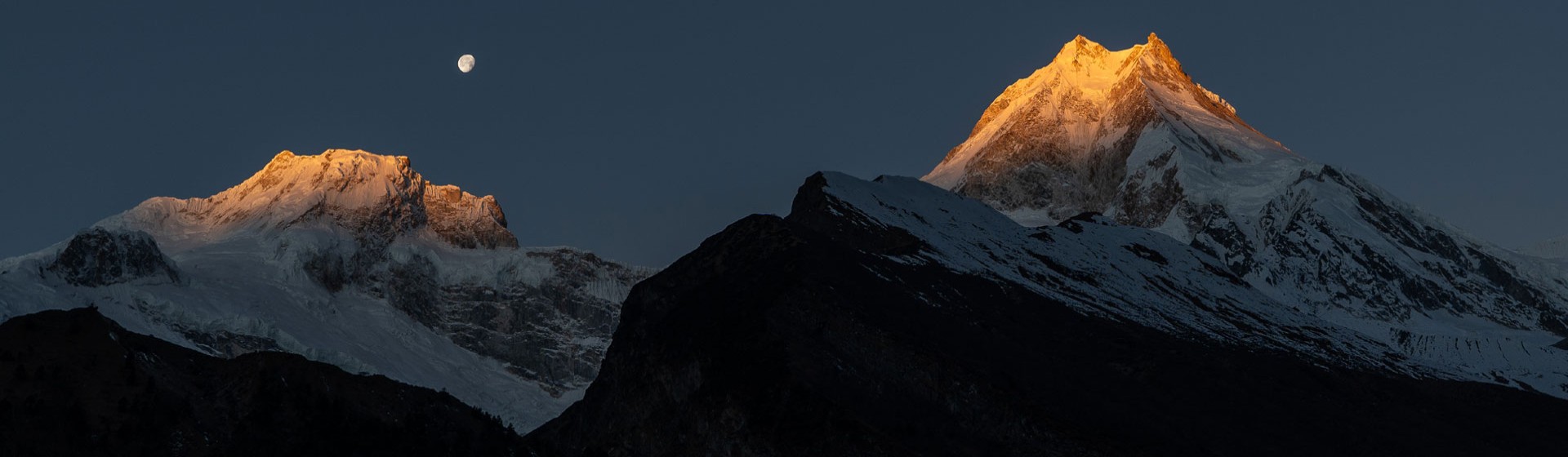
Samagaun, often called the heart of the Manaslu region, is not just an acclimatization stop but a cultural and geographical turning point. Surrounded by wide glacial valleys and views of Mount Manaslu, the area offers side hikes to places like Manaslu Base Camp and Birendra Lake, helping trekkers adjust gradually while experiencing the deeper beauty of the region.
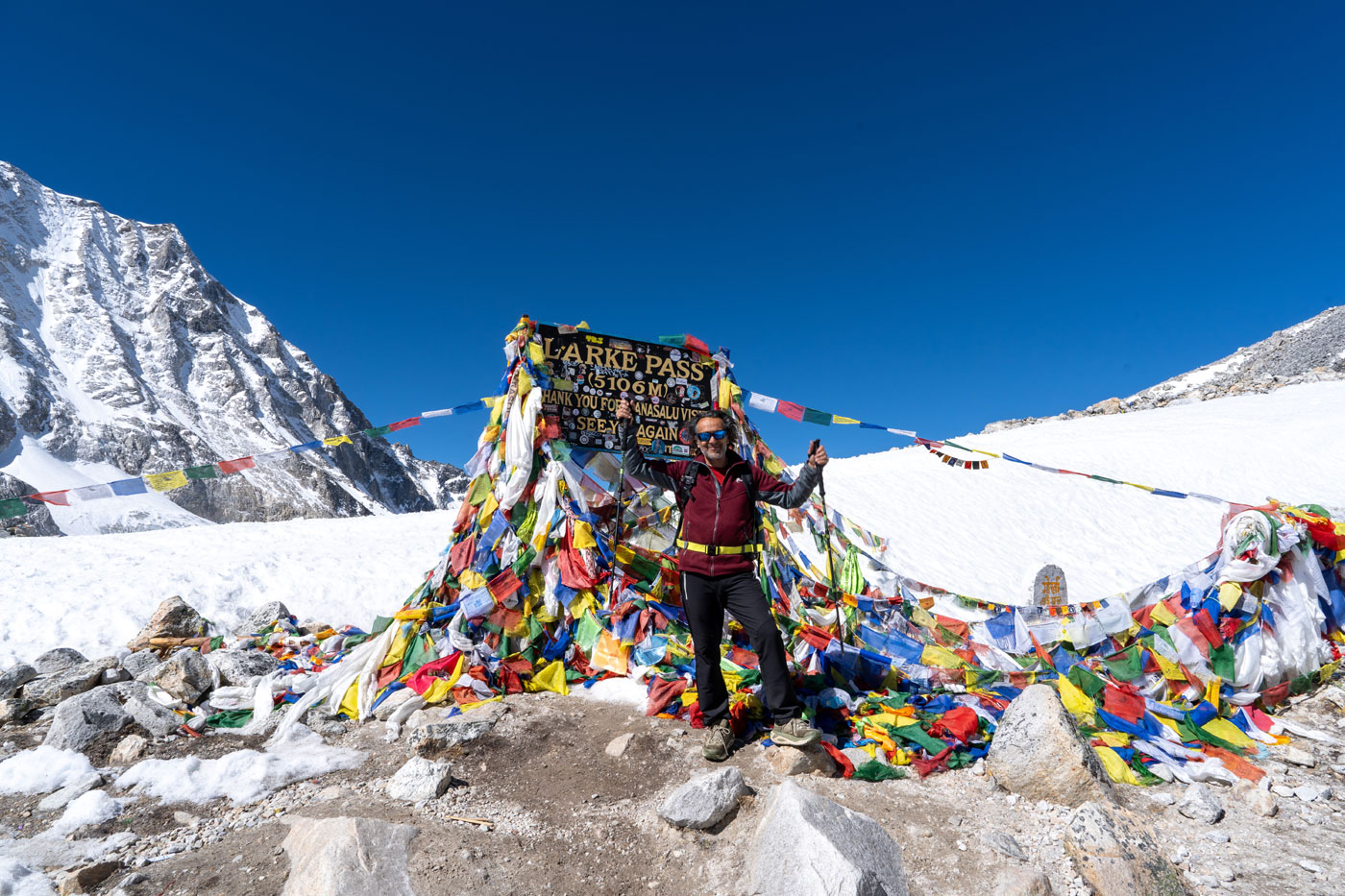
Above Samdo, the trail enters a more exposed alpine environment where vegetation becomes sparse and the terrain feels raw and high. Crossing Larkya La Pass is one of the defining moments of the trek. The climb is long and steady, but the reward is a wide Himalayan panorama with prayer flags marking the top. This is not just a physical achievement, but a transition point between two major trekking regions.
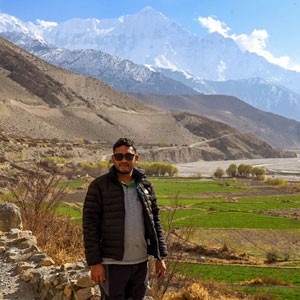
After descending into Bimthang and continuing to Dharapani, the trail joins the Annapurna Circuit. From here, the trekking experience shifts again. The Annapurna section feels more open, with better-established trails and a broader range of landscapes. The route moves toward Manang, a culturally rich village often referred to as “Himal Pariko Jilla,” meaning the district beyond the mountains.
The journey continues toward Thorong La Pass (5,416 m), the second major high pass of the trek. Compared to Larkya La, this crossing feels different in both terrain and atmosphere, offering another perspective of high-altitude trekking in Nepal. The descent to Muktinath introduces a spiritual dimension, where Hindu and Buddhist traditions meet at one of the most sacred sites in the Himalayas.
What makes this combined trek truly special is not just the distance or altitude, but the continuous transition of landscapes, cultures, and experiences. From humid lower valleys to dry high mountain terrain, from Hindu villages to Tibetan Buddhist settlements, and from quiet remote trails to classic trekking routes, every section adds a new layer to the journey.
In 2026, as many popular trekking routes become busier and more developed, this combined trek stands out as one of the few experiences that still feels complete, balanced, and deeply connected to the natural and cultural rhythm of the Himalayas.
Before planning this route, you can explore our Manaslu Circuit Trek itinerary to understand the trail, altitude, and daily trekking experience.
Why Combine Manaslu and Annapurna Circuit Trek?
Combining the Manaslu Circuit and Annapurna Circuit is not just about covering more distance. It is about experiencing the Himalayas in a more complete and continuous way. Instead of choosing between two well-known regions, this route allows you to move through both, following a natural path that connects remote valleys, high mountain passes, and culturally rich villages.
What makes this journey special is how the experience builds step by step. You do not simply visit places, you move through changing environments, cultures, and trekking styles, creating a deeper and more meaningful connection with the mountains.
A Natural Extension, Not Two Separate Treks
This combination works because the routes connect naturally at Dharapani. There is no need for transport or rerouting. You walk directly from the Manaslu region into the Annapurna Circuit, following trails that have existed for generations.
Because of this, the trek feels like one continuous journey rather than two separate experiences. There is a clear sense of progression from start to finish.
From Quiet Trails to Classic Himalayan Routes
One of the biggest advantages of this combined trek is the contrast between the two regions.
The Manaslu section offers quieter trails, smaller villages, and a more remote atmosphere. Daily life feels less influenced by tourism, and the connection to local culture is stronger.
After joining the Annapurna Circuit, the environment becomes more open and accessible. Trails are wider, teahouses are more developed, and there is more interaction with other trekkers. This shift creates a natural balance between solitude and social experience.
Two High Passes, One Complete Experience
Very few treks offer the opportunity to cross two major Himalayan passes in one journey.
Larkya La provides a remote and rugged experience, while Thorong La offers a wider and more established crossing. Each pass has its own character, and together they create a stronger sense of achievement.
This combination makes the trek more dynamic and rewarding compared to doing only one route.
Cultural Depth Across Regions
This journey also stands out because of its cultural diversity.
You begin in lower regions influenced by Gurung communities, where daily life is shaped by farming and village traditions. As you move higher in Manaslu, Tibetan Buddhist culture becomes more visible through monasteries, prayer flags, and traditional practices.
In the Annapurna section, villages like Manang and areas near Muktinath introduce a mix of Tibetan and Thakali culture, reflecting a long history of trade and movement across the mountains.
This gradual cultural transition is something you can only experience on a longer, connected route.
A More Complete Himalayan Journey
Combining these two treks allows you to experience a wider range of landscapes, from green river valleys to high alpine terrain and dry mountain regions.
Instead of repeating similar environments, each stage of the trek feels different. This creates a stronger sense of journey, where every few days bring new scenery and new experiences.
Better Value for Time and Effort
From a practical point of view, combining both circuits also makes sense.
Rather than traveling to Nepal multiple times or choosing between regions, you complete both in one well-planned itinerary. The effort you invest in reaching Nepal and trekking at high altitude is used to experience more, without repeating similar logistics.
The Real Reason
In the end, the reason to combine Manaslu and Annapurna is not just to see more places, but to experience the Himalayas more deeply.
You move through changing landscapes, meet different communities, and follow a route that feels natural and continuous. The journey becomes less about ticking destinations and more about understanding the mountains as a connected living environment.
That is what makes this combined trek one of the most rewarding experiences in Nepal.
If you want to compare both routes separately, you can read our Manaslu vs Annapurna Circuit Trek guide.
Trek Preparation and Guide Support
The Manaslu Circuit section of the combined trek normally takes around 12 days and requires proper preparation before departure. Because this is a restricted area, permits must be arranged in advance through Nepal Immigration using a passport copy, valid Nepal visa, and photographs. One full working day in Kathmandu is usually needed to complete this process.
Trekkers are required to travel with a licensed guide in the Manaslu region. These guides are trained in altitude awareness, local weather patterns, and route conditions, and they play an important role in ensuring safety and smooth coordination throughout the trek.
Before starting the journey, it is recommended to have a short pre-trek meeting in Kathmandu. This helps review the itinerary, check gear, and prepare properly for the conditions you will experience on both the Manaslu and Annapurna sections of the trek.
How the Manaslu and Annapurna Routes Connect
For many trekkers, the most important question is not just whether these two treks can be combined, but how the connection actually works on the ground. Once you understand the route clearly, the entire journey feels more natural and easier to plan.
The Manaslu and Annapurna circuits are not separate in reality. They are connected by traditional mountain trails that have been used for generations by local communities, traders, and herders. What trekkers follow today is part of that same natural network of paths.
The Key Connection Point: Dharapani
The actual connection between the two routes happens at Dharapani, a small but important village in the Annapurna region.
After crossing Larkya La Pass on the Manaslu side, the trail descends through Bimthang and continues along forested paths, rivers, and gradually greener landscapes until reaching Dharapani. This is where the restricted Manaslu region ends and the Annapurna Circuit begins.
There is no transport, no shortcut, and no separate transfer involved. You simply continue walking forward, and the trail itself brings you into the next region.
You can also check our detailed Annapurna Circuit Trek itinerary to understand the continuation from Dharapani.
How the Transition Feels on the Trail
The connection is not only geographical, but also something you experience step by step.
On the Manaslu side, the trail feels quieter and more remote. Villages are smaller, and daily life is less influenced by tourism. You walk through areas where people still depend on farming, yak herding, and seasonal trade.
As you descend toward Dharapani, the landscape slowly changes. Forests become denser, trails wider, and villages more frequent. By the time you reach Dharapani, you begin to notice a shift in the atmosphere.
After joining the Annapurna Circuit, the trekking experience feels more open and connected. There are more trekkers on the trail, more developed teahouses, and a slightly faster pace of daily life.
Continuing Toward Manang
From Dharapani, the trail follows the Annapurna Circuit through villages such as Bagarchhap, Chame, and Pisang, gradually climbing toward Manang.
This section feels different from Manaslu. The trail is more established, and the trekking infrastructure is more developed. However, the cultural influence remains strong, with Buddhist traditions visible in villages, prayer flags, and monasteries along the route.
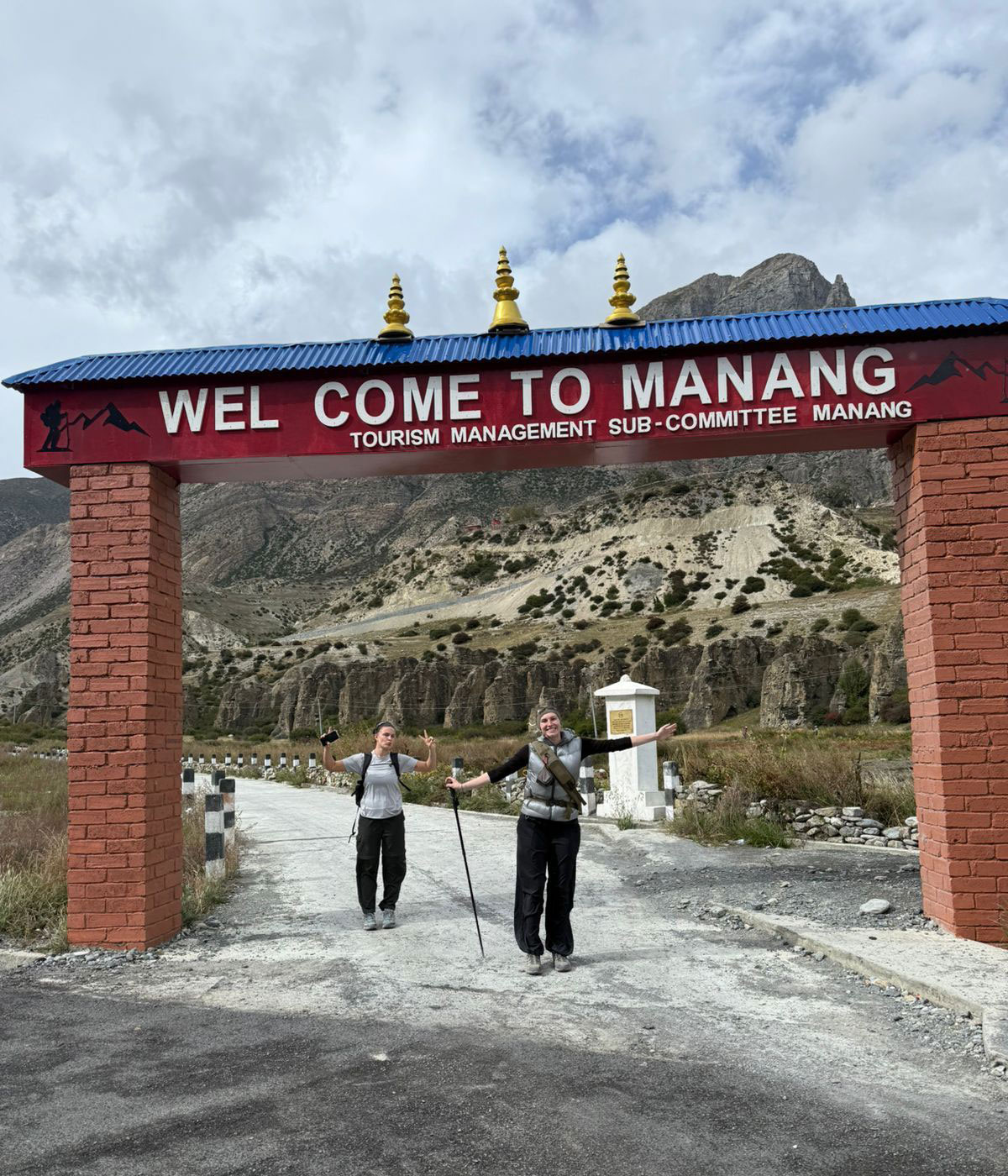
Manang becomes the next major acclimatization point, creating a natural continuation of the trekking rhythm established earlier in Samagaun.
Why This Connection Works Naturally
What makes this route unique is that the connection is not created for tourism, but shaped by geography and history.
The Himalayas have always been connected by walking routes used for trade, migration, and cultural exchange. The path from Manaslu into Annapurna follows this natural flow, linking valleys and communities that have interacted for generations.
For trekkers, this means the journey feels continuous rather than divided. You are not switching treks, you are moving through a larger mountain system.
A Continuous Journey
From a trekking perspective, this connection creates a smooth and logical progression.
You begin in a remote region, move gradually into higher alpine terrain, cross into a more developed trekking route, and continue toward another high pass. There is no need to retrace your steps or reorganize your plan.
Everything flows forward, both physically and mentally.
The Real Experience
Many trekkers find this connection to be one of the most satisfying parts of the entire journey.
Not because it is dramatic, but because it feels natural and complete. You experience how landscapes, cultures, and trekking styles change gradually without interruption.
That is what makes this route more than just a combination of two treks.
It becomes a continuous Himalayan journey shaped by nature, culture, and time.
Manaslu and Annapurna Combined Trek Itinerary
Day 1: Arrival in Kathmandu
Kathmandu – 1,300 m
Arrival in Kathmandu, where the journey begins. After a long international flight, the focus is on rest and preparation. The contrast between busy city life and the quiet mountains ahead is already noticeable. A short briefing helps you understand the route, altitude, and what to expect in the coming days.
Day 2: Drive to Machha Khola
870–930 m | 7–9 hours drive
The journey starts early, leaving the city behind and following winding roads along rivers and hills. As you move further, the road becomes rougher, and the scenery becomes more rural. Small villages, terraced farms, and river valleys introduce you to the landscape of western Nepal. This long drive sets the tone for entering a more remote trekking region.
Day 3: Trek to Jagat
1,410 m | 6–7 hours
The first walking day begins along the Budhi Gandaki River. The trail moves up and down through forests, crossing suspension bridges and passing small settlements. Stone steps and narrow paths require steady pacing. By the time you reach Jagat, you begin to feel the rhythm of trekking life.
Day 4: Trek to Deng
1,804 m | 6–7 hours
The trail continues through forests and riverside paths. Villages become smaller and quieter, and the influence of tourism starts to decrease. You pass through areas where daily life still follows traditional patterns of farming and livestock. The environment feels more remote with each step.
Day 5: Trek to Namrung
2,630 m | 6–7 hours
As you gain altitude, the landscape begins to open. Views of snow-covered peaks start to appear, and the cultural atmosphere changes. Mani walls, chortens, and prayer flags become more common. The air feels cooler and drier, marking your entry into a more Himalayan environment.
Day 6: Trek to Samagaun
3,520 m | 5–6 hours
This is one of the most beautiful days of the trek. The valley widens, and the views of Mount Manaslu become more impressive. Samagaun is a large and important village surrounded by mountains, glaciers, and open landscapes. It is not just a stop, but a place where the trek begins to feel truly high altitude.
Day 7: Acclimatization Day in Samagaun
A rest day that is not really rest. Short hikes to higher viewpoints, such as Manaslu Base Camp or Birendra Lake, help your body adjust to altitude. Walking slowly and returning to sleep lower follows the natural acclimatization process. This day is important for safety and comfort.
Day 8: Trek to Samdo
3,875 m | 4–5 hours
The trail becomes more open and exposed. Vegetation decreases, and the terrain feels more rugged. Samdo is a small village close to the Tibetan border, where life is shaped by trade, seasonal movement, and harsh mountain conditions.
Day 9: Trek to Dharamsala (Larkya Phedi)
4,480 m | 4–5 hours
A short but important day. The landscape feels raw and high, with strong winds and colder temperatures. Accommodation is basic, and the focus is on preparing for the pass. There is a quiet sense of anticipation among trekkers.
Day 10: Cross Larkya La Pass and Trek to Bimthang
5,160 m | 8–10 hours
The longest and most demanding day. You start early in the dark, walking slowly toward the pass. The climb is steady, and the air feels thinner with each step. At the top, prayer flags mark the achievement, and the views stretch across the Himalayas. The descent to Bimthang is long but rewarding, bringing back greener landscapes and a sense of relief.
Day 11: Trek to Dharapani (Join Annapurna Circuit)
1,960 m | 6–7 hours
The trail drops through forests and river valleys. You begin to notice the return of greenery and warmer temperatures. Reaching Dharapani marks the transition point where the Manaslu trail connects with the Annapurna Circuit.
Day 12: Trek to Chame
2,670 m | 5–6 hours
The trail becomes more established, and villages feel more connected. You pass through pine forests and follow the Marsyangdi River. The trekking environment feels more open compared to the Manaslu section.
Day 13: Trek to Pisang
3,200 m | 5–6 hours
The valley widens, offering expansive views of the Annapurna range. The trail becomes drier, and the landscape begins to change again. Upper and Lower Pisang offer different perspectives of the mountains and local life.
Day 14: Trek to Manang
3,540 m | 5–6 hours
One of the most important villages on the Annapurna Circuit. Manang feels both traditional and developed, with bakeries, lodges, and cultural sites. The dry landscape and strong winds give a different feeling compared to earlier sections.
Day 15: Acclimatization Day in Manang
Another important rest day. Short hikes to viewpoints above Manang help your body adjust. The air is thinner, and walking requires more effort, but the views are wide and impressive.
Day 16: Trek to Thorong Phedi
4,540 m | 4–5 hours
A short but challenging day due to altitude. The trail climbs gradually, and the environment becomes colder and more exposed. This is the final preparation point before the second high pass.
Day 17: Cross Thorong La Pass and Trek to Muktinath
5,416 m | 7–9 hours
An early start is essential. The climb to Thorong La feels different from Larkya La, with a wider trail and more trekkers. The pass offers a sense of achievement, followed by a long descent to Muktinath. The spiritual atmosphere of Muktinath adds a different meaning to the journey.
Day 18: Drive to Pokhara
After days of walking in the mountains, the drive to Pokhara feels relaxed and peaceful. The journey ends with a sense of completion, having experienced two of Nepal’s most iconic trekking regions in one continuous route.
Difficulty Level of Manaslu and Annapurna Combined Trek
The Manaslu and Annapurna Combined Trek is a physically demanding high-altitude journey, but it is not technically difficult. You do not need climbing skills, ropes, or mountaineering experience. The challenge comes from the length of the trek, the gradual gain in altitude, and the consistency required over many days rather than from steep or dangerous terrain.
What makes this trek feel demanding is how the effort builds over time. You are walking for more than two weeks, often five to seven hours a day, sometimes longer on key days. In the beginning, the trail follows river valleys with forests, stone steps, and suspension bridges. As the days pass, the terrain becomes more open and alpine, and walking naturally slows down as altitude increases. By the time you reach higher villages like Samagaun and Manang, even simple uphill sections require more controlled breathing and a steady pace.
The two high passes, Larkya La (5,160 m) and Thorong La (5,416 m), are the most challenging parts of the trek. These days start early, often before sunrise, when weather conditions are more stable. The climb is long but gradual, and the key is to walk slowly and consistently. There is no technical climbing involved, but altitude and cold temperatures make these crossings physically and mentally demanding. Most trekkers find that patience and rhythm matter more than strength on these days.
Physical fitness plays an important role, but it does not require extreme training. You do not need to be a marathon runner. What helps most is being comfortable with long walks, having basic stamina, and being used to uphill and downhill movement. Preparing with regular walking, light hiking, cycling, or jogging before the trek is usually enough to build the required endurance.
Mental strength is just as important as physical fitness. Some days feel easier, while others feel slower due to altitude, weather, or fatigue. Cold mornings, simple accommodation, and long walking hours require a calm and positive mindset. Trekkers who move at their own pace, stay patient, and follow the guidance of their guide usually find the trek manageable and even enjoyable.
For beginners, this trek is possible but requires preparation and realistic expectations. It is longer and more demanding than shorter treks like Annapurna Base Camp or Langtang, so being physically active before arrival makes a big difference. Previous trekking experience is helpful but not essential if you approach the trek with a steady pace and good preparation.
Age is not the main factor in determining whether you can complete this trek. Trekkers of different age groups have successfully done this route. What matters more is overall fitness, consistency, and the ability to adapt to changing conditions.
In simple terms, the difficulty of the Manaslu and Annapurna combined trek can be described as demanding but achievable. It challenges your body gradually, rewards patience, and offers a strong sense of achievement by the end. For many trekkers, the effort becomes part of the experience, making the journey more meaningful and memorable.
For more details, read our Manaslu Circuit Trek difficulty guide.
Altitude and Acclimatization Strategy on the Combined Trek
Altitude is the most important factor to understand on the Manaslu and Annapurna combined trek. As the trail gradually climbs from lower river valleys to above 5,000 meters, the amount of oxygen in the air decreases, and your body needs time to adjust. This is not something you feel immediately in the lower days, but as you move beyond around 3,500 meters, the difference becomes noticeable. Walking feels slower, breathing becomes deeper, and your body naturally asks for a more steady pace.
The strength of this combined itinerary is that it allows acclimatization to happen naturally rather than forcing it. The trek includes two key acclimatization points: Samagaun on the Manaslu side and Manang on the Annapurna side. These are not just rest stops, but important parts of the journey where your body prepares for higher altitude. Instead of complete rest, short hikes to higher viewpoints are included, following the simple principle of “climb high, sleep low.” This helps your body adapt more effectively without putting unnecessary stress on it.
Between these acclimatization days, the route is designed with gradual altitude gain. You move step by step from one village to the next, allowing your body to adjust without sudden jumps in elevation. This steady progression is one of the reasons why many trekkers are able to complete both Larkya La and Thorong La passes successfully. The body responds better to consistency than speed, and this trek naturally supports that rhythm.
As you move higher, especially beyond Samdo and later beyond Manang, small changes in how you manage your day make a big difference. Walking at a comfortable pace, drinking enough water, and avoiding unnecessary rushing become more important than physical strength. Appetite may reduce slightly, sleep may feel lighter, and energy levels can fluctuate. These are normal responses to altitude and usually improve as long as you continue moving gradually and give your body time to adjust.
The two pass days, Larkya La and Thorong La, are where acclimatization really shows its value. These are long days at high altitude, but by the time you reach them, your body has already adapted through previous days and rest stops. Starting early in the morning, walking slowly, and maintaining a steady rhythm helps you cross safely and comfortably. After each pass, the descent brings immediate relief as oxygen levels increase again.
Guides play an important role throughout this process. They monitor your pace, observe how you are feeling, and help adjust the daily plan if needed. Most altitude-related issues can be avoided simply by following a gradual pace, staying hydrated, and listening to your body. Serious problems are rare when the trek is done with proper planning and awareness.
In simple terms, altitude on this trek is something to respect, not fear. When approached correctly, it becomes part of the experience rather than a barrier. Trekkers who move slowly, stay consistent, and follow the natural rhythm of the itinerary usually find that their body adapts well, allowing them to enjoy both the journey and the achievement of crossing two major Himalayan passes.
Cost of Manaslu and Annapurna Combined Trek
The cost of the Manaslu and Annapurna combined trek depends on your travel style, but understanding the overall budget helps you plan realistically. This trek is not the cheapest option in Nepal because it includes a restricted area and a longer itinerary, but it offers strong value for the experience.
In general, the total cost for this combined trek usually ranges between USD 1,500 to USD 2,200 per person, depending on group size, services, and comfort level.
The Manaslu section has fixed costs due to restricted permits and guide requirements. The Annapurna section is more flexible, allowing some control over daily expenses. This combination creates a balanced cost structure.
Permit costs are one of the main expenses. The Manaslu restricted area permit varies by season and duration, and additional conservation permits are required for both Manaslu and Annapurna regions. Together, these permits typically cost around USD 150 to USD 250 in total.
Guide and porter services are another key part of the budget. A licensed guide is required for Manaslu, and many trekkers choose to hire a porter for comfort. On average, guide costs range from USD 25 to 35 per day, and porter costs are around USD 20 to 25 per day, usually shared between two trekkers.
Daily expenses during the trek include accommodation and meals. Teahouses are simple and affordable, with rooms typically costing USD 5 to 10, and meals ranging from USD 5 to 10 per item, depending on altitude. As you go higher, prices increase due to transportation challenges.
Transportation costs vary depending on your choice. Local transport keeps the budget lower, while private jeeps add comfort but increase the cost. On average, transportation can range from USD 50 to 150 per person depending on options.
Overall, this combined trek costs slightly more than doing only Annapurna, but offers significantly more in terms of route diversity and experience. For trekkers with enough time, combining both regions often provides better value than doing them separately.
Permits Required for Manaslu and Annapurna Combined Trek
Permits are an essential part of the Manaslu and Annapurna combined trek, and understanding them clearly helps avoid confusion before starting the journey. Since this route passes through both a restricted region and a conservation area, multiple permits are required, but the process is straightforward when arranged properly.
The Manaslu section is the most regulated part of the trek. This region is classified as a restricted area, which means trekkers must obtain a special permit issued through Nepal Immigration. Independent trekking is not allowed here, and you are required to travel with a licensed guide. In most cases, the permit is arranged through a registered trekking agency before the trek begins, using your passport copy, Nepal visa, and photographs.
In addition to the restricted area permit, trekkers also need conservation permits. The Manaslu Conservation Area Permit (MCAP) is required for the Manaslu region, and once the trail connects to the Annapurna Circuit, the Annapurna Conservation Area Permit (ACAP) becomes necessary. These permits support trail maintenance, environmental protection, and local communities along the route.
One important point for 2026 is that the TIMS card is no longer required for this route. Many trekkers still ask about it, but current regulations focus on conservation permits and the restricted area permit for Manaslu.
Permit checks are conducted at several points along the trail, especially in villages like Jagat, Deng, Namrung, and later in the Annapurna region. Your guide typically handles these checkpoints, allowing you to continue walking without interruption.
From a practical perspective, trekkers do not need to worry about the complexity of permits. Once arranged before departure, everything is managed smoothly during the trek. The key requirement is to ensure that all documents are prepared in advance so the journey can begin without delays.
Best Time for Manaslu and Annapurna Combined Trek
Choosing the right time for the Manaslu and Annapurna combined trek is one of the most important decisions you will make. Because this journey crosses two high passes and multiple climate zones, weather conditions directly affect both safety and overall experience.
In general, the best time to do this combined trek is during spring (March to May) and autumn (September to November). These seasons offer the most stable weather, clear mountain views, and comfortable trekking conditions across both Manaslu and Annapurna regions.
Spring (March to May)
Spring is one of the most enjoyable times for this trek. Temperatures are moderate in the lower and mid-altitude sections, and the trail feels alive with blooming rhododendron forests, especially in the early days of the journey.
As you move higher, conditions remain stable, with clear mornings and occasional clouds in the afternoon. Snow on the higher passes is usually manageable, and the overall trekking environment feels balanced.
Spring is ideal for trekkers who want a combination of natural beauty, good weather, and comfortable temperatures.
Autumn (September to November)
Autumn is considered the most popular and reliable season. After the monsoon, the air becomes clear, offering excellent visibility of the Himalayan peaks.
Trail conditions are generally dry, and the weather is stable, making it a good time to cross both Larkya La and Thorong La passes. Days are pleasant for walking, while mornings and evenings become colder at higher altitudes.
Because of these ideal conditions, this is also the busiest time, especially in the Annapurna section.
Winter (December to February)
Winter is possible but more challenging. The trail becomes quieter, and the mountains feel more isolated, which some trekkers prefer.
However, temperatures drop significantly, especially above 3,500 meters. Snowfall can make both Larkya La and Thorong La passes more difficult or occasionally inaccessible.
This season is best suited for experienced trekkers who are comfortable with cold conditions and flexible plans.
Monsoon (June to August)
The monsoon season brings rain, especially in the lower sections of the trek. Trails can become muddy, slippery, and less comfortable to walk.
However, the Manaslu region receives slightly less rain compared to other parts of Nepal, and the upper sections may still offer some clear days. The landscape becomes greener, but mountain views are often limited due to clouds.
This season is generally less recommended, but it can still be considered by trekkers who prefer fewer crowds and do not mind wet conditions.
Accommodation and Food on Manaslu and Annapurna Combined Trek
Accommodation and food on the Manaslu and Annapurna combined trek are based on the traditional teahouse system, but the experience changes noticeably as you move from one region to the other. This contrast is part of what makes the journey more interesting and complete.
In the Manaslu section, teahouses are simple, family-run, and closely connected to local village life. Rooms are basic, usually with two beds, a mattress, pillow, and blanket. Walls are often made of stone or wood, and insulation is limited, especially in higher villages like Samdo and Dharamsala. Dining areas are warm and social, often centered around a stove where trekkers gather in the evening. Electricity, Wi-Fi, and charging facilities are limited and sometimes available only for an extra cost.
Food in the Manaslu region is simple but reliable. The most common meal is dal bhat, which includes rice, lentil soup, vegetables, and sometimes pickles. It is filling, nutritious, and often served with free refills. Other options like noodles, fried rice, soups, eggs, and pancakes are available, but the menu is smaller compared to more developed trekking areas. Ingredients are carried by porters or animals, so variety is naturally limited as you go higher.
After crossing Larkya La and joining the Annapurna Circuit, the accommodation experience gradually becomes more comfortable. Teahouses are more developed, with better insulation, attached bathrooms in some places, and a wider range of services. Villages like Chame and Manang offer bakeries, cafes, and more diverse menus, giving trekkers a chance to enjoy fresh food and take a break from basic meals.
Food variety also increases in the Annapurna section. In addition to dal bhat, you will find pasta, pizza, bakery items, and different international dishes. While the quality can vary, the overall choice is much broader compared to the Manaslu side. However, as you move higher toward Thorong Phedi, options become simpler again due to altitude and remoteness.
One important thing to understand is that prices increase with altitude in both regions. This is not because of luxury, but because everything is transported manually or by animals. A simple meal at higher altitude reflects the effort required to bring those supplies there.
From a practical point of view, trekkers should expect clean but basic rooms, shared dining spaces, and simple menus in the Manaslu section, followed by gradually improving comfort and variety in the Annapurna section. This transition is part of the overall experience and reflects the difference between a restricted, less commercialized region and a more established trekking route.
In reality, accommodation and food on this combined trek are not about comfort in the usual sense, but about experience, simplicity, and connection with local life. Sharing meals in a warm dining room, watching how food is prepared, and interacting with local families becomes part of the journey itself.
Transport and Logistics for Manaslu and Annapurna Combined Trek
Transport and logistics for the Manaslu and Annapurna combined trek are straightforward, but they feel different from more common trekking routes in Nepal. This journey does not rely on flights or fixed tourist routes. Instead, it follows a natural entry into remote areas and a gradual return through more connected regions.
The trek usually begins with a drive from Kathmandu toward Machha Khola, the starting point of the Manaslu Circuit. The first part of the journey follows paved highways, but as you move closer to the trekking region, the road becomes rough, narrow, and sometimes dusty. This drive can take 7 to 9 hours depending on road conditions, traffic, and weather. While it may feel long, it is part of the transition from city life into a more remote mountain environment.
Some trekkers choose a private jeep for comfort and flexibility, especially when traveling in a small group. Others prefer local shared transport to keep costs lower, though it can be more crowded and less predictable. Both options are commonly used, and the choice depends on budget and preference.
Once the trek begins, transport is no longer needed. The entire journey through Manaslu and into Annapurna is completed on foot, following established mountain trails that connect villages, valleys, and high passes. There are no shortcuts or vehicle access in the core trekking sections, which helps preserve the natural and cultural experience of the route.
After crossing Thorong La and reaching Muktinath, the logistics shift again. From here, trekkers usually continue by road toward Jomsom and then further to Pokhara. This section is accessible by vehicle, and options include local jeeps or buses. The road can be rough in parts, but it allows you to exit the mountains gradually rather than returning the same way.
Some trekkers choose to fly from Jomsom to Pokhara for a faster and more scenic exit, but flights depend heavily on weather conditions and are not always reliable. Because of this, road transport remains the more consistent option.
From Pokhara, the journey back to Kathmandu is simple, with options including tourist buses, private vehicles, or short domestic flights. Compared to the beginning of the trek, this part feels much easier and more comfortable.
From a practical perspective, the logistics of this combined trek follow a clear pattern:
- Enter remote Manaslu region by road
- Trek continuously through both circuits
- Exit via road (or optional flight) from the Annapurna side
This one-direction flow is one of the strengths of the route. You are not retracing your steps or dealing with complicated transfers. The journey moves forward naturally from start to finish.
In reality, transport on this trek is not about comfort or speed, but about access and transition. The rough roads at the beginning, the long walking sections in the middle, and the easier exit at the end all reflect the changing nature of the regions you pass through.
Who Should Do the Manaslu and Annapurna Combined Trek
The Manaslu and Annapurna combined trek is best suited for travelers who want more than just a short Himalayan experience. This journey is designed for those who are willing to spend time in the mountains, walk consistently over many days, and experience gradual changes in landscape, culture, and altitude.
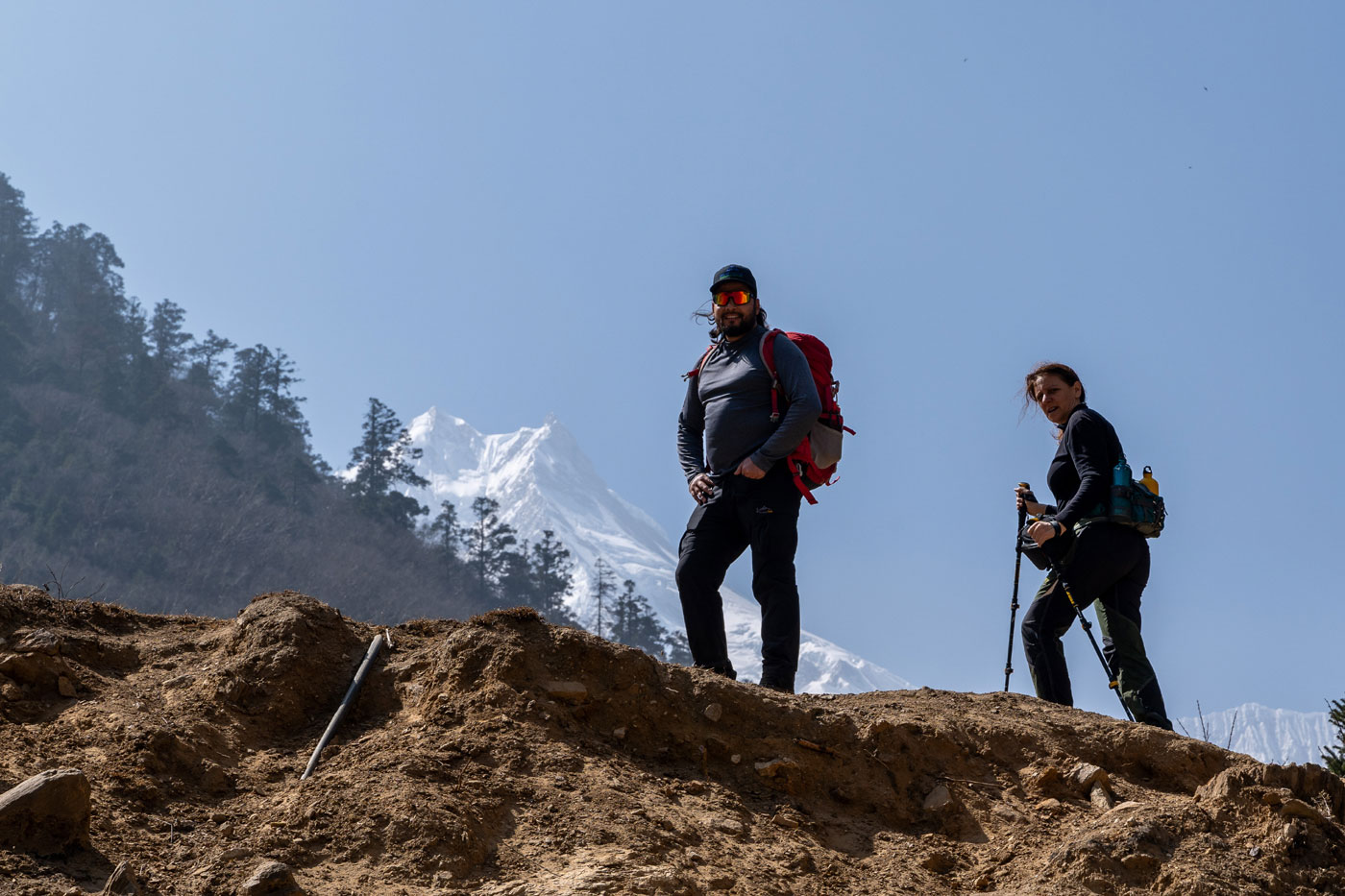
This trek is a good fit for physically active trekkers who are comfortable walking five to seven hours a day and can maintain a steady pace over two to three weeks. You do not need to be highly trained or extremely fit, but you should enjoy long walks, be comfortable on uneven trails, and be prepared for both uphill and downhill sections.
It is especially suitable for trekkers who are looking for a deeper and more complete experience. If you are deciding between Manaslu and Annapurna and do not want to choose one over the other, this combined route allows you to experience both in a single journey. It is ideal for those who prefer a continuous trek rather than separate trips.
This trek also suits travelers who are interested in both nature and culture. Along the route, you move through different communities, including Gurung villages in the lower regions, Tibetan-influenced settlements in the higher Manaslu area, and Thakali culture near Muktinath. The experience is not only about walking through mountains, but also about understanding how people live in these remote regions.
For beginners, this trek is possible but requires preparation. It is longer and more demanding than shorter treks like Langtang or Annapurna Base Camp, so first-time trekkers should be physically active and ready for a sustained journey. Previous trekking experience is helpful, but not necessary if you prepare well and follow a steady pace.
This route is also a good choice for trekkers who prefer a mix of quiet and social environments. The Manaslu section offers more remote and less crowded trails, while the Annapurna section provides a more connected and lively trekking atmosphere. This balance works well for those who want both solitude and interaction.
Age is not a limitation for this trek. Trekkers of different age groups have successfully completed similar routes. What matters most is overall fitness, a positive mindset, and the ability to adapt to simple living conditions during the trek.
In simple terms, this combined trek is for travelers who want to go beyond a standard trekking experience. It is for those who are willing to invest time and energy in exchange for a richer, more diverse, and more meaningful journey through the Himalayas.
Final Verdict: Is the Manaslu and Annapurna Combined Trek Worth It?
The Manaslu and Annapurna combined trek is not the shortest or the easiest option in Nepal, but it is one of the most complete and rewarding journeys you can take in the Himalayas. It brings together two very different trekking experiences into one continuous route, allowing you to move from remote valleys into more established mountain trails without breaking the flow of the journey.
What makes this trek truly worth it is not just the distance or the altitude, but the sense of progression it offers. You begin in quiet river valleys, walk through traditional villages, gradually enter higher and more rugged landscapes, cross one major pass, and then continue toward another. Along the way, you experience different cultures, changing environments, and a rhythm of trekking that builds day by day.
The Manaslu section offers a quieter, less commercialized experience where the connection to local life and landscape feels more direct. The Annapurna section adds variety, accessibility, and a wider range of facilities. Together, they create a balance that is difficult to find on a single trek.
This journey does require time, patience, and preparation. It is not designed for rushed travel or quick experiences. But for those who are willing to commit, the reward is a deeper understanding of the mountains and the people who live there.
From a practical point of view, combining these two treks also makes sense. Instead of choosing between regions or planning multiple trips, you experience both in one well-structured route. The effort you invest is returned through a more diverse and complete trekking experience.
In simple terms, this trek is worth it for those who want more than just reaching a destination. It is for travelers who value the journey itself, who are interested in both nature and culture, and who want to experience the Himalayas in a way that feels continuous and real.
For many trekkers, this is not just another route. It becomes a journey that stays with them long after the trek is finished.