What Is the Difference Between a 12-Day and 14-Day Everest Base Camp Trek?
The difference between a 12-day and 14-day Everest Base Camp Trek depends first on where the counting begins. If the 12 days run from the flight to Lukla through to the flight back to Kathmandu, there is enough room for the usual route to Everest Base Camp with acclimatization stops in Namche Bazaar and Dingboche. A 14-day package does not necessarily give you two additional trekking days in the Khumbu.
We see this distinction when comparing itineraries for trekkers before they arrive in Nepal. Two programs may use the same overnight stops from Lukla through Namche, Tengboche, Dingboche and Lobuche, reach Everest Base Camp on a similar trekking day, and descend on the same schedule. One is sold as 12 days because it starts with Lukla; the other becomes 14 days because the operator has included Kathmandu at the beginning or end.
The difference becomes meaningful when those additional days are actually placed inside the mountain itinerary. An extra night above Lukla can change the spacing between overnight stops or give the itinerary more flexibility at altitude. An extra night in Kathmandu cannot do that, although it can be valuable when planning around mountain flights and an international departure.
| What to check | 12-day Everest Base Camp Trek | 14-day Everest Base Camp Trek |
|---|
| Where the count begins | Commonly starts with the journey to Lukla | Can include Kathmandu before the trek |
| Route through the Khumbu | Lukla to EBC and back can fit within the 12-day schedule | May use the same mountain route as the 12-day schedule |
| Namche Bazaar | Acclimatization day can remain in the itinerary | Check whether an additional day is actually added here |
| Dingboche | Acclimatization day can remain in the itinerary | Check whether the mountain schedule differs at all |
| Walking stages | Determined by the overnight stops, not the package name | Only become slower if the extra days change those stops |
| Additional days | Usually planned separately from the 12 trekking days | Could be in Kathmandu, in the Khumbu, or used as schedule margin |
| Flight buffer | Should be checked separately | Do not assume the extra two days are automatically flight buffers |
When we compare an Everest Base Camp itinerary, we therefore look down the overnight stops before looking at the total duration. Namche Bazaar and Dingboche tell us whether the normal acclimatization stops have been protected. The progression from Tengboche to Dingboche and then Lobuche shows how quickly the itinerary is gaining sleeping altitude. Finally, we check what happens before the Lukla flight and after the return from Lukla.
That is the practical difference between 12 and 14 days. If the two extra days do not change the mountain schedule, they do not make the Everest Base Camp Trek two days slower. They simply make the complete Nepal itinerary two days longer.
Why Are Some Everest Base Camp Treks 12 Days and Others 14 Days?
There is no single industry rule for when the day count of an Everest Base Camp Trek has to begin. This is why two itineraries can show 12 days and 14 days on their booking pages even when the walking route through the Khumbu is almost the same.
In a common 12-day format, Day 1 begins when you leave Kathmandu for Lukla. After landing, you start walking from Lukla rather than spending a separate day getting to the trail. The following days are counted through the trek to Everest Base Camp and the return journey, with the flight from Lukla back to Kathmandu completing Day 12. Hotel nights in Kathmandu before or after the trek are outside that count.
A 14-day program can be counted differently. If your arrival in Kathmandu is Day 1, followed by a preparation day or an additional Kathmandu night before the Lukla flight, the total trip becomes longer before you have walked a kilometre of the EBC trail. The same can happen at the other end when a Kathmandu night after the return flight is included within the advertised duration.
This is different from adding a day in the mountains. A night inserted into the Khumbu itinerary changes where you sleep and potentially how the following trekking stages are spaced. A Kathmandu night does not change the walking schedule between Lukla and Everest Base Camp. Both can be useful, but they solve different problems and should not be treated as the same kind of extra day.
When we receive an Everest Base Camp inquiry in Kathmandu, the number of days alone is therefore not enough for us to understand the itinerary a trekker is comparing. We check where Day 1 is spent, when the Lukla flight occurs, which nights are used in the Khumbu, when Everest Base Camp and Kala Patthar are reached, and when the trekker is expected back in Kathmandu. This quickly shows whether a 14-day trip actually contains more time on the trail or simply counts more of the travel around it.
There is an easy way to check this yourself. Open the itinerary and find where you sleep on Day 1. Then check where you sleep on the final day. If those nights are in Kathmandu, part of the advertised duration is being used outside the Everest region. If the itinerary begins around Lukla and ends with the return flight from Lukla, the advertised number is much closer to the mountain portion of the trip.
That is why the day count should be the beginning of an Everest Base Camp comparison, not the basis for the decision. Two extra days on the package title only become two extra days on the trek when the itinerary actually places them there.
If your priority is reducing the total trekking time rather than adding Kathmandu days, you can also compare a Short Everest Base Camp Trek, where the mountain itinerary itself is designed differently from the standard 12-day schedule.
What Does a 12-Day Everest Base Camp Trek Include?
A 12-day Everest Base Camp Trek can cover the complete journey from Lukla to Everest Base Camp and back to Lukla without removing the commonly used acclimatization days in Namche Bazaar and Dingboche. That does not make 12 days the right pace for every trekker. It means the standard mountain schedule can fit within 12 days when Kathmandu hotel nights and separate travel buffers are not counted as trekking days.
Families and older trekkers comparing itinerary pace can also see how we approach the Everest Base Camp Trek for seniors and kids.
One common 12-day sequence is:
Day 1: Fly to Lukla and walk to Phakding
Day 2: Phakding to Namche Bazaar
Day 3: Acclimatization in Namche Bazaar
Day 4: Namche Bazaar to Tengboche
Day 5: Tengboche to Dingboche
Day 6: Acclimatization in Dingboche
Day 7: Dingboche to Lobuche
Day 8: Lobuche to Gorak Shep, visit Everest Base Camp and return to Gorak Shep
Day 9: Kala Patthar in the morning and descend toward Pheriche
Day 10: Pheriche to Namche Bazaar
Day 11: Namche Bazaar to Lukla
Day 12: Fly from Lukla to Kathmandu
The important days in that sequence are not only the day you reach Everest Base Camp. Days 3 and 6 deliberately stop the forward movement of the trek. From Namche, trekkers normally spend part of the acclimatization day walking higher before returning to sleep at the same elevation. Dingboche serves a similar purpose later in the route, when the trek has already moved above 4,000 metres and the next overnight stop is Lobuche.
This is also where a 12-day itinerary starts to feel different from simply looking at distances on a route map. The walk from Dingboche toward Lobuche is not exceptionally long in kilometres, but the trail is now staying high. From Lobuche, trekkers continue to Gorak Shep, leave their main bags at the lodge and walk on toward Everest Base Camp before returning to Gorak Shep for the night. Kala Patthar is usually approached the following morning, when many trekkers are already carrying several days of fatigue as well as walking at the highest part of the journey.
When we review a 12-day EBC schedule in Kathmandu, these are the days we do not want to compress simply to make the package shorter. A trekker feeling strong in Namche does not tell us how that same person will respond after sleeping in Dingboche, Lobuche or Gorak Shep. Fitness helps with the walking, but it does not make the body's response to increasing altitude predictable.
The return schedule is where much of the time is recovered. After Kala Patthar, the route drops through Pheriche and continues back toward Namche and Lukla over the following days. Descending can be quicker than the gradual approach used on the way up, which allows the complete Lukla to Lukla route to fit within this 12-day format without taking an acclimatization day out of the ascent.
There is still one important day that this schedule does not contain: a guaranteed weather buffer for the return flight from Lukla. Day 12 assumes the mountain flight operates as planned. When we arrange international departure dates, we treat additional time in Kathmandu separately rather than presenting it as another acclimatization day on the Everest Base Camp Trek.
So, when you see an Everest Base Camp Trek advertised as 12 days, check whether Namche and Dingboche remain in the schedule, where you sleep each night on the ascent, and what happens after Kala Patthar. Those details tell you whether the itinerary has preserved the normal altitude progression or has simply removed days to produce a shorter package.
What Do the Extra Two Days Add to a 14-Day Everest Base Camp Trek?
For the 14-day Everest Base Camp Trek compared here, the route in the mountains follows the same 12-day trekking schedule, with two additional days in Kathmandu included in the complete trip. One is used before the flight to Lukla and the other comes after returning from the trek.
This distinction is important. The extra two days do not add two more walking days between Lukla and Everest Base Camp. Namche Bazaar and Dingboche remain the main acclimatization stops, and the route through Tengboche, Lobuche and Gorak Shep follows the same progression before reaching Everest Base Camp and Kala Patthar.
The first Kathmandu day gives the trekker time to arrive in Nepal before heading directly into the mountains. From our side, this is useful for meeting the guide, checking trekking equipment, sorting out anything that is missing and making sure the traveler is ready for the Lukla flight. It also avoids building the mountain departure around an international flight arriving on the same day.
The second Kathmandu day comes after the trek. Instead of treating the scheduled Lukla return and the end of the Nepal trip as the same point, the itinerary brings the trekker back to Kathmandu before the final departure day. This creates a cleaner separation between the mountain journey and the international travel schedule.
What those two Kathmandu days do not provide is additional acclimatization in the Khumbu. A night in Kathmandu cannot replace a night deliberately placed during the ascent. If the Namche, Dingboche, Lobuche and Gorak Shep schedule is unchanged, the altitude progression of the 14-day version remains essentially the same as the 12-day trek.
This is why we describe the 14-day option as a more complete Nepal itinerary rather than simply calling it a slower Everest Base Camp Trek. The additional time is around the mountain journey, not automatically inside it.
In this comparison, the difference is therefore straightforward: 12 days covers the Everest Base Camp trekking schedule from the Lukla journey through the return to Kathmandu, while 14 days includes that trekking schedule together with two additional days in Kathmandu.
12-Day vs 14-Day Everest Base Camp Trek: Side-by-Side Comparison
For the two Everest Base Camp itineraries compared here, the difference happens mainly in Kathmandu, not on the trail. Both use the 12-day mountain schedule with acclimatization in Namche Bazaar and Dingboche, continue through the upper Khumbu to Everest Base Camp and Kala Patthar, and return on foot to Lukla. The 14-day version adds two Kathmandu days around that journey.
| What are you comparing? | 12-Day Everest Base Camp Trek | 14-Day Everest Base Camp Trek |
|---|
| Total program length | 12 days | 14 days |
| EBC trekking schedule | 12-day mountain program | Same 12-day mountain program |
| Kathmandu days within the package | Not included | 2 days included |
| Namche Bazaar acclimatization | Included | Included |
| Dingboche acclimatization | Included | Included |
| Walking route in the Khumbu | Lukla to EBC and back to Lukla | Same |
| Everest Base Camp | Included | Included |
| Kala Patthar | Included | Included |
| Walking pace on the ascent | Standard 12-day schedule | No change |
| Sleeping-altitude progression | Same planned progression | Same planned progression |
| Time before the Lukla flight | Planned outside the 12 days | Kathmandu time included |
| Time after returning from Lukla | Planned outside the 12 days | Kathmandu time included |
| Main difference | Counts the mountain journey | Counts the mountain journey plus Kathmandu days |
The important part of this comparison is what stays unchanged. On the trail, the trekker is not moving more slowly simply because the package says 14 days. Namche and Dingboche remain in the same positions in the ascent, and the higher section through Lobuche and Gorak Shep is not stretched across additional days.
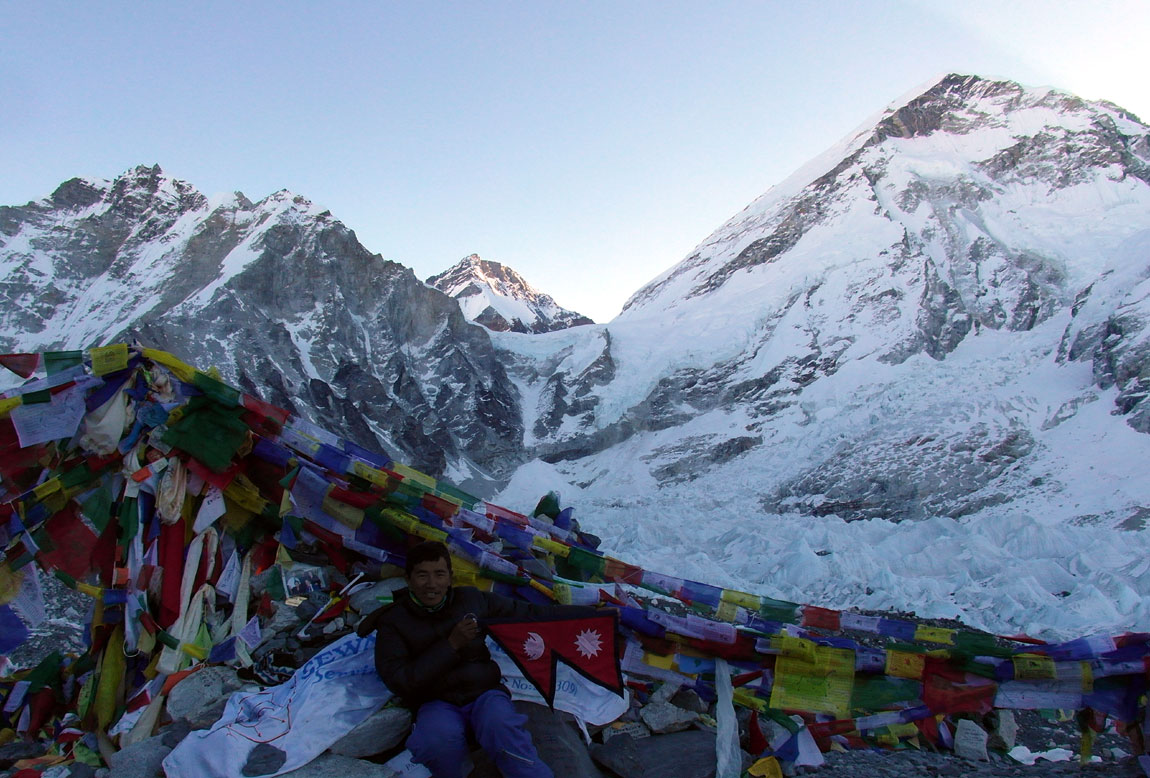
From our side in Kathmandu, this changes how we look at the two options. With a 12-day trekking program, we still need to know when the trekker arrives in Nepal and how much time remains after the planned Lukla return. Those days exist in the travel plan even when they are not printed inside the trekking itinerary. The 14-day format simply brings two of them into the package.
This distinction becomes particularly important when someone compares prices. A higher 14-day price should not automatically be interpreted as paying for two additional trekking days or two additional days of acclimatization. In this comparison, part of the difference covers the additional Kathmandu portion of the trip rather than a longer walk through the Khumbu.
There is also no difference in the physical altitude of the route. Everest Base Camp, Kala Patthar, Lobuche and Gorak Shep do not become easier because the package contains two Kathmandu days. If the overnight sequence in the mountains remains unchanged, the trekker still follows essentially the same altitude progression and walking rhythm.
So, when comparing these two itineraries, look beyond 12 versus 14 and ask one simple question: where are the additional nights? Here, they are in Kathmandu. That makes the 14-day option a longer overall Nepal itinerary, not a two-day longer trek through the Everest region.
Is Acclimatization Different on a 12-Day vs 14-Day Everest Base Camp Trek?
For the 12-day and 14-day Everest Base Camp itineraries compared here, the acclimatization schedule does not change. Both keep dedicated acclimatization days in Namche Bazaar and Dingboche before the route continues toward Lobuche and Gorak Shep. The two additional Kathmandu days in the 14-day program do not provide two additional days of high-altitude acclimatization.
On the trail, we look at acclimatization through sleeping elevations rather than the total number printed on the itinerary. Namche Bazaar is the first deliberate pause in the upward progression. Instead of moving to another village for the night, trekkers normally walk above Namche during the day and come back down to sleep in Namche again. The body experiences a higher elevation during the hike without immediately moving the overnight altitude higher.
The same principle becomes more important in Dingboche. By then, the route has already climbed beyond 4,000 metres, and Lobuche and Gorak Shep are still ahead. An acclimatization hike from Dingboche allows the trekker to gain elevation during the day and return to the same village for another night before continuing farther up the valley.
This is also where the numbers on an itinerary can become misleading. A trekker may have walked strongly from Lukla through Namche and Tengboche, but that does not tell us exactly how the same person will feel after sleeping in Dingboche and then moving toward Lobuche. The walking distances become only part of the picture as sleeping altitude increases.
From a guide's point of view, the morning after an overnight stay can tell us more than the package length. How the trekker slept, whether a headache has settled or worsened, appetite, unusual fatigue and how the person feels before starting uphill again are more useful on the trail than assuming a scheduled acclimatization day has automatically done its job. If symptoms are concerning or worsening, the printed itinerary should not dictate the decision to continue higher.
Trekkers preparing for this altitude progression can read our Everest Base Camp trek preparation guide for a closer look at training, acclimatization and getting ready for the higher Khumbu.
This is why an acclimatization day and a spare travel day should never be counted as the same thing. Namche and Dingboche are positioned within the ascent for a reason. A Kathmandu day can help with the wider travel schedule, but it does not change the sleeping-altitude progression between Lukla and Gorak Shep.
For the two itineraries in this comparison, 14 days therefore does not provide more acclimatization than 12 days. Both use the same acclimatization pattern in the Khumbu. To create a genuine difference, an additional day would need to change the mountain schedule itself rather than simply extend the time spent in Nepal.
Is the Walking Pace Different on a 12-Day vs 14-Day Everest Base Camp Trek?
For the two itineraries compared here, the walking pace in the Everest region is essentially the same. The 14-day version adds time in Kathmandu rather than splitting the Khumbu route into shorter trekking stages, so those two additional days do not make the walk from Lukla to Everest Base Camp slower.
The difference between a lower and upper Khumbu walking day is much more important than the difference between the numbers 12 and 14. From Phakding, the trail follows the Dudh Koshi, crosses suspension bridges and eventually reaches the sustained climb toward Namche Bazaar. That climb remains part of the same trekking day in both itineraries.
The day from Namche toward Tengboche is different again. Trekkers lose elevation before climbing to Tengboche, so looking only at the starting and finishing elevations does not show the work involved during the day. This is one reason we prefer to look at the actual trail stage rather than judging an EBC itinerary from the elevation of the overnight villages alone.
Above Dingboche, pace becomes even more important. The route toward Lobuche is not exceptionally long when measured only in distance, but the trekker is now spending the day at a much higher elevation than during the approach to Namche. A pace that felt comfortable lower in the valley may be unnecessarily fast here. Our guides normally allow the group to settle into a steady walking speed rather than trying to match the pace used during the first days of the trek.
The Everest Base Camp day has another pattern. Trekkers walk from Lobuche to Gorak Shep, usually leave their main trekking bags at the lodge, and continue across the rougher high-altitude terrain toward Everest Base Camp before returning to Gorak Shep. Reaching the Base Camp marker is not the end of the walking day. There is still a return to the lodge at roughly 5,000 metres, which is easy to overlook when comparing itineraries from a simple route list.
Kala Patthar is normally approached early the following morning. The climb is relatively short in distance but begins from Gorak Shep at high altitude. After returning, the direction of the trek changes. Instead of continuing to gain sleeping elevation, trekkers begin losing altitude toward Pheriche and eventually Namche. This allows more ground to be covered on some descent days than was sensible during the ascent.
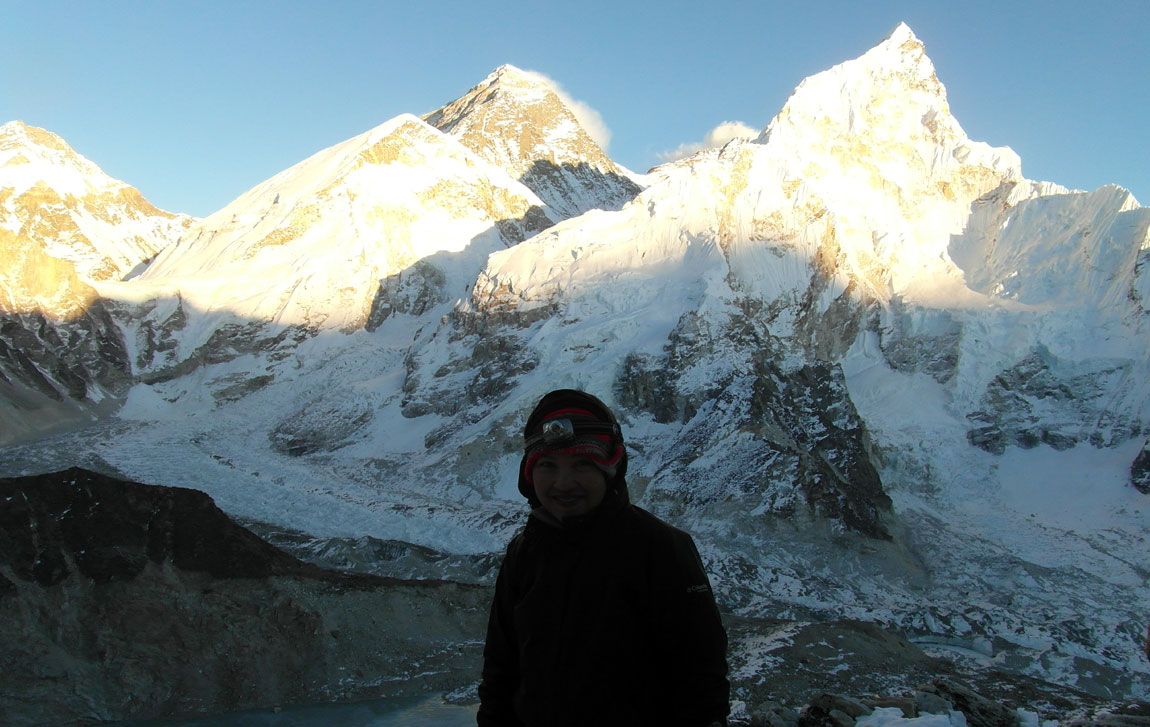
From a guide's point of view, walking pace therefore changes within the same itinerary. We do not expect someone to walk from Dingboche toward Lobuche at exactly the same speed they used below Namche. Elevation, trail conditions, weather, how the trekker is moving that morning and the next overnight stop all influence how the day is handled.
This is the practical answer to the 12-day versus 14-day question: the 14-day itinerary compared here does not give you two slower trekking days in the Khumbu. Both follow the same mountain schedule. What changes the walking pace is where you are on the trail, particularly as the route moves above Dingboche toward Lobuche, Gorak Shep and Everest Base Camp, not the total number of days printed on the package.
How Do Lukla Flights Affect the 12-Day vs 14-Day Everest Base Camp Trek?
Lukla flights do not change the walking schedule of the 12-day and 14-day Everest Base Camp Treks compared here, but they do change how we look at the days surrounding the trek. The main concern is not reaching Everest Base Camp two days earlier or later. It is how much time remains between the planned mountain flight and the trekker's international travel.
Flights to and from Lukla depend on suitable mountain weather and visibility. A flight shown on an itinerary for a particular morning can be delayed or cancelled when conditions do not allow aircraft to operate. For this reason, we do not treat a scheduled Lukla return as if it were a guaranteed connection with an international flight from Kathmandu.
This becomes particularly important on Day 12 of the shorter itinerary. The printed schedule may finish with the flight from Lukla, but from our Kathmandu office we still want to know one more detail: when is the trekker flying home? If the international departure is booked too close to the expected Lukla return, there is very little room when mountain flights do not operate as planned.
Peak trekking season adds another logistical detail. Lukla flights commonly operate through Manthali Airport in Ramechhap during busy spring and autumn periods rather than directly from Kathmandu. Reaching Manthali involves an early road journey of roughly four to five hours from Kathmandu before the short mountain flight to Lukla. The departure airport and transfer arrangement should always be reconfirmed close to the trek because operating plans can change.
The return through Manthali also makes the final travel day longer than the flight time alone suggests. After landing from Lukla, trekkers still have the road journey back to Kathmandu. This is another reason we look at the complete travel schedule rather than treating “Lukla to Kathmandu” as a simple fixed-time transfer.
For the 14-day itinerary compared here, the Kathmandu time around the trek gives more separation between the mountain journey and the international travel schedule. It does not make the Lukla flight more reliable, and it does not guarantee that one spare day will absorb every weather disruption. What it provides is time outside the 12-day mountain schedule that the shorter itinerary does not include within its advertised duration.
The 12-day Everest Base Camp Trek can still use exactly the same mountain itinerary. The practical difference is that any Kathmandu nights and flight margin need to be considered separately when planning the complete Nepal trip.
This is why, when comparing 12 days with 14 days, we would not ask only, “How many days does the trek take?” We would also ask, “How much time is left after the planned return from Lukla?” For many trekkers, that second question is more important when booking the international flight home.
Should You Choose a 12-Day or 14-Day Everest Base Camp Trek?
For the two itineraries compared here, choosing between 12 and 14 days is less about how quickly you want to reach Everest Base Camp and more about how you are arranging the rest of your time in Nepal. The walking schedule in the Khumbu is essentially the same, so adding two Kathmandu days does not turn the 14-day version into a slower trek.
When someone contacts us about these two options, one of the most useful details is often not fitness level but the complete Nepal travel dates. We look at when the international flight arrives, when the trekker needs to be back in Kathmandu, whether hotel nights are already booked, and whether there are other plans in Nepal before or after the trek.
The 12-day Everest Base Camp Trek keeps the trekking program separate from those additional Kathmandu days. A traveler can arrive earlier, choose their own hotel, spend extra time in Kathmandu or continue elsewhere in Nepal after the trek without placing those days inside the EBC package.
This is why having a longer holiday does not automatically mean you need the 14-day option. Someone with 16 or 18 days in Nepal may still use the 12-day trekking program and keep the remaining days outside it. Those days can then be arranged around the trek according to the rest of the travel plan.
With the 14-day Everest Base Camp Trek, the Kathmandu portion is already built into the itinerary. For the version compared in this article, the mountain journey remains the same, but the trek sits inside a longer Kathmandu-to-Kathmandu program rather than being treated as a separate 12-day trekking block.
Price should be read in the same way. If the 14-day program costs more, check what is being provided during the additional Kathmandu time before assuming the difference pays for two extra days in the mountains. The useful comparison is what is included on those days, not simply the difference between the two package prices.
There is one situation where neither number gives the answer. If a trekker specifically wants another acclimatization night, shorter stages higher in the Khumbu, or more flexibility before reaching Gorak Shep, we would look at changing the mountain itinerary itself. Adding Kathmandu days around an unchanged trekking schedule does not create that extra time on the trail.
Travelers whose main concern is reducing the return journey rather than adding Kathmandu days can instead compare an Everest Base Camp Trek with helicopter return, where the itinerary changes after reaching the upper Khumbu.
So, before choosing between these two Everest Base Camp itineraries, start with your total Nepal dates, not the package number. Then check which days you want the trekking company to arrange and which days you prefer to keep outside the trek. For the 12-day and 14-day versions compared here, that distinction is more useful than treating one as the faster trek and the other as the slower trek.
What Should You Check Before Booking a 12-Day or 14-Day Everest Base Camp Trek?
Before booking either itinerary, put the two schedules next to each other and ignore the package titles for a moment. Follow the overnight stops from Kathmandu to Lukla, through the Khumbu and back again. Within a few minutes, you should be able to see whether the extra days change the trek itself or simply extend the time around it.
Start with where Day 1 is spent and where the itinerary finishes. This tells you whether Kathmandu arrival and departure time is included within the advertised duration or sits outside the trekking package.
Then look at the ascent. We would check Namche Bazaar and Dingboche first, followed by the sleeping progression toward Lobuche and Gorak Shep. Do not assume a longer itinerary provides more acclimatization. Find the additional night on the actual schedule and see whether it changes where you sleep in the mountains.
Next, check the return from Lukla against your international flight. The date printed for the Lukla return is a planned mountain-flight day, not something we would treat as a guaranteed international connection. If the travel schedule is tight, the amount of time remaining in Kathmandu matters regardless of whether the trekking package itself is called 12 days or 14 days.
Price needs the same kind of check. Compare what is actually included during the additional days. Kathmandu hotel nights, transfers and services around the trek are different from paying for another guide day, lodge night or trekking day in the Khumbu. A larger package price does not by itself tell you that more money is being spent on the mountain portion.
When we check an Everest Base Camp itinerary from our Kathmandu office, the most useful question is usually very simple:
Where are the extra two days, and what are they doing for the trip?
If the answer is Kathmandu, you are mainly comparing two ways of packaging the same mountain schedule. If the extra nights are placed in the Khumbu, go back to the overnight stops and compare the altitude progression and walking stages again. At that point, you are no longer comparing only 12 days with 14 days. You are comparing two genuinely different Everest Base Camp itineraries.
The number in the package title gets you into the comparison. The overnight schedule tells you what you are actually booking.
Everest Base Camp Trek 12 Days vs 14 Days FAQs
1. Is 12 days enough for the Everest Base Camp Trek?
Yes, 12 days can be enough to trek from Lukla to Everest Base Camp and return to Lukla while keeping acclimatization days in Namche Bazaar and Dingboche. In the itinerary compared here, the 12 days cover the mountain journey and the return flight to Kathmandu rather than Kathmandu arrival and departure days.
The schedule still needs to remain flexible if a trekker is not adapting well to altitude.
2. What is the main difference between a 12-day and 14-day Everest Base Camp Trek?
For the itineraries compared in this article, the mountain schedule is essentially the same. The 14-day version includes two additional days in Kathmandu, while the 12-day version concentrates on the EBC trekking program.
This means the 14-day option is a longer overall Nepal itinerary, not automatically a two-day longer trek in the Khumbu.
3. Does a 14-day Everest Base Camp Trek give you more time at high altitude?
Not in the 14-day itinerary compared here. The additional days are in Kathmandu, so the overnight progression from Namche and Dingboche toward Lobuche and Gorak Shep remains unchanged.
A 14-day itinerary only provides additional time at altitude when extra days are deliberately placed within the mountain schedule.
4. Do both the 12-day and 14-day EBC itineraries include Namche and Dingboche acclimatization?
Yes. Both itineraries compared here retain dedicated acclimatization days in Namche Bazaar and Dingboche.
When comparing a different EBC itinerary online, check the actual overnight schedule rather than assuming the same acclimatization pattern from the total number of days.
5. Is the 14-day Everest Base Camp Trek easier than the 12-day trek?
Not for the two itineraries compared here. The walking stages in the Khumbu are essentially the same, so adding two Kathmandu days does not make the climb to Everest Base Camp physically easier.
A 14-day itinerary would only create a different trekking pace if its additional days were used to change the mountain schedule.
6. Should I book my international flight immediately after the Everest Base Camp Trek?
It is better to keep some time between the planned Lukla return and an international departure from Kathmandu. Lukla flights are weather-dependent, and delays or cancellations can affect the expected return schedule.
A buffer day provides useful margin, but it cannot guarantee protection from a longer period of flight disruption.
7. How can I tell if a 14-day Everest Base Camp itinerary really includes two extra trekking days?
Find the two additional overnight stops. If they are in Kathmandu, the mountain trek may be essentially the same as a 12-day program. If they appear within the Khumbu and change the progression between overnight villages, you are looking at a genuinely different mountain schedule.