Can You Trek to Everest Base Camp Without a Porter?
Yes. Hiring a porter is not what determines whether you can complete the Everest Base Camp Trek. If you choose not to use one, the practical difference is simple: everything you need during the trek has to travel with you unless you have arranged another way to transport it.
This works well for some trekkers. We have clients who arrive in Kathmandu already accustomed to multi-day trekking with a backpack and specifically tell us that they want to carry their own gear. In that situation, we do not try to add a porter simply because Everest Base Camp is a high-altitude trek. If the trekker understands the route, packs sensibly and is comfortable carrying the load, there may be no practical reason to do so.
Where we become more cautious is when someone has never carried a backpack for consecutive trekking days but plans to try it for the first time on Everest. Carrying a pack for a weekend hike at lower altitude does not show exactly how it will feel after several days on the trail, particularly once the trek has moved beyond Namche and into the higher Khumbu.
There is also a difference between trekking without a porter and carrying all of your Nepal luggage. You do not need to take everything you brought into the country to Everest Base Camp. Clothes and belongings needed before or after the trek can normally remain in Kathmandu, allowing you to take a much smaller mountain-specific load to Lukla.
For trekkers travelling with us without porter support, this is something we prefer to sort out in Kathmandu rather than after reaching the trail. If the backpack already looks unnecessarily heavy before departure, removing things at the hotel is much easier than discovering several days later that you have been carrying equipment you never use.
Not having a porter also changes the morning routine slightly. With porter-supported luggage, the main bag is normally prepared for the porter while the trekker walks with a smaller daypack containing water, a warm layer, rain protection, valuables and whatever is needed during the day's walk. Without a porter, you need to organize one backpack so that you can carry the full trekking load while still reaching frequently used items without unpacking everything at each stop.
For someone who enjoys carrying their own equipment, that independence can be part of the trekking experience. For someone whose main objective is simply to prove that they can manage without a porter, we would question whether carrying extra kilograms for the entire route adds anything useful to their Everest Base Camp trek.
The decision is therefore less about whether trekking without a porter is possible and more about whether your particular backpack and your previous trekking experience make it practical. That is the distinction we would make before leaving Kathmandu.
How Much Weight Should You Carry Without a Porter?
When a trekker tells us in Kathmandu that they want to do Everest Base Camp without a porter, we do not give them a target weight and tell them that anything below it will be easy. Two people can carry the same backpack very differently, especially when one regularly treks with a loaded pack and the other is doing it for the first time.
What we normally want to see is whether the trekker has packed for the Everest trail or simply packed for Nepal and intends to take the whole bag to Lukla.
That difference can be substantial. Clothing for Kathmandu, spare shoes, large toiletry bottles, extra casual clothes and equipment needed after the trek do not need to make the journey to Everest Base Camp. If they are not going to be used between Lukla and the higher Khumbu, carrying them over every uphill and downhill section of the route serves no practical purpose.
If you are deciding what should actually go into the mountain bag, our Everest Base Camp Trek packing list covers the clothing, layers and equipment we normally recommend for the route.
We prefer to sort this out before departure. A trekker can open the bag at the hotel in Kathmandu, separate what is actually needed on the mountain and leave the remaining travel luggage behind. Once the trek has started, there is much less flexibility to correct poor packing without arranging additional help.
We also tell trekkers not to judge the backpack only by lifting it in the hotel room. Put in the equipment you will actually take, fill the water you expect to carry during the day, put the pack on properly and walk around with it. A bag can feel reasonable when lifted for thirty seconds and still become uncomfortable after several hours on the trail.
There is another detail that becomes obvious during an actual trekking day. You may leave the lodge in the morning wearing a down jacket or fleece because it is cold, but after walking in the sun that layer often comes off and has to go somewhere. Water, snacks, gloves, a hat, rain protection and the layers you remove during the day all have to be managed from the same backpack when there is no porter carrying a separate main bag.
For that reason, we are reluctant to publish one number and describe it as the correct backpack weight for everyone. A light, well-fitted pack carried by somebody accustomed to trekking with weight can be manageable, while a similar load can become an unnecessary burden for somebody who has never carried it for consecutive mountain days.
We would also not reduce backpack weight by removing equipment that is genuinely needed higher on the route. Warm layers, suitable trekking clothing and essential personal equipment should not be left behind simply to make the luggage scale show a smaller number. The first things to question are the items that have no clear job during the trek.
Our practical test in Kathmandu is therefore quite simple: if we take an item out of your backpack, can you explain when you expect to use it between Lukla and Everest Base Camp? If there is no good answer, it probably does not need to travel all the way up the Khumbu on your back.
Where Does Carrying Your Own Backpack Become Harder on the EBC Trail?
The walk from Lukla to Phakding is too early to judge whether you have packed correctly for an Everest Base Camp trek without a porter. Your legs are fresh, you have only been carrying the backpack for a few hours, and you are still in the lower part of the route. A pack that feels comfortable on this first day can give a completely different impression during the climb to Namche Bazaar.
The approach to Namche is usually where we get a better idea of how somebody is managing their backpack. After several hours of walking and a sustained uphill climb, poorly adjusted shoulder straps, a loose hip belt, uneven weight inside the bag or something hard pressing against the back becomes much easier to notice. A trekker may still reach Namche without difficulty, but we would rather correct these problems there than watch them continue for another week.
Reaching Namche with the full backpack also does not tell us that the same load will work comfortably in the upper Khumbu. The trek continues through repeated climbs and descents toward Tengboche and then higher toward Dingboche. By this stage, the shoulders, hips and legs have already spent several consecutive days under the same load, which is very different from carrying a similar backpack on a single weekend hike.
Around Dingboche, at approximately 4,400 metres, we pay more attention to how the trekker is carrying the bag than to whether they are physically capable of getting it to the next lodge. Someone who is repeatedly pulling at the shoulder straps, leaning forward under the load, stopping because the backpack is uncomfortable or arriving each afternoon with painful shoulders and hips has a luggage problem that should not be ignored simply because they have managed to carry the bag this far.
The section from Dingboche toward Lobuche and Gorak Shep gives unnecessary equipment nowhere to hide. Lobuche is close to 5,000 metres and Gorak Shep is above 5,000 metres, where many trekkers naturally settle into a slower walking pace. At this elevation, we want a trekker concentrating on steady movement and how their body is responding to the altitude, not spending the day adjusting a backpack filled with things that have not been used since Lukla.
We also remind trekkers carrying their own equipment that reaching Everest Base Camp does not finish the job for the backpack. On a normal trekking itinerary with a walking return, everything carried up through the Khumbu has to come back down toward Lukla. Losing elevation changes how the walking feels, but the backpack is now sitting on shoulders and hips that have already carried it for many days.
This is different on an Everest Base Camp Trek with helicopter return, where the ascent is completed on foot but the walking return from the upper Khumbu is replaced by helicopter.
From an operator's side, one of the clearest signs of sensible packing is that the backpack almost disappears from the conversation. The trekker puts it on in the morning, makes a small adjustment if necessary, walks naturally with it and removes it at the lodge without the bag controlling the day's pace.
When the backpack becomes something we have to discuss at the end of almost every walking day, the problem usually did not begin at Lobuche or Gorak Shep. It began with what went into the bag before the trek left Kathmandu.
Who Can Trek to Everest Base Camp Without a Porter?
When somebody tells us they want to trek to Everest Base Camp without a porter, saying “I am fit” does not tell us enough. We are more interested in whether that person has carried a backpack for five or six hours, woken up the following morning and carried it again, and repeated that routine for several days.
Trekkers with this background normally arrive with a useful advantage: they already know their own equipment. They know how the backpack sits when it is fully loaded, where the hip belt needs to rest, which shoulder adjustment works for them and whether a particular pair of boots still feels comfortable after several long walking days. These details are difficult to learn from a packing list.
A strong runner, cyclist or regular gym user may have excellent fitness for the trek but still have very little experience carrying equipment over mountain terrain. We would treat those as two different things. Cardiovascular fitness helps with long walking days, while carrying your own trekking load introduces pressure on the shoulders, hips, back and feet that ordinary fitness training may not reproduce.
Previous multi-day trekking experience is therefore particularly useful for somebody considering EBC without porter support. The previous trek does not have to have been in Nepal, but experience of getting up each morning, packing the bag and walking another full day gives a person a much better reference point for what they are choosing.
High-altitude experience tells us something different. Somebody who has previously trekked above 4,000 metres may already understand that their normal walking speed changes at altitude and that they cannot expect their body to behave exactly as it does at home. That experience is useful, although it never guarantees how the same person will acclimatize on Everest.
We would think more carefully when Everest Base Camp will be both the person's first long mountain trek and their first attempt at carrying their own equipment for consecutive days. Neither of those challenges automatically requires a porter, but combining them means the trekker has very little previous experience to use when judging how the trip will feel.
If Everest will be your first multi-day mountain trek, our beginner Everest Base Camp guide looks separately at previous experience, fitness, altitude and what first-time trekkers should realistically expect.
The type of equipment also changes the discussion. A photographer carrying camera bodies, lenses, batteries and charging equipment may have considerably less flexibility than somebody travelling with basic trekking gear. If photography is an important reason for making the journey, telling that person simply to leave the equipment behind is not particularly helpful. We would instead look at whether all of it needs to remain on their own shoulders every day.
Age does not give us a reliable answer either. An older trekker with years of mountain experience may know exactly how to manage a backpack over consecutive walking days, while a much younger trekker may be carrying one properly for the first time. We would rather know what somebody has done in the mountains before than make the porter decision from their date of birth.
The people we are most comfortable seeing trek without porter support are those who already understand what carrying their own equipment involves. They do not need Everest Base Camp to teach them how their backpack fits, how their body reacts after several loaded walking days or whether they actually enjoy travelling this way.
If you have never carried your trekking equipment for several consecutive days, test it before coming to Nepal. A few proper training walks with the backpack you intend to use will tell you more about whether a no-porter EBC trek suits you than simply describing yourself as fit.
Who Should Consider Hiring a Porter for the Everest Base Camp Trek?
We normally talk more seriously about hiring a porter when carrying the luggage is likely to become a bigger problem than the walking itself. Everest Base Camp already gives you long walking days, repeated climbs and descents, and progressively higher sleeping elevations. There is no requirement to add a heavy backpack to that experience simply to prove that you can carry one.
A first-time multi-day trekker is someone we would talk to carefully before deciding. Being a beginner does not automatically mean you need a porter, but there is a difference between being fit enough to walk for several hours and knowing how your shoulders, hips, back and feet behave after carrying the same load for several days. If you have never tested that before, EBC is a fairly serious place to find out.
We pay even more attention when somebody already knows that carrying weight causes trouble. Perhaps an old backpacking trip left one shoulder painful every afternoon, the hip belt irritated the lower back, or loaded descents were uncomfortable on the knees. If the same problem has happened before, we would want to know about it while planning the trek rather than after reaching Namche.
Photographers often need a different arrangement. Someone travelling to the Khumbu specifically for photography may want a camera body, lenses, batteries and other equipment available during the day. In that case, carrying the camera equipment personally while a porter carries the main trekking bag can make much more sense than putting clothing, sleeping equipment and photography gear onto the same shoulders.
We also see couples and friends arrive with very different experience levels. One person may have spent years hiking with a backpack while the other has hardly carried one outside a day walk. We would rather arrange each person's load properly from the beginning than depend on a plan where the stronger trekker starts taking extra equipment if their partner struggles. That solution usually means one backpack keeps getting heavier as the trek continues.
Sometimes the decision changes only after the client reaches Kathmandu. Months earlier, carrying everything personally may have sounded straightforward. Then we see the actual luggage: trekking clothes, sleeping bag, toiletries, electronics, spare footwear and several items that were not part of the original packing plan. We can remove what does not need to go to Lukla, but if the remaining load is still more than the trekker expected, that is the right time to reconsider porter support.
Not everyone who hires a porter does so because they are unable to carry a backpack. Some experienced trekkers simply know that they enjoy the mountains more with a light daypack. They want their water, warm layer, rain protection, camera and personal items with them during the day while the main trekking luggage travels separately. They have carried heavy packs on other trips and have nothing left to prove by doing it again on Everest.
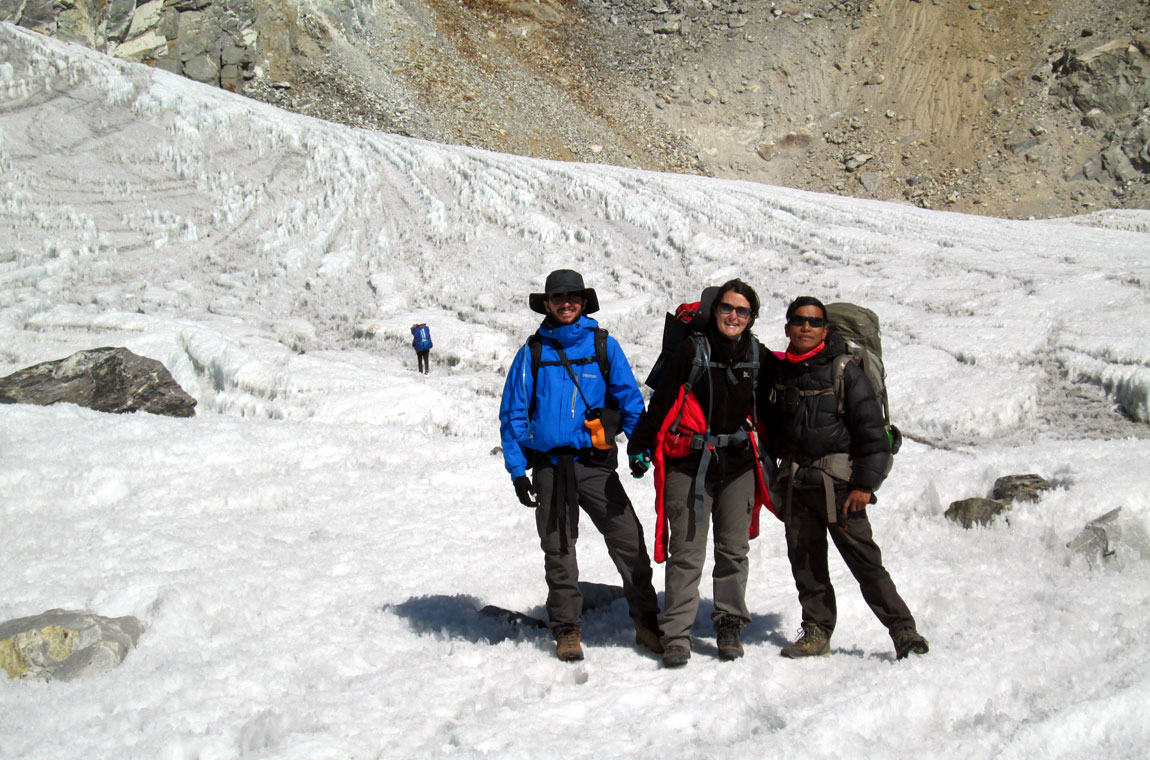
From our side, hiring a porter makes sense when the porter is solving a real problem: an uncomfortable load, equipment that genuinely needs to come on the trek, little experience carrying luggage for consecutive days, or simply a preference to walk without the full trekking bag on your back.
We are not interested in convincing every trekker that they need a porter. We are equally uninterested in convincing someone to carry a heavy backpack just so they can say they reached Everest Base Camp without one. The better arrangement is the one that lets the trekker manage the route comfortably without making luggage the main challenge of the trip.
How Much Does a Porter Cost on the Everest Base Camp Trek?
For our Everest Base Camp treks, we normally calculate porter service at USD 25 per porter per day. We calculate the final amount from the number of days the porter actually works on the trek, because not every Everest Base Camp itinerary uses a porter for exactly the same number of days.
The total trip duration can also be counted differently between packages; our Everest Base Camp 12 Days vs 14 Days comparison explains where those extra days actually appear.
For two trekkers travelling together, we normally arrange one porter to carry their combined main trekking luggage, provided the total weight stays within the load we allow for our porter. This means a couple sharing one porter does not pay USD 25 each per day. The USD 25 is the daily rate for the porter, which the two trekkers can share.
The main luggage carried by the porter is different from the backpack you walk with during the day. We still ask each trekker to carry a small daypack containing drinking water, valuables, a warm layer, rain protection, camera or phone, medication and anything else they may need before reaching the next lodge. We do not recommend putting something you may suddenly need on the trail inside the bag that has already gone ahead with the porter.
The number of porter days also needs to follow the actual route. Reaching Everest Base Camp does not finish the porter's work on an itinerary that returns on foot through the Khumbu. The luggage still has to travel back toward Lukla, so we calculate porter service through the required trekking days rather than charging only for the outward journey to Base Camp.
We confirm the luggage arrangement before departure because the number of trekkers and the amount of baggage matter more than simply booking “one porter.” If two people arrive with more luggage than we are comfortable asking one porter to carry, we first look at what can remain in Kathmandu. If the trekking luggage is still too much, we change the porter arrangement rather than increasing the load on one person.
Tipping is separate from the USD 25 daily porter rate. We prefer clients to know this before the trek rather than assume that a tip has already been included in the daily calculation.
When comparing porter prices between Everest Base Camp operators, a difference of a few dollars per day does not tell you very much by itself. Ask how much luggage the porter is expected to carry, whether one porter is being shared between trekkers, how many days have been included in the calculation, and what the company provides for the porter during the trek. Those details explain far more than the advertised daily rate.
For our own Everest Base Camp planning, the calculation begins at USD 25 per porter per day. We then confirm the trekking itinerary, number of trekkers sharing the porter and the actual luggage before giving the final porter cost.
How Much Weight Can an Everest Base Camp Porter Carry?
For our Everest Base Camp treks, we normally keep the trekking load carried by one porter within approximately 20-25 kg. When two trekkers share one porter, this is the combined weight of their main trekking luggage, not an allowance of 20-25 kg for each person.
This is something we prefer to sort out in Kathmandu rather than at Lukla. If two clients are sharing a porter, we look at both trekking bags together and make sure the combined load is reasonable before departure. Clothes and other belongings needed only in Kathmandu or after the trek can remain at the hotel instead of travelling unnecessarily through the Khumbu.
The porter-carried bag should also not contain everything you will need during the walking day. Once the porter leaves the lodge, he may walk at a different pace and may reach the next overnight stop before or after you. Your drinking water, medication, passport and money, camera or phone, rain jacket, warm layer and anything you may need before reaching the next lodge should stay in your own daypack.
If two trekkers arrive with more than 25 kg of combined trekking luggage, we do not solve the problem by simply asking the porter to carry more. We first open the bags and look at what actually needs to go on the mountain. Extra shoes, city clothes, large toiletries and duplicate items are often the easiest things to leave in Kathmandu. If the necessary trekking equipment still takes the load beyond what we are comfortable giving one porter, we arrange the luggage differently rather than adding weight to the same person.
The weight also needs to work for the whole route, not only for the first day from Lukla. A porter carrying luggage to Everest Base Camp is walking the same mountain terrain between the overnight stops and, on a normal return itinerary, carrying that luggage back down through the Khumbu. We therefore use the 20-25 kg range as a working limit for the trek rather than seeing how much somebody can physically lift at the beginning.
When two trekkers share one porter, we look at the combined weight of both main trekking bags rather than giving each person a separate maximum and ignoring the final total. If one bag is slightly heavier and the other is lighter, that is normally not the issue. What matters to us is keeping the porter's complete trekking load within the range we use for the route.
From our side, 20-25 kg is a load limit, not a packing target. If two trekkers can complete their mountain packing with less weight, we do not add unnecessary items simply because the porter could carry more. A lighter load is easier to manage between lodges and is better for the person carrying it day after day.
Can You Hire a Porter After Starting the Everest Base Camp Trek?
Yes. If you planned to carry your own backpack but change your mind after reaching Lukla, we can try to arrange a porter there for the remaining Everest Base Camp trek. The arrangement is subject to porter availability, so we prefer to know as soon as you decide rather than just before you are ready to start walking.
Lukla is the place where we would normally try to make this change. If a client arrives on the flight, puts on the fully loaded backpack and decides that carrying it for the whole trek is not what they expected, there is still an opportunity to reorganize the luggage before continuing farther into the Khumbu.
We first check what the trekker is carrying rather than immediately handing the entire bag to a porter. Things that are not needed on the mountain can be separated, while water, medication, money, passport, rain protection, a warm layer, camera or phone and anything required during the walking day remain with the trekker in a personal daypack. The porter then takes the main trekking luggage for the agreed section of the route.
The porter charge is calculated from the days the porter works rather than charging for days before the porter joined the trek. We also confirm the luggage weight before the porter starts, because adding somebody halfway into the arrangement does not change the load limit we use for our trekking staff.
Once the trek has moved beyond Lukla, we would not promise that a porter can simply be hired from the next village. It may sometimes be possible for us to arrange somebody farther up the route, but availability is not guaranteed and the cost can be considerably higher. A porter may have to travel to where the trekker is staying before taking over the luggage, which adds time and additional cost to the arrangement.
This is why we do not advise somebody to deliberately leave Lukla with an overweight backpack on the assumption that a porter will be easy to find later. If the bag already feels wrong in Lukla, tell the guide there. Waiting until the same problem has followed you farther up the trail only makes the arrangement more difficult.
For our clients, we prefer to arrange any change through our trekking team rather than asking them to find somebody independently along the route. We can then confirm who is carrying the luggage, the agreed load, the remaining working days and the additional cost before the porter joins the trek.
So if you start the trip planning to carry your own backpack and change your mind, Lukla is the place to tell us. Farther up the Everest trail, we may still be able to help, but the porter will normally cost more and we cannot guarantee that somebody will be available when you need them.
When Does Trekking Without a Porter Become a Problem?
Feeling tired after a long walking day does not mean that trekking without a porter is going badly. What gets our attention is when the backpack starts changing the way somebody walks, how often they need to stop, or how they feel after taking the bag off at the lodge.
Our guides can often see the first signs from the backpack itself. Someone who is comfortable with the load normally puts the bag on in the morning, makes an adjustment and starts walking. When the same person is repeatedly pulling the shoulder straps, loosening and tightening the hip belt, shifting the bag from one side to the other or taking it off at every short stop, we want to know what is causing the discomfort.
We also watch how the person walks with the load. Leaning unusually far forward, changing posture to balance the backpack or taking very short steps because of the weight tells us more than simply asking whether the bag feels heavy. The trekker may still be capable of carrying it, but carrying it is now affecting the way they move on the trail.
At the lodge, normal tiredness and backpack-related discomfort are usually quite different conversations. Tired legs after several hours of trekking are expected. A painful shoulder that returns every afternoon, rubbing around the hips that becomes worse each day, or back discomfort that continues after the bag has been removed is something we would want to deal with before the next morning.
Sometimes the first solution is very small. We may adjust the backpack, move heavier items closer to the back, change where something is packed or remove an item that has been carried for several days without being used. If the problem disappears after that, there is no reason to change the whole trekking arrangement.
We become more concerned when the same problem returns the following day. By then, continuing to carry the backpack is no longer only a question of determination. The trekker may be spending part of every walking day managing a luggage problem that could have been removed from the trek.
We see another version of this when friends or couples begin moving equipment between backpacks. One person starts by taking a jacket from the other. The following day it may be another piece of clothing or part of the shared equipment. Eventually the stronger trekker is carrying considerably more than planned, while the original problem has simply moved onto somebody else's shoulders.
The evening conversation can tell us just as much. If the trekker regularly reaches the lodge asking what can be removed from the bag, whether somebody else can carry something tomorrow, or how much farther they have to walk with the same load, the backpack has become too important a part of the trek.
When somebody has chosen the right load, we normally stop talking about their backpack after the first few days. It becomes ordinary trekking equipment: put it on in the morning, walk with it and take it off at the next lodge.
If we are still adjusting the load, redistributing equipment and discussing the backpack at the end of each day, we would rather solve that problem than ask the trekker to keep proving they can carry it.
So, Should You Trek Everest Base Camp Without a Porter?
If you already have experience carrying your own equipment on multi-day mountain treks, know how your backpack feels after several consecutive walking days and can keep your trekking luggage manageable, there is no reason you must hire a porter simply because you are going to Everest Base Camp.
We have trekkers who prefer carrying their own equipment and would not enjoy handing their main bag to somebody else. They like knowing exactly where everything is, they are accustomed to walking with weight, and carrying their own backpack is part of how they normally trek. For somebody with that background, doing EBC without a porter can be a perfectly reasonable choice.
We look at it differently when Everest Base Camp will be your first long trek with a loaded backpack. You may still be capable of doing it, but you will be finding out how you manage consecutive trekking days, increasing altitude and a full backpack during the same trip. A few proper training walks with the backpack you intend to bring will give you a much better idea before you come to Nepal.
Hiring a porter also does not make the Everest Base Camp Trek easy. You still walk the climb to Namche, continue through the higher Khumbu, acclimatize along the route and reach Everest Base Camp on your own feet. The difference is that your main trekking luggage is being carried separately while you walk with the things you need during the day.
When clients ask us what they should do, we would rather see the actual backpack than make the decision from a fitness description in an email. If you arrive in Kathmandu with a compact load, have carried similar weight before and know that you are comfortable with it, carrying your own bag may suit you very well.
If we open the backpack and find considerably more equipment than you expected to carry, our first answer is not automatically to add a porter. We look at what actually needs to go to the mountain and what can remain in Kathmandu. Sometimes removing the unnecessary items is enough. If the remaining trekking equipment still makes the backpack uncomfortable, porter support may make more sense.
The decision does not have to become a matter of pride once the trek begins either. If you planned to carry everything yourself but reach Lukla and realize that the backpack is not what you expected, tell us there. Subject to availability, we can try to arrange a porter from Lukla for the remaining trek. Once you have moved farther up the trail, arranging somebody becomes more expensive and cannot be guaranteed.
After organizing Everest Base Camp treks for different types of trekkers, we do not believe that everybody needs a porter, and we do not believe that everybody should carry their own main bag.
If carrying your own equipment is already a normal part of multi-day trekking for you, doing Everest Base Camp without a porter can be practical. If the backpack is likely to become one of the main difficulties of the trip, there is little benefit in carrying it simply to prove that you can.
FAQs About Trekking to Everest Base Camp Without a Porter
Do I need a special backpack for Everest Base Camp if I am not using a porter?
You do not need a special Everest-specific backpack, but you do need one that fits your body properly and remains comfortable while carrying your trekking equipment for several hours. A supportive hip belt is particularly important because the full load should not remain on your shoulders throughout the day. We recommend training with the same backpack before coming to Nepal rather than arriving with a new pack that has never been used on a long walk.
Can I leave my extra luggage in Kathmandu while trekking to Everest Base Camp?
Yes. You do not need to take all of your Nepal travel luggage to Lukla. Clothes, extra footwear and belongings needed before or after the trek can normally remain at your hotel in Kathmandu while you are in the Everest region. For somebody trekking without a porter, separating mountain equipment from general travel luggage before departure can remove a surprising amount of unnecessary weight.
Should I carry a sleeping bag myself if I trek without a porter?
If a sleeping bag is part of your trekking equipment, its packed size and weight need to be included when deciding whether carrying everything yourself is practical. Do not calculate your backpack weight using only clothing and then add the sleeping bag at the last moment. We prefer to see the complete trekking load together before departure from Kathmandu.
Where should I keep my passport, money and valuables if I use a porter?
Keep them with you. Your passport, money, phone, camera, medication and other important personal items should remain in your daypack rather than inside luggage carried by a porter. The porter may walk at a different pace, and you should not assume that you will have access to the main bag whenever you stop during the day.
Will my porter walk beside me throughout the Everest Base Camp Trek?
Usually not. A porter is responsible for transporting the agreed trekking luggage between overnight stops, but that does not mean the porter will remain beside you throughout every walking day. Depending on the day's arrangement, the porter may walk at a different pace. Anything you expect to need before reaching the next lodge should therefore stay in your own daypack.
Can two people share one porter on the Everest Base Camp Trek?
Yes. For our Everest Base Camp treks, two trekkers can normally share one porter when their combined main trekking luggage remains within our approximately 20–25 kg porter load limit. Each trekker should still carry a personal daypack containing the things they need while walking.
Should I train with my backpack before attempting EBC without a porter?
Yes. Do not test only your walking fitness. Load the backpack you intend to use and take it on several proper training walks before travelling to Nepal. More importantly, use it on consecutive days if possible. That will show you how the shoulder straps, hip belt, footwear and load feel after repeated walking rather than during one isolated training hike.
Is trekking without a porter cheaper?
You save the cost of porter service, but we would not use price alone to decide whether carrying your own main luggage is suitable. If you already have multi-day backpacking experience and are comfortable with your load, trekking without a porter can be both practical and less expensive. If you are choosing it only to save money while carrying a backpack you have never tested, the financial saving does not tell you whether the arrangement will work well on the trail.