Why Does the Best Time for Annapurna Circuit Depend on Thorong La?
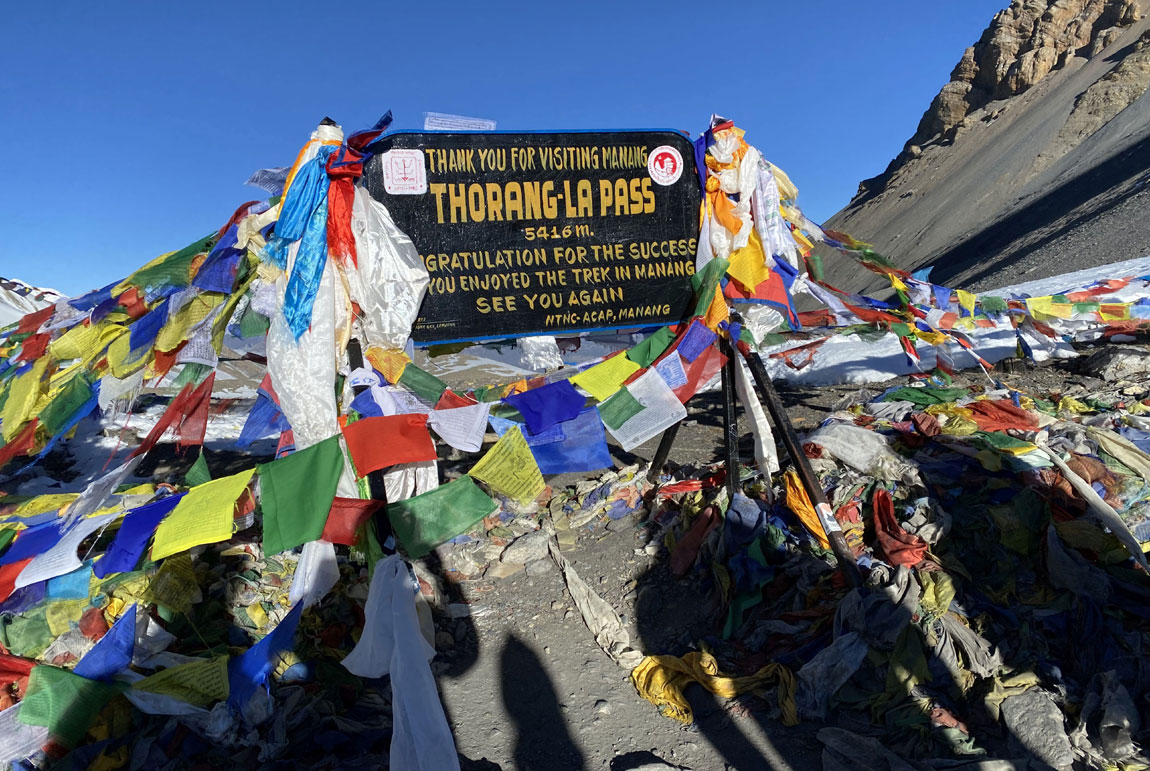
Thorong La is one of the main reasons timing matters so much on the Annapurna Circuit. At 5,416 metres, the pass is the highest point of the standard circuit, and conditions there can be very different from what a trekker experiences several days earlier around Chame, Pisang or Manang. A warm afternoon lower on the route does not tell you what the trail over the pass will be like when you reach it.
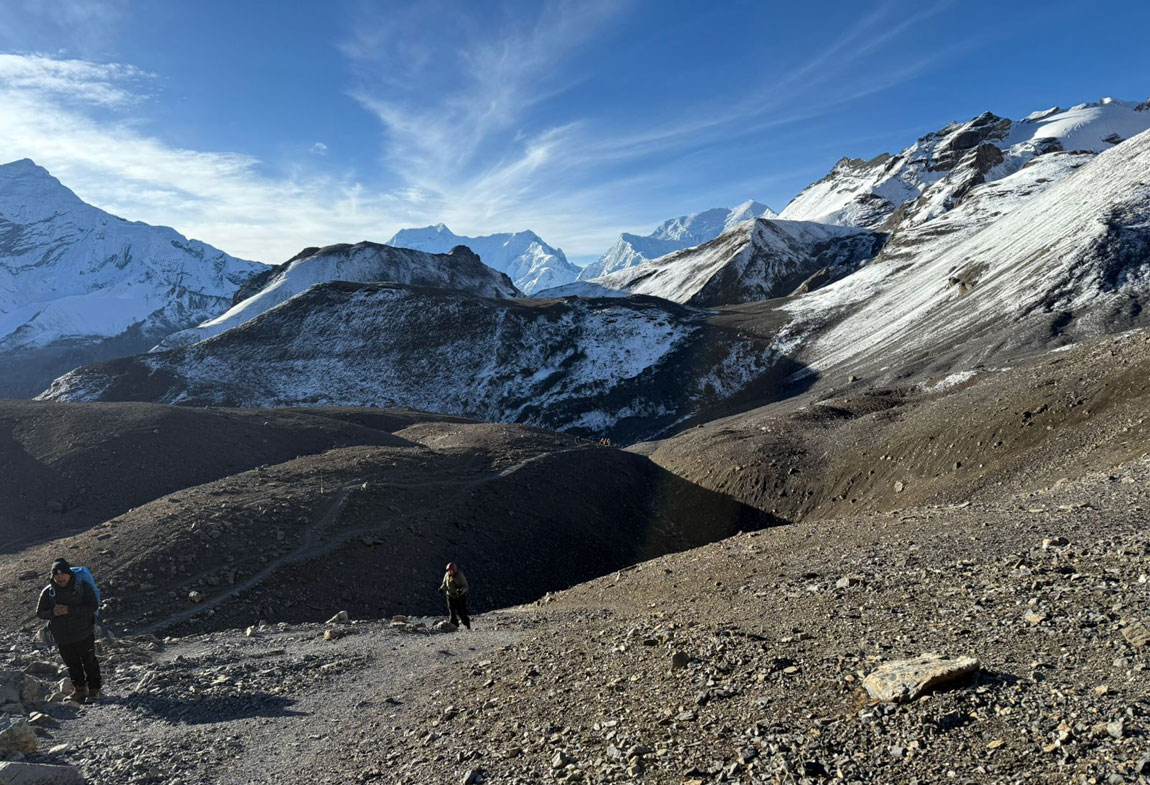
The change becomes easier to understand after Manang. The route continues higher toward Yak Kharka and then Thorong Phedi, where vegetation becomes sparse and the high valley feels much more exposed. By the time trekkers prepare for the pass, the question is no longer whether the weather has been pleasant during the lower part of the trek. We want to know what has happened at higher elevation during the previous days and what conditions are expected for the crossing.
Recent snowfall is particularly important. Snow around Manang does not automatically tell us what has accumulated higher toward Thorong La, and clear weather after snowfall does not mean the trail immediately returns to normal. Conditions underfoot, overnight freezing, wind and the amount of snow remaining on the approach can all affect how the crossing develops.
The timing of the day matters as well. Thorong La is normally approached early in the morning rather than treated like an ordinary afternoon arrival. From Thorong Phedi or High Camp, depending on the itinerary, trekkers climb toward the pass before making the long descent toward Muktinath. It is a substantial high-altitude day, and there is little value in rushing the previous stages simply to reach the pass on a fixed calendar date.
Trekkers who want more time around the complete route can also compare our 17-day Annapurna Thorong La Pass Trek, which follows the classic approach through Chame, Pisang and Manang before crossing the pass.
This is where choosing the best season and managing the actual trek become two different jobs. Spring and autumn give us the main trekking windows, but the calendar cannot tell us exactly what Thorong La will look like on a particular morning. As the group moves through Manang, information from the upper route becomes more useful than a general monthly weather description.
From an operating point of view, we want to know whether there has been recent snow, what guides and lodges farther up the route are reporting, how trekkers coming across the pass are describing conditions, and whether the weather pattern is changing. Those details help us judge the situation close to the crossing rather than assuming that an October or April departure makes every planned pass day straightforward.
The opposite side of Thorong La matters too. Reaching the prayer flags at the top is not the end of the day. Trekkers still have a long descent toward Muktinath, so the condition of the route beyond the pass is part of the decision as well. A crossing should be considered as the complete high day, not simply the climb to 5,416 metres.
That is why Thorong La sits at the centre of any useful discussion about the best time for the Annapurna Circuit Trek. The season helps you choose when to start, but as the trek approaches the high pass, recent conditions, the crossing-day weather and information from the trail should matter more than the month printed on the itinerary.
Spring vs Autumn for the Annapurna Circuit Trek: Which Should You Choose?
Both spring and autumn are strong seasons for the Annapurna Circuit Trek, but they do not give you the same experience. Choose spring if you prefer a greener trail, flowering forests and temperatures that generally become warmer as the season progresses. Choose autumn if clear post-monsoon mountain views are your main priority and you do not mind sharing the route with more trekkers during the busiest weeks.
The difference is noticeable before you reach the high country. In spring, the lower and middle sections of the route are coming out of winter. March can still feel cold, particularly in the mornings, while April brings warmer walking conditions and rhododendron flowering in suitable forested sections. By May, the lower valleys are considerably warmer, but afternoon cloud and pre-monsoon haze can become more noticeable.
Autumn begins from the opposite direction. September follows the summer monsoon, so an early September departure can still encounter rain, cloud and wetter conditions on the lower approach. As the monsoon withdraws, the air generally becomes clearer. October sits in the middle of the main post-monsoon trekking period, while November keeps much of the autumn clarity but becomes progressively colder, especially once the trek moves above Manang.
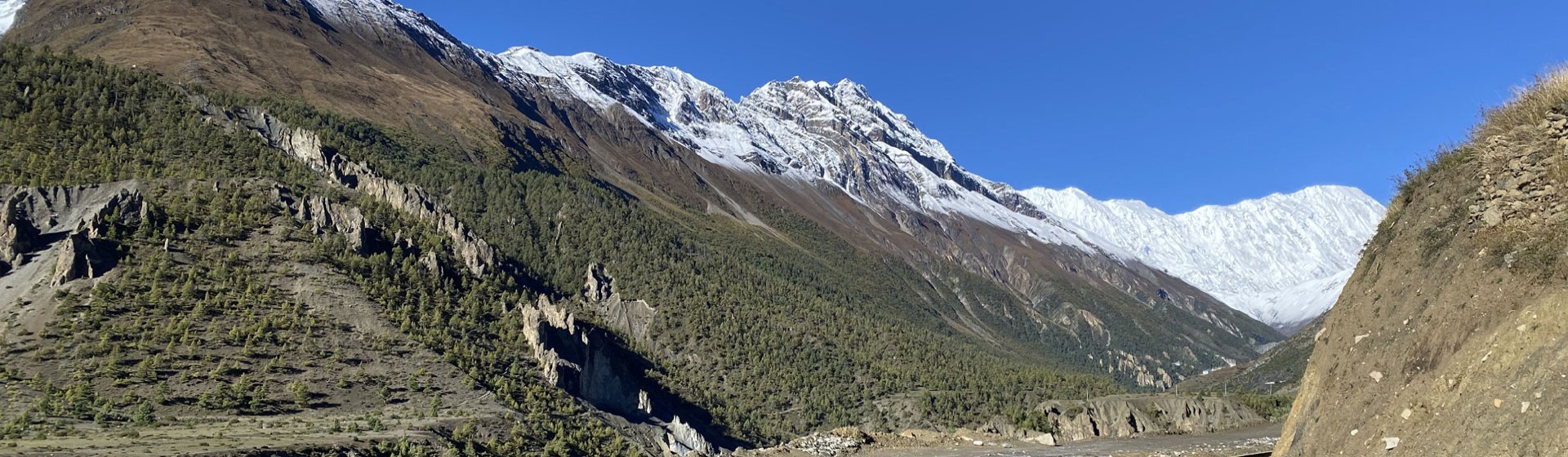
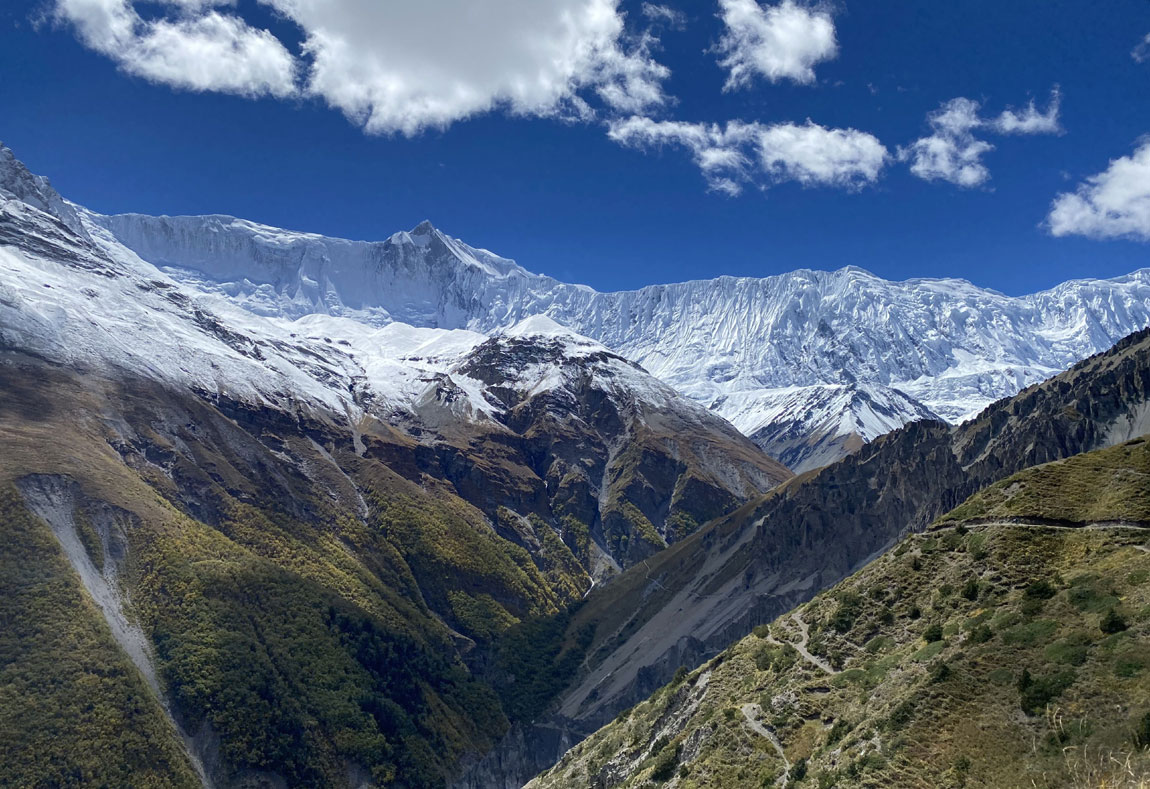
For mountain visibility, this is one of autumn's main advantages. After the monsoon, mornings can give particularly clean views around Pisang and Manang, where Annapurna II, Annapurna III, Gangapurna and the surrounding peaks begin to dominate the route. Spring can also produce excellent mountain mornings, but later in the season the view can soften as cloud and haze build during the day.
Spring has an advantage lower on the trail that autumn cannot reproduce in the same way. Vegetation is becoming active again, and flowering rhododendrons can add colour to forested sections at suitable elevations. The change is gradual as you climb, so the spring experience is not simply “flowers everywhere.” Once the route moves beyond Manang toward Yak Kharka and Thorong Phedi, the landscape becomes increasingly alpine and the seasonal difference is felt more through temperature, snow and wind than vegetation.
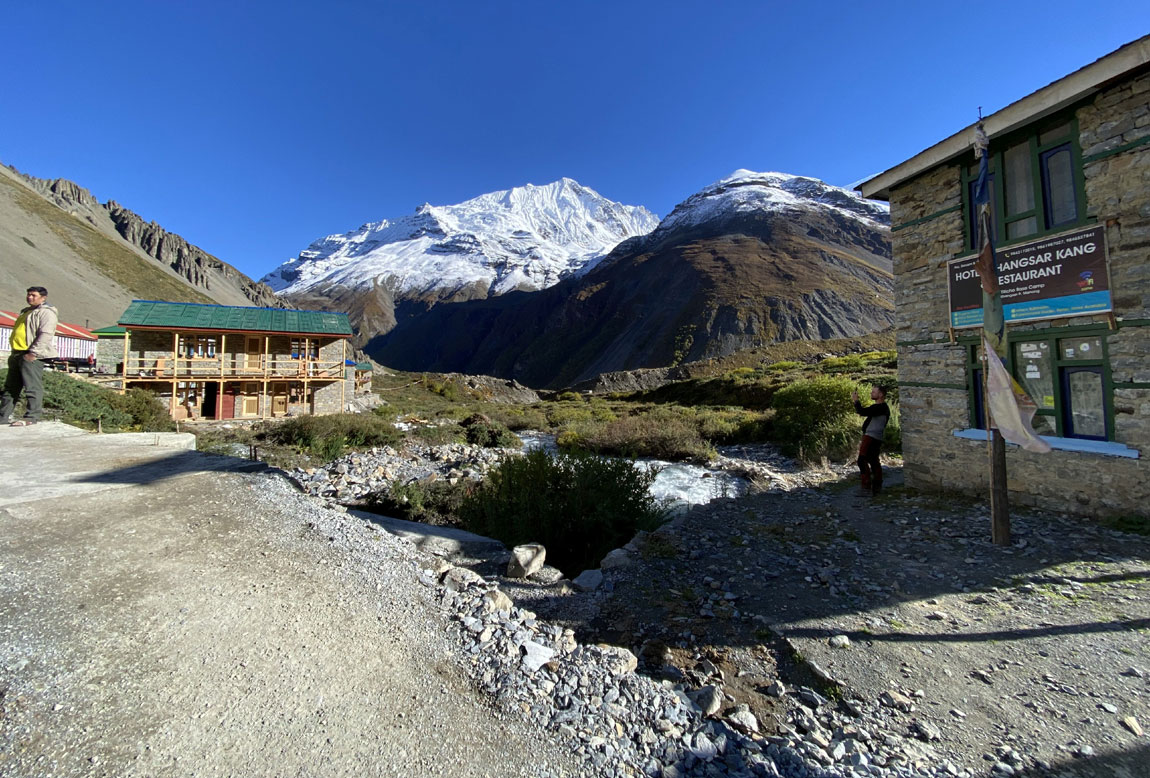
Crowds create another practical difference. October is usually when we notice the greatest pressure on popular lodges and overnight stops along the circuit. Around Manang, where many itineraries keep an acclimatization day, several groups can reach the village at roughly the same stage of their trek. Accommodation becomes more important again as trekkers converge on the limited high-route stops before Thorong La. Spring is also a main trekking season, particularly in April, but October usually feels busier on the trail.
The edges of each season require more thought than the middle. March is not the same as April, and September is not the same as October. Early spring can still carry winter snow higher on the route. Early autumn can still carry the tail of the monsoon lower down. Likewise, late May moves toward the summer monsoon, while late November moves toward winter. This is why simply choosing “spring” or “autumn” is not precise enough when we are planning an actual departure.
From our side in Kathmandu, we therefore narrow the decision to the month and the expected Thorong La crossing date. A trekker choosing between April and October is comparing two established trekking periods. Someone choosing early March or early September is accepting more seasonal transition, while a late-November departure needs to be considered differently from one leaving Kathmandu in early October.
So which should you choose? Autumn has the advantage if your priorities are post-monsoon visibility and the classic clear-weather Annapurna experience. Spring has the advantage if you prefer warmer conditions as the season develops, greener lower trails and spring vegetation. Neither season removes the need to check actual conditions around Thorong La when you approach the pass.
The more useful choice is therefore not simply spring versus autumn. It is March, April or May versus September, October or November, because the month within the season can change the Annapurna Circuit experience almost as much as the season itself.
What Is the Best Month for the Annapurna Circuit Trek?
For trekkers asking us which months we often recommend for the Annapurna Circuit Trek, May and November are two of our favorite periods, but for different reasons. May gives a warmer late-spring journey with greener lower sections, while November brings the drier, clearer character of late autumn after much of the October rush has begun to ease. April and October are also excellent trekking months, but they are not automatically the best choice for every traveler.
The month on your international flight ticket is only the starting point. On the Annapurna Circuit, we also look at when you are expected to reach Thorong La. A trek beginning late in November may approach the 5,416-metre pass close to December, while a late-May departure moves closer to the summer monsoon. The exact trek dates therefore matter as much as the month name.
May: Warmer Spring Conditions and a Greener Lower Trail
May is a month we particularly like for trekkers who prefer warmer conditions and do not need the crisp, colder feel of early spring. By this stage of the season, the lower and middle sections of the circuit are greener, daytime temperatures are generally warmer, and the landscape changes noticeably as you climb from the lower valleys toward the drier terrain around Manang.
There is a trade-off. May is moving toward the summer monsoon, so later in the month, cloud build-up, haze and afternoon weather can become more noticeable. That is why we would not describe every week of May in exactly the same way. An early-May departure and a trek reaching Thorong La near the end of the month can have different considerations.
For trekkers who value warmer walking conditions and spring scenery more than consistently crisp mountain visibility, however, May can be one of the most rewarding times to experience the circuit.
November: Clear Mountains After the October Rush
November is another month we often recommend, especially to trekkers who are comfortable with colder mornings and nights. By November, the summer monsoon has normally withdrawn, and clear mountain visibility can remain one of the month's main advantages.
There is also a different feeling on the trail compared with the height of October. As the main autumn rush begins to ease, popular stops can feel less pressured. Around Manang and farther up toward Yak Kharka and Thorong Phedi, that can matter because the number of lodges becomes more limited as the route climbs.
The compromise is temperature. November becomes colder as the month progresses, and that difference is particularly noticeable above Manang and during the early-morning approach to Thorong La. We therefore look carefully at the actual dates. Early November and a departure near the end of November should not be treated as the same trip simply because both appear under the autumn season.
For trekkers who prioritize mountain visibility, can manage colder conditions and would rather travel after the busiest October period, November can be an excellent Annapurna Circuit month.
What About April and October?
April and October remain two of the established trekking months for good reason.
April sits comfortably within the spring trekking season. Conditions are warming after winter, rhododendrons can be flowering at suitable elevations, and it avoids the later pre-monsoon transition that becomes more relevant as May progresses.
October sits in the heart of the post-monsoon trekking season and is particularly attractive for mountain visibility and established autumn conditions. Its main trade-off is popularity. This is usually when we notice the greatest pressure on popular lodges and overnight stops along the circuit.
Neither of those disadvantages makes April or October a poor choice. They simply explain why we do not automatically tell every trekker that the most famous month is the best month for their trip.
Where Do March and September Fit?
March and September sit closer to seasonal transitions and need slightly more flexibility.
March is the transition out of winter. Earlier departures can still encounter colder conditions and lingering snow higher on the circuit, even when the lower trail already feels like spring.
September is the transition out of the summer monsoon. Early in the month, the lower approach can still experience rain, cloud and wetter trail conditions. The situation generally changes as the month progresses and the autumn pattern becomes established.
This is why our answer to “What is the best month for the Annapurna Circuit Trek?” is not simply October. May and November are two months we often recommend when their particular advantages match the trekker: May for a warmer, greener late-spring circuit, and November for clear late-autumn conditions with the main October rush beginning to ease. April and October remain excellent alternatives, while March and September require more attention to the seasonal transition.
Whatever month you choose, the final decision about the high crossing should still be based on what is actually happening on the route. A good trekking month helps you choose the window; current conditions around Thorong La help determine the crossing when you get there.
Can You Trek the Annapurna Circuit in Winter?
Yes, the Annapurna Circuit can be trekked in winter, but December, January and February should not be planned like a normal spring or autumn departure. The lower and middle sections of the route may remain straightforward to walk, while conditions higher up toward Thorong Phedi, High Camp and Thorong La can determine whether the classic circuit can actually be completed.
Winter is also not one single set of conditions. Early December can feel very different from January, and late February can be different again as the season begins moving toward spring. When someone asks us about a winter Annapurna Circuit, we therefore want to know the exact dates and when the itinerary is expected to reach the high pass.
December
December sits closest to the end of the autumn trekking season. The trail becomes quieter, stable days can bring very clear mountain views, and early December can still be a practical period for trekkers who are prepared for winter temperatures.
The situation becomes more demanding as the month progresses. Nights are colder above Manang, daylight is shorter, and fresh snowfall can change conditions on the upper route. A trek beginning in early December and one reaching Thorong La near the end of the month should not automatically be treated as the same winter plan.
For someone specifically looking for a quieter winter Annapurna Circuit, December is usually the first winter month we would examine, but the Thorong La crossing still needs to remain conditional on what is happening higher on the route.
January
January requires much more flexibility. Once the route climbs beyond Manang toward Yak Kharka and Thorong Phedi, trekkers are dealing with deep-winter conditions rather than simply colder trekking weather.
Fresh snowfall is often more important than the temperature number itself. A substantial snowfall can make the approach to Thorong La difficult or temporarily impractical, and a blue sky the following morning does not mean the accumulated snow and ice have disappeared from the trail.
This is why reaching Manang in January should never create an obligation to continue over the pass. If the upper route is not suitable, waiting, changing the plan or returning by the same side can be the sensible decision.
January does offer something the main trekking seasons cannot: an exceptionally quiet Annapurna Circuit. But we would not recommend it simply as a way to avoid crowds. The trekker needs proper winter equipment, schedule flexibility and an acceptance that the planned Thorong La crossing may have to change.
February
Early February can still carry much of January's winter character. Snow accumulated earlier in the season may remain on the upper route, nights are cold, and Thorong La still needs to be approached as a winter crossing.
Later in February, daylight begins to increase and the circuit starts moving toward the spring trekking period. That can make late February worth considering separately from January, particularly for trekkers who want a quieter trail before the main spring season develops.
It would still be a mistake to assume that a late-February date guarantees an easier pass. Old snow can remain, and a new weather system can change the upper route again. The advantage is a changing seasonal window, not a guaranteed Thorong La crossing.
What Actually Changes on the Annapurna Circuit in Winter?
Winter changes more than the scenery. Above Manang, water can freeze overnight and shaded parts of the trail can hold snow or ice. Trekkers carry bulkier cold-weather equipment, mornings can take longer to get moving, and the shorter daylight window matters when planning a long day in the mountains.
Accommodation also requires more attention. The Annapurna Circuit does not simply shut down for winter, but some smaller or higher lodges may operate with reduced services or close during quieter periods. Before sending a group farther up the route, we prefer to reconfirm the overnight stops rather than assume that every lodge used during October is operating in exactly the same way in January.
Thorong La creates the biggest operational difference. A winter itinerary should not be built around the promise that the pass must be crossed on a particular morning. Recent snowfall, trail conditions, wind, information coming from the upper route and what the guide finds as the group moves higher all matter more than keeping the printed schedule unchanged.
Winter also has a genuine attraction. There are far fewer trekkers on the circuit, and stable winter weather can produce exceptionally clear Himalayan views. For someone properly equipped for the cold and willing to accept uncertainty around the high pass, the quieter trail can be part of the reason to choose this season.
But if the main priority is having a more predictable window for completing the classic Annapurna Circuit over Thorong La, winter would not be our first recommendation. December is the winter month we would normally examine first, January requires the greatest flexibility, and February needs to be judged differently at the beginning and end of the month.
In every case, the winter calendar only tells us what conditions might be expected. What is actually happening above Manang when the trekker arrives there should decide whether the journey toward Thorong La continues as planned.
Can You Trek the Annapurna Circuit During the Monsoon?
Yes, the Annapurna Circuit can be trekked during the monsoon, but June, July and August give you a very different circuit from the main spring and autumn seasons. The biggest mistake is assuming that the entire route receives the same amount of rain. The lower Marsyangdi Valley can be wet, humid and affected by heavy rainfall, while conditions generally become drier as the route moves toward Manang and later onto the Mustang side.
For us, this makes a monsoon Annapurna Circuit less about asking, “Will it rain?” and more about asking, “Where will the trekker be when the heavier rain arrives, and what is happening with road and trail access below Manang?”
Why the Whole Annapurna Circuit Is Not Equally Wet
The lower approach receives much more direct monsoon rainfall. Trails can become muddy and slippery, streams can rise after sustained rain, and warm forested sections can have leeches. Cloud also means that mountain views on the lower route may disappear for long periods even when the trail itself remains walkable.
The character of the trek begins to change as you climb toward Upper Pisang and Manang. The Annapurna massif creates a rain-shadow effect to the north, so the upper Marsyangdi Valley around Manang is generally much drier than the wetter southern approaches.
You can feel that change on the trail. The greener, wetter lower valley gradually gives way to the drier landscape around Manang, and after crossing Thorong La the terrain toward Muktinath and Mustang becomes more arid again.
That does not mean Manang or the upper circuit is guaranteed to stay dry during the monsoon. Local showers, cloud and changing mountain weather still occur. The rain shadow is a geographical advantage, not a promise of clear weather.
June sits at the transition into the monsoon, so conditions can change considerably between the beginning and end of the month. July and August are more firmly within the main rainy period. For those departures, we pay particularly close attention to what is happening on the lower approach rather than judging the entire trek from a weather report for Manang.
Road and Trail Access Matter During the Monsoon
One of the biggest monsoon issues can occur before a trekker reaches the drier country.
Heavy or prolonged rain can cause landslides, mud, road damage and temporary traffic disruption along the approach. This creates an unusual situation where conditions around Manang may look reasonable while reaching the upper valley is more complicated because of weather farther down the route.
From our Kathmandu office, this is why we would check road and trail information close to departure. Reports from drivers, guides, lodges and people already moving through the route can be more useful than relying on a monthly weather description alone.
Thorong La still needs separate attention. By the time trekkers reach the high country, heavy monsoon rain may be less important than it was lower in the Marsyangdi Valley, but cloud, wind, precipitation, visibility and conditions underfoot can still affect a 5,416-metre crossing. A relatively dry stay in Manang should never be taken as proof that the pass will be straightforward.
For most trekkers asking us for the best time for the Annapurna Circuit Trek, June through August would not be our first recommendation. Spring and autumn generally provide a more predictable window for completing the classic circuit.
But monsoon does not make the Annapurna Circuit automatically impossible. A trekker who can travel only during summer, accepts wetter lower trails and reduced mountain visibility, and keeps enough flexibility for access disruption can still consider it.
The important difference is geographical: a monsoon trek can begin in wet, green conditions and gradually enter much drier country as it moves north toward Manang and Mustang. Understanding that change is far more useful than describing the entire Annapurna Circuit as simply “rainy from June to August.”
How Do We Check Thorong La Conditions Before a Crossing?
A few days before a planned Thorong La crossing, the question is no longer what April, May, October or November is normally like. We want to know what has actually been happening on the upper trail and whether the conditions suit the group approaching the pass.
The first information comes from the route itself. As our guide moves with the trekkers through Manang and higher toward Yak Kharka and Thorong Phedi, we keep track of recent snowfall, changes in the weather and information coming from farther up the trail. Lodge owners, local people, guides and trekkers who have recently crossed can all provide useful information about conditions that a general monthly forecast cannot show.
We pay particular attention to recent snowfall rather than simply whether the sky is clear. If significant snow fell recently, sunshine the following morning does not automatically return the trail to normal. Snow or ice can remain on the approach, and conditions while climbing toward Thorong La may be different again on the long descent toward Muktinath.
The guide's observations become increasingly important as the group moves higher. Has fresh snow accumulated? What are people coming from the opposite direction reporting? Are the expected lodges and services farther up operating normally? Has the weather pattern been improving or becoming less favorable? These are practical questions that can be answered much closer to the crossing than several months before the trek.
We also check the trekker, not only the trail. By Manang, the guide has already spent several days observing how each person is responding as the sleeping elevation increases. Appetite, sleep, energy, walking pace and any symptoms reported by the trekker all matter before continuing higher toward Yak Kharka and Thorong Phedi.
This gives us two separate questions: Are the conditions suitable for crossing, and is this particular trekker ready to continue higher? A clear morning at Thorong La does not answer the second question.
As the group reaches Thorong Phedi or High Camp, both assessments continue. On the planned crossing morning, the guide considers what is happening on the ground, how the group is doing and the latest information available from the upper route before committing to the full crossing.
Reaching the prayer flags at Thorong La, 5,416 metres, is not the end of that day's decision. The descent toward Muktinath still lies ahead, so conditions on the western side of the pass also matter. We think about the complete crossing rather than only whether the group can reach the highest point.
An itinerary may show Thorong La on a particular day, but that date should never become a deadline that forces the crossing. If recent snowfall, poor visibility, strong wind, difficult trail conditions or the condition of a trekker makes continuing unreasonable, keeping the printed schedule is no longer the priority. Depending on the situation, the sensible decision may be to wait, adjust the itinerary, descend or change the plan.
Our Kathmandu office can follow forecasts, receive information and communicate with the trekking team, but the guide on the mountain has the immediate view of what the group is actually facing. A forecast helps us plan; it cannot replace what is being observed on the trail.
That is also why we are careful when someone asks whether Thorong La will be suitable for crossing on a particular date several months in advance. We can choose a season with historically favorable trekking conditions and estimate when the group should reach the pass, but we cannot honestly guarantee the condition of a 5,416-metre Himalayan pass months beforehand.
For us, the final Thorong La decision comes from three things together: current conditions on the upper route, information available close to the crossing, and the condition of the trekkers themselves.
That is the difference between choosing the best time for the Annapurna Circuit Trek and managing the journey once it is underway. The calendar helps us choose the trekking window. The information coming from the mountain helps us make the decision on the trail.
Is It Better to Trek the Annapurna Circuit in Peak Season or Shoulder Season?
Peak season and shoulder season can both work well for the Annapurna Circuit Trek, but they give you a different balance. Peak-season dates keep you closer to the established spring and autumn trekking windows, while dates toward the edges of those periods can mean quieter trails and less pressure on popular overnight stops. Neither is automatically better.
On the Annapurna Circuit, being in peak season does not mean walking in a continuous line of trekkers. You can still have quiet stretches on the trail. The difference becomes more noticeable in the villages where itineraries begin to converge.
Manang is a good example. Many trekkers spend additional time there for acclimatization, so groups that have been separated along the lower route can arrive in the village at roughly the same stage of their trek. Beyond Manang, the choice of overnight stops narrows as the route climbs toward Yak Kharka, Thorong Phedi and High Camp.
This is why lodge pressure can matter more than trail traffic. Passing other trekkers during the day is rarely the main issue. What we pay more attention to is how many groups are trying to sleep in the same high-altitude stops before Thorong La.
October is where this difference is often easiest to notice. It sits in the heart of the main autumn season and attracts many trekkers looking for post-monsoon conditions. April can also be busy during the established spring season, particularly when several groups are following similar itineraries.
That does not make peak season a disadvantage. A busier period also means the circuit has its full trekking-season atmosphere. Manang can feel lively, trekkers meet people following similar routes, and the lodges along the main trail are operating for the season. Some people enjoy that social side of the Annapurna Circuit rather than wanting an almost empty trail.
For trekkers who prefer a little less pressure, May and November are two periods we often consider. They remain close to the main trekking seasons but can offer a different trail atmosphere from the busiest weeks. This is one reason we like these months for the right traveler.
The trade-off is that quieter does not automatically mean better conditions. As May progresses, the trek moves closer to the pre-monsoon transition. As November progresses, temperatures become colder and winter approaches. We therefore would not move a departure later simply to avoid other trekkers without also looking at when the group is expected to reach Thorong La.
The exact dates matter more than the label “shoulder season.” Early May and late May should not be treated as the same trekking window, just as an early-November Thorong La crossing is different from one approaching December.
From our side in Kathmandu, we first choose a sensible seasonal window and estimate when the trekker should reach the high pass. Only then do we look at whether shifting the departure slightly could provide a quieter trail without giving up too much seasonal margin.
So, should you choose peak season or shoulder season? If you want to stay near the middle of the established trekking window and do not mind a livelier trail, April and October are strong choices. If you prefer fewer trekkers and are comfortable accepting the particular trade-offs of later spring or autumn, May and November can be excellent alternatives.
For many trekkers, the best time for the Annapurna Circuit is therefore not simply the busiest month or the quietest week.
If you are still deciding whether the route itself suits the experience you want, our guide to whether the Annapurna Circuit Trek is worth it in 2026 looks at how road development, trail sections and the modern circuit affect the journey.
How Should You Choose the Best Time for Your Annapurna Circuit Trek?
Choosing the best time for your Annapurna Circuit Trek should start with your own travel priorities, not with a single month labelled “best.” For most trekkers, April, May, October and November are the first months we would compare, but each gives a different balance of temperature, mountain visibility, trail traffic and conditions around Thorong La.
If you want to stay near the centre of the established trekking seasons, April and October are strong choices. April sits comfortably within spring, while October falls in the main post-monsoon trekking period. The trade-off, particularly in October, is a busier trail and more pressure on popular overnight stops.
If you ask us which months we often recommend for a slightly different balance, May and November are two of our favorites. May suits trekkers who prefer warmer walking conditions and a greener lower circuit, while November can offer excellent late-autumn mountain visibility after much of the October rush has started to ease. The compromises are different: later May moves closer to the monsoon, while November becomes progressively colder.
Your tolerance for cold should influence the decision more than many people expect. Choosing late November simply because you want fewer trekkers makes little sense if you strongly dislike cold mornings and nights. In the same way, moving toward late May for warmer temperatures may not suit someone whose highest priority is consistently crisp mountain visibility.
We also look at when you are likely to reach Thorong La, not only when you leave Kathmandu. If your trek begins near the end of a month, the 5,416-metre crossing may fall well into the next one. For a high-pass route, that expected crossing date is one of the first things we calculate when discussing departure timing.
Travelers with a tighter Nepal schedule can also compare our 8-day Short Annapurna Circuit Trek, which uses road transport to reduce the overall duration while retaining the Manang acclimatization day and Thorong La crossing.
If your available dates fall outside the main spring and autumn windows, the answer becomes more conditional. December can be considered by trekkers properly prepared for winter, while January and February require substantially more flexibility around the high route. A summer departure is also possible, but June through August brings a different set of concerns, particularly rainfall, landslides and road or trail access on the wetter approach before reaching the drier terrain toward Manang.
This is why we would rather know your available Nepal dates, tolerance for cold, preference for a busy or quiet trail and flexibility around the high pass than simply tell every trekker to arrive in the same month. Two people asking for the “best time” can reasonably choose different departure dates.
For most trekkers, the practical shortlist is straightforward: April and October if you want to stay closer to the centre of the established trekking seasons; May and November if their particular advantages and trade-offs suit you better. Outside those periods, we would look more carefully at the exact dates and current conditions before treating the departure like a standard Annapurna Circuit trek.
The calendar helps narrow the choice, but it should not make the decision by itself. The best time for your Annapurna Circuit Trek is the window that matches the conditions you want, the conditions you can comfortably handle, and a sensible expected date for crossing Thorong La.
Annapurna Circuit Trek Best Time FAQs
Is May a good time for the Annapurna Circuit Trek?
Yes. May is one of the months we often recommend for the Annapurna Circuit Trek, particularly for trekkers who prefer warmer walking conditions and a greener landscape on the lower and middle sections of the route.
The trade-off comes later in the month as Nepal moves closer to the summer monsoon. Afternoon cloud, haze and unsettled weather can become more noticeable, so early and late May should not automatically be treated as identical. We also consider when the itinerary is expected to reach Thorong La rather than looking only at the Kathmandu departure date.
Is November a good time for the Annapurna Circuit Trek?
Yes. November can be an excellent time for the Annapurna Circuit, especially for trekkers who value clear late-autumn mountain views and prefer to travel after the busiest part of October.
The main compromise is cold. Temperatures drop as November progresses, particularly above Manang and during the early-morning approach to Thorong La. We therefore look at the exact dates carefully because a trek beginning late in November may not reach the 5,416-metre pass until close to December.
Is October too crowded for the Annapurna Circuit Trek?
October is one of the busiest periods on the Annapurna Circuit, but that does not mean the entire trail feels crowded.
The pressure is more noticeable at popular overnight stops where itineraries converge. Manang can be busy because many trekkers spend additional time there for acclimatization, while accommodation becomes more limited farther up toward Yak Kharka, Thorong Phedi and High Camp.
If you want established autumn conditions and do not mind a livelier trekking atmosphere, October remains a strong choice. If avoiding the busiest period matters more, November is one alternative we often consider.
Can you cross Thorong La in December?
A Thorong La crossing can be possible in December when weather, snow and trail conditions allow, but it should never be assumed simply because the itinerary includes the pass.
Early December and late December can present very different conditions. Recent snowfall, ice, wind, temperature and the condition of the route on both sides of the pass all matter. For a December trek, we would keep the crossing flexible and use information from the upper trail as the group approaches Thorong La.
When is the Annapurna Circuit least crowded?
The Annapurna Circuit is generally quieter outside the main spring and autumn peaks, particularly during winter and the summer monsoon. But the least crowded time is not automatically the best time to trek.
Winter brings greater cold and uncertainty around Thorong La, while the monsoon can affect lower trails, roads and access. For trekkers who want fewer people without moving fully into an off-season period, May and November are two months worth considering, depending on the exact dates and the conditions they are comfortable with.
How far in advance can you know the weather at Thorong La?
You can choose a season months in advance, but you cannot reliably know the exact conditions at Thorong La months before your crossing.
Seasonal patterns help us select a suitable trekking window, but the useful information becomes much more specific as the group approaches the pass. Recent snowfall, wind, visibility, trail conditions and reports from guides, lodges and trekkers on the upper route can tell us more than a long-range forecast.
This is why we separate planning the best time for the Annapurna Circuit Trek from deciding whether conditions are suitable for Thorong La on a particular day. The season helps us choose when to trek; current information from the mountain helps guide the crossing decision.