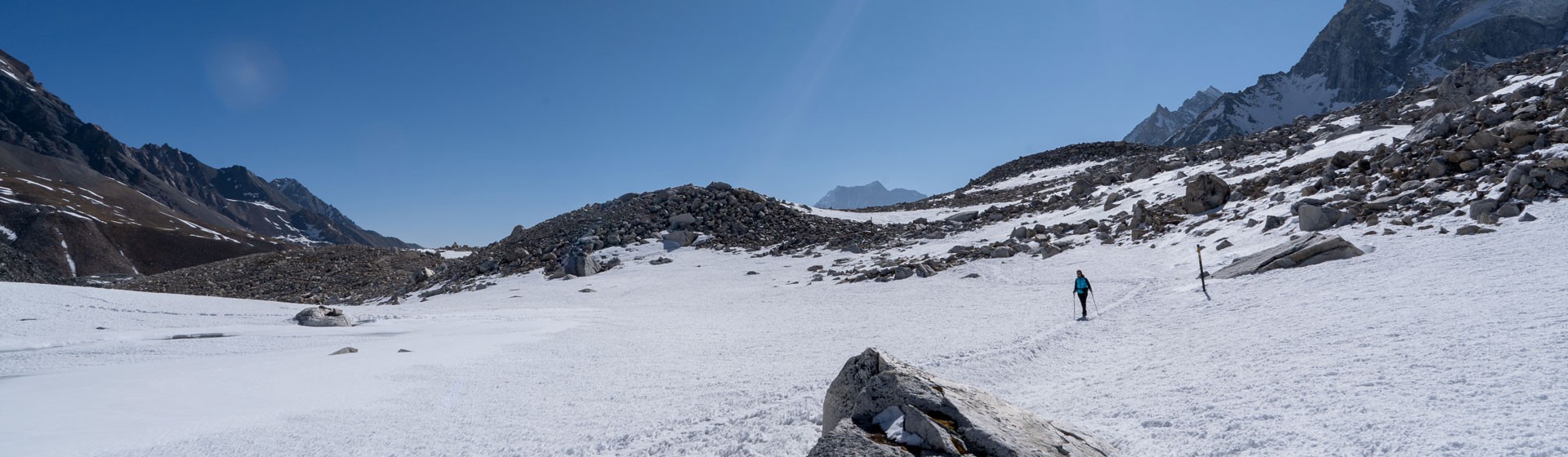
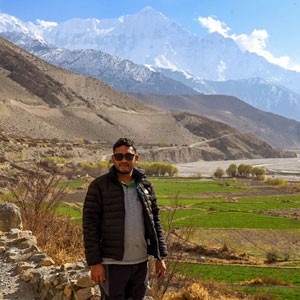
Quick Honest Answer: Can You Do the Manaslu Circuit Trek After 50?
Yes, the Manaslu Circuit Trek is absolutely possible after 50.
Every year, trekkers in their 50s, 60s, and even older successfully complete this challenging Himalayan journey. In our experience guiding trekkers in Nepal, age is rarely the main factor that determines success on the trail.
What matters more is walking fitness, proper acclimatization, realistic expectations, and a willingness to move at a steady pace.
The Manaslu Circuit is not an easy trek. Long walking days, high altitude, basic tea house accommodation, cold mornings, and the crossing of Larke Pass at 5,160 meters make it one of Nepal's more demanding trekking routes. However, it is not a technical climb, and many mature trekkers find that patience and consistency are more valuable than speed.
For older trekkers, the biggest challenge is often altitude and recovery rather than the walking itself. This is why a well-paced itinerary, acclimatization days in Samagaun and Samdo, porter support, and an experienced guide can make a significant difference.
Many trekkers over 50 discover that the Manaslu Circuit Trek becomes more than a physical challenge. The quieter trails, traditional mountain villages, and slower rhythm of life along the route often create a deeper and more meaningful experience than they expected before arriving in Nepal.
The honest answer is simple: if you prepare well, respect the altitude, and give yourself enough time, the Manaslu Circuit Trek can be one of the most rewarding adventures you undertake after 50.
Quick Reality of the Manaslu Circuit Trek After 50
- Trek difficulty: Moderate to challenging
- Highest point: Larke Pass (5,160 m / 16,929 ft)
- Trek style: Tea house trekking through remote Himalayan villages
- Best seasons: March to May and October to November
- Average walking time: 5 to 8 hours per day
- Typical trek duration: 12 to 16 days
- Most important success factor: Proper acclimatization and steady pacing
- Independent trekking: Not allowed in the Manaslu region
- Guide requirement: Licensed guide is mandatory
- Porter recommendation: Strongly recommended for trekkers over 50
- Tea house comfort: Comfortable in lower villages, more basic at higher altitude
- Biggest challenge: High altitude and long trekking days rather than technical difficulty
Before planning the Manaslu Circuit Trek after 50, it is important to understand what this journey actually involves.
Many people worry most about Larke Pass, but in reality, the trek is more about managing altitude, maintaining a comfortable daily pace, and allowing enough time for acclimatization. The route does not require climbing experience or technical mountaineering skills, but it does require patience, preparation, and the ability to walk consistently for several days in a row.
For many mature trekkers, the biggest challenge is not reaching the pass itself. It is staying comfortable and energetic throughout the entire journey while adjusting to higher elevations each day. A realistic itinerary, experienced guide, porter support, and proper acclimatization often make a bigger difference than physical strength alone.
What Fitness Level Do You Need for the Manaslu Circuit Trek After 50?
One of the most common questions people ask before booking the Manaslu Circuit Trek is whether they are fit enough to complete it after the age of 50.
The encouraging news is that you do not need to be an athlete.
Many successful trekkers on the Manaslu Circuit are not marathon runners, mountain climbers, or highly trained hikers. They are simply people who stay active, walk regularly, and prepare sensibly before arriving in Nepal.
The type of fitness needed for this trek is different from the fitness needed for a short hike or a gym workout. The real challenge is being able to walk for several hours each day over multiple consecutive days while carrying a light daypack and recovering well overnight.
For most trekkers over 50, endurance matters far more than speed.
If you can comfortably walk for five to six hours on varied terrain and repeat that effort for several days, you are already building the kind of fitness that helps on the Manaslu Circuit. Strong legs, good balance, and steady stamina are usually more valuable than raw strength.
Many older trekkers also find that downhill walking deserves as much attention as uphill training. Long descents place repeated pressure on the knees and leg muscles, especially after several days on the trail. Training on hills, stairs, and uneven ground before the trek can make a noticeable difference in comfort and confidence.
Cardiovascular fitness is important, but it does not require intense training. Regular walking, hiking, cycling, swimming, or stair climbing are all effective ways to prepare. The goal is not to move quickly. The goal is to stay comfortable while moving steadily for long periods.
Just as important as physical fitness is recovery. Trekkers who sleep well, stay hydrated, eat properly, and manage their energy carefully often perform better than people who rely only on fitness. On a long Himalayan trek, consistency usually beats intensity.
From our experience, many trekkers over 50 arrive worried that they are not fit enough. By the end of the journey, they often realize that success came from preparation, patience, and pacing rather than exceptional athletic ability.
The best fitness plan for the Manaslu Circuit Trek is simple: walk regularly, strengthen your legs, practice on hills whenever possible, and focus on building stamina instead of speed. The mountains reward steady effort far more than fast effort.
If you are still evaluating whether the route matches your experience and expectations, you may also find our guide on How Difficult Is the Manaslu Circuit Trek? helpful.
Why Acclimatization Matters More Than Fitness on the Manaslu Trek
Many people preparing for the Manaslu Circuit Trek focus heavily on fitness.
They walk every day, train in the gym, climb stairs, and spend months improving their endurance. While this preparation is helpful, one reality surprises many trekkers after arriving in the Himalayas:
Altitude does not care how strong you are.
A fit person can develop altitude-related problems, while a less athletic trekker who follows proper acclimatization practices may continue feeling comfortable and strong. This is one reason experienced mountain guides pay close attention to altitude gain rather than simply focusing on walking speed or fitness levels.
As the trek progresses, the amount of oxygen available in the air gradually decreases. The body needs time to adjust to these changes. This adaptation process cannot be rushed through determination, fitness, or experience alone.
Many trekkers over 50 actually have an advantage here.
Older trekkers often approach the mountains with more patience. They tend to walk at a natural pace, take regular breaks, drink water consistently, and avoid unnecessary competition with other people on the trail. These habits support acclimatization far better than trying to cover ground quickly.
One of the biggest mistakes on high-altitude treks is confusing physical strength with altitude adaptation. Feeling strong in the lower valleys does not guarantee that the body will respond the same way at higher elevations. The mountains reward consistency, not speed.
Good acclimatization is usually built through simple habits:
- Walking at a comfortable pace
- Staying well hydrated throughout the day
- Sleeping and recovering properly
- Eating regularly, even when appetite decreases
- Communicating honestly about how you feel
- Allowing enough time for gradual altitude gain
Experienced guides watch these small details carefully because altitude-related issues often begin with subtle changes rather than dramatic symptoms. A slight headache, unusual fatigue, poor sleep, or loss of appetite can sometimes be early signs that the body needs more time to adjust.
The trekkers who generally perform best in the higher Himalayas are not always the strongest people in the group. More often, they are the people who accept the mountain's pace, respect the process of acclimatization, and allow their body to adapt naturally.
For trekkers over 50, this is an important mindset to understand before arriving in Nepal. Success on the Manaslu Circuit Trek is rarely determined by how fast you can walk. It is usually determined by how well you allow your body to adjust to the altitude day after day.
Real Challenges During the Manaslu Circuit Trek After 50
The Manaslu Circuit Trek is absolutely achievable after 50, but it is important to understand that the challenge goes beyond simply walking from one village to the next.
For many mature trekkers, the difficulty comes from how the body responds to multiple days of continuous trekking rather than any single section of the route.
Recovery often becomes more important than effort.
A long walking day may feel manageable, but the real test is waking up the following morning and doing it again. This is why many experienced trekkers over 50 focus on energy management throughout the journey instead of pushing hard on strong days.
Cold weather is another challenge that is often underestimated.
As elevation increases, mornings become colder, evenings arrive earlier, and the body takes longer to warm up after leaving the tea house. Simple tasks such as packing bags, putting on boots, or stepping outside before sunrise can feel surprisingly difficult on colder days.
Many trekkers are also surprised by how much recovery changes at altitude. Muscles can feel tighter, sleep may become lighter, and minor aches that rarely appear at home sometimes become more noticeable. These changes are normal and affect many trekkers regardless of their fitness level.
Joint comfort becomes another important factor after 50.
Most people naturally focus on uphill walking when preparing for a trek, but long descents often place greater stress on the knees and leg muscles. Trekking poles, proper pacing, and strong leg preparation can make a significant difference throughout the journey.
The mental side of the trek is equally important.
Unlike short hikes, the Manaslu Circuit requires commitment over many consecutive days. Some mornings feel fantastic. Others feel slow and demanding. Learning to stay patient during difficult days is often one of the biggest reasons trekkers successfully complete the route.
Another challenge many people do not expect is accepting a slower pace.
At home, slowing down is often viewed negatively. In the mountains, it becomes one of the smartest decisions you can make. Trekkers who remain comfortable, steady, and consistent usually perform far better than those who constantly try to move faster than their natural rhythm.
From our experience, the trekkers who enjoy the Manaslu Circuit most are rarely the strongest or fastest people on the trail. They are the people who manage their energy wisely, adapt to changing conditions, and remain patient throughout the journey.
For trekkers over 50, the challenge is not proving how strong you are. The challenge is learning how to move efficiently, recover well, and maintain a sustainable pace from the beginning of the trek until the final day.
What Often Surprises Trekkers Over 50 on the Manaslu Circuit
Before arriving in Nepal, many trekkers over 50 expect the biggest challenge to be altitude or the physical effort of walking for multiple days.
After completing the trek, many discover that the reality is quite different.
One of the biggest surprises is how important pacing becomes. At home, fitness is often measured by speed, distance, or performance. In the mountains, efficiency matters far more. Many trekkers quickly realize that a comfortable and sustainable rhythm feels better than trying to walk quickly.
Another surprise is how little the journey revolves around age.
On the trail, people stop thinking about numbers. Nobody cares whether someone is 35, 55, or 65 years old. What matters is how each person adapts to the conditions, manages their energy, and responds to the altitude. It is common to see older trekkers moving more comfortably than people decades younger.
Many trekkers are also surprised by how simple daily life becomes.
Away from busy schedules and constant notifications, the day revolves around a few basic things: walking, eating, resting, and enjoying the surroundings. After several days, this routine often feels refreshing rather than restrictive.
The mental side of the journey also catches people off guard.
Before the trek, attention is usually focused on practical concerns such as fitness, weather, equipment, and altitude. Once the walking begins, those worries gradually fade into the background. Many trekkers become more present, paying attention to the day's experience rather than constantly thinking ahead.
Perhaps the biggest surprise is how rewarding steady progress feels.
The Manaslu Circuit is not a trek that rewards rushing. It rewards patience. Many older trekkers discover a quiet sense of satisfaction in moving consistently through the mountains day after day, without feeling the need to compete with anyone.
By the end of the journey, many people realize that the experience was never only about reaching a high point or completing a famous trek. It was about adapting to a different pace of life, trusting the process, and finding confidence through consistency rather than speed.
For many trekkers over 50, that realization becomes one of the most memorable parts of the entire experience.
Why Many Trekkers Over 50 Remember Samagaun So Clearly
Ask trekkers about the Manaslu Circuit several months after they return home and most will mention Larke Pass.
Ask them which place stayed in their memory the longest, and many will say Samagaun.
By the time trekkers reach Samagaun, something has usually changed.
The lower valleys feel far away. The daily rhythm of the trek has settled in. Walking is no longer about getting used to the trail but about becoming part of it.
Set beneath Mount Manaslu, Samagaun feels different from the villages below. Stone houses sit beneath towering peaks, yaks graze on open ground, prayer flags move in the wind, and long mani walls stretch across the landscape. The valley feels wider, quieter, and more peaceful.
For many trekkers over 50, this is where the Himalayas begin to feel truly real.
The acclimatization day adds to that feeling. After several consecutive days of walking, there is finally time to slow down. Some trekkers walk toward Birendra Lake. Others spend time exploring the village or visiting nearby monasteries. Many simply sit outside the tea house, enjoying the mountain views and giving their body time to adjust.
The atmosphere feels noticeably calmer here.
Guides often observe a change in trekkers after arriving in Samagaun. Concerns about the journey ahead begin to fade. The route no longer feels unknown. Confidence grows naturally as people settle into the rhythm of the mountains.
The village also marks a turning point physically.
The air feels thinner. Mornings become colder. Walking requires a little more patience. Yet many trekkers find themselves feeling more comfortable rather than less. They begin trusting their pace, their preparation, and their ability to continue higher.
Evenings in Samagaun leave a lasting impression.
As the sunlight slowly fades from the surrounding peaks, trekkers gather in the dining room, share stories from the trail, and prepare for the higher valleys ahead. Outside, the village becomes quiet as temperatures drop and darkness settles across the mountains.
For many people over 50, Samagaun becomes the emotional heart of the Manaslu Circuit Trek.
Not because it is the highest place on the route.
Not because it is the most difficult.
But because it is often the place where the journey stops feeling like a trek and starts feeling like an experience that will stay with them long after they return home.
Why the Manaslu Circuit Trekking Experience Feels Different After 50
Many people find that the Manaslu Circuit Trekking Experience feels different after 50 because they approach the journey from a different perspective than they might have years earlier.
In younger years, trekkers often focus on goals. Reaching the next village, covering more distance, crossing the pass, or completing the route efficiently can become the main objective.
Later in life, the focus often changes.
Many trekkers become more interested in the experience itself rather than simply reaching the finish line.
Along the Manaslu Circuit, this shift can make the journey feel surprisingly rewarding. A conversation with a tea house owner, the sound of prayer flags moving in the wind, or clouds slowly drifting around a mountain ridge can become just as memorable as reaching a famous viewpoint.
The route encourages this naturally.
Unlike some trekking regions where the next destination always seems to pull people forward, Manaslu still offers long stretches where the journey itself becomes the highlight. Days unfold gradually, giving trekkers time to absorb the landscape rather than simply move through it.
Many people over 50 also bring something valuable to the trail that cannot be developed in a gym or measured by a fitness watch: perspective.
Years of travel, work, family responsibilities, successes, setbacks, and life experience often create a deeper appreciation for simple moments. The mountains have a way of amplifying that appreciation.
A clear morning, a warm meal after a cold day, or a quiet hour spent looking across a valley can carry unexpected meaning when there is no pressure to rush toward something else.
This is one reason many mature trekkers describe the Manaslu Circuit differently after returning home. They often remember how the journey felt rather than focusing only on distances, altitudes, or daily achievements.
The trek still demands effort. It still requires commitment and determination. But for many people over 50, the reward extends far beyond completing a challenging Himalayan route.
It becomes an opportunity to experience the mountains with a level of awareness that is increasingly rare in everyday life.
That perspective often transforms the Manaslu Circuit Trek from a physical challenge into a deeply memorable personal journey.
What Walking Days Feel Like on the Manaslu Circuit After 50
One of the biggest unknowns before the Manaslu Circuit Trek is not the altitude or the distance. It is understanding what a normal trekking day actually feels like.
Many people imagine every day as a continuous uphill climb. In reality, the experience is much more varied.
Some mornings begin slowly with a warm cup of tea and clear mountain air. Other days start before sunrise when the trail ahead is long. Some sections feel comfortable and relaxed, while others require more focus and steady effort.
For trekkers over 50, the rhythm of the day often becomes more important than the number of kilometers covered.
Most days follow a simple pattern. The body gradually warms up during the first hour of walking, settles into a comfortable pace during the middle of the day, and begins feeling the effects of the distance later in the afternoon. Learning to work with this natural rhythm often makes the trek feel far more enjoyable.
One thing many mature trekkers notice is how different mountain walking feels compared to hiking at home.
The pace is slower. Breaks are more purposeful. The focus shifts away from speed and toward maintaining a comfortable level of energy throughout the day. Rather than rushing to reach the next destination, many trekkers find themselves paying more attention to how they feel and how their body responds.
Weather, trail conditions, and elevation also influence each day differently. Some days feel surprisingly easy. Others require more patience and concentration. Accepting these natural variations often becomes part of the experience.
Many trekkers are also surprised by how quickly a daily routine develops. Wake up, enjoy breakfast, walk, rest, eat, and repeat. After several days, this rhythm starts feeling normal. Decisions become simpler, and attention naturally shifts toward the landscape, the people met along the way, and the experience of being in the mountains.
For many people over 50, the walking days themselves become one of the most rewarding parts of the journey.
Not because every day feels easy.
But because each day creates a sense of steady progress that is difficult to find in everyday life. One step follows another, distractions gradually disappear, and the mountains quietly become the center of attention.
That simple rhythm is one of the reasons many trekkers remember the Manaslu Circuit long after the trek is finished.
Tea House Experience on the Manaslu Circuit Trek After 50
The tea house experience becomes a memorable part of the Manaslu Circuit Trek, especially for trekkers over 50. After a few days on the trail, daily life becomes much simpler, and many people begin appreciating comforts they rarely think about at home.
Most tea houses along the route are family-run lodges that provide a warm place to eat, rest, and sleep after a day of walking. While facilities vary between villages, the accommodation generally becomes more basic as the trek gains elevation.
In the lower part of the route, rooms often feel relatively comfortable, and some villages offer more facilities than people expect. Higher on the trail, the focus shifts from comfort to practicality. Rooms become simpler, temperatures become colder, and the dining room naturally becomes the social center of the evening.
For many trekkers over 50, the dining room creates some of the most enjoyable moments of the journey.
After a long day on the trail, people gather around the stove, enjoy a hot meal, share stories from the day, and prepare for the next morning. Outside, temperatures may continue to fall, but inside there is often a relaxed atmosphere created by fellow trekkers, guides, and lodge owners.
The pace of life inside a tea house feels very different from everyday life.
Evenings are usually quiet. Many trekkers spend time reading, talking with fellow travelers, organizing gear, or simply enjoying a warm drink before heading to bed. After several days on the trail, these simple routines become surprisingly satisfying.
Food remains straightforward but nourishing throughout the trek. Warm meals, soups, tea, porridge, rice dishes, potatoes, and traditional Nepali food become an important part of maintaining energy and recovery during the journey.
One thing many mature trekkers notice is how quickly expectations change in the mountains. Luxury becomes less important. A warm dining room, a comfortable bed, dry clothes, and a good meal often feel more valuable than many modern conveniences.
The highest tea houses on the route provide only basic facilities, but they also create some of the most memorable evenings of the trek. Conversations become quieter, the mountain atmosphere feels stronger, and there is often a shared sense of anticipation among trekkers preparing for the next stage of the journey.
For many people over 50, the tea house experience becomes more than accommodation. It becomes part of the rhythm of the trek itself, creating moments of comfort, connection, and reflection between the walking days.
You can learn more about accommodation, meals, and facilities along the route in our Manaslu Circuit Trek Tea House Guide.
Why Many Trekkers Over 50 Enjoy the Manaslu Circuit More Deeply
One interesting thing guides often notice on the Manaslu Circuit is that many trekkers over 50 seem to enjoy the journey in a different way than younger trekkers.
The difference is not usually physical.
It is often how they experience the trail itself.
Many younger trekkers naturally focus on reaching the next destination, checking daily distances, or thinking about the highest point of the route. Older trekkers often approach the journey with fewer expectations and greater curiosity about what each day brings.
This can change the entire experience.
A mountain view is appreciated for longer. A conversation with a local family feels more meaningful. A quiet morning can become just as memorable as a major highlight on the route.
The Manaslu region rewards this type of travel naturally.
The landscapes change gradually, village life remains closely connected to traditional mountain culture, and many parts of the trail still move at a slower pace than modern life elsewhere. Trekkers who are willing to slow down often discover details that are easy to miss when attention is focused only on reaching the next stop.
Many people over 50 also arrive with a greater appreciation for time.
Rather than trying to collect destinations, they often focus on the quality of the experience itself. This approach fits remarkably well with the character of the Manaslu region, where some of the most rewarding moments are often the simplest ones.
A quiet sunrise. A cup of tea with a mountain view. An afternoon spent watching weather move across the valley. These experiences rarely appear on trekking itineraries, yet they often become the memories that stay longest after returning home.
There is also a deeper sense of accomplishment that develops gradually throughout the journey.
Instead of chasing a single goal, many mature trekkers gain satisfaction from showing up each day, adapting to changing conditions, and continuing forward at their own pace. The achievement comes from consistency rather than speed.
This is one reason many people over 50 speak about the Manaslu Circuit in such personal terms after the trek is finished.
The route offers impressive scenery and physical challenge, but for many mature trekkers, the lasting reward comes from the way the experience encourages presence, patience, and appreciation for the journey itself.
Should You Use a Porter on the Manaslu Circuit Trek After 50?
A porter is not mandatory on the Manaslu Circuit Trek, but for most trekkers over 50, it is strongly recommended.
Many people are physically capable of carrying their own backpack. The better question is whether carrying extra weight adds anything meaningful to the overall experience. For most trekkers, the answer is no.
The Manaslu Circuit is a long high-altitude trek where energy becomes increasingly valuable as the days pass. A heavy backpack may feel manageable in the beginning, but the strain often becomes more noticeable after several consecutive days of walking, especially on steep climbs, long descents, and higher sections of the trail.
Using a porter allows trekkers to focus on the journey rather than the weight on their shoulders. With only a light daypack carrying water, extra layers, personal items, and daily essentials, most people find the trek more comfortable and enjoyable.
For trekkers over 50, the benefits often go beyond simple convenience. Carrying less weight can reduce stress on the knees, hips, back, and shoulders while helping conserve energy throughout the trek. Many trekkers also find they recover better each evening and feel fresher the following morning.
A porter does not make the trek easier in terms of altitude or walking distance, but it can make the overall experience far more comfortable. This becomes especially noticeable during longer trekking days and after multiple days on the trail.
From our experience, many trekkers who initially planned to carry everything themselves later say they were glad they chose porter support. Not because they could not carry the weight, but because it allowed them to enjoy the mountains more and worry less about fatigue.
For most trekkers over 50, hiring a porter is not about necessity. It is about preserving energy, improving comfort, and making the most of the overall trekking experience.
Many trekkers who choose porter support also prefer a slower-paced itinerary, such as our 12 Days Manaslu Circuit Trek, which focuses on gradual altitude gain and comfortable daily walking distances.
Best Itinerary Style for the Manaslu Trek After 50
For trekkers over 50, the best Manaslu itinerary is usually not the shortest one.
Many people planning the trek focus on the total number of days, but the overall pace of the journey often has a much bigger impact on comfort, safety, and enjoyment than finishing a few days earlier.
A well-paced itinerary gives the body enough time to adapt naturally to increasing altitude while reducing unnecessary fatigue. It also allows more flexibility if weather, trail conditions, or personal energy levels change during the trek.
One of the most common mistakes trekkers make is choosing an itinerary based only on what they think they are capable of doing at home. Mountain trekking is different. Walking for several days in a row, sleeping at higher elevations, and recovering each evening places different demands on the body than a normal hiking trip.
For most trekkers over 50, extra time is rarely wasted time.
A slower itinerary creates more opportunities to rest properly, enjoy the surroundings, and maintain a steady rhythm throughout the trek. It also helps reduce the pressure of feeling rushed from one overnight stop to the next.
From our experience, a 15-day Manaslu Circuit Trek itinerary often provides one of the most comfortable pacing options for mature trekkers. The additional time allows for gradual altitude gain, proper acclimatization, shorter walking days in some sections, and better recovery before and after the higher part of the route.
Many experienced trekkers discover that the most enjoyable days are often the ones when there is enough time to walk comfortably, take breaks when needed, and arrive at the lodge with energy still left in reserve.
The goal is not to prove how quickly the route can be completed.
The goal is to enjoy the journey while giving yourself the best possible chance of feeling strong throughout the entire trek.
Many trekkers who initially look for the shortest itinerary later realize that a more relaxed schedule creates a much more enjoyable overall experience. The mountains remain the same, but the journey often feels very different.
The best Manaslu itinerary after 50 is one that allows you to walk at your natural pace, recover properly, and enjoy the experience without constantly watching the clock. In the Himalayas, a little extra time often becomes one of the most valuable parts of the entire journey.
Best Time for the Manaslu Circuit Trek After 50
Choosing the right season can make a noticeable difference to the overall trekking experience, especially for trekkers over 50.
While the Manaslu Circuit can be completed during different times of the year, some seasons offer more comfortable walking conditions, clearer mountain views, and a more predictable experience than others.
For most mature trekkers, spring and autumn remain the best times to visit the Manaslu region.
Autumn, particularly from October to November, is often considered the most reliable season. After the monsoon has cleared the atmosphere, mountain views are usually at their sharpest, skies tend to stay clearer, and trail conditions are generally dry and stable. Many trekkers appreciate the comfortable daytime temperatures and excellent visibility throughout the journey.
Spring, from March to May, offers a different but equally rewarding experience. The lower hills become greener, forests feel more vibrant, and rhododendron blooms add color to parts of the trail. Temperatures are usually slightly warmer than autumn, which many older trekkers find pleasant during early mornings and evenings.
Winter can provide exceptionally clear mountain views, but colder temperatures create additional challenges. Frosty mornings, freezing nights, and occasional snowfall can make some sections feel more demanding. For experienced trekkers with proper equipment, winter remains possible, but it is generally less comfortable than spring or autumn.
The monsoon season brings a different set of conditions. Rain, cloud cover, muddy trails, and occasional disruptions caused by weather can make the journey less predictable. Although the landscapes become beautifully green, most trekkers over 50 prefer a season with more stable conditions and better visibility.
When choosing a season, comfort is often just as important as scenery.
Clear trails, moderate temperatures, reliable weather, and good visibility allow trekkers to focus more on enjoying the experience and less on managing difficult conditions. For many mature trekkers, this balance plays a significant role in the overall enjoyment of the journey.
Both spring and autumn provide that balance remarkably well, which is why they continue to be the preferred seasons for the Manaslu Circuit Trek after 50.
Common Mistakes Older Trekkers Make on the Manaslu Circuit
Most trekkers over 50 who complete the Manaslu Circuit Trek do very well on the trail.
In fact, many mature trekkers approach the mountains with patience, realistic expectations, and a willingness to adapt, which often helps them throughout the journey.
The challenges that arise are usually not caused by age itself. More often, they come from small decisions made before or during the trek.
One common mistake is treating the trek like a personal test rather than an experience.
Some trekkers arrive with a strong desire to prove they can still perform exactly as they did years earlier. The mountains rarely reward this mindset. The people who generally enjoy the trek most are those who focus on the journey itself rather than comparing their performance to others.
Another mistake is paying too much attention to daily distances.
Many first-time trekkers spend a lot of time thinking about how far they walked or how much remains ahead. On a long Himalayan trek, these numbers matter far less than maintaining a comfortable and sustainable rhythm throughout the journey.
Some people also underestimate the value of recovery.
Walking is only one part of a successful trek. Rest, hydration, nutrition, and sleep play an equally important role. Trekkers who look after themselves consistently often feel stronger throughout the journey than those who focus only on the walking itself.
Another common mistake is carrying unnecessary concerns into the mountains.
Before arriving in Nepal, many people worry constantly about weather forecasts, altitude statistics, equipment lists, or every possible challenge they might face. While preparation is important, excessive worry often disappears once the trek begins. The reality of the journey is usually far simpler than people imagine.
Many mature trekkers also discover that flexibility is one of the most valuable skills on the trail.
Mountain conditions can change. Energy levels can vary. Some days feel easier than expected, while others require more patience. Trekkers who accept these changes calmly often have a much more enjoyable experience than those who expect everything to go exactly according to plan.
Perhaps the most important lesson is that the Manaslu Circuit is not a route that rewards stubbornness.
It rewards awareness.
The people who tend to have the best experience are not necessarily the strongest, fastest, or most experienced trekkers. They are the people who stay adaptable, make sensible decisions, and allow the journey to unfold at its own pace.
For many trekkers over 50, avoiding these small mistakes is often far more important than trying to gain an extra advantage. A calm approach, realistic expectations, and good judgement usually contribute more to a successful trek than any amount of determination alone.
Why Many Trekkers Over 50 Prefer the Manaslu Circuit Over Everest
Everest Base Camp remains one of the world's most famous trekking destinations, and for good reason. The region offers iconic mountain scenery, rich Sherpa culture, and the opportunity to walk beneath the highest peak on Earth.
Yet many trekkers over 50 find themselves drawn toward the Manaslu Circuit for a very different reason.
The appeal is often not about seeing a more famous mountain.
It is about experiencing a different atmosphere.
Many mature trekkers are looking for a journey that feels less crowded, less hurried, and more connected to the landscape itself. The Manaslu region still provides long stretches where the trail feels quiet, villages maintain a strong connection to traditional mountain life, and daily routines move at a slower pace.
For some people, this creates a more rewarding experience than following a route that attracts larger numbers of trekkers.
Another reason is the feeling of discovery.
Most people have heard of Everest for decades before arriving in Nepal. Manaslu often feels different. Trekkers arrive with fewer expectations, which allows the journey to unfold more naturally. Many people are surprised by how much they enjoy the remote valleys, cultural encounters, and changing mountain scenery along the route.
The Manaslu Circuit also tends to attract people who value the journey itself as much as the destination.
Rather than focusing on reaching a single famous landmark, the experience develops gradually over many days. Villages, landscapes, local culture, and mountain views combine to create a journey that feels immersive from beginning to end.
Many trekkers over 50 appreciate this style of travel.
There is often less emphasis on ticking off a bucket-list destination and more emphasis on enjoying the overall experience. The route encourages observation, patience, and a deeper connection with the surroundings.
This does not mean Manaslu is better than Everest.
Both treks offer extraordinary experiences for different reasons.
However, many mature trekkers find that the quieter character of the Manaslu region aligns naturally with what they are looking for at this stage of life. Instead of seeking the most famous trail, they often seek the journey that feels most meaningful.
That is one reason so many trekkers over 50 finish the Manaslu Circuit feeling they discovered something special that they were not necessarily expecting to find.
The Quiet Confidence Many Trekkers Feel Near the End of the Manaslu Circuit
Something subtle happens to many trekkers during the final days of the Manaslu Circuit.
It is not a dramatic moment. There is no sudden realization or major milestone.
Instead, it develops gradually.
By the time the higher mountains are behind them and the journey begins approaching its final stages, many trekkers notice that they feel different from when they first arrived.
The doubts that existed at the beginning often disappear.
Questions about whether the trek would be too difficult, whether the body would adapt well, or whether the challenge would feel overwhelming slowly lose their importance. Those concerns are replaced by something much quieter.
Trust.
- Trust in the body.
- Trust in the daily rhythm that has developed over many days of walking.
- Trust in the ability to handle whatever the trail presents next.
Many trekkers over 50 describe this feeling in different ways. Some call it confidence. Others describe it as calmness. Some simply say they feel more comfortable than they expected.
What makes the feeling unique is that it is earned gradually.
It does not come from reaching a single destination or standing at a famous viewpoint. It comes from showing up every day, adapting to changing conditions, and continuing forward one step at a time.
The mountains have a way of simplifying things.
After days of focusing on weather, walking, meals, rest, and recovery, many of the distractions of normal life begin to feel distant. Decisions become simpler. Expectations become smaller. Attention becomes more focused on the present moment.
This is one reason the final days of the Manaslu Circuit often feel emotionally different from the beginning.
The physical challenge may not be completely finished, but the uncertainty has largely disappeared. Trekkers understand the rhythm of the journey, and the journey begins to feel familiar.
For many people over 50, this quiet confidence becomes one of the most rewarding parts of the entire experience.
Not because it changes who they are.
But because it reminds them of something they already possessed: the ability to adapt, remain steady, and keep moving forward when the path ahead is uncertain.
Final Thoughts on the Manaslu Circuit Trek After 50
The Manaslu Circuit Trek after 50 is not about walking faster, proving your strength, or competing with anyone else on the trail.
It is about moving steadily through one of Nepal's most remarkable mountain regions while allowing yourself enough time to experience it fully.
Many people arrive in Nepal carrying questions about fitness, altitude, age, or whether they are still capable of completing a demanding Himalayan trek. These concerns are completely understandable. Almost every trekker begins the journey with some level of uncertainty.
Yet the mountains have a way of changing that perspective.
Day by day, the focus shifts away from worries and toward the simple rhythm of the trail. Walking becomes routine. The body adapts. Confidence grows quietly. What initially feels intimidating gradually becomes familiar.
Along the way, trekkers experience far more than just a physical challenge. They encounter remote mountain communities, changing landscapes, high Himalayan scenery, and a way of life that still moves at a slower pace than much of the modern world.
For many people over 50, this combination becomes the true reward of the journey.
The Manaslu Circuit is not the easiest trek in Nepal, nor is it designed to be. Its value comes from the experience itself. The effort required to complete the route often makes the memories even more meaningful.
Many trekkers return home proud of reaching Larke Pass, but the moments they remember most are often much simpler: a quiet morning in the mountains, a conversation in a tea house, changing weather across a valley, or the satisfaction of completing another day on the trail.
That is why the Manaslu Circuit continues to leave such a lasting impression on mature trekkers.
It offers challenge without unnecessary crowds, adventure without constant noise, and a rare opportunity to slow down and reconnect with the journey itself.
If you are considering this adventure, you can also explore our complete Manaslu Circuit Trek Package for detailed itinerary options, inclusions, costs, and departure information.
If you approach the trek with realistic expectations, proper preparation, and a willingness to follow the mountain's pace, there is every reason to believe that the Manaslu Circuit Trek can become one of the most rewarding adventures of your life after 50.
Not because it is easy.
But because it is worth it.