Manaslu Circuit Trek for Indian Citizens at a Glance
If you are planning the Manaslu Circuit Trek from India, here are the most important things to know before booking your trip.
| Topic | Information |
|---|
| Visa for Nepal | No visa required for Indian citizens. |
| Entry Documents | A valid Indian passport is recommended. Indian citizens may also enter Nepal using other officially accepted identification documents such as a valid Voter ID card. |
| Guide Requirement | Yes. A licensed trekking guide is mandatory for the Manaslu Circuit Trek. |
| Restricted Area Permit | Required for all trekkers. |
| Additional Permits | MCAP and ACAP are also required. |
| Solo Trekking | Solo trekking is allowed, but all trekkers must be accompanied by a licensed trekking guide throughout the restricted area. |
| Typical Trek Duration | 12 to 14 days. |
| Highest Point | Larkya La Pass (5,160 metres). |
| Best Time | March to May and late September to November. |
| Currency | Trek package in USD; personal expenses in Nepalese Rupees (NPR). |
| Starting Point | Machha Khola, reached by road from Kathmandu. |
The sections below explain each of these points in greater detail, together with practical advice based on our experience organizing Manaslu Circuit Treks for Indian travellers.
Why More Indian Trekkers Are Choosing Manaslu Over Everest
Everest Base Camp continues to be one of Nepal's most famous trekking destinations, and for good reason. The route offers iconic mountain scenery, well-established trekking infrastructure, and the opportunity to stand at the foot of the world's highest mountain. However, over the past few years, we have seen increasing interest from Indian trekkers who are specifically asking about the Manaslu Circuit Trek instead.
What many of them are looking for is not necessarily a harder trek or a higher altitude challenge. More often, they are searching for a different kind of trekking adventure.
One of the first things trekkers notice on the Manaslu Circuit is how quickly the trail feels remote. After leaving the road behind and following the Budhi Gandaki Valley, the atmosphere changes day by day. The villages become smaller, the mountains feel closer, and the rhythm of life slows noticeably. Unlike some of Nepal's busier trekking regions, there are still sections of the Manaslu trail where hours can pass with only a few trekking groups crossing paths.
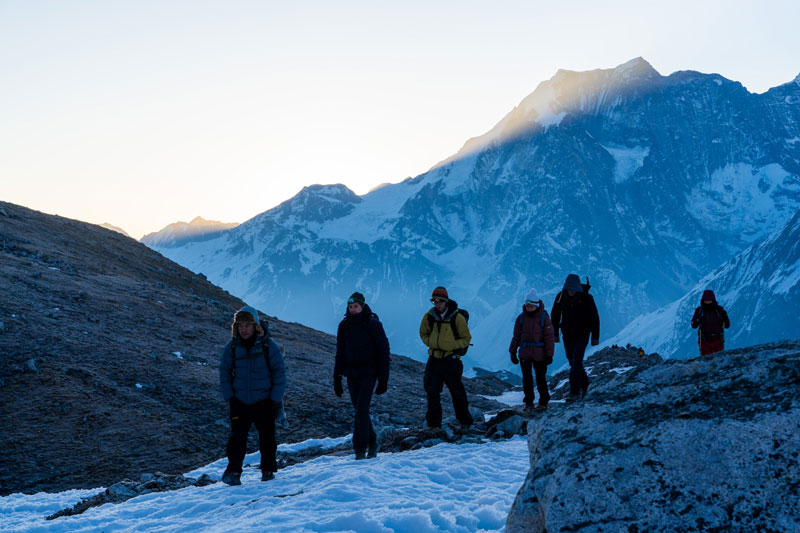
Another reason many Indian trekkers choose the Manaslu Circuit is that every stage of the journey feels different. The trek begins in subtropical river valleys before gradually climbing through traditional mountain villages, alpine meadows, and the high Himalayan landscape surrounding Samagaun, Samdo, and Larkya La Pass.
The cultural experience is equally important. Many villages along the route maintain strong Tibetan Buddhist traditions, and daily life still revolves around farming, livestock, monasteries, and seasonal mountain routines. Trekkers often tell us that some of their strongest memories come not from the highest point of the trek, but from simple moments shared in village tea houses, conversations with local families, or evenings spent watching the mountains change color as the sun disappears behind the valley.
For trekkers interested in exploring this cultural heritage in greater depth, the combined Manaslu Circuit and Tsum Valley Trek offers an opportunity to visit some of the region's most historically significant monasteries and traditional mountain communities.
What surprises many first-time visitors is that Manaslu feels larger than expected. The scale of the valleys, the distance between settlements, and the gradual transition from lower hills to the high mountain world around Larkya La Pass create a sense of journey that is difficult to appreciate from photographs alone. It is one of the reasons why many trekkers who have already completed popular Himalayan routes choose Manaslu when they return to Nepal.
Why Indian Trekkers Are Choosing Manaslu Today
Over the past few trekking seasons, we have noticed a clear change in the questions we receive from Indian travellers. Instead of asking only about Everest Base Camp, many now contact us specifically about the Manaslu Circuit Trek after looking for a quieter and less commercial trekking experience in Nepal.
Many have already completed popular Himalayan treks in India or visited Everest and Annapurna. Rather than searching for a higher altitude or a more difficult route, they are looking for a journey that feels more remote, offers longer days on the trail, and provides a stronger connection with local mountain communities.
Another reason is the overall value of the experience. Although the Manaslu Circuit requires additional permits and a licensed guide, many Indian trekkers feel the experience justifies the cost because of the smaller number of trekkers on the trail, the diversity of landscapes, and the opportunity to experience a less crowded part of the Nepal Himalayas.
From our experience leading groups through the Manaslu region, we have found that trekkers who value quieter trails, authentic village life, changing landscapes, and a stronger sense of remoteness often finish the Manaslu Circuit Trek with memories that stay with them long after the challenge of crossing Larkya La Pass has been forgotten.
Can Indian Citizens Do the Manaslu Circuit Trek?
Yes, Indian citizens can do the Manaslu Circuit Trek, and every trekking season we organize departures for Indian travelers joining both private and group treks in the region.
The Manaslu Circuit is open to Indian citizens, but the route is regulated differently from some other trekking areas in Nepal because part of the trail passes through a designated restricted area. As a result, trekkers must obtain the required permits before starting the trek and must be accompanied by a licensed trekking guide throughout the journey.
One of the most common questions we receive from Indian travelers is whether previous Himalayan trekking experience is necessary. In our experience, the answer depends more on fitness, preparation, and pacing than on the number of treks completed in the past. We have guided first-time visitors to Nepal as well as experienced trekkers from across India, and many successfully complete the Manaslu Circuit with proper acclimatization and realistic expectations.
The trek reaches its highest point at Larkya La Pass (5,160 meters), which means altitude becomes a more important consideration than technical trekking skills. The route involves multiple days of walking, gradual elevation gain, and long distances between major settlements in the upper part of the valley. While the trail does not require climbing experience, trekkers should arrive prepared for a physically demanding journey in a remote mountain environment.
Another point worth understanding is that the Manaslu Circuit is very different from a typical hiking holiday. Once the trek begins, facilities become more limited as the route climbs higher into the valley. Internet access can be unreliable, transportation options are limited, and the pace of daily life changes significantly compared to cities in India. First-time visitors often discover that this sense of remoteness becomes one of the most rewarding parts of the experience.
For Indian citizens looking for a less crowded Himalayan trek with outstanding mountain scenery, traditional villages, and a genuine sense of adventure, the Manaslu Circuit Trek remains one of the most rewarding trekking routes in Nepal.
Do Indian Citizens Need a Nepal Visa for the Manaslu Circuit Trek?
No, Indian citizens do not need a Nepal visa to travel to Nepal for the Manaslu Circuit Trek.
Documents Indian Citizens Need for the Manaslu Trek
- Valid Indian passport (recommended)
- A valid Voter ID card is generally accepted for entering Nepal
- Passport copy for trekking permit processing
- Travel insurance certificate (recommended)
- Passport-size photographs (optional but useful)
Indian citizens also benefit from flexible travel documentation requirements when entering Nepal. In addition to a valid Indian passport, travelers can generally enter Nepal using other officially accepted identification documents, such as a Voter ID card. Since travel and documentation regulations can occasionally change, it is always advisable to verify the latest requirements before departure.
This is one of the reasons Nepal remains a convenient trekking destination for Indian travelers. Unlike most international visitors, Indian nationals can enter Nepal without obtaining a tourist visa before arrival. Many of the Indian trekkers who join our Manaslu departures are often surprised by how straightforward the travel process is compared to planning trekking trips in many other mountain destinations around the world.
One of the most common misunderstandings we encounter is the difference between entering Nepal and trekking in the Manaslu region. While Indian citizens do not need a visa, the Manaslu Circuit Trek still requires specific trekking permits because part of the route passes through a restricted area of Nepal. These permits are separate from Nepal's immigration requirements and must be arranged before the trek begins.
For permit processing, trekkers should carry the same identification documents used for travel to Nepal. Permit applications require personal identification details before entering the restricted area, so it is important to ensure that the documents used for travel are available during the permit application process.
It is always a good idea to verify that all documents are valid and readily available before arriving in Kathmandu, especially during the busy spring and autumn trekking seasons.
In practice, visa requirements are usually one of the simplest parts of planning the Manaslu Circuit Trek. Most trekkers spend far more time preparing for the physical demands of the trek, understanding permit regulations, and organizing their travel schedule.
The good news is that once you arrive in Nepal, the permit process can be handled before the trek begins, allowing you to focus on preparing for the journey ahead through one of the most remote and rewarding trekking regions in the Himalayas.
Our recommendation: To make the permit process as smooth as possible, we normally ask Indian trekkers to send us a clear passport copy after confirming their booking and before arriving in Kathmandu. This allows us to prepare the required permit applications in advance so everything is ready before the trek begins.
Permit Cost for Indian Citizens to Trek the Manaslu Circuit
One of the most common questions Indian trekkers ask before planning the Manaslu Circuit Trek is whether permit fees are different for Indian citizens. The answer depends on the permit.
The trek requires three permits: the Manaslu Restricted Area Permit (RAP), the Manaslu Conservation Area Permit (MCAP), and the Annapurna Conservation Area Permit (ACAP). All three permits are mandatory for anyone trekking the complete Manaslu Circuit.
You can also read our complete guide to Manaslu Circuit Trek permits for a detailed breakdown of permit rules, costs, and application requirements.
Manaslu Circuit Trek Permit Fees for Indian Citizens
| Permit | Cost for Indian Citizens |
|---|
| Manaslu Restricted Area Permit (RAP) | Same government rate as all nationalities (varies by season and duration) |
| Manaslu Conservation Area Permit (MCAP) | NPR 1,000 per person |
| Annapurna Conservation Area Permit (ACAP) | NPR 1,000 per person |
| Chumnubri Rural Municipality Fee | NPR 1,000 per person |
The Manaslu Restricted Area Permit follows a seasonal pricing structure established by the Nepal government. Permit fees are higher during the peak trekking months of September through November and lower during the remainder of the year. The total cost also depends on how many days a trekker spends inside the restricted area.
Indian citizens do not receive a separate discount on the Restricted Area Permit. However, they benefit from SAARC pricing for both the Manaslu Conservation Area Permit and Annapurna Conservation Area Permit, which helps reduce the overall permit cost compared to many non-SAARC travelers.
Another point worth understanding is that Manaslu permits cannot be arranged independently at the trailhead. Permit applications must be processed before the trek begins and require identification details, confirmed travel dates, and the information of the licensed guide accompanying the trek. This is one reason why permit arrangements are normally handled through a registered trekking company in Kathmandu.
For many first-time visitors, permit requirements appear more complicated during the planning stage than they do in reality. Once the permits have been issued and the route begins, most trekkers quickly shift their attention from paperwork to the experience of trekking in the Manaslu region.
How Much Does the Manaslu Circuit Trek Cost for Indians?
The total cost of the Manaslu Circuit Trek for Indian citizens depends on the style of trek, group size, transportation arrangements, porter services, and any additional days added to the itinerary. While permit fees are a fixed part of the budget, the biggest difference usually comes from whether trekkers join a group departure, book a private trek, or customize the journey.
For most Indian trekkers, the lowest price is only one part of the decision. They also want to understand what is included, how the trek is organized, and whether the overall experience offers good value. On a remote trek like Manaslu, experienced guides, reliable logistics, and a sensible itinerary usually make a much bigger difference than saving a small amount on the initial package cost.
Typical Manaslu Circuit Trek Cost for Indian Citizens
| Trek Type | Cost Per Person |
|---|
| Group Join Manaslu Circuit Trek | From USD 985 |
| Private Manaslu Circuit Trek | From USD 1,050 |
| Private Trek with Porter Included | From USD 1,125 |
| Customized Trek with Extra Days | Price depends on the itinerary, group size, and services included. |
The final budget depends on your departure city in India, airline fares, trekking style, equipment you already own, and personal spending during the trek. Travellers joining a group departure and bringing their own trekking gear generally spend less than those booking a private trek or purchasing equipment in Kathmandu.
Many Indian trekkers choose this option because it allows them to share transportation and logistics while meeting fellow trekkers from different countries along the route. If you are interested in joining a scheduled departure, you can also explore our Group Join Manaslu Circuit Trek.
A private trek offers greater flexibility. Departure dates, daily pace, acclimatization preferences, and itinerary adjustments can be tailored to the needs of the group. This option is particularly popular among couples, families, and friends traveling together.
For trekkers who prefer additional support on the trail, a porter-inclusive package can make the journey considerably more comfortable, especially during the longer days approaching Samagaun, Samdo, and Larkya La Pass. Carrying a lighter daypack often allows trekkers to focus more on the experience itself and less on the physical strain of carrying a full trekking load at higher elevations.
It is also important to remember that the trekking package is only one part of the overall travel budget. Indian trekkers should also consider flights to Kathmandu, travel insurance, personal trekking equipment, drinks and snacks purchased along the trail, charging fees, hot showers, and staff tips when estimating total trip expenses.
When helping travellers choose a Manaslu trek, we always encourage them to look beyond the price. On a remote route like Manaslu, experienced guides, reliable logistics, proper acclimatization, and a well-planned itinerary usually make a much bigger difference to the overall trekking experience than saving a small amount on the initial package cost.
For those seeking a quieter alternative to Everest Base Camp with outstanding mountain scenery, traditional villages, and one of Nepal's most rewarding high-altitude crossings, the Manaslu Circuit Trek continues to offer excellent value for the experience it delivers.
Typical Manaslu Circuit Trek Itinerary
Most Indian trekkers choose a 12-day Manaslu Circuit Trek because it provides enough time for proper acclimatization while completing the full circuit at a comfortable pace. The itinerary below shows the typical route followed by many of our departures.
| Day | Route |
|---|
| Day 1 | Drive from Kathmandu to Machha Khola |
| Day 2 | Trek from Machha Khola to Jagat |
| Day 3 | Trek from Jagat to Deng |
| Day 4 | Trek from Deng to Namrung |
| Day 5 | Trek from Namrung to Syala |
| Day 6 | Trek from Syala to Sama Gaun |
| Day 7 | Acclimatization day in Sama Gaun |
| Day 8 | Trek from Sama Gaun to Samdo |
| Day 9 | Trek from Samdo to Dharmasala |
| Day 10 | Cross Larkya La Pass (5,160 m) and trek to Bimthang |
| Day 11 | Trek from Bimthang to Tilje and drive to Besisahar |
| Day 12 | Drive from Besisahar to Kathmandu |
This itinerary provides a general overview of the route. For detailed daily descriptions, accommodation, inclusions, permits, and upcoming departure dates, please see our complete Manaslu Circuit Trekking Package.
Traveling from India to Nepal for the Manaslu Trek
One of the reasons the Manaslu Circuit Trek appeals to many Indian travelers is that Nepal is relatively easy to reach from India. Every trekking season, we organize Manaslu departures for trekkers arriving from cities such as Delhi, Mumbai, Bangalore, Kolkata, Chennai, and Pune, and most are surprised by how straightforward the journey is compared to many other international trekking destinations.
The first step is traveling to Kathmandu, Nepal's capital city and the main gateway for the Manaslu region. Direct flights connect Kathmandu with several major Indian cities throughout the year, making it possible for many trekkers to reach Nepal within just a few hours.
After arriving in Kathmandu, we generally recommend spending at least one night in the city before starting the trek. This allows time for permit processing, equipment checks, currency exchange, and a final trek briefing. More importantly, it provides a comfortable transition between travel and the start of the trekking journey.
Unlike the Everest Base Camp Trek, which usually requires a domestic flight to Lukla, the Manaslu Circuit Trek begins with an overland journey from Kathmandu to Machha Khola. This drive is often overlooked during the planning stage, but it marks the beginning of the experience for many trekkers.
Most of our departures follow a carefully planned 12-day itinerary designed to balance acclimatization, walking distances, and overall trekking experience.
For many visitors, the drive from Kathmandu to Machha Khola is more than just transportation. It offers a gradual introduction to rural Nepal before the trekking trail begins.
For most Indian travelers, the logistics of reaching the Manaslu region are usually much simpler than expected. Once preparations in Kathmandu are complete, attention quickly shifts from planning to the journey itself as the route follows the Budhi Gandaki Valley toward Samagaun, Samdo, and eventually Larkya La Pass.
For Indian citizens looking to trek in Nepal, the journey to Manaslu is both accessible and rewarding, combining convenient travel arrangements with access to one of the Himalayas' most remote and spectacular trekking regions.
Best Time to Trek the Manaslu Circuit for Indian Trekkers
The best time to trek the Manaslu Circuit for Indian trekkers is usually during the spring (March to May) and autumn (September to November) seasons. These months generally offer the most reliable weather, clear mountain views, comfortable temperatures, and favorable conditions for crossing Larkya La Pass.
However, after many years of guiding trekkers through the Manaslu region, we have found that the "best" season often depends on what type of experience a person is looking for rather than simply what the weather forecast says.
Spring (March to May)
Spring brings longer days, gradually warmer temperatures, and some of the most colorful landscapes of the year. As trekkers move through the lower valleys, forests begin to come alive with blooming rhododendrons and fresh greenery. Higher on the trail, snow-covered peaks remain visible above the valleys, creating a striking contrast between the mountains and the forests below.
One thing visitors often appreciate about spring is the feeling of change throughout the journey. Conditions can vary noticeably between the lower villages and the high alpine terrain around Samdo and Dharamsala, making the trek feel dynamic from start to finish.
Autumn (September to November)
Autumn is often considered the most reliable season for the Manaslu Circuit Trek. After the monsoon clears, the mountains frequently appear at their sharpest, and visibility is often excellent for extended periods.
This is the season when many trekkers experience their first truly memorable views of Manaslu. As the trail climbs through Namrung, Lho, and Samagaun, the mountain seems to grow larger each day, dominating the skyline above the valley. For many first-time visitors, these are the moments they remember long after the trek has finished.
Autumn is also the season we most commonly recommend to Indian trekkers planning their first visit to the Manaslu region because weather disruptions are generally less common and trail conditions are often at their best.
Travelers planning an autumn departure can also read our detailed guides to trekking the Manaslu Circuit in October and November.
Winter (December to February)
Winter transforms the character of the trek. Temperatures become significantly colder, especially above Samdo, and snowfall can occasionally affect conditions around Larkya La Pass.
At the same time, winter offers something that many trekkers value: silence. Trails become noticeably quieter, tea houses host fewer visitors, and the mountains often appear exceptionally clear during stable weather periods. For experienced trekkers who are comfortable with cold conditions, winter can provide a uniquely rewarding experience.
Monsoon (June to August)
Monsoon is generally the least popular season for the Manaslu Circuit Trek, but it is often misunderstood. Rainfall affects the lower sections of the route, particularly during the first few days of trekking, and cloud cover can sometimes limit mountain views.
However, conditions higher in the valley are often better than many people expect. The hillsides become intensely green, waterfalls flow at full strength, and visitor numbers remain low. Trekkers who choose the monsoon season are usually seeking solitude rather than perfect weather.
Our Experience as Local Manaslu Guides
Leading treks through the Manaslu region each season has shown us that October, November, March, and April consistently provide the most balanced trekking experience for most Indian travellers. These months typically offer the best combination of stable weather, clear mountain views, comfortable walking conditions, and reliable access to Larkya La Pass.
That said, every season has its own personality. Some trekkers remember the crystal-clear skies of winter, others talk about the green valleys of monsoon, and many return home with stories of the colorful spring forests or the spectacular autumn mountain views. The best season ultimately depends on the type of experience you want from the journey, not simply the month written on the calendar.
Currency, Payments and ATMs in the Manaslu Region
Questions about money, cash, and payment options are among the most common practical concerns Indian trekkers have before starting the Manaslu Circuit Trek. Many travelers want to know whether Indian Rupees can be used on the trail, whether ATMs are available in the mountains, and how much cash they should carry before leaving Kathmandu.
The official currency used throughout the Manaslu region is the Nepalese Rupee (NPR). While Indian Rupees may be accepted by some businesses in Kathmandu, trekkers should not rely on using INR once they leave the city and enter the trekking region.
For this reason, we generally recommend exchanging sufficient Nepalese Rupees in Kathmandu before the trek begins. Kathmandu has numerous banks, exchange counters, and financial services, making it the most convenient place to obtain local currency.
Cash remains the primary method of payment throughout most of the Manaslu Circuit. Personal expenses such as drinks, snacks, charging electronic devices, WiFi access, hot showers, laundry services, and other purchases made during the trek are typically paid in cash.
Although limited ATM facilities may occasionally be available in some lower settlements, they should never be considered a dependable source of funds during the trek. Likewise, card payment facilities are rare, and digital payment options should not be relied upon in the mountain villages.
Can Indian Trekkers Use UPI, Google Pay or PhonePe?
Many Indian travellers ask whether they can use UPI payment apps such as Google Pay, PhonePe, or Paytm in Nepal. While UPI payments are becoming increasingly available at some hotels, restaurants, supermarkets, and businesses in Kathmandu, you should not rely on them during the Manaslu Circuit Trek.
Once you leave Kathmandu and begin trekking toward Machha Khola, cash remains the most reliable way to pay for personal expenses. Most tea houses, small shops, and lodges along the trail accept payment in Nepalese Rupees (NPR), while mobile payment options and card facilities are either unavailable or unreliable due to limited banking infrastructure and internet connectivity.
Before leaving Kathmandu, we recommend exchanging enough Nepalese Rupees to cover your personal expenses for the entire trek. This includes drinks, snacks, charging electronic devices, WiFi, hot showers, and any additional purchases you make along the route. Your guide can also advise how much cash is appropriate based on your itinerary and spending habits.
This becomes even more important in the upper section of the route. Villages such as Samagaun, Samdo, and Dharamsala have extremely limited banking services, and trekkers should be prepared to cover their personal expenses using the cash they carry from Kathmandu.
For most Indian trekkers, exchanging Nepalese Rupees in Kathmandu and carrying sufficient cash for personal expenses throughout the trek remains the simplest and most reliable approach. This helps avoid unnecessary complications in the higher villages where banking facilities and electronic payment options are extremely limited.
What Indian Trekkers Usually Find Most Surprising About the Manaslu Circuit Trek
Before starting the Manaslu Circuit Trek, most Indian trekkers focus on practical details such as permits, costs, altitude, accommodation, and the challenge of crossing Larkya La Pass. Yet after the trek is finished, the things people talk about most are often very different from what they expected before arriving in Nepal.
After guiding trekkers through the Manaslu region for many years, we have noticed several surprises that are mentioned again and again by first-time visitors.
The Feeling of Remoteness Begins Earlier Than Expected
Many trekkers assume the remote part of the trek starts only after reaching the higher villages. In reality, the feeling starts much earlier.
As the trail follows the Budhi Gandaki Valley, the road disappears behind, mobile connectivity becomes less reliable, and the rhythm of daily life begins to change. With each passing day, the route feels increasingly removed from the busy world most trekkers have left behind.
Manaslu Is Not the Only Mountain That Stands Out
Most people arrive expecting to focus entirely on Mount Manaslu. While the mountain certainly dominates many sections of the trek, trekkers are often surprised by the variety of landscapes and peaks encountered along the route.
The scenery changes constantly, from steep river gorges and forested hillsides to wide alpine valleys and high mountain terrain near Larkya La Pass. Many trekkers finish the journey talking about the overall landscape rather than a single mountain.
Samagaun Often Becomes a Favorite Part of the Trek
Before the trek, most attention is focused on Larkya La Pass because it is the highest and most challenging part of the route.
However, many trekkers later describe Samagaun as one of their favorite places on the entire circuit. Surrounded by mountains and positioned beneath Manaslu, the village often becomes a memorable stop where trekkers spend time acclimatizing, exploring the area, and experiencing daily life in the upper valley.
The Trek Feels Less Commercial Than Many Expect
Indian trekkers who have researched Everest or other popular trekking regions are sometimes surprised by how different the atmosphere feels on the Manaslu Circuit.
Tea houses remain relatively simple, villages feel less influenced by large-scale tourism, and many sections of the trail remain quiet even during the main trekking seasons. For many visitors, this becomes one of the strongest reasons for choosing Manaslu over more heavily visited routes.
Distances Feel Different in the High Himalayas
A common surprise is that trekking days are not defined only by the number of kilometers walked.
As altitude increases, the pace naturally becomes slower, and the focus shifts from covering distance to maintaining a steady rhythm. Many trekkers discover that a seemingly short day in the upper valley can feel more demanding than a much longer walk at lower elevations.
The Journey Feels Like a Continuous Transition
One of the unique characteristics of the Manaslu Circuit is how dramatically the environment changes throughout the trek.
The journey begins among river valleys and subtropical vegetation before gradually passing through traditional mountain villages, alpine terrain, and eventually the high mountain landscapes surrounding Larkya La Pass. By the time trekkers descend toward Bimthang and the Annapurna region, many are surprised by how different the landscape feels from where the trek began.
After years of guiding on the Manaslu Circuit, we have found that these are often the moments people remember most. While reaching Larkya La Pass is a major achievement, many trekkers return home talking just as much about the changing landscapes, the atmosphere of the villages, and the feeling of traveling through one of Nepal's most remote mountain regions.
Our Experience Organizing Manaslu Treks for Indian Travelers
After many years of organizing and guiding treks in the Manaslu region, one thing has become clear to us: Indian trekkers often arrive with a certain picture of the journey in mind, but the experience they remember afterward is usually quite different.
Our team organizes and guides Manaslu Circuit departures during both the spring and autumn trekking seasons, allowing us to observe how trekkers experience the route under different weather, trail, and seasonal conditions.
Before the trek begins, most conversations focus on Larkya La Pass. Understandably, it is the highest point of the route and one of the major reasons people choose the Manaslu Circuit. Yet after returning home, very few trekkers talk only about the pass itself.
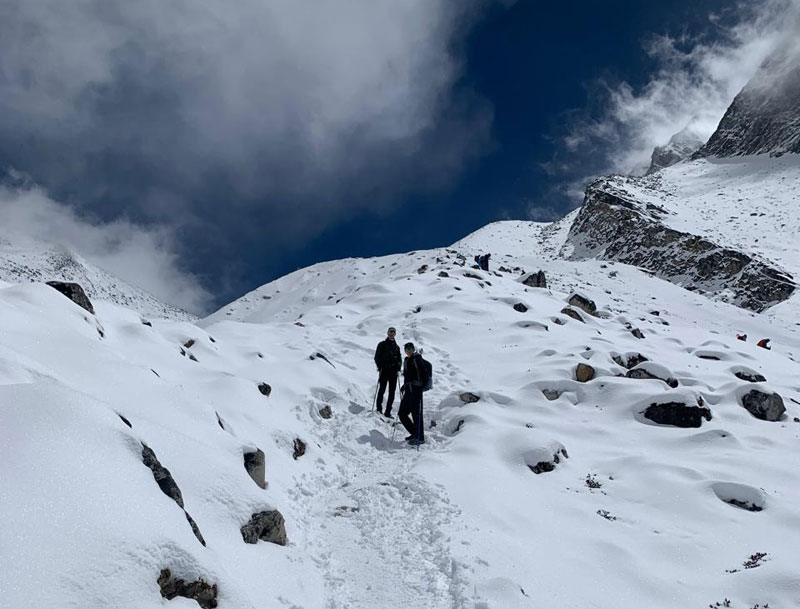
Instead, many remember the gradual transformation of the journey.
They remember how the landscape changes from the lower valleys of the Budhi Gandaki into the high mountain world surrounding Samagaun and Samdo. They remember the feeling of waking up each morning in a different village, watching the terrain become more dramatic with every day of walking, and realizing that the trek is constantly changing rather than leading toward a single destination.
Another observation we have made over the years is that many Indian trekkers initially underestimate how important the villages become to the overall experience. Before arriving in Nepal, most attention is naturally directed toward mountains, altitude, and the pass crossing. During the trek, however, places such as Namrung, Lho, Samagaun, and Samdo often become some of the most talked-about parts of the route.
The pace of the trek also surprises many people. Life becomes remarkably simple. Days are shaped by the trail, the weather, meal times, and the next village ahead. The routine is different from daily life back home, and our guests often tell us that this simplicity becomes one of the most rewarding aspects of the journey.
We have also noticed that the trekkers who enjoy Manaslu the most are rarely those focused only on reaching the highest point as quickly as possible. The route tends to reward patience. Those who take time to appreciate the changing landscapes, the atmosphere of the villages, and the gradual transition into the higher Himalayas often leave with the strongest memories.
Perhaps the most common feedback we hear from Indian travelers is that the Manaslu Circuit feels larger than expected. Not simply in terms of altitude or mountain size, but in the overall sense of journey. The route covers a remarkable variety of landscapes, cultures, and environments, creating an experience that feels far longer and richer than the distance alone might suggest.
After guiding in the region for many years, we have found that this is what makes Manaslu special. The trek is not defined by a single viewpoint, a single mountain, or even a single day. It is the combination of remote valleys, traditional villages, changing scenery, and the gradual progression toward Larkya La Pass that leaves the strongest impression on those who walk the route.
Common Planning Mistakes We See Before the Manaslu Circuit Trek
After organizing Manaslu Circuit Treks for many Indian travellers over the years, we have noticed that the biggest problems rarely happen on the trail itself. Most can be avoided with a little preparation before arriving in Nepal. Here are the planning mistakes we see most often and how you can avoid them.
Arriving in Kathmandu the Night Before the Trek
Many first-time visitors underestimate how much needs to be completed before the trek begins. Permit processing, equipment checks, currency exchange, and the pre-trek briefing all take time. We recommend arriving in Kathmandu at least one day before your departure to allow everything to be arranged without unnecessary stress.
Not Carrying Enough Nepalese Rupees
Many trekkers assume ATMs or digital payments will be available throughout the route. In reality, cash is essential once the trek begins. Personal expenses such as drinks, snacks, WiFi, charging devices, hot showers, and small purchases should be paid in Nepalese Rupees carried from Kathmandu.
Buying Travel Insurance That Does Not Cover High-Altitude Trekking
Standard travel insurance policies often exclude trekking above certain elevations or emergency helicopter evacuation. Before purchasing insurance, check that your policy specifically covers trekking above 5,000 metres and includes emergency rescue in the Himalayas.
Using Brand-New Trekking Boots
One of the most preventable problems we see is trekkers arriving with new boots that have never been worn on longer walks. Even high-quality boots should be broken in before coming to Nepal to reduce the risk of blisters during the first few days of the trek.
Focusing Too Much on the Distance and Not Enough on Altitude
Many trekkers prepare by looking at the daily walking distance, but altitude usually has a much greater effect on how challenging the trek feels. Walking at a steady pace, staying well hydrated, and following a proper acclimatization schedule are far more important than trying to walk quickly.
Packing Too Much
It is common for first-time trekkers to bring more clothing and equipment than they actually use. A lighter backpack makes the trek more comfortable, especially during the higher sections of the trail. We always recommend packing only what you are likely to need and leaving unnecessary items at your hotel in Kathmandu.
See our complete Manaslu Circuit Trek packing list before your trip.
Frequently Asked Questions (FAQs)
Can Indian citizens trek the Manaslu Circuit?
Yes. Indian citizens can complete the Manaslu Circuit Trekking route in Nepal provided they obtain the required permits and trek with a licensed guide. Every year, many Indian travelers join both private and group departures on the Manaslu Circuit.
How much does the Manaslu Circuit Trek cost from India?
The total cost depends on the trekking package, flights to Kathmandu, travel insurance, personal expenses, and optional services such as porter support. Indian trekkers should budget for both the trek itself and the travel costs associated with reaching Nepal.
Should Indian trekkers choose Manaslu or Everest Base Camp?
Manaslu and Everest Base Camp offer very different trekking experiences. Indian trekkers who prefer quieter trails, traditional mountain villages, changing landscapes, and a stronger sense of remoteness may prefer the Manaslu Circuit. Everest Base Camp is generally better suited to travellers who want to visit the world-famous Everest region, experience established trekking infrastructure, and reach iconic places such as Namche Bazaar and Kala Patthar.
Can Indian travellers join a Manaslu group trek?
Yes. Group departures are one of the most popular options for Indian solo travelers and small groups. They provide an opportunity to share transportation and logistics while trekking with other participants from different countries.
Can Indian citizens travel to Nepal with a Voter ID card?
Yes. Indian citizens can generally enter Nepal using a valid Indian passport or an officially accepted Voter ID card. Since entry requirements may change over time, we recommend checking the latest travel regulations before your trip.
Do Indian citizens need a passport for the Manaslu trek permit?
Although Indian citizens can generally enter Nepal with a valid Voter ID card, we strongly recommend carrying a valid passport for the Manaslu Circuit Trek. In our experience, a passport makes the restricted area permit process simpler and helps us prepare the required permit applications before your arrival in Kathmandu. If you book your trek with us, we normally ask for a clear passport copy in advance to arrange the permits smoothly.
Do Indian citizens need a guide for the Manaslu Trek?
Yes. The Manaslu region includes a restricted area, and trekking regulations require all trekkers, including Indian citizens, to be accompanied by a licensed guide.
Can Indian Rupees be used during a trek to the Manaslu Circuit?
Indian Rupees may be accepted in some businesses in Kathmandu, but trekkers should exchange Nepalese Rupees before beginning the trek. Cash in local currency remains the most reliable form of payment throughout the Manaslu region.
Are vegetarian meals available during the Manaslu Circuit Trekking route?
Yes. Vegetarian food is widely available throughout the trek. Dal bhat, vegetable curries, fried rice, noodles, soups, potatoes, pancakes, porridge, and egg-based dishes are commonly served in tea houses along the route.
Is travel insurance necessary for Indian citizens trekking to Manaslu Circuit?
Travel insurance is strongly recommended. Policies that include high-altitude trekking and emergency helicopter evacuation provide additional protection during the trek.
Which season is best for a Manaslu Trek from India?
Spring (March to May) and autumn (September to November) are generally considered the best seasons for the Manaslu Trek. These months usually provide the most favorable weather, mountain views, and trail conditions.
For a more detailed seasonal comparison, see our complete guide to the best time for the Manaslu Circuit Trek.
How many days are needed for the Manaslu Circuit Trek?
Most trekkers choose itineraries lasting between 12 and 14 days. This allows sufficient time for acclimatization, comfortable daily walking distances, and a safer crossing of Larkya La Pass.
Is the Manaslu Circuit Trek suitable for first-time trekkers from India?
Previous trekking experience can be helpful but is not essential. Many first-time visitors to Nepal successfully complete the Manaslu Circuit Trek each year with proper preparation, reasonable fitness, and a well-planned itinerary.
What makes the Manaslu Circuit Trek different from other treks in Nepal?
Many trekkers are drawn to the Manaslu region because of its quieter trails, traditional mountain villages, diverse landscapes, and the feeling of traveling through a less commercialized part of the Himalayas. These characteristics continue to make the Manaslu Circuit one of Nepal's most rewarding trekking experiences.
Conclusion
The Manaslu Circuit Trek is often researched for its permits, costs, and the challenge of crossing Larkya La Pass, but those practical details rarely become the lasting memory of the journey.
After many years of guiding trekkers through the region, we have found that what people remember most is the overall experience of moving through the landscape itself. The route changes constantly, beginning in the lower valleys of the Budhi Gandaki, passing through traditional mountain villages, and gradually entering the high Himalayan environment that surrounds Samagaun, Samdo, and Larkya La Pass.
For many Indian trekkers, one of the biggest surprises is how complete the journey feels. The trek is not defined by a single destination. Instead, it is shaped by a series of experiences that unfold over many days on the trail. Each village, each section of valley, and each change in landscape adds something different to the journey.
Perhaps this is why the Manaslu Circuit leaves such a strong impression on those who complete it. Long after the physical challenge has been forgotten, many trekkers still remember the atmosphere of the villages, the scale of the mountains, the quiet sections of trail between settlements, and the feeling of progressing deeper into one of Nepal's most remarkable trekking regions.
For Indian travelers considering a trek in Nepal, the Manaslu Circuit remains one of the finest opportunities to experience the Himalayas beyond the country's most heavily visited routes. It is a journey that rewards patience, curiosity, and a willingness to embrace the rhythm of life in the mountains.
Every trekking season gives us another opportunity to guide Indian travellers through the Manaslu region, and one thing remains consistent. People arrive expecting a mountain trek but return home talking about the entire journey. That is what continues to make the Manaslu Circuit one of Nepal's most memorable trekking experiences.
If you are considering the trek yourself, you can explore our complete Manaslu Circuit Trek itinerary, costs, permits, and upcoming departures.