Is February Too Cold for the Manaslu Circuit Trek?
This is easily the most common question we receive from trekkers considering the Manaslu Circuit Trek in February.
In many cases, people are not asking whether it is cold. They already know February is a winter month.
What they really want to know is whether the cold makes the trek unrealistic.
In our experience, that is where many assumptions about February begin to break down.
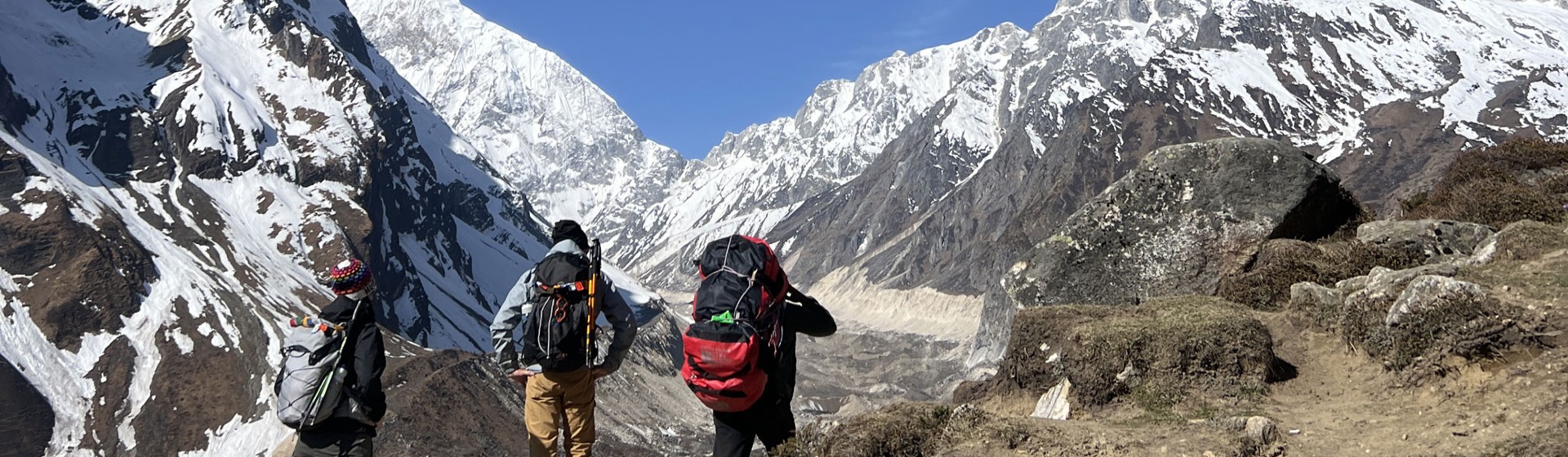
Yes, February is cold, particularly at higher elevations. Mornings around Dharamsala can be freezing, and conditions near Larkya La Pass require close attention. However, many trekkers are surprised to discover that daytime walking conditions are often more comfortable than they expected, especially when the weather is clear and the sun is out.
Trekkers interested in the challenge of the pass can also explore our detailed guide to How Difficult Is the Manaslu Circuit Trek.
One thing guides regularly notice during February departures is the contrast between different parts of the day. Trekkers may start the morning with frost around the tea house and frozen water bottles, only to spend the afternoon walking under bright sunshine with excellent mountain views.
The section we watch most carefully is Larkya La Pass.
Winter conditions can vary significantly from year to year. Some February departures encounter only light snow around the pass, while other seasons may bring much heavier snowfall. After fresh snow, trail conditions can become more demanding, and additional traction such as microspikes or crampons may be recommended depending on the conditions at the time.
This is why recent weather patterns and trail reports are particularly important during winter. A clear and stable February can offer excellent trekking conditions, while a period of heavy snowfall may require additional caution and flexibility.
Another thing we always emphasize is preparation. February is not a month for underestimating the cold. Warm clothing, proper layering, insulated gloves, a suitable sleeping bag, and good-quality trekking gear become much more important than they are during warmer seasons.
At the same time, February offers something many trekkers value greatly: space.
The trails are quieter, tea houses are less crowded, and there are days when groups may walk for long periods without seeing many other trekkers. Combined with the clear winter air, this creates a very different atmosphere from the busy autumn season.
Over the years, we have found that the trekkers who enjoy February the most are usually those who understand what the month offers. They are not expecting autumn conditions. They are looking for a genuine winter trekking experience and are prepared for the colder temperatures that come with it.
For that reason, we rarely answer this question with a simple yes or no.
February is cold, and some winters can bring significant snow around Larkya La Pass. However, cold alone does not determine whether the Manaslu Circuit Trek is possible. More often, the deciding factor is whether a trekker is properly prepared and comfortable embracing the realities of winter in the Himalayas.
What a Manaslu Circuit Trek in February Actually Looks Like
One thing we have noticed over the years is that many trekkers arrive in Nepal with the wrong picture of what February looks like on the Manaslu Circuit Trek.
Some expect deep snow from the first day of walking. Others imagine the entire route is locked in winter conditions from beginning to end.
In reality, the experience is usually more varied than that.
The lower sections of the trek often surprise first-time winter trekkers. It is not unusual for people to spend the first few days walking on mostly dry trails while snow remains visible only on higher slopes and surrounding peaks. Because of this, some trekkers begin to wonder whether the route will feel like winter at all.
That usually changes as the trek gains elevation.
By the time groups reach Samagaon, Samdo, and later Dharamsala, the winter atmosphere becomes much more noticeable. Mornings are colder, water bottles left outside may freeze overnight, and frost around tea houses is common during clear weather.
Our Manaslu Circuit Trek Tea House Guide explains what accommodation and daily life are typically like in these villages.
Another thing that stands out in February is the lack of crowds.
During autumn, trekkers regularly encounter other groups throughout the day. In February, there are times when people walk for long stretches without meeting many other trekkers at all. For some, this quiet atmosphere becomes one of the highlights of the entire journey.
Travelers looking for a less crowded Himalayan route often compare Manaslu with other regions, including the Annapurna Circuit Trek.
What surprises many trekkers most is the quality of the mountain views. When the weather remains stable, February often brings exceptionally clear visibility. The mountains feel sharper, the skies appear deeper, and the trail can feel far more remote than it does during busier seasons.
Of course, conditions become more serious as the route approaches Larkya La Pass. This is where winter conditions matter most and where recent snowfall can have the biggest impact on the trekking experience.
For us, February is not a month defined by constant snow or extreme conditions every day. Instead, it is a month of changing conditions, quiet trails, cold mornings, and some of the clearest mountain views of the year.
The Part of the Manaslu Circuit Trek We Watch Most Carefully in February
When trekkers ask us about February, the conversation almost always leads to the same place: Larkya La Pass.
This is understandable.
The pass is the highest point of the Manaslu Circuit Trek and the section most likely to be affected by winter conditions. While much of the route can offer relatively straightforward trekking during February, conditions around Larkya La often determine how the overall experience unfolds.
If you would like a complete overview of permits, route logistics, and daily stages, see our Manaslu Circuit Trek Itinerary and Cost Guide.
For this reason, it is the part of the trek we watch most carefully throughout the winter season.
One thing we have learned over the years is that the calendar alone rarely tells the full story. A clear February following several days of stable weather can create very different conditions from a February that has recently received heavy snowfall. What happened during the previous week often matters more than the month itself.
Fresh snow can significantly change the crossing.
In some seasons, trekkers encounter only limited snow around the pass. In others, deeper snow may slow progress, require more careful footing, and occasionally make additional traction such as microspikes or crampons a sensible precaution. Wind can also become an important factor, particularly in exposed sections near the pass.
Because of this, we pay close attention to recent trail conditions, local information from the region, and short-term weather forecasts rather than relying solely on historical averages.
Another thing many first-time winter trekkers do not realize is that conditions at Larkya La Pass often have little resemblance to conditions lower on the trail. Trekkers may spend several days walking on mostly dry paths before reaching areas where winter becomes much more noticeable.
Flexibility is one of the most valuable qualities a February trekker can bring.
Occasionally, waiting for improved conditions is the better decision than pushing toward the pass immediately. While this is not necessary every winter, it remains an important part of responsible trekking in the mountains.
The good news is that most February concerns are concentrated around a relatively small section of the route.
For much of the trek, people are simply enjoying quieter trails, clear mountain views, and a different side of Manaslu. It is the approach to Larkya La Pass where winter conditions deserve the most attention and where preparation, experience, and good judgment matter most.
How Is Larkya La Pass in February?
For most trekkers considering the Manaslu Circuit Trek in February, Larkya La Pass is the part of the route they think about most.
This is understandable.
The pass sits at 5,106 meters and is the highest point of the trek. It is also the section most affected by winter conditions, which means trail conditions in February can vary considerably from one season to the next.
One thing we always explain to trekkers is that there is no single answer to the question.
Some February departures cross the pass under clear skies with only limited snow on the trail. In other years, fresh snowfall can create deeper snow, slower walking conditions, and a more demanding crossing. What happened during the previous few days often has a greater impact than the month itself.
Trail conditions around the pass can vary considerably throughout the year, which is one reason many trekkers compare Manaslu Circuit Trek in Spring vs Autumn before choosing their season.
Because of this, guides pay close attention to recent trail conditions before reaching Dharamsala and preparing for the crossing.
After fresh snowfall, microspikes or crampons may occasionally be useful, particularly on icy or snow-covered sections near the pass. Early departures also become especially important during winter, as conditions are often firmer and more predictable during the morning hours.
Wind is another factor that trekkers sometimes underestimate.
Even when the sky is completely clear, strong winds near the pass can make temperatures feel significantly colder than they do lower on the route. This is one reason proper winter clothing is so important for February departures.
At the same time, many trekkers are surprised by how manageable the crossing can feel during periods of stable weather. Clear winter days often bring excellent visibility, and the mountain views from the pass can be some of the sharpest and most impressive of the entire year.
Over the years, we have found that the trekkers who cross Larkya La most comfortably in February are usually not the strongest walkers. They are the ones who arrive prepared, remain flexible, and understand that winter conditions in the mountains require respect rather than concern.
For that reason, we rarely describe Larkya La Pass as the reason to avoid February.
Instead, we see it as the part of the trek that deserves the most preparation and the most attention. When conditions are stable and trekkers are properly equipped, February can still provide a safe and rewarding crossing of one of Nepal's most memorable Himalayan passes.
What Surprises Trekkers Most About a Manaslu Trek in February
One thing we have learned over the years is that February often surprises trekkers in ways they do not expect.
The first surprise is usually the amount of snow they do not see.
Many people arrive in Nepal imagining that winter conditions begin from the first day of the trek. Instead, it is common to spend several days walking on mostly dry trails before winter becomes much more noticeable at higher elevations.
Another surprise is how different the temperatures can feel throughout the day.
Cold mornings are part of the experience, particularly as the trek gains elevation. Yet many trekkers are surprised by how comfortable walking can feel once the sun reaches the trail. It is not unusual to start the morning wearing several layers and spend part of the afternoon walking in much lighter clothing.
The atmosphere on the trail also catches many people off guard.
During autumn, meeting other trekking groups is part of daily life on the Manaslu Circuit. In February, there are days when trekkers see very few people on the trail at all. For some, this becomes one of the most memorable aspects of the journey.
Another common surprise is that the cold is often felt more during mornings and evenings than while walking. Trekkers who worry most about daytime temperatures are sometimes surprised to discover that the biggest adjustment is getting out of a warm sleeping bag on a cold morning.
Perhaps the biggest surprise of all is how much people enjoy the quieter side of Manaslu.
The trails feel less busy, the villages feel calmer, and when the weather is stable, the mountain views can be exceptional. Many trekkers who begin the trip concerned about February conditions finish the trek wondering why they were worried in the first place.
That does not mean February is the right choice for everyone. But it does explain why some trekkers who initially viewed winter as a compromise end up seeing it as one of the most rewarding times to experience the Manaslu Circuit Trek.
What We Tell Trekkers Who Ask About the Manaslu Circuit Trek in February
When trekkers contact us about the Manaslu Circuit Trek in February, they are often expecting a simple answer.
Many ask whether they should go ahead with their plans or wait until spring.
Our response is usually the same.
February can be an excellent time to trek in the Manaslu region, but only if you understand what makes it different from the more popular trekking seasons.
We do not usually tell people to avoid February simply because it is cold. Instead, we ask a few questions first.
Are you comfortable trekking in winter conditions?
Do you enjoy quieter trails?
Are you prepared for cold mornings, colder nights, and the possibility of snow around Larkya La Pass?
If the answer is yes, February can be a very rewarding month.
At the same time, we are careful not to present February as an easier or better version of autumn. The conditions are different, and expectations need to match reality. Some years bring very stable weather and excellent visibility, while others may see fresh snowfall that affects conditions around the pass.
One thing we often tell trekkers is that flexibility becomes more important during winter.
Understanding transportation to the trailhead is also important during winter, and our Manaslu Ground Transportation Guide explains the available options.
Unlike peak trekking seasons, February sometimes requires paying closer attention to weather patterns, recent trail conditions, and local information from the region. This does not mean problems are common, but it does mean that a flexible mindset is valuable.
We also encourage trekkers to think about the type of experience they are looking for.
If someone dreams of busy tea houses, meeting large numbers of other trekkers, and trekking in milder temperatures, we may suggest waiting for spring or autumn. On the other hand, if they are looking for quieter trails, clear mountain views, and a different side of the Himalayas, February often becomes much more appealing.
Perhaps the most important thing we tell people is this:
Do not choose February because it is the cheapest month, and do not avoid it simply because it is winter.
Choose February because the experience it offers matches the kind of trek you genuinely want.
In our experience, trekkers who make that decision for the right reasons are usually the ones who enjoy February the most.
Who Usually Enjoys a Manaslu Trek in February the Most
After discussing the challenges of February, many trekkers ask us another question:
"Who is February actually best for?"
Over the years, we have noticed that certain types of trekkers consistently enjoy the Manaslu Circuit Trek in February more than others.
One group is people who actively seek quieter trails.
During the autumn season, it is common to meet other trekking groups throughout the day and share tea houses with travelers from around the world. February offers a very different atmosphere. Some days pass with surprisingly few encounters on the trail, creating a stronger sense of remoteness and solitude.
Photographers also tend to appreciate February.
When weather conditions remain stable, winter often brings exceptionally clear visibility. The mountains can appear remarkably sharp, and the quieter trails make it easier to enjoy viewpoints without the crowds sometimes found during peak trekking months.
Another group includes trekkers who have already visited Nepal during spring or autumn.
Many repeat visitors are not looking for the busiest season or the most comfortable temperatures. Instead, they want to experience a different side of the Himalayas. For them, February often provides a quieter and more peaceful version of the Manaslu region.
We have also found that February suits trekkers who enjoy the journey itself rather than focusing only on reaching a destination. Winter trekking requires a little more patience, preparation, and flexibility than some other seasons. People who embrace those aspects of trekking generally adapt well to February conditions.
Interestingly, the trekkers who enjoy February most are not always the strongest hikers.
More often, they are the people who arrive with realistic expectations and an appreciation for what makes winter trekking unique. They understand that colder temperatures, occasional snow, and quieter trails are part of the experience rather than obstacles to it.
For those trekkers, February often becomes much more than an alternative to autumn or spring. It becomes a season they would happily choose again.
When February May Not Be the Right Time for the Manaslu Circuit Trek
Although the Manaslu Circuit Trek in February can be a rewarding experience, it is not the month we recommend to every trekker who contacts us.
Every winter, we receive inquiries from trekkers who are unsure whether to trek in February or wait until spring. The answer is not always the same because the best trekking season often depends on the individual rather than the calendar.
Over the years, we have found that the people who enjoy February the most are usually those who specifically want a winter trekking experience. They understand that colder temperatures, quieter trails, and the possibility of snow are part of what makes the season unique.
For others, a different season may simply be a better fit.
One example is trekkers who strongly dislike cold weather. Even during periods of stable weather, mornings and evenings can feel significantly colder than they do during spring or autumn, particularly in places such as Samdo, Dharamsala, and around Larkya La Pass.
We may also suggest a different season for trekkers with very limited flexibility in their schedule.
One thing we have learned from operating Manaslu treks over the years is that winter conditions do not always follow a predictable pattern. A week of stable weather can create excellent conditions on the trail, while fresh snowfall may change conditions around higher elevations. Trekkers who have only a narrow travel window sometimes prefer the greater predictability that spring and autumn often provide.
Another group includes people who enjoy the social atmosphere of trekking.
February offers a quieter version of the Manaslu Circuit Trek. Some trekkers love the sense of solitude and the quieter tea houses. Others prefer the busier atmosphere that comes with meeting more travelers along the route. Neither preference is right or wrong, but it is worth considering before choosing a season.
We are also careful when advising first-time Himalayan trekkers who are uncertain about winter conditions. While February is certainly possible, some people find that their first experience in the Himalayas is more enjoyable during a slightly warmer season.
This does not mean February is a poor time to trek.
In fact, many trekkers who choose the Manaslu Circuit Trek in February return with some of their strongest memories of Nepal. The key is understanding what the month offers and making sure it matches the experience you are looking for.
For some people, February provides exactly the combination of quiet trails, clear mountain views, and winter adventure they want. For others, spring or autumn may simply be a better choice.
That is why we rarely describe February as either good or bad. More often, it comes down to choosing the season that best matches your expectations, comfort level, and trekking style.
Final Thoughts
So, should you trek the Manaslu Circuit in February?
In our experience, the answer depends less on the month itself and more on what kind of trekking experience you are looking for.
February is not the easiest month on the Manaslu Circuit Trek, and it is certainly not the busiest. Temperatures are colder, conditions around Larkya La Pass require closer attention, and winter weather occasionally demands flexibility.
At the same time, February offers something that many trekkers find increasingly difficult to experience during the more popular trekking seasons.
The trails are quieter. The mountains often appear exceptionally clear. Villages feel more peaceful, and the overall experience can feel far more remote than it does during spring or autumn.
Over the years, we have watched trekkers arrive concerned about snow at Larkya La Pass, uncertain about the cold, and unsure whether February was the right decision. Many leave with a completely different impression of the season, remembering the quiet trails, clear mountain views, and peaceful atmosphere far more than the challenges they worried about before the trek.
That does not mean February is the perfect month for everyone.
Some trekkers will undoubtedly enjoy the warmer temperatures and greater predictability of spring or autumn. Others will appreciate exactly what winter brings to the trail.
For that reason, we rarely describe February as either good or bad.
Instead, we see it as a season that offers a different side of the Manaslu Circuit Trek, one that rewards preparation, flexibility, and an appreciation for quieter mountain experiences.
For trekkers considering a winter departure, our complete Manaslu Circuit Trek package includes updated route information, permit assistance, experienced guides, and current trail advice.
If those are the qualities you value most in a trek, February may be worth considering far more seriously than many people initially expect.