What Makes Thorong La Pass So Difficult?
What makes Thorong La Pass particularly difficult is how much effort trekkers must manage in a single day, with little room for poor pacing or unexpected delays. On most days of the Annapurna Circuit, you walk between villages, take breaks at teahouses, and gradually settle into a comfortable rhythm. The crossing of Thorong La is different. Once you are high on the route, there are fewer sheltered places to rest, and turning back or continuing becomes a decision that needs careful judgment.
One of the difficulties is judging how much energy to use. A short uphill stretch that looks manageable from a distance can take considerably longer than expected. Trekkers sometimes try to maintain the same walking speed they managed around Manang, only to find themselves stopping more frequently as the morning progresses. Walking too quickly early in the day can leave them unnecessarily tired before the crossing is complete.
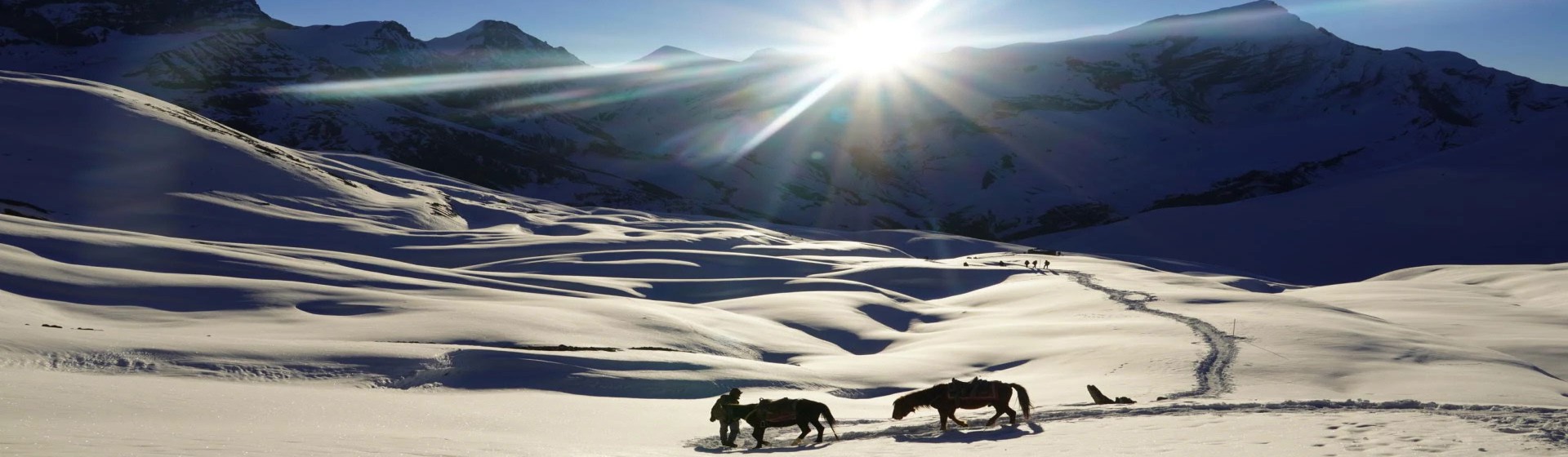
The exposed surroundings add another challenge. There are long stretches without a village or a warm place to sit. In cold conditions, even simple things like taking off gloves to open a snack, adjusting a backpack, or stopping to drink water can become uncomfortable. These small interruptions may seem unimportant at lower elevations, but they can affect concentration and energy during a long mountain crossing.
Another important consideration is how a trekker has been coping with the preceding days. Someone who walked comfortably through the lower Annapurna Valley may still struggle above Manang. Poor recovery, unusual exhaustion, or symptoms of altitude illness should never be dismissed simply because the person was physically strong earlier in the trek.
The real difficulty of Thorong La is not just reaching 5,416 meters. It is maintaining enough energy, awareness, and physical control to complete the crossing safely. A sensible pace and good acclimatization help, but neither can guarantee a safe crossing when the weather deteriorates or someone becomes unwell.
Trekkers who also want to visit Tilicho Lake can consider our Annapurna Circuit with Tilicho Lake Trek, which follows a longer route from Manang before continuing toward Thorong La. This adds extra high-altitude walking and requires additional days, so the itinerary should be planned with enough time for acclimatization.
How Difficult Is the Climb from Thorong Phedi to Thorong La Pass?
The climb from Thorong Phedi (4,525m) to Thorong La Pass (5,416m) involves approximately 890 meters of elevation gain and generally takes 4-5 hours in favorable conditions. Although the distance is relatively short, the ascent is challenging because the trail begins steeply and continues through increasingly high, exposed mountain terrain. The difficulty also changes noticeably between Thorong Phedi, High Camp, and the final approach to the pass.
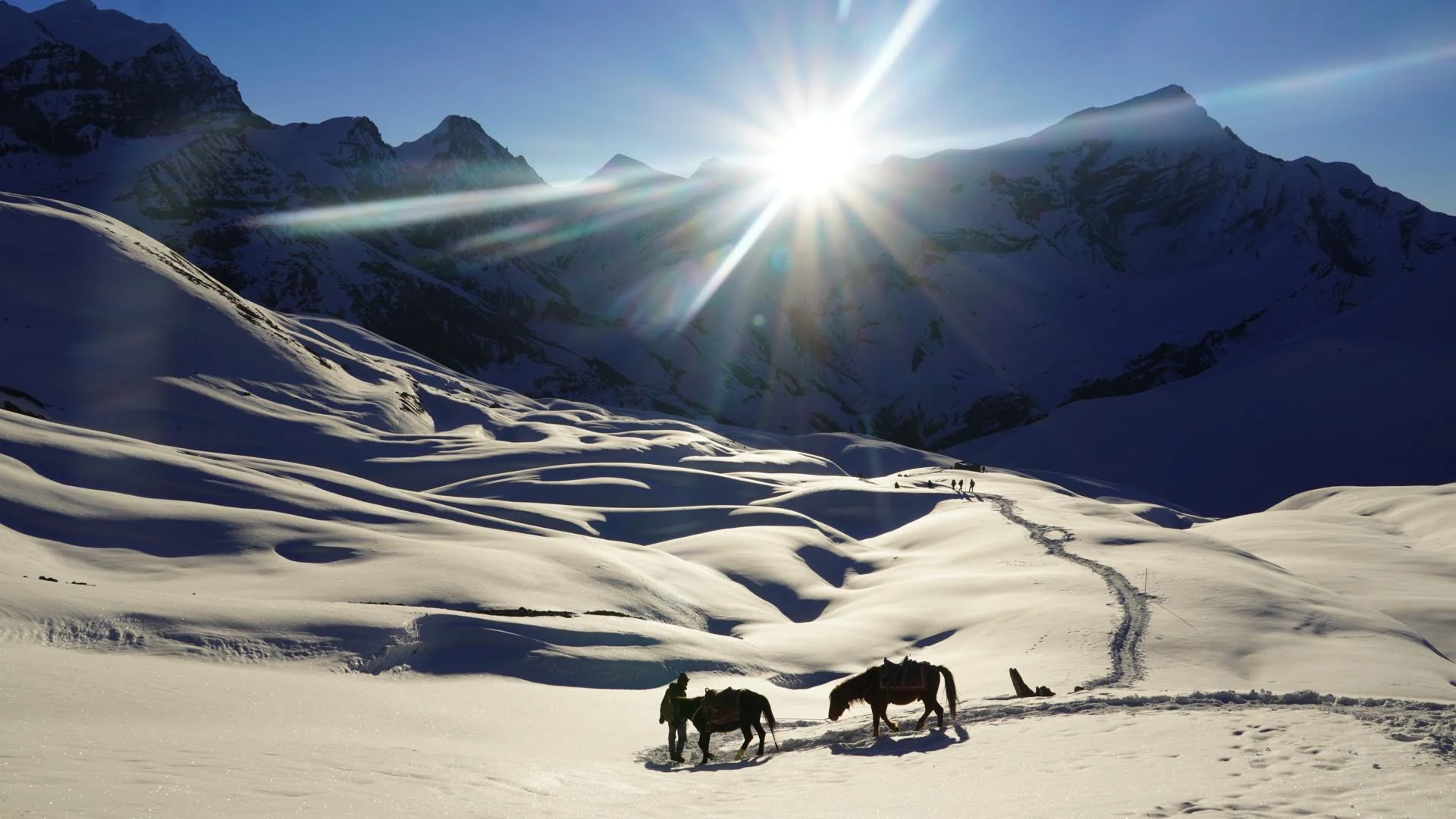
The first section toward High Camp (4,880m) is particularly steep. The path climbs directly above Thorong Phedi through a series of rocky switchbacks, gaining approximately 355 meters of elevation. This section usually takes around 1-2 hours, depending on walking speed and trail conditions. Trekkers leaving before daylight must negotiate the uneven ground with headlamps, making careful foot placement important.
After reaching High Camp, the nature of the climb changes. The trail becomes less steep in places, but the walking does not necessarily feel easier. The route continues across barren slopes with several gradual rises, and the pass is not immediately visible throughout the approach. At this elevation, a short stretch of uphill walking can take much longer than expected.
One of the most challenging parts is the final approach above High Camp. The trail may appear relatively gentle, yet progress can be frustratingly slow. Trekkers sometimes expect the next rise to reveal the pass, only to discover another section ahead. It is better to maintain a comfortable pace than to repeatedly speed up in anticipation of reaching the top.
On our 12-day Annapurna Circuit Trek, we normally stay overnight at Thorong Phedi rather than High Camp. This adds more climbing on the crossing morning but avoids sleeping approximately 355 meters higher. High Camp can shorten the ascent, although the decision about where to sleep should depend on acclimatization, individual health, and the group's condition.
The climb also provides an important opportunity to assess how trekkers are coping with the altitude. Someone struggling unusually badly on the approach to High Camp should not simply assume the gentler terrain above will solve the problem. Headache, nausea, dizziness, or unusual exhaustion require attention, and suspected altitude illness may mean stopping the ascent or descending.
The climb to Thorong La is not technically difficult under normal, snow-free conditions, but it demands patience, endurance, and sound judgment. The steep section below High Camp tests the legs, while the upper approach tests how comfortably a trekker can continue walking at altitude. Snow, ice, or worsening weather can make either section significantly more difficult.
Is the Descent from Thorong La Pass to Muktinath Harder Than the Ascent?
For some trekkers, descending from Thorong La Pass (5,416m) to Muktinath (3,760m) is harder than climbing to the pass, particularly for those who struggle with long downhill walks. The route drops approximately 1,650 meters and normally takes another 3–5 hours after reaching the top. The uphill section is generally more demanding on breathing, while the descent puts greater pressure on the knees, thighs, and ankles.
The first part of the descent on the Mustang side is steep, with a winding trail over loose stones and gravel. Unlike climbing, where each step requires an upward push, walking downhill involves constantly controlling your body's weight. When the ground is loose, a foot can slide forward unexpectedly, especially when the legs are already tired. This is why the descent needs just as much attention as the climb, even though the altitude is gradually decreasing.
One difficulty that trekkers sometimes underestimate is how tiring continuous downhill walking can become. The thigh muscles work repeatedly to slow the body with every step. After an hour or two, maintaining the same controlled movement can become uncomfortable, particularly for people who have trained mostly on flat ground or uphill trails. Taking longer steps to descend faster often increases the strain rather than saving energy.
Footwear also becomes important here. On a steep descent, your toes can repeatedly press against the front of your boots, especially if the laces are too loose or the boots do not fit properly. Checking your laces before leaving the pass and adjusting them when necessary can help prevent painful toes and blisters. Trekking poles are useful for maintaining balance and taking some pressure off the legs, especially on uneven sections.
As you continue lower toward Muktinath, breathing usually becomes more comfortable, but that does not mean your legs have recovered. The temptation is to walk faster once the difficult high-altitude section is behind you. Maintaining shorter, controlled steps and taking brief rests when needed is generally more comfortable than rushing through the final downhill stretches.
So, which is harder: climbing Thorong La or descending to Muktinath? The ascent is usually tougher for trekkers who struggle with sustained uphill effort at altitude. The descent may feel harder for those with sensitive knees, tired leg muscles, or limited experience on steep downhill trails. Neither section should be underestimated, and snow or ice can make the descent considerably more hazardous than it would be on a dry trail.
How Long Does It Take to Cross Thorong La Pass?
Crossing Thorong La Pass from Thorong Phedi to Muktinath generally takes 8-10 hours, covering approximately 15.5 km (9.6 miles). On our 12-day Annapurna Circuit Trek, we normally plan around 8–9 hours in favorable conditions. However, the actual duration can vary considerably depending on the group's pace, acclimatization, and trail conditions.
Most trekkers leave Thorong Phedi around 4:00-5:00 AM, although the exact departure time depends on the season and weather. The aim is to reach the pass early enough to leave sufficient daylight for the remaining journey to Muktinath.
Thorong La Pass Walking Time Breakdown
| Trail Section | Approximate Walking Time |
|---|
| Thorong Phedi (4,525m) to High Camp (4,880m) | 1-1.5 hours |
| High Camp to Thorong La Pass (5,416m) | 2.5-3.5 hours |
| Thorong La Pass to Muktinath (3,760m) | 3-5 hours |
| Total crossing day, including breaks | Allow 8-10 hours or longer |
These are approximate times, not a fixed schedule. Short breaks, slower progress at altitude, and changing conditions can extend the day.
For example, leaving Thorong Phedi at 4:00 AM does not necessarily mean reaching Muktinath by midday. A trekker who takes five hours to reach the pass still has several hours of descending ahead. This is why the time remaining after reaching Thorong La matters just as much as the time spent climbing.
Starting from High Camp can shorten the morning walk, but it also means spending the previous night at a higher elevation. That decision should be based on acclimatization and the trekker's condition rather than simply trying to save walking time.
For us, the important consideration is whether the group is making safe progress with enough daylight remaining to reach Muktinath. If someone is struggling unusually badly, developing symptoms of altitude illness, or the weather is deteriorating, continuing toward the pass simply to stay on schedule is not the right decision.
The estimated walking hours are useful for planning, but they should never become a reason to rush or continue when conditions are unsafe.
How Does High Altitude Affect Trekkers Crossing Thorong La Pass?
At Thorong La Pass (5,416m), the lower atmospheric pressure reduces the amount of oxygen available with each breath, making walking considerably more demanding. Even physically strong trekkers may find themselves breathing heavily, taking shorter steps, and needing more frequent rests. However, the greater concern is altitude sickness, which can develop regardless of fitness or previous trekking experience.
The effects of altitude become particularly important after Manang (3,540m). By the time trekkers reach Yak Kharka and Thorong Phedi, they are sleeping above 4,000 meters, where the body needs more time to adjust. Some people continue feeling comfortable, while others may develop headaches, nausea, dizziness, or unusual tiredness. These symptoms should not be dismissed as ordinary fatigue after a long walking day.
At Thorong Phedi, the concern becomes more immediate. Trekkers normally prepare for an early departure, but someone waking with a persistent headache, nausea, or worsening symptoms should not simply take painkillers and begin climbing toward the pass. A headache accompanied by other symptoms after gaining altitude may indicate acute mountain sickness (AMS), and continuing higher can make the condition worse.
There is also an important difference between breathing heavily while climbing and becoming breathless while resting. The first is common at high altitude, while the second can signal a serious problem. Confusion, difficulty walking steadily, or severe breathing difficulties are emergency warning signs that require urgent medical attention and descent.
On our 12-day Annapurna Circuit Trek, we spend an additional night in Manang for acclimatization before continuing through Yak Kharka to Thorong Phedi. This gives trekkers more time to adjust before attempting the pass. However, an acclimatization day is not a guarantee against altitude sickness, and we encourage trekkers to report symptoms early rather than hide them because they are worried about delaying the trip.
The decision to cross Thorong La should depend on how well a trekker has acclimatized, not simply how strong or determined they feel. Suspected altitude sickness means stopping further ascent until symptoms have resolved, while worsening or severe symptoms require descent and appropriate medical care. Losing a trekking day is always preferable to risking a serious altitude-related emergency.
The CDC's guidance on high-altitude travel and altitude illness explains why even physically fit trekkers can develop altitude sickness and why continuing to ascend with symptoms can be dangerous.
Can Beginners Cross Thorong La Pass on the Annapurna Circuit Trek?
Yes, beginners can cross Thorong La Pass (5,416m), but it is not an easy first mountain trek. Previous Himalayan trekking experience is helpful, though not essential. In normal, snow-free conditions, the route does not require technical climbing skills. However, first-time trekkers need to understand the physical demands of crossing a high pass before deciding whether this is the right challenge for them.
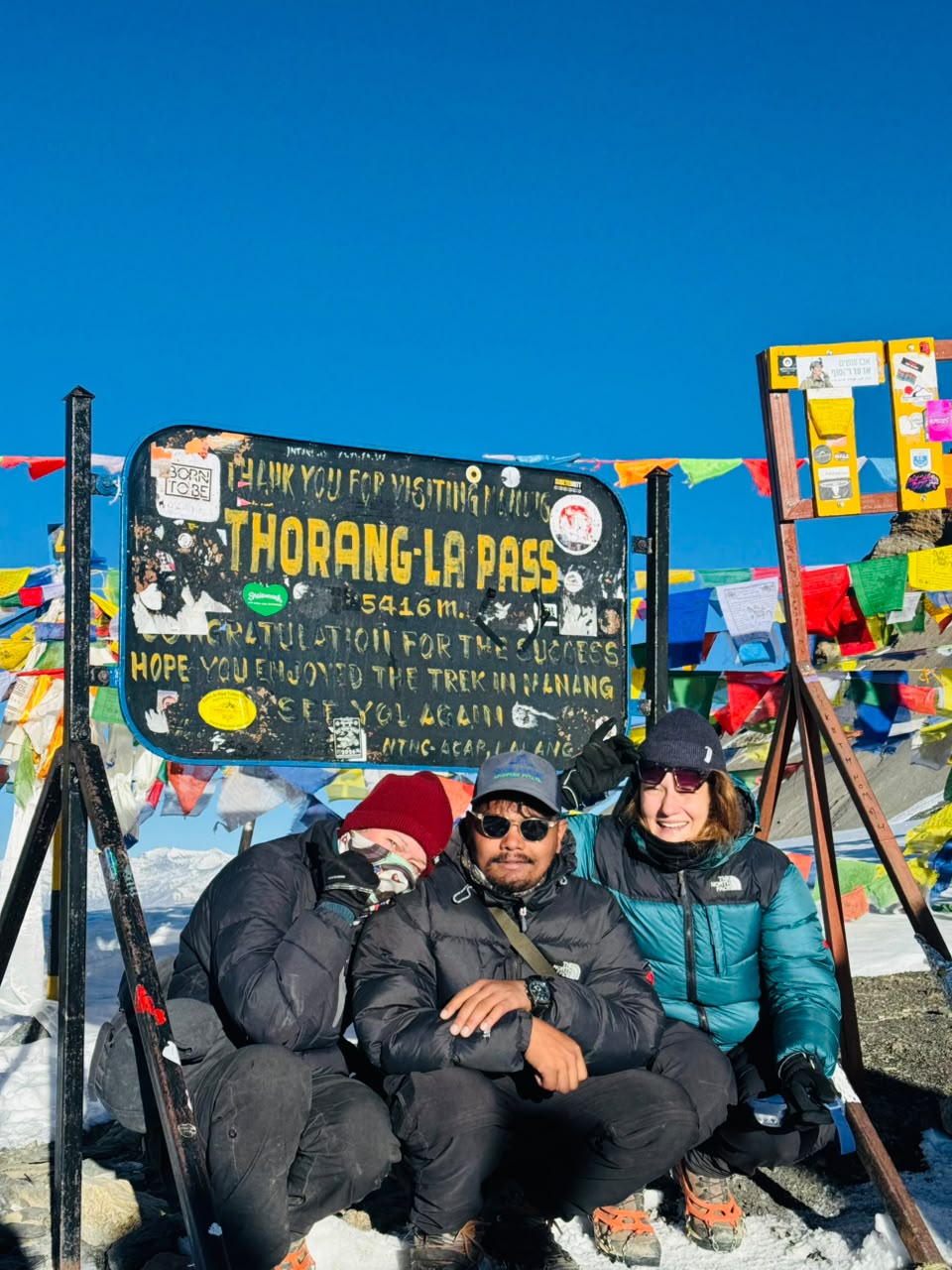
A better way to judge your readiness is to consider how you handle long days in the mountains. Can you continue walking comfortably after several hours of climbing? Are you accustomed to descending steep, uneven trails when your legs are already tired? Someone who regularly walks in the hills may find the physical demands more manageable than someone whose preparation consists mainly of short walks on flat ground.
For beginners, the choice of itinerary deserves particular attention. Our 12-day Annapurna Circuit Trek includes an acclimatization day in Manang, but this schedule may not suit everyone. Travelers with limited hiking experience, uncertain fitness, or concerns about adjusting to altitude may benefit from additional days rather than following a tighter schedule.
Another important consideration is flexibility. The crossing should never become something you feel obliged to complete because you have already spent several days reaching Thorong Phedi. Poor acclimatization, illness, or unsuitable mountain conditions can make postponing or abandoning the attempt the safer decision.
Our advice for first-time Himalayan trekkers is to choose Thorong La only when you are prepared for the complete crossing, not simply excited about reaching 5,416 meters. A realistic itinerary, suitable preparation, and the willingness to change plans matter far more than reaching the pass on a particular date.
For a broader understanding of the fitness, experience, and preparation needed for the complete route, read our Annapurna Circuit Trek for beginners guide.
How Can You Prepare for the Thorong La Pass Crossing?
Preparing for Thorong La Pass involves physical readiness, suitable equipment, and careful planning before the crossing day. By the time you reach Thorong Phedi, there is little you can do to improve your fitness. What matters now is whether you have adjusted well to the altitude, whether your equipment is ready, and whether you are prepared for several hours of walking before sunrise.
Before arriving in Nepal, practice longer hill walks that include sustained descents, not just uphill climbing. Your boots should already be comfortable after several hours of walking. If you develop blisters or pressure points during the earlier days of the Annapurna Circuit, deal with them before reaching Thorong Phedi. A small problem around Manang can become much more uncomfortable during the long crossing to Muktinath.
The evening at Thorong Phedi is particularly important. After settling into the teahouse, prepare your clothes and daypack while there is still enough light to organize everything properly. Check that your headlamp works, keep spare batteries available, and arrange your warm layers so you can put them on without searching through your bag in the cold.
Keep the things you will need during the climb within easy reach. Gloves, drinking water, snacks, and an extra warm layer should not be buried underneath everything else. Water can begin freezing in very cold conditions, so an insulated bottle is useful. Carry food that is easy to eat without removing your gloves for long periods.
Clothing should allow you to adjust as your body warms during the ascent. You may leave Thorong Phedi wearing several layers, then need to remove one as you begin climbing. A windproof jacket, warm gloves, and protection for your ears and face become particularly important when stopping in exposed areas.
Before going to bed, confirm the departure time and breakfast arrangements with your guide. It is also worth discussing the latest information about snow and ice on the route. Microspikes may be useful in certain icy conditions, but they should not be treated as a solution for heavy snow or an unsafe crossing.
On the morning of departure, take time to eat something, check your equipment, and tell your guide if you are feeling unwell. Good preparation does not mean carrying more equipment than necessary. It means having the right things ready, knowing what to expect, and starting the crossing in suitable conditions.
What Happens If Bad Weather Makes Thorong La Pass Unsafe to Cross?
If heavy snowfall, strong winds, or poor visibility make Thorong La Pass unsafe, the crossing must be delayed or the trekking route changed. Unlike an ordinary trekking day, there is no simple alternative walking trail that bypasses Thorong La and takes you directly to Muktinath. Once you reach Thorong Phedi, your options depend on the conditions above the pass, how the group is feeling, and how much flexibility remains in the itinerary.
A difficult situation can arise when trekkers wake up at Thorong Phedi expecting to cross, only to learn that overnight snowfall has made the route unsafe. Other groups may already be preparing to leave, but that does not necessarily mean the trail is suitable for everyone. Fresh snow can hide the established path, while icy sections may become particularly dangerous during the descent toward Muktinath.
If the weather is expected to improve and accommodation remains available, waiting another day at Thorong Phedi may be possible. However, staying at 4,525 meters for additional nights is not always appropriate, especially for anyone experiencing altitude-related symptoms. If the bad weather is likely to continue, descending toward Yak Kharka or Manang may be the better decision.
What happens to the itinerary if you cannot cross Thorong La? On our 12-day Annapurna Circuit Trek, the crossing is scheduled for Day 9, followed by the walk to Jomsom on Day 10 and a flight to Pokhara on Day 11. Even a one-day delay can affect these arrangements, particularly when travelers have limited time before their international departure.
Sometimes the schedule can be adjusted, but this depends on available days, accommodation, transportation, and the conditions ahead. If the pass remains unsafe for an extended period, the group may need to return toward Manang and leave the region through the Marsyangdi Valley rather than continue to Mustang. Additional arrangements may involve extra costs, depending on the booking terms.
A helicopter should not be considered a guaranteed alternative. The same weather preventing trekkers from crossing the pass can also make helicopter operations impossible.
If conditions deteriorate after the climb has already started, the guide must assess whether returning along the approach route is safe or whether another immediate safety measure is necessary.
For anyone planning the Annapurna Circuit, an extra day in the schedule is worth considering, but even a buffer day cannot guarantee a successful crossing. Sometimes the sensible decision is to wait, and sometimes it is to change the plan completely. Thorong La should only be attempted when the conditions allow a safe crossing, regardless of the original itinerary.
Choosing the best time for the Annapurna Circuit Trek can improve your chances of suitable crossing conditions, although no season guarantees clear weather at Thorong La.
Is Thorong La Pass Harder Than Larkya La Pass on the Manaslu Circuit Trek?
Thorong La Pass (5,416m) is 256 meters higher than Larkya La Pass (5,160m), but that does not automatically make it the harder crossing. Thorong La involves a greater elevation gain from Thorong Phedi and a longer vertical descent to Muktinath, while Larkya La presents rougher terrain in places and a more remote mountain environment.
On the Manaslu Circuit Trek, the crossing begins at Dharmasala (4,460m) and finishes at Bimthang (3,720m). The route passes through rocky, exposed terrain, with a long descent that can be particularly demanding when the ground is loose or covered in snow.
Thorong La follows a more established trail, but climbing above 5,000 meters and descending approximately 1,650 meters to Muktinath requires considerable endurance. The higher altitude can also make the uphill walking feel more exhausting.
For trekkers sensitive to altitude, Thorong La may feel harder, while those who struggle with remote, uneven mountain trails may find Larkya La more challenging. Both are serious high-altitude crossings, and the actual difficulty depends on acclimatization, trail conditions, and individual trekking experience.
Frequently Asked Questions About Thorong La Pass
Are There Tea Houses, Toilets, or Drinking Water Facilities on Thorong La Pass?
Facilities are very limited between Thorong Phedi and Muktinath. During the main trekking seasons, a small tea shop may operate near Thorong La Pass, offering hot drinks and simple refreshments. However, it may be closed during bad weather or quieter periods.
Trekkers should not depend on finding toilets or reliable drinking water along the crossing. Use the facilities at Thorong Phedi before departure and carry enough safe drinking water and snacks to reach Muktinath. Seasonal tea stops are helpful, but they should never be your only source of food or water.
Can You Cross Thorong La Pass from Muktinath to Manang?
Yes, Thorong La can be crossed from Muktinath toward Manang, but this direction is generally not recommended for trekkers who have not already acclimatized. Starting from Muktinath (3,760m) involves gaining approximately 1,650 meters to reach the pass in a single day.
Most Annapurna Circuit itineraries follow the opposite direction, approaching through Manang, Yak Kharka, and Thorong Phedi. This allows a more gradual increase in sleeping altitude before the crossing.
The reverse route requires careful planning and appropriate acclimatization. Simply arriving in Muktinath by road and attempting the pass the following morning would be a risky approach.
Is There Mobile Phone Coverage or Emergency Communication at Thorong La Pass?
Mobile coverage around Thorong La is unreliable, and trekkers should prepare for periods without any phone signal. Reception becomes increasingly limited beyond Yak Kharka, particularly around Thorong Phedi, High Camp, and the pass itself.
Do not rely on a Nepali SIM card for emergency communication during the crossing. Download any necessary maps before leaving Manang, inform your family that you may be out of contact, and discuss emergency communication arrangements with your trekking guide beforehand.
Coverage generally improves after descending toward Muktinath.
Do You Need Crampons or Microspikes to Cross Thorong La Pass?
Crampons and microspikes are not normally necessary when crossing Thorong La on a clear, snow-free trail. However, conditions can change after snowfall, and icy sections may require additional traction.
Lightweight microspikes can provide better grip on packed snow and icy walking trails, but they are not suitable for every type of snow or mountain terrain. Technical crampons are not standard equipment for the normal trekking route.
Your guide should assess the conditions before the crossing. If the snow or ice makes the route unsafe, carrying microspikes does not mean the pass should be attempted.
Is Thorong La Pass Harder Than Larkya La Pass on the Manaslu Circuit Trek?
Thorong La Pass (5,416m) is 256 meters higher than Larkya La Pass (5,160m), but that does not automatically make it more difficult. Thorong La involves a greater elevation gain from Thorong Phedi and a long descent to Muktinath, while Larkya La crosses more remote mountain terrain with rocky moraine and fewer facilities.
On the Manaslu Circuit Trek, the crossing from Dharmasala to Bimthang can feel particularly demanding because of the uneven ground and long walking day. Thorong La follows a more established trekking trail, although its higher elevation makes sustained uphill walking challenging.
Trekkers who struggle with altitude may find Thorong La harder, while those less comfortable on rough, remote trails may find Larkya La more exhausting. Both require proper acclimatization, suitable weather, and realistic preparation.
On the Manaslu Circuit Trek, the crossing from Dharmasala to Bimthang involves rougher terrain in places and a more remote mountain environment.
Final Thoughts: How Difficult Is Thorong La Pass?
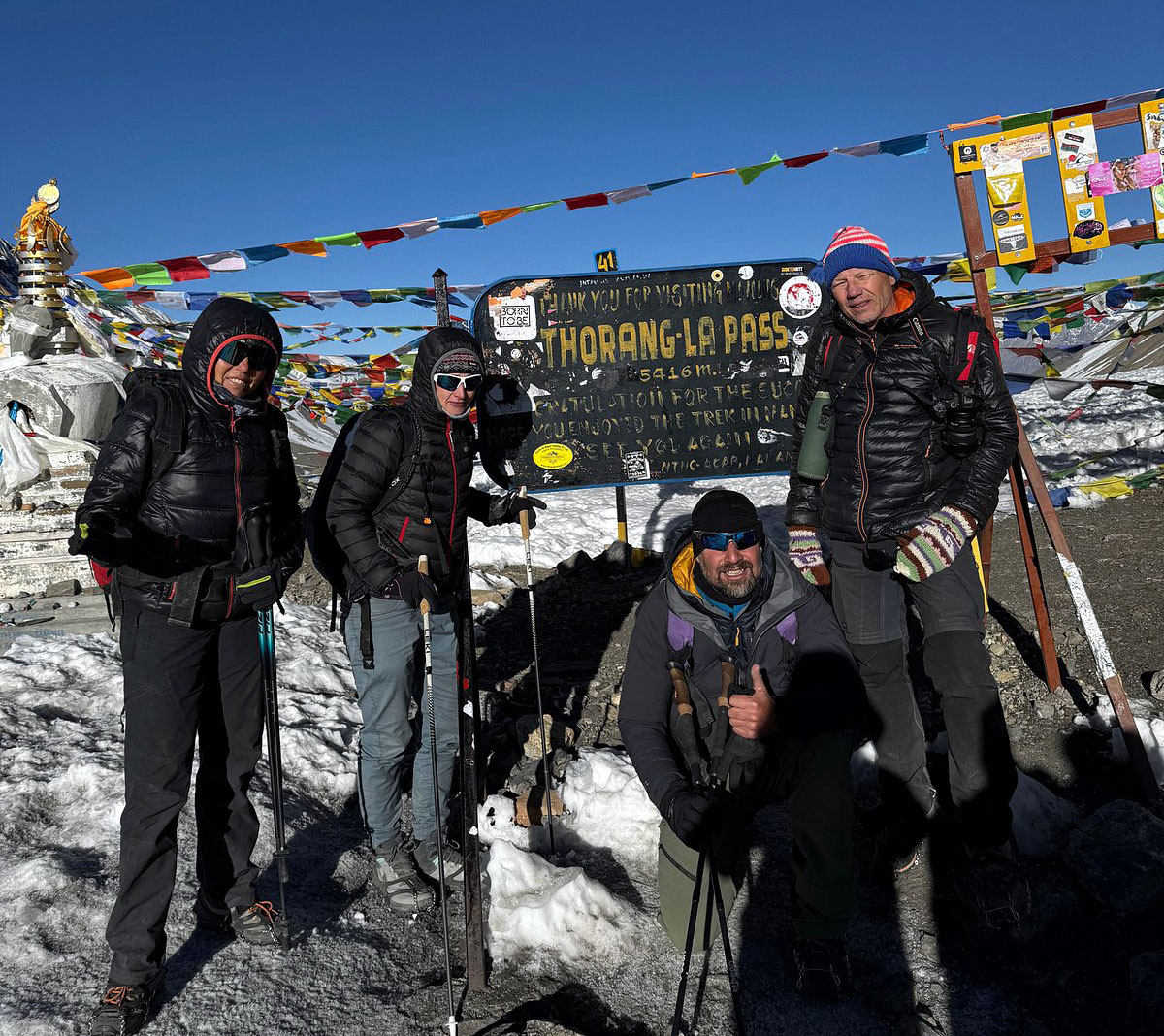
Thorong La Pass (5,416m) is a demanding high-altitude crossing, but it is achievable for trekkers who are well-prepared, properly acclimatized, and walking in suitable conditions. Reaching the prayer flags at the top is a memorable moment, but the crossing is not complete until you have safely descended to Muktinath. It is a day that requires patience, endurance, and sensible decisions rather than speed.
At Dream Heaven Adventure, our 12-day Annapurna Circuit Trek includes an acclimatization day in Manang and an overnight stay at Thorong Phedi before attempting the pass. Even with this preparation, we understand that every trekker responds differently to altitude, and the crossing plan must remain flexible.
If you are considering Thorong La, look beyond the total trekking days and package price. Check the acclimatization schedule, understand the crossing day, and allow room for unexpected changes.
You can explore our 12-day Annapurna Circuit Trek or speak with our local team in Kathmandu to choose an itinerary that suits your experience and expectations.