Can Solo Female Travellers Trek the Manaslu Circuit?
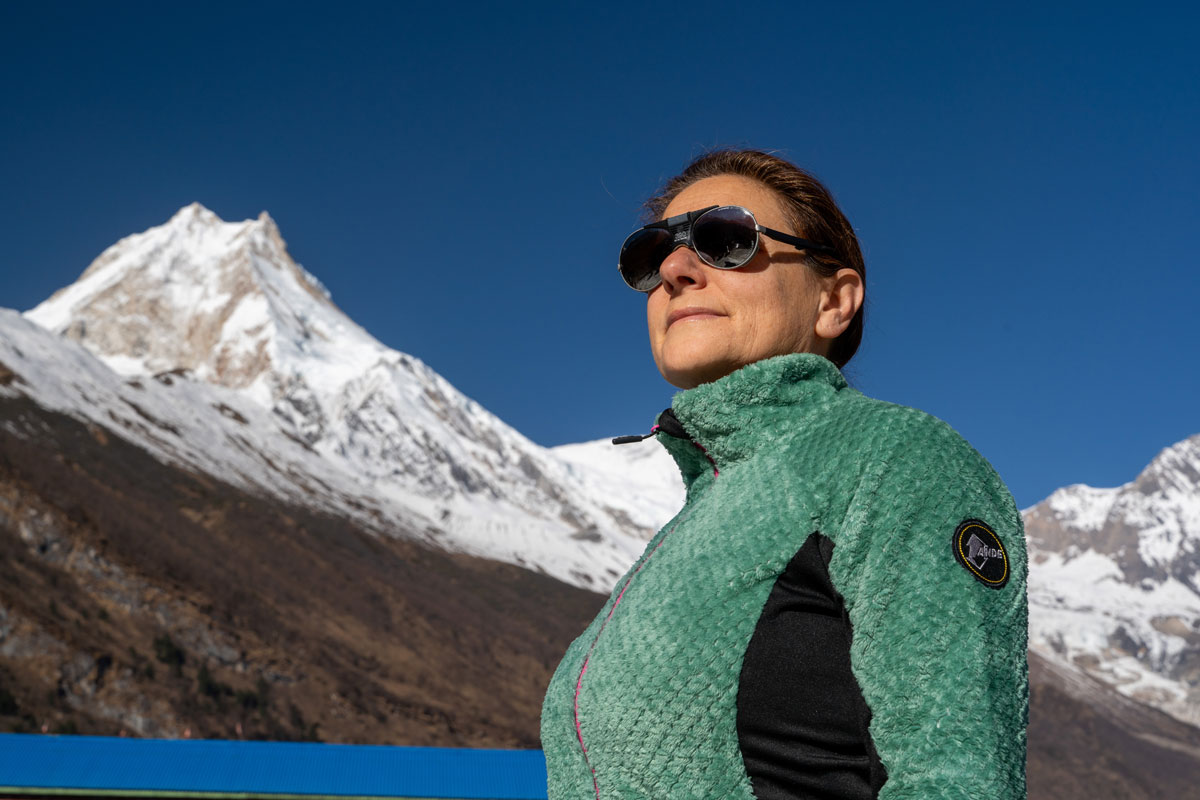
Yes, a woman travelling alone can plan and complete the Manaslu Circuit Trek, but travelling solo does not necessarily mean walking the restricted route completely independently. Manaslu has specific trekking regulations, so solo travellers need to arrange the required permits and guiding support according to the rules in effect at the time of their trek.
In practice, a solo female traveller will usually choose between joining a guided group departure and arranging a privately guided trek. A group can provide companionship and the opportunity to share the experience with other trekkers, while a private arrangement gives you greater control over your pace, daily routine, and who you spend the journey with. Neither option is automatically better or safer; the experience and professionalism of the guide, the operator behind the trek, and clear communication before departure matter more.
For the complete route, itinerary, current departure information, and trek arrangements, see our Manaslu Circuit Trek itinerary and trip details.
This distinction is important because many women searching for a solo female Manaslu trek are not actually looking to spend days walking through the mountains completely alone. They may simply be travelling to Nepal without a partner, friend, or trekking companion and want to know whether they can still organise the journey. Travelling to Nepal alone does not mean you need to find your own trekking partner before considering Manaslu.
Before booking, ask exactly how your trek will operate. If you are joining a group, confirm the expected group size, whether the departure is already confirmed, and what happens if other participants withdraw. If you prefer a private trek, ask who will guide you, how you can communicate with the Kathmandu office while you are on the trail, and what support is available if an arrangement needs to be changed during the journey.
For a solo woman, these details matter because your guide or group becomes a significant part of everyday life on the circuit. You walk together for hours, eat in the same tea houses, deal with changing weather and trail conditions together, and spend several days in villages far from immediate road access. Choosing the people and company behind the trek therefore deserves as much attention as choosing the route itself.
The key point is simple: solo female travel and unsupported solo trekking are two different things on the Manaslu Circuit. You can arrive in Nepal independently and organise a Manaslu trek as a solo female traveller, but the guide, group, permit, and support arrangements should be clear before you leave for the trail.
Is the Manaslu Circuit Trek Safe for Solo Female Trekkers?
The Manaslu Circuit can be a suitable trek for solo female travellers when it is organised with experienced guiding support and sensible preparation, but no remote Himalayan trek should be described as completely risk-free. For most trekkers, the more significant hazards on Manaslu come from altitude, changing weather, difficult trail conditions, illness, and the remoteness of the route rather than from travelling as a woman.
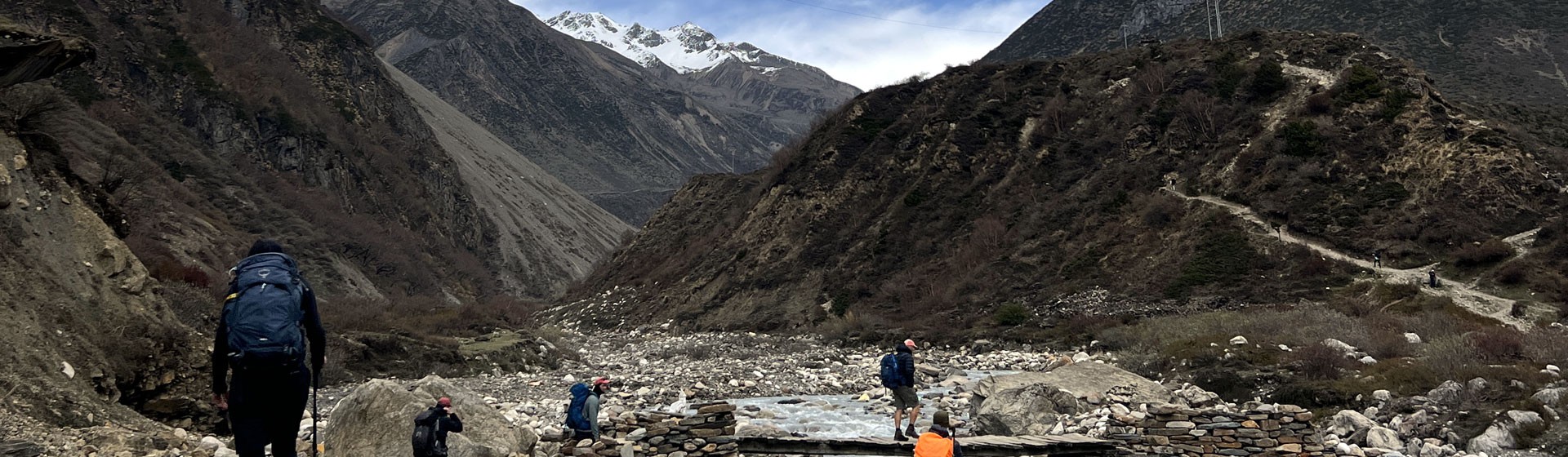
The character of the trail changes considerably during the journey. Lower sections pass through inhabited villages and farming communities, while higher sections become quieter and more isolated. There may be periods when you see other trekking groups regularly and others when only your guide, porter, or group is nearby. This is one reason a solo traveller should know who she will be trekking with and how the operating company provides support before leaving Kathmandu.
Personal comfort matters as well as mountain safety. A professional guide should respect your privacy, communicate clearly, avoid behaviour that makes you uncomfortable, and take concerns seriously. Before the trek, you should know how to contact the trekking company's office independently of your guide and what the company would do if you reported a problem. Those arrangements are worth asking about before paying a deposit, not after something has already gone wrong on the trail.
Tea houses create a relatively social environment at the end of most trekking days, but facilities become simpler as you gain altitude. Doors and room security may not resemble a city hotel, bathrooms are frequently shared, and privacy can be more limited in smaller high-altitude settlements. Keeping your passport, money, phone, and other important belongings with you rather than leaving them unattended is a sensible habit for any traveller.
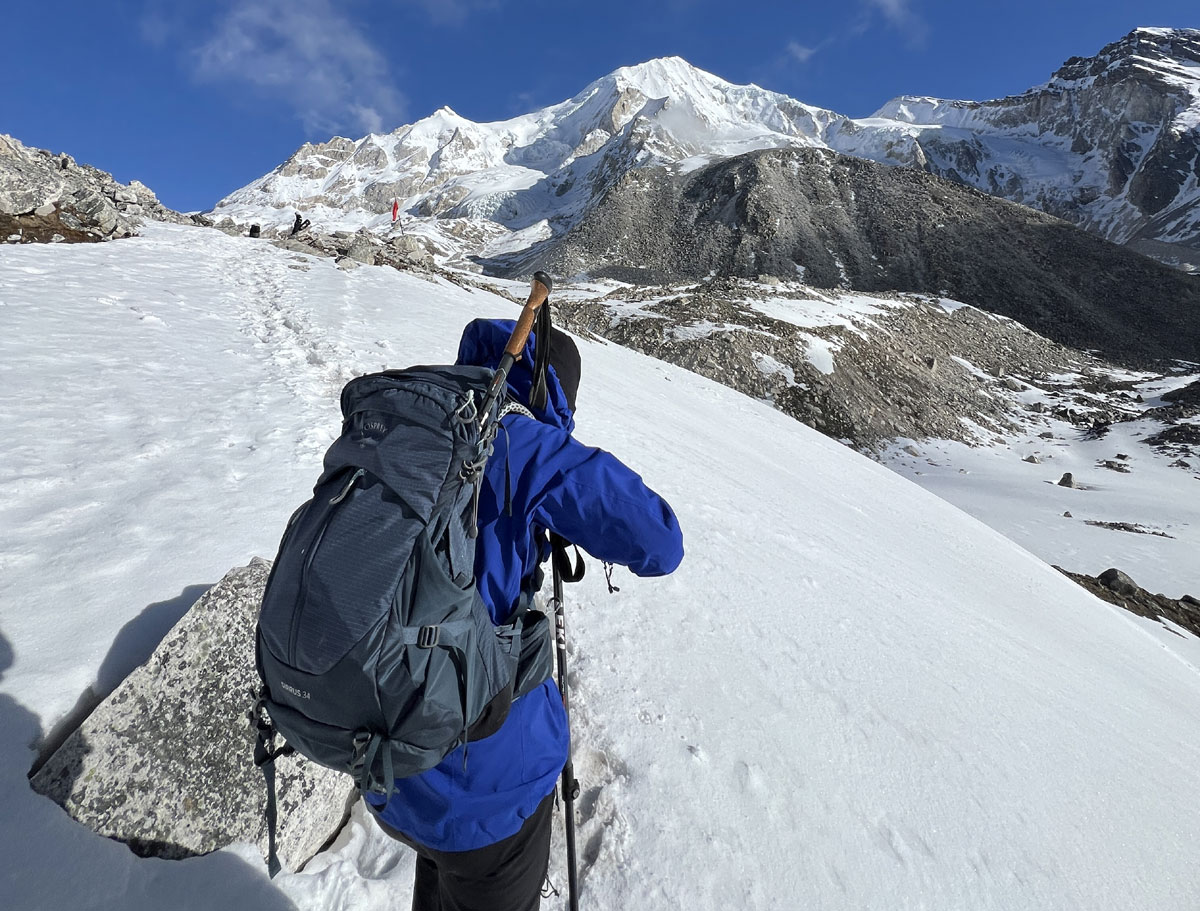
It is also important not to let concerns about personal safety distract from the larger risks of the trek. Larkya La reaches 5,160 metres, weather can change rapidly, and some sections are far from immediate road access. A guide who can recognise altitude problems, assess trail and weather conditions, communicate with the operator, and make conservative decisions when necessary contributes far more to overall safety than simply having someone walking beside you.
For a solo female trekker, the goal should therefore not be to find a company that promises the Manaslu Circuit is “100% safe.” A more useful question is whether the operator has experienced guides, clear communication, realistic emergency procedures, appropriate accommodation arrangements, and a straightforward way for you to raise a concern during the trek. Those are practical safety measures that can be evaluated before you choose who to travel with.
What Solo Female Trekkers Can Expect on the Manaslu Circuit
Travelling alone does not necessarily mean spending the Manaslu Circuit alone. If you join a group, you may begin the journey with people you have only recently met. After several days of walking, sharing meals, resting at the same tea houses, and dealing with the same trail conditions, people often begin to know one another naturally. If you choose a private trek instead, much of your daily interaction will be with your guide and porter.
During the walking day, trekkers usually settle into their own pace. Faster members of a group may move ahead while others stay closer to the guide or porter. There can be stretches where other groups are nearby and quieter sections, particularly higher on the route, where very few trekkers are immediately around you. The sound of the river, mule bells, footsteps, and conversations with your guide can become much more noticeable than the social atmosphere of the villages.
Tea houses are where the trail often becomes social again. Trekkers following similar schedules frequently meet in the same overnight villages, and evenings are usually spent around shared dining rooms eating, talking about the day's walk, charging devices where available, and discussing conditions farther along the route. It is common to recognise some of the same trekkers again as you continue around the circuit.
For a solo female trekker, privacy can become more noticeable as the accommodation gets simpler. Having somewhere comfortable to change clothes, understanding whether bathrooms are shared, and being able to communicate openly with your guide can matter after a long day on the trail. Facilities generally become more basic at higher elevations, so expectations should be different from those of hotels in Kathmandu.
Joining a group also means accepting different personalities, walking speeds, routines, and expectations. The advantage is having other trekkers with whom to share meals, difficult days, mountain views, and eventually the Larkya La crossing. A private guided trek provides more control over your daily rhythm and personal space, although you naturally spend considerably more time with your guide and porter.
There is therefore no single solo female experience on the Manaslu Circuit. Some women prefer the companionship and shared experience of a group departure, while others value the flexibility of travelling privately with a guide. What matters most is choosing an arrangement in which you feel comfortable communicating, asking questions, setting personal boundaries, and enjoying both the social and quieter parts of the journey.
Group Trek vs Private Guide for Solo Female Trekkers on Manaslu
For a solo female traveller planning the Manaslu Circuit Trek, choosing between a group departure and a private guide can shape much of the experience. A group trek provides built-in companionship and shared experiences, while a private trek gives you more control over your pace and daily routine. Neither option is automatically better or safer; the right choice depends on how you prefer to travel and the quality of the arrangements behind the trek.
| Factor | Group Trek | Private Guide |
|---|
| Companionship | Regular interaction with other trekkers | Mainly your guide and porter |
| Walking pace | Needs to work around the group | Easier to adjust to your own pace |
| Daily flexibility | More limited | Greater flexibility when conditions allow |
| Social experience | Stronger group atmosphere | More independent experience |
| Personal space | Depends on group and accommodation | Greater control over your daily routine |
| Cost | Shared services can reduce the per-person cost | Usually costs more for one traveller |
| Group dynamics | Different personalities and walking speeds | Much simpler day-to-day coordination |
| Best suited for | Solo travellers who value companionship | Travellers who prioritise flexibility and independence |
When a Group Trek May Be Better
A group departure can work particularly well if one of your concerns about travelling alone is feeling isolated. Sharing meals, difficult walking days, rest stops, and the Larkya La crossing with other trekkers can create a natural sense of companionship. It can also make some shared trekking services more economical than arranging everything privately.
The trade-off is that a group has to function as a group. Walking speeds, morning routines, rest preferences, and personalities will not always match. Before booking, ask how large the group can become, whether the departure is already confirmed, and what happens if other participants cancel. A departure advertised as a “group trek” is not necessarily a confirmed group departure.
When a Private Guide May Be Better
A privately guided trek can be a better fit if you value flexibility, prefer a quieter experience, or do not want your daily rhythm determined by a larger group. Your guide can generally manage the walking pace around you, and communication about rest stops, accommodation preferences, or how you are feeling can be more straightforward.
However, private does not automatically mean safer or more comfortable. You will spend many hours over several days with your guide, often in remote areas, so choosing a guide and operator you trust becomes especially important. Before departure, know who your guide will be, how the company selects its guides, and how you can contact the office independently if you need assistance.
Which Option Is Better for a Solo Female Trekker?
Choose a group trek if companionship, meeting other travellers, and sharing the experience are priorities. Choose a private guide if flexibility, independence, and greater control over your daily routine matter more.
For solo female trekkers, the strongest arrangement is not necessarily the largest group or the most expensive private service. It is the one where the departure details are transparent, the guide is experienced and professional, communication with the operator is clear, and you know what support is available before you leave Kathmandu.
How to Choose a Guide and Trekking Company as a Solo Female Traveller
For a solo female traveller, choosing the right Manaslu trekking company and guide deserves more attention than simply comparing prices or star ratings. You may spend many hours each day with your guide and several nights in remote villages, so professionalism, communication, Manaslu experience, and knowing what support exists if something goes wrong can directly affect your experience on the trail.
Ask Who Will Actually Operate Your Trek
Before booking, establish whether you are dealing directly with the Nepal company that will operate your trek or with an overseas agent or reseller. Using an intermediary is not automatically a problem, but you should know who is responsible for your arrangements once the trek begins.
Ask for the operating company's name, where its Nepal office is located, who your contact person will be, and how you can reach that person during the trek. Clear answers are more useful than a website simply describing itself as a “trusted local company.”
Ask About Your Guide, Not Just Whether a Guide Is Included
“Experienced English-speaking guide included” tells you very little about the person with whom you may spend much of your trek.
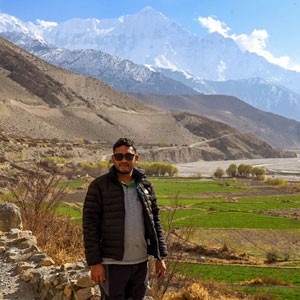
Ask whether the guide has previously led the Manaslu Circuit, how familiar they are with Larkya La and the villages along the route, and how the company selects guides for solo travellers. If a guide has already been assigned, you can also ask whether it is possible to speak with them briefly before departure.
For a private trek, this becomes particularly important because your guide will be your main companion throughout much of the journey.
Make Sure You Can Contact the Office Without Going Through Your Guide
A solo traveller should have a direct way to contact the trekking company's office independently. Save the office contact and an emergency contact on your phone before leaving Kathmandu rather than relying entirely on your guide to communicate on your behalf.
One useful question to ask before booking is:
“If I have a problem with my guide or group during the trek, who can I contact directly?”
The answer can reveal a great deal about how seriously a company has considered traveller support beyond simply assigning a guide.
Ask What Happens If You Are Uncomfortable With Your Guide
This is a reasonable question and should not be awkward to ask.
Find out how the company would respond if communication with your guide became difficult or if you felt uncomfortable with their behaviour. Replacing a guide immediately in a remote village may not always be possible, but the operator should still be able to explain how concerns can be reported, assessed, and handled.
Promises that you will “never have a problem” are less useful than a clear explanation of what happens if you do.
Check the Group Details Before Joining a Departure
If you are joining a group, ask for the maximum group size, whether the departure is already confirmed, and what happens if other participants cancel.
You may also want to know whether you will be the only solo traveller or the only woman in the group. A company may not know the final composition months in advance, but it should be clear about what is already confirmed and what remains uncertain.
Ask About Room and Privacy Arrangements
Do not assume that travelling alone automatically guarantees a private room throughout the Manaslu Circuit.
Ask whether a private room is normally arranged for solo travellers and where this may become difficult because of limited tea house capacity. Facilities become simpler higher on the route, and bathrooms are often shared, so understanding these limitations beforehand helps set realistic expectations.
Can You Request a Female Guide?
If trekking with a woman guide would make you more comfortable, ask about availability before confirming the trip. Female trekking guides work in Nepal, but availability can depend on the season, departure date, route, and existing assignments.
A responsible operator should check whether a suitable female guide is actually available rather than guarantee one without confirming it.
Look Beyond Reviews and Star Ratings
Reviews can help identify patterns in previous travellers' experiences, particularly comments about guides, communication, problem-solving, and how a company responded when plans changed. However, a high rating alone does not tell you who will guide your trek or what support you will receive.
Look at several trust signals together: the company's operating identity, recent traveller feedback, guide experience, communication before booking, clear trip conditions, emergency procedures, and whether difficult questions receive direct answers.
For a solo female Manaslu trek, the best operator is not necessarily the cheapest company or the one making the strongest safety promises. A better sign is an operator that clearly explains who will guide you, how the trek will operate, what limitations exist, and who you can contact if you need support once you are on the trail.
Tea Houses, Private Rooms and Bathroom Privacy for Solo Female Trekkers
For many solo female trekkers, accommodation questions are less about luxury and more about privacy, security, and knowing what to expect before reaching the next village. Tea houses along the Manaslu Circuit are simple mountain lodges, and facilities vary considerably between villages. Rooms and bathrooms that feel relatively comfortable in the lower sections generally become more basic as the trail moves higher.
Will Solo Female Trekkers Get a Private Room?
We try to arrange a private room for solo female trekkers throughout the Manaslu Circuit wherever accommodation availability allows. Most tea-house rooms are simple, usually with basic beds and limited furniture rather than the facilities you would expect from a hotel.
The main place where additional flexibility may be necessary is Dharmasala, the final overnight stop before crossing Larkya La. Accommodation there is limited, and during busy trekking periods there may not be enough rooms for every solo traveller to have one privately.
If a private room is unavailable at Dharmasala, a room may need to be shared. Where possible, we try to arrange room sharing with another female trekker rather than placing a solo woman with an unfamiliar male traveller. The exact arrangement still depends on who is staying at the lodge and what rooms are available that evening, so this should not be treated as an absolute guarantee.
Does a Private Room Include a Private Bathroom?
Usually not. A private room and a private bathroom are two different things on the Manaslu Circuit.
Shared toilets are common, particularly as you gain altitude. Some tea houses in the lower sections have better facilities, while accommodation becomes simpler in the higher villages. Standards also vary between individual lodges, so solo travellers should expect shared bathroom facilities rather than assume an attached bathroom will be available.
What About Showers and Changing Clothes?
Hot showers may be available at some tea houses for an additional charge, but availability and the type of shower vary along the route. At higher elevations, facilities become more basic, and the colder temperatures mean many trekkers choose simple washing rather than taking a full shower every day.
Most trekkers change clothes inside their room. If room sharing becomes necessary, particularly at Dharmasala, speak with your guide about privacy before settling in rather than waiting until you feel uncomfortable.
A lightweight quick-dry towel, washcloth, personal hygiene supplies, and a small amount of wet wipes can be particularly useful during the higher sections of the trek.
Are Tea House Rooms Secure?
Tea-house rooms should not be treated like city hotel rooms with electronic locks, safes, and modern security systems. Doors and locks vary between properties, and some rooms are very basic.
Keep your passport, money, phone, permits, and other important valuables securely with you rather than leaving them openly unattended in your room. A small personal padlock can also be useful for securing your trekking bag where appropriate.
What Should Solo Female Travellers Know Before the Trek?
The most useful expectation is that we will try to provide a private room wherever possible, but privacy and facilities become more limited at higher elevations. Dharmasala is the location where solo travellers should be most prepared for the possibility of room sharing during busy periods.
If privacy is particularly important to you, tell us before departure. It allows the guide and operations team to understand your preference from the beginning rather than discovering it after you have already reached the mountains.
Remote tea-house trekking inevitably requires some flexibility, but that does not mean privacy concerns should simply be ignored. Clear expectations before the trek and good communication with your guide make these situations much easier to manage.
Periods, Toilets and Personal Hygiene on the Manaslu Circuit
Periods and personal hygiene require a little more planning on the Manaslu Circuit because toilets, running water, showers, and places to buy personal supplies become increasingly limited as you move higher. For solo female trekkers, knowing what to bring from Kathmandu and keeping essential items accessible during the walking day can make the experience considerably easier.
What Are Toilets Like on the Manaslu Circuit?
Toilet facilities vary from one tea house to another. In lower villages, you may find Western-style or squat toilets with running water, while facilities at higher elevations are generally more basic. Shared toilets are common, and you should not assume that toilet paper, soap, or hot water will always be provided.
Carry a small amount of toilet paper or tissues, hand sanitiser, and a sealable waste bag in your daypack rather than packing everything in the duffel carried by your porter. These are items you may need during the walking day, not only after reaching your tea house.
What Should You Bring for Your Period?
Bring enough of your preferred menstrual products from Kathmandu for the entire trek, plus a small extra supply in case your journey takes longer than planned. Pads, tampons, and other personal products should not be assumed to be available in remote Manaslu villages, particularly in the higher sections.
Keep at least one day's supply in your daypack so you can reach it easily without opening your main trekking bag. A small opaque pouch can also make carrying products between your room and shared toilets more discreet.
Whether you prefer pads, tampons, or a menstrual cup is a personal choice. What matters on a remote trek is being comfortable using your chosen product when access to clean water, private bathrooms, and waste facilities may be more limited than at home.
How Should You Dispose of Sanitary Products on the Trail?
Pads, tampons, wet wipes, and similar hygiene products should never be flushed down mountain toilets or left on the trail.
Carry several small opaque, sealable waste bags so used products can be wrapped and securely contained until they can be disposed of responsibly. Keeping a separate outer pouch for these bags can make carrying them more discreet during the walking day.
Waste management in remote mountain settlements is limited, so reducing unnecessary disposable items where practical can also help minimise the amount of waste you create during the trek.
How Do You Stay Clean When Showers Are Limited?
Hot showers may be available at some tea houses for an additional charge, but facilities become simpler as you gain altitude. Cold temperatures can also make taking a full shower less practical during the higher part of the trek.
Many trekkers manage these days with a small washcloth, warm water when available, hand sanitiser, and a limited number of personal wipes. Quick-drying underwear can also be useful because washing and drying clothing becomes more difficult in cold or damp conditions.
Use wipes sparingly and keep non-biodegradable waste with you until it can be disposed of responsibly.
What If You Need a Toilet Stop During the Walking Day?
There will not always be a tea house or formal toilet exactly when you need one. On longer stretches between villages, you may occasionally need to wait until the next settlement or find an appropriate private place away from the main trail.
If you need an additional stop, tell your guide. You do not need to provide a detailed explanation. A simple request for a private toilet break is enough, and your guide should give you appropriate space and time.
This is another reason toilet paper, hand sanitiser, menstrual products, and a waste bag belong in your daypack, not only in luggage being carried ahead.
A Simple Personal Hygiene Kit for Manaslu
A practical personal kit can include toilet paper or tissues, hand sanitiser, your preferred menstrual products, opaque sealable waste bags, a quick-dry towel or washcloth, a limited supply of personal wipes, spare quick-drying underwear, and any toiletries you know you will need.
You do not need to carry a large bathroom kit. The priority is bringing personal products that may be difficult to replace once you leave Kathmandu and keeping the essentials accessible while walking.
Having your period should not prevent you from considering the Manaslu Circuit, but remote mountain conditions reward preparation. Bringing your own supplies, expecting bathrooms to become more basic at higher elevations, and being comfortable asking your guide for privacy or an additional stop can remove much of the uncertainty before the trek begins.
Phone Signal, Wi-Fi and Staying in Contact on the Manaslu Circuit
Staying in contact with family or friends can be reassuring when travelling alone, but mobile signal and internet access on the Manaslu Circuit should not be treated as reliable throughout the trek. Connectivity varies between villages, networks, weather conditions, and individual tea houses, and there may be stretches where sending a message is difficult or temporarily impossible.
Is There Mobile Phone Signal on the Manaslu Circuit?
Mobile coverage is available in parts of the route, particularly around some established villages, but it becomes inconsistent as you move through more remote terrain. A phone that works in one village may have little or no usable signal farther along the trail.
For that reason, do not promise family that you will call at a fixed time every evening. A missed message on Manaslu can simply mean that you have reached a village with poor reception, the network is temporarily unavailable, or your phone cannot establish a stable connection.
Is Wi-Fi Available at Tea Houses?
Some tea houses offer Wi-Fi or another form of internet access, sometimes for an additional charge, but availability, speed, and reliability vary considerably. Even where a connection exists, it may be sufficient for a short message but frustrating for large uploads, video calls, or other data-heavy use.
Higher on the route, it is better to regard internet access as a useful extra rather than something you can depend on every evening.
Tell Someone Your Trekking Plan Before You Leave
Before departing Kathmandu, give a trusted family member or friend your approximate trekking itinerary, the name of your trekking company, and an appropriate company contact.
Also explain beforehand that a day without a message does not automatically mean something has gone wrong. Setting that expectation is particularly useful on a remote trek because it prevents unnecessary worry when you simply cannot get a connection.
Instead of promising daily contact, you can agree to send updates whenever a reliable signal or Wi-Fi connection is available.
Keep Important Information Available Offline
Do not keep essential information only inside email, messaging apps, or cloud storage. Save important details somewhere you can access without internet, including your insurance information, trekking company contact, emergency contact, passport details, and any other information you may need during the journey.
Keeping your phone's essential information available offline is particularly useful when there is no mobile data connection.
Keep Your Phone Charged
Charging is available at many tea houses but may involve an additional fee, and access can become more limited higher on the route. Electricity supply is not always as consistent as it is in Kathmandu.
A power bank is useful for keeping enough battery for communication, photographs, offline information, and other essential phone use. Conserving battery by using airplane mode when there is no signal can also help during longer walking days.
What About Communication in an Emergency?
Your personal phone should not be your only emergency plan. Mobile coverage cannot be guaranteed across the route, which is one reason communication arrangements between the guide and trekking operator matter.
Before starting the trek, know how your operator handles communication when ordinary mobile service is unavailable and who your family should contact in Nepal if they have a genuine concern.
For a solo female trekker on the Manaslu Circuit, staying connected is therefore less about expecting continuous internet access and more about planning for periods without it. Give someone your route and operator details, keep important information available offline, protect your phone battery, and make sure family members understand that temporary silence can be a normal part of trekking in a remote Himalayan region.
Is the Manaslu Circuit Suitable for a First-Time Solo Female Trekker?
Yes, the Manaslu Circuit can be suitable for a first-time solo female traveller, but whether it is a sensible first Himalayan trek depends much more on your previous walking experience, fitness, comfort with basic mountain conditions, and expectations than on the fact that you are travelling alone.
It helps to separate several situations that are often grouped together under the word “first-time.”
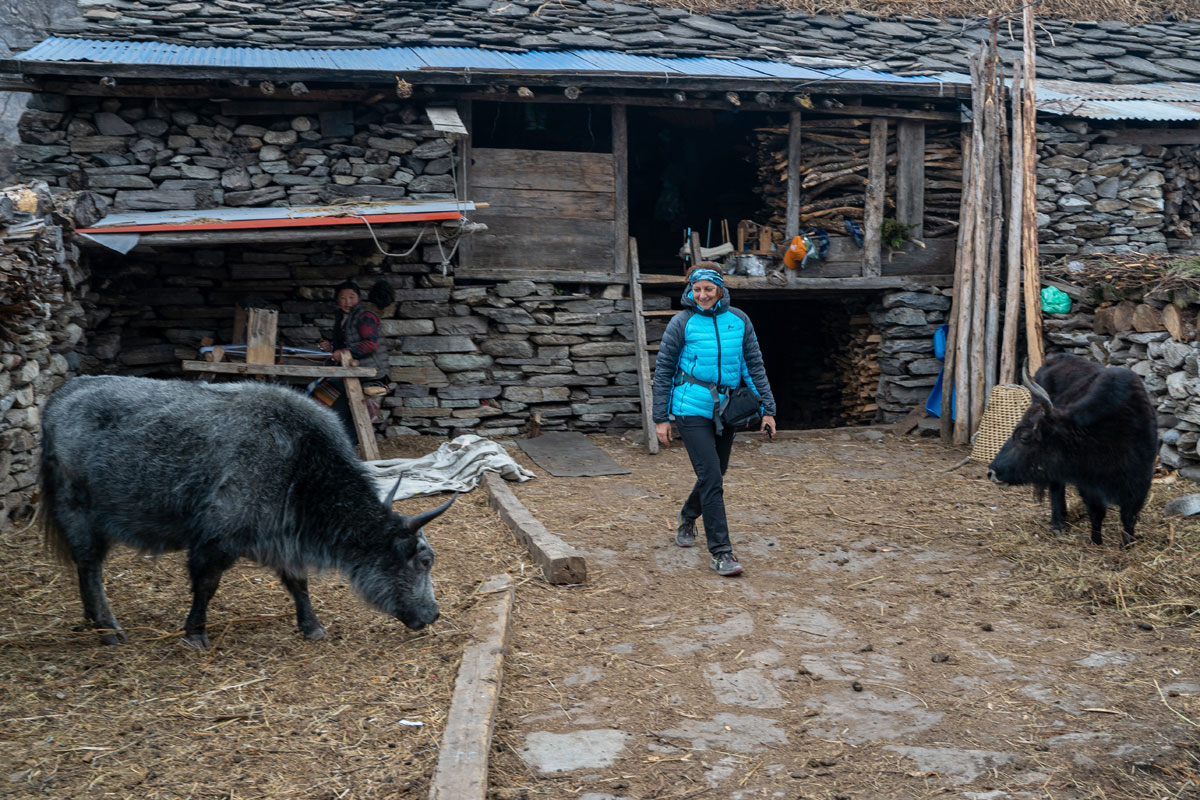
First Time Travelling Alone, but Experienced at Trekking
If you already have experience with multi-day hikes or mountain trekking but have never travelled internationally on your own, Manaslu may feel less unfamiliar once the trek begins than the days before it.
With a private guide or organised group, you are not responsible for navigating every logistical detail alone on the trail. Your bigger adjustment may be travelling to Nepal independently, meeting your guide or group for the first time, and becoming comfortable making decisions without a familiar travel companion.
First Trek in Nepal, but Experienced in the Mountains
Previous mountain experience can be valuable even if you have never trekked in Nepal. You may already understand pacing, layering clothing, carrying a daypack, dealing with long walking days, and adapting plans when mountain weather changes.
What may be new is the tea-house style of trekking, increasing altitude, local trail conditions, and spending consecutive nights in remote Himalayan villages. Arriving with mountain experience helps, but it does not remove the need to acclimatise properly.
Experienced Solo Traveller, but First Multi-Day Trek
This is a different situation. Being confident travelling alone does not automatically prepare you for consecutive days of mountain walking.
Before choosing Manaslu as your first major trek, be realistic about how comfortable you are walking for several hours a day, recovering overnight, and doing it again the following morning. Training beforehand with regular walking, hills or stairs, and carrying the daypack you expect to use can give you a much clearer idea of how your body responds.
First High-Altitude Trek
This deserves the most caution. The Manaslu Circuit reaches Larkya La at 5,160 metres, and nobody can know in advance exactly how their body will respond to altitude based only on fitness.
Being strong, young, or experienced at lower elevations does not make someone immune to altitude problems. If Manaslu will be your first time trekking above 4,000 or 5,000 metres, choose an itinerary with appropriate acclimatisation and be prepared to slow down, change plans, or descend if conditions require it.
So, Is Manaslu a Good First Trek for a Solo Woman?
It can be, particularly for someone who is reasonably fit, comfortable with multi-day walking, realistic about basic tea-house conditions, and willing to follow a properly paced guided itinerary. You do not need to be an expert mountaineer, and travelling without a partner does not by itself make you unsuitable for the route.
However, if Manaslu would simultaneously be your first solo international trip, first multi-day hike, and first experience at high altitude, you are taking on several unfamiliar challenges at once. That does not automatically mean you should not go, but it is a stronger reason to prepare carefully, choose your guide or group well, and be realistic about what the journey involves.
If you are still deciding whether Manaslu is the right first Himalayan circuit for you, our Manaslu Circuit vs Annapurna Circuit comparison explains how the two routes differ in trail character, facilities, accessibility, and overall trekking experience.
The most useful question is therefore not simply, “Am I a solo female trekker?” It is “Which parts of this experience are new to me?” Once you know that, you can prepare for the areas where you actually lack experience rather than assuming that travelling alone is the main challenge.
Best Time for a Solo Female Manaslu Circuit Trek
For most solo female trekkers, spring and autumn are the most practical seasons for the Manaslu Circuit. These are the main trekking periods in the region, when tea houses are generally operating, trekking teams are active, and you are more likely to encounter other trekkers following the route.
That does not mean a solo woman needs a busy trail to feel comfortable. Some travellers deliberately choose Manaslu because they prefer quieter surroundings. The advantage of the main seasons is simply that the trekking infrastructure is more active and there are generally more people moving between the same overnight villages.
Spring: March to May
Spring is a strong choice for solo female travellers who want an established trekking season without necessarily choosing the busiest part of autumn. As the season progresses, lower sections become warmer and vegetation becomes greener, while conditions remain considerably colder around the higher villages and Larkya La.
Other trekking groups are commonly encountered during the spring season, particularly around popular overnight stops. This can provide a social element for someone travelling alone without removing the quieter character that attracts many trekkers to Manaslu.
By May, the lower valleys become warmer, while afternoon cloud and occasional rainfall can become more frequent as the month progresses towards Nepal's summer monsoon. Conditions at high altitude can still change quickly throughout spring.
If you are considering a late-spring departure, our Manaslu Circuit Trek in May guide explains May weather, temperatures, trail conditions, Larkya La conditions, and what to expect during the month.
Autumn: September to November
Autumn is another major trekking period on the Manaslu Circuit. October and November generally fall within Nepal's drier post-monsoon autumn trekking period, although mountain weather remains variable. Tea houses are active and trekking groups regularly move through the main route.
October is particularly popular, which may appeal to a solo traveller who likes having other trekkers around. The trade-off is greater demand for rooms in smaller settlements and a busier atmosphere at some tea houses.
November becomes progressively colder, especially at higher elevations and during early mornings, while the trail can become quieter as the month progresses.
What About Winter?
A winter Manaslu trek can provide a much quieter experience, but that solitude comes with additional considerations. Temperatures are considerably colder at altitude, snow or ice can affect the upper route, and fewer trekkers may be moving through the region.
For an experienced trekker who specifically wants solitude and is prepared for winter mountain conditions, that may be part of the attraction. For someone combining her first Manaslu trek with limited high-altitude experience, however, spring or autumn is generally a more straightforward choice.
What About the Monsoon?
The summer monsoon brings warmer temperatures and greener landscapes, but rainfall can affect trails and road access in the lower sections. Cloud may reduce mountain visibility, wet trails can become slippery, and periods of heavy rainfall can cause landslides or transport delays.
There are also generally fewer trekkers on the circuit than during the main spring and autumn seasons. For someone specifically seeking a quieter journey this may sound attractive, but the additional uncertainty around weather, trail conditions, and road access makes the monsoon a less straightforward choice for a first Manaslu trek.
Which Season Is Best for You?
Choose spring or autumn if you want the most straightforward combination of active tea houses, established trekking conditions, and opportunities to encounter other trekkers along the route.
Within those seasons, the decision becomes more personal. A solo traveller who enjoys a more social trail atmosphere may prefer a popular autumn departure, while someone who wants a little more quiet without moving completely into the off-season may find spring particularly appealing.
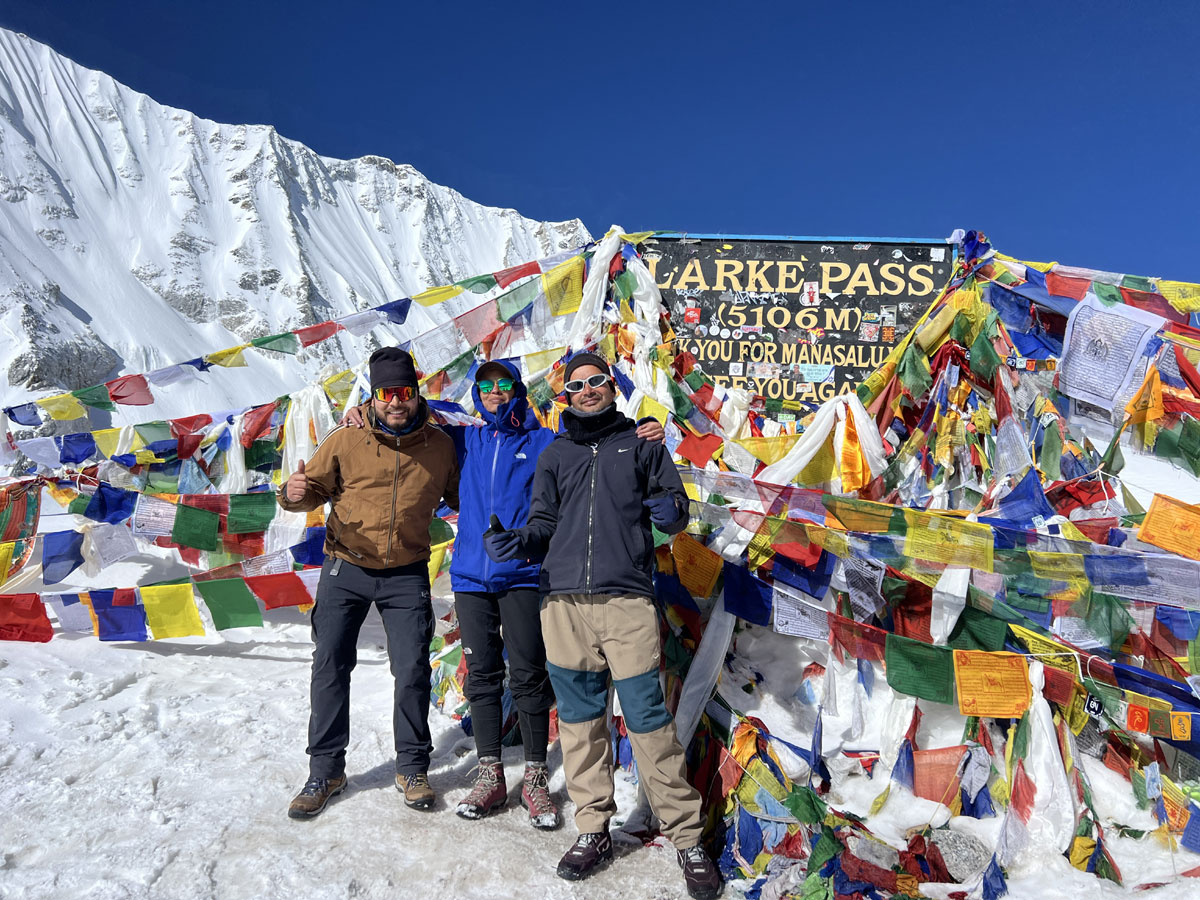
The important point is that the best season for a solo female Manaslu trek is not determined by personal safety alone. Weather, trail conditions, how much social interaction you want, your tolerance for cold or rain, and whether you prefer a group or private trek should all influence when you go.
Frequently Asked Questions About the Manaslu Circuit for Solo Female Trekkers
Can a woman trek the Manaslu Circuit alone?
A woman can travel to Nepal alone and arrange a Manaslu Circuit Trek as a solo traveller, but this should not be confused with walking the restricted route completely independently. Manaslu has specific trekking regulations, so the required guide and permit arrangements should always be confirmed according to the current rules before departure.
Is the Manaslu Circuit safe for a woman travelling alone?
The Manaslu Circuit can be suitable for solo female travellers when the trek is properly organised with experienced guiding support, but no remote high-altitude trek is risk-free. In addition to personal comfort and security, important risks include altitude, weather, trail conditions, illness, and the remoteness of some sections.
Can I join a Manaslu group trek as a solo female traveller?
Yes. Joining a group is a practical option for women arriving in Nepal without a trekking companion and can provide companionship throughout the journey. Before booking, confirm that the departure is actually operating, the maximum group size, and what happens if other participants cancel.
Can I request a female guide for the Manaslu Circuit?
Yes, you can ask for a female trekking guide. However, availability depends on your dates, the season, existing guide assignments, and whether a suitably experienced guide is available for Manaslu, so the request should be made as early as possible rather than treated as guaranteed.
Will I have a private room as a solo female trekker?
A private room can usually be requested, and we try to arrange one for solo female trekkers wherever tea-house availability allows. Accommodation becomes more limited higher on the route, so a private room cannot be guaranteed at every overnight stop.
Will I have to share a room at Dharmasala?
Possibly. Dharmasala has limited accommodation, and during busy periods there may not be enough rooms for every solo traveller to stay privately. If sharing becomes necessary, we try to arrange for a solo female traveller to share with another woman where possible, although the final arrangement depends on who and what rooms are available that evening.
Are toilets and bathrooms private on the Manaslu Circuit?
Do not expect private bathrooms throughout the trek. Shared toilets are common, particularly at higher elevations, and facilities become increasingly basic as you move into more remote settlements. A private bedroom does not necessarily include an attached bathroom.
Is the Manaslu Circuit suitable for my first solo trek in Nepal?
It can be. A first-time solo traveller who already has good fitness and multi-day hiking experience may adapt well, while someone attempting her first solo international trip, first multi-day trek, and first high-altitude journey simultaneously has considerably more unfamiliarity to manage. Your trekking experience and preparation matter more than simply whether you are travelling without a partner.
How can I stay in contact with family while trekking Manaslu?
Mobile signal and Wi-Fi are available in parts of the route but should not be expected continuously. Give a trusted person your approximate itinerary and trekking company contact before departure, keep important information available offline, and explain that missing a daily message can simply mean you have reached an area without a reliable connection.
Is a group trek or private guide better for a solo woman?
A group trek generally suits travellers who value companionship and sharing the experience with other trekkers, while a private guide provides greater flexibility over pace and daily routine. Neither is automatically safer; guide quality, operator support, communication, and how comfortable you feel with the arrangement are more important.
What is the best time for a solo female Manaslu trek?
For most solo female trekkers, spring (March to May) and autumn (September to November) are the most practical seasons. Tea houses and trekking services are generally more active during these periods, and you are more likely to encounter other trekking groups, although weather and high-altitude conditions remain variable.
What personal items should women bring from Kathmandu?
Bring enough menstrual products for the entire trek, plus a small extra supply, as they should not be assumed to be available in remote villages. Toilet paper or tissues, hand sanitiser, opaque sealable waste bags, quick-drying underwear, a small towel or washcloth, and any personal toiletries you specifically rely on are also worth bringing from Kathmandu.
Is the Manaslu Circuit Right for You as a Solo Female Trekker?
Travelling to Nepal alone does not have to prevent you from considering the Manaslu Circuit Trek. For many solo female travellers, the more important questions are not simply whether they are travelling without a partner, but whether they are comfortable with multi-day mountain walking, basic tea-house accommodation, high altitude, limited connectivity, and spending much of the journey with a guide or trekking group.
The people you choose to trek with matter. A professional guide, clear communication with the operating company, realistic room and privacy expectations, and knowing who to contact if you need support can make a significant difference when travelling through a remote mountain region.
Manaslu also requires flexibility. Some days are social, with other trekkers sharing the same tea-house dining rooms, while other sections can feel remarkably quiet. Private rooms may be available for much of the route but become harder to secure at limited-capacity stops such as Dharmasala. Phone service may work in one place and disappear in another. Weather and trail conditions can also change regardless of how carefully the journey is planned.
If you are comfortable with those realities and prepare accordingly, travelling to Manaslu as a solo woman can provide a good balance between independence and guided support. You can experience remote Himalayan villages, quieter sections of trail, the social atmosphere of tea houses, and eventually the crossing of Larkya La without needing to arrive in Nepal with your own trekking companion.
If you are considering the journey, explore our Manaslu Circuit Trek for the current itinerary, departure options, inclusions, accommodation arrangements, and practical trip details. If you are travelling alone, you can also ask us about available group departures or discuss arranging the trek privately with a guide.