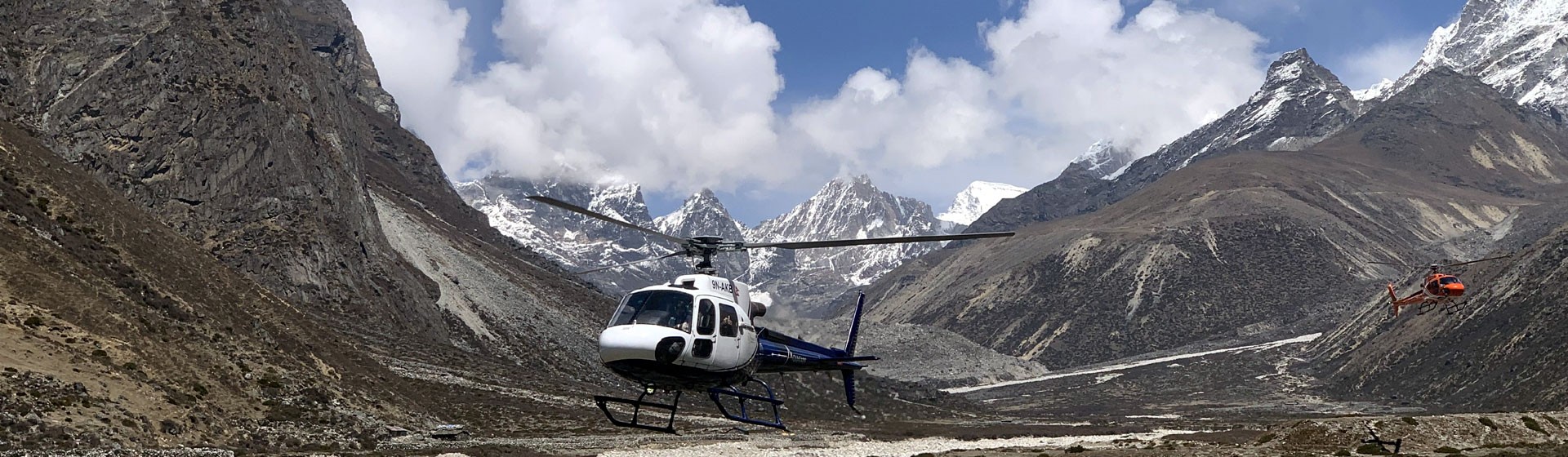
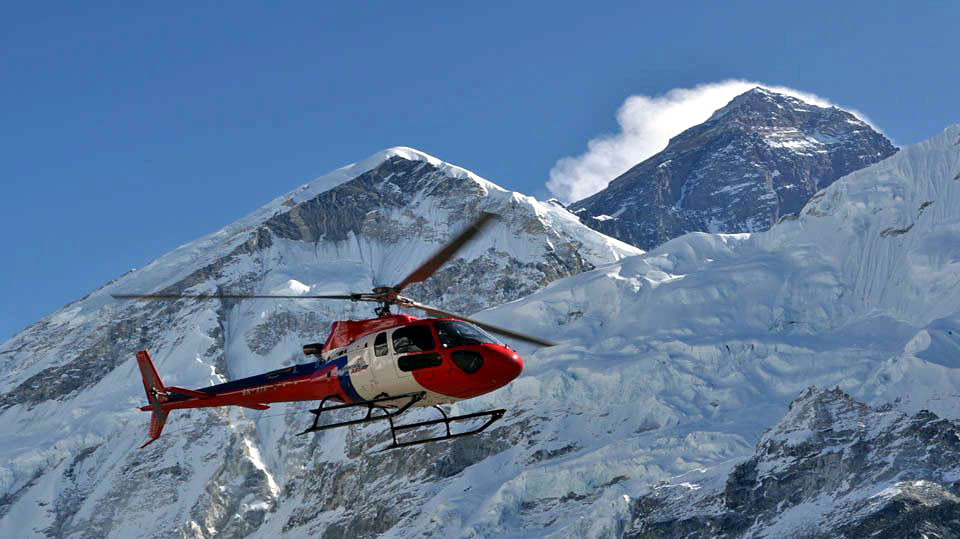
What Does an Everest Base Camp Trek with Helicopter Return Actually Include?
The easiest way we explain this trip to clients is that you are booking an Everest Base Camp trek first and a helicopter return second.
The walking part should still look very similar to a normal Everest Base Camp itinerary on the way up. You trek through the Khumbu, spend time acclimatizing, continue higher through the main villages and eventually reach Gorak Shep. From there, Everest Base Camp itself is reached on foot. The helicopter does not take you over the final section simply because you have paid for a flight back.
This is worth checking when you compare short itineraries. We sometimes see the number of days first and the actual pacing second, when it should be the other way around. If a trek is shorter because several walking days have been removed after Everest Base Camp, that is exactly what a helicopter return is supposed to do. If useful acclimatization time has also disappeared on the way up, the helicopter does not make that a better itinerary.
Kala Patthar needs a closer look as well. Many helicopter-return programs include it before the flight, usually from Gorak Shep, but do not assume that simply because Everest Base Camp, Kala Patthar and a helicopter all appear on the package page, there is comfortable time for everything. If Kala Patthar matters to you, look at where it actually sits in the daily schedule and what happens before the helicopter departure.
There is another misunderstanding we occasionally have to clear up. An Everest Base Camp Trek with Helicopter Return is not the same trip as an Everest helicopter tour. With the trek, most of your Everest experience has already happened before you get anywhere near the helicopter. You have spent days walking through the Khumbu, sleeping higher and eventually reaching Base Camp on foot. On a sightseeing helicopter tour, flying is the main way you enter and experience the Everest region.
The package itself should then tell you exactly what you are paying for. Look beyond “helicopter return included” and check the accommodation, meals, guide and porter service, permits and domestic transportation on the trekking side. On the return side, the important details are where the planned helicopter pickup is, where the booked helicopter sector ends, and whether you have a shared seat or a private charter.
That last part matters because two companies can both advertise a “helicopter return” while providing different services. One itinerary may use a shared helicopter for a particular sector and another may have a different onward arrangement. The package title alone does not tell you enough.
We deal with passenger loads, baggage, possible stops, weather and what happens when the planned flight cannot operate later in this guide. There is no need to understand all of that before understanding the basic product. You walk to Everest Base Camp. The helicopter changes the way you come back.
The walking portion follows much of the same approach as a standard Everest Base Camp Trek until the return arrangement changes after the upper Khumbu.
How Much More Does an Everest Base Camp Trek with Helicopter Return Cost?
The helicopter return is usually one of the biggest price differences between a standard Everest Base Camp Trek and a trek that flies out from the upper Khumbu, but there is no useful single number that applies to every package. The amount you pay depends first on what helicopter sector has actually been booked, whether you are sharing the aircraft or chartering it privately, and then on the normal differences between trekking packages such as group size, guide and porter service, accommodation, meals and domestic transportation.
This is where we tell people to be careful with headline prices. Two trips can both be called an Everest Base Camp Trek with Helicopter Return and still be quite different products. A package that uses a shared helicopter from the upper Khumbu to Lukla, followed by another flight onward, should not be compared directly with one that includes a different helicopter arrangement farther toward Kathmandu. The cheaper package may be perfectly good; it may simply include less helicopter flying.
For most trekkers, a shared helicopter return is the sensible option. You are paying for seats within an operating arrangement rather than paying for exclusive use of the aircraft. A private charter can become considerably more expensive, and unless having the helicopter exclusively for your party is important, we would normally look at the shared option first. Paying more for a private aircraft does not improve the trekking days that brought you to Everest Base Camp.
There is also a small mistake people make when calculating the extra cost. They take the price of a normal EBC trek and add the full helicopter fare to it. In practice, the comparison is not always that simple. If the helicopter removes several walking days from the itinerary, you are also removing some tea-house nights, meals and days of guide and porter logistics. The real helicopter premium is the difference between two otherwise similar trips, not necessarily the full price of the helicopter added on top of the standard trek.
If you want to know whether the price you have been quoted is reasonable, the cleanest comparison is often with the same operator's standard Everest Base Camp Trek. Put the two itineraries beside each other. Check where they remain identical, where the helicopter-return itinerary ends the walking, exactly what flight replaces those days, and what has disappeared from the normal package. That tells you much more than comparing two unrelated prices found on different websites.
Group size can change the figure as well. A solo trekker may pay more per person because guide, porter and other trip costs are not being divided among several clients. A larger group can sometimes bring the per-person package price down. This is why we would never assume that a large “from USD…” figure on a package page is the price you will actually pay. Check the rate for your own number of travelers.
When comparing quotations, we would start with a few practical details: Where does the helicopter pick you up? Where does the booked helicopter service finish? Is it shared or private? Is another flight needed afterward? Are the guide, porter, meals, accommodation, permits and domestic flights comparable between the two packages?
Only then would we compare the final dollar amount. A USD 2,000 package is not automatically better value than a USD 2,500 package if the helicopter sectors and trekking services are different. The reverse is also true: a more expensive package should be able to explain what you are receiving for the additional money.
For us, that is the simplest way to judge the cost of an Everest Base Camp helicopter return. Do not ask only, “How much is the package?” Ask, “How much more am I paying, and exactly what am I getting for that difference?”
Travelers willing to spend more should also decide what they actually want the additional budget to improve. A Luxury Everest Base Camp Trek, for example, puts more of that budget into accommodation and services during the journey, while a helicopter-return trek spends more on shortening the exit.
How Does the Helicopter Return from Gorak Shep Actually Work?
The helicopter-return morning at Gorak Shep is not like checking out of a hotel and finding a vehicle waiting outside at a fixed time. We normally tell trekkers to finish whatever is planned for that morning, have breakfast, pack properly and then be ready while the guide stays in contact with the helicopter company. You might be ready at 7:00 in the morning and still have to wait. In the mountains, being booked for a morning flight does not mean the aircraft will land at an exact minute.
If Kala Patthar is included that morning, the day can start very early. Trekkers return to Gorak Shep, eat, collect their baggage and wait for the flight arrangement. What happens from there depends on the conditions that day: visibility, wind, aircraft movement, passenger and baggage weight and what the aviation company can actually operate from the upper Khumbu.
This is one reason we are careful about promising an exact helicopter pickup time before the trek. We can arrange the flight in advance; we cannot arrange the mountain weather in advance.
Gorak Shep is commonly used as the planned pickup point, but we also explain that the itinerary should not be understood as a guarantee that the helicopter must land at that exact place regardless of conditions. If the operating plan has to change, the guide and helicopter company need to coordinate what happens next. We cover the backup side of this separately, but it is useful to understand from the beginning that “Gorak Shep helicopter return” describes the planned arrangement, not an unconditional landing guarantee.
One thing that sometimes surprises groups is that everybody who trekked together may not necessarily leave Gorak Shep together. At this altitude, passenger weight matters. So does baggage. The helicopter cannot simply be loaded in the same way it might operate from a much lower elevation. Depending on the aircraft, conditions and total load, a group may have to be divided for the high-altitude sector. Some passengers may leave first and others follow under the operating arrangement.
When this happens, clients sometimes think there is a problem because they booked as one group. Usually there isn't. Walking as one group and flying as one load are two different things at this altitude.
This is also why we ask for your body weight when arranging the helicopter. Give us the real number. There is no advantage in taking a few kilograms off because you think it will help with the booking. The aviation company needs passenger information for planning the load, and your duffel has to be considered as well.
We prefer to deal with baggage in Kathmandu, not at Gorak Shep. If the helicopter arrangement has a particular baggage allowance, you should know it before the trek starts. A porter may have carried your duffel for days without any problem, but that does not mean the same weight can automatically be put into the helicopter together with every passenger and every other bag.
Another detail worth checking is what the words “Gorak Shep to Kathmandu by helicopter” actually mean in the package you are buying. Travelers sometimes read that sentence and picture one aircraft picking them up at Gorak Shep and flying nonstop to Kathmandu. That should not be assumed.
Depending on the service booked, there can be an operational stop, passengers can be reorganized, or the onward sector can be handled differently. Instead of focusing on whether the company uses the word “direct,” ask them something more useful: Where do I get into the helicopter, and where does the helicopter service I have paid for actually finish? Then ask whether anything changes in between.
There is another part of the operation that clients rarely think about until we explain it: what happens to the guide and porter when you fly away?
If the clients leave the upper Khumbu by helicopter, somebody still has to deal with the trekking crew and equipment. Depending on the arrangement, the guide may travel with the clients or return differently, while porters may walk down. Their accommodation, meals, transportation and equipment still have to be organized. Your duffel or other trekking equipment may also need a separate plan if everything cannot travel with you.
This sounds like a small detail when you are sitting in Kathmandu discussing the itinerary, but from our side it is part of organizing the trek. We do not want to reach Gorak Shep and only then start asking how the porter is getting home.
If you are comparing operators, ask them: “What happens to my guide, porter and baggage after I take the helicopter?” A company that regularly handles helicopter-return treks should have a straightforward answer.
Once the aircraft is actually coming, the morning can suddenly move quite quickly. Listen to the guide and aviation crew, keep loose hats and straps secured, and do not walk around the landing area trying to get a better photograph. Seating may also be decided by the operating crew rather than by who asks for a window first.
And don't make onward plans using only the advertised flying time. The minutes spent in the air are only one part of the return. You may have waited at Gorak Shep beforehand, passengers may need to be organized, and there may be another operating sector involved. Flight time and the time it takes to complete the whole return are not the same thing.
That is probably the most useful expectation to have on the final morning. Be packed, be ready, know what service you have booked, and then give the operation some flexibility. The helicopter can be arranged before you leave Kathmandu. The exact way that morning unfolds is decided in the Khumbu.
Who Should Choose an Everest Base Camp Trek with Helicopter Return?
An Everest Base Camp Trek with Helicopter Return makes the most sense for someone who wants to reach Everest Base Camp on foot but has a genuine reason for not spending several more days walking back to Lukla. In our experience, limited holiday time is usually that reason. Some travelers have enough days to follow a sensible itinerary on the way up, including proper acclimatization, but once international flights and the rest of their Nepal plans are added, the complete walk back becomes difficult to fit in. In that situation, we would much rather shorten the journey after Base Camp than start removing important days from the ascent.
There is also a more personal question involved: what does completing the Everest Base Camp Trek mean to you? For some trekkers, it means leaving Lukla on foot, reaching Base Camp and eventually walking all the way back into Lukla again. If that complete journey matters to you and you have enough time, we would not try to convince you that flying back is somehow better. Other trekkers see reaching Everest Base Camp on foot as the main objective. Once they have walked through the Khumbu, spent the necessary days acclimatizing and reached Base Camp, retracing much of the route has less importance to them. The helicopter return makes much more sense for this second group.
This is why we do not see the helicopter as the “better” version of the Everest Base Camp Trek. A helicopter changes the transportation at the end; it does not improve the trekking itself. The quality of the journey still depends on how the ascent is planned, whether there is enough time to acclimatize, the pace on the trail, your preparation and how well the trek is managed. A rushed itinerary does not become a good itinerary simply because a helicopter has been added at the end.
When somebody is unsure whether to spend the extra money, one question usually makes the decision easier: what are you actually going to do with the days the helicopter saves? If those days allow the trek to fit within your annual leave, protect a fixed international flight, or leave enough time for another part of Nepal, then the additional cost has a clear purpose. If you have plenty of time and no particular reason to finish early, paying substantially more just because a helicopter sounds like an upgrade is much harder to justify.
If the total number of days is your main concern, it is also worth comparing the helicopter-return itinerary with our Everest Base Camp Short Trek, as the two trips reduce time in different ways.
We would also not recommend choosing the helicopter simply because you are worried that the standard Everest Base Camp Trek sounds difficult. You still have to reach Base Camp first. The climb to Namche, the higher days around Dingboche and Lobuche, the altitude and the final approach from Gorak Shep are still there. If difficulty is your main concern, we would look first at the itinerary, acclimatization, preparation and your walking pace rather than assuming the helicopter solves the problem.
For someone who enjoys trekking and has enough time, there is a good argument for walking back. The return gives the journey a more complete finish, and you do not have to spend the additional money on a helicopter. We would also choose the standard trek if paying for the flight meant cutting the budget for things that matter more, such as suitable equipment, insurance, enough days in the itinerary or some contingency around your international travel.
For us, the helicopter return has the clearest value when the ascent can remain properly paced but the complete return walk makes the overall holiday too long. That is where it solves a real problem rather than simply adding something expensive to the package.
If you have enough time and want to finish the entire route on foot, walk back to Lukla.
If reaching Everest Base Camp on foot is your main objective and those return days genuinely matter somewhere else in your trip, the helicopter return can be worth paying for. You are not buying a better Everest Base Camp Trek. You are paying for a different way to finish it.
Age alone is not a reason to choose a helicopter return. For older trekkers, pacing, acclimatization and preparation matter much more, which we discuss separately in our Everest Base Camp Trek for Seniors guide.
Everest Base Camp Trek with Helicopter Return FAQs
1. What is the difference between an EBC helicopter return and an Everest helicopter tour?
An Everest Base Camp Trek with Helicopter Return is still a trekking trip. You spend several days walking through the Khumbu, acclimatize as you gain elevation and reach Everest Base Camp on foot. The helicopter comes into the journey afterward, when it replaces much of the walk back.
An Everest helicopter tour works the other way around: flying is the main part of the experience. You see the Everest region primarily by air rather than spending days reaching Base Camp on foot.
The names sound similar, but they are two very different ways of experiencing Everest.
2. Is a scheduled helicopter return the same as an emergency evacuation?
No. These are completely different flights.
A scheduled helicopter return is transportation you have booked as part of your itinerary. An emergency evacuation is arranged unexpectedly when illness, injury or another serious problem means a trekker needs to leave the mountains.
This distinction matters for payment and insurance. Having a helicopter booked for the end of your trek does not mean an emergency helicopter evacuation earlier in the journey is automatically included.
3. Do I still need travel insurance if my helicopter return is included?
Yes. The helicopter included in your itinerary does not replace high-altitude trekking and emergency evacuation insurance.
You still spend several days trekking at altitude before reaching the point where the scheduled helicopter return begins. Check that your policy covers trekking up to the maximum elevation in your itinerary and includes appropriate emergency evacuation coverage.
Do not rely only on the words “trekking covered.” Check the altitude limit in the policy.
4. Can I add a helicopter return after starting a normal Everest Base Camp Trek?
Sometimes, yes, but we would not depend on finding a seat at the last minute.
A helicopter may be available once you are already in the Khumbu, but that depends on aircraft availability, operating conditions, passenger loads and the sector you need. Reaching Gorak Shep does not automatically mean there will be an empty helicopter seat waiting for you.
If you already know that you want to fly back, arranging it before the trek also makes the guide, porter and baggage logistics much easier to plan.
5. Does a private Everest Base Camp Trek include a private helicopter?
No, not automatically. You can have your own guide and porter throughout a private Everest Base Camp Trek and still use a shared helicopter for the return. A private trek and a private helicopter are two separate arrangements.
If you want the aircraft exclusively for your party, ask specifically for a private charter and check the price separately. Do not assume “private trek” on the itinerary means the helicopter is private too.
6. How much baggage can I take on an Everest Base Camp helicopter return?
There is no baggage figure we would apply to every helicopter return because the allowable load depends on the aircraft, passengers, flight sector and conditions of the operation.
This is something to confirm before leaving Kathmandu, not when your duffel is already sitting outside the lodge at Gorak Shep.
Remember that the weight your porter has been carrying on the trail is not automatically the amount you will be allowed to take with you on the high-altitude helicopter sector.
7. Will my guide and porter return with me by helicopter?
Not necessarily, and this is worth asking before the trek starts.
Depending on the arrangement and available seats, your guide may travel with you or return another way, while the porter may walk down with equipment or follow a separately planned arrangement. Their meals, accommodation, transport and any trekking baggage left with them still have to be organized.
Ask the company directly: “What happens to my guide, porter and baggage after I fly out?”
If they regularly operate helicopter-return treks, this should not be a difficult question to answer.
8. Can I do an Everest Base Camp Trek with Helicopter Return in winter or monsoon?
It is possible, but the season affects both the trekking conditions and the likelihood of disruption to mountain flights.
Winter brings colder temperatures and the possibility of snow higher in the Khumbu. During the monsoon, cloud and poor visibility can interfere with aviation even when conditions at the place where you are standing do not look particularly bad.
We would therefore look at the whole trek for that season, not simply ask whether helicopters operate. The walking conditions, accommodation, flight flexibility and contingency time all matter.
9. Can I book only the helicopter return without buying the complete trek?
Potentially, yes. If you are already trekking in the Everest region, it may be possible to arrange a helicopter seat separately, depending on the route you need, available aircraft, other passengers and operating conditions.
What we would not do is build an important travel schedule around the assumption that a last-minute seat will definitely be available. If you already know you want to fly out from the upper Khumbu, arranging it before you start trekking is the more sensible option.
10. Can I combine an Everest Base Camp helicopter-return trek with another trip in Nepal?
Yes, and this is actually one of the more practical reasons for paying for the helicopter. If the shorter return gives you extra days, you can use them for Pokhara, Chitwan, Kathmandu or another part of Nepal instead of spending those days walking back toward Lukla.
Just do not make the schedule too tight. We would still keep some flexibility between the planned helicopter return and an international departure rather than filling every hour the helicopter has supposedly saved.
If the flight works exactly as planned, you have some extra time in Nepal. If it does not, you have room to deal with the delay.
Is the Everest Base Camp Trek with Helicopter Return Worth It? Our Verdict
Yes, an Everest Base Camp Trek with Helicopter Return can be worth the extra cost when the helicopter solves a real problem with your available time. If it allows you to keep a properly paced journey to Everest Base Camp instead of cutting acclimatization days just to squeeze the trek into a short holiday, we think the additional expense is much easier to justify.
But we would not recommend it to everybody. If you have enough time and enjoy being on the trail, there is nothing wrong with walking back to Lukla. You have already paid to come to the Himalayas and trek, so paying considerably more simply to stop trekking earlier does not make much sense unless those saved days are useful to you. The return through the Khumbu is still part of the journey, and for some people walking back into Lukla is important because that is when the trek actually feels finished.
The calculation changes when somebody tells us, for example, that they have a fixed international flight, limited annual leave or only a certain number of days in Nepal. In that situation, we would rather keep the acclimatization days and sensible pace on the way to Base Camp and shorten the return. Cutting a day from the way down and cutting a day from the way up are not the same thing.
That is probably the biggest mistake we would avoid when choosing a short Everest itinerary. Do not use the helicopter at the end as an excuse to rush the beginning. You still have to get yourself to Everest Base Camp, and the helicopter does nothing to help your body acclimatize before you reach it.
We would also look carefully at the money. If adding the helicopter means stretching your budget so far that you start compromising on insurance, equipment, contingency time or the quality of the trekking arrangement, we would take the standard trek. The helicopter is convenient, but it is not more important than getting the basics of the trek right.
And before paying, make sure you understand exactly what “helicopter return” means in the package you are considering. You should know the planned pickup point, where the booked helicopter sector finishes, whether the flight is shared or private, and what the operator plans to do if the flight cannot operate as expected. We would want those answers before leaving Kathmandu, not when everybody is standing at Gorak Shep with their bags packed.
So, would we pay extra for the helicopter return?
Yes, if time is genuinely the problem. Probably not if time is not the problem. If you have enough days, enjoy trekking and want to complete the whole route on foot, walk back to Lukla. You will spend less and experience the traditional finish of the Everest Base Camp Trek.
If you want to reach Everest Base Camp on foot, have followed a sensible ascent, and then need those return days somewhere else, the helicopter becomes a practical purchase rather than an unnecessary luxury.
That is the distinction we would make with our own clients. The helicopter does not buy you a better Everest Base Camp Trek. It buys you time after you have done the part of the trek that should not be rushed.
If that trade-off suits your trip, you can compare our Everest Base Camp Trek with Helicopter Return itinerary, current cost and inclusions with the standard Everest Base Camp Trek before deciding which way you would rather finish.