Is Everest Base Camp Safe for Solo Female Trekkers?
Yes, Everest Base Camp is generally a suitable trek for a woman travelling solo, but we would never describe it as completely safe or risk-free. On the standard route, you pass through established villages and tea-house settlements and, particularly in spring and autumn, regularly meet other trekkers, guides, porters and local people. For most women, the bigger risks on this trek come from altitude, weather, illness and decisions made when tired rather than from the fact that they are female.
The important thing is that the trail does not feel the same everywhere. The first days from Lukla through Phakding to Namche Bazaar are relatively lively. You pass houses, small settlements, suspension bridges, checkposts and tea houses throughout the day. Namche itself has shops, cafés, bakeries, trekking stores and many lodges. For someone nervous about arriving in the Himalayas alone, these first days often feel much less isolated than expected.
After Namche, that gradually changes. There are still trekkers and tea houses along the route through Tengboche, Pangboche and Dingboche, but settlements become smaller and the distances between places feel more significant. Above Dingboche, there are fewer comforts and less room for poor decisions. By Lobuche and Gorak Shep, you are in a cold, high-altitude environment where even a simple problem can become harder to manage.
You might spend an evening in a busy dining room at Gorak Shep with trekkers from many different countries and still become seriously unwell with altitude symptoms during the night. Seeing people regularly on the trail does not mean somebody will always be beside you when you need help.
From our point of view, this is one of the most important things a solo female trekker should understand before leaving Kathmandu: the popularity of the Everest trail provides reassurance, but it should never become your safety plan.
For normal day-to-day personal safety, the main EBC route has several advantages for a woman travelling by herself. Overnight stops are established, accommodation is generally in tea houses rather than isolated camps, and meals are normally taken in communal dining rooms. You often see the same lodge owners, guides and trekkers again as you progress through the valley.
Still, use the same judgment you would while travelling alone anywhere else. Keep your passport, cash, phone and important documents with you or secured rather than leaving them unattended. Check how your bedroom door closes when you arrive at a lodge. Carry a headlamp because toilets may be outside your room or along a dark corridor at night. If you are trekking with a guide, know where he or she is staying in the lodge.
If another guest, guide, porter or anyone else makes you uncomfortable, tell your guide, lodge owner or trekking company. You do not need to tolerate unwanted behaviour simply because you are several days into a trek.
We would also avoid walking alone after dark. This is not only a female-safety issue. Trails that are straightforward during daylight become more difficult when visibility disappears, particularly around uneven stone steps, suspension bridges and rougher sections higher in the valley.
Once a trekker reaches Dingboche and continues towards Lobuche and Gorak Shep, our attention shifts increasingly towards altitude. A woman travelling alone may not have a friend or partner watching how she changes from one day to the next, and trekkers do not always recognize deterioration in themselves.
Someone may insist that she only has a small headache because she does not want to lose a day, disappoint the group or turn around after travelling halfway around the world to reach Everest Base Camp. A good trekking team should therefore look beyond the answer, “I'm fine.” Is she eating normally? Has her walking pace suddenly become much slower? Is she unusually exhausted? Has a headache become worse rather than better? Is her behaviour different from the previous day?
Those observations matter. Continuing upward should never become more important than responding properly to symptoms. Everest Base Camp will still be there if an itinerary has to change.
It is also a mistake to assume that because EBC is popular, you will always be surrounded by other trekkers. During October or April, you may pass people frequently on the main trail. Walk very early, leave later than the main groups, travel in a quieter season or fall well behind your planned schedule, and the same stretch can feel completely different.
If you are walking with a guide but prefer some space during the day, agree where you will meet rather than allowing a large distance to develop without a plan. We prefer trekkers to reach the next lodge with enough daylight remaining to settle in, eat, rest and deal with any problem that has developed during the day rather than regularly arriving after dark.
If a woman sitting in our Kathmandu office asked, “Should I be worried about doing Everest Base Camp as a solo woman?”, we would tell her not to be frightened by travelling without a partner, but not to underestimate the mountain simply because the route is popular.
Prepare carefully. Know who is responsible if something goes wrong. Speak up when something makes you uncomfortable. Be completely honest about altitude symptoms. Keep enough flexibility for weather or health problems, and make sure your travel insurance covers the activities and altitude involved in your trek.
Most importantly, do not measure a successful Everest trek only by whether you stand at Base Camp. Sometimes good trekking judgment means walking slower. Sometimes it means spending another night at the same altitude. Occasionally, it means descending.
For a solo female trekker, having the confidence to make those decisions, and having a guide or trekking team prepared to make them with you, is far more valuable than simply being told that the Everest Base Camp trail is “safe.”
Can Women Trek to Everest Base Camp Alone?
Yes, women can travel to Nepal alone for the Everest Base Camp Trek, although travelling solo does not necessarily mean walking through the Khumbu completely by yourself. A woman may arrive in Kathmandu without a companion and trek privately with her own guide, or she may join other trekkers on a scheduled departure. Both options allow you to travel independently without needing to find a trekking partner before coming to Nepal.
We often find that this distinction becomes clearer during the first few days of the trek. Between Lukla, Phakding and Namche Bazaar, the trail is well established and, during the main trekking seasons, there is usually plenty of movement between villages. Trekkers pass one another on the climbs, stop at the same tea houses for lunch and often meet again in Namche after walking separately for much of the day. For someone who imagined solo trekking as spending hours completely alone in an empty mountain valley, the lower Khumbu can feel surprisingly social.
The experience changes gradually after Namche. Settlements are farther apart, altitude begins to influence walking pace, and decisions that seemed simple lower down deserve more thought. By the time you reach Dingboche, followed by Lobuche and Gorak Shep, finding the main trail is usually not the main reason professional support becomes valuable. It is having someone who understands how the day's altitude gain fits into the wider itinerary, notices how you are coping compared with previous days, communicates with the next lodge and knows what practical steps to take when the day does not develop as expected.
For example, a guide who has walked with the same person since Lukla has several days to understand her normal pace. The guide knows whether she usually finishes strongly, eats well after walking and talks comfortably during rest stops. If the same trekker suddenly falls far behind her normal pace above Dingboche, loses her appetite or says that a headache is becoming worse, those changes have context. For a woman travelling without a friend or partner, having another person paying attention to those changes can be more useful than simply having someone who knows the route to the next village.
A private trek works particularly well for some solo women because it preserves much of the independence that made them want to travel alone in the first place. You are not required to match the walking speed of several other clients, and there is more room to establish your own rhythm with the guide. Some trekkers enjoy talking while they walk, while others prefer to leave a little distance between themselves and the guide and experience long stretches of the trail quietly. We discuss this before and during the trek rather than assuming every solo traveler wants constant company.
Joining a group produces a different experience. You may arrive in Kathmandu knowing nobody and, within a few days, be sharing breakfast in Namche, an acclimatization walk above the town and long afternoons in tea-house dining rooms with the same people. This can suit women who want to travel to Nepal independently but would rather share the actual Everest journey with other trekkers.
Group trekking does involve compromises that are sometimes missing from promotional descriptions. People naturally walk at different speeds, have different expectations about rest stops and react differently when they become tired or uncomfortable at altitude. Some groups become very close, while others simply trek well together without becoming close friends. A solo traveler should therefore choose a group because the structure and companionship suit her, rather than because she has been promised that joining strangers will automatically create a perfect social experience.
Women who would feel more comfortable trekking with another woman can also request a female trekking guide for Everest Base Camp. Some travelers find it easier to discuss periods, hygiene, changing arrangements or other personal concerns with a female guide. We recommend making the request well before departure because the number of experienced female trekking guides is smaller and availability can become limited during the busiest spring and autumn periods.
We would not, however, choose a guide on gender alone. High-altitude experience, communication, judgment, knowledge of the Everest trail and the ability to remain calm when an itinerary changes are more important. The best arrangement is a guide you feel comfortable communicating with and whose experience matches the demands of the trek.
There is also a regulatory point to check if you are considering trekking completely independently. Nepal's trekking rules have changed in recent years, while the Everest region also operates local trekking registration and entry procedures. Because this has resulted in conflicting information about independent trekking in the Khumbu, confirm the permit, registration and guide requirements that apply to your departure before travelling rather than relying on an older blog, forum post or previous trekker's experience.
For a woman making her first high-altitude journey in Nepal, especially someone who has never previously slept above 4,000 metres, our preference would normally be a private guide or a properly managed group rather than trying to handle every part of the trek unsupported. This is not because a female trekker is less capable of walking the route. We would give similar advice to a man arriving alone with the same level of high-altitude experience.
The decision ultimately comes down to the kind of independence you want. If you enjoy meeting people and want companionship around the dinner table and during parts of the day's walk, a group can be a good fit. If you came to Nepal partly because you want more space, control over your walking rhythm and direct communication with one guide, a private trek is usually the better arrangement.
In either case, arriving in Nepal alone does not prevent you from having a well-supported Everest Base Camp experience. You can still walk at your own pace, make your own decisions and experience the satisfaction of travelling independently while having reliable support available when the mountain requires it.
What Can Solo Female Trekkers Expect on the Everest Base Camp Trail?
For many women arriving in Nepal alone, the Everest Base Camp trail feels more social than expected without taking away the independence of travelling solo. After landing in Lukla, you immediately share the route with porters carrying supplies, local people travelling between villages, guides returning from previous trips and trekkers beginning or finishing their journey. You may walk for long stretches at your own pace, but you rarely follow exactly the same people for an entire day.
The first two days give a good introduction to how this works. Between Lukla and Phakding, the route passes settlements, tea houses, mani walls, prayer wheels and suspension bridges over the Dudh Koshi. On the longer day towards Namche Bazaar, trekkers become increasingly spread out during the sustained climb. Someone who passes you below Namche may be sitting beside you at breakfast the following morning, while another person you met at the airport in Lukla may keep appearing at the same overnight stops several days later.
This repeated crossing of paths is an important part of travelling solo in the Khumbu. You do not need to attach yourself to another group simply because you arrived alone, but neither should you expect complete isolation. During the main spring and autumn seasons, lunch stops and tea-house dining rooms naturally bring people together even when everybody has spent the day walking at a different pace.
Namche is usually where the rhythm of the trek begins to feel familiar. The town is much busier than the settlements passed during the approach, with trekking shops, cafés, bakeries and numerous lodges built across the hillside. An acclimatization day also gives you time away from the routine of packing your bag every morning and immediately moving to another village. By this point, you often begin recognizing lodge staff, guides and trekkers who started from Lukla around the same time.
Beyond Namche, the character of the trail gradually changes. The route towards Tengboche and Pangboche opens across the valley, with Ama Dablam prominent for much of this part of the journey and Everest and Lhotse appearing when the weather is clear. There are substantial descents as well as climbs, something first-time trekkers sometimes underestimate when looking only at the difference between the starting and sleeping elevations.
By Dingboche, trees have largely disappeared and the broad valley is more exposed to wind and changing weather. Walking pace usually settles naturally as the elevation increases. People who moved quickly through the lower valley may now take longer between rest stops, and afternoons increasingly revolve around getting warm, drinking, eating and recovering for the following day.
For a solo woman, this part of the trek can produce an interesting daily contrast. You may spend several hours walking quietly with only your guide or a few other trekkers within sight, then enter the dining room in the afternoon and recognize people you last saw in Namche or Tengboche. Jackets hang around the stove or dining area, batteries and phones appear wherever charging is available, guides discuss the following day's departure, and people who barely spoke on the lower trail often begin sharing tables as the number of lodges becomes smaller.
Above Thukla, the environment changes more noticeably. After climbing past the memorial area, vegetation becomes sparse and rock and moraine increasingly dominate the route towards Lobuche. The trail is still well established, but you are now moving through a much harsher mountain environment than the forests and villages encountered during the first days from Lukla.
The approach from Lobuche to Gorak Shep brings you close to the Khumbu Glacier and onto rougher ground. Gorak Shep itself is small, with only a limited collection of lodges serving trekkers heading towards Everest Base Camp and Kala Patthar. Compared with Namche, the routine at Gorak Shep is much simpler: eat, rest, prepare what you need for Base Camp or Kala Patthar, and keep an eye on the weather.
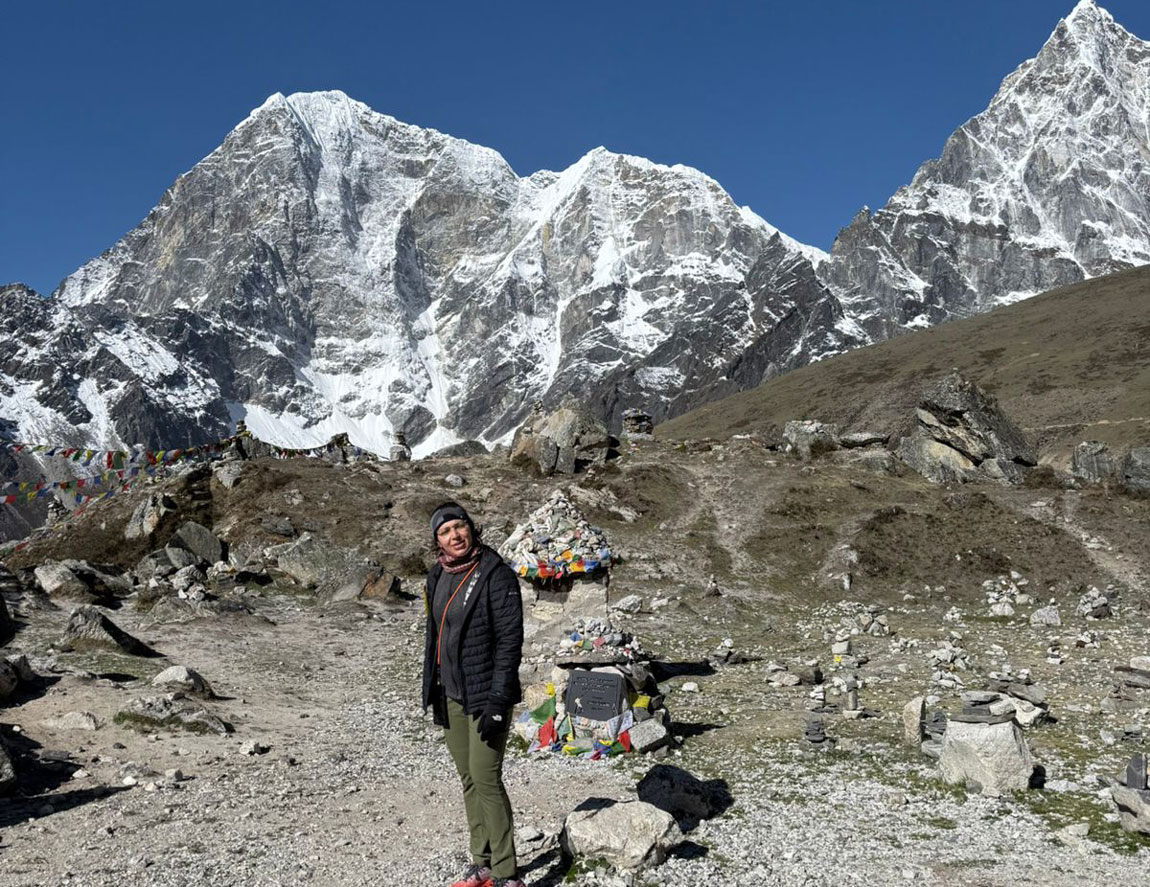
The final route towards Everest Base Camp crosses uneven moraine beside the Khumbu Glacier rather than following the smoother village trails encountered lower down. First-time visitors are sometimes surprised that the summit of Everest is not the dominant view from Base Camp itself; some of the clearer perspectives of Everest are seen from other points along the journey.
Reaching Base Camp can also be less solitary than the words “solo trek” suggest. During busy periods, guides are helping clients take photographs, trekkers who have been passing one another for days arrive within minutes of each other, and congratulations are exchanged between people who may have shared little more than a dining room or a few conversations on the trail. After the photographs and time at Base Camp, everybody still has to cross the moraine again to return to Gorak Shep.
The descent feels different because familiarity has replaced much of the uncertainty of the outward journey. You recognize junctions, bridges, tea houses and villages that were completely new several days earlier. As you lose altitude, walking becomes easier for most trekkers, vegetation returns and the larger settlements of the lower Khumbu begin to feel considerably more comfortable than they did on the way up.
This is probably the most accurate way we can describe the trail to a woman considering Everest Base Camp alone: you can have independence without spending the entire trek in isolation. There are mornings when you may want to walk quietly and evenings when conversation develops naturally around a tea-house table. You begin the journey among strangers, but because most trekkers follow a similar route through a narrow chain of overnight settlements, you repeatedly encounter the same people as you move higher.
That does not mean every solo traveler will have the same social experience, and we would not promise that you will automatically make friends or always have company. Season, weather, your walking pace and where you stay all influence how many people you encounter. What the Everest trail does offer is a combination that suits many independent travelers: enough space to experience the mountains personally, with regular human contact built naturally into the journey rather than something you have to arrange every day.
Tea House Accommodation and Privacy for Solo Female Trekkers
Accommodation is one of the subjects solo female trekkers ask us about most before an Everest Base Camp Trek, particularly whether they will have to share a bedroom with somebody they have never met. For our solo clients, we arrange a private room rather than placing a woman in a room with an unfamiliar trekker. The important limitation is that room availability becomes tighter at the smaller high-altitude settlements, especially during the busiest weeks of spring and autumn, so expectations need to change as the trek moves higher.
A bedroom on the Everest trail is usually much simpler than a hotel room in Kathmandu. Most standard tea-house rooms contain two single beds with mattresses, pillows and blankets, with enough space around them for trekking bags and clothing. Bedrooms are generally not heated, even when the dining room has a stove, and the thin walls used in many lodges provide considerably less sound privacy than most travelers are accustomed to at home. A warm sleeping bag therefore remains an important part of the trekking equipment rather than something we would replace with lodge bedding alone.
The difference between lower and higher villages is worth understanding before the trek. In Lukla and Namche Bazaar there is a wider range of lodges, including properties with better-finished rooms and, in some cases, attached bathrooms. As you continue through Tengboche, Dingboche and towards Lobuche, accommodation becomes progressively more functional. At Gorak Shep, where everybody is staying above 5,100 metres in a small cluster of lodges serving the Base Camp and Kala Patthar routes, we are much more concerned with securing a suitable room in a reliable lodge than trying to reproduce the comfort available several days earlier in Namche.
Women who place a higher priority on accommodation can also compare the Everest Base Camp Luxury Trek, which uses premium lodging in the lower Khumbu where it is genuinely available before relying on the best practical tea-house options higher on the route.
This difference becomes particularly noticeable during the busiest trekking periods. A lodge in Namche may have several room categories available, while a guide reaching Lobuche or Gorak Shep with a client during a busy week has far fewer alternatives. This is one reason our team works with the accommodation plan throughout the trek rather than allowing a client to arrive at every village and begin looking for a room from scratch.
Having your own bedroom provides useful privacy for changing clothes, organizing personal items and sleeping, but it does not mean every facility will be private. Shared toilets are common along the Everest route and become increasingly normal higher in the valley. Depending on the lodge, the toilet may be along the same corridor as the bedrooms, downstairs or in another part of the building. A woman who is comfortable with shared bathrooms at a hostel may still find the experience different at 4,900 or 5,100 metres when the building is cold and she needs to leave her sleeping bag during the night.
For this reason, there are a few things we normally suggest keeping within reach of the bed rather than packed away after dinner. A headlamp is particularly useful for night-time toilet visits, together with whatever warm layer you would put on quickly before leaving the room. Toilet paper and a small personal hygiene pouch are also easier to manage when they have a fixed place in your room rather than disappearing somewhere inside a duffel bag.
Door arrangements vary from lodge to lodge. Everest tea houses should not be approached with the expectation of electronic key cards, hotel safes or identical locking systems at every stop. When you enter a new room, check how the door closes and locks while it is still daytime. If something does not close properly or you are uncomfortable with the room location, tell the guide then rather than waiting until everybody has gone to bed and alternative rooms have already been occupied.
We advise keeping a passport, money, bank cards, phone and other important valuables with you or in the small bag you control throughout the day. Large trekking equipment can remain in the room, but we would not treat a tea-house bedroom as secure storage for documents or significant amounts of cash simply because the door has a lock.
Privacy also extends beyond the physical room. Dining rooms are communal and can become crowded when several groups reach the same lodge in the afternoon. Bedrooms may be separated by thin wooden walls, so conversations and movement in adjoining rooms are sometimes easy to hear. For a solo woman expecting the privacy of a private hotel room every night, knowing this beforehand prevents a fairly normal feature of Himalayan tea-house accommodation from becoming an unpleasant surprise.
Room sharing is different when a solo traveler has chosen to join a group. If the trip price is based on twin sharing, the accommodation arrangement should be explained before booking, including whether another woman from the group may share the room and what happens when there is no suitable roommate. A woman who specifically wants a single room should ask about it before departure rather than assuming that “solo traveler” automatically means single-room accommodation under every group package.
At Dream Heaven Adventure, we prefer to discuss these expectations during the pre-trek briefing in Kathmandu. If having a private room is important, if you would not be comfortable sharing with another group member, or if there is another privacy concern that affects accommodation, this is the time to tell us. It gives the Kathmandu team and guide a clearer understanding of what needs to be arranged before the higher and more limited overnight stops are reached.
The realistic expectation for a solo female trekker is therefore private sleeping space where it has been arranged, but increasingly shared and basic facilities as you move higher towards Everest Base Camp. Namche and Gorak Shep should not be judged by the same accommodation standard. Understanding that difference before leaving Kathmandu makes the simple rooms higher in the Khumbu much easier to accept for what they are: practical places to eat, recover and sleep before the next day's walk.
Periods, Toilets and Personal Hygiene on the Everest Base Camp Trek
Getting your period during the Everest Base Camp Trek is manageable, but it is much easier when you have prepared for it before flying to Lukla. We advise female trekkers to bring enough of the menstrual products they normally use for the entire trek, plus a small reserve in case weather, illness or flight disruption adds an unexpected day to the journey. Supplies can be found in Kathmandu and some larger settlements, but once you move higher through the Khumbu, you should not depend on finding your preferred product or brand when you need it.
Keep part of your supply in your daypack rather than putting everything in a duffel carried by a porter. A period can begin while you are several hours away from the next lodge, and your porter may already be walking well ahead of you. We normally suggest a small personal pouch containing the products you need during the day, toilet paper, hand sanitizer and a few opaque sealable bags. It takes little space and can go with you whenever you leave the main trail to use a toilet or enter a shared tea-house bathroom.
Women sometimes ask us whether pads, tampons or a menstrual cup are best for Everest Base Camp. There is no single product we would recommend changing to specifically for the trek. If pads are what you normally use comfortably while exercising, bring pads. If you already use tampons or a menstrual cup confidently, there is no reason to change simply because you are coming to Nepal. What we would avoid is testing a completely unfamiliar menstrual product for the first time several days into a high-altitude trek.
A menstrual cup can reduce the amount of waste you carry, but it requires more attention to hand hygiene and cleaning. That is straightforward at home and less convenient in a cold tea house with a shared toilet and limited washing facilities. Women who already have an established routine with a cup generally understand how to manage this; Everest Base Camp is not where we would suggest learning the routine for the first time.
Toilets change considerably between the beginning of the trek and the highest overnight stops. Lodges around Lukla and Namche generally offer more choice and better facilities, while toilets become simpler as you continue higher. Depending on the individual tea house, you may encounter Western-style or squat toilets, and bathrooms are frequently shared rather than attached to the bedroom. Conditions also vary from lodge to lodge, so we would not promise one particular toilet standard throughout the route.
Cold creates another practical problem that is easy to overlook when reading a packing list in Kathmandu. At Lobuche and Gorak Shep, freezing temperatures can affect water and plumbing, particularly overnight and early in the morning. A bathroom that is perfectly usable when you arrive in the afternoon may be less convenient during a freezing night. Keeping a headlamp, toilet paper and the personal items you need within easy reach of your bed saves you from searching through a trekking bag when you are half awake and already cold.
Used pads, tampons and wet wipes should never be flushed or dropped into a tea-house toilet. Sanitation and waste systems in mountain settlements are limited, and these products can create additional problems. Use the lodge's appropriate waste arrangement when one is provided. A few opaque sealable bags are worth carrying so that used products can be wrapped discreetly and kept with you until suitable disposal is available rather than being left beside a toilet or anywhere on the trail.
Washing also changes as the trek gains altitude. Lower in the Khumbu, hot showers are available at many lodges for an additional charge, although the method and quality vary. Higher up, particularly around Lobuche and Gorak Shep, washing facilities are more basic and a full shower becomes less attractive in the cold. Even when hot water can be arranged, washing your hair late in the afternoon and then trying to dry it in an unheated room is not something we normally encourage.
On those higher nights, a bowl or small amount of warm water and a cloth are often more practical. You can clean your face, hands, underarms, feet and intimate areas, change into dry base layers and get warm again without turning washing into another exhausting part of the day. This is one of those small adjustments that makes much more sense once you have actually spent an evening above 4,500 metres.
Bring enough quick-drying underwear that you are not relying on washing a pair every evening. Drying clothes becomes increasingly unreliable as the air gets colder, and sunlight can disappear behind the surrounding mountains well before you expect it to. A small item washed after arriving at the lodge may still be damp when you are packing the following morning.
Personal hygiene can also affect the daily trekking routine in ways that are easy to solve when the guide knows about them. If you need a little more time before leaving in the morning, want warm water at the lodge, need to stop at a pharmacy while one is available, or are having unusually difficult period symptoms, tell your guide rather than trying to hide the problem to avoid embarrassment.
We have had enough conversations with trekkers to know that some women are initially uncomfortable discussing menstruation with a male guide. You do not need to explain intimate details. Saying that you need a bathroom stop, extra time, hot water or help finding supplies is normally enough for the guide to understand what needs to be arranged.
A female guide can make these conversations easier for some women, but we would not repeat the guide decision here as the solution to every female-specific concern. Good trekking support should allow a woman to communicate an ordinary practical need professionally regardless of whether her guide is male or female.
For a solo female trekker, the best preparation is therefore not an enormous collection of special products. Bring enough of what your body already knows, keep the day's essentials with you, have a discreet way to manage waste, and expect toilets and washing facilities to become simpler as you move from the lower Khumbu towards Lobuche and Gorak Shep. Those small preparations made in Kathmandu remove a surprising amount of unnecessary stress once you are several days into the trek.
What Should a Solo Female Trekker Pack for Everest Base Camp?
A woman trekking to Everest Base Camp does not need a special mountain-equipment list simply because she is travelling alone. For the complete clothing and equipment breakdown, see our Everest Base Camp Trek packing list, while the advice below focuses specifically on what a solo female trekker should keep with her during the walking day.
Her boots, down jacket, waterproof layers, gloves, sleeping bag and other core trekking equipment are essentially the same as those required by any EBC trekker. What matters more for a solo woman is deciding which personal items stay with her during the walking day and which can safely travel ahead in the porter-carried duffel.
We normally make this distinction before the trek leaves Kathmandu because it is much harder to correct once everybody starts walking from Lukla. A porter is not expected to remain immediately behind the client throughout the day. Porters establish their own walking rhythm, and your duffel may be several kilometres ahead of you by the time you realize something you need is packed inside it.
Think about the walk from Namche towards Tengboche, for example. You may leave the lodge in cold morning air, become warm during the day's climbing, stop for lunch and then encounter wind or cloud later in the afternoon. If your waterproof shell, warm layer or gloves are inside the duffel already moving towards the next lodge, carrying them to Nepal has done you very little good.
The same applies to personal items. Menstrual products needed during the day, toilet paper, hand sanitizer, prescription medication, sunscreen, lip balm, water, snacks, phone, money and important documents belong in the daypack. You do not need to carry your entire supply of every item, but you should be able to manage the complete walking day without opening the porter bag.
This becomes more important as the route climbs beyond Dingboche. Lower in the Khumbu, forgetting a small item can sometimes be solved at a shop or the next larger settlement. Higher towards Lobuche and Gorak Shep, choices are much narrower and the consequences of putting the wrong clothing in the wrong bag are more noticeable. When the sun disappears or wind increases at altitude, waiting until the lodge to retrieve another layer is not a useful plan.
For underwear and base layers, we prefer quick-drying fabrics and enough changes that washing every evening is unnecessary. Clothing that dries easily in Kathmandu or Namche can remain damp much longer in the colder upper valley. A sports bra, trekking socks and base layers should also have been worn during training before Nepal. Several consecutive days with a backpack will expose a small rubbing point much faster than trying the same clothing briefly at home.
A suitable sleeping bag belongs in the duffel because you normally need it only after reaching the lodge, but it should not be treated as optional simply because tea houses provide blankets. Bedrooms are generally unheated, and nights become considerably colder around Lobuche and Gorak Shep. Lodge blankets can supplement your sleeping system; we would not make them the sleeping system.
A headlamp is different. Keep it in your daypack and then beside your bed after reaching the lodge. It may be needed if the day's walk finishes later than expected, during a power interruption, for an early departure or simply to find a shared toilet during the night. It is a small example of equipment whose usefulness comes from being immediately accessible rather than merely appearing somewhere on a packing checklist.
Essential medication should be treated the same way. If you take prescribed medicine every day, carry it yourself and bring more than the exact number of doses required by the itinerary. Lukla flights can be disrupted, weather can alter trekking plans and an additional acclimatization or recovery day may occasionally be necessary. Medication you cannot safely miss should never depend on your duffel arriving at exactly the same time as you.
We take a similar approach to money and documents. Your passport, insurance details, bank cards and the main reserve of cash should remain under your control. Carry enough Nepalese rupees for expenses along the trail rather than assuming electronic payment or an ATM will always solve the problem higher in the valley. Namche has considerably more services than the settlements you encounter afterwards.
Phones also become more important for a solo traveler because the same device may contain family contacts, insurance information, photographs and travel documents. A power bank is useful, as charging is less convenient and generally more expensive as you climb. Cold can also drain batteries more quickly, so electronics are better kept protected rather than left against a cold bedroom window overnight.
For personal hygiene, there is no need to duplicate the entire supply in the daypack. Keep only what you could realistically need before reaching the next lodge: a few menstrual products if required, toilet paper, sanitizer and a small waste bag. The remaining supply can stay in the duffel. This keeps the daypack manageable while avoiding the situation of needing something personal when the porter is already far ahead.
One packing mistake we see is preparing for every imaginable problem until the daypack itself becomes the problem. A woman who weighs considerably less than the person whose packing list she copied online may not find the same backpack weight comfortable. The goal is not to carry a miniature expedition kit personally from Lukla to Base Camp. It is to carry the things that would matter if you could not access your duffel for the next several hours.
That is why we prefer to separate the bags physically during the pre-trek preparation in Kathmandu. Put the duffel on one side and the daypack on the other. Pack the duffel first, then look at what remains and imagine that you will not see that larger bag again until the evening. It quickly becomes obvious whether your rain jacket, medication or another important item has ended up in the wrong place.
For a solo female trekker, packing well for Everest Base Camp is not about carrying more equipment because you are a woman. It is about remaining self-sufficient during the hours between one tea house and the next while the rest of your belongings may already be travelling ahead of you. Once that principle is understood, deciding what belongs in the daypack becomes much easier.
Altitude Sickness for Solo Female Trekkers on the Everest Base Camp Trek
Altitude sickness does not affect somebody simply because she is a woman, and being young, strong or physically fit does not guarantee that she will acclimatize without difficulty. For a solo female trekker, the additional consideration is that she may not have a partner or close friend beside her who already knows her normal walking pace, appetite, energy and behaviour. This makes honest communication with the guide particularly important as the trek moves into the higher Khumbu.
The change in altitude is substantial. Lukla is around 2,860 metres, Namche Bazaar approximately 3,440 metres and Dingboche about 4,410 metres. The trek then continues towards Lobuche at roughly 4,940 metres and Gorak Shep at approximately 5,164 metres before reaching Everest Base Camp at around 5,364 metres. The final few days therefore take place at elevations where the way you feel and recover matters more than how quickly you walked in the lower valley.
From a guide's point of view, observing acclimatization begins well before somebody complains of a headache.
After walking with the same client from Lukla through Namche, a guide begins to understand what is normal for her. Perhaps she usually walks steadily for an hour before asking for a break, talks comfortably while climbing and finishes most of her dinner after reaching the lodge. Those small details provide a useful reference later.
Suppose the same trekker reaches Dingboche and suddenly behaves differently. She has little interest in dinner, says she is unusually tired and needs far more stops than normal during the following day's walk. She may still say, “I'm fine,” because none of the individual problems feels serious enough to mention.
For us, the important information is not simply whether she has a headache. It is that her normal pattern has changed as the sleeping altitude has increased.
A guide cannot diagnose every illness on the trail, and not every headache, poor appetite or tired day is altitude sickness. Dehydration, lack of sleep, stomach problems, migraine, menstruation and ordinary physical exhaustion can produce complaints of their own. What matters is that symptoms are reported rather than hidden so that the guide can consider the whole situation and respond appropriately.
This can be particularly important for somebody travelling without a friend or partner. When people have spent years planning Everest Base Camp, they sometimes minimize how they feel because they do not want to lose a day or turn around after coming so far. The temptation becomes even stronger at Lobuche and Gorak Shep, where Base Camp feels very close.
Proximity to the destination should never influence a health decision.
If symptoms are mild, the response may involve stopping, resting, monitoring the situation and avoiding further ascent until it is appropriate to continue. If symptoms worsen or more serious warning signs develop, descent and medical assistance may be necessary. Emergency evacuation can be arranged when genuinely required, but a helicopter should not be thought of as a substitute for acclimatization or sensible decisions earlier in the trek.
A scheduled helicopter return is a different arrangement from an emergency evacuation. Trekkers who want to complete the journey to Base Camp on foot but prefer not to retrace the entire route towards Lukla can consider our Everest Base Camp Trek with Helicopter Return, where the helicopter flight is planned as part of the itinerary rather than used as an emergency service.
This is also why we do not treat the acclimatization stops at Namche and Dingboche as spare days that can automatically be removed when somebody is walking strongly. A private trek provides flexibility, but that flexibility should be used to respond to the trekker rather than simply to reach Base Camp faster.
A woman who regularly runs, hikes or trains in the gym may be considerably fitter than other people on the trail and still acclimatize differently from them. Fitness helps with the physical work of walking uphill for several hours; it does not allow somebody to choose how her body responds to reduced oxygen at higher elevation.
Eating and drinking provide useful information too. Higher in the valley, appetite may decrease while cold conditions make drinking less appealing. If a client who normally eats well suddenly leaves most of her meals untouched or repeatedly finishes the day with nearly all of her water still in the bottle, we want to know why rather than dismissing it as a small detail.
Solo female trekkers should be equally open about symptoms that could be related to menstruation. Period cramps, headache, fatigue or nausea may have an explanation unrelated to altitude, but it is better to tell the guide what you are experiencing than decide privately that the symptom must be caused by your period. You do not need to discuss more personal detail than you are comfortable sharing; the guide simply needs enough information to understand that something has changed.
Medication should be approached carefully as well. Some trekkers discuss acetazolamide, often known by the brand name Diamox, with their doctor before travelling. Whether it is suitable for you and how it should be used are medical questions to discuss with a qualified healthcare professional rather than decisions to copy from another trekker in a tea-house dining room. Any essential medication should remain in your daypack rather than travelling ahead in the porter duffel.
There is one more situation we discuss with solo clients before moving higher: what to do if you feel significantly worse during the night. At the higher stops, do not stay quietly in your bedroom waiting for morning simply because you do not want to disturb anybody. Know where your guide is sleeping and tell them if your condition has changed or you are seriously concerned.
At Lobuche and Gorak Shep, turning around can feel particularly difficult because so much of the trek has already been completed. A client may be able to picture Base Camp only a few hours ahead. An experienced guide has to be willing to make an unpopular decision at exactly that moment if continuing upward is no longer sensible.
From our perspective at Dream Heaven Adventure, a successful Everest Base Camp trek is not measured only by whether somebody reaches Base Camp. Most clients who acclimatize normally continue according to plan, but good mountain management also means recognizing the occasions when the itinerary needs to slow down, stop or turn downhill.
For a solo female trekker, this is where professional support has far more value than simply knowing which trail to follow. Be honest about changes in appetite, energy, sleep and how you feel while walking. Give acclimatization the time planned for it, do not use another trekker's pace as evidence that you should be moving faster, and never hide a worsening symptom because Base Camp is getting close.
Best Time for a Solo Female Everest Base Camp Trek
For most solo female trekkers, spring from March to May and autumn from late September through November are the best periods for the Everest Base Camp Trek. These are the main trekking seasons in the Khumbu, when the route is active, tea houses are operating normally and you are more likely to encounter other trekkers regularly between Lukla and Base Camp.
For a woman travelling alone, however, choosing the best month is not simply about finding the clearest mountain views. How busy or quiet the trail feels can make a noticeable difference to the experience.
In April or October, you may leave a busy breakfast room in Namche and spend the next several hours walking mostly at your own pace, only to meet many of the same trekkers again at Tengboche, Dingboche or another overnight stop. Higher up, where the number of lodges and possible overnight settlements becomes smaller, familiar faces tend to appear even more often.
Some solo women enjoy exactly this balance. They have space while walking but still arrive at an active tea house in the afternoon, where guides, porters and other trekking groups are coming and going. If this is your first high-altitude trek in Nepal and you would prefer regular human activity around you without having to join a group, the main spring and autumn seasons are particularly suitable.
The busiest months also have a disadvantage. October and parts of April can put considerable pressure on Lukla flights and popular tea houses, and room choice becomes tighter at smaller high-altitude stops such as Lobuche and Gorak Shep. Choosing a busy season therefore gives you more activity around you, not necessarily more flexibility.
Solo travelers who would prefer not to depend on a scheduled Lukla flight can also consider the Everest Base Camp Trek via Salleri, which enters the Everest region overland before joining the classic route.
April is one of our preferred spring months for a first-time solo female trekker. The trekking season is well established by then, winter is retreating and the lower parts of the route begin to show more spring colour. Higher up, April also coincides with the Everest climbing season, and the atmosphere changes as expedition teams and their equipment move towards Base Camp.
March can suit a woman who wants to trek during spring with somewhat less trail traffic, particularly later in the month. Earlier March can still feel considerably colder higher in the valley, and winter conditions may remain on some sections of the route.
May has its own character. Everest Base Camp is active during the climbing season and temperatures are generally warmer lower down, but cloud and changing weather can become more noticeable as Nepal approaches the summer monsoon. For someone particularly interested in seeing the expedition season around Base Camp, this can still be a rewarding time to trek.
In autumn, October is the easiest month for us to recommend to a first-time solo trekker who does not mind a busy trail. The monsoon has normally withdrawn, the trekking season is fully active and mountain visibility is often excellent. You will usually see plenty of movement through the main villages and tea houses.
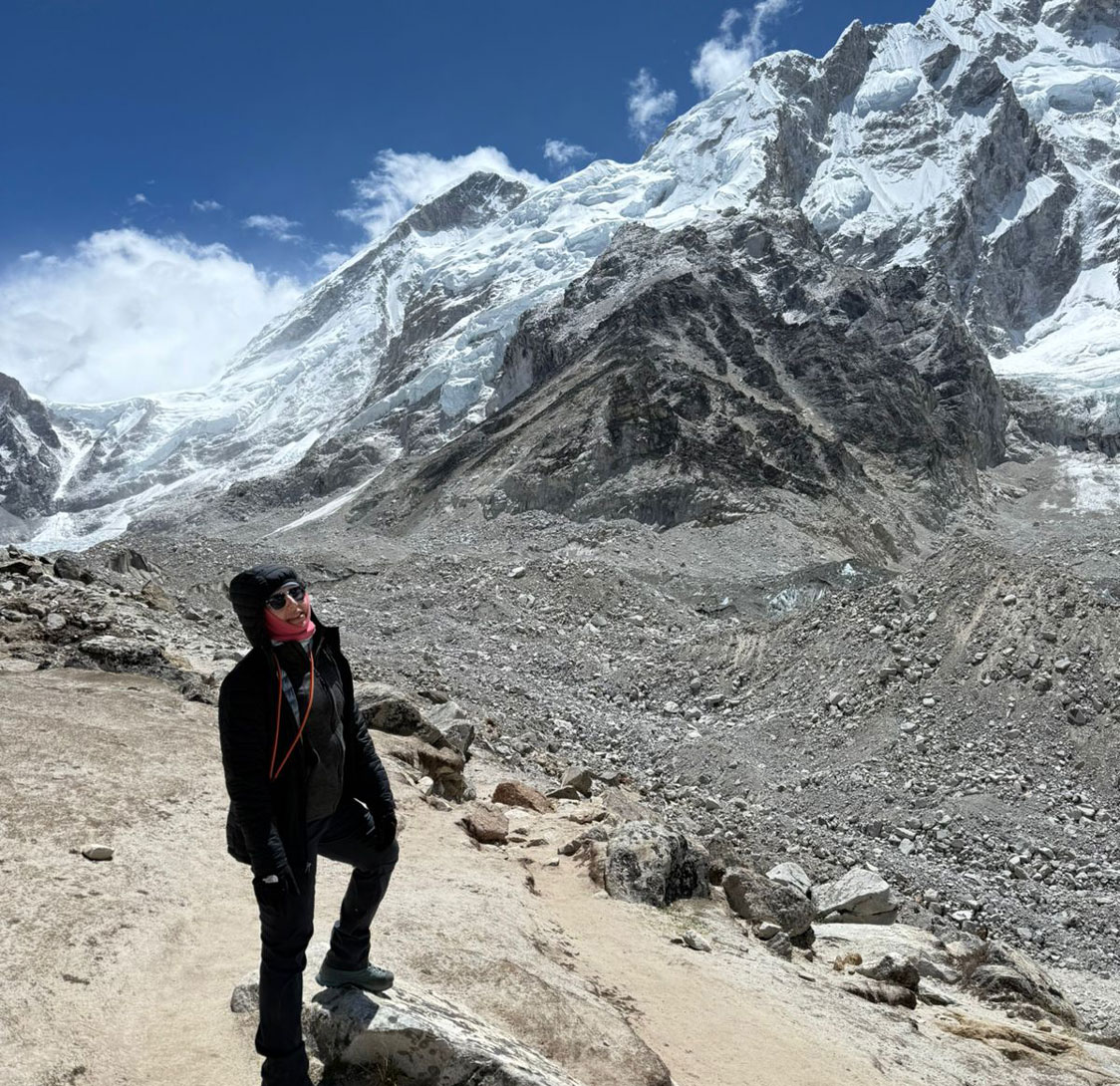
If October sounds too busy, early November can provide a very good compromise. There are still trekkers on the route, but the busiest autumn period begins to ease. The difference becomes noticeable in temperature as well. Mornings and evenings grow colder, particularly once the trek reaches Dingboche, Lobuche and Gorak Shep, so the quieter trail comes with a greater need to be comfortable in cold conditions.
For many independent women, late October into early November offers one of the best balances between trail activity and personal space. There are normally enough trekkers moving through the Khumbu that the route does not feel deserted, while some of the busiest October pressure has begun to reduce.
September requires more flexibility. Early in the month, the monsoon may still influence cloud, rainfall and flight operations. Conditions generally become more settled as autumn develops, and the number of trekkers increases towards the end of the month. Late September can therefore appeal to somebody who wants to begin before the main October rush and is comfortable accepting a little more weather uncertainty.
Winter from December through February gives Everest a completely different atmosphere. Trails are quieter, tea-house dining rooms can feel much less busy and clear winter mornings can be beautiful, but temperatures are substantially colder and snow can affect conditions higher up. For an experienced woman who actively wants a quieter, colder mountain journey, winter can be considered. For a first high-altitude trek in Nepal, it would not normally be our first recommendation.
The summer monsoon from June through August is also much quieter, but fewer trekkers should not automatically be interpreted as an advantage. Rain and cloud affect the lower Khumbu, mountain views become less predictable and Lukla flight schedules can be disrupted by weather. A woman specifically seeking an off-season experience may accept those compromises, but most first-time solo trekkers will find spring or autumn more straightforward.
One mistake is choosing the quietest possible month because “fewer tourists” sounds more adventurous. For a solo traveler, an active trail can actually be part of what makes Everest enjoyable. You can still walk quietly for long periods, particularly once groups spread out after breakfast, while having other trekkers, guides and lodge staff around at the overnight stops.
The opposite is also true. You do not need to choose the busiest week of October simply because you are travelling alone. If crowds would reduce your enjoyment of the mountains, shifting the departure towards late September, early November or another shoulder period can create more breathing room without deliberately moving into the middle of winter or monsoon.
From our experience arranging Everest treks, April, October and early November are the easiest periods to recommend to a first-time solo female trekker. April offers the atmosphere of the spring trekking and climbing season, October gives the most active classic autumn experience, and early November suits women prepared for colder nights in exchange for a somewhat quieter trail.
The best choice ultimately depends on what you want from travelling solo. If you want independence while still seeing other trekkers regularly, choose the heart of spring or autumn. If you value more solitude and are comfortable accepting colder temperatures or greater weather uncertainty, move towards the edges of those seasons rather than assuming the busiest month is automatically best.
Would We Recommend Everest Base Camp to a Solo Female Trekker?
Yes. We would recommend the Everest Base Camp Trek to a woman travelling to Nepal alone, provided she is prepared for the altitude, basic mountain accommodation and the possibility that the itinerary may need to change. Not having a friend, partner or family member available to travel with you is not, by itself, a reason to postpone an Everest trek.
When a solo woman sits with us in Kathmandu before the trek, we want to understand more than simply whether she has arrived alone. We ask about previous multi-day hikes, experience sleeping above 3,000 or 4,000 metres, physical preparation, comfort with simple tea-house facilities and the kind of trekking experience she wants. Some women enjoy quiet walking time and prefer their own rhythm, while others look forward to meeting people along the route and sharing the social side of the trek. These details help us understand what kind of support and trekking arrangement will suit her better than simply describing her as a solo traveler.
For a woman making her first high-altitude trek, we generally prefer an arrangement where experienced support is available throughout the journey. This does not mean the guide needs to walk beside her talking continuously from Lukla to Base Camp. A good guide should understand when a client wants space to walk quietly, while remaining close enough to observe how she is coping and notice when the day begins developing differently from expected.
The value of that relationship becomes clearer as the trek moves higher. On the lower trail, you may be concentrating on suspension bridges, the long climb into Namche and your first views into the high Khumbu. Several days later above Dingboche, the guide is paying attention to different details: whether you are recovering normally after walking, whether you are still eating properly, whether your usual pace has changed and whether there is any reason the following day's plan should be reconsidered. This is where experienced trek management becomes more important than simply knowing which trail leads to the next village.
We would also advise a solo woman not to build the journey around proving that she can manage every situation herself. Independence in the mountains does not mean refusing help, hiding a problem or continuing upward because turning around would feel embarrassing. It means being comfortable making sensible decisions even when those decisions change the trip you originally imagined.
There are circumstances where we would suggest waiting or reconsidering the plan. If you have had no realistic opportunity to train, cannot allow any flexibility beyond the exact itinerary dates, are unwilling to accept basic facilities higher in the mountains or expect the guide to guarantee that you will reach Base Camp regardless of your condition, then the expectations surrounding the trek need to change first.
Women who are physically well prepared but have fewer days available can also compare our Everest Base Camp Short Trek before deciding whether a shorter itinerary is appropriate for their experience and previous acclimatization.
Everest Base Camp is a trekking route rather than a technical climbing expedition, but this does not make it a casual mountain holiday. By the time you reach Gorak Shep, you are sleeping above 5,000 metres and are several days' walk from Lukla, in an environment where altitude, weather and your physical condition influence the day's decisions much more than they did when you left Kathmandu.
At the same time, there is no reason to make the journey sound frightening simply because a woman is travelling without a companion. The standard route passes through established trekking settlements, tea houses provide accommodation each night, and during the main seasons there is regular movement of trekkers, guides, porters and local people through the valley. A well-prepared solo traveler should understand both sides of this experience: the Everest trail is established and well travelled, but the high-altitude environment still deserves careful decisions.
You should be comfortable enjoying periods of independent walking, eating dinner with people you may have met only that afternoon and accepting a simple tea-house room as a normal part of the journey. At the same time, you should feel equally comfortable telling your guide when you are unwell, when something makes you uncomfortable or when you need help with a practical problem rather than remaining silent because you do not want to inconvenience anybody.
From our side, the responsibility goes well beyond delivering a client to the Everest Base Camp marker for a photograph. It is to manage the journey from Kathmandu to Lukla and through the Khumbu in a way that gives her a realistic opportunity to reach Base Camp while remaining prepared to change the plan when altitude, weather or her condition requires it.
Sometimes good guiding means recognizing that a client is simply having an ordinary difficult afternoon and helping her settle into a manageable rhythm towards the next lodge. On another day, similar tiredness may be accompanied by other changes that make continuing higher the wrong decision. Knowing the client, observing how she has been walking over several days and understanding the mountain environment help an experienced guide distinguish between those situations.
If a woman sitting with us in our Kathmandu office asked whether she should postpone Everest Base Camp until she finds somebody willing to travel with her, our answer would usually be no. If she wants to experience the trek, has prepared properly and chooses the right support, arriving in Nepal without a companion should not prevent her from making the journey.
Our recommendation is to approach Everest Base Camp as an independent traveler rather than an unsupported one. You can arrive in Nepal alone, walk much of the trail at your own rhythm and experience the journey as your own while still having experienced support available when altitude, weather or an unexpected problem changes what needs to happen next.
For a solo female trekker, that balance provides genuine independence without requiring her to handle every decision in the high mountains entirely by herself.
FAQs About Everest Base Camp Trek for Solo Female Trekkers
1. Is Everest Base Camp safe for a woman travelling alone?
Yes, Everest Base Camp is generally suitable for a woman travelling to Nepal alone when she is properly prepared and has a clear trekking plan. The standard route passes through established tea-house settlements, and during the main trekking seasons there is regular movement of trekkers, guides, porters and local people.
The popularity of the route should not be mistaken for complete safety. Altitude, weather, illness and poor decisions when tired can create more serious problems than travelling without a companion. A solo woman should know who is responsible when the itinerary changes and communicate early when she feels unwell or uncomfortable.
2. Do solo female trekkers have to share a room on the Everest Base Camp Trek?
Not if a private room has been arranged as part of the trek. At Dream Heaven Adventure, we discuss the room arrangement with solo clients before departure rather than expecting a woman to arrive at a tea house and discover that she has been placed with an unfamiliar person.
The important limitation is availability. Room choice becomes tighter at smaller high-altitude stops such as Lobuche and Gorak Shep during busy periods. A private bedroom also does not necessarily include a private bathroom, as shared toilets are normal in many mountain tea houses.
3. Can I request a female guide for Everest Base Camp?
Yes. A female trekking guide can be requested for Everest Base Camp, and some women find it easier to discuss periods, hygiene, room arrangements or other personal concerns with another woman.
Request one well before your departure, particularly during the busy spring and autumn seasons, because the number of experienced female trekking guides is limited. Gender should not be the only consideration; Everest experience, high-altitude judgment, communication and professionalism remain essential.
4. What happens if I get my period while trekking to Everest Base Camp?
You can manage your period normally, but bring enough of the menstrual products you already use for the entire trek, plus a small reserve for possible delays. Keep the amount you may need during the walking day in your daypack rather than putting everything into the porter-carried duffel.
Pads, tampons and wet wipes should not be put into tea-house toilets. Carry a few opaque sealable bags so used products can be managed discreetly until appropriate disposal is available. If you already use a menstrual cup confidently, it can be an option, but the Everest trail is not a practical place to learn to use one for the first time.
5. What happens if I become sick when trekking without a companion?
Tell your guide as soon as you notice a meaningful change rather than waiting to see whether it disappears by the following morning. On a high-altitude trek, changes in headache, appetite, nausea, energy, coordination or normal walking pace deserve attention, particularly as you move beyond Dingboche.
The response depends on the situation. It may involve resting, remaining at the same altitude, changing the day's plan, descending or seeking medical assistance. If evacuation becomes necessary, the guide and trekking company can help coordinate the next steps with the client and relevant emergency or insurance contacts.
6. Can a first-time female trekker do Everest Base Camp?
Yes. Everest Base Camp can be a first major high-altitude trek for a woman who has trained properly and understands that fitness and acclimatization are different things.
Before Nepal, it is useful to become comfortable walking for several hours on consecutive days and spending sustained periods climbing and descending. Once on the trek, do not shorten acclimatization simply because the lower days feel easier than expected. How strongly you walk into Namche does not predict exactly how your body will respond above 4,000 or 5,000 metres.
7. Is it better to join a group or hire a private guide as a solo woman?
Choose according to how you actually want to experience the trek. A private guide suits women who value their own walking rhythm, quiet time and direct communication with one guide. A group suits solo travelers who want more regular companionship during meals, acclimatization walks and parts of the trekking day.
Arriving in Nepal alone does not require you to choose one particular style. Some of our solo clients prefer the independence of a private arrangement, while others deliberately join a departure because sharing the journey is part of what they want from Everest.
8. What should a solo female trekker know before flying to Lukla?
Separate your daypack from the porter duffel carefully before leaving Kathmandu. Medication, waterproof and warm layers, menstrual products you may need that day, toilet paper, money, important documents, water and other essentials should remain with you because the porter carrying your larger bag may walk at a different pace.
Also begin the trek with realistic expectations. Tea-house facilities become simpler as you move higher, room and flight arrangements can be affected during busy periods, and the itinerary occasionally needs to respond to weather or acclimatization. Knowing this before Lukla makes normal changes on the trail much easier to deal with.