Everest Base Camp Trek from Lukla at a Glance
The classic Everest Base Camp trek begins in Lukla (2,860 m), follows the Khumbu Valley to Everest Base Camp (5,364 m), and returns to Lukla on foot. The complete journey covers approximately 130 km round trip, depending on the exact trail, acclimatization hikes and optional viewpoints included along the way.
Starting point: Lukla, approximately 2,860 m
Everest Base Camp altitude: 5,364 m
Highest commonly included viewpoint: Kala Patthar, approximately 5,545 m
Approximate trekking distance: 130 km round trip
Route: Lukla - Phakding - Namche Bazaar - Tengboche - Dingboche - Lobuche - Gorak Shep - Everest Base Camp - Lukla
Main acclimatization stops: Namche Bazaar (3,440 m) and Dingboche (4,400 m)
Last lodge settlement before Base Camp: Gorak Shep (approximately 5,160 m)
Overnight at Everest Base Camp: No. On the standard teahouse trek, trekkers visit Base Camp and return to Gorak Shep for the night.
Return route: Normally via Pheriche and Namche Bazaar to Lukla.
Although the total distance is around 130 km, the walking days are not evenly divided. We spend more time on the ascent to allow for acclimatization, including two nights each in Namche Bazaar and Dingboche. The return to Lukla usually takes fewer days because we are moving toward lower sleeping elevations and do not need to repeat those acclimatization stops.
For the complete day-by-day schedule, accommodation arrangements and package details, see our Everest Base Camp Trek itinerary.
Lukla to Phakding
The first surprise after leaving Lukla is that the Everest Base Camp trek does not begin with a continuous climb toward Everest. Lukla sits at approximately 2,860 m, while Phakding, our usual first overnight stop, is around 2,610 m. The walk covers roughly 7–8 km and takes about 3–4 hours, depending on the group's pace and trail conditions. Although the route finishes lower than it starts, there are several short uphill sections along the way.
After organizing the trekking luggage in Lukla, we follow the trail through the lower Khumbu, passing small settlements, stone steps, mani walls and suspension bridges along the Dudh Koshi valley. The trail alternates between gentle descents and short climbs rather than following a continuous downhill path. It is a relatively manageable introduction to the Everest Base Camp route, especially compared with the longer climb toward Namche Bazaar the following day.
This first walk also gives our guide an opportunity to understand how everyone moves on the trail. Someone who described themselves as fit during our briefing in Kathmandu may naturally walk too quickly, while another trekker may prefer a slower but steadier pace. We also notice practical problems such as uncomfortable boots, poorly adjusted backpacks or items packed in the main duffel bag that should have been kept in the daypack. These are easier to correct on the first afternoon than several days later at higher elevations.
Phakding is a practical first stop because the walking day begins only after the flight to Lukla has operated and the group is ready to leave. When we arrive in Lukla early, there is time to walk comfortably and settle into the lodge. If the flight arrives later, the relatively short distance to Phakding gives us more flexibility, provided there is sufficient daylight and conditions are suitable.
Most trekkers reach Phakding feeling reasonably comfortable, sometimes surprised that their first day on the Everest Base Camp trail was easier than expected. We consider that a good beginning, but it does not tell us how someone will respond to the higher elevations ahead. The next morning, the route toward Namche Bazaar (3,440 m) brings longer walking hours and the first sustained uphill challenge of the trek.
Phakding to Namche Bazaar
The trek from Phakding (2,610 m) to Namche Bazaar (3,440 m) covers approximately 10–12 km and usually takes 5–7 hours. This is the first demanding uphill day of the Everest Base Camp trek from Lukla. Although the difference between the two overnight elevations is around 830 metres, the trail includes several descents and shorter climbs before the long ascent to Namche begins.
We normally leave Phakding at a comfortable pace, following the Dudh Koshi valley through small Sherpa settlements, forested sections and suspension bridges. The walking is relatively manageable during the early part of the day, but there is still a considerable climb ahead. Trekkers who felt strong on the short walk from Lukla sometimes start too quickly here, so we encourage a steady rhythm from the beginning rather than waiting until the steepest section to slow down.
As we approach Monjo, we reach the entrance to Sagarmatha National Park, where trekking permits are checked. The trail then continues toward Jorsalle, a common stopping point before the main climb. We normally use this part of the journey to take a break, have something to eat and make sure everyone is comfortable before continuing uphill.
Beyond Jorsalle, the trail follows the river toward the famous Hillary Suspension Bridge, one of the highest bridges encountered on the classic Everest Base Camp route. After crossing the bridge, the character of the day changes noticeably. The trail climbs steeply through the forest toward Namche Bazaar, with repeated uphill bends and stone steps. This final ascent is usually the most tiring part of the day's walk.
This is where we begin to understand each trekker's natural uphill pace. Some people climb slowly without needing many breaks, while others move faster but stop more frequently. We do not expect everyone to walk at exactly the same speed, but our guide keeps track of how the group is progressing and makes sure nobody is struggling to maintain an unnecessarily fast pace. On a clear day, there may also be a first distant glimpse of Mount Everest from the trail before reaching Namche.
By the time we arrive in Namche Bazaar, we have completed the first substantial climb of the trek and reached an overnight elevation above 3,000 metres. How someone feels on arrival matters more to us than whether they reached the lodge ahead of the others. We check that everyone is settling in comfortably and encourage trekkers to tell the guide about any headache, nausea, dizziness or other unusual symptoms rather than assuming these are simply part of a tiring walking day.
Even when the group reaches Namche feeling strong, we do not continue to Tengboche the following morning. Instead, we spend a second night in Namche Bazaar to allow more time for acclimatization before moving higher into the Khumbu. This planned stop is an important part of our Everest Base Camp itinerary, not an extra day added because the walk from Phakding was difficult.
The climb to Namche is only one part of the physical challenge. Our guide to Everest Base Camp trek difficulty explains how altitude, long walking days and trail conditions affect the complete journey.
Acclimatization Day in Namche Bazaar
After reaching Namche Bazaar (3,440 m), we spend a second night here before continuing toward Tengboche. This is the first planned acclimatization day on our Everest Base Camp trek from Lukla. Rather than gaining more sleeping elevation immediately, we give trekkers time to adjust to the altitude while preparing for the higher sections of the Khumbu.
We do not normally spend the entire day resting inside the lodge. When conditions are suitable, we take our trekkers on an acclimatization walk above Namche, often toward the Everest View Hotel area at approximately 3,880 m. The climb offers views of Everest, Ama Dablam and other surrounding peaks when the weather is clear. Depending on the group's condition, we may walk farther or choose a shorter route, but we return to Namche to sleep at the same elevation.
This higher walk also gives our guide another opportunity to see how everyone is adjusting. Someone who managed the climb from Phakding comfortably may feel different after spending a night at 3,440 m. We ask how trekkers slept, whether they have been eating normally and whether they have experienced headaches, nausea, dizziness or unusual tiredness. These details matter more than how quickly someone reaches the viewpoint.
Feeling strong does not mean the extra night is unnecessary. Even experienced and physically fit trekkers can develop altitude sickness, so we do not remove the planned acclimatization day simply because someone walked quickly into Namche. If a trekker develops symptoms suggesting altitude illness, we assess the situation rather than pushing them higher. Someone with suspected acute mountain sickness should not ascend to a higher sleeping altitude while symptoms persist, and worsening or severe symptoms require prompt action.
After the second night in Namche, we continue toward Tengboche, provided everyone is well enough to proceed. The next stage takes us along the mountainside before descending toward Phunki Tenga and climbing again to Tengboche. Although Tengboche is higher than Namche, the trail between them includes a considerable amount of downhill walking before the final ascent.
Namche Bazaar to Tengboche
The trek from Namche Bazaar (3,440 m) to Tengboche (3,860 m) covers approximately 10–11 km and usually takes 5–6 hours. Although the difference between the two overnight elevations is only about 420 metres, the trail involves considerably more climbing than that. We first follow the mountainside above the Dudh Koshi Valley, descend toward Phunki Tenga and then climb steeply through the forest to reach Tengboche.
After leaving Namche, we follow the main trail toward Kyangjuma and Sanasa. This is one of the more enjoyable sections of the day, with a relatively comfortable path along the mountainside and open views across the Khumbu Valley. On a clear morning, trekkers can see Everest, Lhotse and Ama Dablam from different points along the trail. We usually find that people stop for photographs here more often than they expect, especially with Ama Dablam becoming such a prominent part of the landscape.
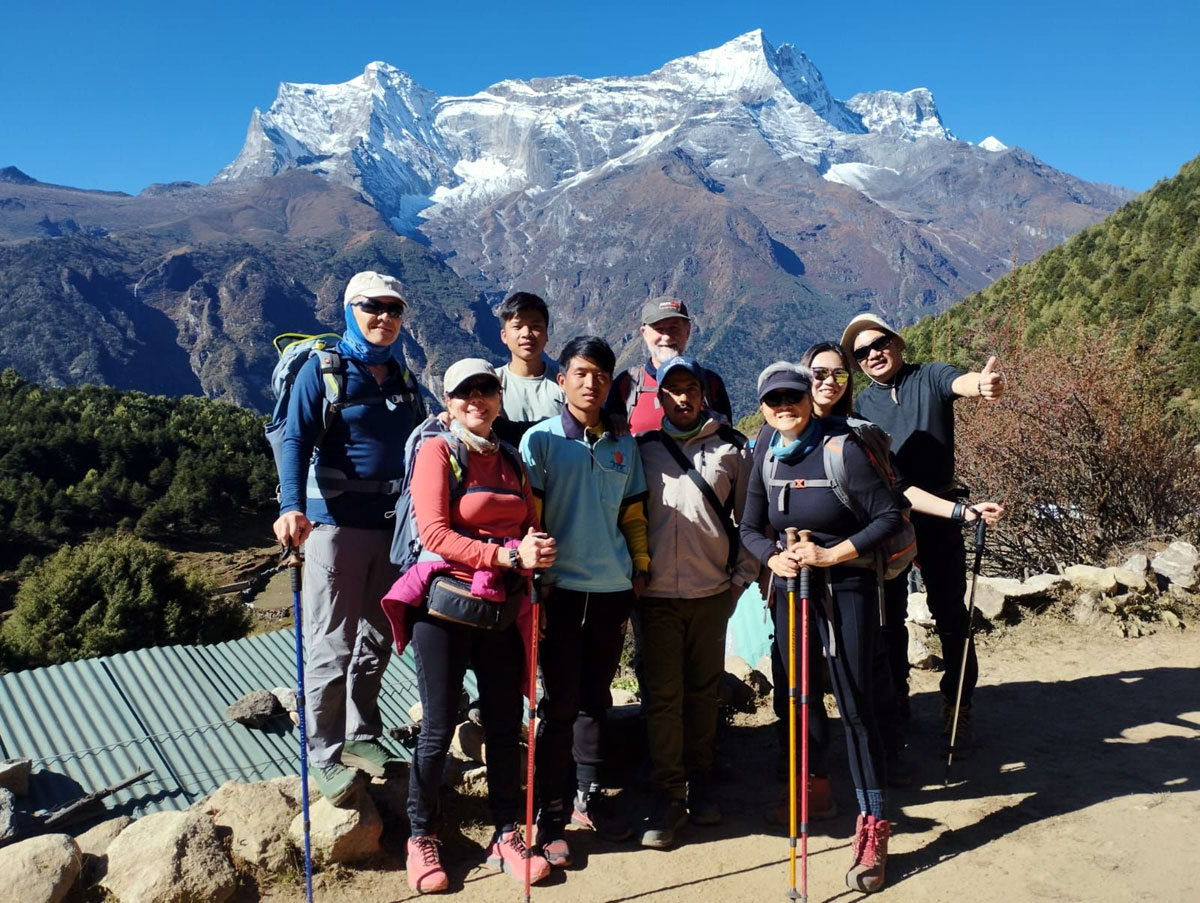
Beyond Sanasa, the trail begins descending through forest toward Phunki Tenga, near the Dudh Koshi River. By the time we reach the river crossing, we have lost much of the elevation gained earlier. We normally explain this before the descent because trekkers sometimes assume that the easier downhill walking means most of the day's effort is behind them. In fact, the longest sustained climb of the stage is still ahead.
After crossing the river at Phunki Tenga, we begin the uphill walk toward Tengboche. The trail climbs through rhododendron and pine forest, with long uphill stretches and occasional stone steps. This is where we settle into a comfortable climbing pace rather than trying to make up time. The ascent can feel surprisingly demanding after the descent to the river, particularly for trekkers who walked quickly during the morning.
Reaching Tengboche brings us to one of the best-known places on the Everest Base Camp route. Tengboche Monastery stands on the ridge above the valley, surrounded by views of Ama Dablam and the higher Himalayan peaks when the weather is clear. If the monastery is open and the timing allows, trekkers may have an opportunity to visit. We also take time to settle into the lodge and enjoy the surroundings rather than treating Tengboche as simply another overnight stop.
Tengboche feels different from Namche Bazaar. There are fewer lodges, the settlement is smaller, and the busy atmosphere of Namche is now behind us. We have completed our first acclimatization stop, but the higher part of the trek is still ahead. The following morning, we descend through the forest toward Deboche before continuing through Pangboche and farther up the valley to Dingboche.
Tengboche to Dingboche
The trek from Tengboche (3,860 m) to Dingboche (approximately 4,400 m) covers around 10–12 km and usually takes 5–6 hours. The route passes through Deboche, Pangboche and Shomare before reaching Dingboche. Although the two villages are separated by a net elevation gain of roughly 540 metres, the trail first descends through the forest before gradually climbing into the more open landscape of the upper Khumbu.
We begin by descending from Tengboche through the rhododendron and pine forest toward Deboche. After crossing the Imja Khola, the trail climbs toward Pangboche, one of the oldest Sherpa settlements in the Khumbu. Ama Dablam becomes a particularly impressive sight along this part of the route, rising above the valley as we continue toward the higher villages.
Beyond Pangboche, the landscape changes noticeably. The dense forest is largely behind us, the valley becomes wider, and the trail passes through more open terrain around Shomare. There is less protection from the wind, and the mountains feel much closer than they did around Namche and Tengboche. Trekkers also begin to notice how different the walking feels as we approach and move above 4,000 metres.
We normally maintain a comfortable pace through this section, even when the trail is not particularly steep. Someone who walked easily through the lower Khumbu may now find that a short uphill stretch requires more effort. We pay attention to how everyone is feeling, especially if a trekker develops a headache, nausea or unusual fatigue. These symptoms should not simply be dismissed as the result of a long walking day.
As we approach Dingboche, the valley opens around a settlement of stone-walled fields and lodges, with mountain slopes rising on either side. At approximately 4,400 m, this is our highest overnight stop so far. After arriving, we give trekkers time to settle into the lodge, eat, rest and prepare for another night at altitude. We are particularly interested in how everyone feels after spending the night here, not just how comfortably they completed the walk.
We spend a second night in Dingboche rather than continuing directly toward Lobuche. The following day is reserved for acclimatization, usually involving a walk above the village before returning to sleep at the same lodge. This gives us another opportunity to assess how trekkers are adjusting before moving into the highest part of the Everest Base Camp route.
Acclimatization Day in Dingboche
After reaching Dingboche (approximately 4,400 m), we spend a second night here before continuing toward Lobuche. This is our final planned two-night acclimatization stop on the standard Everest Base Camp trek from Lukla. We have already spent an extra night in Namche Bazaar, but Dingboche is almost 1,000 metres higher, and the next stages will take us toward the highest sleeping elevations of the journey.
When the weather and group conditions allow, we take an acclimatization walk above Dingboche, often following the trail toward Nangkartshang Hill. The climb begins above the village and gradually opens up views of Ama Dablam, Lhotse, Island Peak and the surrounding Himalayan mountains. We do not need to reach the highest viewpoint to make use of the day. How far we continue depends on the weather, trail conditions and how everyone is feeling. After the walk, we return to Dingboche to sleep at the same altitude.
The difference from our earlier acclimatization walk in Namche becomes noticeable as we gain height above Dingboche. The terrain is more exposed, the air is thinner, and even a relatively short uphill section can require more effort. We encourage trekkers to carry warm layers, drinking water and the things they need for the outing rather than treating it as a casual walk around the village. The main trekking luggage stays at the lodge.
The demands of walking above 4,000 metres are also why we encourage trekkers to begin preparing for the Everest Base Camp trek well before arriving in Nepal.
By this stage, our guide has spent several days walking with the same trekkers and has a better understanding of how they normally move and feel. We ask about sleep, appetite, headaches, nausea and any unusual tiredness. These observations help us recognize possible problems, but walking comfortably does not guarantee that someone is fully acclimatized. If a trekker develops symptoms suggesting altitude sickness, we take them seriously rather than assuming another night in Dingboche will automatically resolve the problem.
We do not continue to a higher sleeping elevation while a trekker has symptoms of altitude illness. If symptoms worsen despite rest, descent and appropriate medical assistance may be necessary. Fitness and previous trekking experience do not remove the risk, which is why we keep this acclimatization day in the itinerary even when everyone feels strong after arriving in Dingboche.
After the second night in Dingboche, we prepare to continue toward Lobuche, provided everyone is well enough and conditions are suitable. The route passes through the open upper valley toward Thukla before climbing to the memorial area above it. Although the walking distance is shorter than on some earlier stages, we will be approaching 5,000 metres, where the combination of altitude and uphill walking makes the journey noticeably more demanding.
Dingboche to Lobuche
The trek from Dingboche (approximately 4,400 m) to Lobuche (4,940 m) covers around 8–9 km and usually takes 5–6 hours. Although this is shorter than several earlier walking days on the Everest Base Camp route, we are now approaching 5,000 metres, where even moderate uphill sections can feel demanding. The trail crosses the open upper valley toward Thukla before climbing steeply to the memorial area and continuing toward Lobuche.
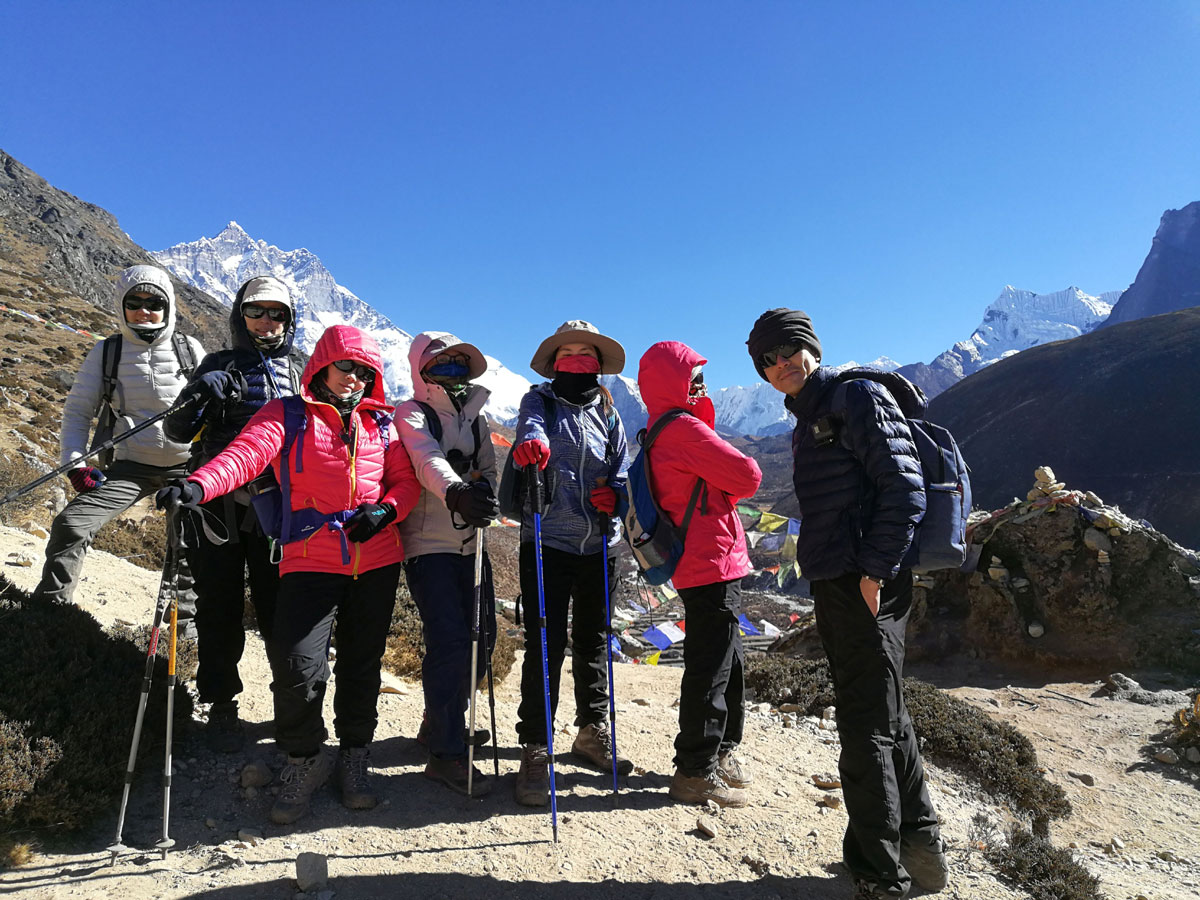
After spending two nights in Dingboche, we begin by walking gradually uphill across the open valley, with views of Taboche, Cholatse and the surrounding mountain slopes. There are fewer settlements and almost no trees along this part of the route. The walking is relatively gentle at first, but the exposed landscape offers little shelter when the wind picks up. We normally keep a comfortable pace because the main climb of the day is still ahead.
Thukla, also known as Dughla, is a small stopping point below the steep ascent toward the memorial ridge. We often use this area for a break before continuing uphill. The trail becomes noticeably steeper after Thukla, climbing over rocky ground toward the ridge above. At this elevation, trekkers who managed longer climbs comfortably in the lower Khumbu may find themselves taking shorter steps and stopping more frequently. We allow time for the climb rather than expecting everyone to reach the top together.
At the top of the climb, we reach the Thukla memorial area, where stone monuments and prayer flags commemorate climbers and Sherpa mountaineers who lost their lives in the Himalayas. It is one of the more sobering places along the Everest Base Camp trail. We normally give trekkers time to walk among the memorials and reflect before continuing. The setting also reminds us that the mountains surrounding this route have a long history of climbing, achievement and loss.
Beyond the memorial ridge, the steepest climb is behind us, but there is still a stretch of exposed, rocky trail to Lobuche. The route follows high terrain near the Khumbu Glacier's lateral moraine, with increasingly close views of the surrounding peaks. Although the gradient becomes more manageable, the altitude can make the final approach feel longer than expected. We continue steadily until the lodges of Lobuche come into view.
At approximately 4,940 m, Lobuche is our highest overnight stop so far. Accommodation here is generally more basic than in Namche or Dingboche, and cold evenings are common. After reaching the lodge, we encourage trekkers to change into warm clothing, eat properly and tell the guide about any unusual symptoms. The following morning, we continue toward Gorak Shep, the final lodge settlement before Everest Base Camp. From there, the journey changes again because reaching the lodge is only the first part of the day's plan.
Lobuche to Gorak Shep
The trek from Lobuche (approximately 4,940 m) to Gorak Shep (5,160 m) covers around 4–5 km and usually takes 2–3 hours. Although it is one of the shortest walking stages of the Everest Base Camp trek, the trail crosses rough, rocky terrain above 5,000 metres. Gorak Shep is the last lodge settlement on the standard route and the starting point for the walk to Everest Base Camp and the climb to Kala Patthar.
After leaving Lobuche, we follow the trail toward the Khumbu Glacier, gradually gaining elevation across the upper valley. The path becomes increasingly uneven, with loose stones, rocky slopes and short uphill and downhill sections. Some parts require more attention to footing than the trails below Dingboche. We keep a steady pace and allow extra time where the ground is difficult, particularly if there is snow or ice along the route.
This section can feel surprisingly slow despite the short distance. Our trekkers have already spent a night close to 5,000 metres, and the trail now takes them even higher. The mountains and glacial landscape are impressive, but there is little shelter from the wind. We make sure everyone has warm layers and drinking water easily accessible rather than packed away in the main trekking luggage.
Gorak Shep is a small settlement surrounded by high mountains and glacial terrain, with basic teahouses providing accommodation for trekkers. It is very different from the larger settlements we passed earlier in the Khumbu. Rooms and facilities are simple, and the cold can become noticeable once we stop walking. This is also the highest place where we normally spend the night on the classic Everest Base Camp route.
When we arrive, we first get everyone settled at the lodge and check how they are feeling after the walk from Lobuche. The main trekking luggage stays here while trekkers prepare their daypacks for the journey to Base Camp. Depending on our arrival time, we may have lunch or take a short break before continuing. However, we do not automatically set out simply because we have reached Gorak Shep. The guide must consider each trekker's condition, the weather and whether there is enough daylight to complete the return safely.
For the standard teahouse trek, Gorak Shep is where we sleep, not Everest Base Camp. Reaching the lodge completes only the first part of the day's walking. If conditions allow, we continue toward Everest Base Camp at 5,364 m and return to Gorak Shep afterward. This final outing takes us beyond the last settlement and onto the rocky trail beside the Khumbu Glacier, where the main objective of the journey is finally within reach.
Gorak Shep to Everest Base Camp: How to Reach EBC
The walk from Gorak Shep (approximately 5,160 m) to Everest Base Camp (5,364 m) covers roughly 3.5–5 km each way and usually takes 2–3 hours in each direction. The complete return walk normally requires around 4–6 hours, excluding longer stops. Although the elevation difference is only about 200 metres, the trail crosses uneven glacial terrain above 5,000 metres, making this final approach more demanding than the distance might suggest.
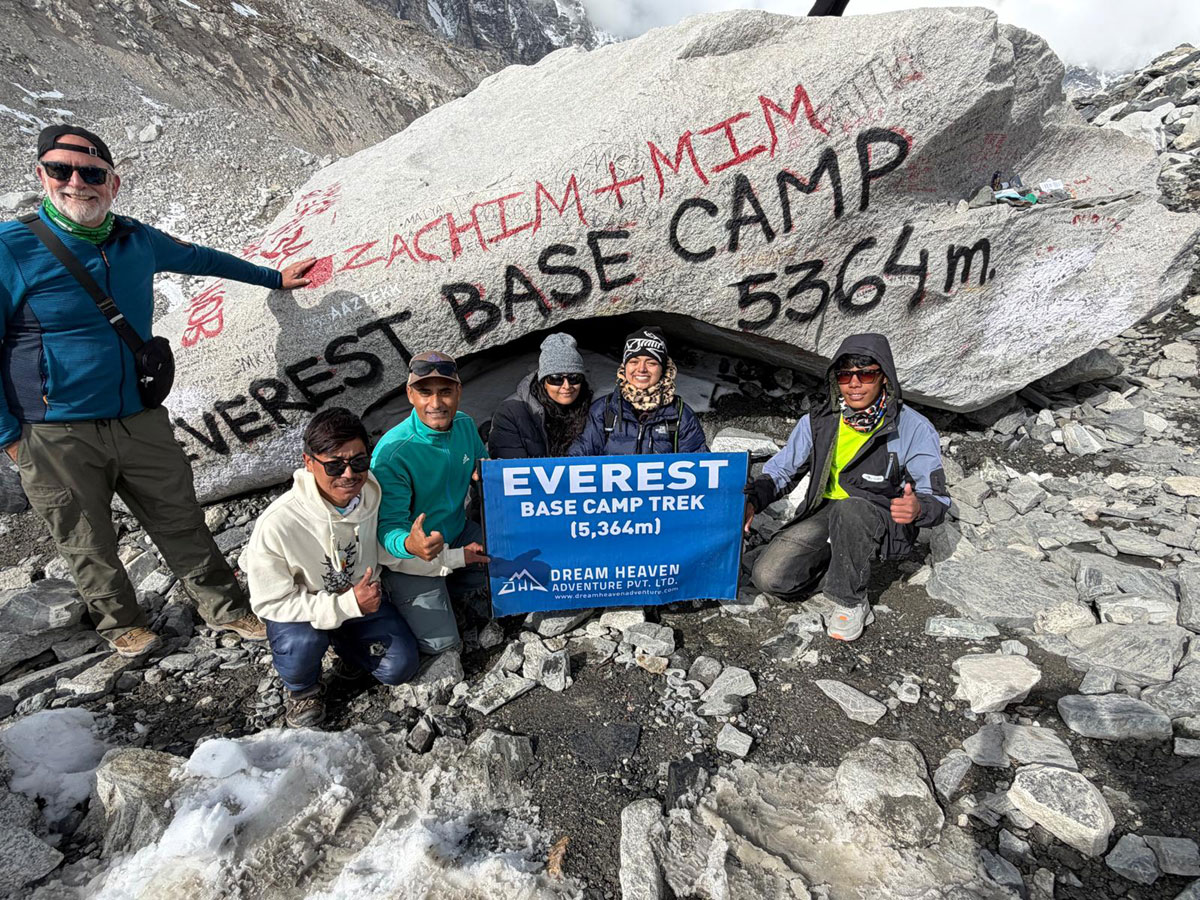
On our standard itinerary, we reach Gorak Shep from Lobuche earlier in the day and prepare for the Base Camp walk after settling into the lodge. We normally allow time for something to eat, drinking water and any extra clothing needed for the afternoon. The main trekking luggage stays at Gorak Shep. Before setting out, our guide checks how everyone is feeling and considers the weather, available daylight and conditions along the route. Reaching Base Camp is our main objective, but we do not continue if the conditions make the outing unsafe.
Leaving Gorak Shep, we follow the rocky trail alongside the Khumbu Glacier. The route is not a continuous climb. It rises and falls across loose stones, moraine ridges and uneven ground, with sections where trekkers need to pay close attention to their footing. The surrounding landscape is very different from the villages and forest trails of the lower Khumbu. Here, the glacier and high mountain walls dominate the view, with Nuptse rising ahead and the Khumbu Icefall becoming more visible as we approach Base Camp.
The final approach brings us to the Everest Base Camp area, where trekkers usually stop near the familiar Base Camp marker for photographs. The exact appearance of this area changes with the season and conditions on the glacier. During the main spring climbing season, especially April and May, expedition tents may spread across parts of Base Camp as climbing teams prepare for Everest. In autumn, the area is generally much quieter, and the same stopping point can look very different from photographs taken during the climbing season.
For many of our trekkers, arriving at Base Camp is the moment they have been thinking about since leaving Lukla. After days of walking through the Khumbu, they are finally standing beside the glacier at the foot of the Everest climbing route. Some are eager to take photographs immediately, while others prefer to spend a few minutes looking around. We allow time for both when conditions permit. The Khumbu Icefall and surrounding mountains are impressive from here, although the summit of Mount Everest is not clearly visible from the usual trekking stopping point.
Our guide also keeps the return journey in mind while the group is at Base Camp. At this elevation, the weather can change quickly, and standing still for photographs can become uncomfortable when the wind increases or temperatures drop. We do not remain longer than conditions allow. Once everyone is ready, we retrace the rocky trail toward Gorak Shep, covering much of the same uneven ground that brought us to Base Camp. The return still requires attention, particularly after the effort of the morning walk from Lobuche.
Only when we reach Gorak Shep again is the Everest Base Camp outing complete. We return to the lodge for the night, with the main objective of the trek behind us but more walking still ahead. If conditions and the group's health allow, the next planned outing is the climb to Kala Patthar for a higher viewpoint of Mount Everest. After that, we begin the longer descent through the Khumbu toward Lukla, where the walking journey originally began.
Everest Base Camp vs Kala Patthar
Everest Base Camp (5,364 m) and Kala Patthar (approximately 5,545 m) offer two different experiences on the classic Everest Base Camp trek from Lukla. Base Camp is where trekkers reach the foot of the Everest climbing route beside the Khumbu Glacier, while Kala Patthar is the high viewpoint above Gorak Shep where they can see Mount Everest's summit much more clearly. We include both because standing at Base Camp and looking across toward Everest from a higher viewpoint are not the same experience.
One thing that surprises some of our trekkers is that reaching Everest Base Camp does not provide the wide, open view of Everest they may have imagined. From the usual trekking stopping point, the summit is hidden by the surrounding mountain terrain, particularly Nuptse. Kala Patthar offers a different perspective. From its elevated position on the slopes of Pumori, trekkers can look toward Everest, Nuptse, Lhotse and the Khumbu Glacier below when visibility is good.
The Kala Patthar climb starts from Gorak Shep at approximately 5,160 m. The trail climbs steeply over rocky ground toward the viewpoint, usually taking around 1.5–2.5 hours uphill, with additional time needed to return. There is no teahouse or overnight settlement at the top. Although the climb does not require technical mountaineering skills under normal conditions, it is demanding because trekkers are already above 5,000 metres and continue gaining elevation with relatively little oxygen available compared with lower altitudes.
On our standard itinerary, we normally attempt Kala Patthar early in the morning after visiting Everest Base Camp the previous day. Starting before sunrise can offer beautiful morning views, but it also means walking in darkness and potentially freezing temperatures. We make sure trekkers have suitable warm clothing and headlamps before leaving Gorak Shep. The climb comes after several days of trekking at high altitude, so we allow enough time for everyone to move at a manageable pace rather than treating the viewpoint as a quick morning walk.
We also explain that reaching Kala Patthar depends on the conditions that morning. Strong wind, snowfall, poor visibility or a trekker's health may make the climb unsuitable. Even when the trail is accessible, clouds can hide Everest and the surrounding mountains. We would rather adjust the plan than push someone higher simply because the viewpoint is included in the itinerary. When conditions are clear, however, the view from Kala Patthar is one of the main reasons many trekkers consider the additional climb worthwhile.
After descending from Kala Patthar, we return to Gorak Shep, collect our trekking luggage and prepare for the journey toward lower elevations. On our standard route, we continue down through Lobuche and Thukla toward Pheriche before eventually returning to Namche Bazaar and Lukla. Everest Base Camp is the main destination of the trek, while Kala Patthar provides the elevated view of Mount Everest. Once both outings are complete, the focus shifts from gaining altitude to making the return journey safely through the Khumbu.
Why Does the Return from Everest Base Camp to Lukla Take Fewer Days?
The return from Everest Base Camp to Lukla takes fewer days mainly because trekkers are descending to lower sleeping elevations and no longer need the acclimatization stops included during the ascent. On our standard route, we spend several days progressing through Namche Bazaar, Tengboche and Dingboche before reaching Gorak Shep and Everest Base Camp. Once the highest part of the trek is complete, we can cover the return journey in fewer stages without repeating those extra nights.
On the way up, the itinerary is planned around gradual altitude gain rather than simply covering distance. We spend two nights in Namche Bazaar and another two in Dingboche, allowing time for acclimatization before continuing higher. These stops are important because the body needs time to adjust as sleeping elevations increase. On the return, we are moving in the opposite direction, so we do not need to follow the same overnight pattern.
For travelers comparing overall trip durations, our guide to the Everest Base Camp Trek 12 Days vs 14 Days explains how Kathmandu accommodation and travel arrangements can affect the package length without changing the walking route.
The daily walking stages also change. For example, after visiting Everest Base Camp and Kala Patthar, we normally descend from Gorak Shep through Lobuche and Thukla to Pheriche. We do not need to spend another night in Lobuche simply because we stayed there on the way up. Similarly, the following stages can take us from Pheriche to Namche Bazaar and then from Namche to Lukla, provided the group is well enough and conditions allow.
However, fewer trekking days do not necessarily mean easier walking. By this point, our trekkers have spent many days on the trail, including the demanding sections around Lobuche, Gorak Shep and Everest Base Camp. Longer descents can be tiring on the knees and legs, especially over stone steps and uneven ground. The return route also includes several uphill sections, even though we are losing elevation overall.
For our guides, the priority is not to reach Lukla as quickly as possible. We consider how everyone has recovered from the highest days, whether they are comfortable with the longer walking stages and how much daylight remains. If someone is struggling or the weather affects the trail, we may need to adjust the planned overnight stop. Returning to lower altitude generally reduces the need for further acclimatization, but it does not remove the need to manage the trek carefully.
This is why the Lukla-to-Lukla Everest Base Camp itinerary is longer on the ascent than on the descent. The journey toward Base Camp requires a gradual increase in sleeping elevation and planned acclimatization days. The return usually takes fewer days because we are descending and can combine some of the shorter stages used on the way up. The trekking route is not finished, however, until we walk back into Lukla.
Does the Everest Base Camp Trek Return on the Same Trail?
Yes. The classic Everest Base Camp trek from Lukla returns along much of the same trail used on the way up, but the route is not completely identical. After visiting Everest Base Camp and Kala Patthar, we descend through the Khumbu rather than crossing another high mountain pass to complete a separate circuit. Most of the main trail is retraced, with some variations between the outward and return journeys.
One important difference on our standard itinerary is the route through Dingboche and Pheriche. On the way up, we walk from Tengboche through Pangboche to Dingboche before continuing toward Lobuche. On the return, we normally descend from Gorak Shep through Lobuche and Thukla toward Pheriche, which lies on a different branch of the valley. The trails reconnect near the Pangboche area before we continue through Tengboche and Namche Bazaar toward Lukla.
Although much of the route is familiar, walking it in the opposite direction can feel quite different. The steep climb toward Namche that demanded considerable effort early in the trek becomes a long descent on the return. Around Tengboche and Phunki Tenga, the situation reverses again. We descend toward the river but still have to climb before reaching the trail toward Namche. This is why we remind trekkers that the return journey is not entirely downhill, even though we are losing elevation overall.
The scenery also changes when we walk south through the Khumbu. Mountain views appear from different angles, and villages that were unfamiliar during the ascent become recognizable places on the way back. We often find that trekkers pay attention to different parts of the landscape during the descent because they are no longer concentrating on reaching the next higher overnight stop. The suspension bridges, forest trails and settlements of the lower Khumbu can feel surprisingly different when approached from the opposite direction.
For this reason, we describe the Everest Base Camp trek as a largely out-and-back route from Lukla rather than a complete trekking circuit. Returning along familiar trails does not mean repeating the same overnight stops or walking experience. On our usual itinerary, we descend via Pheriche and Namche Bazaar before completing the journey on foot in Lukla, where the trek began.
Gorak Shep to Lukla via Pheriche and Namche: Completing the Return Journey
After visiting Everest Base Camp and, when conditions allow, climbing Kala Patthar, we begin the return journey from Gorak Shep to Lukla. On our standard route, we descend through Pheriche (4,370 m) and Namche Bazaar (3,440 m) before finishing the trek in Lukla (2,860 m). The return normally takes three walking days from Gorak Shep, with longer daily stages than on the ascent because we no longer need the same acclimatization stops.
For trekkers who want to complete the journey to Everest Base Camp and Kala Patthar but prefer not to walk the entire return route, our Everest Base Camp Trek with Helicopter Return replaces the descent to Lukla with a helicopter flight from Gorak Shep, subject to suitable flying conditions.
Gorak Shep to Pheriche
After the Kala Patthar climb, we return to Gorak Shep, collect our trekking luggage and begin descending toward Pheriche. The walk from Gorak Shep to Pheriche usually takes around 5–7 hours, excluding the morning Kala Patthar climb. We retrace the rocky trail toward Lobuche before continuing down to the memorial area above Thukla. The steep slope that took considerable effort to climb on the way up is now behind us as we descend toward the lower valley.
Below Thukla, we follow the trail toward Pheriche rather than returning through Dingboche, where we spent two nights during the ascent. The route opens into a broad valley surrounded by high mountain slopes, with Pheriche lying at approximately 4,370 m. This is our first overnight stop after leaving Gorak Shep, and the substantial drop in elevation can feel welcome after several nights above 4,000 metres.
The descent still requires care, especially after the early climb to Kala Patthar. By this point, our trekkers have already completed the demanding upper sections of the Everest Base Camp route. We keep an eye on how everyone is handling the rocky ground and longer downhill walking rather than assuming that losing elevation makes the day easy. Once we reach Pheriche, we settle into the lodge and prepare for another long walking day toward Namche Bazaar.
Pheriche to Namche Bazaar
The trek from Pheriche to Namche Bazaar usually takes around 6–8 hours, making it one of the longer return stages. We leave the open valley around Pheriche and continue toward Pangboche, where the return route reconnects with the trail we followed earlier in the trek. As we descend, the surroundings gradually change from exposed alpine terrain to the greener landscape around Deboche and Tengboche.
After passing through the Tengboche area, we descend toward Phunki Tenga and cross the Dudh Koshi before climbing again toward Kyangjuma. This is one section where trekkers sometimes underestimate the remaining effort. We have already lost considerable elevation, but the climb from the river still has to be completed before the easier mountainside trail leads us back toward Namche.
Returning to Namche Bazaar feels different from arriving here at the beginning of the trek. The shops, lodges and busy streets are familiar now, and we are back at a considerably lower elevation than Gorak Shep. After the quieter villages of the upper Khumbu, Namche can feel surprisingly lively. We spend the night here before making the final walk to Lukla the following day.
Namche Bazaar to Lukla
The final walking day from Namche Bazaar to Lukla covers approximately 18–19 km and usually takes 6–8 hours. We begin by descending the steep trail from Namche toward the Dudh Koshi, crossing the suspension bridges and continuing through Jorsalle and Monjo. This is the same lower Khumbu route we followed during the first two days of the trek, but we are now approaching the villages from the opposite direction.
Beyond Monjo, the trail continues through settlements such as Benkar and Phakding before heading toward Lukla. There are still several short climbs and descents along the way. The final approach to Lukla involves gaining elevation again, which can be tiring after a long day of walking. We normally remind our trekkers that reaching the lower valley does not mean the uphill sections are finished.
Walking back into Lukla completes the trekking journey that began here. The porters bring in the main luggage, we settle into our accommodation and prepare for the flight out of the mountains. After days of walking through the Khumbu, reaching Everest Base Camp, climbing toward Kala Patthar and returning through the same valleys, the group is finally back where the journey started.
The walking part of our Everest Base Camp trek from Lukla ends here. However, leaving the Everest region still depends on the flight operating. Mountain weather can delay departures even when the trek itself has gone exactly according to plan, which is why we always encourage travelers to allow some flexibility before their international flight home.
What Happens If Your Flight To or From Lukla Is Delayed?
Lukla flights can be delayed or cancelled because of cloud, fog, wind and changing mountain weather. A delay before reaching Lukla can postpone the start of the Everest Base Camp trek, while a cancelled return flight can leave trekkers waiting in Lukla after completing the walking journey. Delays sometimes last only a few hours, but poor weather can also interrupt flights for several days.
For our team at Dream Heaven Adventure, flight arrangements are an important part of organizing the Everest Base Camp trek. We monitor the operating situation, stay in contact with the airline and coordinate with our guides and trekkers when schedules change. However, a confirmed flight ticket does not guarantee departure if the weather or airport conditions are unsuitable.
If the Flight to Lukla Is Delayed
When the flight to Lukla is delayed, we first check whether the aircraft may still operate later that day. Mountain weather can change quickly, and a delayed morning departure does not always mean the flight has been cancelled. At the same time, we avoid giving trekkers an expected departure time until the airline confirms what is possible.
If the group reaches Lukla later than planned, we consider the remaining daylight before beginning the walk to Phakding. The first trekking stage is relatively short, but we still need enough time to organize the luggage and complete the walk safely. If the flight cannot operate that day, we review the itinerary and available alternatives rather than simply trying to recover the lost time by walking faster.
One important point is that we do not remove the planned acclimatization days in Namche Bazaar or Dingboche just to make up for a delayed flight. Those stops are included to support a gradual increase in sleeping elevation. Depending on the length of the delay and the traveler's available time, adjustments to the wider schedule may be necessary. We discuss the practical options with the trekker before changing the plan.
If the Flight Out of Lukla Is Delayed
A return flight delay is different because the walking journey has already been completed. The group has reached Everest Base Camp, returned through the Khumbu and arrived back in Lukla, but they still need suitable flying conditions to leave the mountains.
If the scheduled flight cannot operate, our team checks the airline's updated arrangements and available seats. Depending on the situation, trekkers may need to spend another night in Lukla while waiting for the next opportunity to fly. When several days of poor weather affect flights, a backlog of passengers can develop, so improved weather does not necessarily mean everyone can leave immediately.
We keep trekkers informed about the available arrangements and any additional costs before making changes. Extra accommodation, meals, rebooking arrangements or alternative transport may involve expenses that depend on the booking terms and circumstances. This is something we prefer travelers to understand before beginning the trek rather than discovering it only after a flight disruption.
Travelers planning to trek with others can also explore our group join Everest Base Camp trek guide for information about shared departures and the standard trekking itinerary.
Is a Helicopter an Automatic Backup?
A helicopter can sometimes provide an alternative when regular Lukla flights are disrupted, but it is not a guaranteed solution to bad weather. Helicopters and fixed-wing aircraft have different operating capabilities, yet both depend on suitable visibility, weather and safe flying conditions.
When a helicopter option is available, we explain the current cost, seating arrangements and operating conditions before the trekker makes a decision. Helicopter flights generally involve an additional expense, and the price can vary depending on availability, passenger numbers and the route being operated. We do not promise that a helicopter can depart simply because scheduled flights have stopped.
For travelers who prefer to avoid depending on a scheduled Lukla flight, our Everest Base Camp Trek via Salleri uses road transport to reach the lower Solu region before joining the trekking route toward Everest Base Camp.
Kathmandu or Ramechhap: Why We Reconfirm the Flight Plan
Not every Everest Base Camp trek begins with a direct flight from Kathmandu to Lukla. During busy trekking seasons, particularly in spring and autumn, many Lukla flights operate from Manthali Airport in Ramechhap instead of Kathmandu. When this arrangement applies, trekkers must first travel by road from Kathmandu to Ramechhap before boarding the flight to Lukla.
The road journey to Ramechhap commonly takes around 4–6 hours, depending on traffic, road conditions and the route used. For early-morning flights, this can mean leaving Kathmandu during the night or arranging accommodation near the airport the previous evening. The return journey may also involve flying from Lukla to Ramechhap and then travelling back to Kathmandu by road.
Because flight arrangements can change between seasons, we reconfirm the departure airport and transfer plan before the trek. We do not want trekkers relying on an old flight schedule or assuming they will depart from Kathmandu when their ticket is actually connected with Ramechhap.
Why We Prefer Some Time After the Expected Lukla Return
We recommend keeping at least two spare days between the expected flight out of Lukla and an international departure whenever the travel schedule allows. This does not guarantee that every disruption can be covered, but it provides some flexibility if flights are delayed by weather or operational problems. Travelers with particularly important onward connections may prefer additional time.
Our guides can manage walking stages, our Kathmandu team can coordinate accommodation and transport, and the group can complete the trek according to schedule. What we cannot control is whether the weather will allow aircraft to operate on the planned day. For that reason, we prefer to discuss the complete Nepal travel schedule with trekkers rather than looking only at the dates they intend to spend on the trail.
Returning to Lukla completes the walking part of the Everest Base Camp trek from Lukla, but the journey out of the mountains depends on the flight operating safely. Our responsibility is to monitor the situation, communicate the available options and help coordinate the necessary arrangements when the original travel plan changes.