Equipment for the Langtang Valley Trek
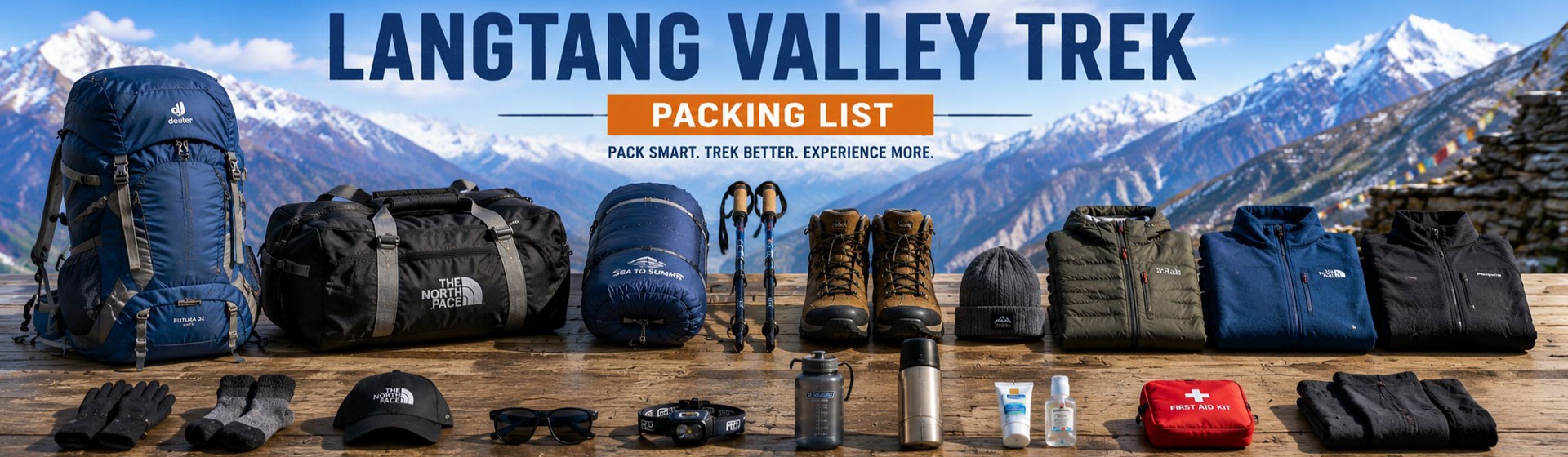
Some of the smallest pieces of equipment are often the ones trekkers appreciate most once they are on the trail. A pair of trekking poles can make long descents easier, a headlamp becomes invaluable during an early morning start or an unexpected power cut, and carrying a simple water purification system means you do not have to rely on bottled water throughout the journey.
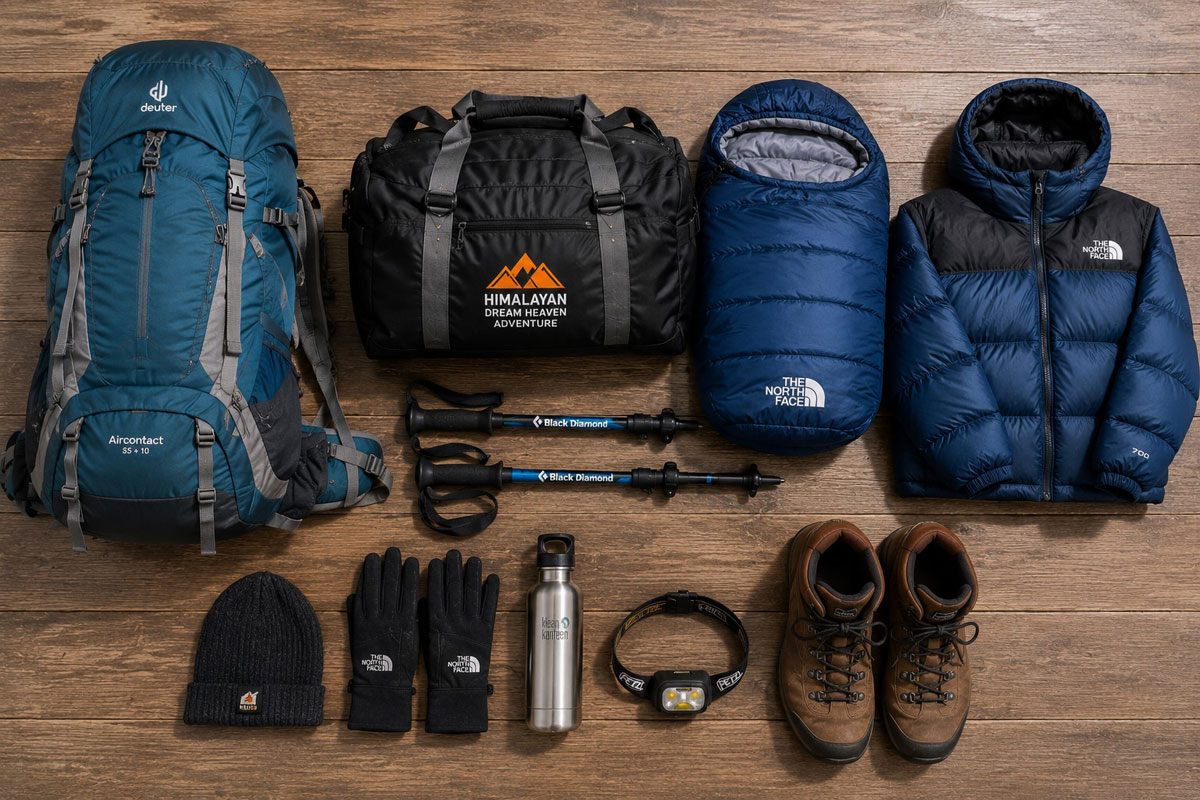
Most trekkers only need a small collection of dependable equipment. The items below are the ones we consistently recommend because they improve comfort, safety, and convenience without adding unnecessary weight. Choosing practical gear instead of packing unnecessary accessories will make your Langtang Valley Trek more enjoyable from the first day to the last.
Trekking Poles
Trekking poles are one of the most valuable pieces of equipment for the Langtang Valley Trek. They improve balance on rocky trails, reduce pressure on your knees during long descents, and provide extra stability on stone staircases, suspension bridges, and uneven sections of the route.
Adjustable poles are the best choice because they can be shortened for uphill climbs and lengthened for descents. If you are not bringing your own, trekking poles are widely available to rent or purchase in Kathmandu before your trek begins.
Headlamp
A headlamp is an essential item, even if you do not expect to walk after dark. It is useful during early morning starts, temporary power cuts in tea houses, or whenever you need reliable hands-free lighting.
Choose a lightweight LED headlamp with fresh batteries or a fully charged rechargeable battery before leaving Kathmandu.
Sunglasses
The Himalayan sun becomes noticeably stronger as you gain altitude, and bright conditions can be even more intense when sunlight reflects from snow during winter or early spring. A quality pair of sunglasses with full UV protection protects your eyes while making long days on exposed trails much more comfortable.
Water Bottles
Staying well hydrated is one of the simplest ways to support your energy levels at altitude. Most trekkers carry either two one-litre water bottles or a hydration bladder with a similar capacity.
Wide-mouth bottles are particularly practical because they are easier to fill with hot drinking water available at tea houses during colder months.
Water Purification
Instead of buying bottled water every day, carry a reliable water purification system. Purification tablets, liquid drops, or compact water filters allow you to safely treat drinking water while reducing plastic waste and lowering your daily trekking costs.
This is one of the easiest ways to trek more responsibly while ensuring you always have access to safe drinking water.
Microspikes (When Needed)
Microspikes are not necessary for most Langtang Valley Trek departures during spring or autumn. However, they can become useful if fresh snowfall or icy sections develop during winter or early spring.
Whether microspikes are recommended depends on current trail conditions rather than the season alone. If conditions change, your trekking company or guide will normally advise you before the trek begins or while you are on the trail.
Thermos (Winter)
A lightweight thermos is optional during spring and autumn but highly recommended for winter treks. Carrying hot water, tea, or soup helps you stay warm during long walking days, particularly on cold mornings and at higher elevations where temperatures often remain below freezing.
Do You Need Special Trekking Gear for the Langtang Valley Trek?
For most trekkers, the answer is no. The Langtang Valley Trek does not require mountaineering equipment or previous climbing experience. The trail follows established walking routes with tea houses throughout the journey, so your comfort depends far more on choosing practical clothing and reliable trekking gear than on carrying expensive technical equipment.
If we could recommend only a few essentials before every Langtang departure, they would be well-fitting hiking boots that have already been broken in, layered clothing that can be adjusted as temperatures change, a quality waterproof jacket, a warm down jacket for higher elevations, and a comfortable daypack. These items have a much greater impact on your trekking experience than buying the latest or most expensive outdoor gear.
Before leaving Kathmandu, our guides check each trekker's equipment because the same small problems appear on almost every departure. New hiking boots that have never been worn, cotton clothing that stays damp after rain or sweat, oversized backpacks filled with unnecessary items, and waterproof jackets that are no longer waterproof are far more common than people expect. Simple adjustments before the trek often prevent discomfort during the first few days on the trail.
The equipment you need also changes with the season. Spring and autumn usually offer the most stable trekking conditions, although mornings and evenings around Kyanjin Gompa can still be cold. During the monsoon season, waterproof clothing, backpack rain covers, and quick-drying layers become much more important. Winter trekkers should carry warmer gloves, additional thermal layers, thicker socks, and better insulation to stay comfortable when temperatures fall below freezing.
One question we are frequently asked is whether trekkers need technical equipment such as crampons, ice axes, climbing ropes, or helmets. Under normal conditions, the answer is no. The Langtang Valley Trek is a classic Himalayan tea house trek rather than a climbing expedition. However, after fresh snowfall or icy conditions in winter, our guides may recommend lightweight microspikes for extra grip on sections around Kyanjin Gompa or when hiking to viewpoints such as Kyanjin Ri. These provide additional traction but are not technical climbing equipment.
Many international trekkers also worry about bringing every piece of equipment from home. In practice, this is rarely necessary. Kathmandu has numerous trekking shops where you can rent or buy quality essentials, including down jackets, sleeping bags, trekking poles, duffel bags, and seasonal items such as microspikes. Renting equipment is often a sensible choice for trekkers who want to travel with lighter luggage or who are unlikely to use the gear again after returning home.
The goal is not to own more equipment than other trekkers. It is to carry gear that matches the season, fits properly, and allows you to walk comfortably day after day. In our experience, a lighter backpack, suitable clothing, and dependable footwear contribute far more to an enjoyable Langtang Valley Trek than carrying unnecessary gear that never leaves your bag.
Clothing Checklist for the Langtang Trek
When our guides check equipment before a Langtang Trek departure, clothing is usually where first-time trekkers either overpack or underprepare. Some arrive with far more clothes than they ever wear, while others forget warm layers for higher elevations or bring cotton clothing that stays damp after a long day of walking. In most cases, staying comfortable on the trail is not about carrying more clothing. It is about wearing the right layers at the right time.
The Langtang Trek passes through several climate zones in just a few days. Lower sections of the trail can feel warm during the day, while mornings and evenings around Langtang Village and Kyanjin Gompa are often cold, even in spring and autumn. Mountain weather can also change quickly, so your clothing should work as a simple layering system that allows you to add or remove layers as conditions change throughout the day.
Base Layers
A moisture-wicking base layer is worn next to your skin and helps regulate body temperature by moving sweat away from your body. Merino wool or quality synthetic fabrics are the best choice because they dry quickly and continue to keep you comfortable during long walking days.
We recommend packing:
- 2 lightweight base layer tops
- 1 thermal top for colder mornings and evenings
- 1 thermal bottom during winter or for trekkers who feel cold easily
Avoid cotton base layers, as they absorb moisture and take much longer to dry.
Trekking Shirts
Quick-drying trekking shirts are ideal for everyday walking. Long-sleeved shirts provide extra protection from the strong Himalayan sun while also reducing exposure to insects on the lower parts of the trail. Two or three trekking shirts are usually sufficient for the entire journey.
Hiking Trousers
Lightweight hiking trousers are much more comfortable than jeans or casual trousers because they dry faster, allow better movement, and remain comfortable throughout long trekking days. Convertible trousers can also be useful during warmer months.
One or two pairs are generally all you need.
Fleece Jacket
A lightweight fleece is one of the most frequently used layers on the Langtang Trek. Many trekkers wear it during cool mornings, lunch stops, and evenings inside the tea houses. It also works well underneath a down jacket when temperatures become colder at higher elevations.
Down Jacket
A warm down jacket becomes increasingly important as you climb higher towards Langtang Village and Kyanjin Gompa. Even during the main trekking seasons, temperatures can drop quickly after sunset or before sunrise.
If you do not already own a suitable down jacket, renting one in Kathmandu is usually a practical and cost-effective option.
Waterproof Jacket
A reliable waterproof jacket should be in every trekker's backpack, regardless of the season. Short afternoon showers can occur even during spring and autumn, while the monsoon season brings more prolonged rainfall. Choose a jacket that is waterproof, wind-resistant, and large enough to fit comfortably over your insulating layers.
Waterproof Trousers
Many trekkers use waterproof trousers only occasionally, but they are invaluable during prolonged rain, strong wind, or cold conditions. They pack down small and add an extra layer of protection whenever the weather changes unexpectedly.
Thermal Underwear
Thermal tops and bottoms provide valuable warmth during cold evenings, early morning starts, and overnight stays at higher elevations. They also make comfortable sleepwear inside tea houses.
Gloves
Cold hands can quickly become uncomfortable as you gain altitude. Lightweight insulated gloves are suitable for spring and autumn, while warmer waterproof gloves are recommended for winter departures.
Warm Hat
A warm beanie or wool hat is one of the simplest ways to stay comfortable during cold mornings and evenings. It takes up very little space but provides noticeable warmth when temperatures drop.
Sun Hat
The Himalayan sun is much stronger than many first-time trekkers expect. A lightweight trekking cap or wide-brimmed hat helps protect your face and neck during long hours of walking.
Buff or Neck Gaiter
A buff is one of the most versatile items you can carry. It helps protect your neck from cold winds, reduces dust during dry conditions, provides extra warmth on chilly mornings, and can also be worn as a lightweight hat if needed.
Socks
Good trekking socks are just as important as good hiking boots. Quality wool or synthetic hiking socks reduce friction, improve comfort, and help prevent blisters during consecutive trekking days.
We recommend packing:
- 3 to 4 pairs of trekking socks
- 1 to 2 pairs of warm socks for evenings and sleeping
- Underwear
Choose lightweight, quick-drying underwear designed for active travel. Four or five pairs are normally enough, as small items can often be hand-washed and dried at tea houses when weather conditions allow.
Best Footwear for the Langtang Trek
Choosing the right footwear will have a greater impact on your comfort than almost any other piece of equipment you pack. Before every Langtang Trek departure, one of the first things our guides check is each trekker's footwear because it is often where small problems become bigger ones on the trail. Boots that have never been broken in, worn-out soles with poor grip, or footwear that does not fit properly are far more likely to cause discomfort than forgetting an extra layer of clothing.
The Langtang Trek crosses forest trails, stone staircases, suspension bridges, rocky paths, and glacial moraine sections near Kyanjin Gompa. Trail conditions also change throughout the year, so your footwear should provide comfort, stability, and dependable grip rather than simply following the latest outdoor gear trends.
Hiking Boots
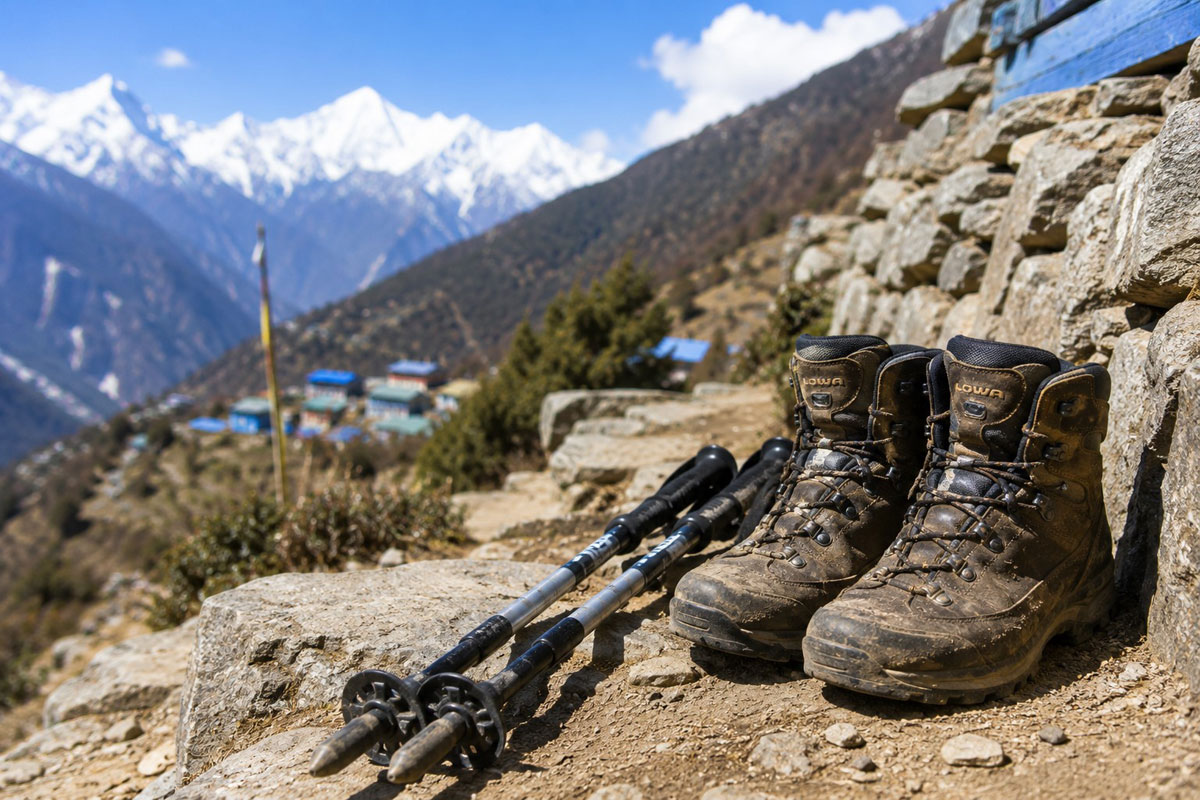
A pair of mid- or high-cut hiking boots is the best choice for the Langtang Trek. Choose boots with good ankle support, a durable sole that provides reliable traction, and enough room to wear quality trekking socks without putting pressure on your toes during long descents.
The most important advice we give trekkers is simple: never start the trek with brand-new hiking boots. Wear them on several walks before arriving in Nepal so they mould naturally to your feet. A comfortable pair of well-broken-in boots is almost always a better choice than an expensive new pair worn for the first time on the trail.
Water-resistant or waterproof boots are recommended throughout the year, especially during spring and the monsoon season when sections of the trail may remain wet after rain. Even during autumn, waterproof footwear provides extra comfort when crossing damp ground or walking through early morning frost at higher elevations.
Camp Shoes
After a full day of trekking, changing into lightweight camp shoes at the tea house gives your feet a chance to recover. Comfortable sandals, lightweight trainers, or slip-on shoes are ideal for walking around the lodge, relaxing in the dining room, or stepping outside during the evening.
Camp shoes are not essential for the trail itself, but they are one of the items many trekkers tell us they are happiest they packed.
Gaiters (Seasonal)
Gaiters are not necessary for most Langtang Trek departures during spring or autumn. However, they become useful during winter when fresh snow covers parts of the trail or during the monsoon season when muddy paths and wet vegetation can soak your boots and lower trousers.
If snowfall occurs before or during your trek, our guides may also recommend lightweight gaiters together with microspikes for additional protection and confidence on slippery sections. These recommendations are always based on current trail conditions rather than the season alone. For most trekkers visiting between March and May or September and November, gaiters are usually unnecessary.
Backpack and Bags for the Langtang Valley Trek
Packing for the Langtang Valley Trek is not only about deciding what to bring but also about how you organise your equipment. Before every departure, our guides encourage trekkers to separate their gear into different bags rather than packing everything together. This simple approach makes daily trekking easier, keeps essential items within easy reach, and protects clothing and electronics if the weather changes unexpectedly.
For most trekkers, an efficient packing system consists of three bags: a duffel bag for your main trekking gear, a comfortable daypack for the items you need while walking, and a few lightweight dry bags to keep important belongings organised and protected from moisture.
Duffel Bag
If you are trekking with a porter, your main luggage should be packed in a durable duffel bag. Soft duffel bags are much more practical than hard suitcases because they fit easily into a porter's carrying system and are easier to handle during road transfers to and from the trailhead.
A 60 to 80-litre duffel bag is suitable for most Langtang trekkers. It provides enough space for clothing, your sleeping bag if you are bringing one, and the rest of your trekking equipment without encouraging unnecessary overpacking.
If you do not already own a suitable duffel bag, many trekking companies in Kathmandu can provide one for the duration of your trek or arrange a rental before departure.
Daypack
Your daypack stays with you throughout the trek, so comfort should be your priority. A 20 to 30-litre backpack is usually the ideal size for carrying everything you may need between tea houses without adding unnecessary weight.
Your daypack should normally include:
- Water bottles or a hydration bladder
- Waterproof jacket
- Fleece or extra warm layer
- Camera or mobile phone
- Sunscreen and sunglasses
- Snacks
- Personal medication
- Passport and valuables
- Power bank
Choose a backpack with padded shoulder straps, an adjustable waist belt, and a supportive back panel to improve comfort during long days on the trail.
Dry Bags
Dry bags are one of the most useful but often overlooked items for the Langtang Trek. Even on dry days, backpacks and duffel bags can become damp during road travel, river crossings, or sudden mountain showers.
Instead of using one large waterproof bag, organise your belongings into several smaller dry bags. Keeping spare clothing, electronics, important documents, and your sleeping clothes separately makes everything easier to find and provides extra protection if the outside of your luggage becomes wet.
Rain Cover
A rain cover is recommended in every trekking season, not only during the monsoon. Weather in the Langtang Valley can change quickly, and even a brief shower can leave an uncovered backpack soaked.
Many trekking backpacks include a built-in rain cover, but if yours does not, carrying a lightweight cover is a worthwhile investment. When used together with dry bags inside your backpack, it provides reliable protection for your equipment throughout the trek.
Sleeping Gear for the Langtang Trek
Tea houses on the Langtang Trek provide a bed, mattress, pillow, and blanket, but the warmth and condition of bedding can vary from one lodge to another, particularly as you gain altitude. For that reason, we always recommend carrying your own sleeping bag. It provides consistent warmth throughout the trek and removes the uncertainty of relying on extra blankets during colder nights.
Many trekkers focus on the equipment they use while walking, but quality sleep is just as important. Recovering well each night helps your body adapt to the increasing altitude, reduces fatigue, and leaves you better prepared for the next day's trek.
Sleeping Bag
A good-quality three-season sleeping bag is suitable for most Langtang Trek departures during spring and autumn. We generally recommend a bag with a comfort rating of around -5°C to -10°C, which is appropriate for overnight stays in Langtang Village and Kyanjin Gompa during the main trekking seasons.
If you are trekking during winter, colder temperatures may require a warmer sleeping bag depending on the weather forecast and expected trail conditions.
If travelling with a bulky sleeping bag is inconvenient, reliable rental options are widely available in Kathmandu before your trek begins.
Sleeping Bag Liner
A sleeping bag liner is lightweight, packs down very small, and is one of the most useful additions to your sleeping gear. It helps keep your sleeping bag clean during multi-day treks, provides a little extra warmth on colder nights, and can be used on its own during warmer evenings at lower elevations.
Although many trekkers overlook this item when packing, it is often appreciated after several consecutive nights in mountain tea houses.
Travel Pillow (Optional)
Most tea houses provide a pillow, so bringing your own is entirely optional. However, if you prefer additional neck support or simply sleep better with familiar bedding, a lightweight inflatable travel pillow can make a noticeable difference without taking up much space in your backpack.
For most trekkers, a travel pillow is a comfort item rather than an essential piece of equipment. Whether you pack one comes down to your personal sleeping preferences.
Toiletries and Personal Hygiene for the Langtang Valley Trek
Looking after your personal hygiene on the Langtang Valley Trek is not about carrying a large toiletry bag. It is about bringing a few practical items that help you stay healthy and comfortable throughout the journey. As you climb higher, tea house facilities become simpler, showers may not be available every day, and the combination of dry mountain air, strong sunlight, and dusty trails becomes more noticeable than many first-time trekkers expect.
Travel-sized toiletries are usually all you need. They reduce unnecessary weight while ensuring you have the essentials for several days on the trail.
Essential Toiletries
We recommend packing:
- Toothbrush and travel-sized toothpaste
- Biodegradable soap or body wash
- Small shampoo bottle or shampoo bar
- Deodorant
- Sunscreen (SPF 30 or higher)
- Lip balm with SPF
- Moisturiser for dry mountain air
- Hand sanitiser
- Wet wipes for occasions when showers are unavailable
- Quick-drying travel towel
- Toilet paper or pocket tissues
- Personal Hygiene Tips
Good hand hygiene is one of the simplest ways to reduce the risk of stomach problems while trekking. Wash or sanitise your hands before meals and after using the toilet whenever possible.
The mountain environment can also dry your skin and lips much faster than expected. Applying sunscreen, lip balm, and moisturiser regularly helps protect your skin from strong UV exposure, cold winds, and dry air, especially after leaving the forested lower valleys.
First Aid and Personal Medication for the Langtang Valley Trek
A personal first aid kit should be small, lightweight, and prepared for the minor problems that are most common during multi-day trekking. Blisters, headaches, muscle soreness, minor cuts, and stomach discomfort are much easier to manage when you have basic supplies with you.
While your trekking guide will normally carry a group first aid kit for emergencies, you should always pack your own personal medication and any prescription medicines you take regularly.
Recommended First Aid Kit
A practical first aid kit may include:
- Personal prescription medication
- Blister plasters or moleskin
- Adhesive bandages
- Antiseptic wipes
- Medical tape
- Sterile gauze pads
- Pain relief medication suitable for you
- Anti-inflammatory medication if appropriate for you
- Anti-diarrhoeal medication
- Oral rehydration salts
- Antihistamines for allergies
- Insect bite cream for lower elevations
- Small scissors or nail clippers
- Altitude Medication
Some trekkers discuss preventive altitude medication with their doctor before travelling to Nepal. Whether it is appropriate depends on your medical history, previous altitude experience, and professional medical advice.
If you take prescription medication, carry enough for the entire trek and keep it in your daypack rather than your main duffel bag so it remains accessible throughout the day.
Practical Advice
Store your first aid kit in a small waterproof pouch where it can be reached quickly without unpacking your entire bag. Minor issues are much easier to deal with when essential supplies are immediately available, allowing you to continue trekking comfortably without unnecessary delays.
Electronics for the Langtang Valley Trek
Electronic devices can make your Langtang Valley Trek safer, more convenient, and help you capture some of Nepal's most memorable mountain scenery. The biggest challenge is not deciding what to bring but making sure your devices remain charged throughout the journey. As you move higher into the valley, charging facilities become more limited, cold temperatures reduce battery performance, and charging your devices at tea houses usually comes with an additional fee.
For most trekkers, carrying a few dependable electronic essentials is far more practical than packing unnecessary gadgets. A lightweight setup saves space, reduces pack weight, and covers everything you need for navigation, photography, communication, and emergencies.
Power Bank
A reliable power bank is one of the most valuable electronic items for the Langtang Valley Trek. A capacity of around 10,000–20,000 mAh is usually enough to recharge a smartphone, camera, smartwatch, or other small devices between charging opportunities.
Cold weather naturally shortens battery life, particularly around Langtang Village and Kyanjin Gompa during the mornings and evenings. Keeping your power bank inside your sleeping bag overnight or in an inner jacket pocket while walking helps preserve its performance.
Charging Cables
Bring the correct charging cable for every electronic device you plan to use, together with one spare cable if possible. Forgotten or damaged cables are one of the most common packing mistakes we see before trekkers leave Kathmandu, and replacing them after your trek begins is rarely convenient.
Short charging cables are often easier to use in shared tea house dining rooms where charging points may be limited.
Camera
The Langtang Valley Trek offers exceptional photography throughout the journey, from waterfalls and rhododendron forests to traditional Tamang villages, alpine meadows, glaciers, and the spectacular mountain scenery surrounding Kyanjin Gompa.
If photography is important to you, carry at least one spare battery and sufficient memory cards for the entire trek. Spare batteries should always be stored somewhere warm, as cold temperatures can reduce their operating time much faster than many first-time trekkers expect.
Travel Adapter
Nepal commonly uses Type C, D, and M electrical sockets with a 230V power supply. A universal travel adapter allows you to charge your devices without worrying about different plug types during your stay.
If you are travelling from Australia, the United States, the United Kingdom, Europe, or most other countries, it is worth bringing your own adapter before arriving in Nepal. It is a small item that prevents unnecessary inconvenience before your trek begins.
Travel Documents and Money for the Langtang Valley Trek
Having the correct travel documents and enough local currency before leaving Kathmandu makes the Langtang Valley Trek much easier. Once your trek begins, banking facilities become extremely limited, and replacing forgotten documents or withdrawing additional cash is rarely practical. Spending a few minutes organising everything before departure can prevent unnecessary delays later on the trail.
Keep your important documents and cash in a waterproof pouch inside your daypack so they remain protected and easily accessible throughout the journey.
Passport
Carry your original passport throughout the trek, as it may be required for permit verification or identification at various checkpoints. Before leaving Kathmandu, make both a digital copy stored securely on your phone and a printed photocopy kept separately from your original passport.
Travel Insurance
Travel insurance is strongly recommended for the Langtang Valley Trek. Your policy should include high-altitude trekking, emergency medical treatment, and helicopter evacuation where available. Before travelling, check the maximum altitude covered by your policy and make sure it matches your planned itinerary.
Cash
ATMs are readily available in Kathmandu but should not be relied upon after your trek begins. Carry enough Nepalese Rupees to cover personal expenses such as drinks, snacks, charging electronic devices, hot showers where available, Wi-Fi, tips, and any unexpected purchases along the route.
Keeping your money in two separate places is a simple precaution that can be very useful if you lose your wallet or daypack.
Trekking Permits
The Langtang Valley Trek requires the appropriate trekking permits before entering the national park. Most trekkers arrange these permits through their trekking company before departure, allowing them to begin the trek without unnecessary paperwork or delays.
Seasonal Packing Guide for the Langtang Valley Trek
The core packing list remains much the same throughout the year, but each trekking season brings different weather conditions. Making a few seasonal adjustments helps you stay comfortable without carrying equipment you are unlikely to use.
Spring (March to May)
Spring is one of the best seasons for the Langtang Valley Trek. Temperatures are generally comfortable, rhododendron forests are in bloom, and mountain views are often excellent.
We recommend adding:
- Lightweight down jacket
- Light gloves
- Sunglasses
- Sunscreen
- Waterproof outer layer for occasional afternoon showers
- Summer and Monsoon (June to August)
Summer trekking brings warmer temperatures, frequent rainfall, muddy trails, and higher humidity, especially in the lower valleys.
Additional items include:
- Waterproof jacket and trousers
- Backpack rain cover
- Dry bags for clothing and electronics
- Extra hiking socks
- Quick-drying clothing
- Insect repellent
- Autumn (September to November)
Autumn offers stable weather, clear mountain views, and comfortable daytime temperatures, making it the most popular trekking season.
In addition to your standard packing list, bring:
- Warm fleece
- Down jacket
- Hat and gloves for cold mornings
- Sunglasses
- Sunscreen
- Winter (December to February)
Winter conditions require warmer clothing because temperatures around Langtang Village and Kyanjin Gompa regularly fall below freezing during the night and early morning.
Additional winter equipment includes:
- Heavier insulated down jacket
- Thermal base layers
- Warm hat
- Insulated gloves
- Thick hiking socks
- Thermos flask
- Microspikes if current trail conditions require them
Regardless of the season, always check the latest weather forecast before travelling, as mountain conditions can change quickly.
Understanding the weather before you pack makes choosing the right clothing much easier, so we also recommend reading our guide to the Best Time for the Langtang Valley Trek before finalising your equipment.
What Can You Rent in Kathmandu?
One of the advantages of trekking in Nepal is that you do not need to buy every piece of equipment before your trip. Kathmandu has many reputable outdoor gear shops where trekkers can rent good-quality equipment at reasonable prices, making it easy to travel with less luggage while still having suitable gear for the mountains.
Items commonly available for rent include:
- Sleeping bags
- Down jackets
- Trekking poles
- Duffel bags
- Gaiters
- Microspikes when seasonal trail conditions require them
Renting equipment is particularly useful if you trek only occasionally or prefer not to travel internationally with bulky gear.
Before renting any equipment, check that zips, buckles, straps, and insulation are all in good condition and make sure every item fits comfortably. Well-maintained equipment performs better on the trail and contributes to a safer, more comfortable trekking experience.
What Should You Leave at Home?
One of the biggest mistakes first-time trekkers make is packing far more than they actually need. Every unnecessary kilogram becomes more noticeable after several consecutive days of walking, particularly on long climbs between villages. A lighter backpack improves comfort, reduces fatigue, and allows you to enjoy the journey instead of constantly thinking about the weight you are carrying.
Before closing your backpack, ask yourself whether each item is likely to be used during the trek. If the answer is no, leave it in Kathmandu.
Items we commonly recommend leaving behind include:
- Large suitcases or hard-shell luggage
- Multiple heavy jackets or duplicate clothing
- Everyday casual clothes that will never be worn on the trail
- Bulky electrical appliances such as hair dryers
- Large bottles of toiletries
- Expensive jewellery and unnecessary valuables
- Heavy books or magazines
- Too many camera lenses or electronic gadgets
- Food that adds unnecessary weight without serving a clear purpose
Most trekkers finish the Langtang Valley Trek wishing they had packed a little less rather than a little more.
Travellers with limited holiday time often prefer our 5 Days Langtang Valley Trek, where packing light becomes even more important because the itinerary moves at a slightly quicker pace.
Packing Tips From Our Langtang Guides
After leading countless Langtang Valley Treks, our guides have found that successful packing is not about carrying more equipment. It is about carrying the right equipment in the right place. Small adjustments made before leaving Kathmandu often make the biggest difference once you are on the trail.
Here are the practical tips our guides share with trekkers before every departure:
- Wear your trekking boots several times before arriving in Nepal instead of breaking them in on the trail.
- Keep your waterproof jacket, warm layer, gloves, sunglasses, water bottle, snacks, and personal medication in your daypack where they can be reached quickly.
- Pack clothing inside lightweight dry bags or packing cubes so you can stay organised without unpacking everything each evening.
- Carry a reusable water bottle together with a reliable purification method instead of depending on bottled water throughout the trek.
- Store your phone, camera batteries, and power bank somewhere warm overnight, as cold temperatures reduce battery performance.
- Check the weather forecast before departure and adjust your clothing accordingly rather than packing for every possible condition.
- Keep your passport, permits, insurance details, and cash separate from your main trekking bag.
- Test every piece of equipment before leaving Kathmandu to make sure it fits comfortably and works properly.
The simplest advice we give almost every trekker is this: once you think your backpack is ready, remove a few non-essential items. You will rarely miss them, but you will appreciate carrying less weight every day.
Printable Langtang Valley Trek Packing Checklist
Use this checklist before leaving Kathmandu to make sure nothing important has been forgotten.
Clothing
☐ Moisture-wicking T-shirts
☐ Thermal base layers
☐ Hiking trousers
☐ Fleece jacket
☐ Down jacket
☐ Waterproof jacket
☐ Waterproof trousers
☐ Underwear
☐ Hiking socks
☐ Warm hat
☐ Sun hat or cap
☐ Gloves
☐ Buff or neck gaiter
Footwear
☐ Broken-in trekking boots
☐ Camp shoes or sandals
☐ Gaiters (if required)
Backpack and Bags
☐ Duffel bag
☐ Daypack (20–30 litres)
☐ Rain cover
☐ Dry bags or packing cubes
Sleeping Gear
☐ Sleeping bag
☐ Sleeping bag liner (optional)
☐ Travel pillow (optional)
Equipment
☐ Trekking poles
☐ Headlamp
☐ Sunglasses
☐ Water bottles or hydration bladder
☐ Water purification tablets or filter
☐ Thermos (winter)
☐ Microspikes (when seasonal conditions require)
Toiletries
☐ Toothbrush and toothpaste
☐ Sunscreen
☐ Lip balm
☐ Moisturiser
☐ Hand sanitiser
☐ Wet wipes
☐ Quick-drying towel
☐ Toilet paper
First Aid
☐ Personal medication
☐ Blister plasters
☐ Pain relief medication
☐ Antiseptic wipes
☐ Oral rehydration salts
☐ Adhesive bandages
Electronics
☐ Mobile phone
☐ Camera
☐ Power bank
☐ Charging cables
☐ Universal travel adapter
Documents and Money
☐ Passport
☐ Trekking permits
☐ Travel insurance details
☐ Nepalese Rupees
Frequently Asked Questions
What size backpack is best for the Langtang Valley Trek?
A 20 to 30-litre daypack is the best choice for most trekkers. It is large enough to carry water, snacks, a waterproof jacket, warm layer, valuables, sunscreen, and personal medication while remaining comfortable throughout the day. If you are hiring a porter, your remaining gear is normally packed in a separate duffel bag, allowing you to walk with only the essentials.
Can I rent trekking gear in Kathmandu?
Yes. Kathmandu has numerous trekking shops where you can rent quality equipment before starting the Langtang Valley Trek. Sleeping bags, down jackets, trekking poles, duffel bags, gaiters, and seasonal equipment are all widely available. Renting is an excellent option for trekkers who want reliable gear without travelling with bulky luggage.
Can I rent a sleeping bag and down jacket in Kathmandu?
Yes. Most international trekkers who join our Langtang departures choose to rent these items in Kathmandu instead of bringing them from home. Rental equipment is widely available in different sizes, making it easy to travel lighter while still having suitable gear for cold nights around Langtang Village and Kyanjin Gompa. Before renting, always check the zip, insulation, and overall condition.
Do I really need trekking poles for the Langtang Valley Trek?
They are not compulsory, but we highly recommend them. Trekking poles improve balance on uneven trails, reduce strain on your knees during descents, and provide extra stability on stone steps and rocky sections. Many trekkers who begin without poles decide to rent or buy a pair before leaving Kathmandu after learning how varied the terrain can be.
Are jeans suitable for the Langtang Valley Trek?
No. Jeans become heavy when wet, dry slowly, and restrict movement during long walking days. Lightweight hiking trousers made from quick-drying materials are much more comfortable and adapt better to changing mountain temperatures. They also layer more easily when mornings and evenings become colder.
How cold does the Langtang Valley Trek get?
The temperature depends on both the season and your altitude. While lower villages are often relatively mild during the day, nights at Langtang Village and Kyanjin Gompa can fall below freezing, particularly from late autumn through winter. Even during the main trekking seasons, a warm down jacket is usually needed after sunset and before setting out each morning.
Can I wash clothes during the Langtang Valley Trek?
Yes, although the options become more limited as you gain altitude. Some tea houses offer simple laundry services or allow trekkers to wash smaller items by hand. Because mountain temperatures slow the drying process, most experienced trekkers carry enough clothing for the trek and wash only essentials when the weather is favourable.
Is a down jacket necessary for the Langtang Valley Trek?
Yes. A good down jacket is one of the most valuable pieces of clothing you can bring on the Langtang Valley Trek. Most trekkers wear it every morning before setting out, every evening after reaching the tea house, and while relaxing in the dining room at higher villages such as Langtang Village and Kyanjin Gompa. A lightweight, insulated down jacket provides excellent warmth without adding much weight to your backpack and remains useful throughout the trek, even during the popular spring and autumn seasons.
What footwear do your guides recommend?
Our guides recommend lightweight, waterproof trekking boots with good ankle support that have already been broken in before your trip. The Langtang trail changes noticeably as you gain altitude, beginning with forest paths and stone staircases before becoming rockier around the upper valley near Kyanjin Gompa. Comfortable boots with reliable grip make the trek safer and more enjoyable than heavy mountaineering boots, which are unnecessary for most conditions.
How much cash should I carry on the Langtang Valley Trek?
Carry enough Nepalese Rupees to cover all of your personal expenses after leaving Kathmandu. While your trekking package may include accommodation and meals, you will still need cash for drinks, snacks, charging electronic devices, Wi-Fi where available, hot showers at some tea houses, tips, and any unexpected purchases. Since there are no reliable ATMs along the Langtang trekking route, withdrawing sufficient cash before departure is the simplest and safest option.
Are microspikes required for the Langtang Valley Trek?
For most trekkers, no. During the main spring and autumn seasons, the trail is normally completed without microspikes. They become useful after fresh snowfall or when trekking during winter, particularly on icy sections around Kyanjin Gompa and higher viewpoints such as Kyanjin Ri or Tserko Ri. If seasonal conditions suggest they may be needed, they can easily be rented in Kathmandu before your trek begins.
Do tea houses provide blankets?
Yes. Tea houses along the Langtang Valley Trek normally provide blankets in each room, but they should be considered an extra layer rather than a replacement for your own sleeping bag. Temperatures become much colder at higher elevations, and having your own sleeping bag provides additional warmth, comfort, and hygiene throughout the trek.
How many pairs of hiking socks should I pack?
Three to four pairs of quality hiking socks are enough for most trekkers. This allows you to rotate pairs while another is drying and still have a spare if conditions become wet. Merino wool or synthetic hiking socks are generally the best choice because they dry faster than cotton, manage moisture more effectively, and help reduce the chance of blisters during consecutive trekking days.
Can I carry my own backpack instead of hiring a porter?
Yes. Many trekkers successfully complete the Langtang Valley Trek carrying their own backpack. The key is to pack efficiently and keep your load as light as possible. Hiring a porter is entirely optional, but it allows many trekkers to enjoy the scenery more comfortably and arrive at each tea house with more energy, especially after longer uphill sections.
If you are still planning your budget, our complete Langtang Valley Trek Cost Guide explains guide, porter, permit, transport, accommodation, and food expenses in detail.
Do I need gaiters for the Langtang Valley Trek?
Not usually. During the main spring and autumn trekking seasons, most trekkers leave gaiters at home without any problems. They become more useful during winter, after fresh snowfall, or during the monsoon when trails can be muddy and wet. If you are unsure about the conditions for your departure, your trekking company or guide can recommend whether gaiters are worth bringing.
Should I pack extra snacks for the Langtang Valley Trek?
Yes, but keep it simple. Tea houses provide regular meals and basic snacks throughout the trek, so there is no need to carry a large food supply. Many trekkers like to pack a few energy bars, trail mix, chocolate, or electrolyte tablets for longer walking days or between meal stops. Lightweight, high-energy snacks are usually more practical than carrying heavy or bulky food from home.
Can I buy trekking gear in Kathmandu?
Yes. Kathmandu is one of the best places in Nepal to buy trekking equipment before your trip. Whether you need hiking clothing, trekking boots, backpacks, sleeping bags, trekking poles, or smaller accessories, there are many outdoor shops offering equipment across different price ranges. If you realise you have forgotten something after arriving in Nepal, you can usually replace it before your trek begins.
How much weight can a porter carry?
A porter normally carries the trekking equipment for two trekkers, with the total load generally kept to around 20–25 kg. For this reason, each trekker is usually asked to limit their duffel bag to about 10–12 kg. Keeping your luggage within this range is not only more comfortable for the porter but also encourages thoughtful packing and avoids carrying unnecessary equipment.
Do I need a water filter or purification tablets?
Yes, carrying a reliable method of treating drinking water is highly recommended. Most trekkers use purification tablets, water filters, or UV purifiers to refill bottles safely during the trek. This reduces the need to buy bottled water, lowers plastic waste in the mountains, and is often more economical over several trekking days.
What do most trekkers forget to pack for the Langtang Valley Trek?
The items most commonly forgotten are often the smallest ones. Lip balm, sunscreen, spare charging cables, hand sanitiser, blister plasters, a reusable water bottle, and a power bank are regularly overlooked but used almost every day on the trail. Before leaving Kathmandu, it is worth checking these small essentials one last time, as they are often the items trekkers miss the most once they are in the mountains.
Good preparation begins long before you reach the trailhead. Packing the right clothing and equipment helps you stay comfortable, walk more confidently, and enjoy everything the Langtang Valley Trek has to offer. If you are still planning your journey, explore our Langtang Valley Trek itineraries to choose the route that best matches your schedule and experience.