How Remote Is the Manaslu Circuit Trek?
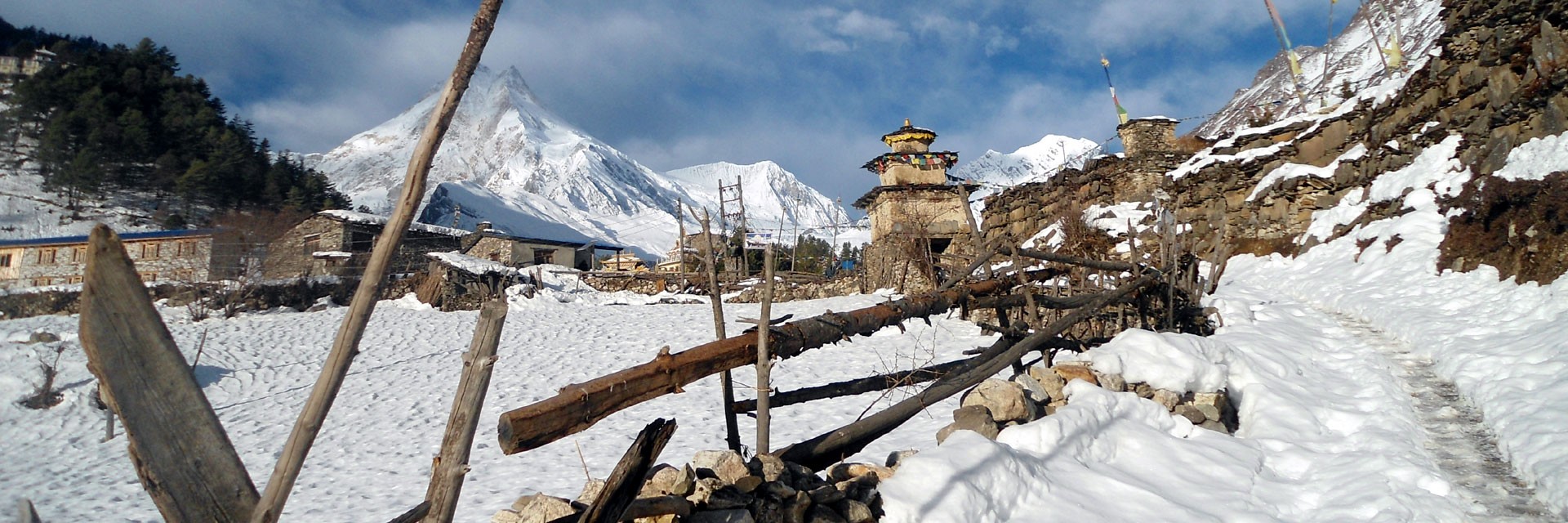
One of the biggest misconceptions about the Manaslu Circuit is that it is completely isolated. In reality, local communities live along the route, and family-run tea houses welcome trekkers at every overnight stop. What makes the trek feel remote is not the absence of villages, but the gradual disappearance of the conveniences that most people are used to before arriving in the mountains.
The journey starts with a drive from Kathmandu to Machha Khola. From there, every stage of the circuit is completed on foot until reaching Bimthang. Unlike some trekking regions where road access or larger settlements provide more flexibility, each day's walk on the Manaslu Circuit is largely planned around the location of the next tea house. This is one reason why following a realistic itinerary is more important than trying to cover extra distance.
As the trail climbs through Jagat, Deng, Namrung, Samagaun, and Samdo, services become progressively simpler. Choices on the menu are usually more limited, charging electronic devices may involve an extra fee, and internet access becomes slower or unavailable depending on the village and local conditions. These changes are a normal part of travelling through a high Himalayan region and are best viewed as part of the experience rather than an inconvenience.
Supplying the higher villages is a significant task. Food, cooking gas, bottled drinks, and other essential goods are transported along the trail by porters and pack animals because there are no roads across the upper section of the circuit. This explains why the cost of personal items gradually increases with altitude and why some menu items may occasionally be unavailable until the next supply arrives.
Communication is another area where expectations should be realistic. Mobile coverage is available in parts of the route, but reception varies between villages and cannot be relied upon throughout the trek. Wi-Fi is offered in some tea houses, although connection speeds are often slow. Before leaving Kathmandu, it is worth letting family and friends know that there may be periods without regular contact.
Although the Manaslu Circuit is quieter than Nepal's busiest trekking routes, it is not an unsupported expedition. Local tea-house owners, mountain communities, and licensed trekking guides are part of the journey from beginning to end. With sensible preparation, enough time for acclimatization, and realistic expectations about the facilities available, most trekkers find that the slower pace and simpler way of life become some of the most memorable aspects of the entire experience.
How to Choose the Right Manaslu Circuit Trek Itinerary
Choosing the right Manaslu Circuit Trek itinerary is one of the most important decisions you will make before booking your trek. Many people compare prices or the total number of days first, but these rarely tell the full story. A well-planned itinerary should balance daily walking hours, altitude gain, acclimatization, and overall trekking experience rather than simply reaching Larkya La Pass as quickly as possible.
When comparing different itineraries, look beyond the headline duration. Two companies may both advertise a 12-day Manaslu Circuit Trek, yet the daily pace, overnight villages, and acclimatization schedule can be completely different. The best way to compare itineraries is to check where you sleep each night and how the altitude increases throughout the journey. A sensible progression from Machha Khola through Jagat, Deng, Namrung, Samagaun, Samdo, and Dharmasala allows most trekkers to adapt naturally before crossing Larkya La Pass at 5,160 metres.
Many first-time trekkers assume that the shortest itinerary is automatically the best option because it saves annual leave and reduces the overall cost. In practice, the extra day or two often becomes one of the most valuable parts of the trek. More time allows you to walk at a comfortable pace, spend longer enjoying the mountain scenery, and arrive at each tea house with enough energy to rest properly before the following day.
Acclimatization should always be one of the biggest priorities when choosing a Manaslu itinerary. No itinerary can completely prevent altitude sickness, but one that gains elevation gradually and includes enough time for your body to adjust provides a safer and more enjoyable trekking experience. If you notice an itinerary climbing quickly with little opportunity to acclimatize before Larkya La Pass, it is worth asking why that schedule has been chosen.
Your itinerary should also match your travel goals. Some trekkers simply want to complete the classic Manaslu Circuit, while others prefer to include side trips such as Birendra Lake or Manaslu Base Camp, extend their journey with the Manaslu Circuit Trek with Tsum Valley, or continue towards the Manaslu Circuit and Annapurna Circuit Trek after crossing the pass.
It is equally important to understand what is included before making a comparison. Transportation between Kathmandu and the trailhead, restricted area permits, Annapurna Conservation Area and Manaslu Conservation Area permits, guide and porter services, accommodation, and meals all influence the overall value of the trip. A lower price does not always represent better value if essential services are excluded or added as extra costs later.
The best Manaslu Circuit Trek itinerary is not necessarily the shortest, the longest, or the cheapest. It is the one that matches your fitness, previous trekking experience, available holiday time, and expectations while providing enough time to enjoy the journey safely. The Manaslu Circuit is a trek where the experience builds gradually from the lower Budhi Gandaki Valley to the high Himalaya, and an itinerary designed around that natural progression usually provides the most rewarding journey.
Internet, Mobile Network and Charging on the Manaslu Circuit Trek
Reliable internet is not something you should expect throughout the Manaslu Circuit Trek. While it is usually possible to contact family or friends during parts of the journey, the route passes through one of Nepal's most remote trekking regions, where mobile coverage and internet quality vary considerably from village to village. Planning for occasional periods without a connection will make your trek far more enjoyable than expecting uninterrupted service every day.
Mobile reception is generally available in the lower and middle sections of the trail, including villages such as Machha Khola, Jagat, Deng, Namrung, and Lho. As you continue towards Samagaun, Samdo, Dharmasala, and Larkya La Pass, the signal becomes increasingly unpredictable. Some days you may be able to make a phone call or send a message within minutes, while on others there may be little or no usable network. Mountain terrain, weather conditions, and local demand all influence network performance.
If you plan to use a local SIM card, Nepal Telecom (NTC) generally provides broader coverage on the Manaslu Circuit than Ncell. Even so, neither provider offers continuous service throughout the trek, particularly in the highest sections of the route. Purchasing and activating your SIM card before leaving Kathmandu is the simplest option, as there are no reliable places to arrange this once the trek begins.
Most tea houses in larger villages now provide paid Wi-Fi, although the quality varies considerably. It is usually sufficient for sending WhatsApp messages, checking emails, or letting family know you have arrived safely, but it should not be relied upon for video meetings, uploading large files, or other bandwidth-heavy tasks. Internet speeds often change depending on the weather, the number of users connected, and the available power supply in the village.
Charging facilities are available at almost every overnight stop, but electricity is a valuable resource in the mountains and charging your phone, camera batteries, smartwatch, or power bank normally involves an additional fee. The higher you trek, the more limited electricity becomes, so carrying a fully charged, high-capacity power bank is one of the simplest ways to avoid running out of battery during the journey.
Before leaving Kathmandu, download offline maps, copies of your permits, travel insurance documents, hotel bookings, and any emergency contact information you may need. It is also sensible to let family know that you may be out of contact for a day or two. On the Manaslu Circuit, temporary loss of signal is a normal part of trekking through a remote Himalayan region rather than an indication that something has gone wrong.
Many trekkers initially worry about being disconnected from the internet. By the end of the trek, however, they often describe it as an unexpected advantage. Spending a few days away from constant notifications allows more time to appreciate the mountains, conversations in the tea houses, and the unique atmosphere that makes the Manaslu Circuit one of Nepal's most complete Himalayan trekking journeys.
How Much Cash Should You Carry on the Manaslu Circuit Trek?
One of the final topics we discuss with trekkers before every Manaslu departure is spending money for the journey. It may seem like a small detail while planning your trek, but having enough cash makes the experience much smoother once you are in the mountains. Many trekkers ask whether they will find an ATM on the trail, if they can pay by card in tea houses, or how much money they should carry. The simplest answer is to prepare your personal spending money before the trek begins and carry it in Nepalese Rupees.
Prepare Your Spending Money Before the Trek Starts
Kathmandu is the easiest place to withdraw or exchange money before travelling to Machha Khola. Banks, ATMs, and licensed money exchange counters are widely available, allowing you to prepare without rushing. Once your journey towards the Manaslu region begins, reliable banking and exchange facilities are no longer something you should expect, so it is much easier to start the trek fully prepared.
Don't Plan on Finding an ATM Along the Trail
You should not build your budget around the idea of withdrawing more money during the trek. Even if an ATM exists before entering the restricted area, power interruptions, technical issues, or a lack of cash can make it unavailable. Most experienced trekkers simply withdraw everything they expect to need while they are still in Kathmandu, avoiding unnecessary stress later in the journey.
What Personal Expenses Should You Budget For?
If your trekking package already includes accommodation, meals, permits, transportation, guide, and porter services, most of your remaining expenses are optional. Trekkers commonly spend money on drinks, snacks, bakery items where available, Wi-Fi, charging electronic devices, hot showers, laundry in some villages, and tips for their guide and porter after completing the trek.
Personal spending varies considerably from one traveller to another. Some trekkers spend very little because they mainly enjoy the meals included in their package and drink tea throughout the day. Others prefer coffee, soft drinks, extra snacks, or regularly use charging and internet services. Thinking about your own travel habits is usually much more helpful than trying to follow someone else's daily budget.
Can You Pay by Card, QR Code or Mobile Wallet?
Card terminals and digital payment systems become much less common as you travel deeper into the Manaslu region. Even where they are available, they depend on electricity and mobile network coverage, both of which can be unreliable in remote mountain villages. For that reason, electronic payment should be viewed as an occasional convenience rather than something you depend on throughout the trek.
Are US Dollars or Indian Rupees Accepted?
Foreign currencies may be accepted by some businesses in Kathmandu, but tea houses along the Manaslu Circuit almost always expect payment in Nepalese Rupees. Indian Rupees may occasionally be accepted in a few places, but this varies from village to village and should never be assumed. Exchanging your money before starting the trek remains the most convenient and dependable option.
Carry a Small Emergency Reserve
Even if your itinerary is carefully planned, mountain travel does not always unfold exactly as expected. Road conditions, weather, or transport delays after the trek can occasionally result in extra expenses. Keeping a reasonable emergency reserve gives you flexibility if you need an additional meal, an extra night's accommodation, or other unexpected services without worrying about running out of cash.
A Practical Tip from Our Trek Leaders
Rather than keeping all of your money in one wallet, divide it between two secure places, such as your daypack and a money pouch or duffel bag. It is a simple habit that reduces the risk of losing all of your cash if one bag is misplaced and makes it easier to manage your spending throughout the trek.
Once you leave Kathmandu, life on the Manaslu Circuit becomes refreshingly simple. With your personal expenses already planned, you can focus on walking through the Budhi Gandaki Valley, enjoying the hospitality of local tea houses, and experiencing the journey towards Larkya La Pass instead of worrying about payment options along the way.
How Weather Influences the Manaslu Circuit Trek
Weather is one of the few parts of the Manaslu Circuit Trek that no one can control, but understanding how it influences the journey helps you prepare far better than simply checking a forecast before departure. Throughout the trek, weather affects trail conditions, visibility, daily walking schedules, and sometimes even the drive to and from the trailhead. Because the route climbs from the warm Budhi Gandaki Valley to the high alpine environment of Larkya La Pass at 5,160 metres, conditions can change noticeably within a single day.
Mountain Conditions Can Change Faster Than the Forecast
One lesson our Manaslu guides learn quickly is that mountain weather does not always follow a forecast exactly. A morning that begins with blue skies in Sama Gaun can become windy and cloudy by the time trekkers reach higher elevations. Rather than depending entirely on a weather app, experienced guides watch the sky, monitor changing wind conditions, and exchange updates with tea houses and other trekking teams along the route before making daily decisions.
Weather Directly Affects the Trail Under Your Feet
Recent weather often has a greater impact on the trek than the temperature itself. After rainfall, lower sections between Machha Khola and Jagat may become muddy and more slippery, while colder conditions near Dharmasala and Larkya La Pass can leave snow or icy patches on exposed sections of the trail. During long trekking days, good footing is often far more important than whether the air feels a few degrees warmer or colder.
Early Starts Usually Bring the Best Conditions
Most experienced Manaslu guides prefer to begin walking early, particularly on days above Sama Gaun. Morning hours are often calmer, mountain views are usually clearer, and conditions around Larkya La Pass are generally more favourable before afternoon clouds and stronger winds begin developing. Leaving early also provides a more comfortable pace without feeling rushed later in the day.
Weather May Influence Daily Decisions Without Changing the Itinerary
Changing weather rarely means cancelling the trek, but it can influence how each day is managed. Depending on the conditions, your guide may recommend leaving the tea house earlier, adjusting the walking pace, taking breaks in more sheltered places, or spending extra time assessing conditions before crossing higher sections. These practical decisions come from experience on the trail rather than following a fixed schedule regardless of the weather.
Road Conditions Can Also Be Affected
The weather does not only influence the trekking route. Heavy rainfall can occasionally slow the drive between Kathmandu and Machha Khola or affect road conditions after completing the trek from Dharapani through Besisahar. During the main trekking seasons, major disruptions are uncommon, but allowing an extra day in Kathmandu before your international flight is always a sensible precaution.
Local Knowledge Matters More Than a Forecast
Forecasts are useful for planning, but they cannot always predict how conditions will develop in the mountains. Local guides combine weather updates with firsthand observations from villages along the route and recent reports from other trekking teams. This practical knowledge helps them make informed decisions throughout the journey and is one of the reasons many trekkers feel more confident on the Manaslu Circuit with an experienced guide.
Mountain weather is simply part of the Manaslu experience. Trekkers who arrive with flexible expectations, start each day prepared for changing conditions, and follow their guide's advice usually enjoy the journey far more than those expecting the weather to remain the same from Machha Khola all the way to Larkya La Pass.
How Should You Prepare Physically for Trekking the Manaslu Circuit?
One of the most common questions we receive before every Manaslu departure is whether you need to be extremely fit to complete the trek. In our experience, the answer is no. The trekkers who enjoy the journey the most are not usually the fastest or strongest. They are the ones who prepare consistently before arriving in Nepal, understand their own pace, and allow their bodies to adapt naturally as the trail climbs higher.
Unlike a single-day mountain hike, the Manaslu Circuit Trek challenges your endurance over many consecutive days. From the lower Budhi Gandaki Valley to Larkya La Pass, your body must recover each evening and be ready to walk again the following morning. That is why preparing for sustained effort is far more important than training for speed or short bursts of intensity.
Start Your Training Before You Travel
We recommend beginning your preparation at least six to eight weeks before your trek. Walking, hiking, jogging, cycling, swimming, and stair climbing are all excellent ways to improve cardiovascular endurance. If you have access to local hills or hiking trails, try to include one longer walk each week while carrying a light backpack. This more closely reflects the type of movement you will experience on the Manaslu Circuit than spending all of your time in a gym.
Prepare for Consecutive Days of Walking
Many first-time trekkers focus on completing one long hike at the weekend but do very little during the rest of the week. On the Manaslu Circuit, however, your legs need to perform day after day. Training on two or three consecutive days occasionally helps your body become familiar with recovering overnight before walking again. This simple adjustment often provides better preparation than trying to complete one extremely demanding workout.
Build Strength Without Ignoring Endurance
Leg strength certainly makes the climbs easier, particularly on the gradual ascent towards Namrung, Sama Gaun, and Dharmasala, but endurance remains the foundation of successful trekking. Exercises such as squats, lunges, step-ups, planks, and balance training can improve stability on uneven trails, while regular walking and hiking develop the stamina needed for long days in the mountains.
Walk in the Boots You Plan to Wear
Before travelling to Nepal, spend time walking in the same trekking boots you intend to use on the trail. Carry a daypack similar in weight to the one you will use during the trek and gradually increase your walking distance. This allows your boots to soften naturally, helps you adjust your backpack correctly, and greatly reduces the chance of developing painful blisters during the first few days.
Do Not Underestimate Recovery
Good preparation is not only about exercise. Quality sleep, balanced nutrition, proper hydration, and allowing your body enough recovery between training sessions all contribute to better performance in the Himalayas. Arriving in Kathmandu healthy and well rested is often more beneficial than completing one final exhausting workout immediately before your flight.
Keep the Same Approach Once the Trek Begins
Physical preparation gives you confidence, but the habits you develop on the trail are equally important. Our guides encourage every trekker to begin at a comfortable pace, drink water regularly, eat enough even when altitude reduces appetite, and communicate honestly if they feel unusually tired. The trekkers who reach Larkya La Pass feeling strongest are rarely the ones trying to lead the group from the first day. More often, they are the ones who conserve energy, walk consistently, and respect the gradual nature of the journey.
The Manaslu Circuit is not a race, and our trek leaders rarely remember who reached each tea house first. They remember the trekkers who walked consistently, recovered well each evening, and still had enough energy to enjoy the villages, mountain scenery, and conversations along the trail. A steady pace almost always leads to a more enjoyable crossing of Larkya La than trying to walk faster than your body allows.
What Do Trekkers Often Forget to Pack for the Manaslu Trek?
Before almost every Manaslu departure from Kathmandu, someone realises they have forgotten one or two small but surprisingly important items. It is rarely a sleeping bag, trekking boots, or a down jacket. More often, it is something simple like lip balm, blister tape, a spare charging cable, or comfortable shoes for the evening. These are inexpensive and easy to pack before the trek begins, but once you are a few days into the Budhi Gandaki Valley, replacing them becomes difficult or impossible.
Below are the items our guides most often remind trekkers to check before leaving Kathmandu. They take up very little space in your backpack, yet they can make a noticeable difference to your comfort throughout the trek.
Lip Balm with SPF and High-SPF Sunscreen
The combination of strong ultraviolet rays, dry mountain air, and constant wind can quickly leave your lips and skin cracked, even when temperatures feel cool. Many trekkers are surprised by how intense the sun becomes above Namrung and Sama Gaun. A quality lip balm with SPF and high-SPF sunscreen are small items that most experienced trekkers never leave behind.
Electrolyte Tablets or Oral Rehydration Salts
Staying hydrated is essential at altitude, but drinking only plain water throughout the day is not always enough. Electrolyte tablets or oral rehydration salts help replace minerals lost during long climbs and can make it easier to maintain good hydration as the trail gains elevation.
Lightweight Shoes or Sandals for the Tea House
After walking for six to eight hours, most trekkers remove their boots as soon as they arrive at the tea house. Having lightweight sandals or comfortable camp shoes gives your feet a chance to recover while relaxing in the dining room or moving around the lodge. It is one of the items people most often wish they had packed.
A Spare Charging Cable and Power Bank
Charging is available in most tea houses for an additional fee, but small charging cables are easily misplaced while moving from one village to the next. Carrying a spare cable and a fully charged power bank provides a simple backup and helps keep your phone, camera, or GPS watch ready throughout the journey.
Blister Care Supplies
Even well-broken-in trekking boots can occasionally cause rubbing during consecutive days on the trail. Blister plasters, sports tape, or moleskin allow you to protect a hot spot before it develops into a painful blister that affects the rest of your trek.
A Reliable Water Purification Method
Many trekkers remember to bring a reusable water bottle but forget how they will refill it safely along the route. Water purification tablets, purification drops, or a quality filter bottle make it easy to refill drinking water at tea houses while reducing both costs and unnecessary plastic waste.
Small Personal Comfort Items
The smallest items often make the biggest difference after a long trekking day. Earplugs can help you sleep in busy tea houses, hand sanitiser is useful before meals, a quick-drying towel is practical throughout the journey, and a few favourite energy snacks can be welcome on longer walking days between villages.
Prescription Medication
If you take regular medication, bring enough for your entire trip along with a small reserve in case of unexpected travel delays. Basic medicines are available in some villages, but you should never expect to find specific prescription medication once the trek has started.
These forgotten items may seem minor while packing at home, but they become much more valuable once you are trekking through the remote villages of the Manaslu region. Spending a few extra minutes checking your backpack before leaving Kathmandu is often far easier than trying to manage without them later. A thoughtful packing list is not about carrying more gear; it is about carrying the right gear for the journey ahead.
What Travel Insurance Do You Actually Need for the Manaslu Trek?
Travel insurance is not just another item on your packing checklist. It is one of the first things we ask trekkers to confirm before they begin the Manaslu Trek. Every trekking season, we speak with travellers who already have insurance but later discover that their policy does not cover high-altitude trekking or emergency helicopter evacuation. Most are surprised because they assumed a standard travel insurance policy automatically included trekking in Nepal.
Before purchasing a policy, read the coverage details carefully rather than relying only on the headline benefits. For the Manaslu Trek, your insurance should clearly cover trekking at altitudes of at least 6,000 metres. Although the highest point of the route is Larkya La Pass (5,160 metres), many insurers apply strict altitude limits, so checking this before you travel is essential.
Emergency Helicopter Evacuation
Emergency helicopter evacuation is the single most important part of your insurance policy. The Manaslu Trek passes through remote mountain valleys where road access is unavailable across much of the route. While experienced guides work carefully to reduce risks through sensible pacing and acclimatisation, unexpected medical situations can still occur. In those circumstances, a helicopter may be the fastest and safest way to reach appropriate medical care. Without suitable insurance, evacuation costs can be substantial.
Medical Expenses and Hospital Treatment
Your policy should also include emergency medical treatment, hospital care, and transportation to an appropriate medical facility if further treatment is required. Before leaving Kathmandu, save your insurer's emergency assistance number on your phone and keep a printed or offline copy of your insurance certificate. Mobile coverage improves each year, but you should not rely on having a stable connection everywhere along the trail.
Check the Policy Wording, Not Just the Summary
One of the most common mistakes we see is trekkers reading only the policy summary without checking the exclusions. Some insurance providers exclude trekking above certain elevations, while others require adventure activities to be added separately. It is also worth confirming that emergency helicopter evacuation is specifically included and understanding how your insurer manages emergency claims.
If You Are Unsure, Ask Before You Travel
If any part of your insurance policy is unclear, ask your insurer for written confirmation before your trip. You are also welcome to send us your policy details before arriving in Nepal. We are happy to check whether the altitude limit and emergency evacuation cover are suitable for the Manaslu Trek and let you know if anything appears to be missing.
Most trekkers complete the Manaslu Trek without needing to use their insurance, and that is exactly how everyone hopes the journey will go. However, having the right cover provides peace of mind for both you and your family, allowing you to focus on enjoying one of Nepal's most rewarding trekking experiences with greater confidence.
Common Mistakes to Avoid on the Manaslu Circuit Trek
The Manaslu Circuit Trek is not a route that rewards rushing or overconfidence. Most trekkers who finish the journey with great memories are not necessarily the strongest or fastest hikers. They are usually the ones who prepare well, listen to local advice, and make sensible decisions throughout the trek. After leading groups on this route for many years, we have noticed that the same avoidable mistakes appear again and again.
Treating Every Day Like a Race
It is common for trekkers to feel fresh during the first few days and naturally increase their pace. However, the Manaslu Circuit is a trek where consistency matters far more than speed. The people who usually feel strongest by the time they cross Larkya La Pass are often those who walked at a comfortable, steady pace from the very beginning instead of trying to reach each village as quickly as possible.
Ignoring Your Guide's Local Advice
Your guide does far more than show the way. They constantly assess trail conditions, weather patterns, your walking pace, and how everyone in the group is adapting to the altitude. Occasionally, small changes to the day's plan may be recommended because of local conditions. Being flexible and trusting your guide's judgement often leads to a safer and more enjoyable trek.
Comparing Yourself with Other Trekkers
Every trekker arrives with a different level of fitness, previous trekking experience, and ability to adapt to altitude. It is easy to feel pressured when another group walks faster or reaches the tea house first, but the Manaslu Circuit is never a competition. Walking at your own comfortable rhythm almost always leads to a better overall experience.
Leaving Everything Until the Last Minute
Some trekkers arrive in Kathmandu only a few hours before departure and expect to organise permits, equipment, insurance, and final preparations immediately. Allowing at least one full day before the trek begins gives you time to check your gear, meet your guide, complete permit arrangements, and start the journey feeling relaxed rather than rushed.
Expecting Every Tea House to Offer the Same Facilities
Facilities naturally become simpler as the trek climbs higher into the mountains. Mobile reception, charging options, internet access, and room facilities vary from village to village. Trekkers who arrive with flexible expectations usually enjoy the experience much more than those expecting the same level of comfort every night.
Focusing Only on Reaching Larkya La Pass
Many first-time visitors think of the trek as a single goal: crossing Larkya La Pass. In reality, some of the most memorable moments happen well before and after the pass itself. Walking through traditional villages, meeting local families, watching daily mountain life, and gradually seeing the landscape change are all part of what makes the Manaslu Circuit such a rewarding journey.
Not Asking Questions During the Trek
Local guides have a deep understanding of the region's history, Buddhist culture, mountain environment, and everyday life in the villages. Trekkers who ask questions often finish the journey with a much richer understanding of the Manaslu region than those who simply walk from one destination to the next.
The Manaslu Circuit Trek is not about covering distance as quickly as possible. It is about travelling thoughtfully through one of Nepal's most remarkable mountain regions. Good preparation, realistic expectations, and a willingness to adapt to mountain conditions usually make a far bigger difference than speed or previous trekking experience.
Frequently Asked Questions About the Manaslu Circuit Trek
Can I leave my extra luggage in Kathmandu during the Manaslu Circuit Trek?
Yes. Most trekking companies and hotels in Kathmandu provide secure luggage storage free of charge or for a small fee. Many trekkers leave suitcases, city clothes, and unnecessary valuables behind and carry only what they need for the trek.
How early should I arrive in Kathmandu before starting the Manaslu Circuit Trek?
Arriving at least one full day before your trek is highly recommended. This gives you enough time to check your equipment, meet your guide, complete permit arrangements, and prepare without feeling rushed.
Can I take a hot shower every day on the Manaslu Circuit Trek?
Hot showers are available in many tea houses for an additional charge, although availability becomes more limited at higher elevations. Water heating methods also vary from village to village.
Are electric blankets available in the tea houses?
No. Tea houses provide warm blankets, but electric blankets are generally not available. During colder months, a quality sleeping bag provides extra comfort at higher elevations.
Can I recharge my power bank during the trek?
Yes. Most tea houses offer charging facilities for phones, cameras, and power banks for a small fee. Carrying a fully charged power bank is still recommended, especially for longer trekking days.
Can I buy snacks and drinks during the Manaslu Circuit Trek?
Yes. Most villages have small shops selling chocolate, biscuits, noodles, soft drinks, bottled water, and basic trekking supplies. Prices gradually increase as altitude and transport costs rise.
What happens if bad weather affects the Manaslu Circuit Trek?
Mountain weather can occasionally delay travel or temporarily affect trail conditions. Experienced guides monitor local conditions throughout the trek and adjust plans when necessary to prioritise safety.
Can I customise my Manaslu Circuit Trek itinerary?
Yes. Private treks can usually be customised to include additional acclimatisation days, shorter walking distances, side trips, or combinations with destinations such as Tsum Valley or the Annapurna Circuit.
Is the Manaslu Circuit Trek suitable for photographers?
Absolutely. The route offers dramatic mountain scenery, traditional stone villages, suspension bridges, Buddhist monasteries, glacial valleys, and panoramic Himalayan landscapes throughout the journey. Early mornings and late afternoons often provide the best light for photography.
Which village do most trekkers enjoy the most?
Everyone has a favourite, but Sama Gaun is often considered one of the highlights of the trek. Surrounded by spectacular mountain scenery, it is also an important acclimatisation stop with opportunities for rewarding side hikes.
Can I see Mount Manaslu during the trek?
Yes. There are several excellent viewpoints along the route where Mount Manaslu can be seen clearly, particularly around Lho, Shyala, Sama Gaun, and the approach towards Larkya La Pass.
Is the Manaslu Circuit Trek good for solo travellers?
Yes. Many solo travellers join organised departures, making it easy to share the experience with other trekkers while meeting the guide requirements for the restricted Manaslu region.
Can older trekkers complete the Manaslu Circuit Trek?
Yes. Every year, many trekkers in their 50s, 60s, and beyond successfully complete the route. Good preparation, a suitable itinerary, and walking at a comfortable pace are generally more important than age.
Can I combine the Manaslu Circuit Trek with Tsum Valley?
Yes. This is one of the most popular extended itineraries. Adding Tsum Valley allows trekkers to explore remote Tibetan-influenced villages, historic monasteries, and a quieter side of the Manaslu region.
Will I cross many suspension bridges on the Manaslu Circuit Trek?
Yes. The lower section of the trail follows the Budhi Gandaki River and includes numerous suspension bridges, many of which offer impressive views of deep gorges and flowing rivers.
Are there monasteries to visit during the trek?
Yes. The Manaslu region has a strong Tibetan Buddhist heritage, and several villages feature traditional monasteries, prayer wheels, mani walls, and colourful prayer flags that reflect the area's rich cultural traditions.
What wildlife might I see on the Manaslu Circuit Trek?
The Manaslu Conservation Area is home to Himalayan wildlife including blue sheep, Himalayan tahr, musk deer, and many mountain bird species. Snow leopards also inhabit the region, although sightings are exceptionally rare.
Is the Manaslu Circuit Trek worth choosing over more popular trekking routes?
If you are looking for fewer crowds, authentic mountain villages, spectacular Himalayan scenery, and a more remote trekking experience, many trekkers consider the Manaslu Circuit one of the most rewarding treks in Nepal.
Final Thoughts
Preparing well before the Manaslu Circuit Trek is not simply about packing the right equipment or choosing the right season. It is about understanding the pace of the journey, respecting the mountains, and allowing enough time to experience one of Nepal's most remarkable trekking regions the way it was meant to be experienced.
One thing we have noticed over the years is that the memories trekkers talk about most are rarely limited to standing on Larkya La Pass. Long after returning home, many remember sharing tea with local families, watching the first sunlight reach Manaslu from Shyala, spending an extra day around Sama Gaun, crossing the suspension bridges above the Budhi Gandaki River, and seeing how the landscape changes from green river valleys to the high alpine wilderness near the pass. Those moments are what give the Manaslu Circuit its character.
Unlike many trekking routes where one viewpoint becomes the entire focus of the journey, the Manaslu Circuit gradually unfolds day by day. Every section feels different, every village has its own atmosphere, and the scenery continually changes as you gain altitude. That variety is one of the reasons so many trekkers describe the Manaslu Circuit as one of Nepal's most rewarding long-distance treks.
If this is your first visit to the Manaslu region, choose an itinerary that allows enough time to settle into the rhythm of the trail rather than simply reaching Larkya La Pass as quickly as possible. The Manaslu Circuit is one of those rare treks where the journey between the villages often becomes just as memorable as the pass itself. Before booking, compare our complete Manaslu Circuit Trek itinerary, departure dates, and current cost to choose the option that best matches your experience, available time, and trekking goals.