Every Day on the Manaslu Circuit Trek Starts a Little Differently
One of the things many trekkers notice during the Manaslu Circuit Trek is that the mornings rarely feel the same from one day to the next.
In the lower part of the trail around Machha Khola and Jagat, mornings are often relatively mild. The sound of the Budhi Gandaki River is never far away, villages are beginning to wake up, and most trekkers are still settling into the routine of life on a Manaslu trek.
A few days later, the atmosphere starts to change. Around Namrung and Lho, many trekkers find themselves spending a little more time outside before breakfast. These villages are part of a route that changes significantly from the lower valley to the upper mountain settlements.
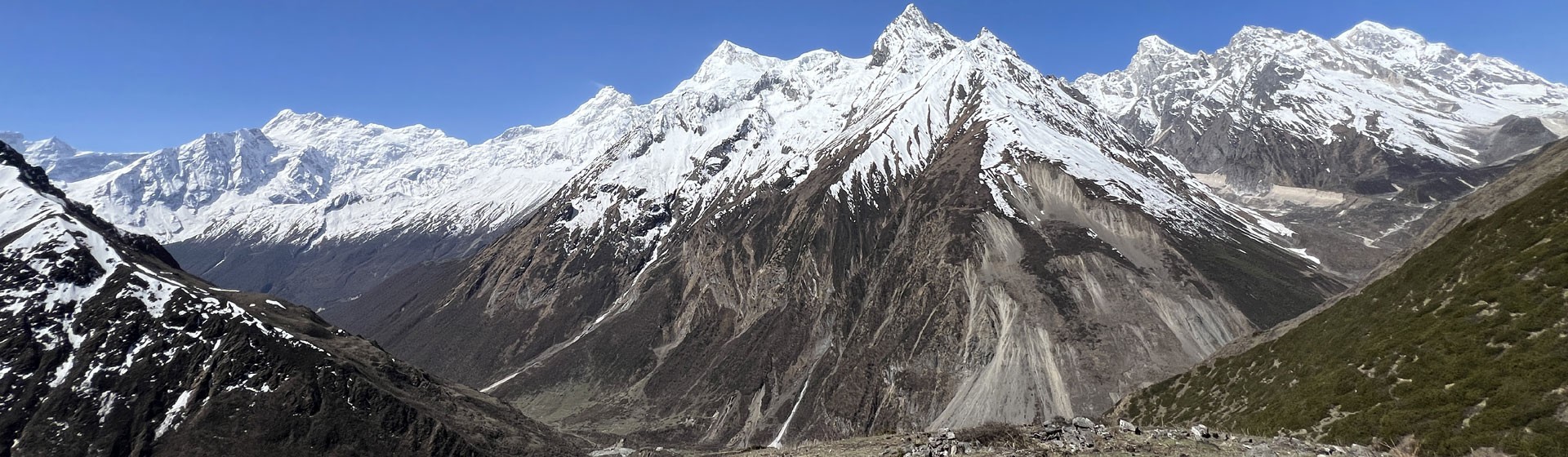
The forests begin to thin, mountain views become more prominent, and the route starts to feel increasingly remote compared to the lower valley.
Higher up in Samagaun and Samdo, mornings are usually quieter. Temperatures are cooler, the air is noticeably thinner, and conversations often turn to acclimatization, side hikes, and the days ahead. By this stage of the trek, most people no longer need to think about the daily routine. What felt unfamiliar during the first days of Manaslu Circuit Trekking has usually become second nature.
The biggest contrast often comes at Dharamsala, the final stop before crossing Larkya La Pass. Backpacks are usually packed before dinner, trekking gear is laid out for the morning, and many people check the weather more than once before going to bed. Although the daily routine remains much the same, there is often a sense of anticipation throughout the tea house as everyone prepares for the highest and most demanding day of the trek.
At this stage of the route, the trail often feels very different from those first days in the lower valley. The landscapes have changed, the altitude has increased, and the routines that felt unfamiliar in Machha Khola have become part of everyday life on the trail. Each morning still begins in a simple way, but the experience of the trek continues to evolve with every village along the route.
The First Few Hours Reveal the Real Character of the Trail
The first few hours of walking are often when trekkers begin to settle into the day.
Once the village is behind them, conversations usually become quieter and everyone gradually finds their own pace. The trail follows the Budhi Gandaki River for much of the lower section of the Manaslu Circuit Trek, crossing suspension bridges, passing small settlements, and moving through forested areas where the sound of the river is rarely far away.
Many of these early impressions begin around Machha Khola, the village where the trekking portion of the route officially starts for most trekkers.
During the first days of a Manaslu trek, many trekkers spend more time looking around than looking at their watches. There is always something changing along the trail. A narrow gorge, a waterfall beside the path, a line of prayer flags above a bridge, or the first clear mountain views appearing between the trees.
As the route climbs higher, the surroundings continue to change. Some mornings pass through dense forest, while others follow open sections of valley with wider views and fewer villages. Certain parts of the trail feel busy as local people move between settlements, while other sections can feel surprisingly quiet for long periods.
One of the reasons many people enjoy Manaslu Circuit Trekking is that the route rarely feels repetitive. Even when the daily routine remains similar, the landscape, villages, and atmosphere continue to change from one day to the next.
For many trekkers, this is where the appeal of a trek to Manaslu Circuit becomes clear. The experience is not built around a single viewpoint or one particular day. Instead, it develops gradually through the forests, valleys, suspension bridges, and villages that connect the route together.
One of the Biggest Surprises During Manaslu Circuit Trekking Is How Quickly the Routine Feels Normal
Before starting the Manaslu Circuit Trek, many people expect life on the trail to feel completely different from their normal routine.
What often surprises them is how quickly the unfamiliar becomes normal.
After only a few days, most trekkers settle into a simple pattern. Duffel bags are packed before breakfast, boots are left outside the room at the end of the day, and everyone gradually develops their own pace on the trail. Things that seem unusual during the first days in Machha Khola soon become part of everyday life.
The same faces also begin to appear regularly along the route. Trekkers who started in different groups often meet again at lunch stops, in tea houses, or around the dining room in the evening. Even though people walk at different speeds, it is common to see the same trekkers crossing paths for several days in a row.
Life inside the tea houses develops its own routine as well. Wet clothes are hung near the stove, phones and power banks are plugged into the nearest charging point, and conversations often focus on the trail ahead, the weather, or where everyone plans to stop the next day.
By the time trekkers reach Samagaun or Samdo, most no longer think much about the routines that felt unfamiliar at the beginning of the trek. Packing in the morning, walking for several hours, stopping for tea, and gathering in the dining hall in the evening simply becomes part of the day.
One of the reasons many people enjoy a Manaslu trek is that this routine develops naturally. The daily structure remains familiar, but the landscapes, villages, and atmosphere continue to change. Each day feels connected to the one before it, yet rarely feels exactly the same.
The Trail Feels Completely Different as You Move Higher
One of the most interesting parts of the Manaslu Circuit Trek is how much the trail changes between the first days in the lower valley and the villages closer to Larkya La Pass. Although trekkers follow the same route, the experience rarely feels the same for very long.
Lower Manaslu Trek Days: Machha Khola, Jagat, and Deng
The lower section of the Manaslu trek is often greener and more humid than many first-time trekkers expect. The trail follows the Budhi Gandaki River through narrow valleys, crossing suspension bridges and passing small settlements scattered along the hillsides.
These days are usually full of movement. Local people travel between villages, mule caravans use the same trails, and the sound of the river remains a constant part of the day. For many trekkers, this section feels closely connected to everyday life in the valley.
The Middle Section: Namrung and Lho
A noticeable change begins around Namrung and becomes even more apparent near Lho. This gradual transition between the lower valley and the upper mountain settlements is one reason our standard itinerary follows a carefully paced schedule.
The forests gradually open, mountain views become more frequent, and the villages feel further removed from the busy lower valley.
It is also around this stage that many trekkers begin stopping more often during the day. Not because the trail suddenly becomes more difficult, but because the surrounding scenery starts to demand more attention. The mountains appear closer, the valleys become wider, and the character of the route changes with every village.
The Upper Valley: Samagaun and Samdo
By the time trekkers reach Samagaun and Samdo, the atmosphere has changed again. The valleys are broader, the landscape feels more open, and daily life on the trail slows naturally.
Acclimatization becomes part of the routine, walking speeds are often more relaxed, and conversations increasingly focus on side hikes, weather conditions, and the days ahead. The sense of remoteness is also much stronger than in the lower section of the route.
For many trekkers, this section around Samagaun and Samdo becomes one of the highlights of the entire Manaslu Circuit Trek.
Interestingly, by the time people arrive in Samdo, many are no longer talking only about reaching Larkya La Pass. Conversations often shift toward the places they have already walked through, the villages they have stayed in, and the experiences they have had along the trail.
Looking back, the distance between Machha Khola and Samdo is only one part of the journey. What many people remember most is how the landscapes, atmosphere, and daily experience gradually change as the Manaslu Circuit Trek moves deeper into the mountains.
Why Time Feels Different on Manaslu Treks
Time starts to feel different after a few days on the Manaslu Circuit Trek.
At the beginning, people often check their phones regularly, ask how many hours remain until the next stop, and follow the daily schedule closely. After several walking days, those questions usually become less frequent.
Part of the reason is the simplicity of the trail routine. Breakfast, walking, lunch, tea house arrival, dinner, and preparation for the next day become the main structure of life. There is not much else to manage.
Distractions also reduce naturally. Phone signal is not always available, internet can be slow or limited, and long sections of the trail pass without screens, traffic, or regular messages from home. Attention moves toward simpler things: the river below the trail, the next bridge, the weather, the sound of boots on stone steps, or the pace of the group ahead.
In the upper parts of the Manaslu trek, the day often feels slower even when the walking is demanding. People spend more time watching the sky, drying clothes near the stove, talking quietly after dinner, or listening to the guide explain the next morning’s plan.
This is one reason Manaslu Treks often stay in people’s memory in a different way. Nothing dramatic needs to happen. The routine becomes simple, the distractions become fewer, and the trail slowly changes how people notice time.
The Evening Atmosphere Is Often What Trekkers Remember Most
By late afternoon, most of the walking is finished and the pace of the day begins to slow.
As trekkers arrive at the next village, a familiar routine usually follows. Rooms are assigned, extra layers come out as the temperature drops, and people gradually gather in the dining hall before dinner.
The atmosphere inside the tea houses often changes throughout the evening. Early conversations usually focus on the day's walk, the condition of the trail, or the places people passed along the way. Later, attention often shifts toward tomorrow. Guides explain the next section of the route, weather forecasts become a regular topic of discussion, and trekkers compare plans for the morning ahead.
Some evenings are lively when several groups arrive at the same tea house. On other nights, especially in the higher villages, the atmosphere can be much quieter. People sort through photos from the day, read a book, dry clothing near the stove, or simply listen to the conversations taking place around them.
The evening before crossing Larkya La Pass often has its own atmosphere. Trekking gear is prepared, departure times are discussed, and questions about weather conditions become increasingly common. Although everyone follows a similar routine, there is usually a noticeable sense of anticipation throughout the tea house.
These hours between arriving at the tea house and going to bed are a small part of the Manaslu Circuit Trek, but they often become an important part of the overall experience. The walking may be finished for the day, yet the trail remains the focus of conversation until the lights gradually go out and attention turns to the next morning's journey.
What Changes After Samagaun
One of the more interesting changes on the Manaslu Circuit Trek is not the landscape or the altitude, but the way many trekkers approach the days ahead.
During the lower part of the route, conversations often revolve around the villages people have passed through, the suspension bridges they have crossed, or the scenery they have seen along the way. After Samagaun, the focus gradually shifts.
Discussions in the tea houses increasingly turn toward the following day. Weather conditions, departure times, and plans for the next stage of the trek become regular topics of conversation. The closer the route moves toward Samdo and Dharamsala, the more attention naturally shifts toward what lies ahead.
The daily routine also changes in small ways. People often spend more time organizing equipment in the evening, checking that water bottles are filled, and preparing clothing for the next morning. These are simple habits, but they become part of everyday life during the upper section of Manaslu Circuit Trekking.
Another noticeable difference is the pace of the evenings. Earlier in the trek, dining halls can remain active for longer as trekkers exchange stories from the day. Higher up the valley, evenings often become quieter. People tend to head to their rooms earlier, rest more, and focus on preparing for the following day's walk.
What makes this stage of the trek interesting is that the changes are gradual rather than dramatic. There is no single moment when the atmosphere suddenly feels different. Instead, priorities slowly shift from the experiences of the day that has just finished to the trail waiting ahead the next morning.
What Most People Remember After the Trek to Manaslu Circuit
Before starting the Manaslu Circuit Trek, many people assume that Larkya La Pass will be the memory that stands out most once the journey is over.
Yet when people talk about the trek afterward, the conversation often turns to much smaller moments along the route.
People talk about their first morning in Machha Khola when the trek finally felt real after the long journey from Kathmandu. They remember the mountain views appearing above Namrung, the extra time spent in Samagaun, or a quiet evening in Samdo after a long day of walking.
Others remember conversations in the tea houses, the sound of the Budhi Gandaki River during the first days of the route, or the atmosphere in Dharamsala on the evening before crossing Larkya La Pass.
These are rarely the moments people focus on while planning a Manaslu trek. Before the trip, most attention naturally goes toward permits, altitude, and the pass itself. Afterward, the memories are often much more personal.
That is one reason why no two experiences of Manaslu Circuit Trekking are exactly the same. Everyone follows a similar route, stays in many of the same villages, and eventually reaches the same pass, yet the moments that stay with them are often completely different.
Looking back, the trek is not remembered as a single day or a single destination. It becomes a collection of villages, conversations, landscapes, and small experiences that gradually come together over the course of the journey.
If you are planning a group join Manaslu Circuit Trek, you can explore our complete itinerary, upcoming departure dates, permit information, and route details.