Manaslu Circuit with Tsum Valley: Month-by-Month Conditions
The trekking calendar for the Manaslu Circuit with Tsum Valley is not simply divided into good and bad months. Conditions change quickly at the edges of each season, and the weather you experience in Tsum Valley can be very different from what you meet several days later around Samdo, Dharamsala and Larkya La. When we discuss departure dates with trekkers, this is how we generally look at the year.
| Month | What We Expect on the Trail | Larkya La Consideration |
|---|
| January | Very cold at higher elevations, quiet trails and short winter days. Snow is possible on the upper route. | Snow, ice and severe cold can make the crossing difficult or sometimes impractical. |
| February | Still winter at altitude, although conditions may begin improving towards the end of the month. | Snow accumulation and icy sections can remain a concern around the high crossing. |
| March | A transition month. Lower sections become milder while winter conditions can linger higher up. Late March is generally preferable to early March. | Existing snow or fresh snowfall can still affect the pass. |
| April | One of the most balanced spring months, with milder lower trails, spring vegetation and generally favorable trekking conditions. | Usually one of the better spring periods for the crossing, although fresh mountain snowfall remains possible. |
| May | Warmer walking days and greener lower sections, with cloud and pre-monsoon weather becoming more noticeable later in the month. | Conditions can remain suitable, but weather tends to become less settled as June approaches. |
| June | Monsoon influence increases, bringing rain, cloud, wetter trails and more uncertainty on the lower approaches. | Changing mountain weather makes the timing of the higher section less reliable. |
| July | One of the wettest periods on the lower route, with muddy or slippery trails and frequent cloud. | Even if parts of Tsum Valley are relatively drier, conditions across the complete circuit remain less predictable. |
| August | Monsoon conditions continue. The landscape is very green, but wet trails and possible road or travel disruption remain concerns. | Conditions on the high route have to be considered alongside access and weather problems lower down. |
| September | Early September can still carry monsoon rain and cloud, while conditions often improve noticeably as the month progresses. | The outlook for Larkya La generally becomes more favorable later in the month, although recent weather still matters. |
| October | Usually the strongest overall balance of drying trails, clearer skies and mountain visibility, but also the busiest trekking period. | Generally one of the most favorable windows for the crossing before deeper winter cold develops. |
| November | Often clear and crisp, with increasingly cold nights and fewer trekkers as the month progresses. | Early November is particularly attractive; cold and the chance of winter conditions increase later. |
| December | Winter becomes established at higher elevations. Trails are quieter, but temperatures drop sharply around the upper villages. | Snow, ice and very low temperatures become increasingly important when assessing the crossing. |
The table is best used as a starting point rather than a guarantee of conditions. Mountain weather does not follow the calendar perfectly, and a short period of rain, snowfall or strong wind can change the character of the trail even during a normally favorable trekking month.
The biggest difference on this combined route is where you will be when the weather changes. Conditions around Chumling, Chhokang Paro or Nile may be manageable while the higher Manaslu section tells a very different story several days later. By the time the route reaches Samdo and Dharamsala, temperature, wind and recent snowfall become much more important.
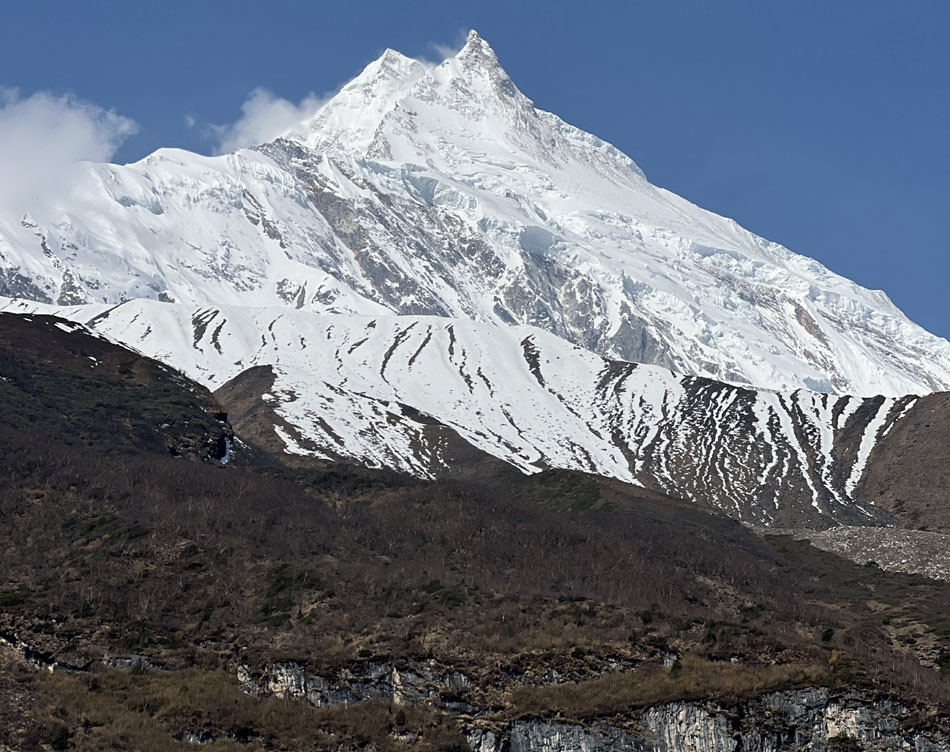
For that reason, we look at the expected conditions across the whole Manaslu and Tsum Valley journey, particularly around the approximate date the group should reach Larkya La, rather than judging a departure only by the weather expected at the beginning of the trek.
Spring on the Manaslu Circuit with Tsum Valley: March, April or May?
April is generally the best spring month for the Manaslu Circuit with Tsum Valley. March offers a quieter trail but carries more uncertainty from lingering winter conditions, while May is warmer but becomes progressively more affected by cloud and pre-monsoon weather. If your spring dates are completely flexible, April gives the best balance for the journey as a whole.
Trekking in March
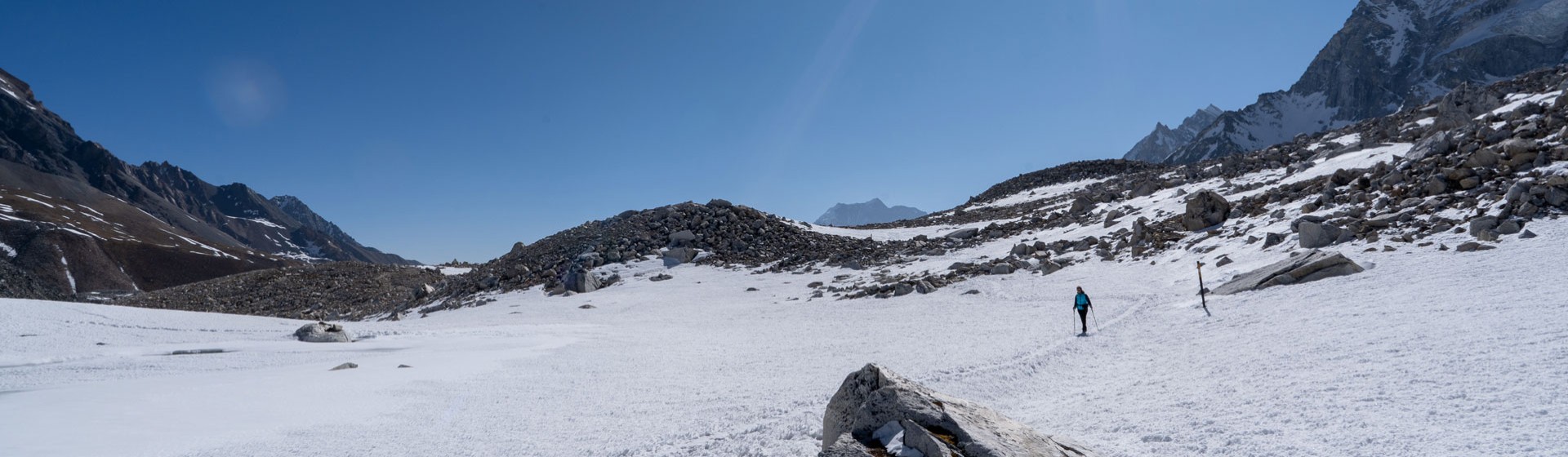
March is a transition month on this route, and you can sometimes feel that transition during the same trek. Conditions lower down may already feel comfortable during the day, while the mountains above the upper Manaslu villages can still be holding winter snow.
This is why we are more cautious with early-March departures. The first few days of pleasant weather do not tell us what conditions will be like later when the group reaches Samdo and Dharamsala. What matters more is how much snow remains higher up, whether there has been recent snowfall and what the trail towards Larkya La looks like by the time the group gets there.
The situation generally becomes more favorable as March progresses. Days are longer, the lower trail begins moving more clearly into spring and there are usually fewer trekkers than during the busier weeks that follow. For someone who values a quieter journey and does not mind colder mornings, late March can be a very good window.
There is another reason we prefer the later part of March. On the combined route, Larkya La is not reached at the beginning of the trek. You first travel into Tsum Valley, spend several days there and return to the main Manaslu trail before climbing towards the pass. A late-March departure therefore pushes the actual crossing farther into spring.
Trekking in April
April is the spring month we find easiest to recommend because the different parts of this long journey tend to fit together particularly well.
Lower on the route, spring is already established. Forest sections are greener, rhododendrons may be flowering at suitable elevations, and daytime walking generally feels milder than it does at the beginning of March. As you turn into Tsum Valley and move towards Chhokang Paro, Nile and Mu Gompa, the landscape gradually opens and the high mountains become a much stronger part of the journey.
The change becomes even more obvious after leaving Tsum and returning to the Manaslu Circuit. By the time you reach Samagaon and Samdo, the green lower trail is well behind you. Nights are colder, vegetation becomes sparse and the route begins to feel like the high Himalayan trek that will eventually take you over Larkya La.
That contrast is one of the reasons we like April for the combined trek. You experience spring lower on the route without deliberately pushing the high-pass section towards winter conditions.
April is also popular, particularly during the main spring trekking weeks. You should expect to meet more trekkers and see greater demand for rooms at the regular Manaslu overnight stops than you would in March. For most travelers, however, that is a reasonable compromise for the more balanced seasonal window.
If a traveler asks us to choose one spring month for a first Manaslu Circuit with Tsum Valley trek, we normally choose April.
Trekking in May
May changes the calculation again. Walking conditions lower down are warmer, vegetation is well established and cold is generally less noticeable during the early part of the journey. For trekkers who particularly dislike cold weather, this can make May attractive.
What we start watching instead is the sky.
As Nepal moves closer to the summer monsoon, cloud can build more readily as the day progresses. Afternoon showers and unsettled weather become increasingly relevant, particularly later in May. A morning that begins with an open mountain view does not necessarily stay that way through the afternoon.
This affects how we think about the walking day. In May, there is even more reason to get moving early rather than spending a clear morning at the lodge and putting most of the day's distance into the afternoon. Earlier starts give the group a better chance of completing the main walking hours before cloud and possible afternoon weather build.
The timing within May matters as well. Early to mid-May is generally easier for us to recommend than the final part of the month. Late May is not automatically unsuitable, but we would want a traveler choosing those dates to understand that they are moving closer to the monsoon transition.
Which Spring Month Is Best?
For most trekkers, our order would be April first, late March second, and early to mid-May third.
That does not mean every April departure will have better weather than every March or May departure. A fresh snowfall can change Larkya La conditions even during a normally favorable week, and mountain weather never follows the calendar perfectly.
The difference is the amount of compromise we expect when choosing the dates. April usually asks for the fewest compromises across the complete Tsum Valley and Manaslu journey, which is why it remains our first spring choice when a traveler is free to choose.
Autumn on the Manaslu Circuit with Tsum Valley: September, October or November?
October is generally the best autumn month for the Manaslu Circuit with Tsum Valley, while late September and early November are excellent alternatives for trekkers willing to trade a little weather certainty for either a quieter trail or a different seasonal feel. The important point is that September, October and November should not be treated as three identical months of “good autumn weather.”
On a trek that eventually reaches Larkya La at 5,160 metres, the difference between leaving in early September and late November is considerable.
Late September: Following the Monsoon Out of the Mountains
We separate early September from late September when discussing departure dates.
At the beginning of the month, the monsoon can still be very much part of the journey. Lower trails may be wet, cloud can sit across the hills for long periods, streams carry more water and road travel towards the trailhead can be slower when there has been recent heavy rain.
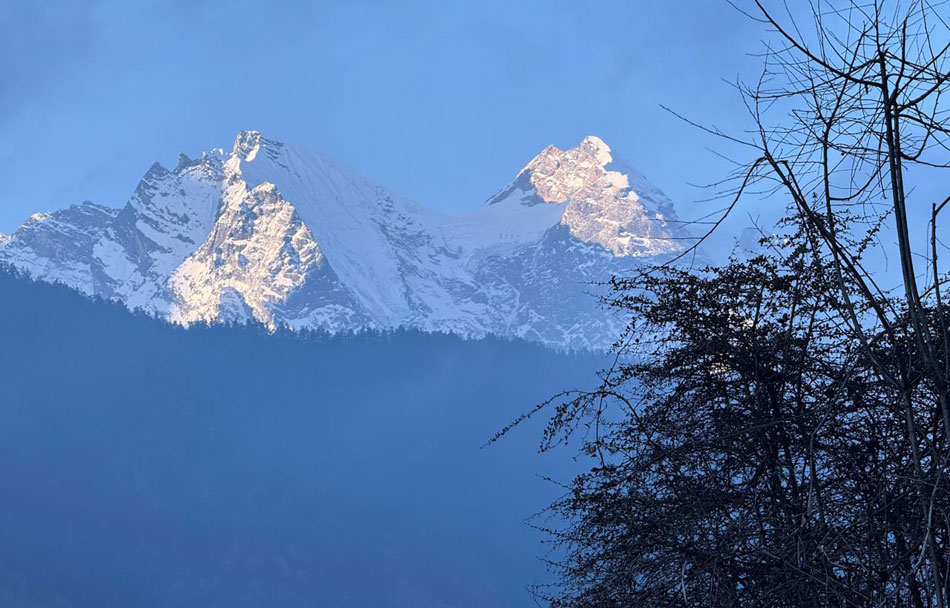
Later in September, you begin to catch the change.
The lower hills are still intensely green from the monsoon, waterfalls and streams have not yet reduced to their drier autumn levels, and sections of trail that become dusty later in the season may still be damp underfoot. Mountain views can appear beautifully after cloud clears and then disappear again later in the day.
For this combined trek, we also think about where the group will be ten or more days after departure, not only what the weather is doing on the first morning. Before reaching the highest part of Manaslu, the route spends several days going into Tsum Valley and coming back out. A group beginning in late September therefore reaches Samagaon, Samdo and the approach to Larkya La farther into the developing autumn season.
That timing is one reason late September interests us much more than the beginning of the month.
It is not a guarantee. If the monsoon withdraws late in a particular year, rain and cloud can follow the group farther into the trek than expected. But for someone who accepts that uncertainty in exchange for a greener landscape and a departure before peak October traffic, late September can be an excellent choice.
October: When the Whole Route Fits Together Best
By October, the change left by the monsoon is usually obvious on the trail. Lower sections have had more time to dry, mountain mornings are often clearer and the journey has not yet moved into the deeper cold associated with the end of autumn.
That balance matters particularly on the Manaslu Circuit with Tsum Valley because you experience several different environments during the same trek.
In Tsum Valley, sunny daytime walking can still feel relatively comfortable. After returning to the main Manaslu trail, however, every few days bring a noticeable change. By Samagaon the evenings feel colder, around Samdo the landscape is more exposed, and at Dharamsala the group is preparing for a pre-dawn departure towards a pass more than 5,000 metres above sea level.
This is where October works particularly well. It does not make the high mountains warm, and it certainly does not guarantee that Larkya La will be free of fresh snow. What it usually provides is a useful window after the main monsoon influence and before winter becomes the dominant concern at higher elevations.
There is a price for choosing that window: other trekkers choose it too.
October is the period when we pay more attention to lodge availability at the regular overnight stops. On a busy day, arriving considerably later than other groups can mean fewer room choices, particularly at smaller settlements where accommodation is naturally limited. That is a practical part of peak-season trekking that is often missing from descriptions of October as simply “the best weather.”
For most first-time trekkers, we think that is a reasonable trade. If your priority is the strongest overall seasonal window rather than the quietest trail, October is the autumn month we would choose.
October is also when scheduled departures are easiest to match with other trekkers. If you are travelling solo or prefer to trek with others, you can check our Manaslu Circuit Trek group joining departures for available dates during the main trekking season.
November: The Cold Begins to Shape the Day
November is not simply a quieter version of October. As the month progresses, the cold begins to influence how the trekking day feels and how we prepare for the higher section.
Lower down, sunshine can still make daytime walking surprisingly comfortable. Once the sun disappears behind the mountains, however, the temperature can fall quickly. By Samagaon and Samdo, getting out of a sleeping bag in the morning, putting on cold boots and waiting for sunlight to reach the valley become familiar parts of the day.
The difference becomes clearest at Dharamsala.
The Larkya La day begins very early, when the surrounding slopes are still dark and there has been no daytime sun to soften the cold. Water carried outside your sleeping bag may begin to freeze, exposed sections feel much colder when there is wind, and snow or ice from previous weather can remain where direct sunlight is limited.
These are manageable conditions on many November departures, but they explain why we distinguish early November from late November.
Early November is one of the periods we particularly like for trekkers who want to move just beyond peak October. Visibility can be excellent, the main autumn trekking pattern is still established and the trail may begin to feel less busy.
By late November, we become more interested in recent snowfall, overnight temperatures and current conditions around the pass. We would not reject a departure because the calendar says November 25, but we would prepare for it differently from a trek beginning three weeks earlier.
Which Autumn Month Should You Choose?
For a first trek with completely flexible dates, October gives the fewest compromises across the complete Manaslu and Tsum Valley route.
Choose late September if you would rather begin before peak season and do not mind accepting some lingering monsoon uncertainty.
Choose early November if clearer, quieter trails appeal to you and you are comfortable with colder mornings and nights as the trek gains altitude.
The choice is therefore less about finding a month with “perfect Himalayan weather” and more about deciding which compromise suits you: more weather uncertainty at the beginning of autumn, more trekkers in the middle, or more cold towards the end.
That is how we prefer to compare autumn departures, because those differences are what you are more likely to notice once you are actually walking the trail.
Should I Choose April or October for Manaslu and Tsum Valley?
If both April and October fit your travel dates, you do not need to keep searching for the month with “perfect” weather. Both are strong periods for the Manaslu Circuit with Tsum Valley. At that point, we would choose according to what you want from the trek, not because one month is universally right for everyone.
When someone asks us this question, we usually turn it around: Is this your first trek in Nepal, and what would disappoint you more: sharing the trail with more trekkers or giving up some weather predictability?
For a first visit to the Manaslu region, we would normally lean towards October. It is the easier choice for someone whose main priority is giving the complete journey a strong seasonal window and who does not mind meeting more groups along the established overnight route.
For someone who has already trekked in Nepal during autumn, April becomes much more interesting. There is little reason to keep returning in the same season simply because October has the strongest reputation. Walking this route in spring gives you another version of the landscape and can make the journey feel quite different from an earlier autumn trek elsewhere in Nepal.
We would also lean towards April for a traveler who tells us that the changing character of the trail matters as much as the final mountain views. If the priority is the classic high-Himalayan atmosphere and the traveler is comfortable with a busier trekking period, we would lean back towards October.
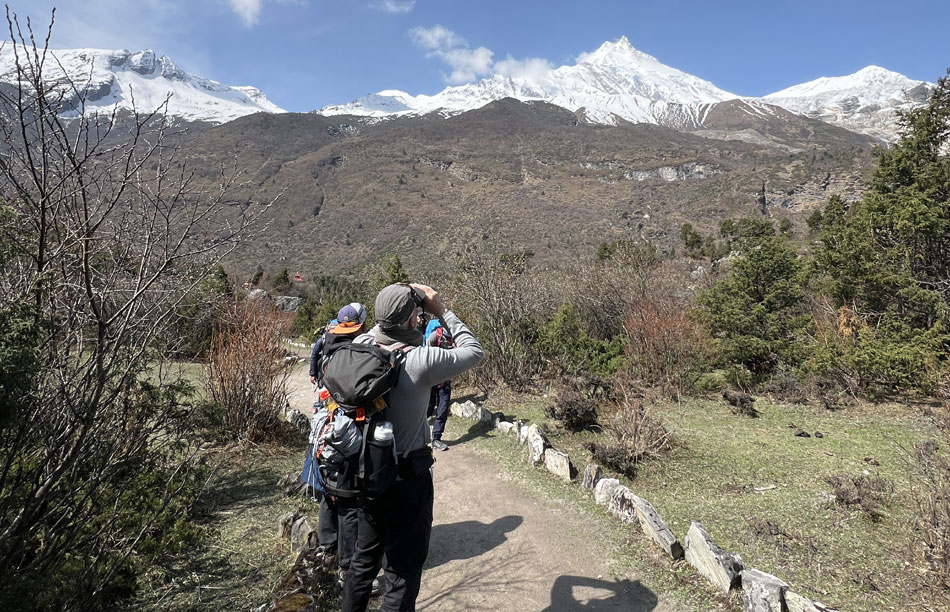
For photographers, we would ask what they actually want to photograph rather than automatically recommending one month. Someone primarily interested in expansive mountain landscapes may prefer October, while someone who wants more seasonal variety throughout a long trekking story may find April more interesting.
And if two friends were sitting in our Kathmandu office with the same fitness, the same number of days and no strong preference between spring and autumn, we would probably send them in October. But it would not be a difficult decision. We would be equally comfortable organizing the trek in April.
That is the useful distinction. October is our default choice; April is not the backup choice. They are two different ways of experiencing the same route.
If your available holiday falls naturally into either one, we would not move an entire Nepal trip by several months just to chase a theoretical improvement in conditions. Choose the period that suits your schedule and the type of trail experience you want, then prepare properly for the conditions you may actually meet.
What If the Weather Changes After You Start the Trek?
Choosing a good departure month improves your chances of favorable conditions on the Manaslu Circuit with Tsum Valley, but it does not guarantee the same weather for the entire journey. This is a long trek through very different elevations, and conditions can change considerably between the day you enter Tsum Valley and the morning you approach Larkya La.
If rain arrives while the group is still lower on the route, it does not automatically mean changing the itinerary. We first look at what the weather is actually doing on the trail. A few hours of rain is very different from prolonged rainfall affecting walking conditions, streams or road access. Sometimes the sensible response is simply an earlier start, a slower walking pace or keeping waterproof layers accessible rather than buried inside a porter bag.
The decisions become different once the trek moves higher.
Fresh snow around Samdo or Dharamsala gets our attention because the group still has to cross Larkya La. At that stage, the question is not whether snow looks dramatic from the lodge window. We want to know how much has fallen, whether it is continuing, what the wind is doing higher up and what the guide is learning about conditions ahead.
Our Dharmasala and Larkya La guide looks more closely at the final approach, pass conditions and what the crossing day involves.
Information can come from several directions. Guides speak with lodge owners, other guides and groups arriving from or moving towards the pass. What people have actually encountered on the trail can be useful alongside the weather forecast, particularly when conditions have changed overnight.
This is one reason we do not like making a firm decision about Larkya La several days too early. If the group is still in Tsum Valley, a forecast for the pass may change before you get anywhere near it. As the crossing approaches, the guide can make decisions using much more relevant information from the trail and the latest weather conditions.
Sometimes that means continuing exactly as planned. Sometimes it means changing the morning start, waiting when the itinerary allows, or adjusting the days ahead rather than forcing the original schedule.
The important point is that reaching Larkya La on the date printed in the itinerary is not more important than deciding whether the crossing makes sense under the conditions actually found there.
The same principle applies to individual trekkers. Weather may be perfectly acceptable while someone in the group is moving more slowly than expected or not adapting well to the altitude. In that situation, we would not use a clear forecast as a reason to rush the person higher simply because a good weather window appears to be available.
This is also why we advise travelers not to become too concerned by every forecast they see before leaving Kathmandu. Mountain forecasts are useful, particularly as a specific trekking day gets closer, but a long journey through Manaslu and Tsum Valley should not be judged from a weather symbol showing rain or snow more than a week ahead.
Choose a sensible trekking season, plan the route carefully, and then make mountain decisions using the conditions and information available once you are there. On the Manaslu Circuit with Tsum Valley, that approach is far more useful than expecting even the best month of the year to deliver perfect weather every day.
How Far in Advance Should I Plan a Manaslu and Tsum Valley Trek?
You do not need to arrange the Manaslu Circuit with Tsum Valley a year in advance, but we would not leave everything until the final few days either. Once your Nepal travel dates are reasonably certain, that is usually the right time to start arranging the trek.
The first date we look at is not actually the day you want to start walking. It is when you arrive in Kathmandu.
For this trek, we prefer having enough time before departure to meet the guide, check the final itinerary, review equipment and complete the required restricted-area arrangements. Our Manaslu Circuit Trek permit guide explains the permit system separately for travelers who want to understand the paperwork before booking.
Your return flight matters just as much. We do not like seeing an international departure tied too tightly to the expected end of a long Himalayan trek. Weather, road conditions, a slower trekking day or another change along the route can affect the schedule. If possible, keeping some breathing room in Kathmandu after the trek is much more comfortable than spending the final days in the mountains worrying about a flight home.
Once the travel window is clear, the practical arrangements become straightforward. The trekking company can confirm the route and departure date, collect the documents required for the permits, assign the trekking crew and organize the transport that connects Kathmandu with the trail.
For travelers joining friends from different countries, we recommend settling the dates before worrying about smaller details. We sometimes see groups discussing sleeping bags, charging facilities or exactly what to order in tea houses while one person still has not confirmed when they can arrive in Nepal. The international travel window determines almost everything that follows.
The same applies if you have only a fixed number of days available. Rather than choosing a departure date first and trying to squeeze the entire trek between two flights, work backwards from your international schedule. Allow for arrival in Kathmandu, preparation before the trek, the complete walking itinerary and some margin before flying home.
This becomes especially important on the combined Manaslu and Tsum Valley route. You are not taking a short trek where losing half a day can easily be absorbed. You travel into Tsum Valley, return to the main Manaslu trail and continue towards the highest part of the circuit before eventually crossing Larkya La. Trying to save a day at the beginning or end simply to fit cheaper flights can leave the whole journey unnecessarily tight.
If your dates are flexible, there is no benefit in booking simply because someone pressures you to make an immediate decision. Compare the itinerary, understand what is included and make sure the schedule actually works with your Nepal travel dates.
If your flights are already booked, however, we would start planning rather than waiting for an arbitrary number of weeks before departure.
The best time to arrange the trek is when your travel window is clear enough to build the journey properly around it. For us, good planning is less about saying “book exactly three months ahead” and more about making sure your Kathmandu arrival, trek departure, permit preparation and flight home fit together without forcing the mountain itinerary into an unnecessarily tight schedule.
What If My Nepal Travel Dates Are Fixed?
If your Nepal travel dates are already fixed, you do not necessarily need to change them just because they fall outside the most recommended weeks for the Manaslu Circuit with Tsum Valley. The better question is whether the complete route makes sense for your exact dates and how much seasonal compromise those dates require.
This is something we look at quite differently from a traveler who can choose any month of the year.
If someone has complete flexibility, choosing a suitable trekking window is relatively straightforward. But many trekkers contact us after their international flights have already been booked, their annual leave has been approved or they are combining Nepal with another country. In that situation, simply telling them that October or April is “best” does not solve their problem.
We start with the actual calendar. A departure close to a seasonal transition deserves more attention than the name of the month alone. Conditions can change considerably over the course of a long trek, particularly when the journey eventually reaches high terrain.
For the combined route, we then look beyond the starting date and estimate where you are likely to be later in the journey. Your first trekking day may fall in one set of conditions, while the Larkya La crossing comes considerably later. That difference matters more to us than simply attaching a seasonal label to the day you leave Kathmandu.
The amount of time available is equally important. If your holiday window is already tight, we would be cautious about solving the problem by removing acclimatization or repeatedly increasing walking hours. A calendar problem should not become an altitude or pacing problem.
Sometimes the dates work perfectly well and only require realistic preparation for the conditions you may encounter. Sometimes shifting the trek by a few days makes the schedule noticeably better. And there are occasions when we would rather recommend a different trekking plan than pretend that every date is equally suitable for completing the full Manaslu and Tsum Valley route.
A trekking company should be willing to tell you when your dates are not a good match for the journey you want to do.
So if your flights are already booked, send the company your Kathmandu arrival date, earliest possible trek departure and international flight home. Those three dates are more useful than simply asking, “Is November good for Manaslu?”
From there, the route can be assessed as a real journey rather than a month on a weather chart.
Fixed dates do not automatically mean a bad Manaslu and Tsum Valley trek. They simply mean the itinerary and season need to be judged together.
Is the Manaslu Circuit with Tsum Valley Too Busy in Peak Season?
No. The Manaslu Circuit with Tsum Valley can be busier in October and during the main spring weeks, but it does not normally feel crowded for the entire trek. The interesting part is that the number of trekkers around you changes as the route divides and comes back together.
We notice this particularly when guests compare the combined trek with the standard Manaslu Circuit.
During the first part of the journey, you may be walking alongside people who are all heading in the same general direction. Some are doing only the Manaslu Circuit, while others are continuing into Tsum Valley. Once the Tsum route separates from the main circuit, those two groups of trekkers stop following the same schedule.
The circuit-only trekkers continue north while you spend several days deeper inside Tsum Valley. By the time you come back and rejoin the main Manaslu trail, many of the people you saw earlier are already farther ahead. Instead, you begin meeting trekkers who started the circuit on different dates.
That changes the social rhythm of the trek more than people expect.
You might share breakfast with another group, walk for several hours without seeing them, pass them while they stop for lunch and then find everyone in the same village again that evening. On another day, differences in walking speed, acclimatization days and side trips can separate groups almost completely.
Tsum Valley itself often feels different from the main circuit for a simple reason: many Manaslu trekkers do not make the detour into Tsum. The people you meet there have deliberately chosen the longer combined journey rather than simply following the standard circuit itinerary.
After returning from Tsum, the pattern changes again. As the route climbs farther into Manaslu, itineraries begin to converge towards the limited sequence of settlements used before the Larkya La crossing. This is where you are more likely to recognize the same guides and trekkers for several days.
That is what we would explain to someone worried about October crowds. The trail and the lodge can give you two completely different impressions on the same day. You may spend much of the morning seeing very few people and then arrive in the afternoon to find several groups already sitting in the dining room.
We therefore would not choose an unsuitable month simply to avoid seeing other trekkers.
If having the quietest possible trail is your main priority, the busiest weeks of October may not be your ideal choice. But if you are choosing October because the season suits your complete Manaslu and Tsum Valley journey, meeting other groups occasionally is a reasonable trade.
The combined route actually helps in this respect. Going into Tsum Valley temporarily takes you away from the flow of trekkers completing only the circuit, and when you return, you effectively join the main trail at a different point in its trekking rhythm.
So, is the Manaslu Circuit with Tsum Valley crowded in peak season? At certain lodges and particular points on the main circuit, it can feel busy. For the complete journey, no. You should expect to meet other trekkers in October and the main spring season, but you should not expect to walk in a continuous line of people from the beginning of the trek to Larkya La.
Trekkers following only the Manaslu Circuit Trek continue on the main circuit, while the combined itinerary leaves that flow for several days inside Tsum Valley before eventually returning.
Is Late November Too Cold for the Manaslu Circuit with Tsum Valley?
Late November is not automatically too cold for the Manaslu Circuit with Tsum Valley, but by this point we treat the cold as part of the trek rather than a minor inconvenience. The lower sections can still feel comfortable when the sun is out, while the experience higher around Manaslu can be very different.
This is one of those questions where the temperature shown on a weather app does not tell the whole story. During the day, walking generates plenty of body heat and direct sunshine can make conditions feel surprisingly pleasant. The cold becomes much more noticeable when you stop walking, when the sun leaves the valley and during the hours before sunrise.
By late November, that changes some very ordinary parts of the trekking day. Clothes that felt adequate while walking may not be enough when you sit down outside for a break. At the colder high-altitude stops, water left in an exposed bottle overnight may partially freeze. Boots and clothing feel much less inviting when you put them on early in the morning, and getting out of a warm sleeping bag becomes harder as the trek climbs higher.
None of those things necessarily stops the trek. They simply mean that equipment and daily habits matter more. The bigger question for us is what has been happening around the high section of the route. A cold, dry period and a recent heavy snowfall create very different situations even though both can occur in late November. Before the Larkya La crossing, recent snow, ice, wind and the condition of the trail matter more than the date printed on the calendar.
There is also a difference between being prepared for cold and being comfortable in cold. A trekker with an appropriate sleeping bag, warm layers, gloves and good cold-weather habits may be perfectly happy with a late-November departure. Someone who already dislikes cold mornings at moderate altitude may find the upper part of the journey much less enjoyable, even when the route remains possible.
That is why we would not answer this question simply by saying, “Yes, November is a good trekking month.” If someone contacts us for a departure near the end of November, we want to know their exact dates and how far into the following month the itinerary will extend. On the combined route, the date you begin trekking is not the date you cross Larkya La. A late-November start can push the highest part of the journey into December, which is a different calculation from beginning earlier in November and finishing before the month ends.
So, is late November too cold for Manaslu and Tsum Valley? Not necessarily. For a well-equipped trekker who accepts colder mornings and the possibility of more demanding high-altitude conditions, it can still be a realistic period. But the later your departure moves, the more we would judge the trek by current conditions around the upper route rather than relying on November's general reputation as a good autumn trekking month.
Would We Trek Manaslu and Tsum Valley During the Monsoon?
If we had complete freedom to choose the dates, we would not normally choose the monsoon for the Manaslu Circuit with Tsum Valley. Trekking during June, July or August can be possible when conditions allow, but for the complete combined route we would usually prefer spring or autumn.
Our concern is not simply whether it rains during the walking day. In the monsoon, we also have to think about how the group reaches the trail, what prolonged rain has been doing to the lower route, how much water is coming through streams and waterfalls, and whether road conditions are creating delays before the trek has properly begun.
Once on foot, several wet days together can make ordinary trekking much more tiring than a weather forecast suggests. Stone steps and rocky sections require more attention when wet, boots may still be damp when you put them on the following morning, and clothing that normally dries during an afternoon at the lodge can remain damp in humid conditions. Cloud may also hide mountains that would normally be visible from the trail, sometimes for much of the day.
At the same time, we would be giving an incomplete picture if we described a monsoon trek only as rain and mud. The lower valleys become intensely green, waterfalls are much larger, cultivated land around the villages is active and the trail receives far fewer trekking groups than during October. Someone returning to Nepal after several autumn treks may find that seasonal change fascinating.
Tsum Valley sometimes creates confusion when people research a summer departure. Because of its position within the Himalaya, parts of the valley can be relatively drier than Nepal's wetter southern slopes, and this can make a monsoon visit sound more attractive.
But you are not trekking only in Tsum Valley. You first have to reach the valley, later come back out and rejoin the main Manaslu route, and eventually continue towards the much higher section of the circuit. Conditions in one relatively dry part of Tsum therefore cannot be used to judge the weather or trail conditions across the entire journey.
This is the point we would discuss carefully with someone who can travel only in summer. We would want to know the exact dates, whether they have previously walked for consecutive days in wet conditions, how important clear mountain views are to them and how much flexibility they have if road or trail conditions affect the planned schedule.
A traveler who says, “I don't mind rain; I want very few trekkers and I have extra time in Nepal,” gives us a very different situation from someone who has exactly enough holiday for the itinerary, wants the clearest possible mountain views and needs to catch an international flight immediately after the trek.
That is why a monsoon Manaslu and Tsum Valley trek can be possible without being the season we would recommend first.
If the same traveler could freely choose between July and October, we would normally choose October. If the choice were August or April, we would normally choose April. But if June, July or August were the only available travel period, we would assess the actual dates and current conditions rather than automatically saying that the trek cannot be done.
For us, the reason to choose the monsoon should be that your dates require it or you genuinely want the character of a summer trek and understand its compromises. We would not choose it simply to find an emptier trail.
If you are still deciding whether the longer journey is right for you, our guide to whether Tsum Valley is worth adding to the Manaslu Circuit explains what the detour changes beyond simply adding more trekking days.
Is the Manaslu Circuit with Tsum Valley Worth Trekking in Winter?
The Manaslu Circuit with Tsum Valley can be trekked in winter when conditions allow, but December, January and February would not be our first choice for most travelers. If someone specifically wants a quiet winter journey and already understands what trekking for many days in cold conditions involves, the experience can be rewarding. If the only reason for choosing winter is to avoid the busier spring and autumn periods, we would usually reconsider the dates.
When a traveler asks us about a January departure, we are less interested in convincing them that winter is either “good” or “bad” and more interested in why they chose January in the first place.
Someone who has previously trekked through snow, is comfortable spending consecutive nights in simple mountain lodges and has enough flexibility in Nepal if the schedule changes gives us a very different starting point from a first-time Himalayan trekker who has chosen January because they found a cheap flight to Kathmandu.
That distinction matters on the combined route because the journey does not remain at one elevation or in one valley. You spend the earlier part of the trek approaching and exploring Tsum Valley, later return to the main Manaslu trail and continue progressively higher before the route eventually reaches Larkya La at 5,160 metres. Conditions experienced during the first part of the journey therefore cannot tell us exactly what the group will find when it reaches the pass many days later.
This is also why we would not describe a winter departure simply as the normal Manaslu and Tsum Valley trek with fewer people.
The season changes how the trip has to be approached. Daylight is shorter, cold becomes a more important part of rest and recovery, some services along a quieter mountain route may be more limited than during peak trekking periods, and recent snowfall can influence the upper itinerary. A traveler needs to be comfortable with the possibility that the plan may have to respond to conditions rather than expecting every overnight stop and walking day to unfold exactly as it would in the main season.
There can be a very attractive side to that experience. With fewer trekking groups moving through the region, winter changes the atmosphere of the trail and the villages considerably. When the weather settles, clear winter air can produce excellent mountain visibility, and someone who actively prefers quiet trails may value the season precisely because it feels different from October.
But that quieter experience comes with a trade. If recent snow makes the approach to Larkya La unsuitable, the fact that you have already spent many days reaching the upper route does not make crossing the pass more important. We would rather change a plan than treat completing the circuit as something that has to happen regardless of the conditions encountered.
For travelers considering December, the exact timing matters because the beginning of the month and the deeper part of winter should not automatically be treated the same. For January and February, we would pay even more attention to current snow conditions, cold-weather preparation and the amount of flexibility available in the overall Nepal itinerary. A favorable winter period can produce a very good trek, while a significant snowfall can change the calculation quickly.
So when someone asks us whether a winter Manaslu and Tsum Valley trek is “worth it,” our answer depends more on the traveler than it does during April or October.
For an experienced trekker who wants solitude, accepts the cold and has enough flexibility to respond to mountain conditions, winter can be worth considering. For a first-time trekker with completely flexible dates, we would normally choose spring or autumn instead.
We would especially avoid choosing winter simply because it appears quieter on a seasonal chart. If you choose December, January or February, it should be because you actually want the character of a winter Himalayan journey and are prepared for the compromises that come with it.
Travelers interested primarily in the valley rather than the complete circuit can compare this with our Tsum Valley Trek, where the seasonal decision does not have to account for completing the later Larkya La section.
Does Festival Season Affect a Manaslu and Tsum Valley Trek?
Festival season can affect the planning of a Manaslu Circuit with Tsum Valley trek, particularly when Dashain or Tihar falls close to your arrival or departure dates, but we would not normally change a good trekking window simply to avoid a festival. What matters more is understanding where the festival may affect the journey and arranging those details before the trek begins.
Dashain and Tihar usually overlap with Nepal's main autumn trekking period, although their dates change each year according to the traditional calendar. When we receive an inquiry for this period, we therefore look at the actual festival dates for that year rather than assuming that every October departure will be affected in the same way.
The first thing we check is where the traveler will be when the important festival days fall.
If you are still in Kathmandu, the effect may be more noticeable than it is several days into the mountains. Many Nepalis travel to their home districts for Dashain, families gather together and normal working patterns can change around the main holidays. Transport can be in greater demand, and some shops, offices and services may operate differently from an ordinary week.
For us, this becomes a planning issue rather than a sightseeing issue. If a guest lands in Kathmandu immediately before an important festival day and expects to leave for the trek straight away, we want the guide, transport and necessary arrangements settled beforehand instead of relying on everything being organized at the last moment.
The trekking crew deserves the same consideration. Guides and porters are not simply names added to an itinerary; many also want to spend important festival days with their families. When a departure overlaps Dashain or Tihar, we prefer knowing that early enough to assign people who have agreed to those dates rather than searching for whoever happens to be available just before departure.
Once the trek is underway, we are careful about what we promise a traveler will experience.
Being in Nepal during Dashain does not mean that every village on the Manaslu trail will be holding a celebration when you walk through it, and traveling during Tihar does not guarantee that the mountain section of the journey will look like the festival scenes someone may have seen from Kathmandu. The date, village, local community and your position on the itinerary all influence what you actually encounter.
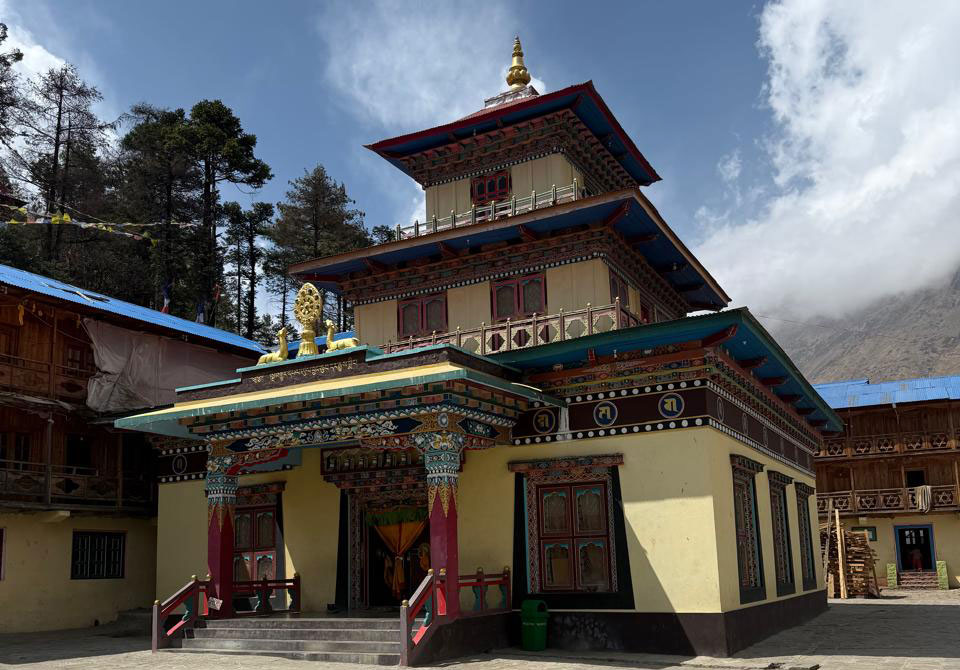
This is particularly relevant once the journey enters Tsum Valley, where Tibetan Buddhist traditions are an important part of local life. We would not describe the cultural calendar there simply through the better-known Hindu festivals celebrated across much of Nepal.
Occasionally a traveler asks us something more specific: “Can I time the trek to see a particular festival or monastery event in Tsum Valley?”
That is when the planning changes.
Instead of choosing a trekking date first and hoping the event happens while the group is there, we would verify the festival or event date for that year and then work backwards through the itinerary to see when the trek needs to begin. If reaching a particular village or monastery on a particular day requires rushing acclimatization or creating an awkward schedule elsewhere, we would rather explain that than force the itinerary around a cultural event.
For travelers who are simply choosing the best time for the Manaslu Circuit with Tsum Valley, festival season should therefore be a secondary consideration. We would first choose dates that make sense for the complete trek, then check how Dashain, Tihar or another important holiday interacts with the Kathmandu arrival, ground transport, crew arrangements and the days before departure.
For someone traveling specifically because they want a festival to be part of the experience, we do the opposite: confirm what is actually happening, confirm the date, and only then decide when the trek should start.
That is much more reliable than choosing an October departure because it is “festival season” and expecting the celebration to appear somewhere along the trail.
Our Final Recommendation: When Should You Trek Manaslu Circuit with Tsum Valley?
After looking at the whole journey rather than one valley or one weather forecast, October would be our first choice for the Manaslu Circuit with Tsum Valley, with April as our first choice in spring.
If two trekkers came to our Kathmandu office with exactly the same experience, the same amount of time and complete freedom to choose their dates, we would probably send the October trekker first. The reason is not that October guarantees sunshine or a snow-free Larkya La. It simply tends to require fewer compromises across a journey that begins much lower, spends additional days inside Tsum Valley and finishes with a very different environment around the upper Manaslu route.
We would have no hesitation sending the second trekker in April. In fact, if that person had already walked in Nepal during autumn and wanted the next journey to feel seasonally different, April could easily become our preferred choice for them.
The decision becomes more interesting when someone says, “I want good trekking conditions, but I would rather avoid the busiest weeks.” We would not immediately move that person into winter or the monsoon. We would first look around the edges of the strongest windows, particularly late September or early November, and then judge the actual travel dates against the complete itinerary.
We take the same approach when someone's holiday falls outside those periods. A January departure from an experienced winter trekker with flexible Nepal dates deserves a different answer from a January departure chosen only because the airfare was cheaper. A July traveler who understands wet-weather trekking and has time available if plans change is also asking us a different question from someone who has a tight schedule and expects uninterrupted mountain views.
That is why our recommendation changes only after we know something about the person doing the trek.
For a first Manaslu and Tsum Valley journey with completely flexible dates, choose October. If autumn does not suit your schedule or you prefer spring, choose April. If you want to move just outside the busiest autumn period, look first at late September or early November.
Beyond those choices, we would stop ranking months and start looking at the traveler: previous trekking experience, tolerance for cold or prolonged rain, international flight dates, available contingency time and how strongly they value a quieter trail.
The best departure is not the one that looks perfect on a twelve-month weather chart. It is the one that gives you a sensible chance of completing the whole Manaslu Circuit with Tsum Valley, including the high section that comes many days after you first start walking.
For most first-time trekkers who ask us to make that decision for them, October remains our answer.