Why Choosing a Company for Manaslu and Tsum Valley Is Different
Choosing a company for the Manaslu Circuit with Tsum Valley is different from booking many of Nepal's unrestricted trekking routes. Both the Manaslu and Tsum Valley sections pass through restricted areas, and the restricted-area permits must be arranged through an authorized trekking agency in Nepal. A licensed trekking guide is also required for this route. You cannot treat this as an independent trek and simply organize the restricted-area paperwork yourself.
This matters even more on the combined trek because Manaslu and Tsum Valley are listed separately as restricted areas. The permit arrangements therefore have to match the route you are actually following. A company organizing the complete journey should know which permits are required, the dates and areas they need to cover, and what documents must be prepared before you leave Kathmandu.
Travelers who are still deciding whether to include Tsum Valley can first compare the combined journey with our standard Manaslu Circuit Trek.
From our side, permit preparation starts before the trek reaches the trail. We collect the required traveler details and documents, check them against the planned itinerary, and arrange the applicable trekking permits through the authorized process. By the time we leave Kathmandu, we want the paperwork settled rather than discovering a permit or route problem at a checkpoint.
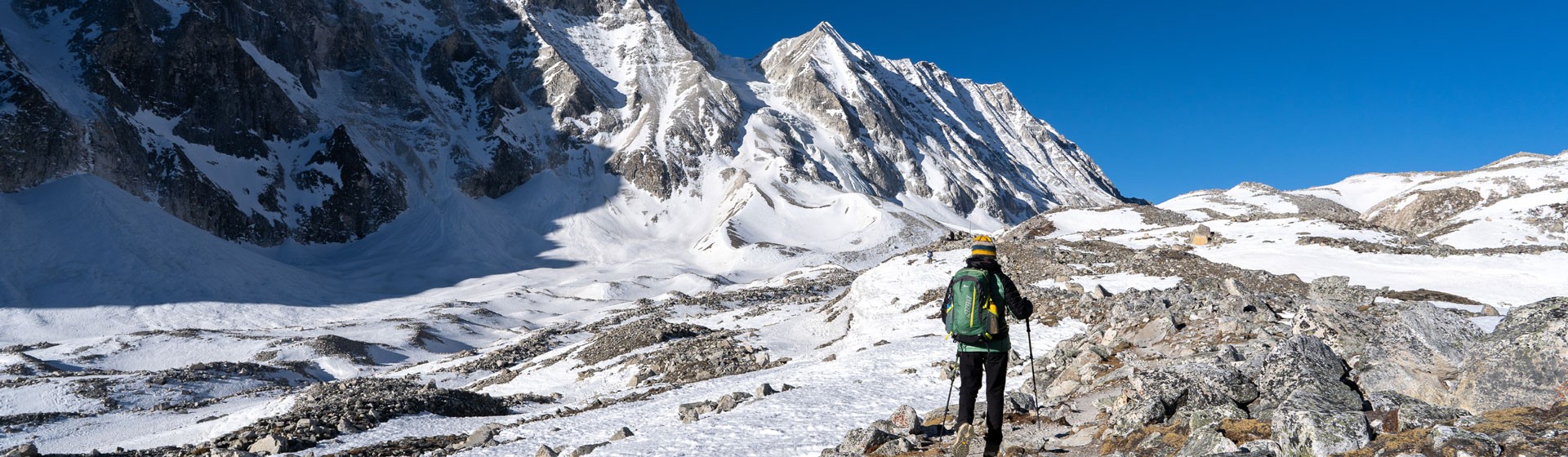
The guide requirement should not be viewed as paperwork alone. This becomes clear once you leave the main Manaslu trail and turn towards Tsum Valley via Lokpa. The trail continues through places such as Chumling and Chhokang Paro before reaching the upper valley around Nile and Mu Gompa. You then retrace part of the route, reconnect with the Manaslu Circuit and gradually move into a very different stage of the trek towards Namrung, Samagaon, Samdo and Larkya La.
A guide who has actually worked on the combined route understands that these are not just names on an itinerary. There are days when guests want more time around the monasteries and villages of Tsum, days when walking time changes with the group's pace, and later days when gaining altitude becomes more important than trying to recover time lost earlier. Cutting a day may look easy while planning the trip in Kathmandu, but it can make much less sense once the group is moving towards the higher Manaslu villages.
For that reason, the first question should not be which company offers the cheapest Manaslu and Tsum Valley trek. First check whether the company is properly authorized to arrange the restricted trek, whether it will process the correct permits, and whether the licensed guide assigned to your departure has relevant experience on both parts of the route. Price becomes useful to compare only after those basics are clear.
What Should You Check Before Choosing a Manaslu and Tsum Valley Trek Company?
Before choosing a company for the Manaslu Circuit with Tsum Valley Trek, look beyond the package price, reviews and the number of years displayed on its website. For this particular route, we would want to know who actually operates the trek in Nepal, how well the team knows the combined route, who will lead it, what happens when the planned schedule changes and exactly what the quoted price covers.
First, find out whether you are dealing directly with the Nepal company operating the trek or with a business that will pass your booking to another ground operator. Using an overseas company or reseller is not automatically a problem, but you should know who will actually arrange your permits, select the guide and deal with problems once the trek begins. If this is not clear, ask for the name of the Nepal operator. When booking directly with a local company, check its office, company information, trekking credentials and the people behind the operation rather than relying on the word “local” on a website.
Then read the route itself, not just the number of days. Look at what happens after the trail branches towards Tsum Valley. Does the itinerary turn around after the lower villages, or does it continue through the upper valley towards Nile and Mu Gompa? Where does it reconnect with the main Manaslu route, and how much time remains before the trek reaches Samagaon, Samdo and the approach to Larkya La?
We pay particular attention to this because two itineraries sold under almost the same name can give you very different experiences in Tsum Valley. Removing a day from the upper valley can mean turning back earlier, missing places you expected to visit or creating longer walking days elsewhere. A shorter itinerary is not necessarily a poor itinerary, but the company should be able to explain what has been changed to make it shorter.
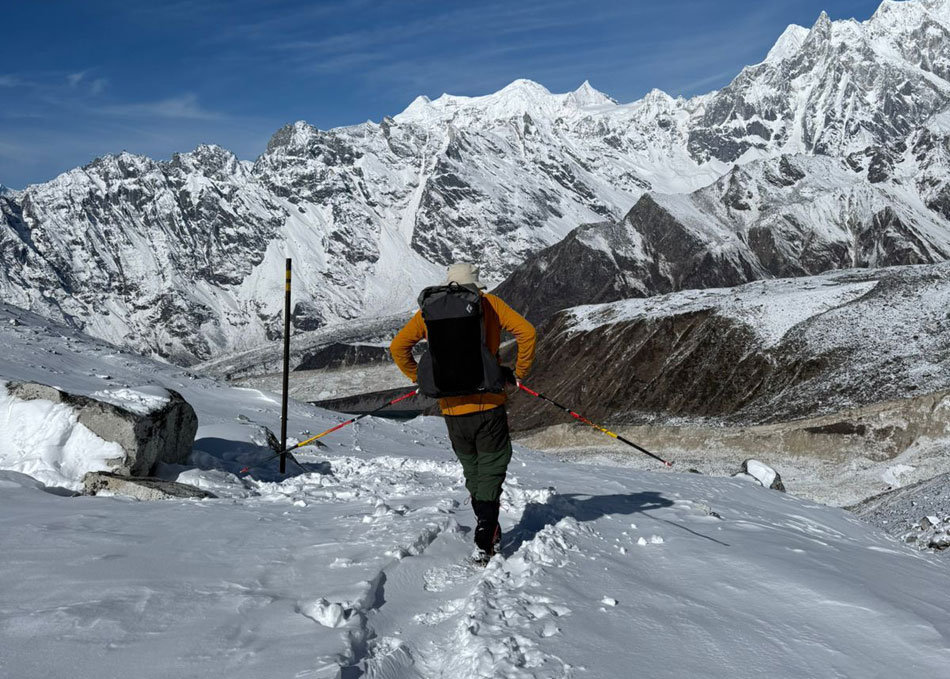
It is also worth asking who will actually lead your trek rather than stopping at “licensed English-speaking guide included.” A guide can have many years of trekking experience in Nepal while having spent most of that time in Everest, Annapurna or Langtang. For this journey, ask whether the guide proposed for your departure has previously worked on the combined Manaslu and Tsum Valley route. Once you turn into Tsum, the guide should already understand the overnight stops, trail junctions, lodge options and realistic walking times there, and then be comfortable taking the same group back onto the Manaslu Circuit as the elevation increases.
One question we think travelers should ask is: “If we lose a day during the trek, which day would you change and which day would you protect?” Someone may need a shorter walking day in Tsum, weather may slow the group, or conditions later may affect the planned Larkya La crossing. There is no single correct answer for every situation. What matters is whether the company can explain the choices and their consequences instead of simply promising that everything can be adjusted. On this route, recovering lost time by walking longer the following day is not always sensible, particularly after returning from Tsum Valley and continuing into the higher Manaslu section.
Finally, compare what the price actually covers. Check the restricted-area and conservation permits, accommodation, meals, guide, porter arrangement, ground transportation, staff expenses and anything that remains payable during the trek. Ask what happens financially if an additional night, different vehicle or another itinerary change becomes necessary. Two quotations can look similar until these details are placed side by side.
For the Manaslu Circuit with Tsum Valley, the cheapest quotation is useful only when you understand what has been included, what has been left out and who will actually be responsible for your trek once you leave Kathmandu. Those details tell you considerably more about a company than a “best trekking company” claim on its website.
Ask Whether the Guide Actually Knows Tsum Valley
An “experienced Manaslu guide” and a guide who knows the Manaslu Circuit with Tsum Valley are not necessarily the same thing. Many guides are familiar with the main circuit through Namrung, Samagaon, Samdo and Larkya La, while the turn into Tsum Valley takes them away from that regular route for several days.
You can usually learn more by asking one practical question than by asking how many years the guide has worked: “When we enter Tsum Valley, what would you recommend that we make time for rather than simply following the overnight stops?”
A guide who knows the valley should be able to answer from experience. The discussion might include how much time is worth keeping around Chhokang Paro, what makes continuing towards Nile worthwhile, how Mu Gompa fits into the upper-valley days, or where it makes sense to slow down rather than treating Tsum as a detour that needs to be completed quickly. The exact answer can vary; what matters is whether it sounds like knowledge of the place rather than a recitation of the itinerary.
Travelers whose main interest is the valley itself can also look at our Tsum Valley Trek, which focuses on this cultural section without continuing around the full Manaslu Circuit.
There are smaller signs on the trail as well. In Tsum Valley, arriving at the lodge does not necessarily mean there is nothing left to do that day. Depending on where you are, the weather and how the group is walking, there may still be time to visit a monastery, explore around a village or simply keep the afternoon free because the following day will be longer. Knowing when one of those choices makes sense comes from familiarity with the route, not from the number of trekking destinations listed on a guide's résumé.
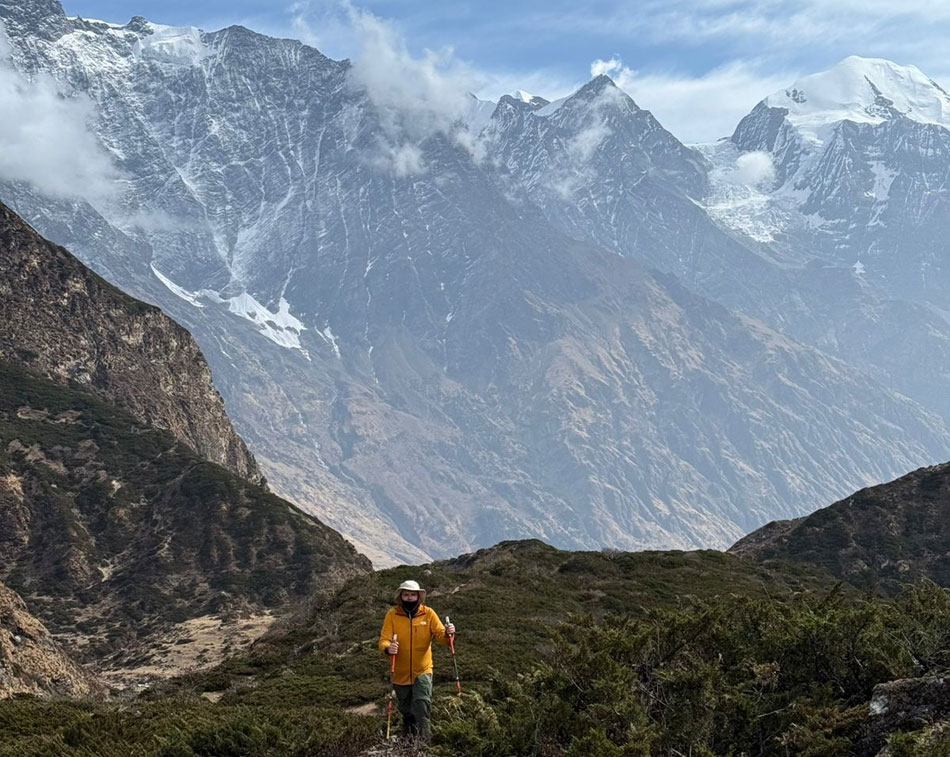
The same experience matters when leaving Tsum. You retrace part of the valley before reconnecting with the Manaslu Circuit, and from there the character of the journey gradually changes. The days ahead lead towards higher settlements and eventually Larkya La, so there is little value in exhausting a group simply to recover a few hours that were spent well in Tsum Valley.
This is why we would not reject a guide simply because someone else has more years of trekking experience. For this particular journey, recent experience on both parts of the route is more useful than an impressive résumé built mainly in Everest, Annapurna or even on the standard Manaslu Circuit.
If a company cannot name the guide months before departure, that is not automatically a warning sign. Guide assignments can depend on departure dates and availability. What the company should be able to tell you is how it chooses a guide for the combined trek and what experience that guide must have before being assigned to it.
How Long Should a Proper Manaslu Circuit with Tsum Valley Trek Take?
A Manaslu Circuit with Tsum Valley Trek can be completed in 18 days from Kathmandu to Kathmandu with a carefully planned route, but the number of days alone does not tell you whether an itinerary is good. When comparing companies, look at where those days are spent, how far the trek goes into Tsum Valley, how quickly the route gains altitude after returning to the Manaslu Circuit, and where acclimatization time has been protected.
Our standard combined itinerary is 18 days from Kathmandu back to Kathmandu. We have designed it to include the Tsum Valley section before continuing around Manaslu rather than treating Tsum as a quick side trip. The route goes through the lower and upper valley, including Chumling, Chhokang Paro and Nile, with time to reach Mu Gompa, before returning to the main Manaslu trail and continuing towards the higher villages.
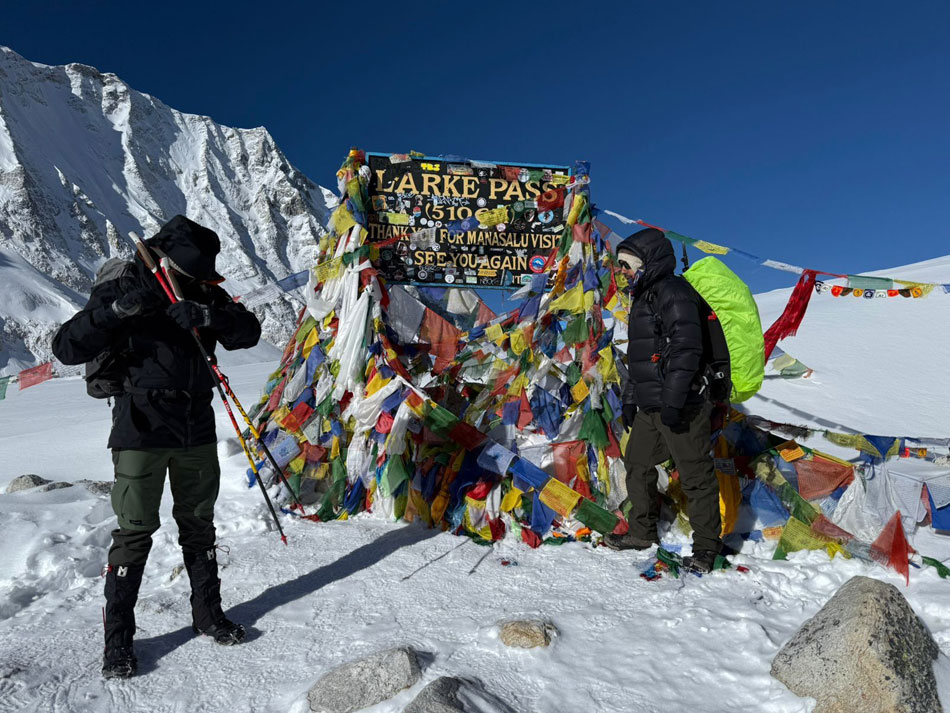
The part we would not shorten casually comes after the trek rejoins the Manaslu Circuit. The landscape and altitude change noticeably as the route continues through the upper Manaslu section towards Samagaon and Samdo. Samagaon is particularly important in the way we plan the trek because the days ahead lead progressively higher towards Dharamsala and the 5,160-metre Larkya La. Saving a day here simply to advertise a shorter package would be a poor trade if it meant compromising acclimatization.
Eighteen days also does not mean every traveler should automatically choose an 18-day itinerary. Someone who wants more time around the villages and monasteries of Tsum Valley, prefers shorter walking days, or simply does not want the trip to feel tightly scheduled may be better with additional days. We sometimes recommend adding time for exactly those reasons rather than trying to fit every traveler into the same schedule.
This is why comparisons between an 18-, 20- or 22-day package can be misleading. Some companies count arrival and departure days, some include additional Kathmandu nights, and others use different roadheads or daily stopping points. Compare the actual trail days and overnight places rather than the number in the package title.
If you are still deciding whether those additional days are worthwhile, our guide to whether Tsum Valley is worth adding to the Manaslu Circuit looks at the decision from the trail experience rather than itinerary length alone.
If another company offers the trek in fewer days, ask what has changed. Does the route turn back earlier in Tsum Valley? Have two walking days been combined? Has an acclimatization day disappeared? Is different road transport being used? A shorter itinerary can be perfectly reasonable when there is a clear explanation, but shortening the trek by removing time that the body needs at altitude is a different matter.
For us, 18 days from Kathmandu to Kathmandu is a practical duration for the combined trek when the itinerary is arranged properly, while extra days remain valuable for travelers who want a slower pace or more time in Tsum Valley. The important question is not which company advertises the shortest trek, but whether it can explain why each day is where it is.
Who Should Arrange Your Manaslu and Tsum Valley Permits?
The trekking company operating your Manaslu Circuit with Tsum Valley Trek should arrange the required permits before you leave Kathmandu. For the combined route, this includes the applicable restricted-area permits for both Manaslu and Tsum Valley, together with the Manaslu Conservation Area Permit (MCAP) and Annapurna Conservation Area Permit (ACAP). When choosing a company, the important question is not whether its website simply says “permits included,” but whether the team can explain exactly which permits it will arrange for the route you are booking.
At Dream Heaven Adventure, we handle the permit process from Kathmandu as part of organizing the trek. Once the trip is confirmed, we collect the required traveler documents and details, check them against the trekking dates and planned route, and prepare the applications through the authorized process. We want any mismatch in a passport detail, travel date or itinerary identified here in Kathmandu rather than after the journey towards Manaslu has begun.
This becomes particularly important when Tsum Valley is combined with the Manaslu Circuit. Tsum is not an informal side trip that can simply be added after reaching the trail. The route enters a separately designated restricted area, so the company needs to know before departure whether your itinerary includes Tsum Valley and arrange the appropriate paperwork accordingly.
A useful question to send any operator is: “Which permits will you arrange for my exact Manaslu and Tsum Valley itinerary, and are all of those permit costs included in your quotation?” A company that regularly operates the combined trek should be able to answer clearly rather than replying only that “all necessary permits” are included.
Before we leave Kathmandu, we also check that the permit information corresponds with the traveler and the trip being operated. The permits travel with the trekking party because documents are checked at checkpoints along the route. They are not simply paperwork prepared in Kathmandu and forgotten once the trek begins.
For the traveler, the process should be straightforward. You provide the correct documents and trip information; the trekking company handles the required permit applications and checks the paperwork; and you begin the journey knowing that the planned Manaslu and Tsum Valley route is covered. If an operator cannot explain that process clearly before you pay a deposit, clarify it before booking.
Who Should Arrange Your Manaslu and Tsum Valley Permits?
The trekking company operating your Manaslu Circuit with Tsum Valley Trek should arrange the required permits before you leave Kathmandu. For the combined route, this includes the applicable restricted-area permits for both Manaslu and Tsum Valley, together with the Manaslu Conservation Area Permit (MCAP) and Annapurna Conservation Area Permit (ACAP). When choosing a company, the important question is not whether its website simply says “permits included,” but whether the team can explain exactly which permits it will arrange for the route you are booking.
For travelers who want to understand the paperwork in more detail, our Manaslu Circuit Trek permit guide explains the restricted-area and conservation permits separately.
At Dream Heaven Adventure, we handle the permit process from Kathmandu as part of organizing the trek. Once the trip is confirmed, we collect the required traveler documents and details, check them against the trekking dates and planned route, and prepare the applications through the authorized process. We want any mismatch in a passport detail, travel date or itinerary identified here in Kathmandu rather than after the journey towards Manaslu has begun.
This becomes particularly important when Tsum Valley is combined with the Manaslu Circuit. Tsum is not an informal side trip that can simply be added after reaching the trail. The route enters a separately designated restricted area, so the company needs to know before departure whether your itinerary includes Tsum Valley and arrange the appropriate paperwork accordingly.
A useful question to send any operator is: “Which permits will you arrange for my exact Manaslu and Tsum Valley itinerary, and are all of those permit costs included in your quotation?” A company that regularly operates the combined trek should be able to answer clearly rather than replying only that “all necessary permits” are included.
Before we leave Kathmandu, we also check that the permit information corresponds with the traveler and the trip being operated. The permits travel with the trekking party because documents are checked at checkpoints along the route. They are not simply paperwork prepared in Kathmandu and forgotten once the trek begins.
For the traveler, the process should be straightforward. You provide the correct documents and trip information; the trekking company handles the required permit applications and checks the paperwork; and you begin the journey knowing that the planned Manaslu and Tsum Valley route is covered. If an operator cannot explain that process clearly before you pay a deposit, clarify it before booking.
What Should Be Included in the Company's Quoted Price?
When comparing quotations for the Manaslu Circuit with Tsum Valley Trek, do not start with the final price. First make sure the companies are actually quoting for the same journey. On this route, a lower price can come from spending fewer days in Tsum Valley, using different ground transport, excluding a porter, or leaving some meals and permit costs outside the package.
At Dream Heaven Adventure, we prefer to make those differences clear before a traveler decides whether our quotation suits them. For our 18-day journey from Kathmandu to Kathmandu, knowing what is included is more useful than seeing one attractive headline price and discovering the details afterwards.
Start with the route itself. Check that the quotation covers the same Tsum Valley section you intend to trek and then continues around the Manaslu Circuit to Larkya La. If one itinerary reaches the upper Tsum Valley around Nile and Mu Gompa while another turns back earlier, you are not comparing equivalent trips even if both are advertised as “Manaslu Circuit with Tsum Valley.”
Then compare the services needed to operate that route. The quotation should make clear how the required restricted-area and conservation permits are handled, whether the licensed guide is included for the complete journey, what meals and accommodation are covered, and whether a porter is included or optional. If a porter is provided, ask how the load is shared rather than assuming every company uses the same arrangement.
Ground transport can create another significant difference. Ask exactly how you will travel from Kathmandu to the starting point and how you will return after completing the circuit. A local bus, shared jeep and private jeep are very different arrangements in both comfort and cost. Simply seeing “all ground transportation included” does not tell you which one you are buying.
One question that is often overlooked is what the quoted price assumes when the itinerary changes. Imagine the group needs an additional night, road conditions require different transport, or the Larkya La crossing has to be delayed. The original package cannot reasonably cover every possible mountain contingency, but the operator should be able to explain which additional costs would normally fall to the traveler and which arrangements the company would handle.
There is also a difference between a necessary trekking cost and a personal trail expense. Before booking, ask the company to separate the two. That makes it much easier to understand the real cost of the trek without turning every cup of tea, battery charge or personal purchase into an argument about what “all inclusive” was supposed to mean.
For us, the most useful way to compare two Manaslu and Tsum Valley quotations is simple: put the itineraries beside each other first, then compare permits, guide and porter arrangements, meals, accommodation, transport and the policy for changes. If those things are not equivalent, comparing only the final price tells you very little about which company is actually offering better value.
Questions to Ask Before Paying a Deposit
Before paying a deposit for the Manaslu Circuit with Tsum Valley Trek, ask questions that are difficult to answer with a standard sales reply. By this stage you should already know the itinerary, permits, price and basic inclusions. What you still need to understand is how the company will actually run your trek once the booking becomes real.
1. Who will be responsible for my trek after I book?
Find out whether you will continue communicating with the same Kathmandu team or be passed between a salesperson, another agency and the guide. You should know who handles your documents before departure and who your contact is if something changes while you are on the trail.
2. When will you decide which guide is leading my departure?
A company may not be able to guarantee a particular guide months ahead, and that alone is not a problem. What matters is whether it can explain when guides are assigned and what Manaslu and Tsum Valley experience it expects from the person selected.
3. What would make you change our planned Larkya La crossing day?
This is more useful than asking whether the itinerary is flexible. Weather, snow conditions, the group's progress and how individual trekkers are coping can all affect decisions higher on the route. Listen for an explanation of how the decision would actually be made rather than a promise that the pass will be crossed on schedule.
4. If one person becomes slower, how do you manage the rest of the group?
This matters particularly on a longer combined trek. Ask whether the company changes the day's pace, separates the group when appropriate, uses additional staff if available or adjusts an overnight stop. The answer will tell you something about how the operator manages people, not just itineraries.
5. What do you check with us in Kathmandu before we leave?
A useful pre-trek meeting should involve more than collecting the remaining payment. Ask whether the team checks permits and documents, discusses the route and current conditions, reviews equipment and baggage, introduces the guide and deals with questions that could become harder to solve after leaving Kathmandu.
6. How will your Kathmandu office know if our plan changes on the trail?
The guide is the person with you, but the company should still have a process for communicating important changes back to its operations team. Ask what normally happens if the group needs another night, transport has to be rearranged or the itinerary changes significantly.
7. What is one part of this itinerary you would advise us not to shorten?
This is deliberately open-ended. An operator who knows the combined route should have an opinion and be able to explain it. The answer may depend on your itinerary, pace and interests, but “every day is flexible” is much less useful than a reasoned explanation of where additional time matters.
8. What costs could realistically arise that are not in this quotation?
Do not ask only for an exclusions list. Ask what the company has actually seen travelers pay extra for when plans change. An additional lodge night, altered transport or another unexpected arrangement is more useful to understand before booking than discovering it when the situation occurs.
At Dream Heaven Adventure, these are the kinds of questions we would rather discuss before confirming the trek. They help us understand how a traveler expects the trip to work and give the traveler a better idea of how we operate when the journey does not follow the itinerary perfectly.
The purpose is not to find a company that promises an answer you like to every question. It is to find one that can explain what it would actually do. Specific answers about people, decisions and trail operations are much stronger evidence than “best service,” “experienced team” or “100% satisfaction” claims.
Local Nepal Company vs Overseas Trekking Company for Manaslu and Tsum Valley
You can book the Manaslu Circuit with Tsum Valley Trek directly with a Nepal-based trekking company or through an overseas adventure company working with a local operator in Nepal. Either arrangement can work well. The more important question is who will actually operate your trek once you arrive in Nepal.
An overseas company may suit travelers who prefer booking through a business in their own country, using a familiar payment system or travelling with a company they already know. Some international operators have worked with the same Nepal partners for years and run excellent trips. We would not choose or reject a company simply because of where its sales office is located.
For Manaslu and Tsum Valley, however, there is always an operation taking place on the Nepal side. The restricted-area permits have to be processed through an authorized trekking agency in Nepal, while guides, transport and other trail arrangements also need to be coordinated here. If you are booking through an overseas company, ask which Nepal trekking company will actually operate your trip. There is no good reason for that information to be unclear.
Booking directly with a Nepal company removes one layer between you and the people making those arrangements. Dream Heaven Adventure is a local Nepal trekking company based in Kathmandu, and the team discussing your trek is connected directly with our operation here. If you want more time in Tsum Valley, prefer a different transport arrangement, decide to add a porter or need to adjust the itinerary, we can look at how that decision affects the actual trek rather than passing the request through another company first.
That direct connection can matter even more once the group is on the trail. Imagine that you return from the Tsum Valley section later than planned, road conditions affect a vehicle arrangement, or conditions higher up mean the schedule towards Larkya La needs to change. The guide deals with the immediate situation in the mountains, but some changes may also require support from Kathmandu. Transport may need to be rearranged, another lodge night organized or the wider itinerary reconsidered. At that point, knowing who is responsible for the ground operation matters more than where the original booking website was based.
Booking locally does not automatically mean receiving better service. A Kathmandu address does not prove that a company knows Tsum Valley, assigns suitable guides or manages difficult situations well. You should still check the company's credentials, route knowledge, guide-selection process, itinerary and communication. A well-run international company working with an experienced Nepal operator can be a better choice than a poorly run local company.
For this trek, we would therefore look beyond the simple “local versus international” comparison. Find out who processes your permits, who selects your guide, who coordinates the trek from Kathmandu and who can make arrangements when the original plan changes. Those answers tell you much more about the company that will actually be responsible for your journey.
If those responsibilities lead directly to an experienced Nepal operator and you are comfortable dealing with that team, booking directly can make communication simpler. If you prefer an overseas company, ask who its Nepal operating partner is before you commit. Either way, you should know who is behind your trek when you turn into Tsum Valley and, many days later, when your group is preparing for Larkya La.
Why Contact Dream Heaven Adventure for Manaslu Circuit with Tsum Valley Trek?
Dream Heaven Adventure is a local Nepal trekking company based in Kathmandu, organizing treks in Nepal since 2013. For the Manaslu Circuit with Tsum Valley, our role begins before you reach the trail: we discuss the route with you, arrange the required permits, select the trekking crew and coordinate the journey from our Kathmandu office.
For this combined trek, we do not think experience with the standard Manaslu Circuit alone is enough. Tsum Valley adds several days away from the main circuit before the route eventually continues into the higher Manaslu section. When assigning a guide, we therefore look for relevant experience with the route being operated, not simply the number of years someone has worked as a trekking guide.
Our standard itinerary is 18 days from Kathmandu to Kathmandu, including the Tsum Valley section before continuing around Manaslu towards Larkya La. That schedule is not something we insist on for every traveler. If you want more time around Tsum Valley, prefer shorter walking days or have additional days available, we can look at the route with you and decide where extra time would actually be useful.
Travelers interested in a shorter group option without the Tsum Valley extension can also check our Manaslu Circuit Trek group joining departures for scheduled dates and availability.
The same applies when someone wants to make the trek shorter. We will not say that every requested change is automatically a good idea. We look at which walking days would have to be combined, what would be lost in Tsum Valley and whether the change would affect the altitude progression later in the trek. Sometimes shortening the route is reasonable; sometimes keeping the additional day makes more sense.
Before leaving Kathmandu, we hold a pre-trek discussion so that the route, equipment, baggage, transport and other practical arrangements are clear. This is also an opportunity to meet the team, deal with questions that have come up since booking and resolve anything that is easier to fix in Kathmandu than after the trek has started.
Once you are on the trail, the guide manages the day-to-day trek, while our Kathmandu team remains behind the operation. That distinction matters if plans change and something off the trail needs to be rearranged. Our responsibility does not end when the vehicle leaves Kathmandu.
We do not expect you to choose Dream Heaven Adventure because we describe ourselves as the best Manaslu trekking company. Check our company credentials, read independent feedback from previous trekkers, compare our itinerary and quotation with other operators, and ask us detailed questions about Tsum Valley, Manaslu and Larkya La before you decide. We would rather earn the booking through clear answers than ask you to rely on a marketing claim.
Final Recommendation: Which Company Should You Contact for Manaslu Circuit with Tsum Valley?
For the Manaslu Circuit with Tsum Valley Trek, contact an authorized trekking company in Nepal that can do more than sell you an itinerary. The operator should understand both sections of the route, arrange the required restricted-area permits correctly, provide a suitable licensed guide, explain where acclimatization time has been protected, and tell you clearly what happens if the original plan needs to change.
Do not choose on price, reviews or the word “local” alone. Compare the actual route, ask who will operate the trek in Nepal, find out who will lead you into Tsum Valley and around Manaslu, and pay attention to how specifically the company answers your questions.
Dream Heaven Adventure is a local Nepal trekking company based in Kathmandu, and you can contact us directly to plan the Manaslu Circuit with Tsum Valley Trek. Our standard journey is 18 days from Kathmandu to Kathmandu, but we can discuss additional days, a different pace or other practical changes before you book.
Whether you ultimately trek with us or another operator, choose the company that can explain the journey from the permit arrangements in Kathmandu to the days in Tsum Valley and the final approach to Larkya La. For a trek this long and remote, clear answers before booking are one of the best indications of the support you can expect once you are on the trail.
FAQs About Choosing a Company for Manaslu Circuit with Tsum Valley Trek
Can I book the Manaslu Circuit with Tsum Valley directly with a Nepal trekking company?
Yes. You can book directly with an authorized trekking company in Nepal that can arrange the required restricted-area permits and guided trek. Booking directly also allows you to communicate with the team responsible for organizing the journey in Nepal rather than necessarily going through an overseas intermediary.
How far in advance should I contact a company for the Manaslu and Tsum Valley trek?
For the main spring and autumn trekking seasons, contacting a company a few months ahead gives you more time to compare itineraries, arrange international travel, prepare equipment and discuss guide or porter requirements. Later bookings may still be possible, but there is little advantage in leaving a remote, restricted-area trek until the last moment when your travel dates are already fixed.
Can a solo traveler book the Manaslu Circuit with Tsum Valley Trek?
Yes. A solo traveler can book the Manaslu Circuit with Tsum Valley through an authorized trekking agency and trek with the required licensed guide. Older information stating that two foreign trekkers must always apply together may still appear online, so check current restricted-area requirements when planning your departure rather than relying on older Manaslu guides.
Can the Manaslu Circuit with Tsum Valley itinerary be customized?
Yes, within the practical and regulatory limits of the route. At Dream Heaven Adventure, our standard combined journey is 18 days from Kathmandu to Kathmandu, but additional days can be added for travelers who prefer a slower pace or want more time in Tsum Valley. We evaluate requests to shorten the trek more carefully because removing days can affect walking distances and altitude progression.
Can I spend extra days in Tsum Valley?
Yes. Adding time in Tsum Valley can make sense if exploring the valley is an important reason for choosing the combined trek. Instead of simply adding a day anywhere, discuss where the additional time would be most useful based on the route you want to follow and the places you want to visit.
Do I need to know the name of my guide before paying a deposit?
Not necessarily. Guide assignments can depend on departure dates and availability, particularly when you book several months ahead. More important is whether the company can explain how it selects guides and whether experience on both the Manaslu Circuit and Tsum Valley is considered when making the assignment.
What should I send when asking for a Manaslu and Tsum Valley trek quotation?
Send your preferred travel dates, number of travelers and approximate number of days available. Also mention whether you prefer a private or group arrangement, your previous high-altitude trekking experience, whether you need a porter, and whether spending additional time in Tsum Valley is important to you. This allows the company to recommend a suitable route rather than simply sending a standard package price.
Can I meet the trekking team before leaving Kathmandu?
Yes. When booking with a Kathmandu-based company, ask whether a pre-trek meeting is arranged before departure. At Dream Heaven Adventure, we use this time to discuss the route and practical arrangements, deal with equipment or baggage questions, and introduce the guide when the assignment is confirmed. These details are much easier to resolve in Kathmandu than after the journey to the trail has begun.