Where Is Dharmasala (Larkya Phedi) Located?
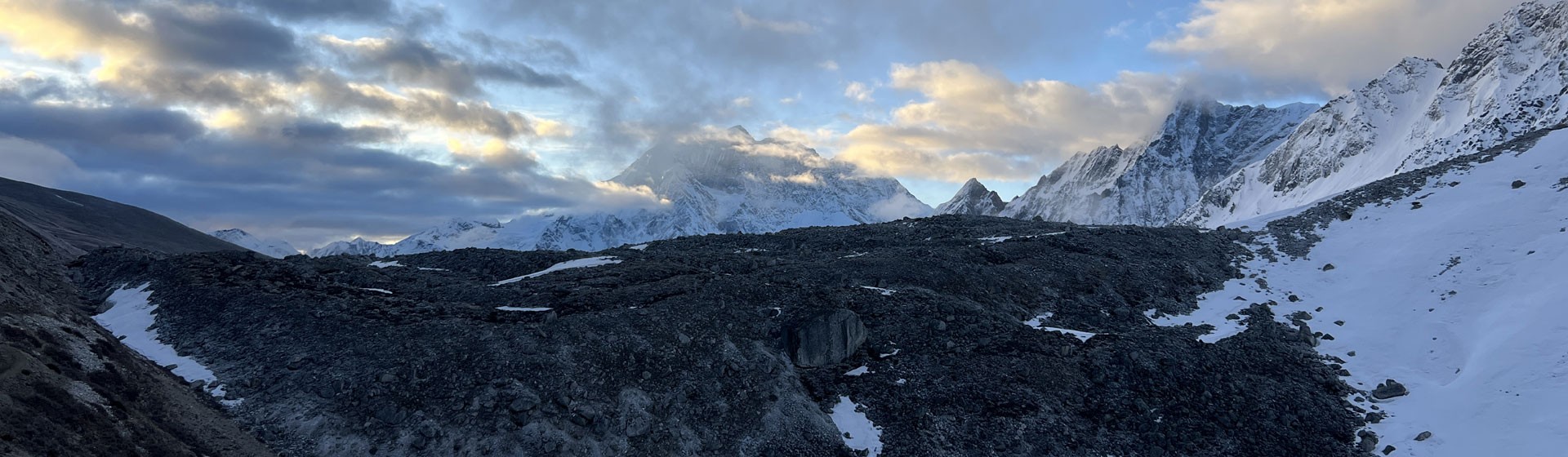
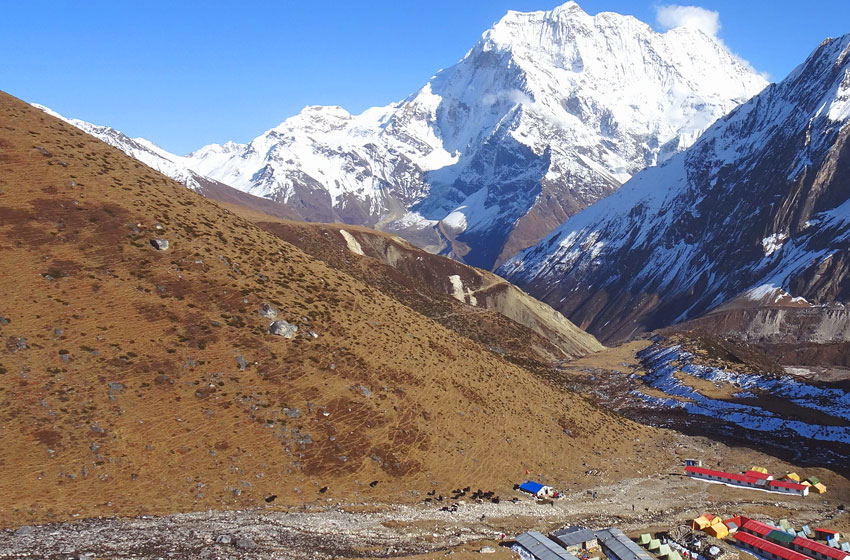
By the time the trail reaches Dharmasala, the Manaslu Circuit has already left its last permanent village behind. The walk from Samdo gradually enters a broad alpine valley where stone houses, cultivated fields, and everyday village life disappear, replaced by rocky terrain, glacial streams, and the surrounding high mountains. It is here, at around 4,460 metres (14,632 feet), that trekkers reach Dharmasala, also known as Larkya Phedi, the final overnight stop before crossing Larkya La Pass (5,160 metres / 16,929 feet).
Most standard Manaslu Circuit Trek itineraries include one night at Dharmasala before crossing the pass.
Although many people refer to Dharmasala as a village, it is better understood as a small trekking stop built to support those crossing the pass. Unlike Samagaun or Samdo, there are no permanent neighbourhoods, farmland, or local community to explore. Almost everyone who arrives here shares the same purpose: resting for a few hours before continuing over one of Nepal's highest and most rewarding trekking passes.
Its position on the route is one of the reasons the Manaslu Circuit itinerary works so well. Rather than attempting the long journey from Samdo across Larkya La Pass and down to Bimthang in a single day, trekkers break the climb at Dharmasala. This allows time to recover from the day's ascent, adjust to the higher altitude, and begin the pass crossing early the following morning, when mountain conditions are often more stable.
From Dharmasala onwards, the character of the trek changes again. The route climbs steadily towards Larkya La, leaving the upper Budhi Gandaki Valley behind before descending into the Marsyangdi Valley on the western side of the pass. For many trekkers, reaching Dharmasala is the moment they realise the journey has entered its final and most memorable mountain stage.
How Do You Reach Dharmasala?
The journey to Dharmasala is not simply a 3 to 4-hour walk from Samdo. By the time you arrive here, you have already travelled from Kathmandu to Machha Khola and spent more than a week trekking through the Budhi Gandaki Valley, passing villages including Jagat, Deng, Namrung, Lho, Samagaun, and finally Samdo. This gradual ascent is an important part of the Manaslu Circuit, allowing trekkers to gain altitude naturally before reaching the final approach to Larkya La Pass.
Most groups leave Samdo after breakfast rather than setting off before sunrise. Unlike the following morning, there is no advantage in rushing this day. The goal is simply to reach Dharmasala comfortably, stay well hydrated, and conserve energy for the pass crossing ahead. Experienced Manaslu guides usually encourage a steady, conversational pace instead of trying to arrive as early as possible.
After leaving the last permanent village on the route, the trail enters a broad alpine valley where there are no more settlements before Dharmasala. Depending on the season, you may pass yak caravans transporting supplies, small glacial streams flowing across the valley, and prayer flags marking important points along the route. The climb is generally gradual rather than steep, but at this altitude most trekkers naturally slow their pace as the air becomes thinner.
The walk covers approximately 6 to 7 kilometres (3.7 to 4.3 miles) and usually takes around 3 to 4 hours, although weather, trail conditions, and individual walking speed can all influence the total time. Because the distance is relatively short, many trekkers are surprised by how much easier the day feels physically compared with some of the longer stages lower on the Manaslu Circuit. That lighter schedule is intentional, giving your body time to recover before one of the trek's most demanding mornings.
As Dharmasala finally comes into view beneath the slopes leading towards Larkya La, the atmosphere often changes within the group. Conversations become quieter, cameras come out more frequently, and tomorrow's pass crossing begins to feel real. After more than a week of steadily gaining altitude from Machha Khola, this is the point where preparation gradually gives way to anticipation.
Why Does Every Manaslu Trekker Stay at Dharmasala?
One question we hear on almost every Manaslu departure is, "Why are we stopping here already?" After leaving Samdo, most trekking groups reach Dharmasala by late morning or early afternoon, so the day can feel surprisingly short. For many first-time trekkers, it seems as though there is still plenty of time to keep walking.
The answer is simple. Dharmasala is not included because the walk from Samdo is difficult. It is included because the following day is.
Continuing beyond Dharmasala would mean climbing to Larkya La Pass (5,160 metres) and then descending all the way to Bimthang in the same day after already walking from Samdo. Even for fit trekkers, that often becomes a very long day at high altitude, where good decisions and steady energy matter far more than walking speed. Dividing the journey into two stages allows the pass crossing to remain challenging without becoming unnecessarily exhausting.
This shorter day also fits naturally with how the Manaslu Circuit gains altitude. By the time trekkers arrive at Dharmasala, they have already spent more than a week walking from Machha Khola through Jagat, Deng, Namrung, Lho, Samagaun, and Samdo. The itinerary has already done the hard work of gradual acclimatisation. At this stage, guides are no longer trying to gain altitude quickly. The priority shifts to arriving well rested, drinking enough water, eating properly, and keeping energy in reserve for the highest point of the entire trek.
That is why experienced Manaslu guides rarely see an early arrival at Dharmasala as wasted time. Instead, it becomes one of the most important afternoons of the journey. Boots are dried if necessary, water bottles are filled, warm layers are kept ready, and the departure time for the following morning is discussed over dinner. Everyone knows that the next day will begin before sunrise, so there is very little reason to use unnecessary energy on the afternoon before the pass.
For local operators who lead this route every season, Dharmasala is far more than another overnight stop on the itinerary. It marks the point where the gradual approach through the Budhi Gandaki Valley ends and the final challenge begins. By the time you settle into the tea house, the conversation among trekkers is rarely about the trail behind. Almost everyone is thinking about the same thing—the climb to Larkya La waiting just a few hours away.
What Facilities Are Available at Dharmasala?
Many trekkers arrive at Dharmasala expecting facilities similar to those they found in Samagaun or Samdo. The reality is quite different. Dharmasala, also known as Larkya Phedi, exists for one purpose: to provide a safe overnight stop before crossing Larkya La Pass. It is one of the highest and most remote tea house stops on the Manaslu Circuit, where every bag of rice, gas cylinder, blanket, mattress, and building material has to be transported into the mountains. Because of that, the focus is on providing the essentials rather than comfort.
Accommodation is simple but sufficient for a single night before the pass. Rooms are basic, usually with twin beds, mattresses, pillows, and warm blankets. There are no luxury facilities here, and most trekkers spend very little time in their rooms. As temperatures fall after sunset, almost everyone gathers in the communal dining room, where the stove provides the warmest place to eat dinner, share stories with other trekkers, and prepare for the following morning.
Electricity is limited and should never be taken for granted. Charging facilities may be unavailable or restricted depending on the season and the tea house operating that year. Before leaving Samdo, our guides always remind trekkers to fully charge phones, cameras, watches, headlamps, and power banks because they may not have another reliable opportunity until after crossing Larkya La.
Mobile reception is weak or unavailable, and Wi Fi should not be expected. For most trekkers, Dharmasala becomes the one place on the Manaslu Circuit where being offline feels completely normal. The focus naturally shifts away from screens and towards the challenge waiting the next morning.
Toilet facilities are shared and located outside the main building. They are simple but practical for such a remote location. During the colder months, using the toilet before the early morning departure can be extremely cold, which is why we always recommend keeping a headlamp and warm jacket beside your bed before going to sleep.
Most trekkers also decide not to shower at Dharmasala. At this altitude, staying warm, drinking enough water, and conserving energy for the pass are far more important than taking a hot shower. Our guides usually encourage trekkers to eat well, organise their backpack, prepare extra layers, and get to bed early rather than spending unnecessary time outside in the cold.
Facilities at Dharmasala can vary slightly from one season to another depending on snowfall, weather conditions, and the number of trekking groups using the route. However, the purpose of this stop never changes. It provides a warm meal, a safe place to sleep, and the opportunity to rest before crossing the highest point of the Manaslu Circuit.
After guiding this route for many years, we have found that trekkers who arrive expecting only the basics almost always enjoy the experience the most. Dharmasala is not remembered because of comfortable facilities. It is remembered because it marks the final night before standing on Larkya La Pass at 5,160 metres, one of the most rewarding moments anywhere on the Manaslu Circuit Trek.
If you are still preparing your equipment, our Manaslu Circuit Trek packing list explains what is worth carrying for high-altitude nights like Dharmasala.
Weather Conditions at Dharmasala
By the time trekkers reach Dharmasala (4,460 metres / 14,633 feet), weather becomes part of the day's decision-making rather than something you simply check on a phone. This is the final overnight stop before Larkya La Pass, and small changes in wind, cloud cover, or overnight snowfall can affect how the following morning unfolds. While the lower Manaslu trail often gives plenty of warning before conditions change, weather at Dharmasala can shift much more quickly because of its exposed alpine location.
One thing we often notice is that many trekkers become concerned when clouds gather around Dharmasala during the afternoon. In reality, this is not unusual. On many departures, those clouds disappear overnight, and the next morning begins with calm conditions and excellent visibility towards Larkya La. We have also experienced the opposite, where a clear evening is followed by fresh snow or stronger winds before dawn. That is why local guides never base the next day's plan on a single weather forecast or the evening sky alone.
Cold mornings are normal throughout the main trekking seasons. Before sunrise, temperatures frequently fall below freezing, and even after daylight reaches the valley, exposed sections leading to the pass can remain cold because of persistent wind. For this reason, most groups leave Dharmasala well before first light. Earlier departures usually mean firmer trail conditions, lighter winds, and enough time to cross the highest section before mountain weather becomes less predictable later in the day.
Spring often brings some of the clearest mornings of the year, although fresh snowfall is still possible, particularly during March and early April. A light overnight snowfall rarely means the pass is closed, but it does mean guides assess trail conditions more carefully before leaving Dharmasala. Footprints from previous groups, the firmness of the snow, and recent reports from guides returning over the pass often provide more useful information than a weather app.
After the summer monsoon, autumn normally offers the most reliable combination of stable weather and clear Himalayan views. Even so, conditions are never identical from one week to the next. Some years remain dry well into November, while others receive early snowfall that temporarily changes trail conditions around Larkya La. Local knowledge is often more valuable than seasonal averages because mountain weather does not always follow the calendar.
Winter demands greater flexibility than any other season. Heavy snowfall, drifting snow across exposed slopes, and strong winds can all influence the crossing. We have seen winters when Larkya La remained in good condition for extended periods, and others when a single storm changed the trail overnight. Decisions during this season are always based on current mountain conditions rather than assumptions about the month.
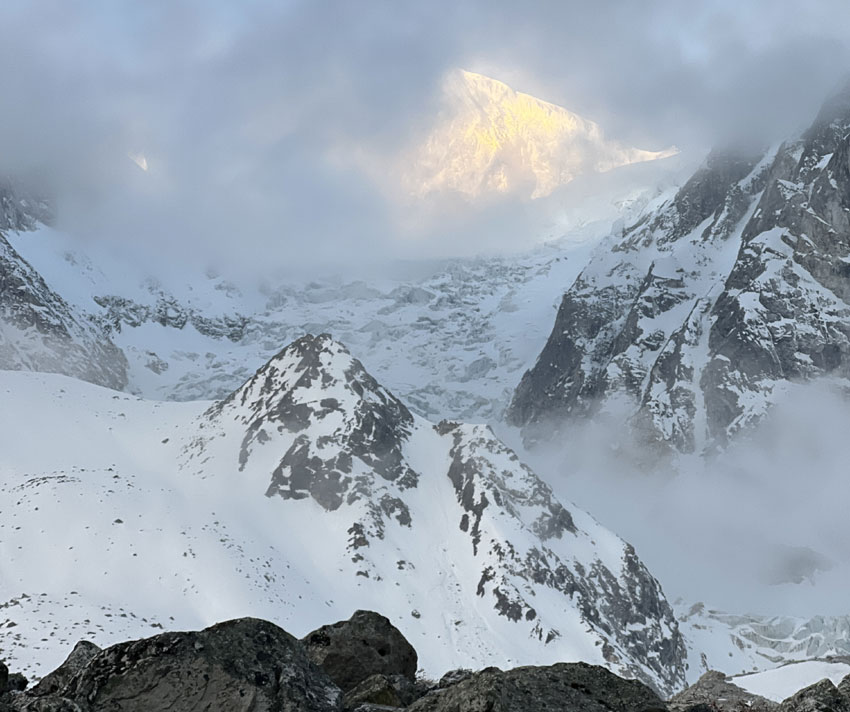
Although the monsoon brings persistent rain to the lower Budhi Gandaki Valley, Dharmasala experiences those systems differently. Rain frequently turns to snow at higher elevations, while cloud and mist can reduce visibility around the pass. Even when the trail below Samdo feels stable, guides continue monitoring conditions higher up because the weather above Dharmasala often follows a different pattern.
After leading groups across Larkya La for many seasons, one lesson remains consistent. The safest crossings are not usually the ones with perfect weather forecasts; they are the ones where departure times, trail conditions, and mountain weather are considered together. That is why experienced guides continue checking conditions until the moment the group leaves Dharmasala, rather than assuming tomorrow will look the same as today.
Weather conditions at Dharmasala change throughout the year, so it is worth understanding the Manaslu Circuit weather by month before choosing your trekking season.
What to See and Do at Dharmasala
Dharmasala is unlike any other overnight stop on the Manaslu Circuit Trek. There is no permanent village, no cultivated farmland, and no monastery to visit. This small seasonal tea house stop exists for a single purpose: to provide trekkers with a place to rest before crossing Larkya La Pass. That alone gives Dharmasala a different atmosphere from every village lower on the trail.
Rather than spending the afternoon exploring, most trekkers naturally slow their pace after arriving from Samdo. At 4,460 metres (14,633 feet), the priority shifts from covering distance to conserving energy for the highest and most demanding day of the trek. A short walk around the camp is usually enough to stretch tired legs while taking in the rugged alpine surroundings without placing unnecessary strain on the body.
The landscape around Dharmasala feels noticeably different from the valleys below. Forests, cultivated fields, and stone villages have disappeared, replaced by rocky slopes, glacial moraine, and the vast mountain basin leading towards Larkya La. On clear afternoons, the changing light across the surrounding ridges transforms the scenery from hour to hour, and many trekkers find themselves quietly watching the mountains long after they have put their backpacks down.
Photography is particularly rewarding when conditions are clear. The soft afternoon light brings out the texture of the surrounding cliffs and snow-covered peaks, while the early morning departure offers an entirely different perspective. Before sunrise, headlamps begin moving through the darkness as groups leave the tea houses one by one, and the first rays of sunlight gradually reach the upper mountains while the valley remains in shadow. These peaceful moments often become some of the most memorable photographs of the entire Manaslu Circuit Trek.
As evening approaches, the dining room becomes the centre of life at Dharmasala. Guides review weather updates and the following day's route, porters organise equipment for the early departure, and trekkers gather around the stove to warm up after a cold afternoon. Conversations naturally turn to Larkya La Pass, recent trail conditions, clothing layers, and the excitement of reaching the highest point of the journey. The quiet anticipation shared by everyone staying here is one of the experiences that makes Dharmasala memorable.
The evening is also the ideal time to prepare for the pass crossing. Water bottles are filled, backpacks are reorganised, cameras and headlamps are charged whenever electricity is available, and essential clothing is packed where it can be reached easily before dawn. After many seasons guiding the Manaslu Circuit, we have found that trekkers who organise everything the night before usually leave more comfortably and confidently during the early morning start, when temperatures are often below freezing.
Although nearly every group spends just a single night at Dharmasala, it is one of the places that stays with trekkers long after the journey is over. It marks the transition from the sheltered valleys of the Manaslu region to the high alpine world of Larkya La, where every step the following morning leads towards one of Nepal's most spectacular Himalayan passes.
Crossing Larkya La Pass from Dharmasala
The walk from Dharmasala to Larkya La Pass is the highest and most demanding stage of the Manaslu Circuit Trek. From the tea houses at 4,460 metres (14,633 feet), the trail climbs steadily to Larkya La at 5,160 metres (16,929 feet) before descending into the beautiful alpine valley of Bimthang. Although the distance is not especially long, the combination of high altitude, continuous ascent, and a long descent makes this the most challenging day of the journey.
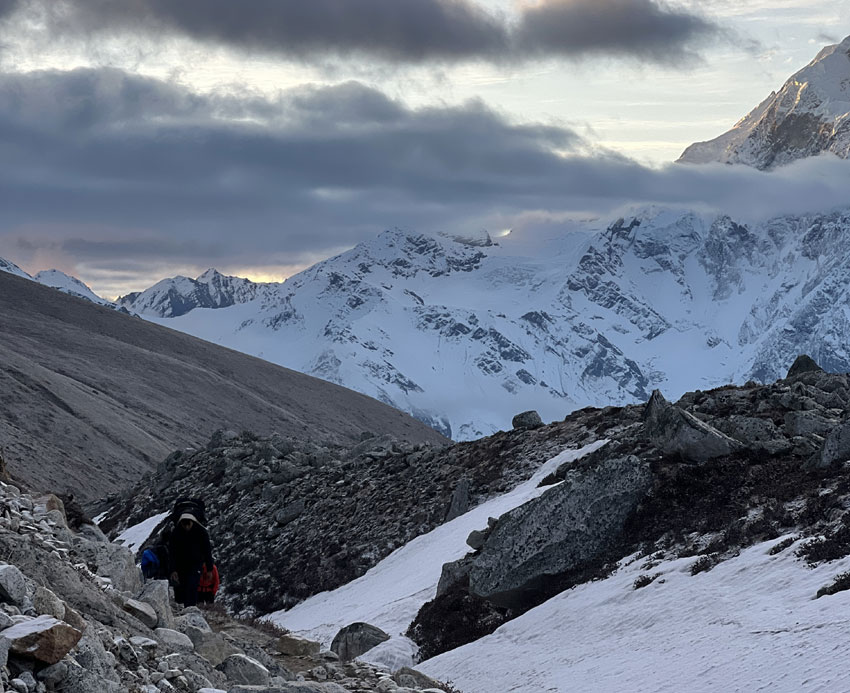
The day begins well before sunrise. Depending on the season and current mountain conditions, most groups leave Dharmasala between 3:00 am and 5:00 am. Early departures are planned for practical reasons rather than tradition. Walking while the ground is still firm often provides better trail conditions, lighter winds, and enough time to complete much of the descent before afternoon weather becomes less predictable. Before leaving, guides assess overnight temperatures, recent snowfall, wind conditions, and the latest trail reports from groups that crossed the pass the previous day.
The first section above Dharmasala climbs gradually across rocky alpine terrain. Although the trail may appear straightforward, the altitude begins to make itself felt surprisingly quickly. One of the most common mistakes is walking too fast during the opening hour in an attempt to gain time. In reality, a steady rhythm from the beginning usually allows trekkers to climb more comfortably and reduces the need for frequent rest stops higher on the mountain.
As daylight reaches the upper valley, the surrounding Himalayan landscape gradually reveals itself. On clear mornings, the route offers magnificent views of Himlung Himal, Cheo Himal, Kang Guru, and distant sections of the Manaslu range. Colourful prayer flags mark the summit of Larkya La, providing a welcome reminder that the highest point of the trek has been reached. Most groups spend a few minutes taking photographs and enjoying the panorama before continuing the descent, as cold winds can develop quickly on the exposed pass.
The descent towards Bimthang is considerably longer than many trekkers expect. The trail crosses rocky slopes, glacial moraine, and, depending on the season, lingering snow before gradually dropping into greener alpine meadows. Although the hardest climbing is over, tired legs and uneven terrain require continued concentration throughout the afternoon, making trekking poles especially helpful on the lower sections.
Conditions on Larkya La vary throughout the year. Spring often leaves patches of old snow on the upper approach, while fresh snowfall can occasionally affect the trail during late autumn. Winter crossings demand additional caution because deeper snow and stronger winds may influence both departure times and daily plans. Rather than relying solely on seasonal expectations, experienced guides assess the actual mountain conditions each morning, as the character of the pass can change significantly after a single night of snowfall or strong wind.
One of the most noticeable differences between first-time high-altitude trekkers and experienced mountain walkers is not speed but rhythm. Those who settle into a comfortable pace from the moment they leave Dharmasala usually reach Larkya La feeling stronger than those who try to gain time during the early climb. At this altitude, patience is often rewarded far more than speed, allowing trekkers to enjoy both the pass itself and the long descent towards Bimthang with greater confidence and energy.
Most trekkers cross the pass as part of our 12 Days Manaslu Circuit Trek itinerary, which includes proper acclimatisation before reaching Dharmasala.
Frequently Asked Questions About Dharmasala
How high is Dharmasala on the Manaslu Circuit Trek?
Dharmasala sits at approximately 4,460 metres (14,633 feet) above sea level. It is the final overnight stop before crossing Larkya La Pass and the highest place where most trekkers spend the night on the standard Manaslu Circuit Trek.
Why do trekkers stay overnight at Dharmasala?
Dharmasala allows trekkers to shorten the climb to Larkya La Pass and begin the crossing before sunrise. Staying here also spreads the altitude gain over two days instead of attempting the pass directly from Samdo.
How long does it take to trek from Samdo to Dharmasala?
The walk from Samdo to Dharmasala usually takes around 3 to 4 hours, depending on trail conditions, weather, and each group's walking pace.
How far is Larkya La Pass from Dharmasala?
Larkya La Pass lies about 700 metres higher than Dharmasala in elevation. Most trekking groups reach the pass after approximately 3 to 5 hours of climbing, depending on snow conditions, weather, and acclimatisation.
What time do trekkers usually leave Dharmasala?
Most groups leave between 3:00 am and 5:00 am. Early departures usually provide firmer trail conditions, lighter morning winds, and enough time to complete the long descent towards Bimthang before afternoon weather becomes less predictable.
Do I need a guide?
Yes. A licensed guide is mandatory for the Manaslu region. Learn more in our guide about Manaslu Circuit Trek guides.
Are there tea houses at Dharmasala?
Yes. Dharmasala has simple seasonal tea houses that provide accommodation, freshly prepared meals, and basic shelter for trekkers before crossing Larkya La Pass.
Does Dharmasala have electricity?
Electricity is limited and depends on the tea house and weather conditions. Charging electronic devices is usually available for an additional fee, although power is not always reliable.
Is there mobile network or Wi-Fi at Dharmasala?
Mobile reception is generally weak or unavailable. Some tea houses occasionally offer limited Wi-Fi, but connections are slow and should not be relied upon for important communication.
Are toilets available at Dharmasala?
Yes. Basic shared toilets are available at the tea houses. Facilities are simple because of the remote high-altitude location.
Is drinking water available at Dharmasala?
Yes. Tea houses provide boiled drinking water for an additional charge. Many trekkers also carry water purification tablets or filters as a backup.
Is Dharmasala colder than Samdo?
Yes. Because Dharmasala is nearly 600 metres higher than Samdo, temperatures are noticeably colder, especially before sunrise and after sunset.
Do I need microspikes for Larkya La Pass?
Microspikes are not normally required during the main spring and autumn trekking seasons. However, they can be useful after fresh snowfall or during late autumn and winter. Your guide will recommend whether they are necessary based on current trail conditions.
Can beginners cross Larkya La Pass from Dharmasala?
Yes. Many first-time Himalayan trekkers successfully cross Larkya La each season. Following a proper acclimatisation itinerary, walking at a steady pace, and listening to your licensed guide are far more important than previous high-altitude trekking experience.
Can I stay two nights at Dharmasala?
Most itineraries include only one night because Dharmasala is intended as the final staging point before crossing Larkya La Pass. If weather or trail conditions require a delay, your guide may adjust the itinerary accordingly.
What should I prepare before leaving Dharmasala?
Before going to bed, organise your backpack, refill your water bottles, prepare warm layers, check your headlamp, and keep essential items easily accessible for the early morning departure.
What is the next overnight stop after crossing Larkya La Pass?
After crossing Larkya La Pass, most trekking groups continue to Bimthang, a beautiful alpine valley known for its forests, open meadows, and dramatic mountain scenery.
Is Dharmasala the highest place to sleep on the Manaslu Circuit Trek?
Yes. Dharmasala is generally the highest overnight stop on the standard Manaslu Circuit Trek itinerary. After reaching Larkya La Pass, trekkers descend to the lower altitude of Bimthang.
Is altitude sickness common at Dharmasala?
Because of its high elevation, some trekkers may experience mild symptoms of altitude sickness. Following a proper acclimatisation itinerary, staying well hydrated, eating regularly, and informing your guide about any symptoms are the best ways to reduce the risk.
Is helicopter rescue possible from Dharmasala?
Yes. In the event of a serious medical emergency or severe altitude sickness, helicopter evacuation may be possible if weather conditions allow. Because Dharmasala is in a remote high-altitude environment, flights are not always immediately available. Comprehensive travel insurance that covers high-altitude helicopter evacuation is strongly recommended for the Manaslu Circuit Trek.
If you are planning your trek, explore our complete Manaslu Circuit Trek itinerary for detailed daily stages, permits, transport, and preparation advice.